Wednesday is supposed to be my day off, but I've been coming into the shop at irregular hours
to work through the backlog of nomu Lab wheel reservations.
Actually, I've been doing this for about the past month.
There's a wheel I really wanted to build for myself,
and yesterday I ended up spending time on it.
Please forgive me for working on my day off.
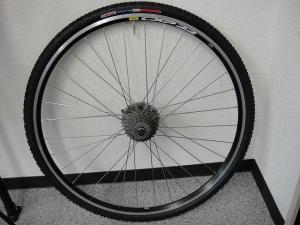
The W freewheel hub I made has a couple of drawbacks, or rather, weak points.
The main drawback is that the flange width is narrow. About 42.5mm.
There's no way you can achieve lateral stiffness with such narrow flanges.
The weak point, separate from this "unavoidable" issue,
is something that should be solvable. I can't write what it is, though.


The spokes are Hoshi No. 15 Aero—not CX-RAY.
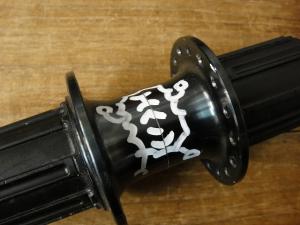
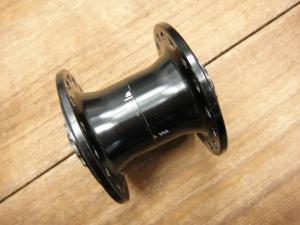
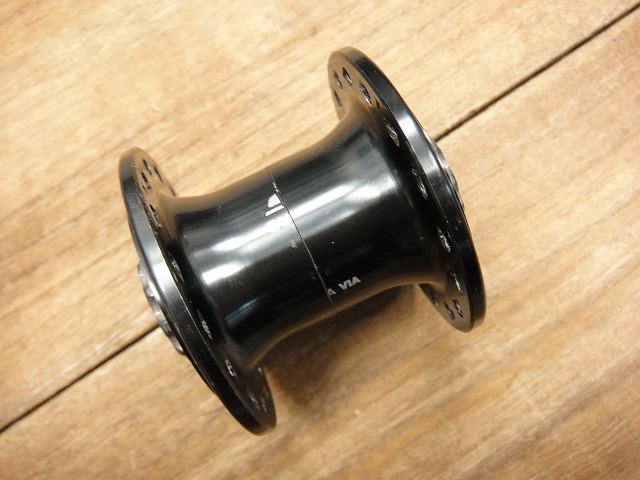
I disassembled the hub. As for the left and right hub shells,
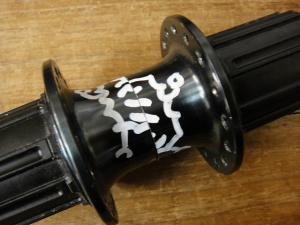
they're not glued together, as you can see.
This means I can change the phase relationship between left and right.
Even with a 32H paired-spoke phase rim, I can build it without issues.
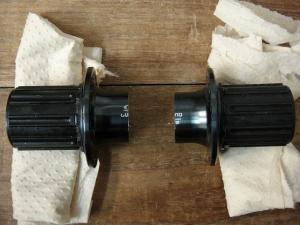
I split it apart. I've laid paper towels on the freewheel body
to use as a cushion because I don't want the cross-section to be visible.
If I install 16 pawls before reassembly, that's a 80,000 point bonus.

I'm in the middle of a loose build for reassembly.

For reasons that will become clear, I'm doing a loose build with the freewheel body and shaft removed.
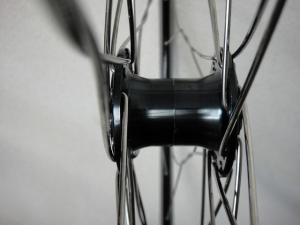
↑Tight!
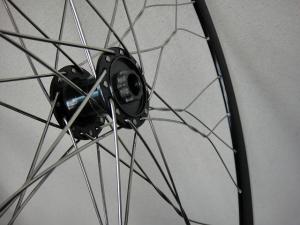
Twisted lacing requires longer spokes than standard lacing.
The amount of additional length varies depending on whether you twist a 4-cross
or a 6-cross pattern.
I need to build it this way partly to investigate that,
but also to overcome the weak point I mentioned earlier.
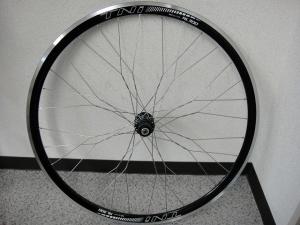
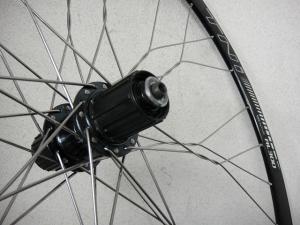
I got it built.
I tensioned it to a level that would be rideable.
Radial runout is corrected and the wheel is centered.
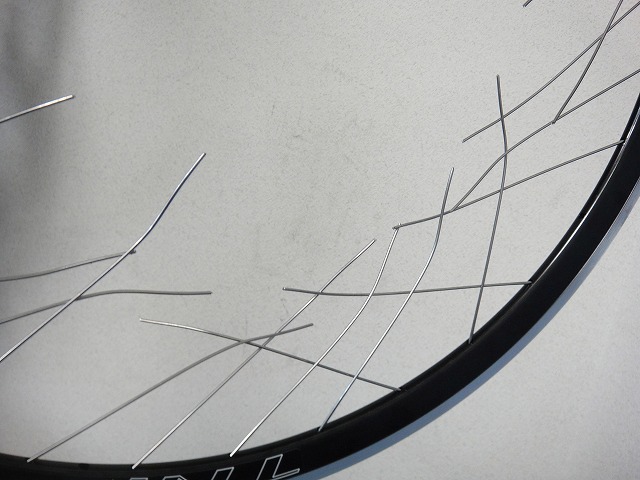
But then I disassembled it again.
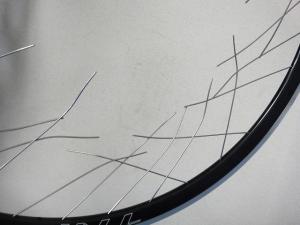
The spokes had taken a permanent bend, so they couldn't be reused.
I released the tension and then cut them.
This wheel only existed for 10 minutes.
But I did learn something from it. Aha, I see!
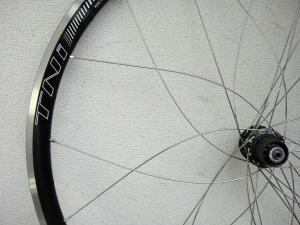
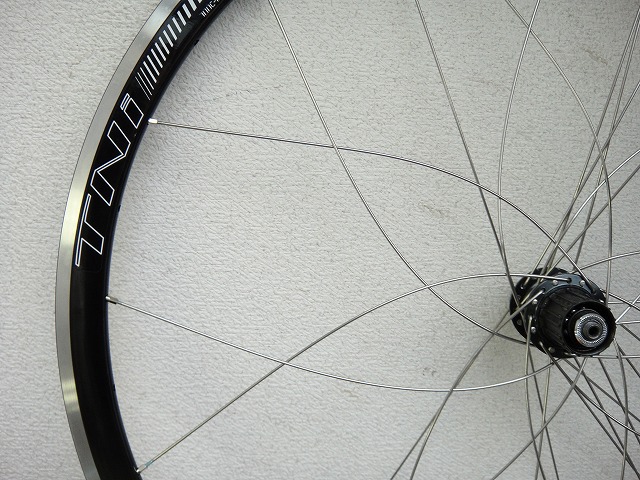
Next, I'll build it as a 10-cross.
The maximum tangent lacing for 32H is 8-cross, so the spokes coming from holes
on opposite sides of the flange bisector will cross each other.
Since X-cross = X/2 cross pattern, with this lacing,
any given spoke will cross 5 times with other spokes when viewed from the side.
Of those 5 crossings, the 3rd, 4th, and 5th can be woven, counting from the hub side—
and I weave all of them. Three weaves means it's triple-cross.
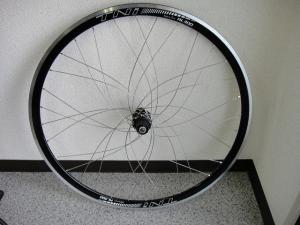
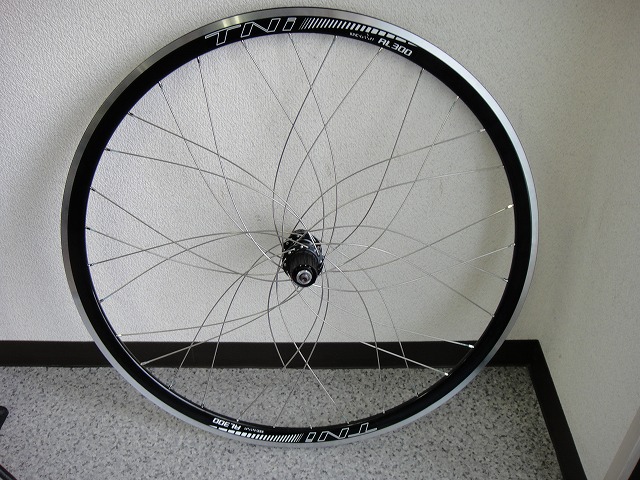
The loose build is done.
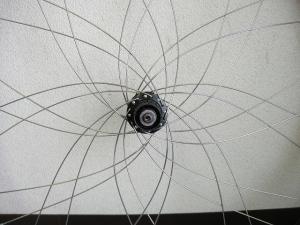
Looking at the inpokes, the 3rd crossing is on the bottom, the 4th is on top,
and the 5th is on the bottom. Three weaves total.
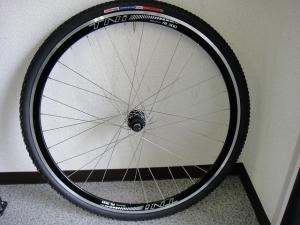
It's built.
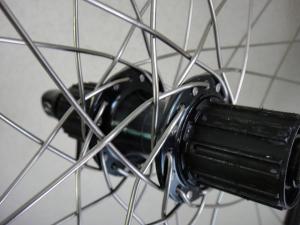
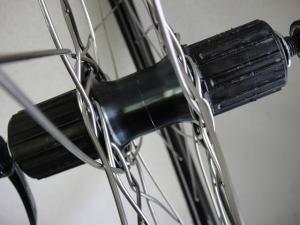
This lacing method has nothing to do with solving the weak point.
When you run two or more experiments simultaneously,
you can't get clean data.
Weakness no. 1 is something you'd notice immediately if you rode it, and it was solved.
Weakness no. 2 was probably also solved, but it needs observation over time,
so I can't draw conclusions yet.
The spokes I used in both wheel builds were
DT Competition both times.
to work through the backlog of nomu Lab wheel reservations.
Actually, I've been doing this for about the past month.
There's a wheel I really wanted to build for myself,
and yesterday I ended up spending time on it.
Please forgive me for working on my day off.
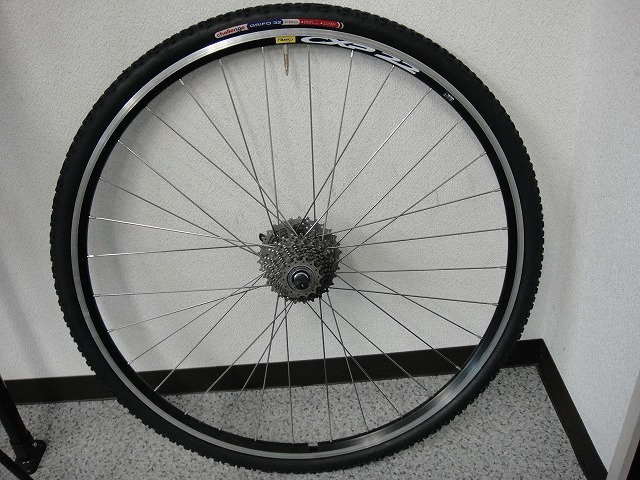
The W freewheel hub I made has a couple of drawbacks, or rather, weak points.
The main drawback is that the flange width is narrow. About 42.5mm.
There's no way you can achieve lateral stiffness with such narrow flanges.
The weak point, separate from this "unavoidable" issue,
is something that should be solvable. I can't write what it is, though.


The spokes are Hoshi No. 15 Aero—not CX-RAY.
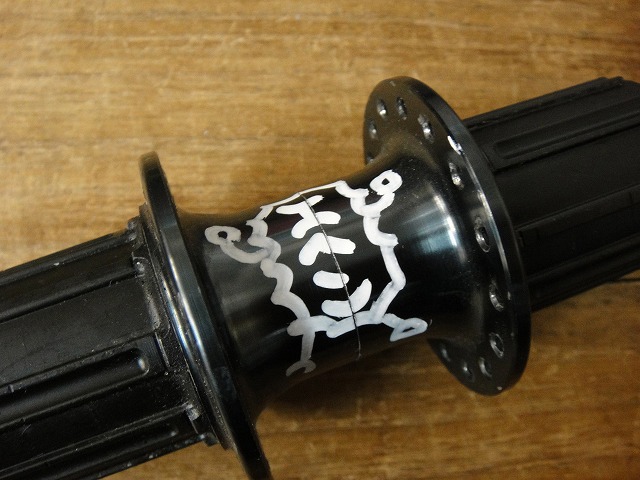
I disassembled the hub. As for the left and right hub shells,
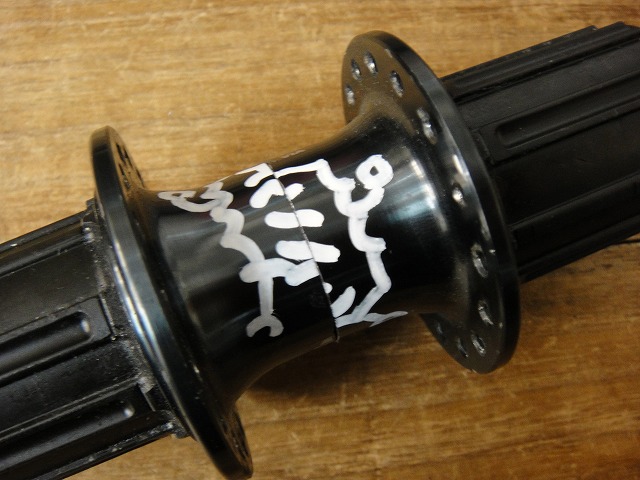
they're not glued together, as you can see.
This means I can change the phase relationship between left and right.
Even with a 32H paired-spoke phase rim, I can build it without issues.

I split it apart. I've laid paper towels on the freewheel body
to use as a cushion because I don't want the cross-section to be visible.
If I install 16 pawls before reassembly, that's a 80,000 point bonus.
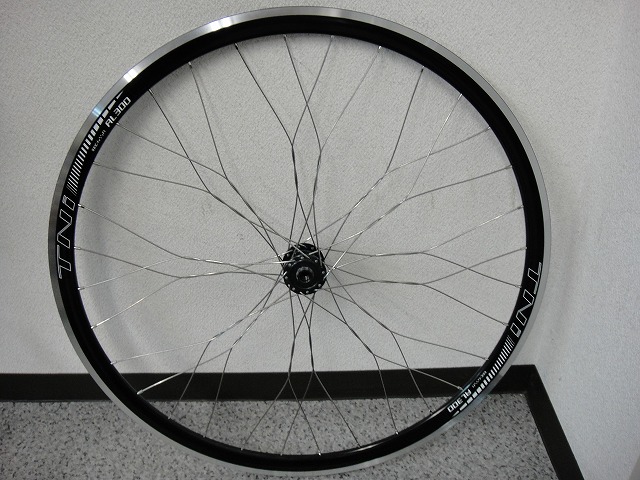
I'm in the middle of a loose build for reassembly.
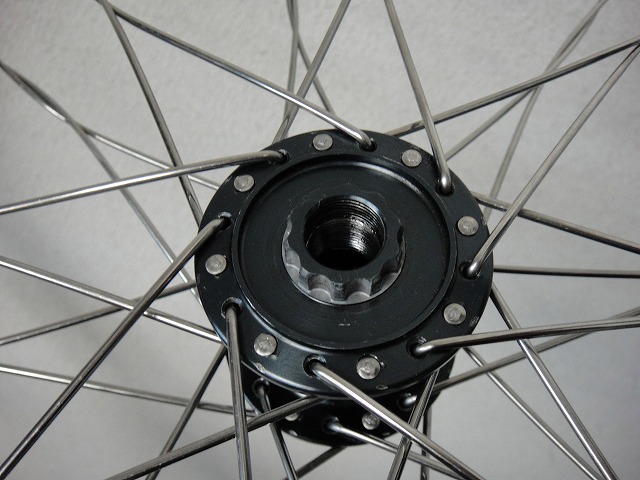
For reasons that will become clear, I'm doing a loose build with the freewheel body and shaft removed.
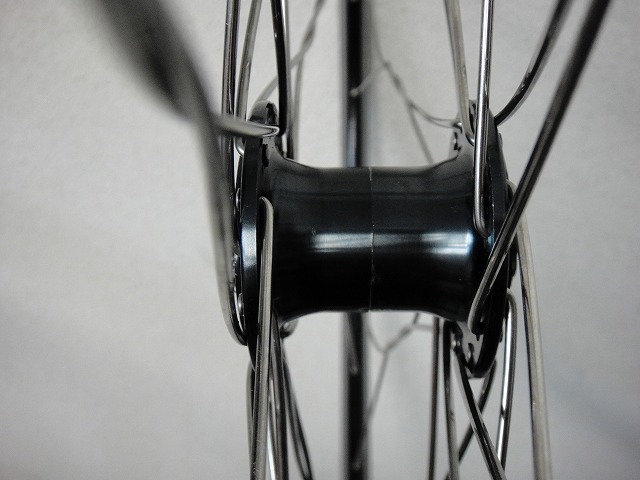
↑Tight!

Twisted lacing requires longer spokes than standard lacing.
The amount of additional length varies depending on whether you twist a 4-cross
or a 6-cross pattern.
I need to build it this way partly to investigate that,
but also to overcome the weak point I mentioned earlier.
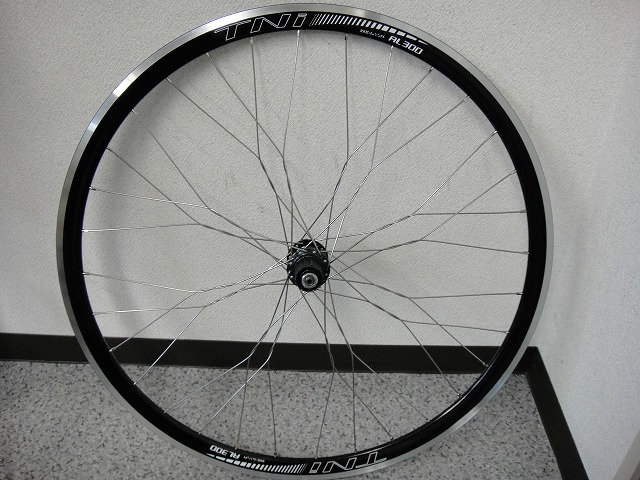
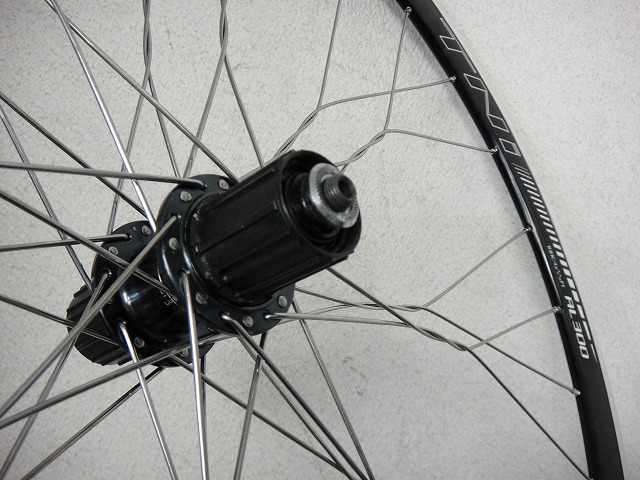
I got it built.
I tensioned it to a level that would be rideable.
Radial runout is corrected and the wheel is centered.
But then I disassembled it again.
The spokes had taken a permanent bend, so they couldn't be reused.
I released the tension and then cut them.
This wheel only existed for 10 minutes.
But I did learn something from it. Aha, I see!
Next, I'll build it as a 10-cross.
The maximum tangent lacing for 32H is 8-cross, so the spokes coming from holes
on opposite sides of the flange bisector will cross each other.
Since X-cross = X/2 cross pattern, with this lacing,
any given spoke will cross 5 times with other spokes when viewed from the side.
Of those 5 crossings, the 3rd, 4th, and 5th can be woven, counting from the hub side—
and I weave all of them. Three weaves means it's triple-cross.
The loose build is done.
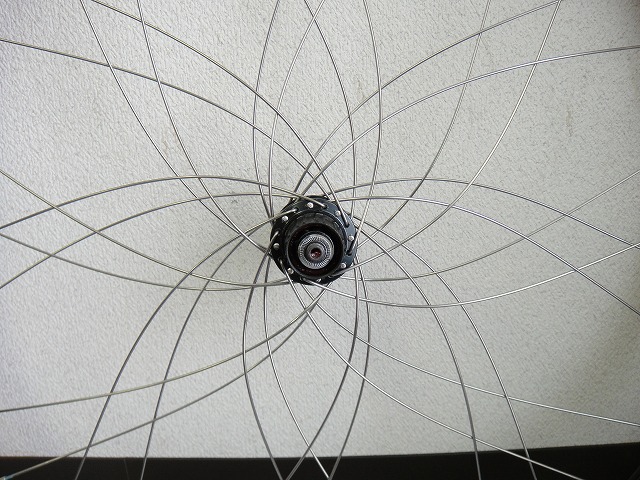
Looking at the inpokes, the 3rd crossing is on the bottom, the 4th is on top,
and the 5th is on the bottom. Three weaves total.
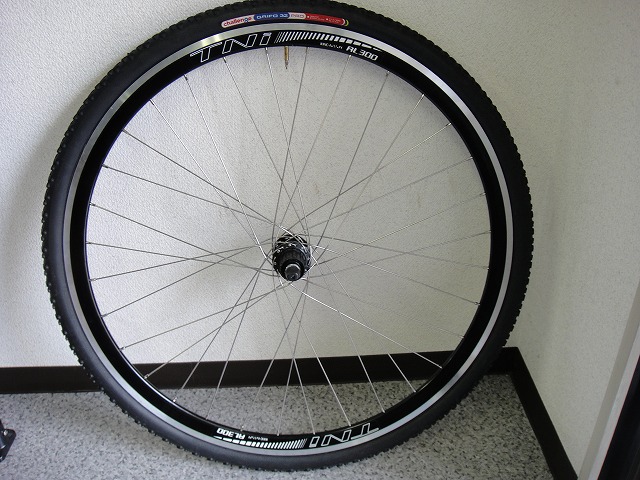
It's built.
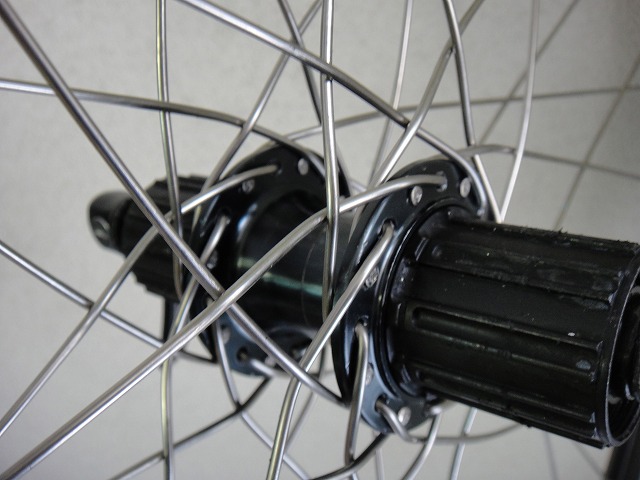
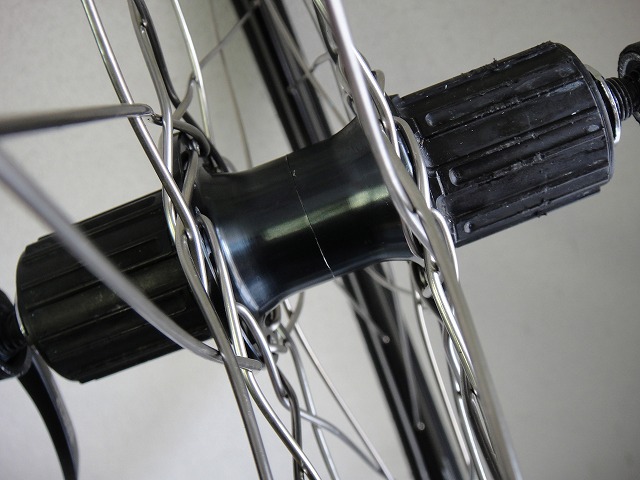
This lacing method has nothing to do with solving the weak point.
When you run two or more experiments simultaneously,
you can't get clean data.
Weakness no. 1 is something you'd notice immediately if you rode it, and it was solved.
Weakness no. 2 was probably also solved, but it needs observation over time,
so I can't draw conclusions yet.
The spokes I used in both wheel builds were
DT Competition both times.