Whether it's factory-built wheels or hand-built wheels,
there are a lot of manufacturers and wheel builders saying
"we use Sapim CX-RAY spokes."
I'd like to build the best wheel for each individual user,
but I have some doubts about this trend of "CX-RAY no matter what!"
so today I'm going to write about that.
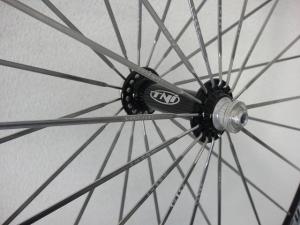
↑This wheel I built the other day — after handing it over to the customer and getting to test ride it,
it was just incredibly stiff! Brutally stiff.
It was stiff like a track wheel!
(Of course, track wheels are stiffer in the vertical direction. I can't beat those.)
The CX-RAY is an aero spoke, but it's also a lightweight spoke.
It's actually not that strong against lateral stress.
At about 65% the weight ratio to a 2.0mm plain spoke (hereafter, "weight ratio"),
the DT Revolution 2.0-1.5-2.0 is about 64.5%,
and the DT Revolution 1.8-1.5-1.8 is about 61%.
Among currently available retail products, the Revolution 1.8 is probably the lightest.
I know of two spokes lighter than that, under 60% weight ratio,
but both have been discontinued.

When the wheel is fully built,
if you cradle the spoke section in both palms and push,
or press a single spoke near its center with your finger,
the spokes flex quite a bit.
But with the wheel built with the star Aero Star Bright II type from the beginning,
there's almost no flex at all. It'd be an exaggeration to call it a perfect rigid body,
but you can feel something close to that.
With Sapim's CX-RAY, this flex is much greater.
(Just to be clear, both are built pretty solidly,
with spoke tension tightened right up to the rim's limit minus a bit of safety margin.)
Top pro riders actually use wheels built with CX-RAY around 20H
and have no particular problems with them, so maybe this lateral flex isn't such a big deal.
However, it's also true that there are requests to use wheels with almost no lateral flex,
even knowing it might be over-engineered.
So why is the adoption rate of CX-RAY so high?
Off the top of my head, I can think of three reasons.
Reason 1: Easy to build
With aero spokes, spoke rotation that happens when you tighten the nipple
during wheel building is easy to spot visually.
Plus, by holding down the flat section with a tool, you can eliminate the rotation altogether.
When building a wheel, we do a "settling-in" process,
but with aero spokes, this settling-in takes far less time and effort compared to round spokes,
and the overall wheel-building time is reduced.
Reason 2: Spoke heads rarely break off
Sapim puts the maker stamp that's normally at the very tip of the spoke head
instead near the spoke neck on the round spoke section,
so even if the head breaks, you can still see it's a Sapim.
This shows Sapim's confidence that "our spokes just don't break,"
and in reality, they're quite resistant to spoke head failure.
As a production spoke, it's probably the world's best at resisting breakage.
The same goes for straight spokes.
From the wheel builder's perspective, spokes that don't cause trouble are obviously better,
so I understand why people adopt Sapim.
Personally, I think with CX-RAY you're buying the spoke head durability
more than you're buying the aero performance.

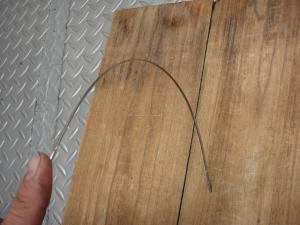
※I'm inserting this image because endless text doesn't seem right either.
It's not related to the main text.
Though inserting this image also seems questionable.
Reason 3: It's light
Let's say you have two rear wheels with identical specs except for the spokes.
One is built with DT Competition 2.0-1.8-2.0,
and the other with CX-RAY 2.0-(0.9-2.3)-2.0,
and the CX-RAY wheel turns out to be 40g lighter.
Depending on the spoke count, this is entirely plausible.
If one wheel is 825g and the other is 785g,
it's natural to think "the 785g wheel is better!"
but the 825g wheel could also ride firmer and better,
depending on how it's built.
Personally, I disagree with thinking solely about lightness
for parts other than the rim and nipples (I've written about this before),
but from the manufacturer's perspective, wanting to show lighter numbers on the spec sheet,
it makes sense that lighter spokes are preferred.
I don't use aero spokes on the freewheel side of my own rear wheel,
regardless of whether it's CX-RAY or not.
(Though I don't push this thinking on other people.)
CX-RAY is an excellent spoke,
but it's not the optimal choice in every situation.
And that optimal choice itself varies
depending on the rider's weight and intended use,
even when building with the same materials.
Hand-built wheels have an advantage over factory-built wheels in this regard.
It's my specialty as well.
there are a lot of manufacturers and wheel builders saying
"we use Sapim CX-RAY spokes."
I'd like to build the best wheel for each individual user,
but I have some doubts about this trend of "CX-RAY no matter what!"
so today I'm going to write about that.
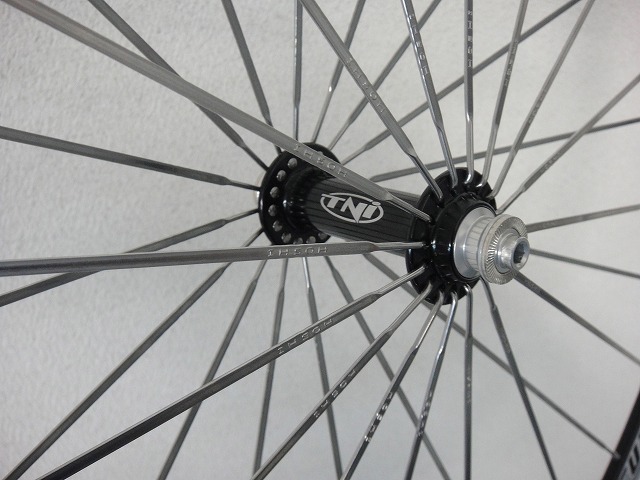
↑This wheel I built the other day — after handing it over to the customer and getting to test ride it,
it was just incredibly stiff! Brutally stiff.
It was stiff like a track wheel!
(Of course, track wheels are stiffer in the vertical direction. I can't beat those.)
The CX-RAY is an aero spoke, but it's also a lightweight spoke.
It's actually not that strong against lateral stress.
At about 65% the weight ratio to a 2.0mm plain spoke (hereafter, "weight ratio"),
the DT Revolution 2.0-1.5-2.0 is about 64.5%,
and the DT Revolution 1.8-1.5-1.8 is about 61%.
Among currently available retail products, the Revolution 1.8 is probably the lightest.
I know of two spokes lighter than that, under 60% weight ratio,
but both have been discontinued.
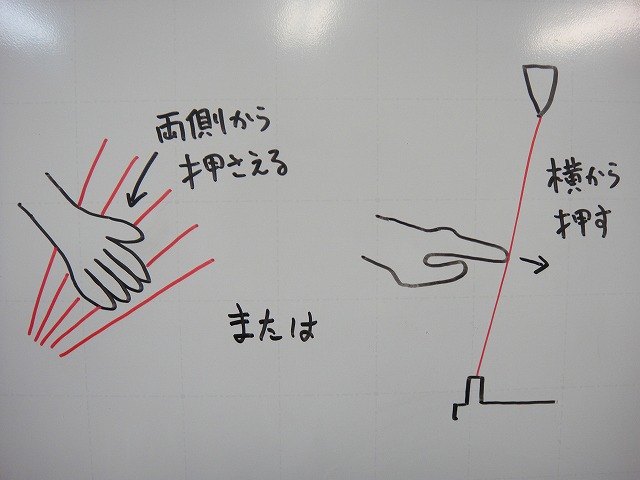
When the wheel is fully built,
if you cradle the spoke section in both palms and push,
or press a single spoke near its center with your finger,
the spokes flex quite a bit.
But with the wheel built with the star Aero Star Bright II type from the beginning,
there's almost no flex at all. It'd be an exaggeration to call it a perfect rigid body,
but you can feel something close to that.
With Sapim's CX-RAY, this flex is much greater.
(Just to be clear, both are built pretty solidly,
with spoke tension tightened right up to the rim's limit minus a bit of safety margin.)
Top pro riders actually use wheels built with CX-RAY around 20H
and have no particular problems with them, so maybe this lateral flex isn't such a big deal.
However, it's also true that there are requests to use wheels with almost no lateral flex,
even knowing it might be over-engineered.
So why is the adoption rate of CX-RAY so high?
Off the top of my head, I can think of three reasons.
Reason 1: Easy to build
With aero spokes, spoke rotation that happens when you tighten the nipple
during wheel building is easy to spot visually.
Plus, by holding down the flat section with a tool, you can eliminate the rotation altogether.
When building a wheel, we do a "settling-in" process,
but with aero spokes, this settling-in takes far less time and effort compared to round spokes,
and the overall wheel-building time is reduced.
Reason 2: Spoke heads rarely break off
Sapim puts the maker stamp that's normally at the very tip of the spoke head
instead near the spoke neck on the round spoke section,
so even if the head breaks, you can still see it's a Sapim.
This shows Sapim's confidence that "our spokes just don't break,"
and in reality, they're quite resistant to spoke head failure.
As a production spoke, it's probably the world's best at resisting breakage.
The same goes for straight spokes.
From the wheel builder's perspective, spokes that don't cause trouble are obviously better,
so I understand why people adopt Sapim.
Personally, I think with CX-RAY you're buying the spoke head durability
more than you're buying the aero performance.

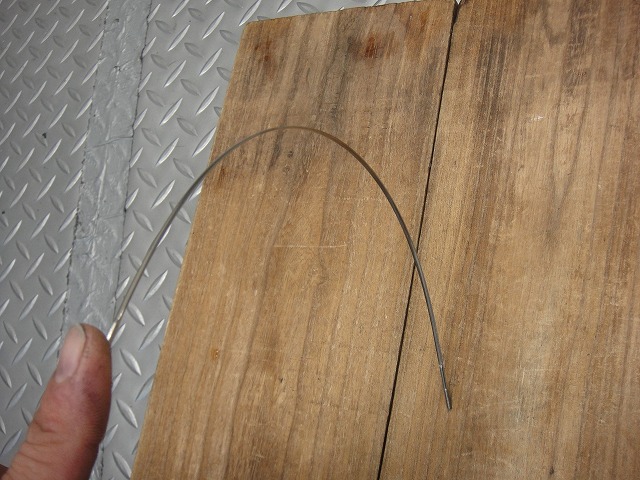
※I'm inserting this image because endless text doesn't seem right either.
It's not related to the main text.
Though inserting this image also seems questionable.
Reason 3: It's light
Let's say you have two rear wheels with identical specs except for the spokes.
One is built with DT Competition 2.0-1.8-2.0,
and the other with CX-RAY 2.0-(0.9-2.3)-2.0,
and the CX-RAY wheel turns out to be 40g lighter.
Depending on the spoke count, this is entirely plausible.
If one wheel is 825g and the other is 785g,
it's natural to think "the 785g wheel is better!"
but the 825g wheel could also ride firmer and better,
depending on how it's built.
Personally, I disagree with thinking solely about lightness
for parts other than the rim and nipples (I've written about this before),
but from the manufacturer's perspective, wanting to show lighter numbers on the spec sheet,
it makes sense that lighter spokes are preferred.
I don't use aero spokes on the freewheel side of my own rear wheel,
regardless of whether it's CX-RAY or not.
(Though I don't push this thinking on other people.)
CX-RAY is an excellent spoke,
but it's not the optimal choice in every situation.
And that optimal choice itself varies
depending on the rider's weight and intended use,
even when building with the same materials.
Hand-built wheels have an advantage over factory-built wheels in this regard.
It's my specialty as well.