Another day with wheels (and so on).

I received a rear wheel built with a Suntour Sprint hub and
a Mavic GP4 rim.
32 holes.

The GP4 is one model before the final version.
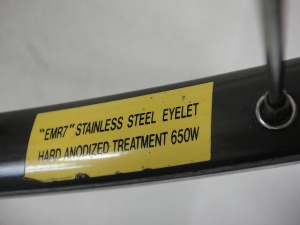
↑The marking shows that the hard anodize electrolytic treatment was done at 650W,
but there are also markings for 650V, so if it's the same process, that means 1A.
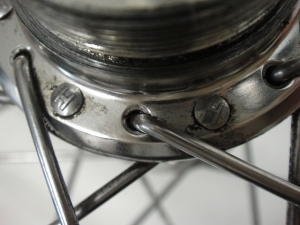
The spokes are star-marked Starbright #14 (2.0mm) plain.
If they have an H stamp, they're definitely the "old" Starbright
from when Starbright was definitely Starbright.
These days it seems there's a mix of stainless steel spokes with H stamps that don't have star markings,
but why go out of your way to make an already hard-to-distinguish product even harder to distinguish?
I wrote the other day about using magnetism to tell them apart,
but the "old" Starbright and today's Starbright
don't seem to be the same thing either.
When I wrote about Ambrogio rims, I mentioned "once a technique is lost, it cannot be reproduced,"
and I think there's a similar break somewhere here.
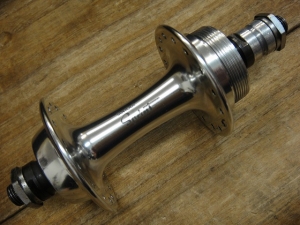
I disassembled and lightly cleaned the hub.
I do this before building Evolite hubs and Leaf hubs too.
That's because oil can seep from the freebody and form a film
in the hub flange holes.
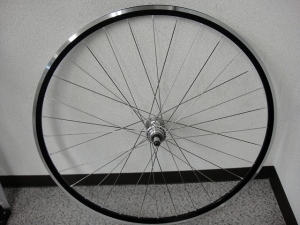
All built.
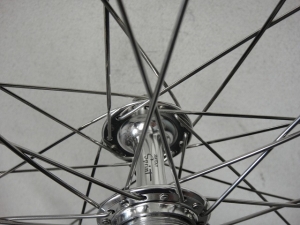
Half-competition 48-hole lacing pattern.
I'll do the tie-and-solder later, but there's something I want to check more carefully.
This is a customer's wheel, so sorry about that.
It's something I can't write about later here.
I received a comment the other day, and
today is a good opportunity to answer it.
The question was: "What's the balance like on a wheel built with an FH9000?"
Well, it can't be good.
That said, it's not just Dura-Ace that's bad.
Current Shimano 11-speed rear hubs, including the official FH-9000,
almost all have a right flange width of less than 20mm,
so there isn't really much difference.
Evolite hubs and Leaf hubs are also under 20mm.
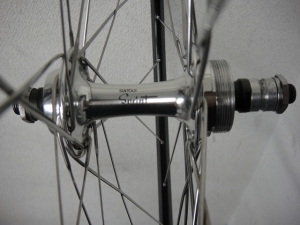
The Sprint hub this time is just under 22mm, and that 2mm difference is really significant.
The right flange width (and the resulting dishing amount) is such a major factor
that it completely changes the correction potential seen from the perspective of equal-spoke-count lacing versus unequal-spoke-count lacing.
As I had expected, when I built the Sprint hub with different spoke counts and different diameters on left and right,
it became the kind of wheel where I occasionally think "this one might not even need tie-and-solder?"
In the extreme argument about energy issues, there's "can we really go back to a life without electricity now?"
Similarly, "can we really go back to the 8-speed era now, making dishing amount the primary concern?" is obviously impossible,
so all I can do now is search for the best method with current hubs.
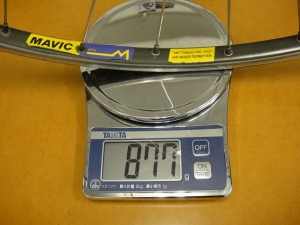
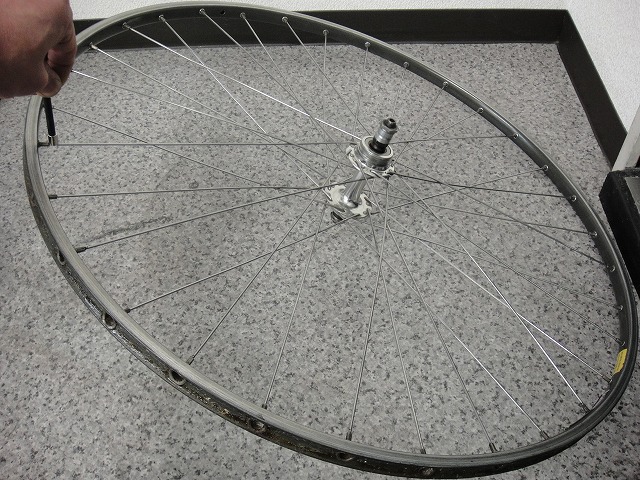
↑Wheel and rim before rebuild

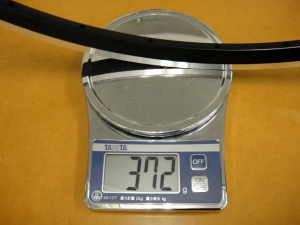
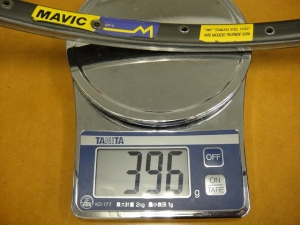
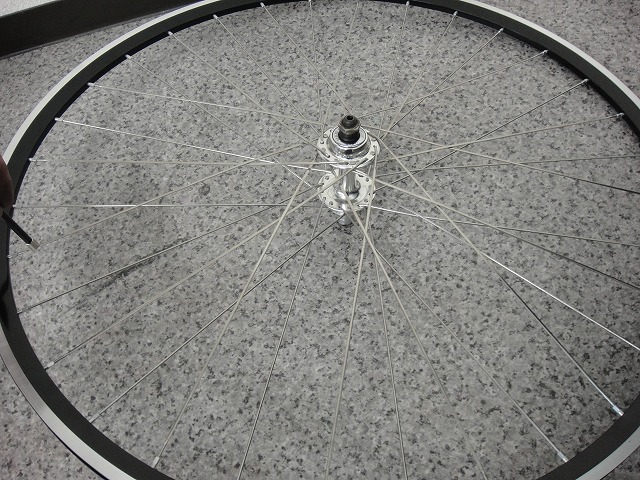
↑Wheel and rim after rebuild
(The rim came out slightly on the lighter side)
The subject here isn't "look how much lighter it got!"
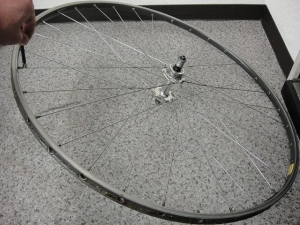
As you can see if you look at the photos, the iron content of the Starbright, or rather
the "old" Starbright, is nothing to sneeze at.
The wheel lifts up to this angle.
The rim and wheel weights are as shown before.
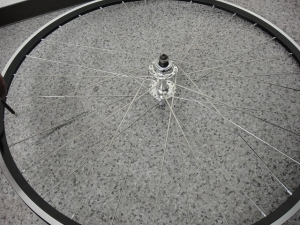
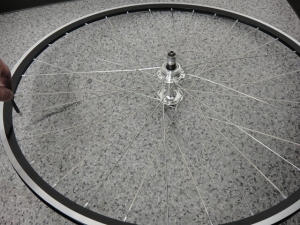
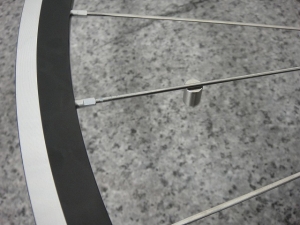
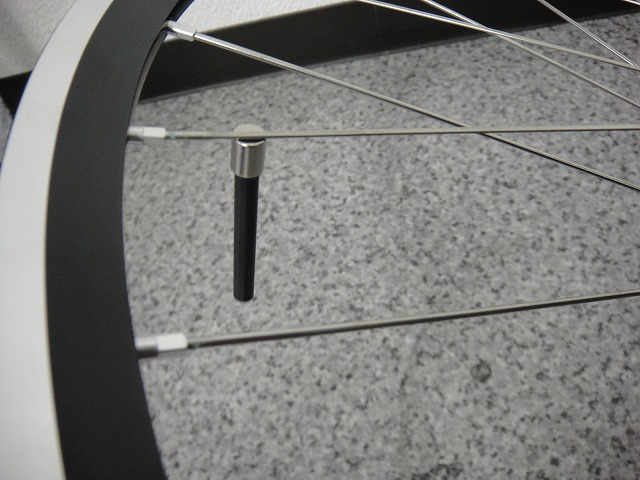
With CX-RAY:
The magnet attracts, but the wheel doesn't lift even 1mm.
This wheel is actually lighter, you know.
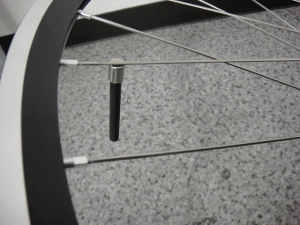
The magnetism is about at the level of hanging a magnet with an iron rod.
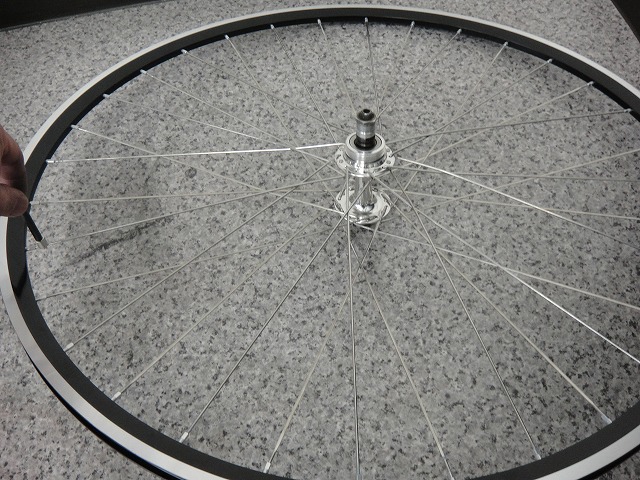
With Compe:
The magnet attracts similarly, but it's weaker than CX-RAY.
The wheel doesn't lift even 1mm.
With magnet plus iron rod, it wouldn't hang.
With just the magnet alone, it can stick.
Naturally, all the magnets are the same ones.
Bonus
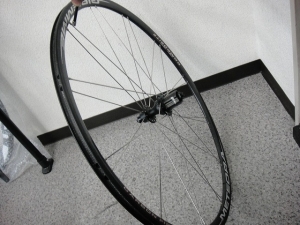
While searching for wheels built with "old" Starbright that are in the shop now,
my personal freewheel side built with a Gipyenne Meteorora rim turned out to be one.
This is an Aero Starbright III type.
With the same magnet as before, I was able to stand up the wheel that was lying down,
but if I stood it completely upright, the wheel would stand by itself, so I tilted it slightly as in the image.
The strong attraction is
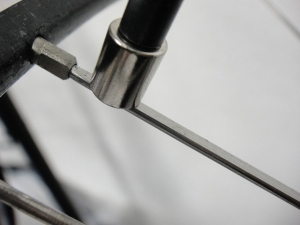
mainly because of the spoke shape that fits perfectly with the magnet.
There may be a change in magnetism (becoming stronger) due to work hardening when flattening,
but since they originally stick so strongly to the magnet,
I can't tell the difference.

I received a rear wheel built with a Suntour Sprint hub and
a Mavic GP4 rim.
32 holes.
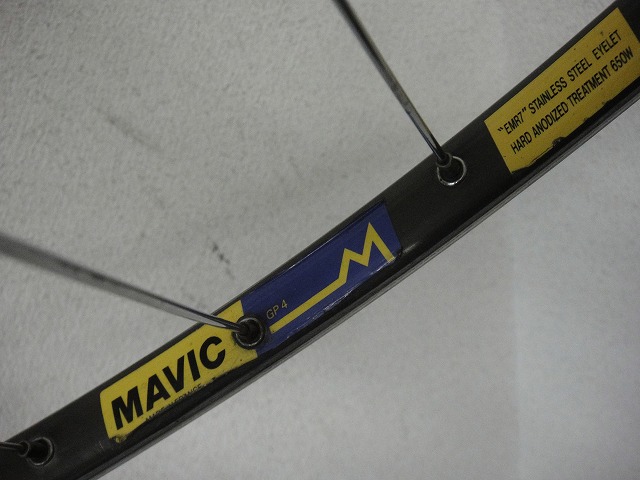
The GP4 is one model before the final version.
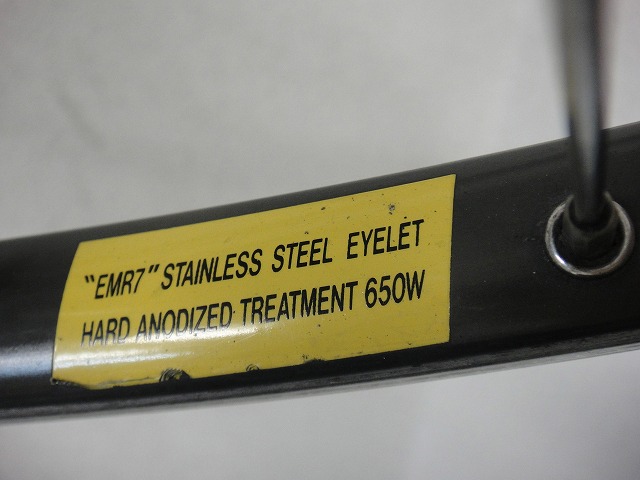
↑The marking shows that the hard anodize electrolytic treatment was done at 650W,
but there are also markings for 650V, so if it's the same process, that means 1A.
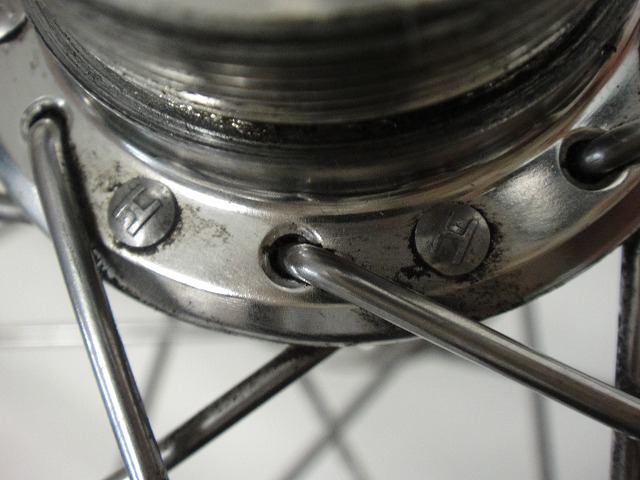
The spokes are star-marked Starbright #14 (2.0mm) plain.
If they have an H stamp, they're definitely the "old" Starbright
from when Starbright was definitely Starbright.
These days it seems there's a mix of stainless steel spokes with H stamps that don't have star markings,
but why go out of your way to make an already hard-to-distinguish product even harder to distinguish?
I wrote the other day about using magnetism to tell them apart,
but the "old" Starbright and today's Starbright
don't seem to be the same thing either.
When I wrote about Ambrogio rims, I mentioned "once a technique is lost, it cannot be reproduced,"
and I think there's a similar break somewhere here.
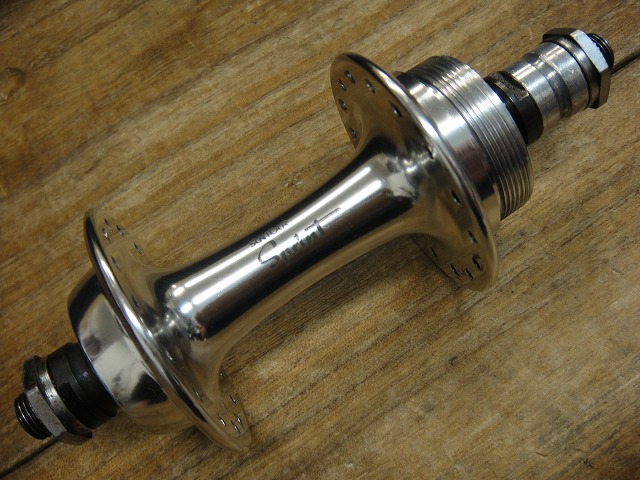
I disassembled and lightly cleaned the hub.
I do this before building Evolite hubs and Leaf hubs too.
That's because oil can seep from the freebody and form a film
in the hub flange holes.
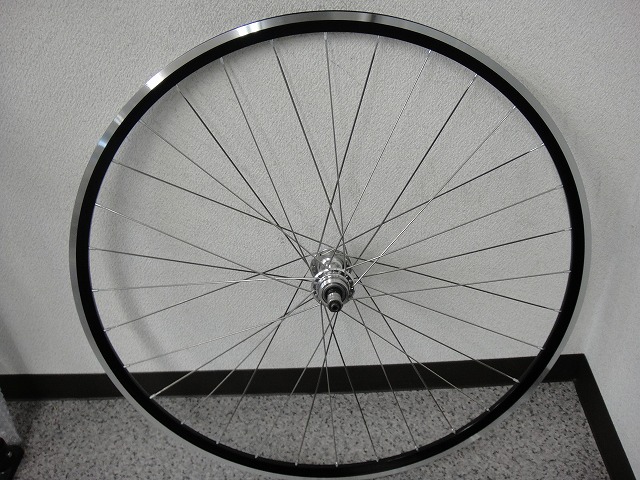
All built.
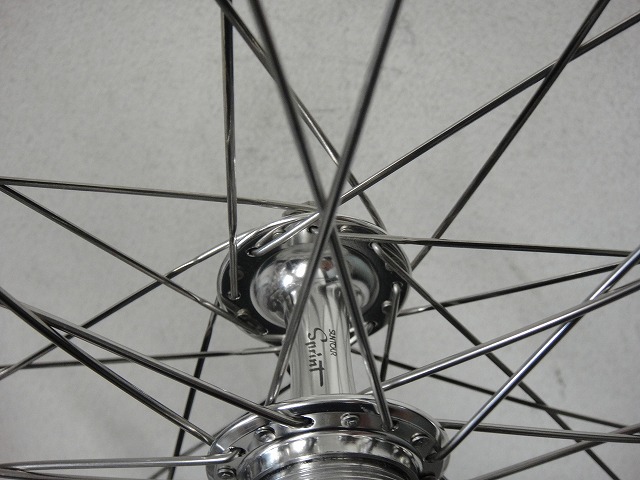
Half-competition 48-hole lacing pattern.
I'll do the tie-and-solder later, but there's something I want to check more carefully.
This is a customer's wheel, so sorry about that.
It's something I can't write about later here.

I received a comment the other day, and
today is a good opportunity to answer it.
The question was: "What's the balance like on a wheel built with an FH9000?"
Well, it can't be good.
That said, it's not just Dura-Ace that's bad.
Current Shimano 11-speed rear hubs, including the official FH-9000,
almost all have a right flange width of less than 20mm,
so there isn't really much difference.
Evolite hubs and Leaf hubs are also under 20mm.
The Sprint hub this time is just under 22mm, and that 2mm difference is really significant.
The right flange width (and the resulting dishing amount) is such a major factor
that it completely changes the correction potential seen from the perspective of equal-spoke-count lacing versus unequal-spoke-count lacing.
As I had expected, when I built the Sprint hub with different spoke counts and different diameters on left and right,
it became the kind of wheel where I occasionally think "this one might not even need tie-and-solder?"
In the extreme argument about energy issues, there's "can we really go back to a life without electricity now?"
Similarly, "can we really go back to the 8-speed era now, making dishing amount the primary concern?" is obviously impossible,
so all I can do now is search for the best method with current hubs.
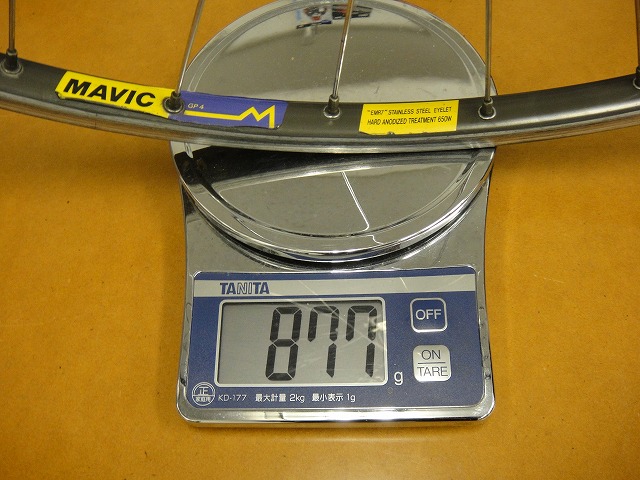
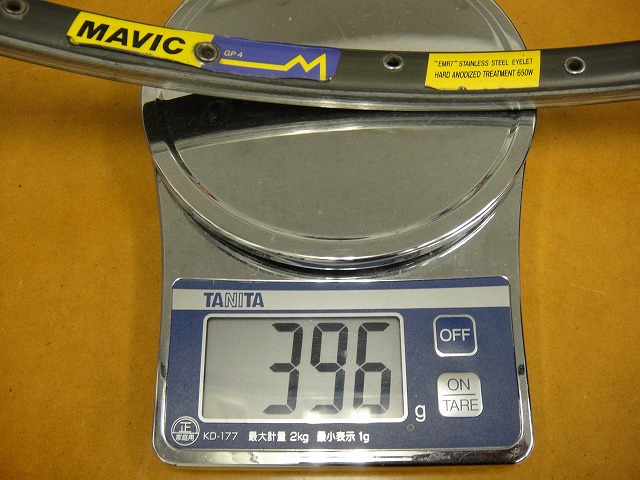
↑Wheel and rim before rebuild


↑Wheel and rim after rebuild
(The rim came out slightly on the lighter side)
The subject here isn't "look how much lighter it got!"
As you can see if you look at the photos, the iron content of the Starbright, or rather
the "old" Starbright, is nothing to sneeze at.
The wheel lifts up to this angle.
The rim and wheel weights are as shown before.
With CX-RAY:
The magnet attracts, but the wheel doesn't lift even 1mm.
This wheel is actually lighter, you know.
The magnetism is about at the level of hanging a magnet with an iron rod.

With Compe:
The magnet attracts similarly, but it's weaker than CX-RAY.
The wheel doesn't lift even 1mm.
With magnet plus iron rod, it wouldn't hang.
With just the magnet alone, it can stick.
Naturally, all the magnets are the same ones.
Bonus
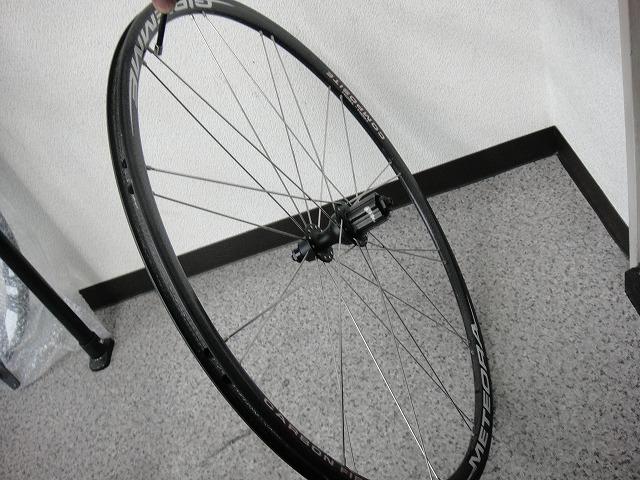
While searching for wheels built with "old" Starbright that are in the shop now,
my personal freewheel side built with a Gipyenne Meteorora rim turned out to be one.
This is an Aero Starbright III type.
With the same magnet as before, I was able to stand up the wheel that was lying down,
but if I stood it completely upright, the wheel would stand by itself, so I tilted it slightly as in the image.
The strong attraction is
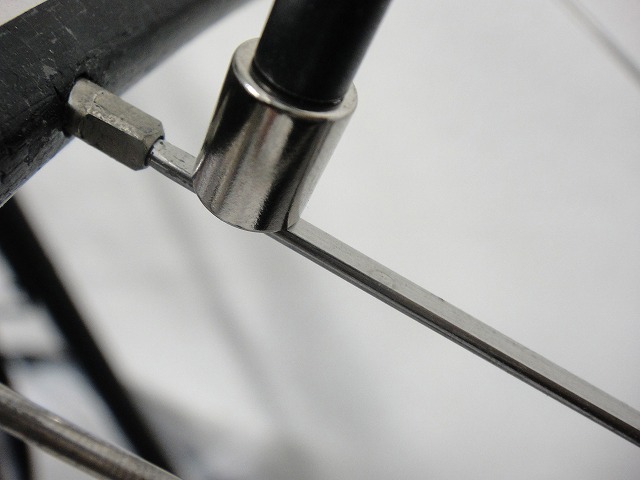
mainly because of the spoke shape that fits perfectly with the magnet.
There may be a change in magnetism (becoming stronger) due to work hardening when flattening,
but since they originally stick so strongly to the magnet,
I can't tell the difference.