Wheels again today (and so on).

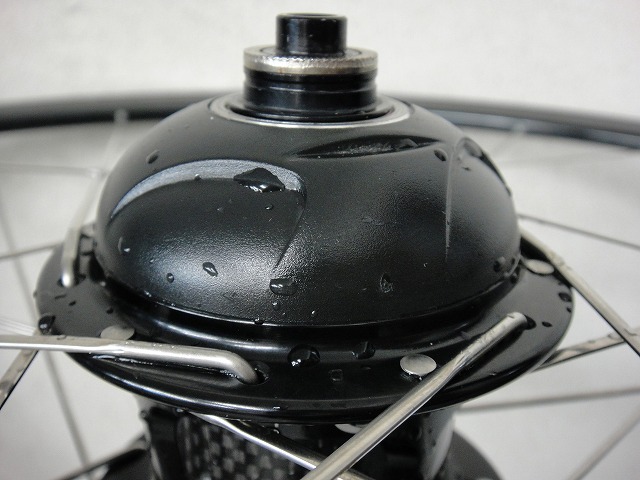
A customer left me with a Powertap SL+ hub, 24-hole, to build a wheel.
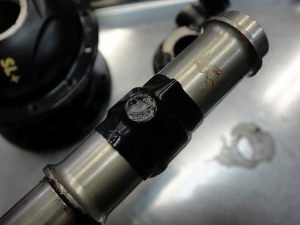
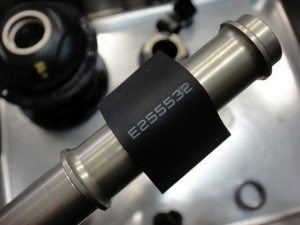
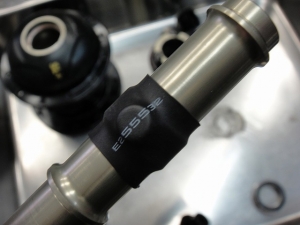
Right off the bat—heat shrink tubing, no questions asked.
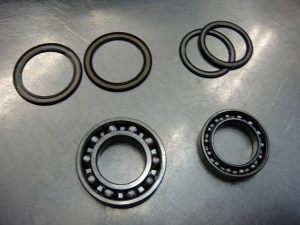
The bearings on the non-freewheel side were a bit rough,
so I thought they might need replacing, but after cleaning
and re-greasing they smoothed out well enough, so I left them.
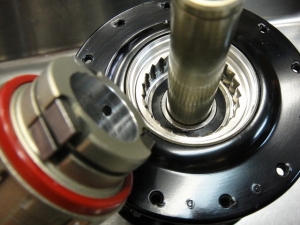
I forgot to take a photo before cleaning, but they weren't that dirty to begin with.
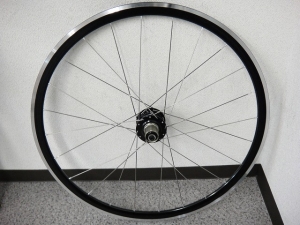
Built!
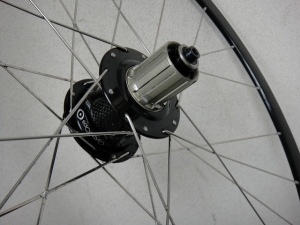
Half-comp 4-cross lacing with bracing. Hmm, looks like "that thing" showed up again...
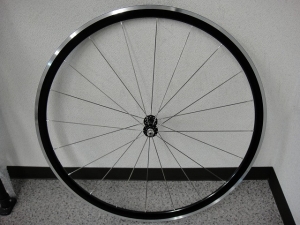
The customer also asked for a front wheel, so I built that too.
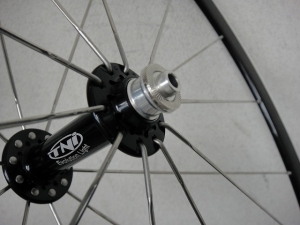
Evolite hub, 20-hole, CX-RAY inpoke radial lacing.
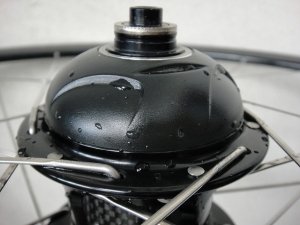
I can't go into details, but there's a certain phenomenon that only occurs—and shows up distinctly—when you do asymmetric left-right lacing on larger flanges. At this size you're guaranteed to see it. With radial lacing (0-cross), you won't get it regardless of flange size, so if I were to describe the conditions where it shows up most, it'd be: "large flanges with the biggest crossing angle possible in tangential lacing." That's what this blog calls ultimate tangential or true ultimate tangential lacing. The size of the hub body doesn't matter. You get the same effect depending on how you lace it, whether it's an Amerac hub (small body) or a double-threaded track hub (no body).
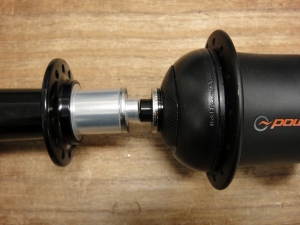
What's puzzling is that from a Leaf hub perspective on the non-freewheel side, the Powertap G3 hub has a sufficiently large flange that you'd expect it to show something about halfway between a Leaf and an older Powertap for that phenomenon, but the difference is subtle enough that it's not really striking.
In terms of flange diameter alone, the G3 hub sits about midway between the Leaf and the older Powertap...
If spoke angle were the deciding factor, you'd think you'd see it with a small flange and super-deep rim, but you don't get it with those conditions.
None of this affects wheel quality, so don't worry about it.
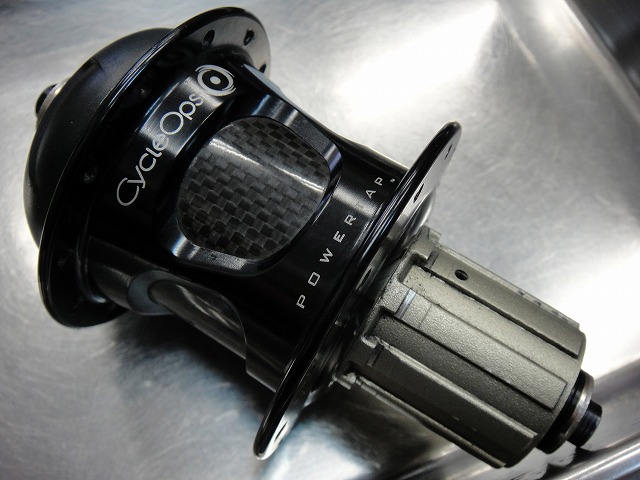
A customer left me with a Powertap SL+ hub, 24-hole, to build a wheel.
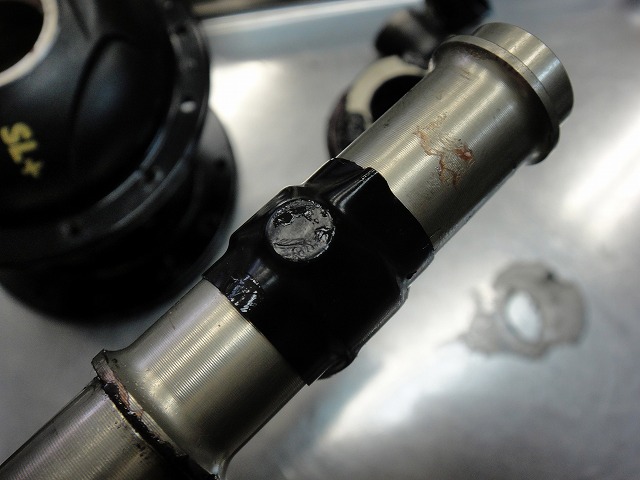
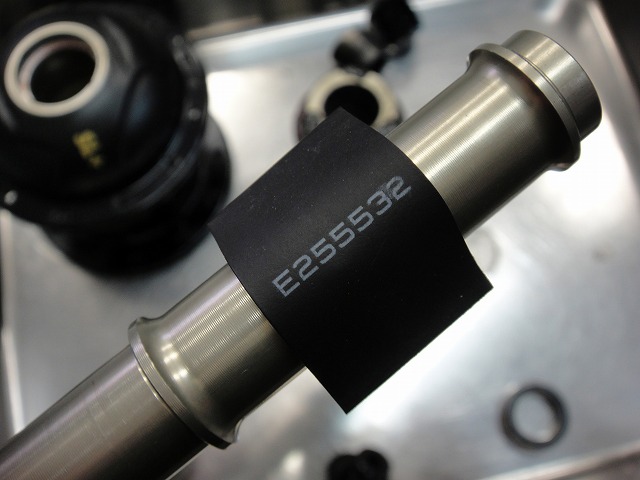

Right off the bat—heat shrink tubing, no questions asked.

The bearings on the non-freewheel side were a bit rough,
so I thought they might need replacing, but after cleaning
and re-greasing they smoothed out well enough, so I left them.
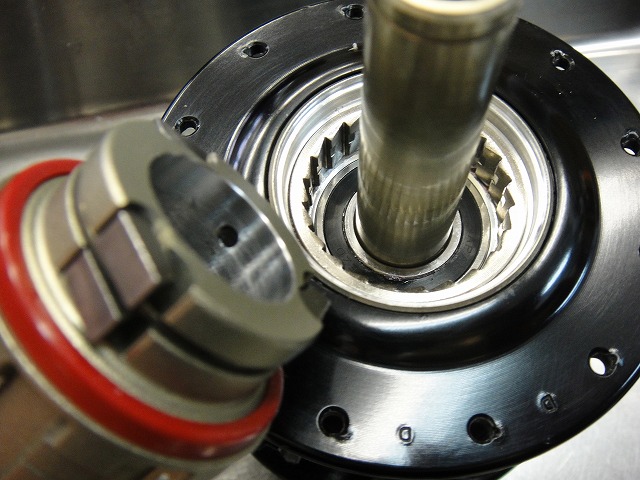
I forgot to take a photo before cleaning, but they weren't that dirty to begin with.

Built!
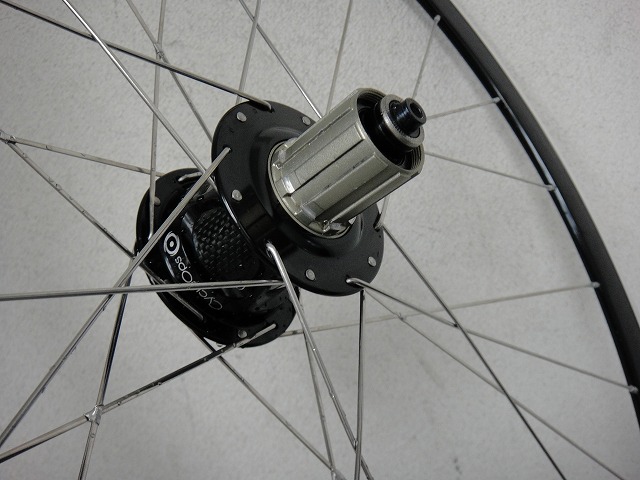
Half-comp 4-cross lacing with bracing. Hmm, looks like "that thing" showed up again...
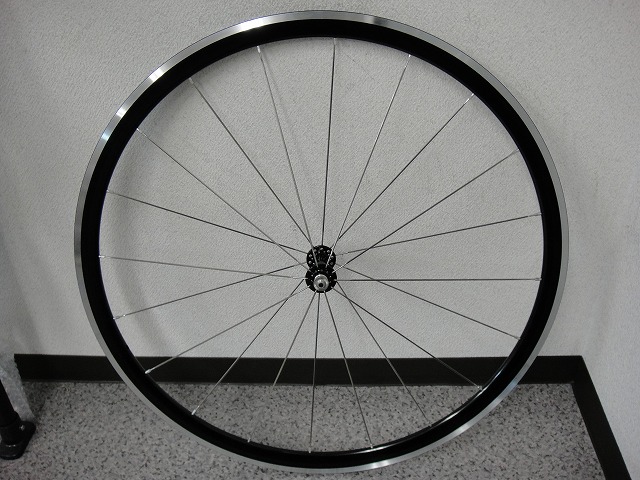
The customer also asked for a front wheel, so I built that too.
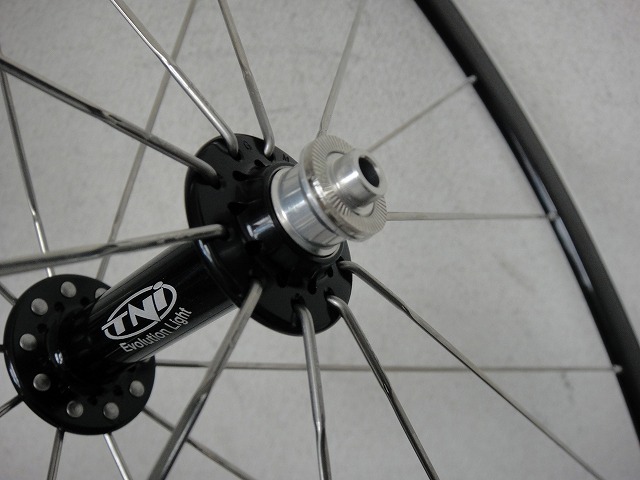
Evolite hub, 20-hole, CX-RAY inpoke radial lacing.
I can't go into details, but there's a certain phenomenon that only occurs—and shows up distinctly—when you do asymmetric left-right lacing on larger flanges. At this size you're guaranteed to see it. With radial lacing (0-cross), you won't get it regardless of flange size, so if I were to describe the conditions where it shows up most, it'd be: "large flanges with the biggest crossing angle possible in tangential lacing." That's what this blog calls ultimate tangential or true ultimate tangential lacing. The size of the hub body doesn't matter. You get the same effect depending on how you lace it, whether it's an Amerac hub (small body) or a double-threaded track hub (no body).
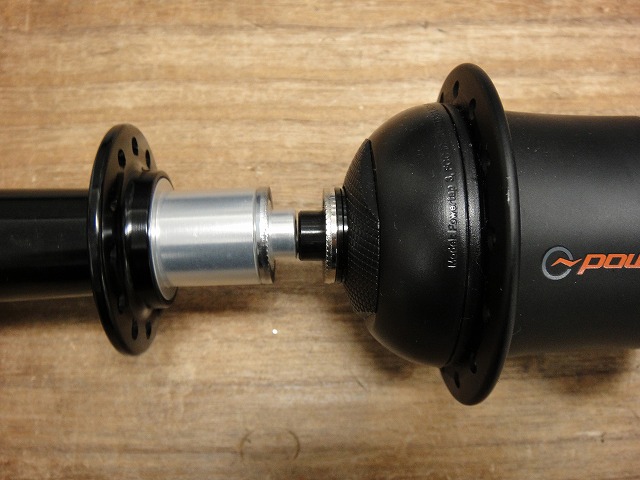
What's puzzling is that from a Leaf hub perspective on the non-freewheel side, the Powertap G3 hub has a sufficiently large flange that you'd expect it to show something about halfway between a Leaf and an older Powertap for that phenomenon, but the difference is subtle enough that it's not really striking.
In terms of flange diameter alone, the G3 hub sits about midway between the Leaf and the older Powertap...
If spoke angle were the deciding factor, you'd think you'd see it with a small flange and super-deep rim, but you don't get it with those conditions.
None of this affects wheel quality, so don't worry about it.