I built a front wheel with a TNi Carbon 50 rim!
I've already built a rear wheel with an Aero 80, but
since I used completely different approaches for front and rear, I'll write about them separately.
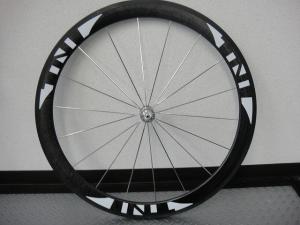
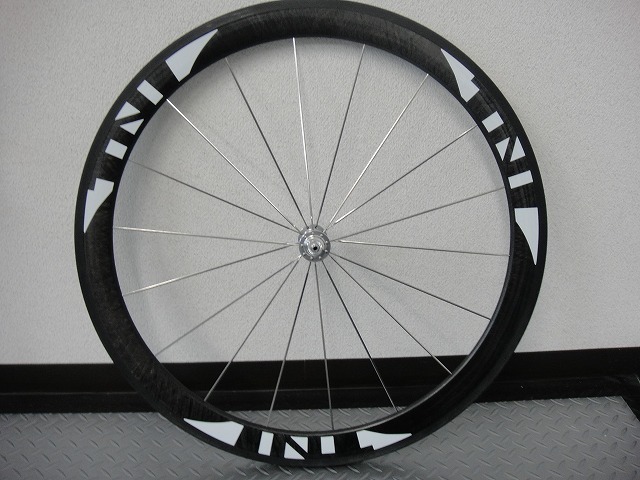
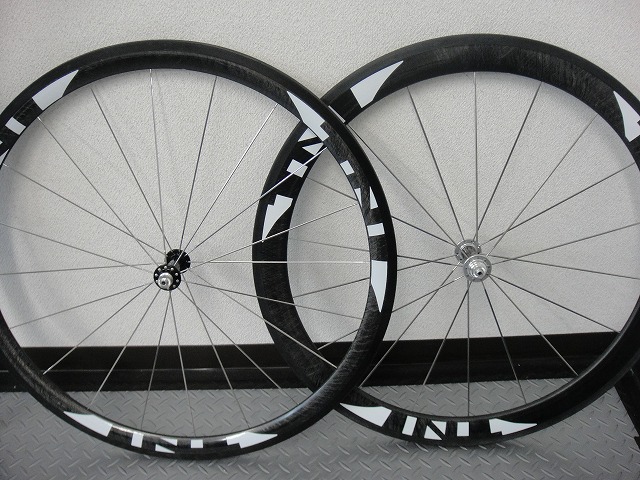
↑It looks like this. Pretty sharp, right? Unlike the Carbon 38,
I had to keep spoke tension under 100 kgf, which really made me think about things.
The rim has no stated weight spec, but my actual measurement came in at 398g.
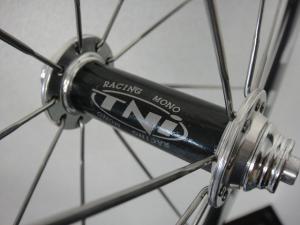
First, this is a perk of doing an 18H front wheel only.
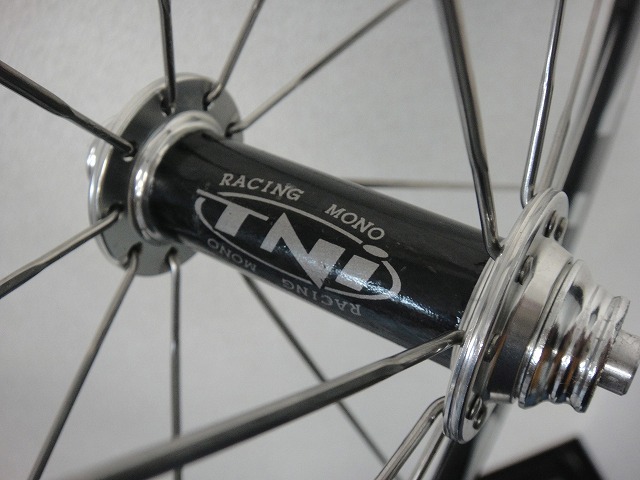
TNi makes a hub called the "Carbon Front Hub."
It's been around for about 15 years, but here's the thing—it only comes in 18H.
It's not that 18H stock got leftover; that's just the spec they make.
Since I decided to build the front wheel in 18H, I went with it.
The spokes are Sapim CX. Not CX-RAY.
Like the Hoshi Aero Star Bright II model I did recently, these need a hub with slits in the spoke holes
or they won't thread through and you can't build the wheel.
I laced these as outpokes because the rim is pretty tall.
My personal dividing line for whether to go inpoke is around 50mm rim depth.
(Though honestly, I almost never see inpoke lacing out there anyway.)
About why I deliberately chose CX spokes.
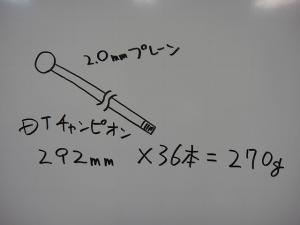
It comes down to my usual spoke specific gravity discussion.
There's some overlap with what I've said before.
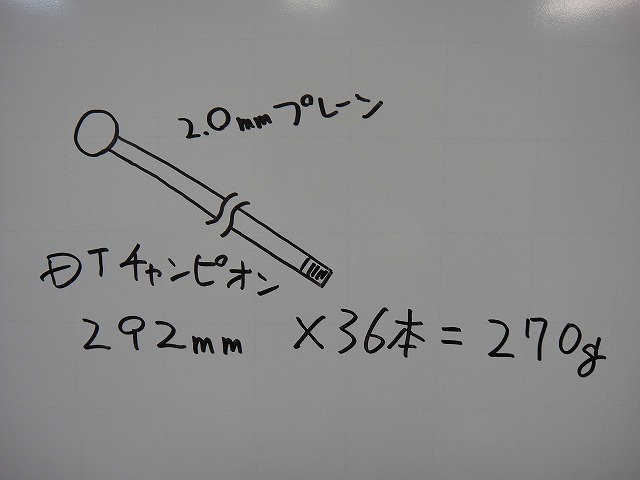
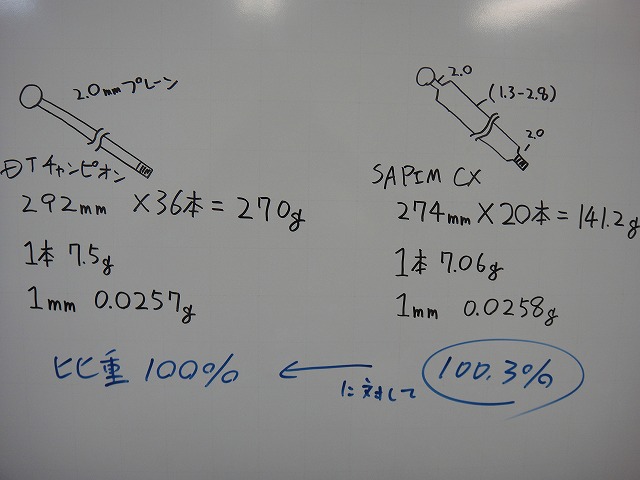
When I measured a bundle of 36 DT Champion 2.0mm plain spokes, 292mm long,
they weighed 270g.

Calculating the weight per spoke: 270g ÷ 36 spokes
comes out to 7.5g per spoke.
Dividing that by length gives me 0.0257g per mm.
This is my approach: if I set 2.0mm plain spokes at 1 mm per gram as my 100% baseline,
and calculate all other spokes' specific gravities against it,
I can estimate spoke weight quite accurately even when length or spoke count changes.
(In practice, I've taken many more samples to establish that 0.0257g figure.)
If I had 2.0mm plain spokes at 286mm length, 24 spokes,
it would be 0.0257 × 286 × 24 = 310g.
Then add the hub, nipples, and rim weight and you get the finished wheel weight without actually building it.
If I swapped everything to CX-RAY instead,
since CX-RAY's specific gravity is 65.0%,
I'd calculate 310 × 0.65 = 201g.
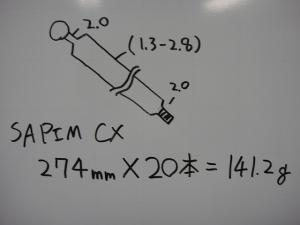
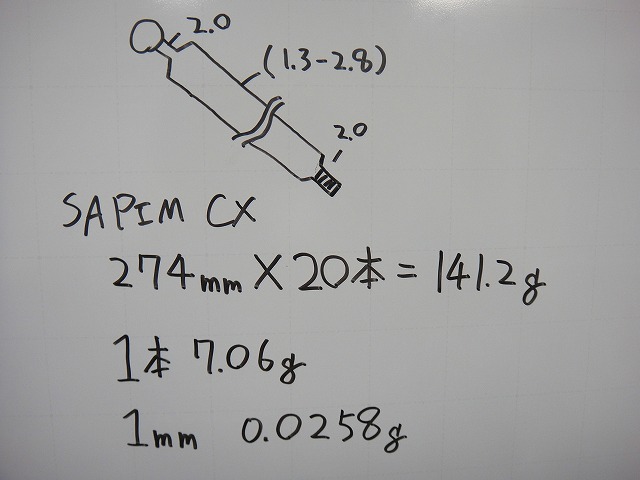
So I did the same calculation for Sapim CX.
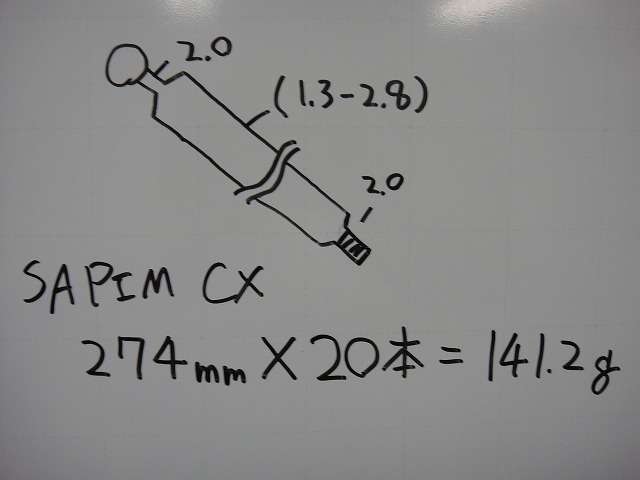
The CX has the thin aero section at 1.3mm and the thick section at 2.8mm,
with the neck and threads at 2.0mm.
At 274mm in a bundle of 20, they weighed 141.2g.
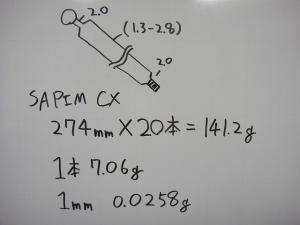
So that's 7.06g per spoke.
The weight per mm came out to 0.0258g.

The CX came out slightly heavier than 2.0mm plain spokes.
A full 100.3%!
This is the first time in my measurements I've found a spoke with specific gravity over 100%.
When the specific gravity is essentially the same, it means the cross-sectional area of the 1.3mm × 2.8mm aero section
is roughly equivalent to a 2.0mm round spoke.
As a side note: Sapim publishes the weight of spoke bundles at 260mm in quantities of 64.
Sapim's plain spokes are the "Leader" model—Leader at 260mm, 64 spokes is listed at 421g in the catalog.
For CX at the same specs, it's 423g in the catalog.
So by Sapim's own catalog figures, CX is 100.4% the weight of Leader (≈ DT Champion).
This number backs up the validity of my method of estimating spoke bundle weight using specific gravity.
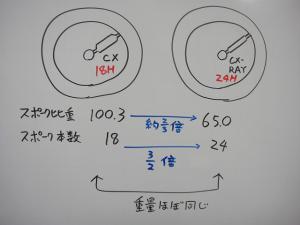
TNi's carbon hubs don't come in 24H, but
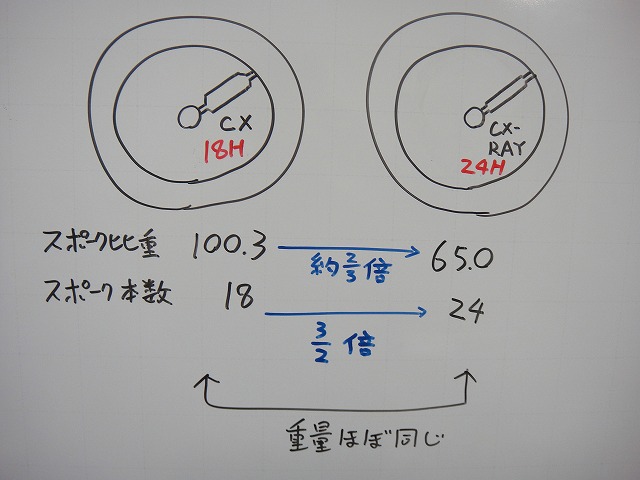
let me compare building with CX 18H versus CX-RAY 24H,
assuming the hub, nipples, and rim are otherwise identical.
Compared to the CX 18H front wheel, the spoke specific gravity would be about 1.5 times heavier.
But the spoke count drops to 2/3, so
these two front wheels end up roughly the same weight.
A 50mm rim with 24H looks a bit visually busy, honestly.
This wheel is a customer order for criterium racing.
If I had to choose between these two for crit use myself,
I'd pick the CX 18H.
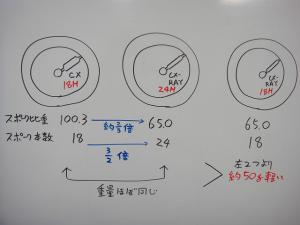
But what if we compare to CX-RAY 18H instead?
The CX-RAY 18H would be about 50g lighter than the previous two options.
For climbing, that might be better.
But I didn't want to use CX-RAY this time.
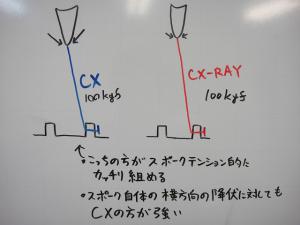
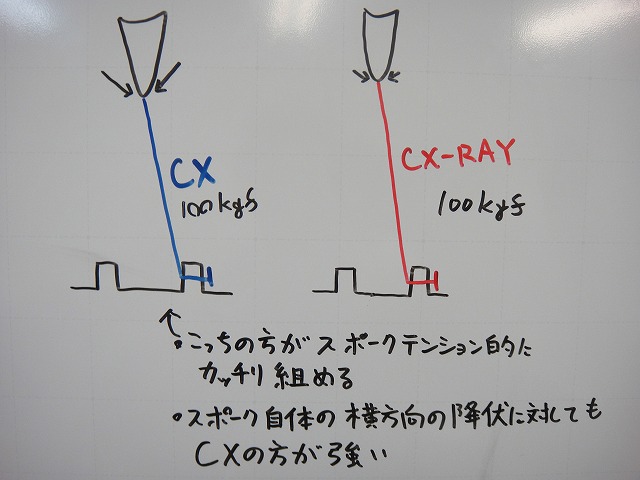
It's because the spoke tension limit is 100 kgf. As I wrote earlier,
the CX specific gravity is basically the same as 2.0mm plain—meaning the cross-section is roughly the same too.
I wrote before that thicker spokes don't build up spoke tension as easily.
To say it another way:
if rim load (what I call RK on this blog) stays the same,
thicker spokes produce lower spoke tension.
When spoke tension hits the 100 kgf limit, thicker spokes result in a stiffer wheel.
This is why I built with CX this time (why I had to).
If I could tension to 130 kgf like with the Carbon 38, I might have gone with CX-RAY.
Of the usable road bike spokes,
2.0mm plain is the thickest, and since CX has equivalent cross-sectional area,
theoretically it can be built with the tension characteristics of 2.0mm plain.
And on top of that, you get the aero properties.
Plus you get Sapim's reputation for spoke durability.
The downside is it's heavy like 2.0mm plain (50g heavier than CX-RAY in this front wheel case),
but I prioritized stiffness.
Since it's not in the outer rim, and the rim is tall with all the nipples toward the inner section,
weight placement shouldn't be much of an issue.
Okay, I need to stop or the crab lasers will show up.
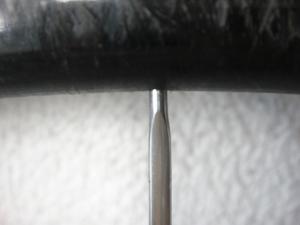
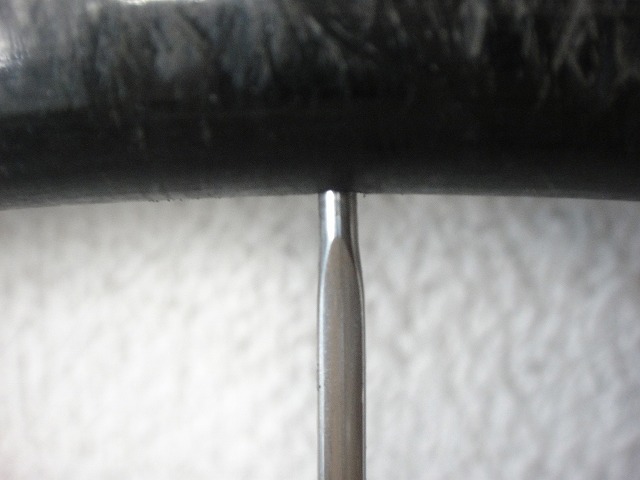
For anyone who saw the CX length and thought,
"So when you do a radial lace with a TNi carbon hub and TNi Carbon 50,
the spoke length really is 274mm?"—
Nope. I sourced 274mm, sure, but
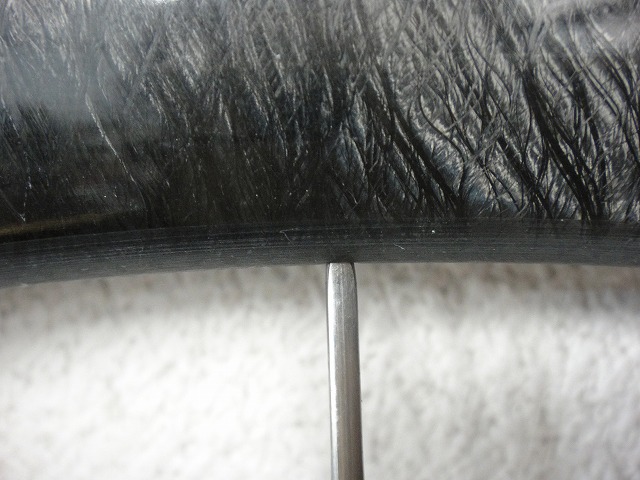
I do secondary work to minimize exposed plain section.
If built normally, it would look like the image above.
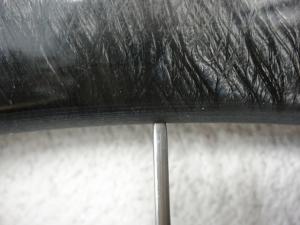
In reality, it looks like this. Only the flattened section is visible.
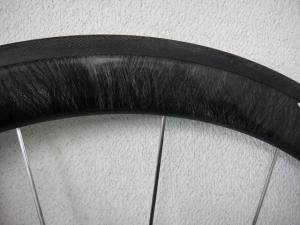
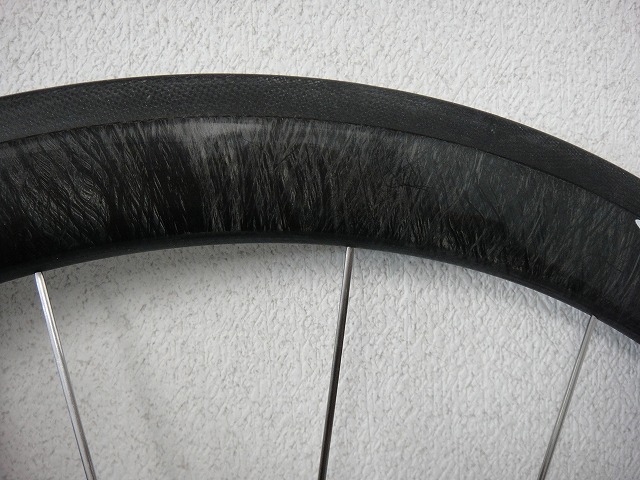
Caterpillar-friendly outer section.
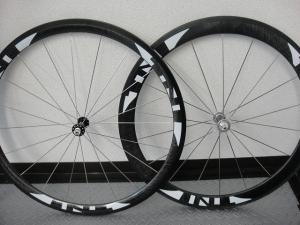
This time was a custom order, but
if you go with the nomunLab Wheel #2 spec (TNi Evo hub + Sapim CX-RAY),
the 38 and 50 rims are the same price, so the wheels are too.
But (as I've mentioned), I can't really recommend a 50 rear wheel.
On the other hand, a 50 front with a 38 rear just looks wrong.
So that's how we ended up with an Aero 80 rear wheel.
I've already built a rear wheel with an Aero 80, but
since I used completely different approaches for front and rear, I'll write about them separately.
↑It looks like this. Pretty sharp, right? Unlike the Carbon 38,
I had to keep spoke tension under 100 kgf, which really made me think about things.
The rim has no stated weight spec, but my actual measurement came in at 398g.
First, this is a perk of doing an 18H front wheel only.
TNi makes a hub called the "Carbon Front Hub."
It's been around for about 15 years, but here's the thing—it only comes in 18H.
It's not that 18H stock got leftover; that's just the spec they make.
Since I decided to build the front wheel in 18H, I went with it.
The spokes are Sapim CX. Not CX-RAY.
Like the Hoshi Aero Star Bright II model I did recently, these need a hub with slits in the spoke holes
or they won't thread through and you can't build the wheel.
I laced these as outpokes because the rim is pretty tall.
My personal dividing line for whether to go inpoke is around 50mm rim depth.
(Though honestly, I almost never see inpoke lacing out there anyway.)
About why I deliberately chose CX spokes.
It comes down to my usual spoke specific gravity discussion.
There's some overlap with what I've said before.
When I measured a bundle of 36 DT Champion 2.0mm plain spokes, 292mm long,
they weighed 270g.

Calculating the weight per spoke: 270g ÷ 36 spokes
comes out to 7.5g per spoke.
Dividing that by length gives me 0.0257g per mm.
This is my approach: if I set 2.0mm plain spokes at 1 mm per gram as my 100% baseline,
and calculate all other spokes' specific gravities against it,
I can estimate spoke weight quite accurately even when length or spoke count changes.
(In practice, I've taken many more samples to establish that 0.0257g figure.)
If I had 2.0mm plain spokes at 286mm length, 24 spokes,
it would be 0.0257 × 286 × 24 = 310g.
Then add the hub, nipples, and rim weight and you get the finished wheel weight without actually building it.
If I swapped everything to CX-RAY instead,
since CX-RAY's specific gravity is 65.0%,
I'd calculate 310 × 0.65 = 201g.
So I did the same calculation for Sapim CX.
The CX has the thin aero section at 1.3mm and the thick section at 2.8mm,
with the neck and threads at 2.0mm.
At 274mm in a bundle of 20, they weighed 141.2g.
So that's 7.06g per spoke.
The weight per mm came out to 0.0258g.
The CX came out slightly heavier than 2.0mm plain spokes.
A full 100.3%!
This is the first time in my measurements I've found a spoke with specific gravity over 100%.
When the specific gravity is essentially the same, it means the cross-sectional area of the 1.3mm × 2.8mm aero section
is roughly equivalent to a 2.0mm round spoke.
As a side note: Sapim publishes the weight of spoke bundles at 260mm in quantities of 64.
Sapim's plain spokes are the "Leader" model—Leader at 260mm, 64 spokes is listed at 421g in the catalog.
For CX at the same specs, it's 423g in the catalog.
So by Sapim's own catalog figures, CX is 100.4% the weight of Leader (≈ DT Champion).
This number backs up the validity of my method of estimating spoke bundle weight using specific gravity.
TNi's carbon hubs don't come in 24H, but
let me compare building with CX 18H versus CX-RAY 24H,
assuming the hub, nipples, and rim are otherwise identical.
Compared to the CX 18H front wheel, the spoke specific gravity would be about 1.5 times heavier.
But the spoke count drops to 2/3, so
these two front wheels end up roughly the same weight.
A 50mm rim with 24H looks a bit visually busy, honestly.
This wheel is a customer order for criterium racing.
If I had to choose between these two for crit use myself,
I'd pick the CX 18H.

But what if we compare to CX-RAY 18H instead?
The CX-RAY 18H would be about 50g lighter than the previous two options.
For climbing, that might be better.
But I didn't want to use CX-RAY this time.
It's because the spoke tension limit is 100 kgf. As I wrote earlier,
the CX specific gravity is basically the same as 2.0mm plain—meaning the cross-section is roughly the same too.
I wrote before that thicker spokes don't build up spoke tension as easily.
To say it another way:
if rim load (what I call RK on this blog) stays the same,
thicker spokes produce lower spoke tension.
When spoke tension hits the 100 kgf limit, thicker spokes result in a stiffer wheel.
This is why I built with CX this time (why I had to).
If I could tension to 130 kgf like with the Carbon 38, I might have gone with CX-RAY.
Of the usable road bike spokes,
2.0mm plain is the thickest, and since CX has equivalent cross-sectional area,
theoretically it can be built with the tension characteristics of 2.0mm plain.
And on top of that, you get the aero properties.
Plus you get Sapim's reputation for spoke durability.
The downside is it's heavy like 2.0mm plain (50g heavier than CX-RAY in this front wheel case),
but I prioritized stiffness.
Since it's not in the outer rim, and the rim is tall with all the nipples toward the inner section,
weight placement shouldn't be much of an issue.
Okay, I need to stop or the crab lasers will show up.
For anyone who saw the CX length and thought,
"So when you do a radial lace with a TNi carbon hub and TNi Carbon 50,
the spoke length really is 274mm?"—
Nope. I sourced 274mm, sure, but
I do secondary work to minimize exposed plain section.
If built normally, it would look like the image above.
In reality, it looks like this. Only the flattened section is visible.
Caterpillar-friendly outer section.
This time was a custom order, but
if you go with the nomunLab Wheel #2 spec (TNi Evo hub + Sapim CX-RAY),
the 38 and 50 rims are the same price, so the wheels are too.
But (as I've mentioned), I can't really recommend a 50 rear wheel.
On the other hand, a 50 front with a 38 rear just looks wrong.
So that's how we ended up with an Aero 80 rear wheel.