A customer brought in an R-SYS for me to work on.
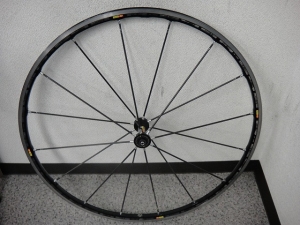
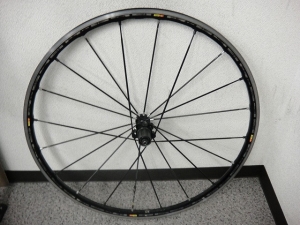
The rear wheel had its center offset,
and since I had no choice but to touch the nipples on the non-drive side,
I removed the spoke-protector ring to make adjustments.
The front wheel had only minor run-out and center issues,
but when I pressed alternately on both ends of the axle with my thumbs,
I could clearly hear a creaking noise,
so I determined that the nipples needed tightening and the spoke heads needed grease.
I removed the spoke-protector ring for this wheel too.
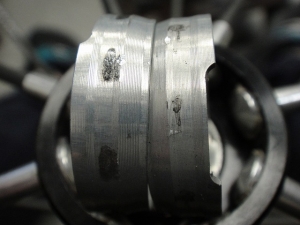
↑The contact marks between the spoke heads and the ring aren't point marks—
they're stretched out horizontally because the ring rotated.
I thought maybe it had been re-seated at a slightly different phase,
but it appears the ring rotated due to spoke head movement.
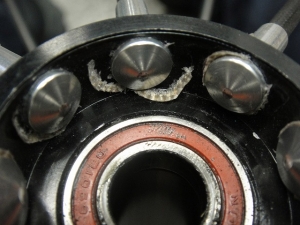
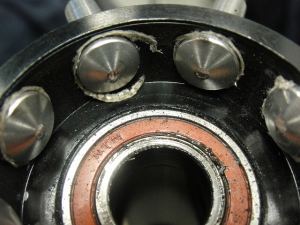
↑The Kevlar-like washer cloth below the spoke neck was torn.
This isn't caused by over-tightening the nipples—it's actually the opposite, from under-tightening.
Since R-SYS uses carbon spokes with no stretch, people often think the spokes don't need to be tensioned.
But if you don't properly pull the hub flange with spoke tension,
the contact points will rattle and cause noises.
After tightening the nipples and correcting the slight center offset,
when I tried to reproduce the pre-work creaking noise using the same method,
the noise had completely disappeared.
The solution for noises that have already developed is the same.
Especially when standing on the pedals, it's hard to believe that such a small contact point
can produce such loud cracking sounds.
R-SYS wheels with these noises (at least from what I've seen)
invariably have under-tightened nipples.

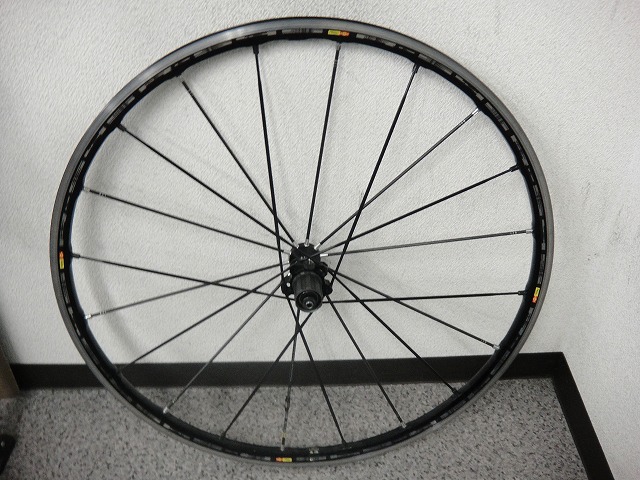
The rear wheel had its center offset,
and since I had no choice but to touch the nipples on the non-drive side,
I removed the spoke-protector ring to make adjustments.
The front wheel had only minor run-out and center issues,
but when I pressed alternately on both ends of the axle with my thumbs,
I could clearly hear a creaking noise,
so I determined that the nipples needed tightening and the spoke heads needed grease.
I removed the spoke-protector ring for this wheel too.
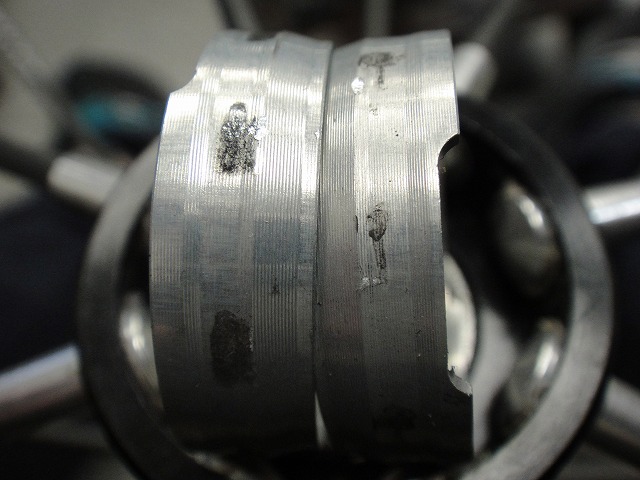
↑The contact marks between the spoke heads and the ring aren't point marks—
they're stretched out horizontally because the ring rotated.
I thought maybe it had been re-seated at a slightly different phase,
but it appears the ring rotated due to spoke head movement.
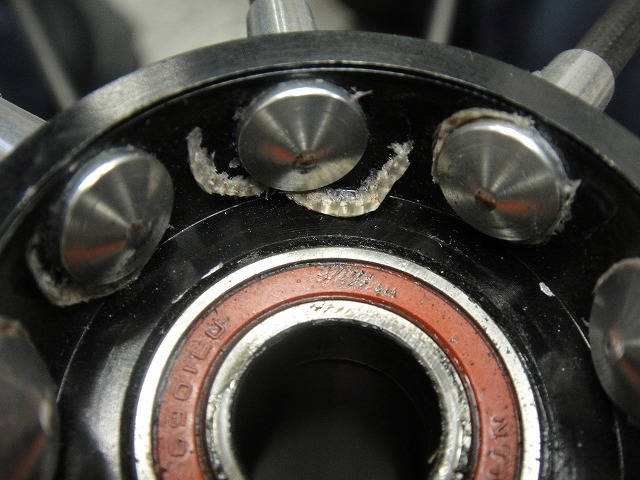
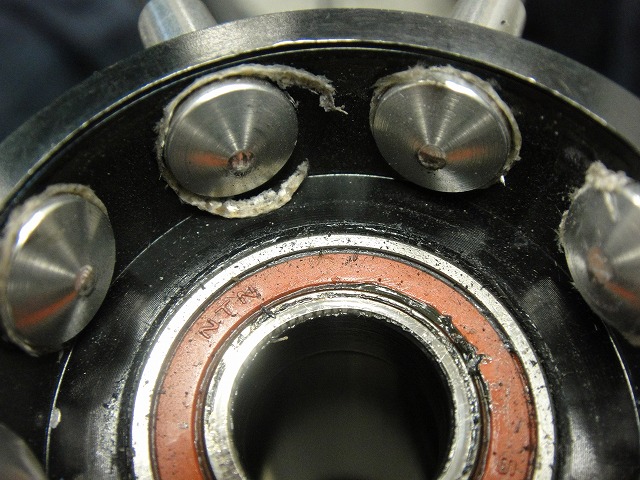
↑The Kevlar-like washer cloth below the spoke neck was torn.
This isn't caused by over-tightening the nipples—it's actually the opposite, from under-tightening.
Since R-SYS uses carbon spokes with no stretch, people often think the spokes don't need to be tensioned.
But if you don't properly pull the hub flange with spoke tension,
the contact points will rattle and cause noises.
After tightening the nipples and correcting the slight center offset,
when I tried to reproduce the pre-work creaking noise using the same method,
the noise had completely disappeared.
The solution for noises that have already developed is the same.
Especially when standing on the pedals, it's hard to believe that such a small contact point
can produce such loud cracking sounds.
R-SYS wheels with these noises (at least from what I've seen)
invariably have under-tightened nipples.