Continuing from earlier.
First, let me explain "gear ratio."
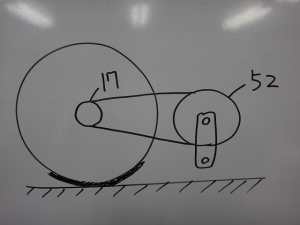
Gear ratio is "the multiplier of how many times the rear wheel rotates for one complete crank revolution."
This is determined by the number of teeth on the front chainring and rear sprocket.
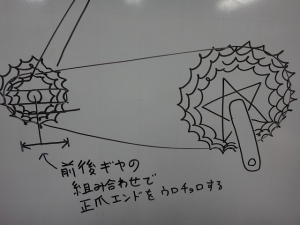
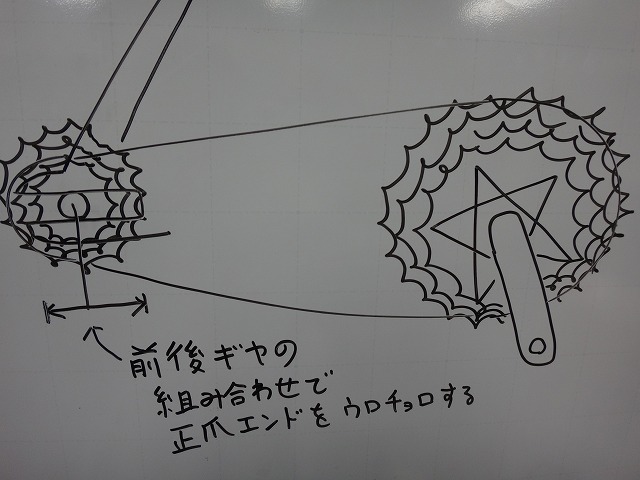
In the diagram above, I've drawn 52T and 17T,
and this is conventionally written as "52×17T (go-ju-ni no ju-nana T)."
Confusingly, because there's a × sign, it looks like multiplication at first glance,
but it's actually division.

52÷17 = 3.05882352....
This becomes the number of rear wheel rotations per crank revolution.
From here on in this article, for numerical values
I'll use figures to the third decimal place by truncating at the fourth decimal.
(So even if it were 3.05899999...,
I'd write it as 3.058)
In the diagram above, if we include the wheel's outer circumference all the way to the tire,
let's say it's 2130mm (2.13m).
In that case, per crank revolution
3.058 × 2.13 = 6.513m distance covered.
Furthermore, if the cadence is 90 RPM,
the distance covered in one minute is 6.513 × 90 = 586.17m,
and for 60 minutes (1 hour) 586.17 × 60 = 35,170.2m,
converting to km gives a speed of 35.17 km/h.
Now, regarding this gear ratio (assuming the rear wheel size is the same),
if someone asks "which is easier, 52×17 or 52×18?"
the answer is simple. A larger rear sprocket is always easier.
But if they ask "52×17 vs 50×15?" with both
front and rear teeth numbers different, you probably can't answer immediately.
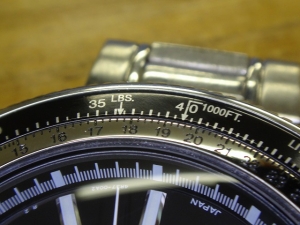
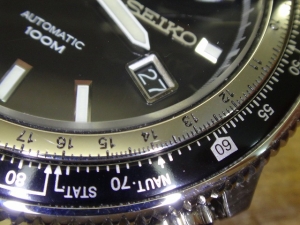
For making these kinds of comparisons, a rotation slide rule is incredibly convenient,
which is what I'm about to explain.
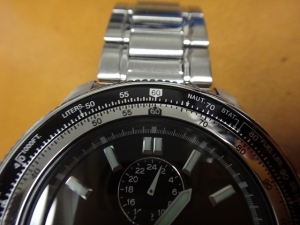
↑This image was in the previous article. Going forward,
just remember that
"the outer scale shows front chainring teeth,
the inner scale shows rear sprocket teeth"
That's all you need. Super simple and convenient.
For example, say someone normally runs an inner chainring of 39T,
and swaps to a 34T crank just for hill climbs.
If the rear low gear is 25T,
a rotation slide rule can instantly calculate what gear ratio
the post-swap lowest gear of 34×25T
is equivalent to in terms of 39×?T.
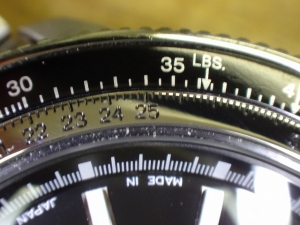
First, align the scales to 34×25T.
Front chainring is on the outside, rear sprocket is on the inside.
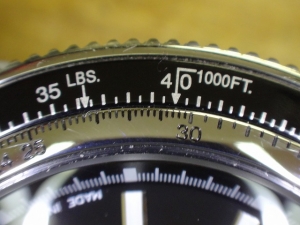
Next, just read the 39T on the outside from there.
The 29T rear sprocket is closest.
So that means 34×25T ≈ 39×29T.
In actual calculation,
34×25T = 39×28.676T,
but sprocket teeth only come in natural numbers like 28T or 29T (obviously).
A 28.676T tooth doesn't actually exist, even conceptually.
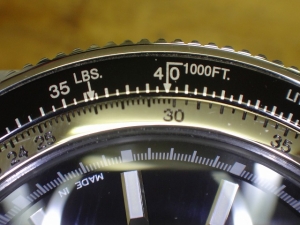
Next, from the 39×28.676T state, I rotated the outer scale
to where the scales align exactly at 39×29T.
At this point, you can rotate either clockwise or counterclockwise.
This time it was clockwise.
If we call the originally-aligned gear position the former,
and the approximate value read later the latter,
when aligning the latter scale to the nearest natural numbers (scales exactly aligned),
"clockwise means the latter gear ratio is slightly easier than the former,
counterclockwise means the latter gear ratio is slightly harder than the former."
In this case:
・Original gear: 34×25T
・Approximate value read at 39T: 29T
・Rotated outer scale clockwise to align exactly at 39×29T
So instantly you know "34×25T and 39×29T are almost the same, but 39×29T is slightly easier."
What's convenient and simple about this is "you're not actually calculating."
You're just reading the scales.
It's a bit tedious, but let me actually calculate it.
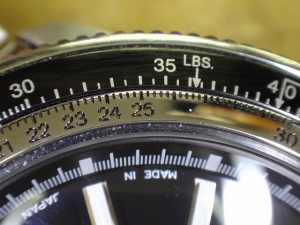
First, align to 34×25T.
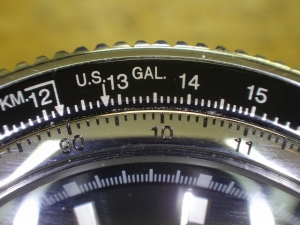
Next, look at the value at the 10 mark on the inner scale.
It's around 13.6. This is the gear ratio.
From the magnitude of the value, you can tell it's 1.36, not 13.6.
Here we're getting the specific numerical value of the gear ratio.
(Calculating it out, 34÷25 = 1.36x)
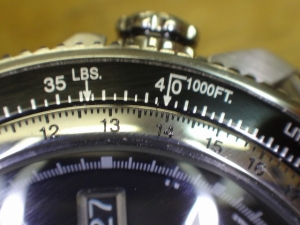
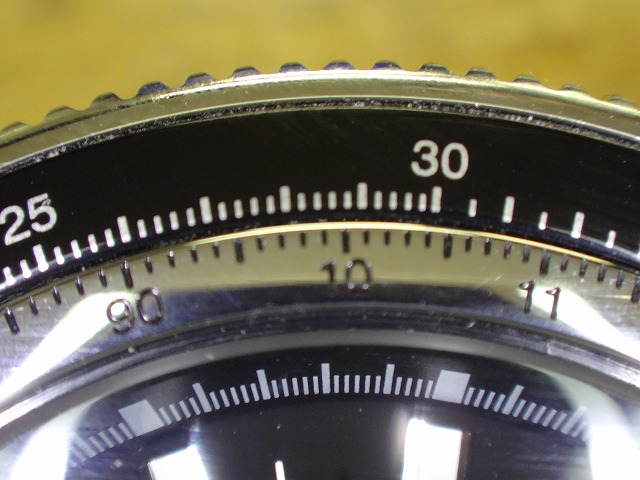
Next, align 39T to the inner 13.6 (the gear ratio we found).
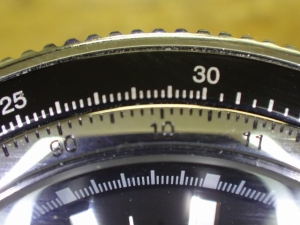
Then looking at the 10 mark on the inner scale,
you get the 39×?T value close to 34×25T.
It reads around 28.7,
so you can read 34×25T ≈ 39×28.7T.
But this method is tedious.
You have to carefully rotate the outer scale back and forth,
and each time the reading error might be amplified.
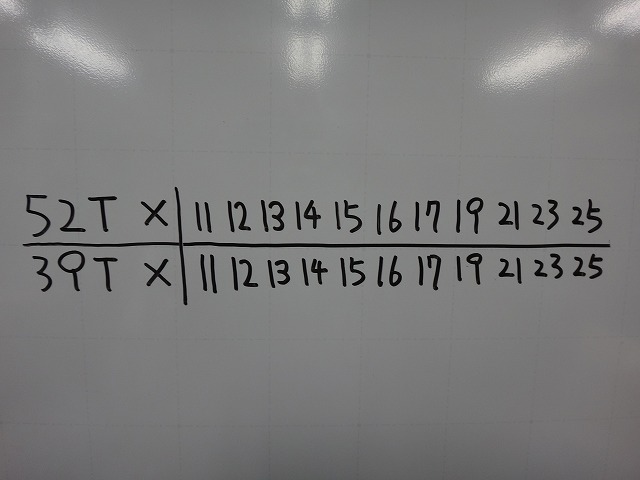
Next, let's check how the gear cross-ratio works when you have 52×39T front
with a maximum rear sprocket of 25T.
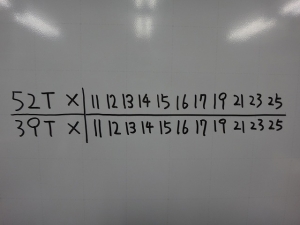
↑With Shimano 11-speed, 11-25T case
You get these 22 gear combinations.
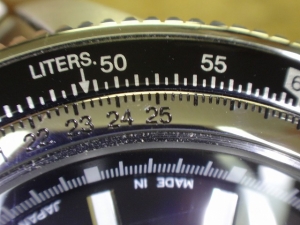
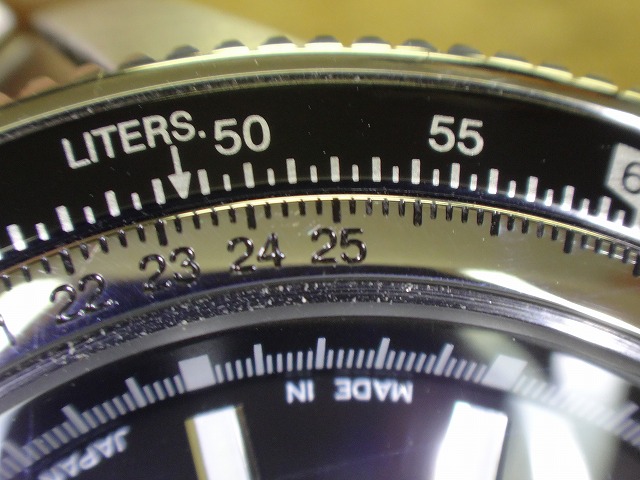
First, align to the outer × low of 52×25T.
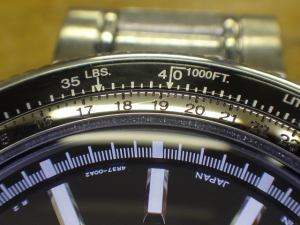
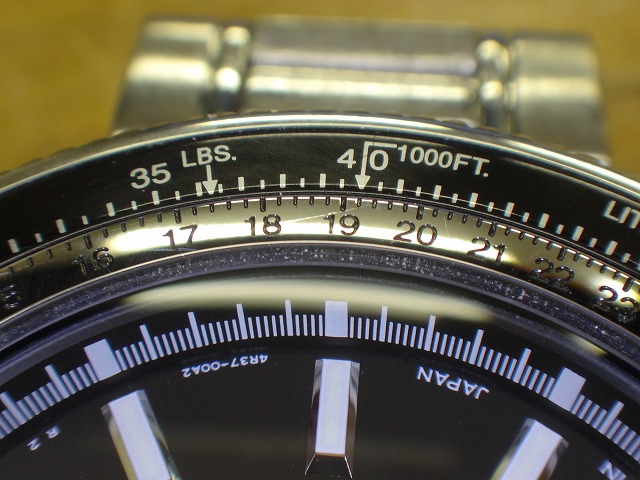
Reading 39T from there, the closest sprocket tooth count is 19T.
(Actually calculating, the gear ratio of 52×25T is 2.08,
and the conceptual sprocket tooth count for 2.08x with 39T is 18.75T,
but without doing such calculations, gear ratios can be compared pretty accurately—that's the point of this article)
I aligned the scales to the closest natural number 19T.
Since I rotated clockwise,
"the sprocket tooth count closest to 52×25T for 39T is 19T,
and 39×19T is almost the same as 52×25T but slightly easier"
became instantly apparent without any calculation.
If picturing "clockwise rotation makes it easier" is hard,
you can think of it this way instead.
The image above shows 52×11T,
but if you shift toward the low side like →12T→13T→14T→15T...,
you're rotating the outer scale clockwise.
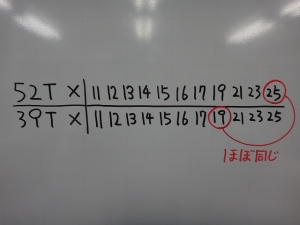
And from the fact that 52×25T and 39×19T are almost the same, what can we tell?
With this combination, low gear ratios achievable only in the inner chainring
are limited to just the bottom 3 sprockets.
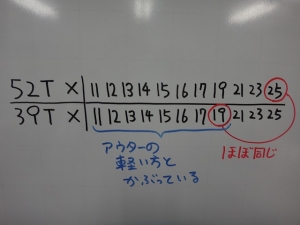
So speaking a bit roughly,
inner 39T×19T and gears heavier than that
overlap with outer 52T×lighter gears.
This means that while this 22-gear combination looks like
a 22-color colored pencil set, it's really just 22 pencils,
and if you count similar shades as the same, it's really only about 14 colors.
Next, let's think about front and rear gear combinations for a fixed-gear bike.
With Shimano, the lineup for fixed-gear front chainring teeth ranges
from 45 to 55T.
Of these, what's actually used is around 48-51T.
The rear sprocket comes in just 4 sizes: 13-16T.
Of these, 13, 14, and 15T are commonly used.
Since the combination of front and rear tooth counts changes the chain length,
you adjust the rear hub axle position,
chain length, or half-link adjustments accordingly, but there are limits.
Also, the change in gear ratio per 1T is not constant—it varies by gear size.
Extremely speaking, when 12T becomes 11T it gets about 10% harder,
but 100000T and 100001T would be almost the same.
When the front chainring goes from 49T up or down by 1T,
the gear ratio changes by about 2%.
When the rear sprocket goes from 15T up or down by 1T
the gear ratio changes by about 7%.
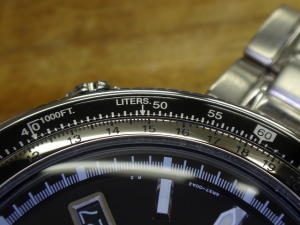
I aligned to 49×15T.
The rear sprocket only has 13, 14, and 16T besides 15T.
Looking for the front chainring that approximates 49×15T,
you get
・about 42.5T×13T
・just under 46T×14T
・just over 52T×16T
and of these, the approximations are the bottom two.
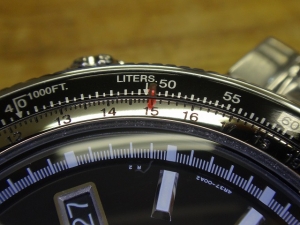
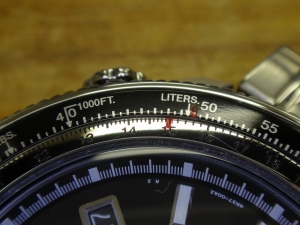
I marked 49×15T with a red water-based pen.
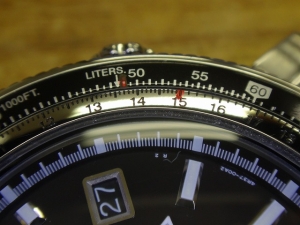
From there, I aligned to 50×14T.
The outer scale rotated quite a bit counterclockwise,
meaning the gear ratio got significantly harder.
Next, I tried 44×14T.
The outer scale is just slightly clockwise from the original position,
so the gear ratio is slightly easier than 49×15.
To belabor the point, if you only want to get an intuitive sense of gear ratios,
you don't need to calculate the actual gear ratio numbers.
A rotation slide rule shows it instantly.
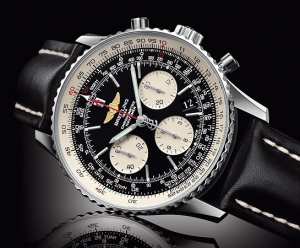
If you're getting interested in a watch with a rotation slide rule,
I highly recommend Breitling's "Navitimer."
(Image from Breitling homepage)
Price varies by spec, but starts from 860,000 yen (before tax).
This article itself is, well,
"I thought it was a documentary but it turned out to be a clever advertisement for garlic and egg yolk"
kind of sponsored content. My apologies to those reading seriously.
It's true that I use Superior to estimate gear ratios.
First, let me explain "gear ratio."
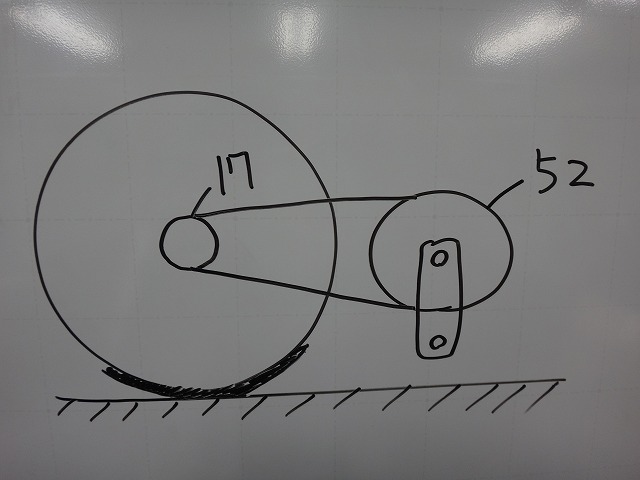
Gear ratio is "the multiplier of how many times the rear wheel rotates for one complete crank revolution."
This is determined by the number of teeth on the front chainring and rear sprocket.
In the diagram above, I've drawn 52T and 17T,
and this is conventionally written as "52×17T (go-ju-ni no ju-nana T)."
Confusingly, because there's a × sign, it looks like multiplication at first glance,
but it's actually division.
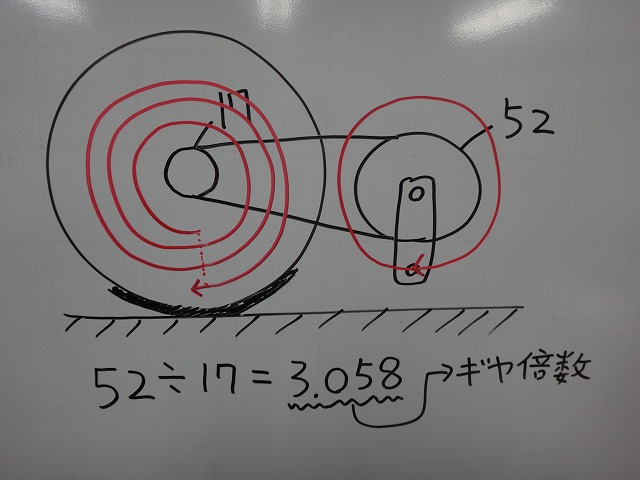
52÷17 = 3.05882352....
This becomes the number of rear wheel rotations per crank revolution.
From here on in this article, for numerical values
I'll use figures to the third decimal place by truncating at the fourth decimal.
(So even if it were 3.05899999...,
I'd write it as 3.058)
In the diagram above, if we include the wheel's outer circumference all the way to the tire,
let's say it's 2130mm (2.13m).
In that case, per crank revolution
3.058 × 2.13 = 6.513m distance covered.
Furthermore, if the cadence is 90 RPM,
the distance covered in one minute is 6.513 × 90 = 586.17m,
and for 60 minutes (1 hour) 586.17 × 60 = 35,170.2m,
converting to km gives a speed of 35.17 km/h.
Now, regarding this gear ratio (assuming the rear wheel size is the same),
if someone asks "which is easier, 52×17 or 52×18?"
the answer is simple. A larger rear sprocket is always easier.
But if they ask "52×17 vs 50×15?" with both
front and rear teeth numbers different, you probably can't answer immediately.
For making these kinds of comparisons, a rotation slide rule is incredibly convenient,
which is what I'm about to explain.

↑This image was in the previous article. Going forward,
just remember that
"the outer scale shows front chainring teeth,
the inner scale shows rear sprocket teeth"
That's all you need. Super simple and convenient.
For example, say someone normally runs an inner chainring of 39T,
and swaps to a 34T crank just for hill climbs.
If the rear low gear is 25T,
a rotation slide rule can instantly calculate what gear ratio
the post-swap lowest gear of 34×25T
is equivalent to in terms of 39×?T.
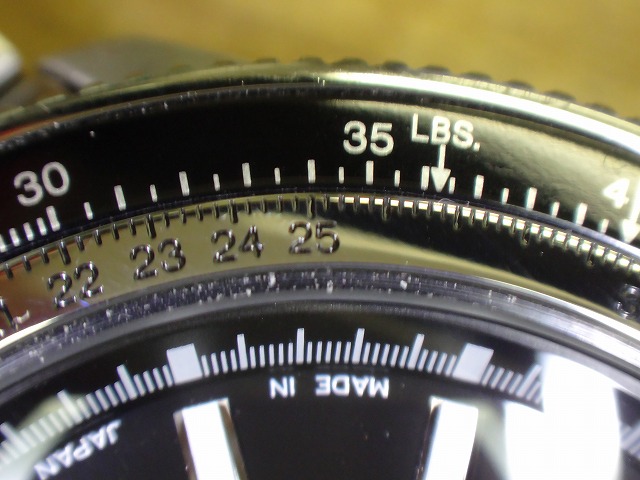
First, align the scales to 34×25T.
Front chainring is on the outside, rear sprocket is on the inside.
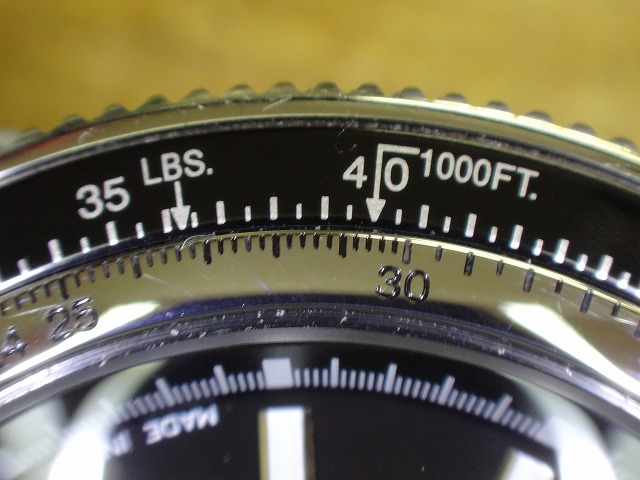
Next, just read the 39T on the outside from there.
The 29T rear sprocket is closest.
So that means 34×25T ≈ 39×29T.
In actual calculation,
34×25T = 39×28.676T,
but sprocket teeth only come in natural numbers like 28T or 29T (obviously).
A 28.676T tooth doesn't actually exist, even conceptually.
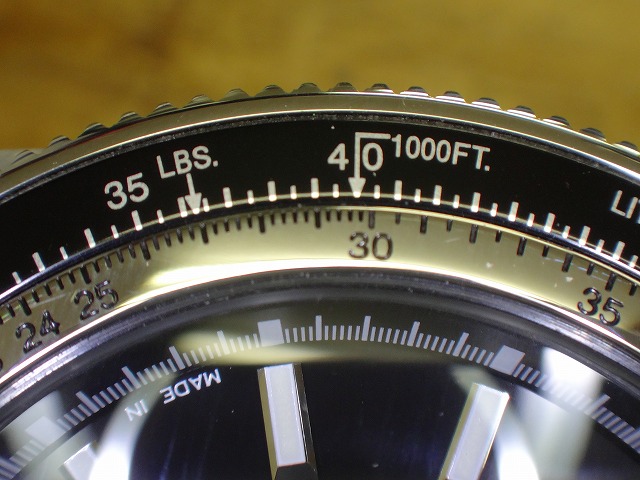
Next, from the 39×28.676T state, I rotated the outer scale
to where the scales align exactly at 39×29T.
At this point, you can rotate either clockwise or counterclockwise.
This time it was clockwise.
If we call the originally-aligned gear position the former,
and the approximate value read later the latter,
when aligning the latter scale to the nearest natural numbers (scales exactly aligned),
"clockwise means the latter gear ratio is slightly easier than the former,
counterclockwise means the latter gear ratio is slightly harder than the former."
In this case:
・Original gear: 34×25T
・Approximate value read at 39T: 29T
・Rotated outer scale clockwise to align exactly at 39×29T
So instantly you know "34×25T and 39×29T are almost the same, but 39×29T is slightly easier."
What's convenient and simple about this is "you're not actually calculating."
You're just reading the scales.
It's a bit tedious, but let me actually calculate it.

First, align to 34×25T.
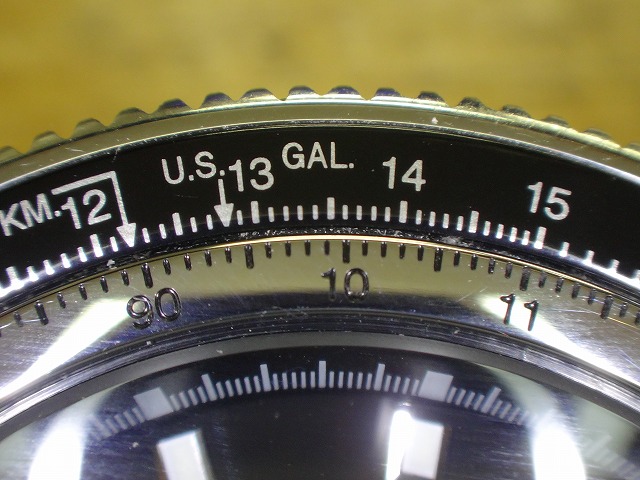
Next, look at the value at the 10 mark on the inner scale.
It's around 13.6. This is the gear ratio.
From the magnitude of the value, you can tell it's 1.36, not 13.6.
Here we're getting the specific numerical value of the gear ratio.
(Calculating it out, 34÷25 = 1.36x)

Next, align 39T to the inner 13.6 (the gear ratio we found).
Then looking at the 10 mark on the inner scale,
you get the 39×?T value close to 34×25T.
It reads around 28.7,
so you can read 34×25T ≈ 39×28.7T.
But this method is tedious.
You have to carefully rotate the outer scale back and forth,
and each time the reading error might be amplified.
Next, let's check how the gear cross-ratio works when you have 52×39T front
with a maximum rear sprocket of 25T.
↑With Shimano 11-speed, 11-25T case
You get these 22 gear combinations.
First, align to the outer × low of 52×25T.
Reading 39T from there, the closest sprocket tooth count is 19T.
(Actually calculating, the gear ratio of 52×25T is 2.08,
and the conceptual sprocket tooth count for 2.08x with 39T is 18.75T,
but without doing such calculations, gear ratios can be compared pretty accurately—that's the point of this article)
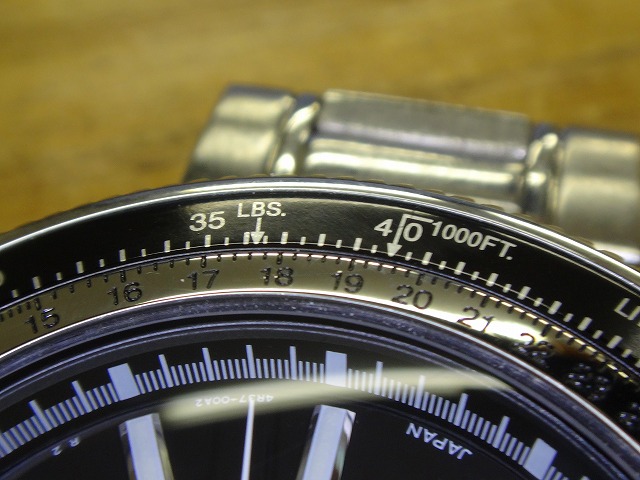
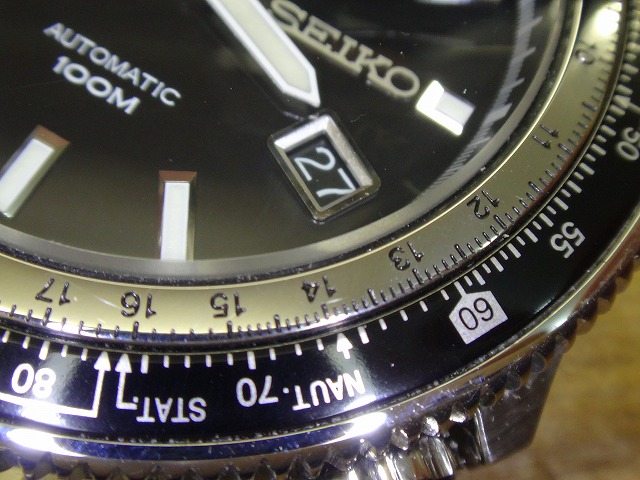
I aligned the scales to the closest natural number 19T.
Since I rotated clockwise,
"the sprocket tooth count closest to 52×25T for 39T is 19T,
and 39×19T is almost the same as 52×25T but slightly easier"
became instantly apparent without any calculation.
If picturing "clockwise rotation makes it easier" is hard,
you can think of it this way instead.
The image above shows 52×11T,
but if you shift toward the low side like →12T→13T→14T→15T...,
you're rotating the outer scale clockwise.
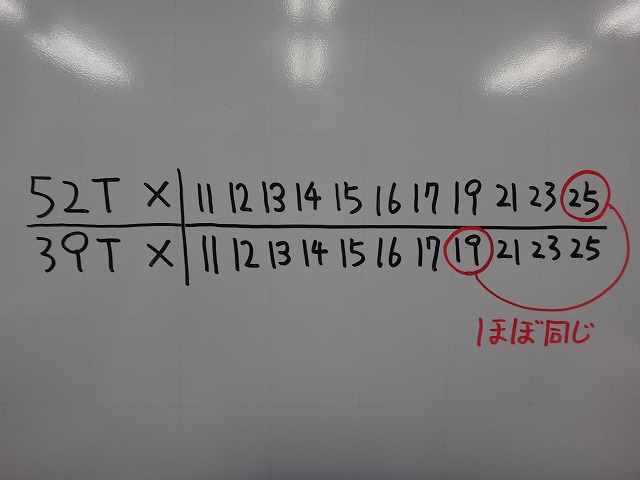
And from the fact that 52×25T and 39×19T are almost the same, what can we tell?
With this combination, low gear ratios achievable only in the inner chainring
are limited to just the bottom 3 sprockets.
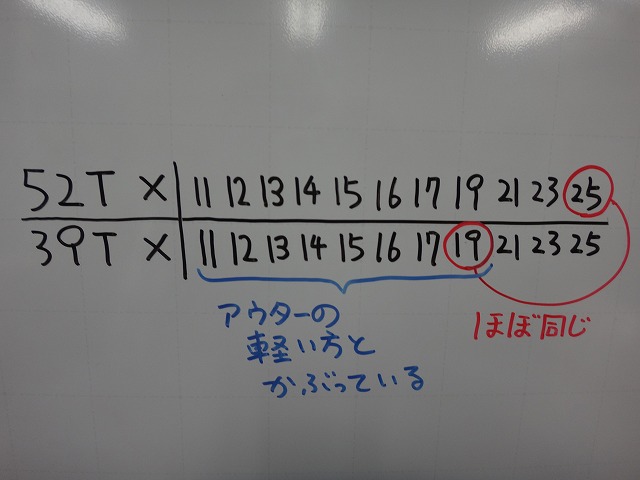
So speaking a bit roughly,
inner 39T×19T and gears heavier than that
overlap with outer 52T×lighter gears.
This means that while this 22-gear combination looks like
a 22-color colored pencil set, it's really just 22 pencils,
and if you count similar shades as the same, it's really only about 14 colors.
Next, let's think about front and rear gear combinations for a fixed-gear bike.
With Shimano, the lineup for fixed-gear front chainring teeth ranges
from 45 to 55T.
Of these, what's actually used is around 48-51T.
The rear sprocket comes in just 4 sizes: 13-16T.
Of these, 13, 14, and 15T are commonly used.
Since the combination of front and rear tooth counts changes the chain length,
you adjust the rear hub axle position,
chain length, or half-link adjustments accordingly, but there are limits.
Also, the change in gear ratio per 1T is not constant—it varies by gear size.
Extremely speaking, when 12T becomes 11T it gets about 10% harder,
but 100000T and 100001T would be almost the same.
When the front chainring goes from 49T up or down by 1T,
the gear ratio changes by about 2%.
When the rear sprocket goes from 15T up or down by 1T
the gear ratio changes by about 7%.
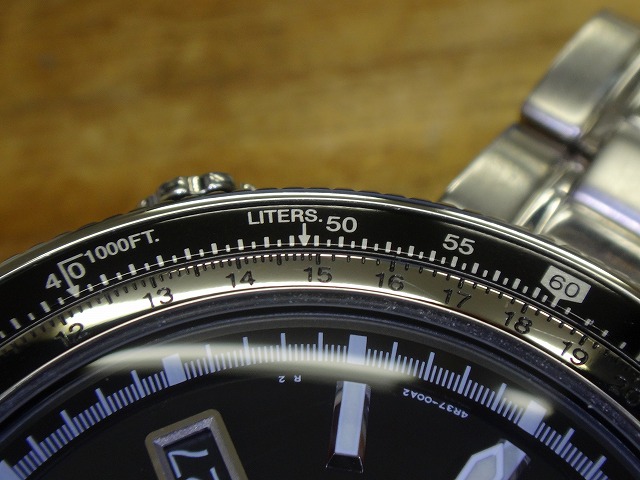
I aligned to 49×15T.
The rear sprocket only has 13, 14, and 16T besides 15T.
Looking for the front chainring that approximates 49×15T,
you get
・about 42.5T×13T
・just under 46T×14T
・just over 52T×16T
and of these, the approximations are the bottom two.
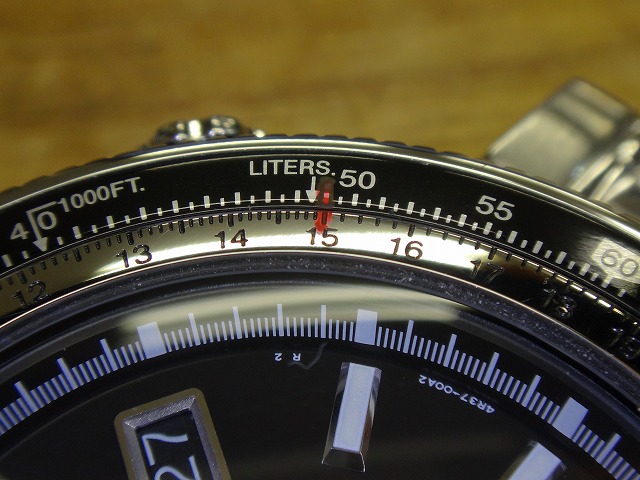
I marked 49×15T with a red water-based pen.
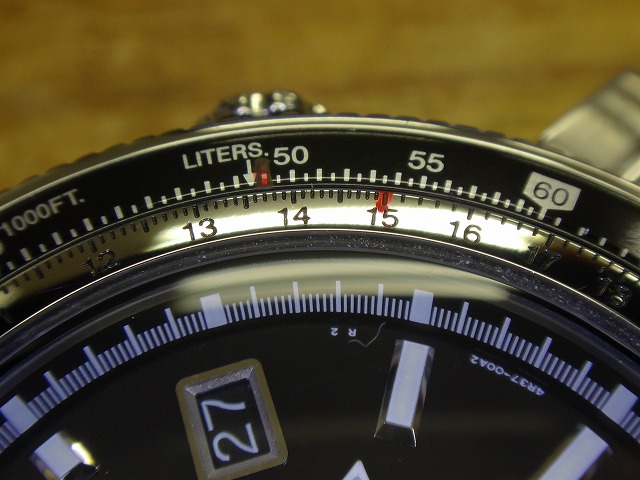
From there, I aligned to 50×14T.
The outer scale rotated quite a bit counterclockwise,
meaning the gear ratio got significantly harder.

Next, I tried 44×14T.
The outer scale is just slightly clockwise from the original position,
so the gear ratio is slightly easier than 49×15.
To belabor the point, if you only want to get an intuitive sense of gear ratios,
you don't need to calculate the actual gear ratio numbers.
A rotation slide rule shows it instantly.
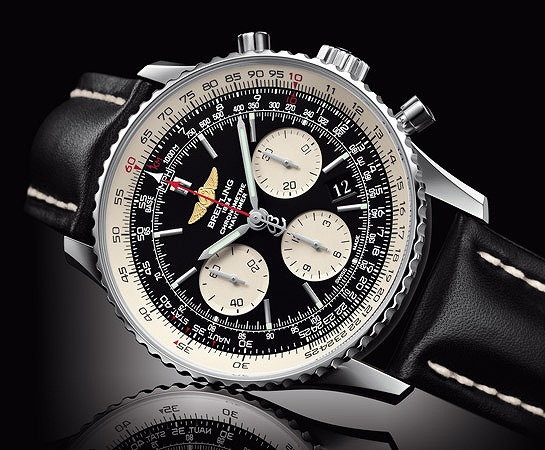
If you're getting interested in a watch with a rotation slide rule,
I highly recommend Breitling's "Navitimer."
(Image from Breitling homepage)
Price varies by spec, but starts from 860,000 yen (before tax).
"I thought it was a documentary but it turned out to be a clever advertisement for garlic and egg yolk"
kind of sponsored content. My apologies to those reading seriously.
It's true that I use Superior to estimate gear ratios.