The other day, the AL22 rim that weighed 391g when actually measured—surprisingly heavy for some reason—
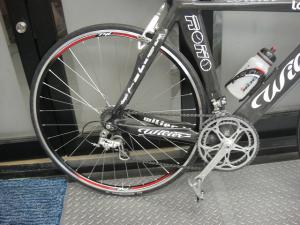
so I built a rear wheel for myself.
Since this type of rim is unreasonably light for me,
I'm actually grateful if it's a bit heavier, even within the margin of error.
This is the AL22 wheel I built first, before the Nomu Lab Wheel No. 5.
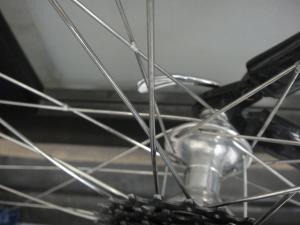
A wheel's "light in hand" and "light while riding" don't correlate purely.
Weight reduction contributes to riding lightness in the outer perimeter of the wheel.
With my personal obsession with outer perimeter weight—the idea that "the rim and nipples should be light"—
I tend to overlook spoke weight.
So I went with DT Competition spokes on both sides.
I could have used CX-RAY on the non-drive side, but with 48-spoke lacing and crossed pattern,
the apparent left-right tension difference mostly disappears, so this works fine.
Thinking commercially, with 32 holes there's a clear difference in hand weight between Competition and CX-RAY spokes,
so I went with CX-RAY for No. 5.
(After all, it won't be well-received if it's not light)
Unlike the AL300 (No. 1) rim, it lacks a bit of that solid feel,
but the initial pedal response is significantly lighter.
I can even sense the "slightly loose" feeling unique to light rims (though I can't quite describe it well).
Naturally, this is the better wheel for climbing.
It's a dud specimen—15g heavier than other AL22 rims—but
it's still about 70g lighter than the AL300, so the difference is clearly noticeable.
Lightness is justice after all.
I'd recommend this rim as a battle wheel for those who say "tubulars are a bit much..."

so I built a rear wheel for myself.
Since this type of rim is unreasonably light for me,
I'm actually grateful if it's a bit heavier, even within the margin of error.
This is the AL22 wheel I built first, before the Nomu Lab Wheel No. 5.
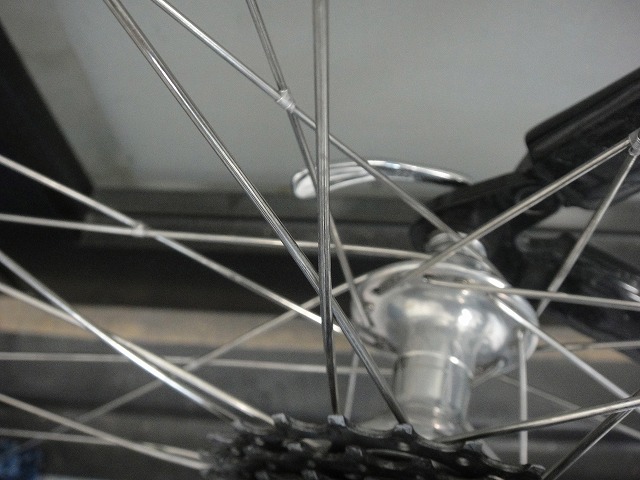
A wheel's "light in hand" and "light while riding" don't correlate purely.
Weight reduction contributes to riding lightness in the outer perimeter of the wheel.
With my personal obsession with outer perimeter weight—the idea that "the rim and nipples should be light"—
I tend to overlook spoke weight.
So I went with DT Competition spokes on both sides.
I could have used CX-RAY on the non-drive side, but with 48-spoke lacing and crossed pattern,
the apparent left-right tension difference mostly disappears, so this works fine.
Thinking commercially, with 32 holes there's a clear difference in hand weight between Competition and CX-RAY spokes,
so I went with CX-RAY for No. 5.
(After all, it won't be well-received if it's not light)
Unlike the AL300 (No. 1) rim, it lacks a bit of that solid feel,
but the initial pedal response is significantly lighter.
I can even sense the "slightly loose" feeling unique to light rims (though I can't quite describe it well).
Naturally, this is the better wheel for climbing.
It's a dud specimen—15g heavier than other AL22 rims—but
it's still about 70g lighter than the AL300, so the difference is clearly noticeable.
Lightness is justice after all.
I'd recommend this rim as a battle wheel for those who say "tubulars are a bit much..."