I got a comment the other day, and it gave me a little push, so I'm going to write about something I'd decided not to write about.
First though. Setting aside the origins of complete wheels (probably Roval, or disk wheels in the broader sense), what really kicked off the whole complete wheel trend was the 1996 Mavic Helium (achievement? or sin?). In other words, you can pretty much grasp the history of complete wheels by going through the major wheel brand catalogs from 1996 onward.
And I've been carefully, carefully collecting those catalogs to read regularly, and there's something that's been nagging at me all this time.
First, an excerpt from the comment I got:
「I have two 7900 wheels, but why doesn't Shimano release a freehub compatible with 9000?」
「Wheel makers put out compatible versions right away, and yet...」
「Structurally impossible? I don't think so.」
「The selling side makes money on replacement sales though」
「I'm never buying Shimano complete wheels again.」
Wow, what a thing to say (←like you have room to talk).
If someone has two 7900 wheels, they have more right to criticize this issue than I do, who doesn't have even one. They also sent me a link to their blog, which I read.
Yeah, I have my doubts about it too.
Not just the recent issue of whether or not to release 11S-compatible freehubs for the old Shimano wheels (which were still in service just days ago), but about Shimano's whole approach to complete wheels in general. Let me write about that below.
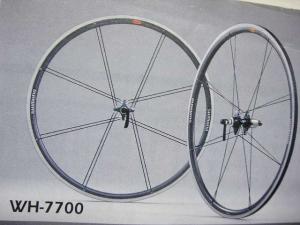
First up, the godfather of Shimano wheels, the WH-7700. The pair-spoke lacing with 16H front and rear was quite shocking.
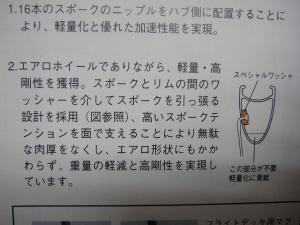
↑What I want you to notice first is the part that says 「this part is unnecessary, contributes to weight reduction」 in the diagram above. You don't need to cut this part—there are plenty of lighter rims than this. This wheel uses hub-side nipples, but the special washers are parts that weigh about as much as nipples, so it's like having nipple weight on both the hub and rim sides. Plus, the weight of those special washers is pretty far out toward the rim.
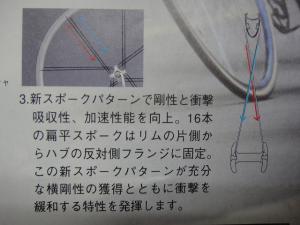
↑But something far more important than that. Where it says 「new spoke pattern」, remember the phrase 「adequate lateral stiffness」.
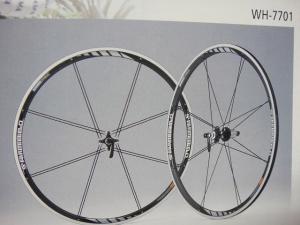
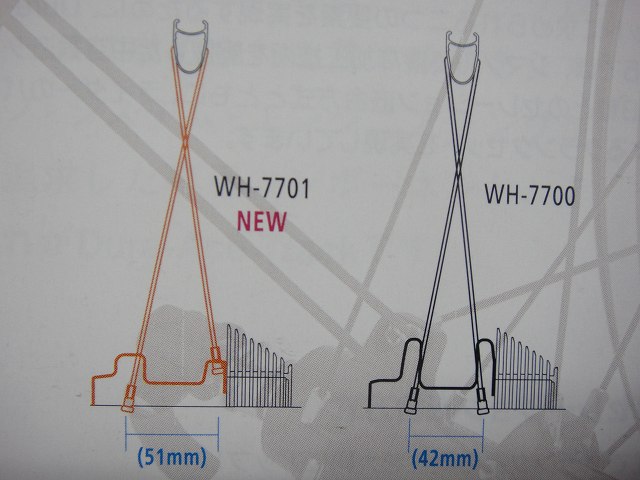
Next is the WH-7701. The biggest change is radial lacing on the rear wheel's freewheel side. I've written repeatedly on this blog about how effective this is at correcting left-right spoke tension imbalance. For hand-built wheels, my position is that you shouldn't do it because of the risk of spoke breakage at the neck and the dishing angle problem (efficiency relative to drive stress).
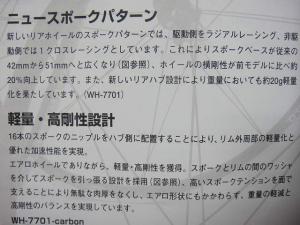
↑But the real point isn't there—it's that they widened the flange width. Lateral stiffness is up 20%, they say. But didn't they just say something about 「adequate lateral stiffness」 a moment ago?
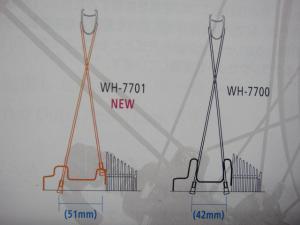
Anyway, the message is that wider rear hub flanges are better. I call this wide-flange fraud. If you could do it, or if you knew about it, why not do it from the start? The WH-7700 series is full of Shimano's originality in its design.
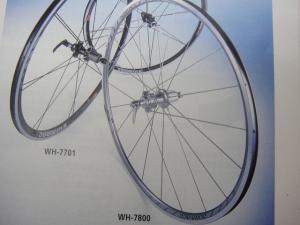
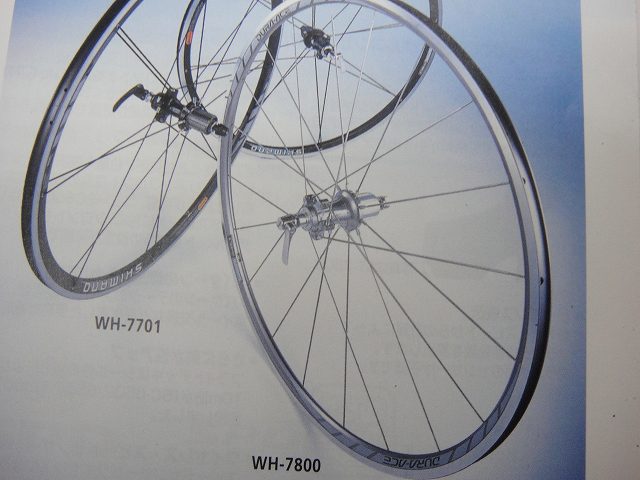
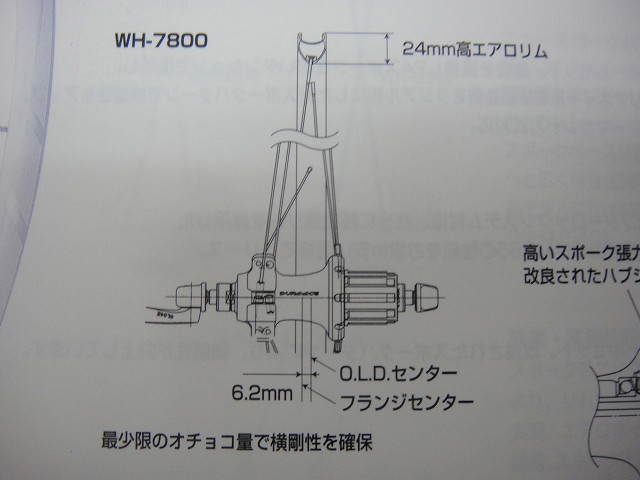
Next, the WH-7800. 「This part is unnecessary, contributes to weight reduction」? What's that about? The hub structure is a straight copy of Campagnolo (just this era's Dura-Ace hub in all of Shimano's freehub history has this feature), and the spoke arrangement is a straight copy of Mavic Ksyrium, so it became a design lacking originality.
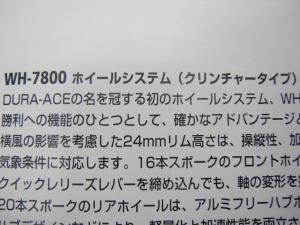
↑Apparently the previous ones were "not Dura-Ace wheels."
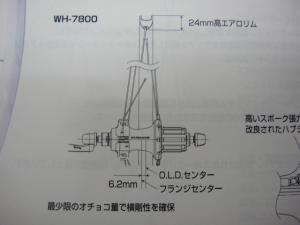
↑Remember this part: 「minimal dish quantity securing lateral stiffness」. The antonym of 「minimal」(さいしょうげん) would be 「maximum」, and there's no word 「maximal」(最多限), so shouldn't it be 「minimum」(最小限)? The auto-complete only suggests 「minimum」 and 「restatement」 anyway... But let me not split hairs. The center of the entire hub and the center of the flange width differ by 6.2mm, but there's no flange width notation so I can't calculate the left flange dimension.
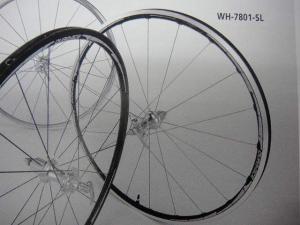
Next, the WH-7801.

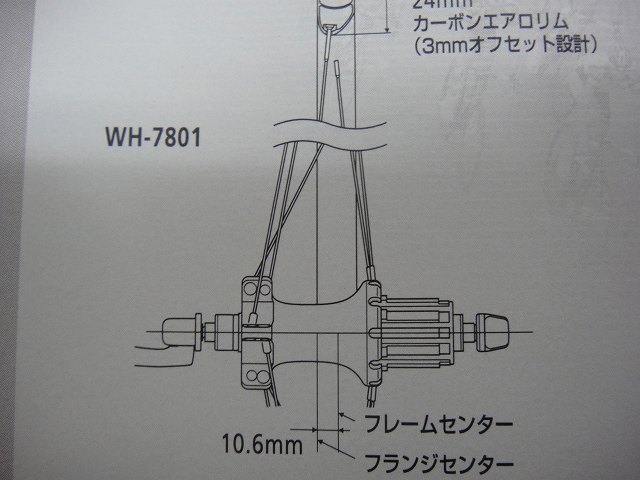
↑There are two points I want you to remember. First, about wide flanges. The part that says 「designed to the maximum width」.
Second, about the aluminum freehub body. This started with the WH-7800, but it's a 10S-only freebody, and it's actually slightly lighter than the titanium freebody of the 7700 series. The 10S-only specification abandons previous 9S users (obviously on purpose), but they don't mention that here.
The problem is that only this 10S-exclusive freebody on the rear hub has a structure unique in Shimano's history, so you can't swap it with the freebodies of the 7700 or 7900 (you can't convert to 8S, 9S, or 11S).
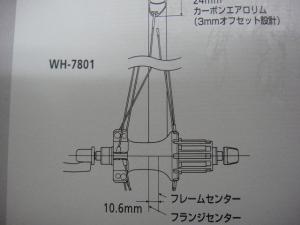
Wide-flange fraud strikes a second time!
The right flange dimension of the rear hub is, as you can tell from the hub discussion the other day, almost the same even as hubs change. The difference is at most around 1mm. Which means the difference between that 6.2mm and this 10.6mm comes down to the left flange width being different by at least 4mm, even conservatively. If you look at the WH-7800 drawing from earlier, you'll see the WH-7800 doesn't use an offset rim. I think the WH-7801, which combines offset rim design with wide flange design, is Shimano's structural masterpiece of wheels.
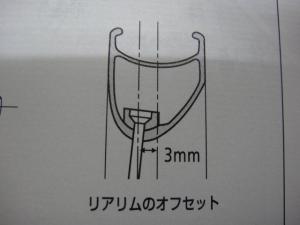
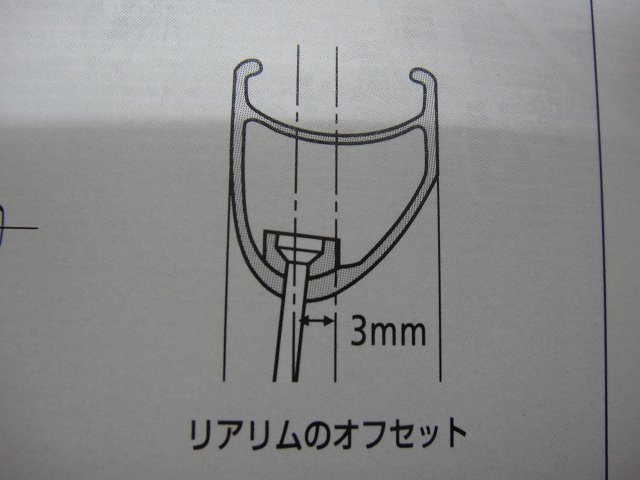
Tangent here: I wrote the other day that no matter how hard you try with offset rims, you can't offset by 10mm, but even with this much offset, it's only 3mm. When we're talking about 1-2mm differences in flange width or rim apex, that's actually quite large.
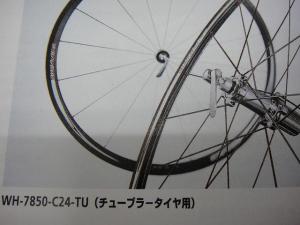
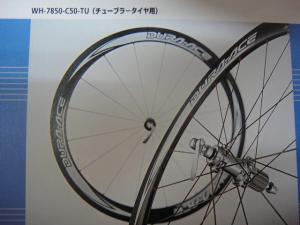
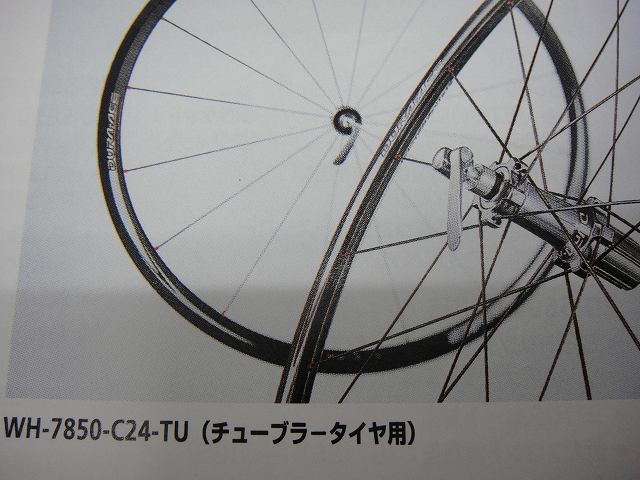
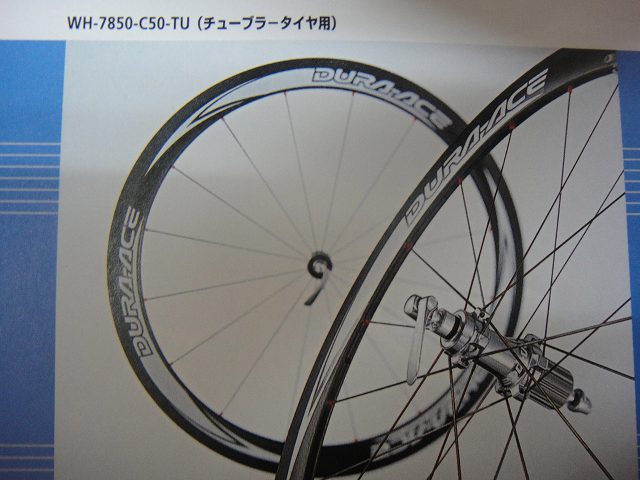
Next, the WH-7850. Since it's almost identical, I think you can lump the WH-7900 into this group too. We're back to Shimano's original design. The outermost spoke on the freewheel side (the spoke I think corresponds to the freewheel-side inpoke in hand-built wheels) is in the anti-porcupine direction, so the spoke that should ideally be most resistant to freehub twist would theoretically have its spoke tension go momentarily slack. I think for hand-built wheels this would be equivalent to reverse Italian lacing.
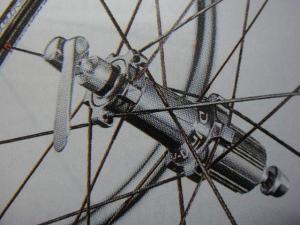
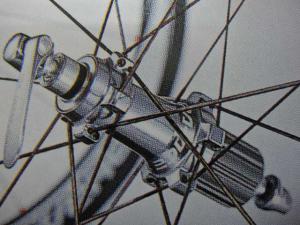
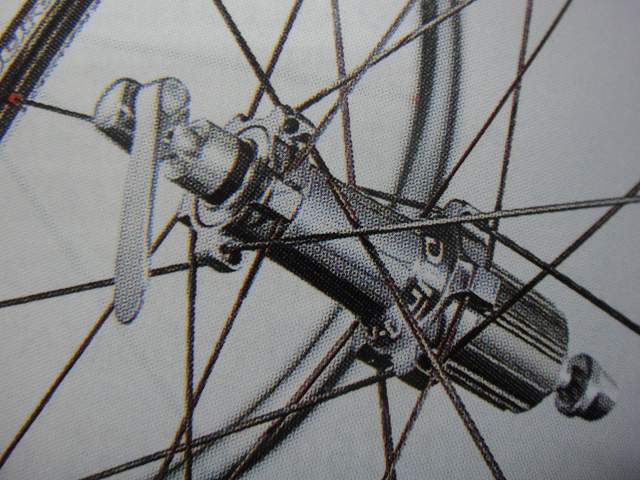
↑But the bigger problem is flange width. In the image above, the top is a C24 hub and the bottom is a C50. As the rim gets taller, they tighten the left flange inward—a specification that makes no sense. I said earlier that 1-2mm differences in this dimension are huge, but the C50's tightening is visibly beyond that even to the eye. There's no C35 wheel for the 7850, but the C35 for the 7900 uses the same narrow-flange hub as the C50.
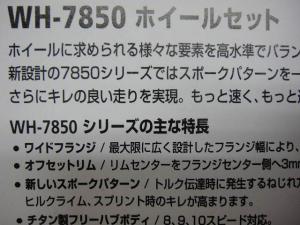
↑Yet they still say it was 「designed to the maximum width」. Maximum... And then the freebody gets slightly lighter again with a pared-down titanium freeybody compared to the WH-7800/7801, now 8/9/10S compatible, and they make sure to note it in a way that's not negative. I mean, if you could make it lighter with a titanium freebody, why not do it from the start?
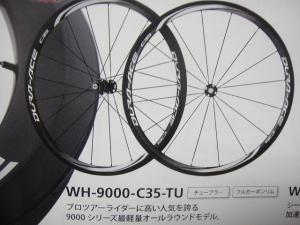
Finally caught up. The WH-9000. Except for the C24, everything is now "Optoval," a 2:1 spoke arrangement.

↑「With conventional 1:1 spoke configuration, spoke tension becomes unbalanced, and whole-wheel damage and nipple loosening, etc., pose potential impacts to durability and strength.」
I got chills transcribing that verbatim. They're saying something pretty serious here. Basically saying you might get hurt riding the Shimano wheels you've been using. That's their assessment of their own wheels that were still on sale yesterday or the day before.
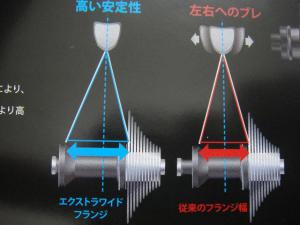
And wide-flange fraud strikes a third time!
I wrote the other day that the C50 WH-7850 or 7900 is prone to left spoke rub when sprinting, but in a way this is self-admission of that.
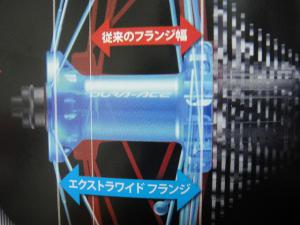
↑The 「conventional wheel」 mentioned here doesn't refer to wheels in general but specifically to the WH-7900, which is clear from the silhouette (the red one). The WH-9000 is a ripoff of Roval and Easton, so it's a wheel without Shimano's originality. Personally, I think it's the second-best design after the WH-7800/7801 series. If they had the time to design their own wheels, I guess researching which other companies' wheel designs have expired patents is more worthwhile. I don't think 12S is coming soon, so I'd say the WH-9000 is a buy(deadpan).
From all these examples, you can see that Shimano wheels have no consistent design philosophy or coherence whatsoever. Nobody can deny that point. You could make the excuse 「we're always putting out what we think is best at the time,」 but even so, there's too much flip-flopping (almost every generation). Mavic's Ksyrium debuted in 1999 and was a truly 10 years-ahead wheel. Well, those 10 years have passed now (laugh). But the fact that it stayed in the lineup for a straight 14 years is worth serious praise. Sure, the level around it rose so it got caught up to, but my impression is it hasn't been completely lapped either. For example, compared to Fulcrum Racing 1, it's more give-and-take, and the Racing 1 debuted in 2005 (announced 2004). The changes Ksyrium has made since its debut amount to carbonizing the front hub body and paring down the rim. If you'd regret buying Ksyrium, it'd be something like 「Dammit! They added porting to the rim the year after I bought mine!」 A manufacturer doesn't self-negate its own previous design. Campagnolo doesn't do things like 「G3? Eh, forget about it」 and abandon their own designs either. Rather, they've evolved with super-high/low flange designs and CULT bearings and such.
Even setting aside questions about wheel performance itself, there's something questionable about this approach: hawking quick-fix designs that change the appearance while saying 「the old one was no good」 and being not valuing the people who bought it. The beginning issue about old Shimano wheels not getting 11S compatibility might be an example (though technically it might really be impossible). But as the number of sprockets increases, at some point merging users in one big discontinuity becomes unavoidable. Manufacturers surely find it painful. But the 10S-exclusive freebody situation makes it seem not painful at all... though that's probably just my imagination. Anyway, there are probably plenty of people supporting this enough that these concerns don't matter, so Shimano will probably keep making complacent wheels like this going forward.
First though. Setting aside the origins of complete wheels (probably Roval, or disk wheels in the broader sense), what really kicked off the whole complete wheel trend was the 1996 Mavic Helium (achievement? or sin?). In other words, you can pretty much grasp the history of complete wheels by going through the major wheel brand catalogs from 1996 onward.
And I've been carefully, carefully collecting those catalogs to read regularly, and there's something that's been nagging at me all this time.
First, an excerpt from the comment I got:
「I have two 7900 wheels, but why doesn't Shimano release a freehub compatible with 9000?」
「Wheel makers put out compatible versions right away, and yet...」
「Structurally impossible? I don't think so.」
「The selling side makes money on replacement sales though」
「I'm never buying Shimano complete wheels again.」
Wow, what a thing to say (←like you have room to talk).
If someone has two 7900 wheels, they have more right to criticize this issue than I do, who doesn't have even one. They also sent me a link to their blog, which I read.
Yeah, I have my doubts about it too.
Not just the recent issue of whether or not to release 11S-compatible freehubs for the old Shimano wheels (which were still in service just days ago), but about Shimano's whole approach to complete wheels in general. Let me write about that below.
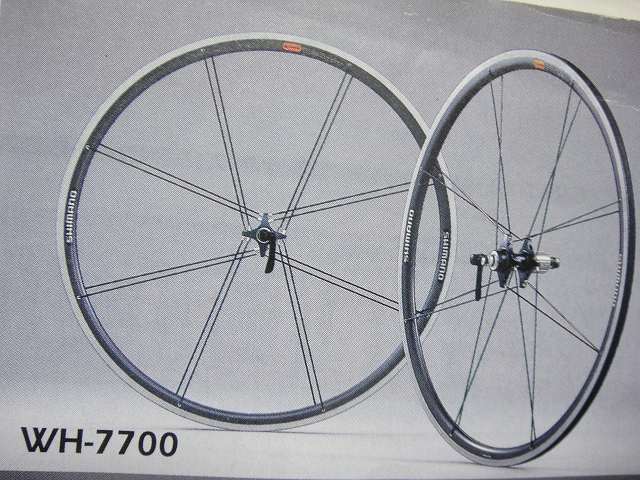
First up, the godfather of Shimano wheels, the WH-7700. The pair-spoke lacing with 16H front and rear was quite shocking.
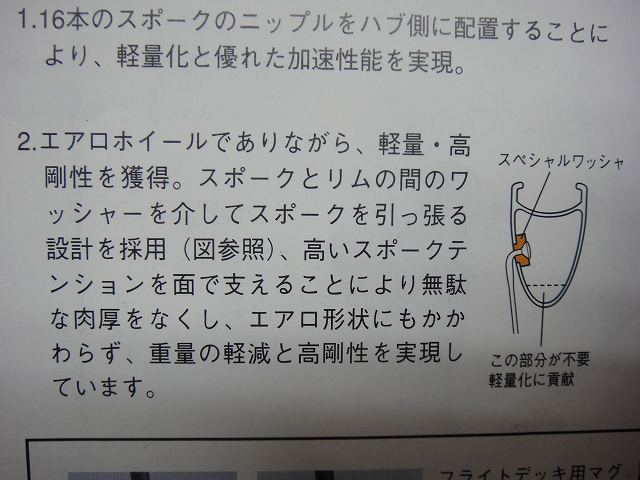
↑What I want you to notice first is the part that says 「this part is unnecessary, contributes to weight reduction」 in the diagram above. You don't need to cut this part—there are plenty of lighter rims than this. This wheel uses hub-side nipples, but the special washers are parts that weigh about as much as nipples, so it's like having nipple weight on both the hub and rim sides. Plus, the weight of those special washers is pretty far out toward the rim.
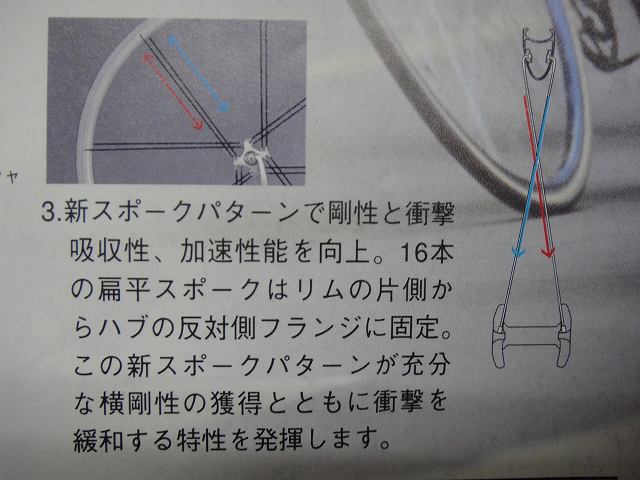
↑But something far more important than that. Where it says 「new spoke pattern」, remember the phrase 「adequate lateral stiffness」.
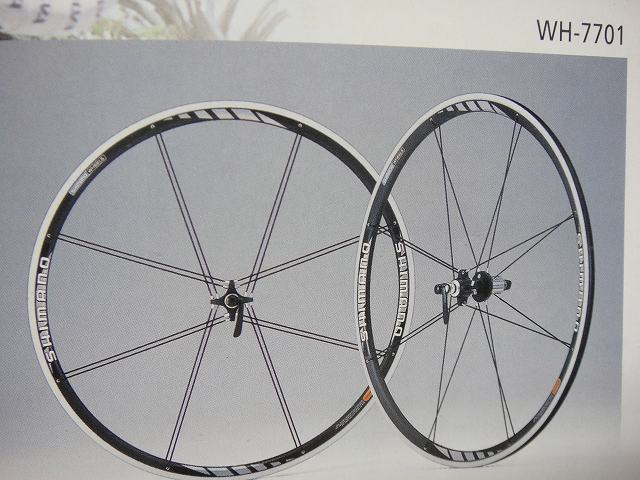
Next is the WH-7701. The biggest change is radial lacing on the rear wheel's freewheel side. I've written repeatedly on this blog about how effective this is at correcting left-right spoke tension imbalance. For hand-built wheels, my position is that you shouldn't do it because of the risk of spoke breakage at the neck and the dishing angle problem (efficiency relative to drive stress).

↑But the real point isn't there—it's that they widened the flange width. Lateral stiffness is up 20%, they say. But didn't they just say something about 「adequate lateral stiffness」 a moment ago?
Anyway, the message is that wider rear hub flanges are better. I call this wide-flange fraud. If you could do it, or if you knew about it, why not do it from the start? The WH-7700 series is full of Shimano's originality in its design.
Next, the WH-7800. 「This part is unnecessary, contributes to weight reduction」? What's that about? The hub structure is a straight copy of Campagnolo (just this era's Dura-Ace hub in all of Shimano's freehub history has this feature), and the spoke arrangement is a straight copy of Mavic Ksyrium, so it became a design lacking originality.

↑Apparently the previous ones were "not Dura-Ace wheels."
↑Remember this part: 「minimal dish quantity securing lateral stiffness」. The antonym of 「minimal」(さいしょうげん) would be 「maximum」, and there's no word 「maximal」(最多限), so shouldn't it be 「minimum」(最小限)? The auto-complete only suggests 「minimum」 and 「restatement」 anyway... But let me not split hairs. The center of the entire hub and the center of the flange width differ by 6.2mm, but there's no flange width notation so I can't calculate the left flange dimension.

Next, the WH-7801.

↑There are two points I want you to remember. First, about wide flanges. The part that says 「designed to the maximum width」.
Second, about the aluminum freehub body. This started with the WH-7800, but it's a 10S-only freebody, and it's actually slightly lighter than the titanium freebody of the 7700 series. The 10S-only specification abandons previous 9S users (obviously on purpose), but they don't mention that here.
The problem is that only this 10S-exclusive freebody on the rear hub has a structure unique in Shimano's history, so you can't swap it with the freebodies of the 7700 or 7900 (you can't convert to 8S, 9S, or 11S).
Wide-flange fraud strikes a second time!
The right flange dimension of the rear hub is, as you can tell from the hub discussion the other day, almost the same even as hubs change. The difference is at most around 1mm. Which means the difference between that 6.2mm and this 10.6mm comes down to the left flange width being different by at least 4mm, even conservatively. If you look at the WH-7800 drawing from earlier, you'll see the WH-7800 doesn't use an offset rim. I think the WH-7801, which combines offset rim design with wide flange design, is Shimano's structural masterpiece of wheels.
Tangent here: I wrote the other day that no matter how hard you try with offset rims, you can't offset by 10mm, but even with this much offset, it's only 3mm. When we're talking about 1-2mm differences in flange width or rim apex, that's actually quite large.
Next, the WH-7850. Since it's almost identical, I think you can lump the WH-7900 into this group too. We're back to Shimano's original design. The outermost spoke on the freewheel side (the spoke I think corresponds to the freewheel-side inpoke in hand-built wheels) is in the anti-porcupine direction, so the spoke that should ideally be most resistant to freehub twist would theoretically have its spoke tension go momentarily slack. I think for hand-built wheels this would be equivalent to reverse Italian lacing.
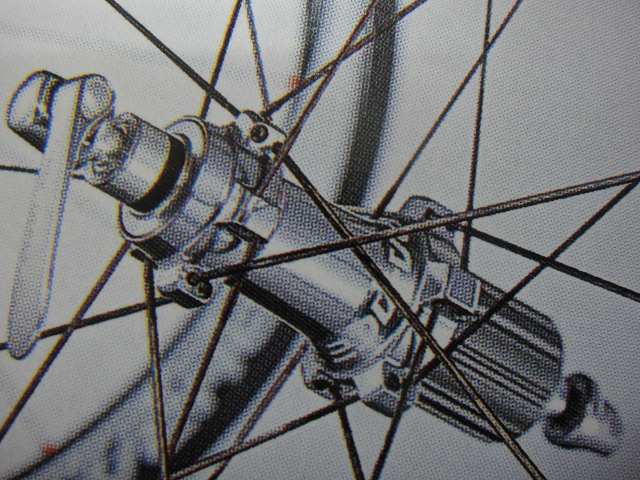
↑But the bigger problem is flange width. In the image above, the top is a C24 hub and the bottom is a C50. As the rim gets taller, they tighten the left flange inward—a specification that makes no sense. I said earlier that 1-2mm differences in this dimension are huge, but the C50's tightening is visibly beyond that even to the eye. There's no C35 wheel for the 7850, but the C35 for the 7900 uses the same narrow-flange hub as the C50.
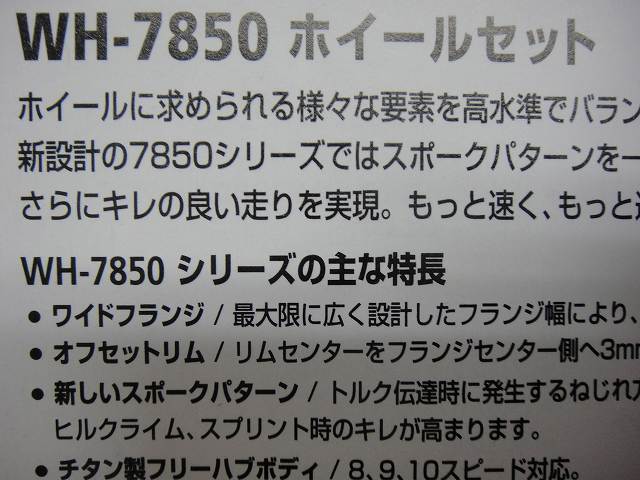
↑Yet they still say it was 「designed to the maximum width」. Maximum... And then the freebody gets slightly lighter again with a pared-down titanium freeybody compared to the WH-7800/7801, now 8/9/10S compatible, and they make sure to note it in a way that's not negative. I mean, if you could make it lighter with a titanium freebody, why not do it from the start?
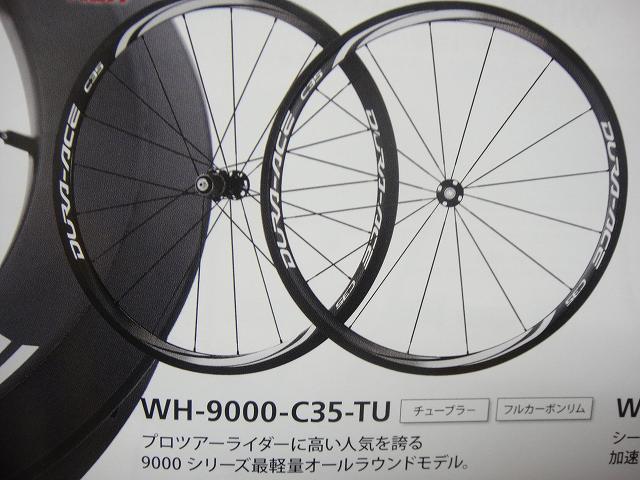
Finally caught up. The WH-9000. Except for the C24, everything is now "Optoval," a 2:1 spoke arrangement.

↑「With conventional 1:1 spoke configuration, spoke tension becomes unbalanced, and whole-wheel damage and nipple loosening, etc., pose potential impacts to durability and strength.」
I got chills transcribing that verbatim. They're saying something pretty serious here. Basically saying you might get hurt riding the Shimano wheels you've been using. That's their assessment of their own wheels that were still on sale yesterday or the day before.
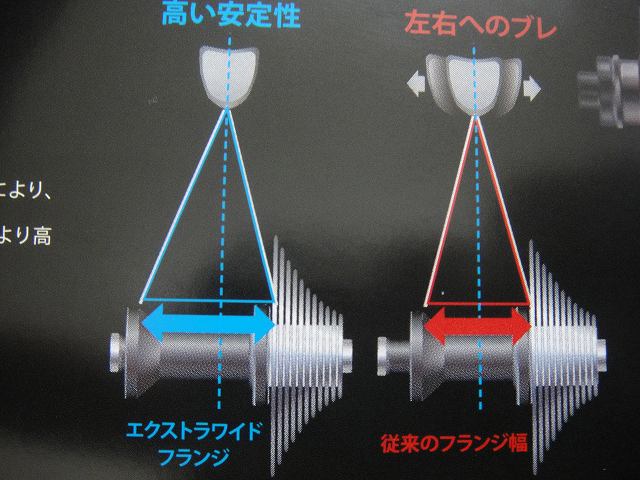
And wide-flange fraud strikes a third time!
I wrote the other day that the C50 WH-7850 or 7900 is prone to left spoke rub when sprinting, but in a way this is self-admission of that.

↑The 「conventional wheel」 mentioned here doesn't refer to wheels in general but specifically to the WH-7900, which is clear from the silhouette (the red one). The WH-9000 is a ripoff of Roval and Easton, so it's a wheel without Shimano's originality. Personally, I think it's the second-best design after the WH-7800/7801 series. If they had the time to design their own wheels, I guess researching which other companies' wheel designs have expired patents is more worthwhile. I don't think 12S is coming soon, so I'd say the WH-9000 is a buy(deadpan).
From all these examples, you can see that Shimano wheels have no consistent design philosophy or coherence whatsoever. Nobody can deny that point. You could make the excuse 「we're always putting out what we think is best at the time,」 but even so, there's too much flip-flopping (almost every generation). Mavic's Ksyrium debuted in 1999 and was a truly 10 years-ahead wheel. Well, those 10 years have passed now (laugh). But the fact that it stayed in the lineup for a straight 14 years is worth serious praise. Sure, the level around it rose so it got caught up to, but my impression is it hasn't been completely lapped either. For example, compared to Fulcrum Racing 1, it's more give-and-take, and the Racing 1 debuted in 2005 (announced 2004). The changes Ksyrium has made since its debut amount to carbonizing the front hub body and paring down the rim. If you'd regret buying Ksyrium, it'd be something like 「Dammit! They added porting to the rim the year after I bought mine!」 A manufacturer doesn't self-negate its own previous design. Campagnolo doesn't do things like 「G3? Eh, forget about it」 and abandon their own designs either. Rather, they've evolved with super-high/low flange designs and CULT bearings and such.
Even setting aside questions about wheel performance itself, there's something questionable about this approach: hawking quick-fix designs that change the appearance while saying 「the old one was no good」 and being not valuing the people who bought it. The beginning issue about old Shimano wheels not getting 11S compatibility might be an example (though technically it might really be impossible). But as the number of sprockets increases, at some point merging users in one big discontinuity becomes unavoidable. Manufacturers surely find it painful. But the 10S-exclusive freebody situation makes it seem not painful at all... though that's probably just my imagination. Anyway, there are probably plenty of people supporting this enough that these concerns don't matter, so Shimano will probably keep making complacent wheels like this going forward.