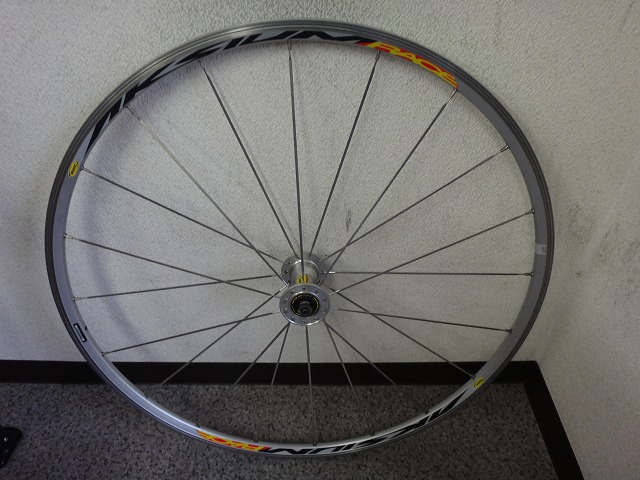
A customer brought in a second generation Axiom wheel for me to work on.
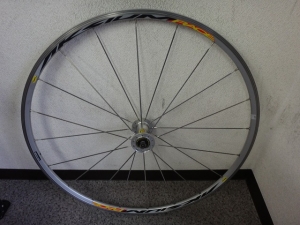
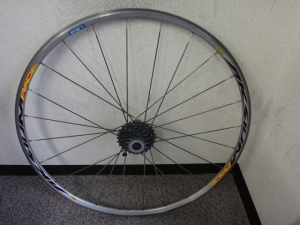
I know it might seem contradictory to the title, but it's not.
The first generation in the Axiom series is called "Axiom,"
and the second generation is called "First Generation Axiom Race."
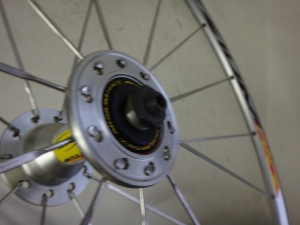
The front hub has the same angled slotted holes as the original generation for aero spokes with the neck-break design, but this one is 20H.
The original Axiom came in a 24H front and rear setup, and the rims were shared front and rear (same part number too).
Starting with this First Generation Axiom Race (second generation Axiom), the front wheel became 20H.
The Second Generation Axiom Race (third generation Axiom) has the same rim but the front hub is straight-spoke compatible.
After measuring the weight of Axium rims across several generations,
I'm pretty confident about this: even at this price point, Mavic controls rim wall thickness
to create different front and rear rim weights.
The original Axiom rim (both front and rear at 24H) weighs about 590g, but
the 20H front rim from the second generation onwards weighs about 540g
(the 24H rear rim remains about 590g even in later generations).
Since the rim depth doesn't differ front to rear, this is clearly intentional.
With something like Fulcrum's Racing Zero, the rim depth does differ front to rear,
so naturally the rear rim is heavier. Whether you call this kind of strategy
"lightening the front rim" or "beefing up the rear rim" is a matter of perspective.
In the case of Axiom, based on the second generation results,
the original rims were basically "rear rims on both ends,"
so we can say the front rim was lightened.
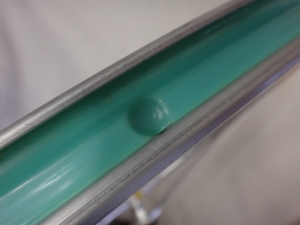
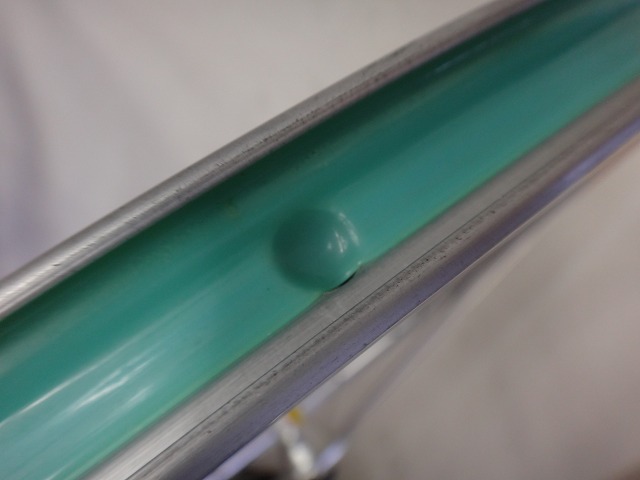
There was a Schwalbe 16mm rim tape on it, but the width wasn't right,
and there were several spots where the rim holes were visible through the gaps, so I replaced it.
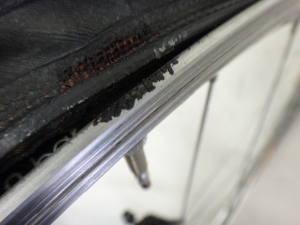
Unrelated to this wheel, but looking at a customer's wheel after they removed the tire,
I've been able to say "you were running the red sidewall Michelin Pro Race," and surprised them.
That's because Michelin tires often have their sidewalls melt right below the valve
and stick to the bead hook.
This Axiom Race came to me with tires on, and they were Lithion black.
That sticking residue comes right off with parts cleaner.
During the inspection, I did fine spoke truing all over the wheel,
and the centering issue got corrected too.
(I check the direction of the misalignment before starting, then do the truing on the correction side, so it works out.)

I know it might seem contradictory to the title, but it's not.
The first generation in the Axiom series is called "Axiom,"
and the second generation is called "First Generation Axiom Race."

The front hub has the same angled slotted holes as the original generation for aero spokes with the neck-break design, but this one is 20H.
The original Axiom came in a 24H front and rear setup, and the rims were shared front and rear (same part number too).
Starting with this First Generation Axiom Race (second generation Axiom), the front wheel became 20H.
The Second Generation Axiom Race (third generation Axiom) has the same rim but the front hub is straight-spoke compatible.
After measuring the weight of Axium rims across several generations,
I'm pretty confident about this: even at this price point, Mavic controls rim wall thickness
to create different front and rear rim weights.
The original Axiom rim (both front and rear at 24H) weighs about 590g, but
the 20H front rim from the second generation onwards weighs about 540g
(the 24H rear rim remains about 590g even in later generations).
Since the rim depth doesn't differ front to rear, this is clearly intentional.
With something like Fulcrum's Racing Zero, the rim depth does differ front to rear,
so naturally the rear rim is heavier. Whether you call this kind of strategy
"lightening the front rim" or "beefing up the rear rim" is a matter of perspective.
In the case of Axiom, based on the second generation results,
the original rims were basically "rear rims on both ends,"
so we can say the front rim was lightened.
There was a Schwalbe 16mm rim tape on it, but the width wasn't right,
and there were several spots where the rim holes were visible through the gaps, so I replaced it.

Unrelated to this wheel, but looking at a customer's wheel after they removed the tire,
I've been able to say "you were running the red sidewall Michelin Pro Race," and surprised them.
That's because Michelin tires often have their sidewalls melt right below the valve
and stick to the bead hook.
This Axiom Race came to me with tires on, and they were Lithion black.
That sticking residue comes right off with parts cleaner.
During the inspection, I did fine spoke truing all over the wheel,
and the centering issue got corrected too.
(I check the direction of the misalignment before starting, then do the truing on the correction side, so it works out.)