Today it's wheels again (and so on).
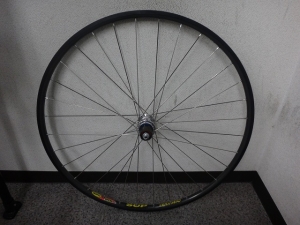
I built the rear wheel with an Open Pro rim.
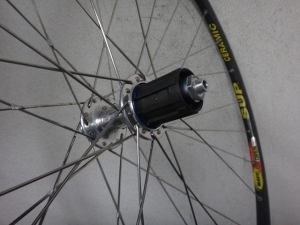
The hub is a Chorus 32H with a Shimano 11-speed freewheel body installed,
and I built it with a half-competition 4-cross lace pattern with spoke twist.
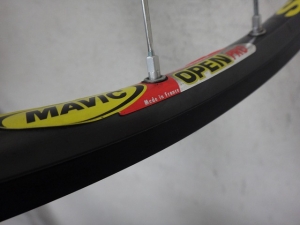
The sticker is from the first generation.
↑This is the first generation since it became a sticker,
but there are earlier versions with "OPEN PRO" marked with laser engraving,
so technically this is the second generation design.

The customer wanted the bearings in the freewheel body replaced from the original ones,
so I took in same-size bearings.
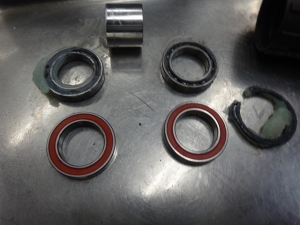
The original ones have a seal on one side, but these have seals on both sides.
The inside of a steel freewheel body tends to rust easily,
so the customer wanted anti-rust grease applied,
so I did that while replacing the bearings.
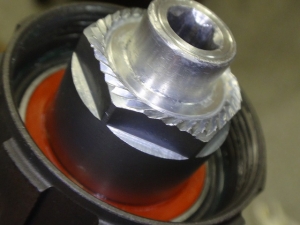
The right axle nut is an older type.
On current products the nut part and spacer part are separate,
but on this one they're integrated together.
Since it's a reverse thread, it's compatible with current products.
Perhaps because the thread pitch is slightly deeper, the older type
seems less prone to the usual loosening problem.

The customer has a specific grease they want to apply to the freewheel ratchet,
so I left it as-is.
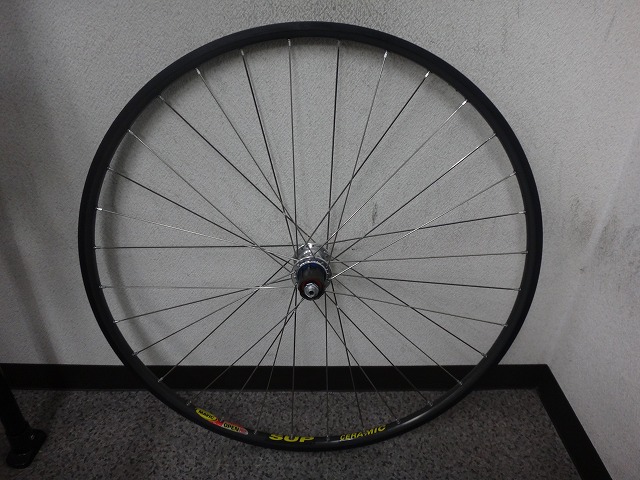
I built the rear wheel with an Open Pro rim.
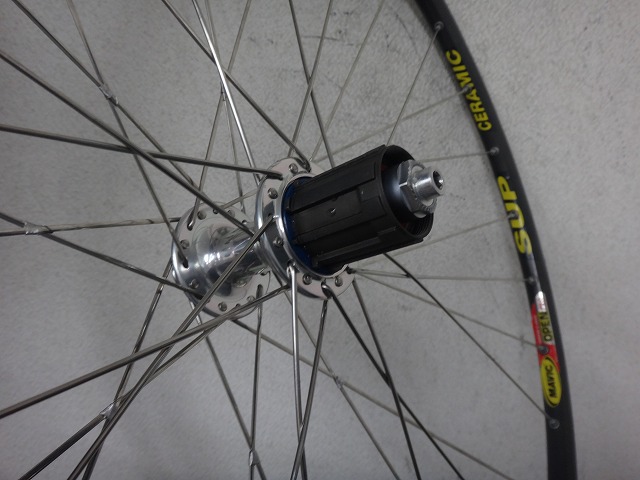
The hub is a Chorus 32H with a Shimano 11-speed freewheel body installed,
and I built it with a half-competition 4-cross lace pattern with spoke twist.
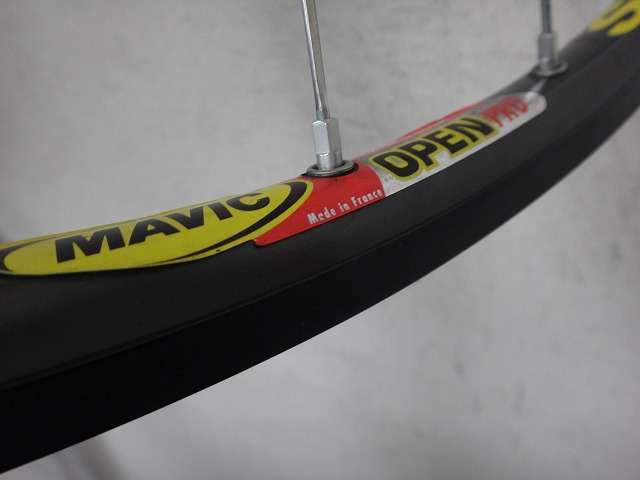
The sticker is from the first generation.
↑This is the first generation since it became a sticker,
but there are earlier versions with "OPEN PRO" marked with laser engraving,
so technically this is the second generation design.
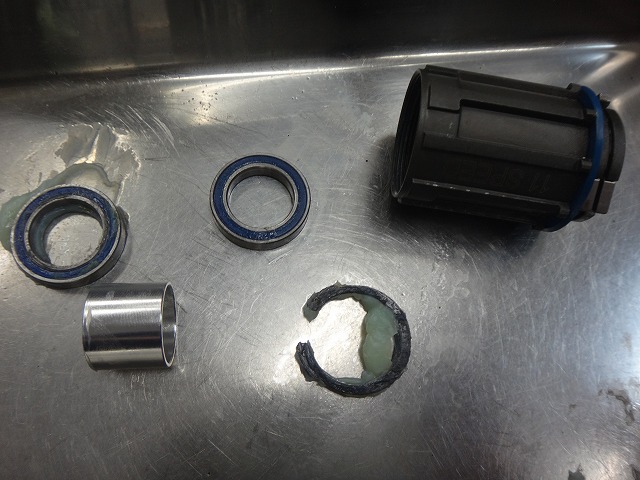
The customer wanted the bearings in the freewheel body replaced from the original ones,
so I took in same-size bearings.
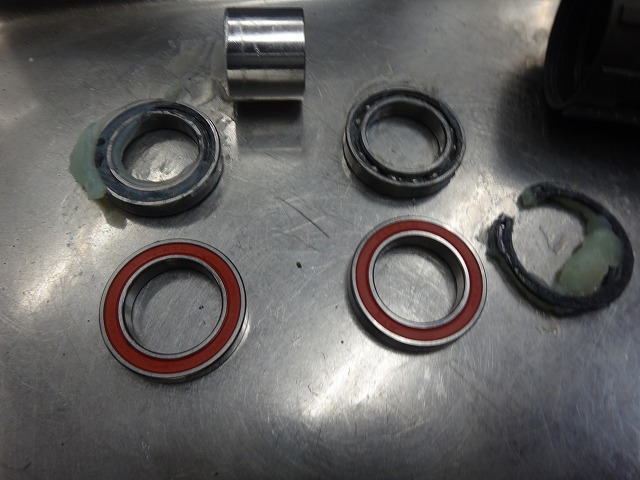
The original ones have a seal on one side, but these have seals on both sides.
The inside of a steel freewheel body tends to rust easily,
so the customer wanted anti-rust grease applied,
so I did that while replacing the bearings.
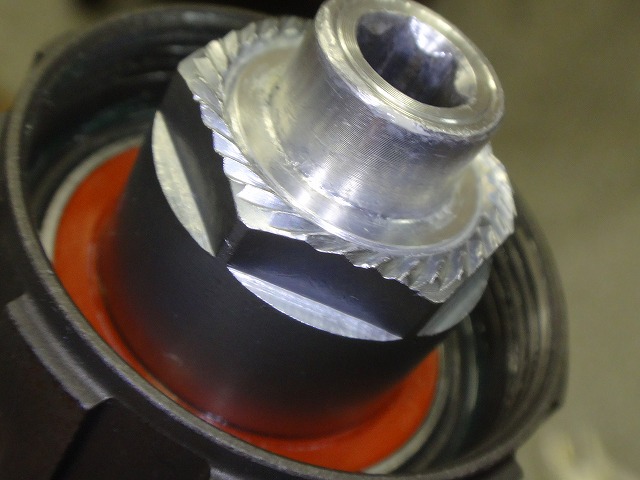
The right axle nut is an older type.
On current products the nut part and spacer part are separate,
but on this one they're integrated together.
Since it's a reverse thread, it's compatible with current products.
Perhaps because the thread pitch is slightly deeper, the older type
seems less prone to the usual loosening problem.
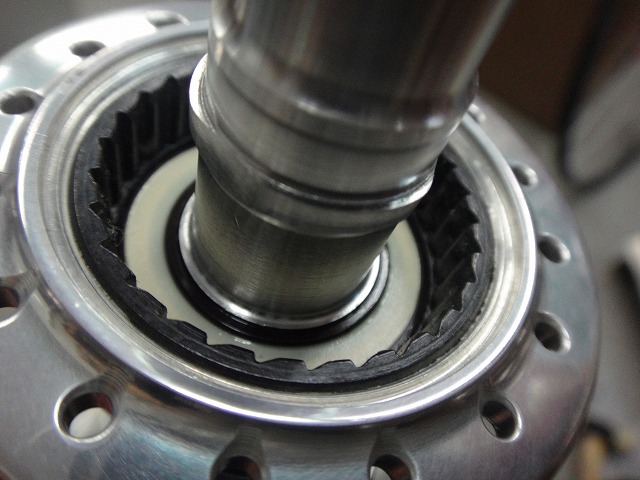
The customer has a specific grease they want to apply to the freewheel ratchet,
so I left it as-is.