A customer asked me to do a major overhaul on their commuter crossbike,
and I've been working on it at my suggestion.
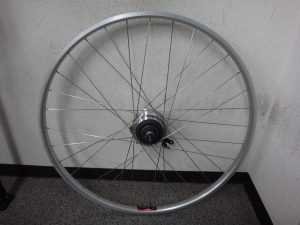
As part of that, I built the rear wheel.
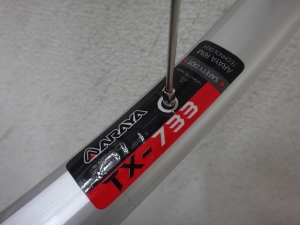
The rim is an Araya TX733, a 700C rim.
It's a double-wall rim with a width that suits a crossbike,
and I needed a Presta valve hole with a silver rim,
so this is what I ended up with after searching around.
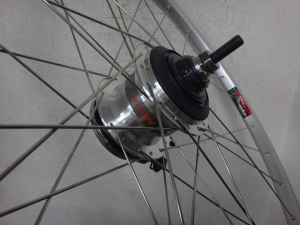
The hub is a Nexus (Shimano's internal hub brand) internal 7-speed with roller brake.
In terms of utility bikes (mamachari), it's in the price range used on high-end models.
For sport bikes, there's also Alfine, which is an even more expensive component group.
I built it as an SG-C3000-7R hub, 32H, with DT Champion #14 spokes in JIS lacing pattern.
I chose JIS lacing because the brake is hub-mounted.
Even with the roller brake attachment, there's some dish to the hub,
but the difference wasn't significant enough to warrant using different spoke lengths or different spoke diameters, so I didn't bother with that.
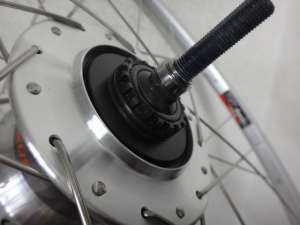
↑This is the spline for attaching the roller brake, but
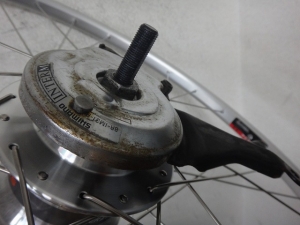
on the left side, the roller brake's locking nut becomes the hub end,
so the brake needs to be attached when centering the wheel.
If I were attaching chain stays on only the right side,
I'd need to account for their thickness,
but since I'm using chain stays on both sides this time, it doesn't matter.
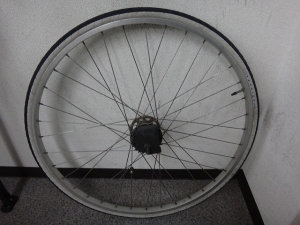
Here's the original wheel.

It's a Nexus internal 3-speed hub with a steel hub shell, but
it's not just a simple internal 3-speed—
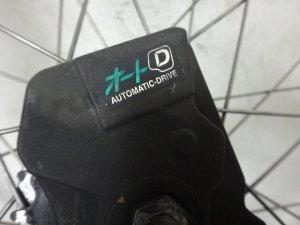
it has an "Auto D" automatic shifting system.
This system measures speed from a magnet attached to the wheel
and automatically shifts based on that, but
frankly, it's more trouble than it's worth.
On uphill sections it shifts to an awkward gear,
and on flat ground when you put in a little power, it shifts to a hard gear at the wrong time.
Unlike cars, automatic transmissions on bicycles are just annoying, frankly.
You can adjust the speed range at which it shifts to some degree based on your preference,
but you can't avoid unintended shifts.
What's even more annoying is that if the battery dies or the system breaks,
it locks into the heaviest gear (which would be the top gear on a derailleur system) as a single speed.
That said, Shimano's internal 3-speed has three states: "no internal shifting," "one gear lighter," and "two gears lighter,"
so even in its heaviest mode it's just the hub with no internal shifting.
(On the customer's bike, it's a 31T front × 20T rear)
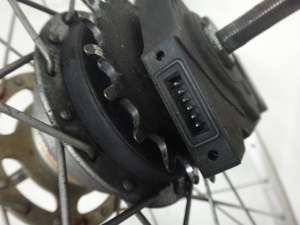
So I've tried to revive the Auto D in the past,
but over these last few years I've just left it broken.
For this rear wheel, I sometimes do true work, but
the brass nipples seem to be rusted inside, and the nipples don't turn smoothly.
The spoke tension is quite low overall, and I can't even tighten it properly,
so rather than replace all the spokes, I figured I might as well
replace the hub and rim too. That's the idea behind this job.
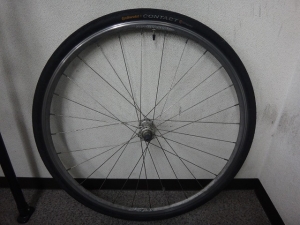
The front wheel is also beat up, so I'll rebuild that too.

The rim is an ALEXRIMS DA22. The front wheel was replaced at some point.
It's at least double-walled, which is good, but
the customer's front brake is a cantilever brake, and
from years of use the brake zone is quite worn, and
these super-long brass nipples won't turn at all either, so I'm replacing them.
The hub internals are pretty damaged too, so I'm replacing the hub as well.
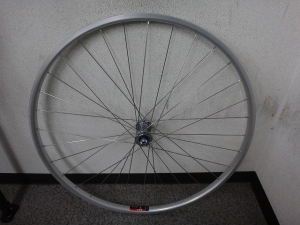
Since I'm replacing the hub, rim, spokes, and nipples,
this is more like building a completely new wheel rather than rebuilding the old one.
In terms of "Ship of Theseus," there's no gradual component replacement process—
I'm essentially providing a second ship altogether.
Though I am reusing the tire and tube.
The rim is the same TX733 as the rear rim.
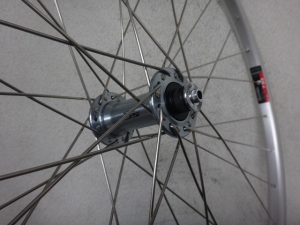
The hub is a 105-grade HB-5800, 32H in silver.
Like the component group itself, there's also a black version of the same model,
but I was pretty bummed out that the included quick release is black even on the silver hub.
105 isn't such a budget-conscious grade that you shouldn't complain about stuff like that, I'd think.
I laced it the same way as the rear wheel with DT Champion #14 spokes in a six-cross pattern,
but I used Italian lacing instead of JIS lacing.
It seems utility bike front wheels use JIS lacing
so that the wheel assembly doesn't change even if the wheel gets flipped around randomly
during things like tire and tube replacement, but
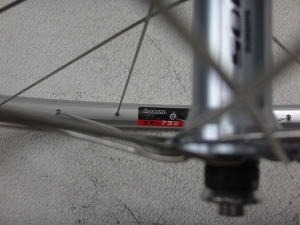
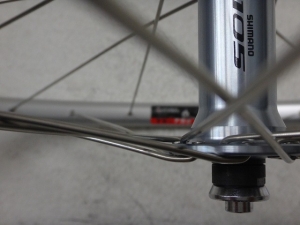
↑since this customer doesn't seem to care about the logo orientation,
I went with Italian lacing.
and I've been working on it at my suggestion.

As part of that, I built the rear wheel.

The rim is an Araya TX733, a 700C rim.
It's a double-wall rim with a width that suits a crossbike,
and I needed a Presta valve hole with a silver rim,
so this is what I ended up with after searching around.
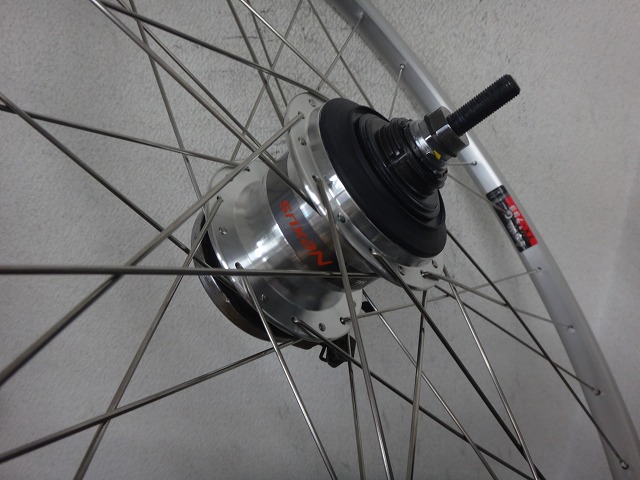
The hub is a Nexus (Shimano's internal hub brand) internal 7-speed with roller brake.
In terms of utility bikes (mamachari), it's in the price range used on high-end models.
For sport bikes, there's also Alfine, which is an even more expensive component group.
I built it as an SG-C3000-7R hub, 32H, with DT Champion #14 spokes in JIS lacing pattern.
I chose JIS lacing because the brake is hub-mounted.
Even with the roller brake attachment, there's some dish to the hub,
but the difference wasn't significant enough to warrant using different spoke lengths or different spoke diameters, so I didn't bother with that.
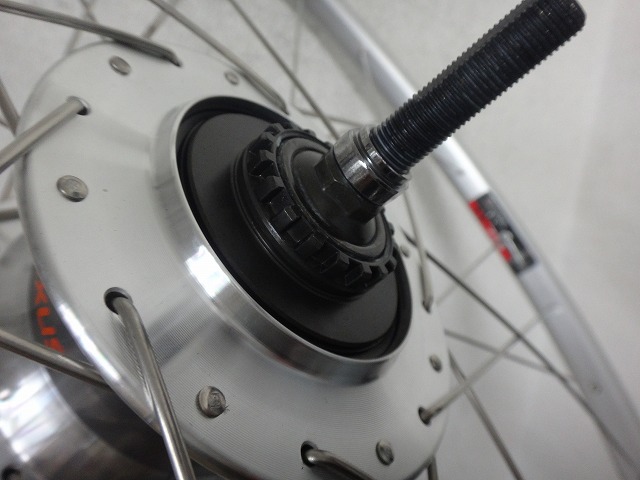
↑This is the spline for attaching the roller brake, but
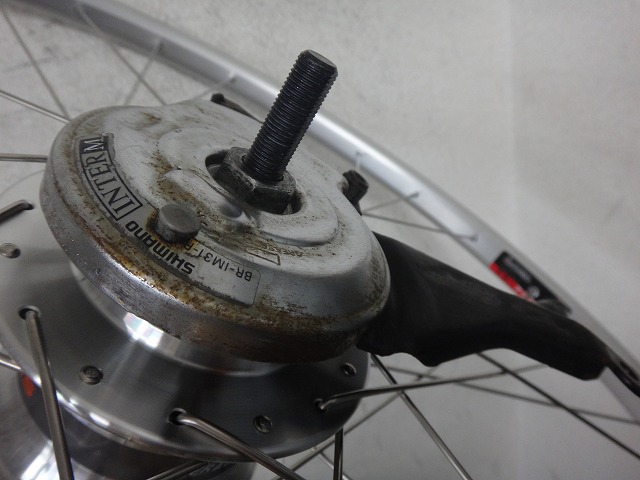
on the left side, the roller brake's locking nut becomes the hub end,
so the brake needs to be attached when centering the wheel.
If I were attaching chain stays on only the right side,
I'd need to account for their thickness,
but since I'm using chain stays on both sides this time, it doesn't matter.
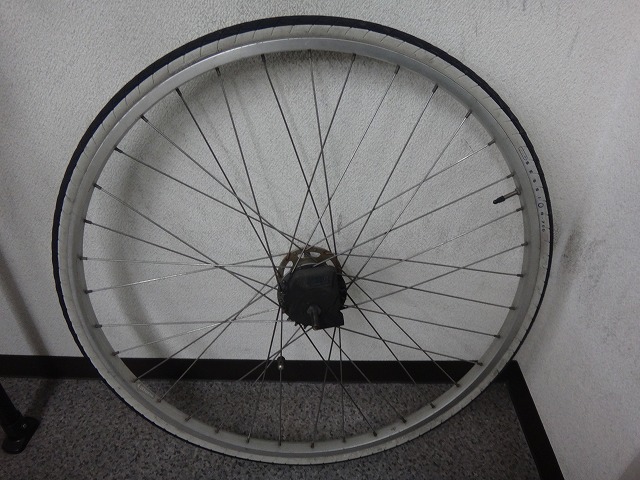
Here's the original wheel.

It's a Nexus internal 3-speed hub with a steel hub shell, but
it's not just a simple internal 3-speed—
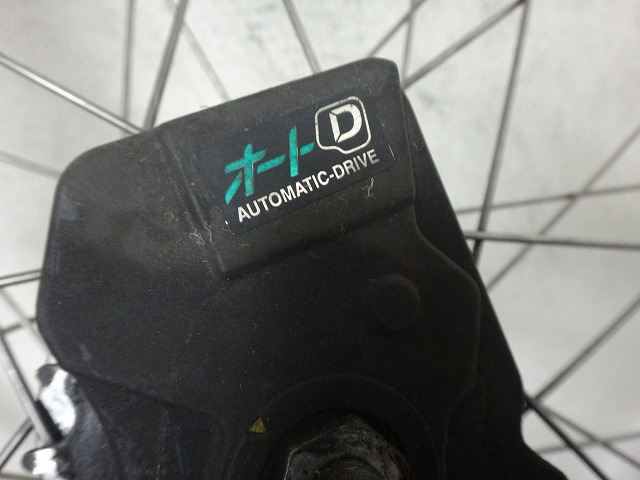
it has an "Auto D" automatic shifting system.
This system measures speed from a magnet attached to the wheel
and automatically shifts based on that, but
frankly, it's more trouble than it's worth.
On uphill sections it shifts to an awkward gear,
and on flat ground when you put in a little power, it shifts to a hard gear at the wrong time.
Unlike cars, automatic transmissions on bicycles are just annoying, frankly.
You can adjust the speed range at which it shifts to some degree based on your preference,
but you can't avoid unintended shifts.
What's even more annoying is that if the battery dies or the system breaks,
it locks into the heaviest gear (which would be the top gear on a derailleur system) as a single speed.
That said, Shimano's internal 3-speed has three states: "no internal shifting," "one gear lighter," and "two gears lighter,"
so even in its heaviest mode it's just the hub with no internal shifting.
(On the customer's bike, it's a 31T front × 20T rear)
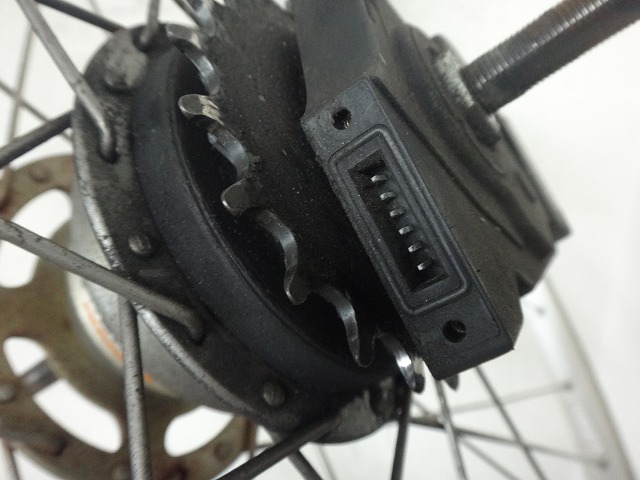
So I've tried to revive the Auto D in the past,
but over these last few years I've just left it broken.
For this rear wheel, I sometimes do true work, but
the brass nipples seem to be rusted inside, and the nipples don't turn smoothly.
The spoke tension is quite low overall, and I can't even tighten it properly,
so rather than replace all the spokes, I figured I might as well
replace the hub and rim too. That's the idea behind this job.
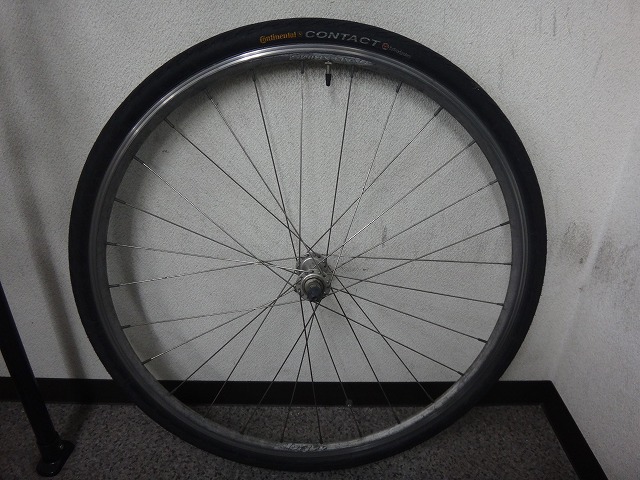
The front wheel is also beat up, so I'll rebuild that too.
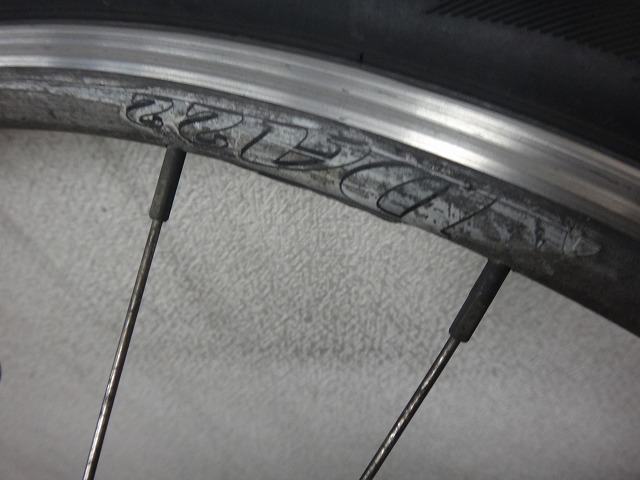
The rim is an ALEXRIMS DA22. The front wheel was replaced at some point.
It's at least double-walled, which is good, but
the customer's front brake is a cantilever brake, and
from years of use the brake zone is quite worn, and
these super-long brass nipples won't turn at all either, so I'm replacing them.
The hub internals are pretty damaged too, so I'm replacing the hub as well.

Since I'm replacing the hub, rim, spokes, and nipples,
this is more like building a completely new wheel rather than rebuilding the old one.
In terms of "Ship of Theseus," there's no gradual component replacement process—
I'm essentially providing a second ship altogether.
Though I am reusing the tire and tube.
The rim is the same TX733 as the rear rim.
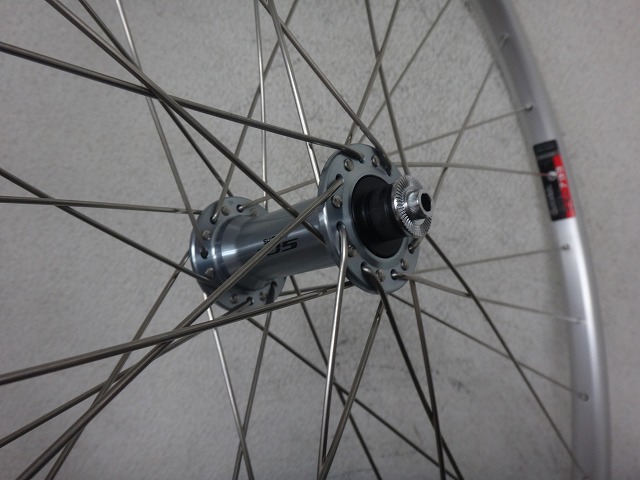
The hub is a 105-grade HB-5800, 32H in silver.
Like the component group itself, there's also a black version of the same model,
but I was pretty bummed out that the included quick release is black even on the silver hub.
105 isn't such a budget-conscious grade that you shouldn't complain about stuff like that, I'd think.
I laced it the same way as the rear wheel with DT Champion #14 spokes in a six-cross pattern,
but I used Italian lacing instead of JIS lacing.
It seems utility bike front wheels use JIS lacing
so that the wheel assembly doesn't change even if the wheel gets flipped around randomly
during things like tire and tube replacement, but

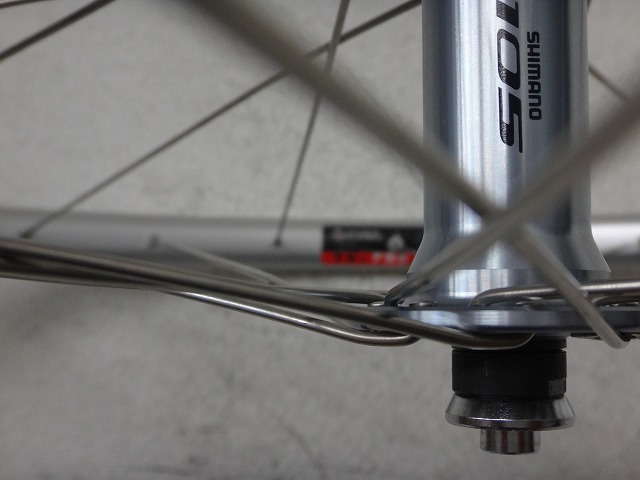
↑since this customer doesn't seem to care about the logo orientation,
I went with Italian lacing.