Wheels again today (and so on).
Continuing from the other day.
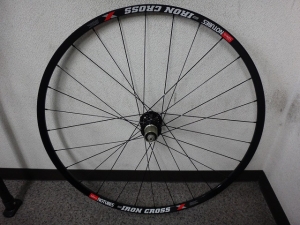
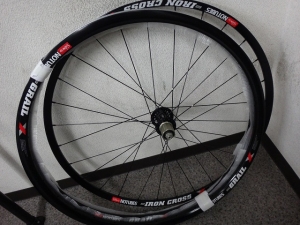
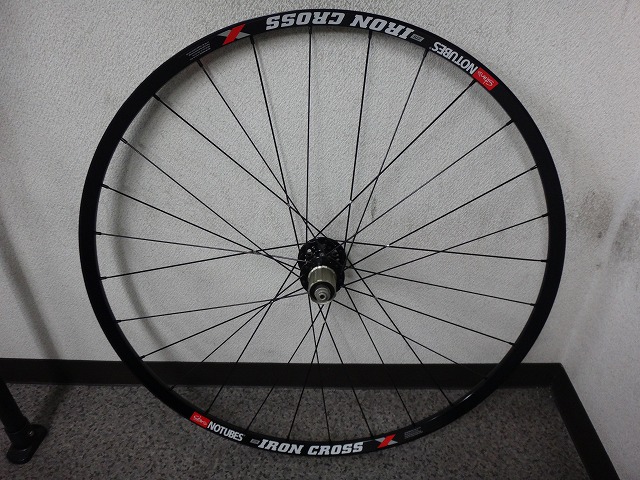
Built the rear wheel with an Iron Cross rim.
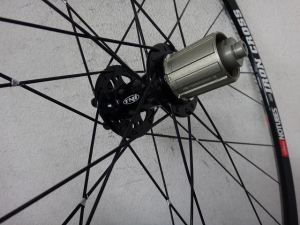
Tni disc hub 28H black semi-comp 46-spoke JIS lacing with crossed spokes.
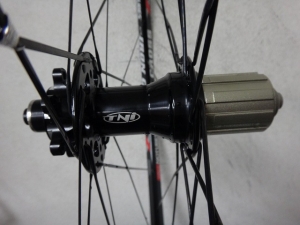
This hub has reversed high-low flanges, so
tensioning the non-drive side is extremely difficult.
Build it normally and you'll end up with a sub-par wheel.
When I usually build rear wheels with Evolight or Leaf hubs, I benefit from
favorable hub dimensions without really thinking about it—but when those
same benefits come back with a negative sign, it's shocking how challenging it becomes.
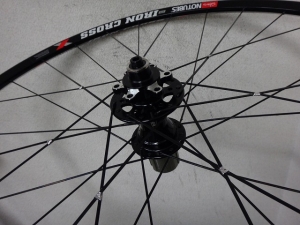
If the rim were 28H and the rotor mounting could be centerlock instead of 6-bolt,
I'd recommend a Shimano CX75 hub,
but this time the customer brought this hub, so I did my best under the given constraints.
It turned out more respectable than a rear wheel built with equal-diameter
disc hubs using the same spoke count on both sides.
The same customer also needs a Grail 28H rim built with
a Tni disc hub. I'm planning to ask for approval to build this rear wheel
with semi-championship-grade spec (if using black spokes, that would be Sapim Leader for availability).
The spoke length for the drive side when building with Grail × 14 spokes—
when changing spoke ratio from 85% to 100%, the weight increase is roughly 16g.
Since there's more weight difference between Iron Cross and Grail than that,
I'll propose differentiating them: the Iron Cross build optimized for lightness,
and the Grail build optimized for stiffness.
Bonus
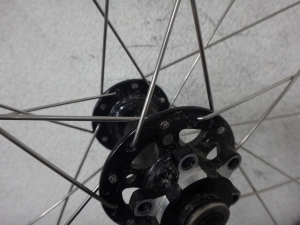
Previously, I rebuilt wheels that had been built with a Tni disc hub for another project,
and the front wheel was built with full-comp 24H Italian four-four lacing.
Shooting the rim would reveal the customer's identity because it's such a distinctive rim,
so I was asked not to post it here. However, I got permission to shoot just the hub area.
I couldn't use it for "Wheels again today (and so on)," so
I built another wheel that day instead.
Supposedly professional work, but apparently it was built at a "playing house" level,
and the customer is now uncomfortable going back to that shop.
The front wheel had slight lateral runout, which by itself is
minor enough to go out and ride with, but
the radial runout was significant and there was slight centering drift.
The compromise threshold was too low.
Also, with a disc hub, there's offset even on the front,
so the spoke lengths differ between left and right, but
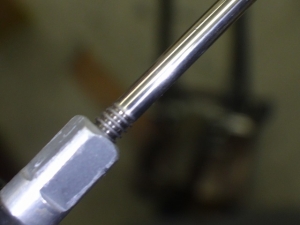
↑Right side
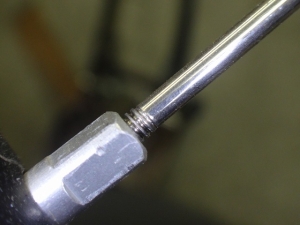
↑Left side (rotor side)
On both sides, the spoke thread engagement was extremely shallow with visible threads.

The rear wheel is also full-comp 24H Italian four-four lacing.
On this rear wheel, the rim is badly off-center toward the drive side,
and in that case the spoke tension difference between left and right
should be smaller than when the wheel is centered,
yet the drive side felt loose.
This is exactly what "build it normally and you get sub-par" means.
I'd almost never build with reversed high-low hubs using equal diameter and spoke count,
so having an actual sample someone else made is genuinely helpful.

↑Drive side
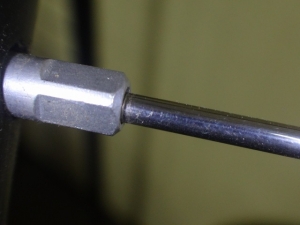
↑Non-drive side
They look dark in the light, but they're silver spokes.
When I loosened the non-drive side nipples to show as much thread as the drive side,
the wheel came into nearly perfect center.
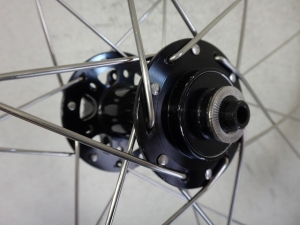
Rebuilt it.
Front wheel is full-comp 64-spoke reverse Italian lacing,
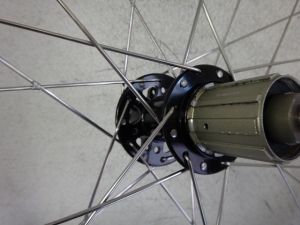
rear wheel is full-comp 46-spoke JIS lacing with crossed spokes.
The front wheel might have worked with 66-spoke lacing too.
The rear wheel came out pretty respectable.
Semi-comp wasn't in the budget,
so I made do with full-comp.
It was fortunate that the rim could handle proper tension better than the Iron Cross.
Continuing from the other day.
Built the rear wheel with an Iron Cross rim.

Tni disc hub 28H black semi-comp 46-spoke JIS lacing with crossed spokes.
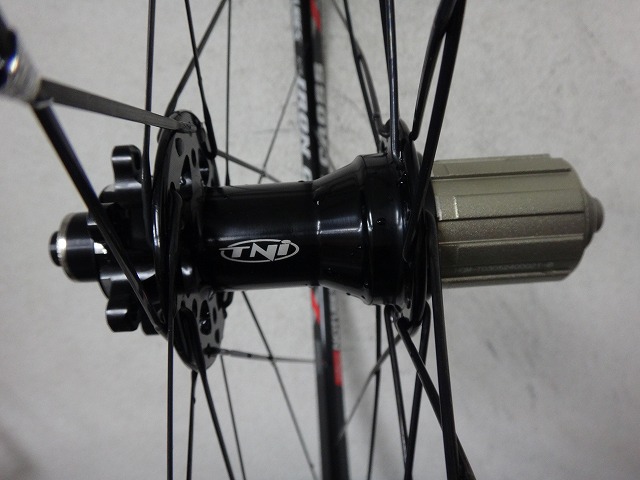
This hub has reversed high-low flanges, so
tensioning the non-drive side is extremely difficult.
Build it normally and you'll end up with a sub-par wheel.
When I usually build rear wheels with Evolight or Leaf hubs, I benefit from
favorable hub dimensions without really thinking about it—but when those
same benefits come back with a negative sign, it's shocking how challenging it becomes.
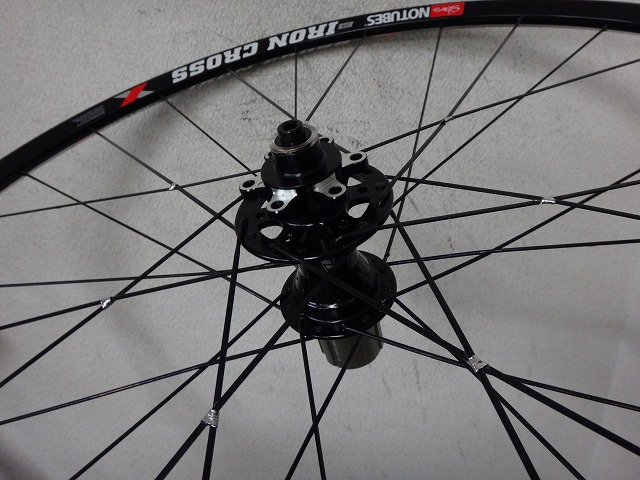
If the rim were 28H and the rotor mounting could be centerlock instead of 6-bolt,
I'd recommend a Shimano CX75 hub,
but this time the customer brought this hub, so I did my best under the given constraints.
It turned out more respectable than a rear wheel built with equal-diameter
disc hubs using the same spoke count on both sides.
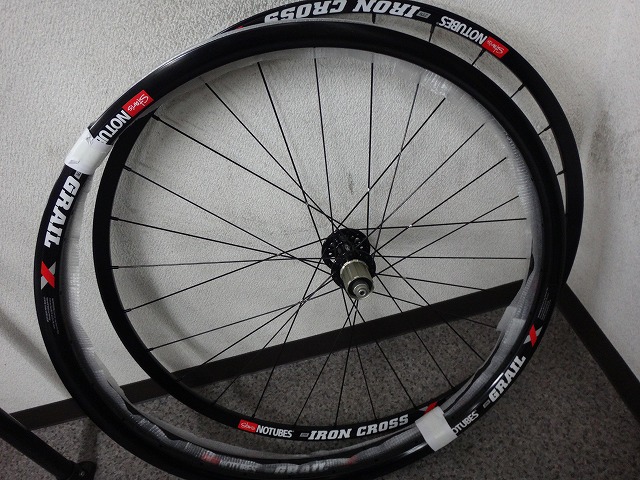
The same customer also needs a Grail 28H rim built with
a Tni disc hub. I'm planning to ask for approval to build this rear wheel
with semi-championship-grade spec (if using black spokes, that would be Sapim Leader for availability).
The spoke length for the drive side when building with Grail × 14 spokes—
when changing spoke ratio from 85% to 100%, the weight increase is roughly 16g.
Since there's more weight difference between Iron Cross and Grail than that,
I'll propose differentiating them: the Iron Cross build optimized for lightness,
and the Grail build optimized for stiffness.
Bonus
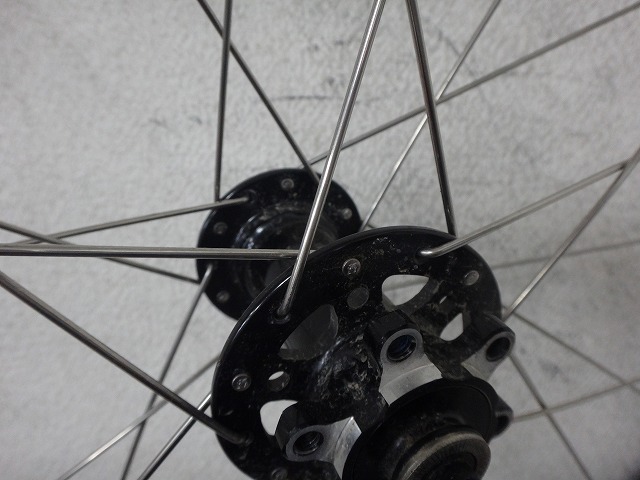
Previously, I rebuilt wheels that had been built with a Tni disc hub for another project,
and the front wheel was built with full-comp 24H Italian four-four lacing.
Shooting the rim would reveal the customer's identity because it's such a distinctive rim,
so I was asked not to post it here. However, I got permission to shoot just the hub area.
I built another wheel that day instead.
Supposedly professional work, but apparently it was built at a "playing house" level,
and the customer is now uncomfortable going back to that shop.
The front wheel had slight lateral runout, which by itself is
minor enough to go out and ride with, but
the radial runout was significant and there was slight centering drift.
The compromise threshold was too low.
Also, with a disc hub, there's offset even on the front,
so the spoke lengths differ between left and right, but
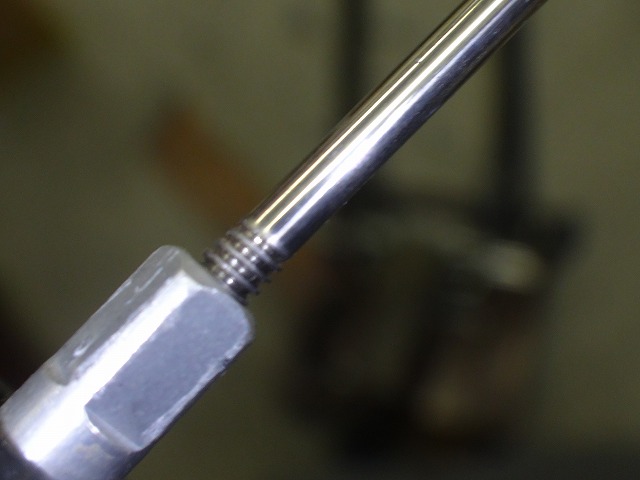
↑Right side
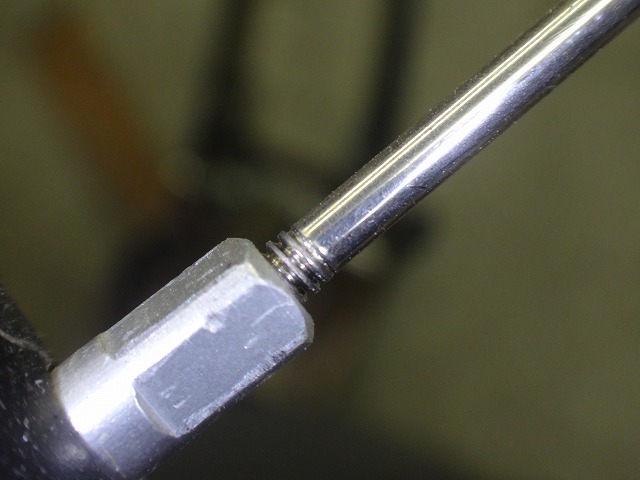
↑Left side (rotor side)
On both sides, the spoke thread engagement was extremely shallow with visible threads.
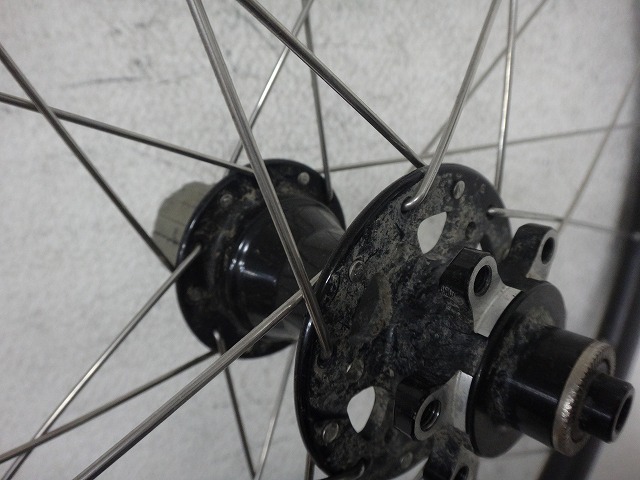
The rear wheel is also full-comp 24H Italian four-four lacing.
On this rear wheel, the rim is badly off-center toward the drive side,
and in that case the spoke tension difference between left and right
should be smaller than when the wheel is centered,
yet the drive side felt loose.
This is exactly what "build it normally and you get sub-par" means.
I'd almost never build with reversed high-low hubs using equal diameter and spoke count,
so having an actual sample someone else made is genuinely helpful.

↑Drive side
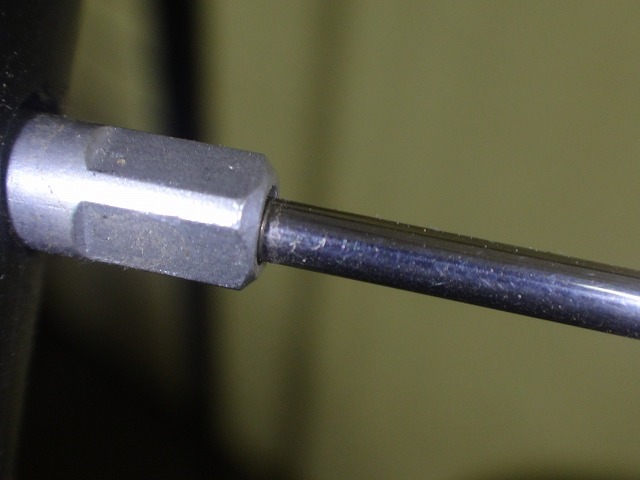
↑Non-drive side
They look dark in the light, but they're silver spokes.
When I loosened the non-drive side nipples to show as much thread as the drive side,
the wheel came into nearly perfect center.

Rebuilt it.
Front wheel is full-comp 64-spoke reverse Italian lacing,
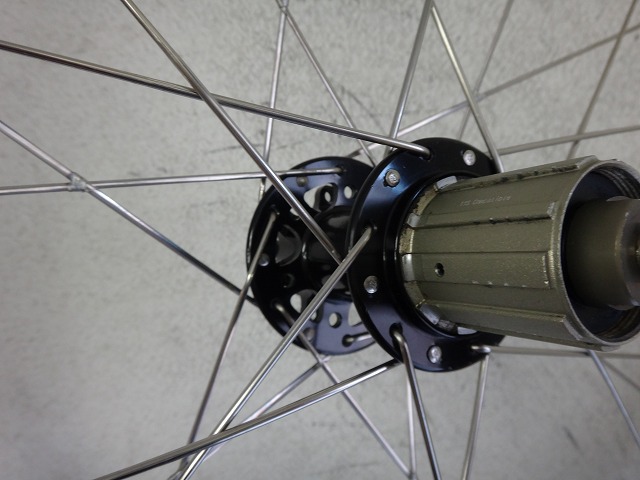
rear wheel is full-comp 46-spoke JIS lacing with crossed spokes.
The front wheel might have worked with 66-spoke lacing too.
The rear wheel came out pretty respectable.
Semi-comp wasn't in the budget,
so I made do with full-comp.
It was fortunate that the rim could handle proper tension better than the Iron Cross.