Another day, another wheel (and so on).
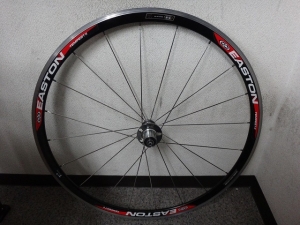
A customer left me with an Easton Tempest II rear wheel.
The sticker says Easton on it,
but the specs are identical to a Velomax wheel—
it's not really an Easton wheel.
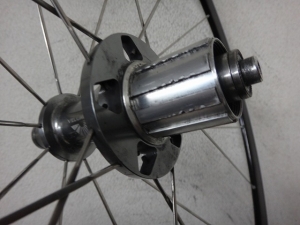
Because the hub is still a Velomax.
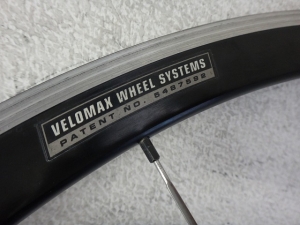
↑That big sticker—not a double-name EASTON VELOMAX,
but there's a separate sticker saying it's Velomax.
Velomax wheels use spokes with threads on both ends.
The spokes are fixed to the hub with a high-strength threadlocker
before the wheel is built, which takes time and has poor productivity.
Repairs are also difficult when a spoke breaks,
so Easton wheels switched to plain straight spokes.
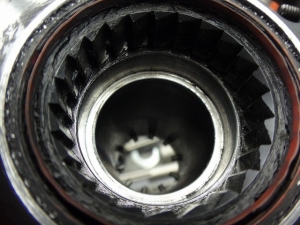
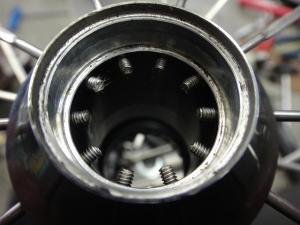
Actually, exactly two months ago the hub was grinding pretty badly,
so I replaced the bearings.
(The photos are from September 11, but I didn't write about it at the time)
I didn't notice it then, but
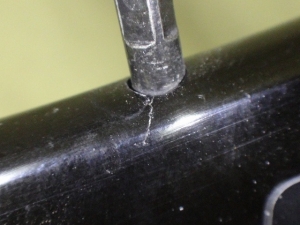
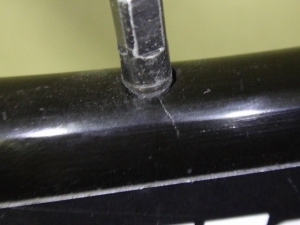
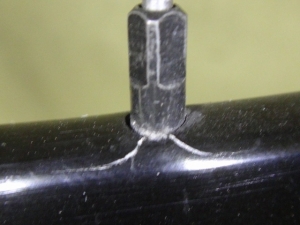
There were cracks in several rim holes.
The rim needs replacement, but I'll rebuild it with a Nomu Lab Wheel #1 rim.
This wasn't my suggestion—the customer proposed it,
but honestly, my recommendation would've been the same.
If it works out, the bearing replacement won't have been wasted effort.

Since the rim heights are close,
I was hoping to reuse the hub-and-spoke assembly as-is,
like a sea urchin in one piece . . .
And it worked out OK.
The XR300's rim inner diameter is about 1mm longer than the Tempest II's,
so I needed longer spokes for the rebuild.
A 1mm difference in rim inner diameter translates directly to a 1mm spoke length difference in radial lacing
where the hub flange sits right below the rim,
but in practice it varies depending on flange position and lacing method.
So when reusing the sea-urchin assembly as-is in this case,
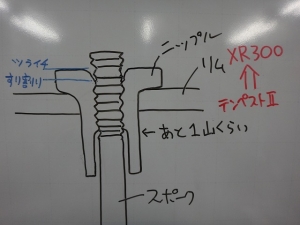
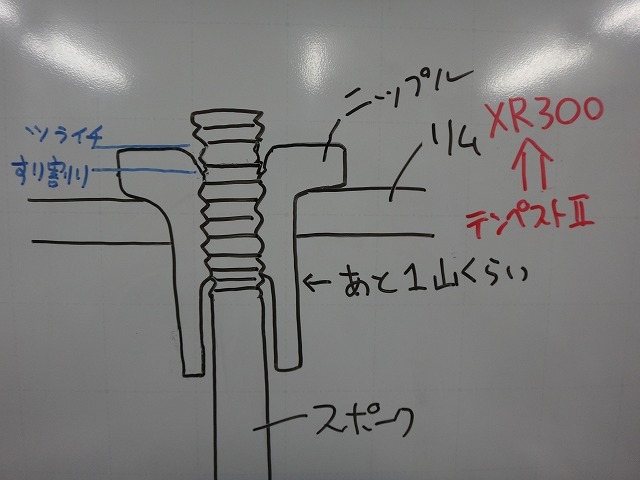
the spoke threads would have less engagement with the nipple threads.
By the way, most Easton wheels are built with about two threads
of spoke sticking out past the end of the nipple.
If you're particular about that spoke-protrusion length,
you'd want longer thread lengths on the spokes,
but it's no different from off-the-shelf Sapim products.
So as shown in the diagram above, there's only about one thread
of clearance before the nipple bottoms out.
The rim is under so much tension it's no wonder it cracked—
I can't do any more than fine spoke truing, and
there's virtually no way I'd ever tighten a nipple another full turn.
When I repair Easton wheel spokes myself,
I use a spoke length that's flush with the nipple end.
This time, thanks to thatwasted extra length, things worked out.
After assembly, the spoke end reached right to the nipple slot—basically flush—
so it ended up being exactly the right length in my opinion.

It's built. Besides the rim change,
I swapped out the brass nipples for silver aluminum ones.
By the way, I got a comment the other day about Easton wheel repairs:
"I always find your posts really helpful!
But I'm curious—I heard that at distributors,
repairs to EASTON wheels are basically a no-go,
so doesn't Nomu Lab ever get grief from Toshshokai about fixing them?
Feel free to ignore this if it's awkward!"
I think I've written about this before somewhere, but
that "dealers basically shouldn't touch them" policy isn't from the Japanese distributor—
it comes from the manufacturer.
Per Easton and Velomax's wishes,
there are (or were) "Easton (Velomax) Wheel Centers"
within Lightweight Products Japan (which handled Velomax)
and Toshshokai (which handles Easton),
but processing volume and repair turnaround through those centers alone was difficult,
so both brands held seminars for shops on "you can handle this if you receive it."
Before Nomu Lab, I attended one of those seminars
and I still have the materials, so I do the work,
but since our shop doesn't do business with Toshshokai,
if you want to go through proper channels, please use the Easton Wheel Center.
Specifically—I won't spell it out—there are detailed restrictions:
if the number of spokes being repaired exceeds a certain percentage of the whole wheel, shop repair isn't allowed;
replacement rim singles aren't supplied,
rim exchanges get sent to the Wheel Center,
and so on.
This customer is from far away
and wanted to use the wheel at Suzuka tomorrow,
so I asked for "30 minutes, and please park in a coin lot—
street parking enforcement comes fast in front of the shop"
and did an improvised rebuild.
While I was working, some IT engineer guy named FJT
who writes a road bike blog was chatting with two others about "bad guys,"
but I try not to pay attention.
Well, if I do get scolded about this,
I'll stop posting Easton repairs here
(that's not saying I'll stop doing them).
Thanks for the comment.
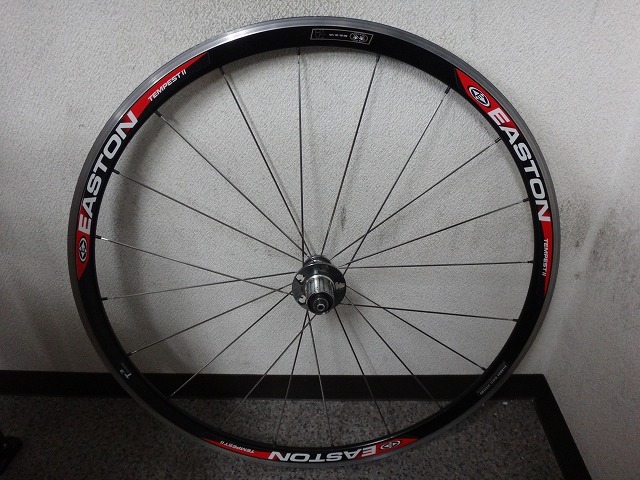
A customer left me with an Easton Tempest II rear wheel.
The sticker says Easton on it,
but the specs are identical to a Velomax wheel—
it's not really an Easton wheel.
Because the hub is still a Velomax.
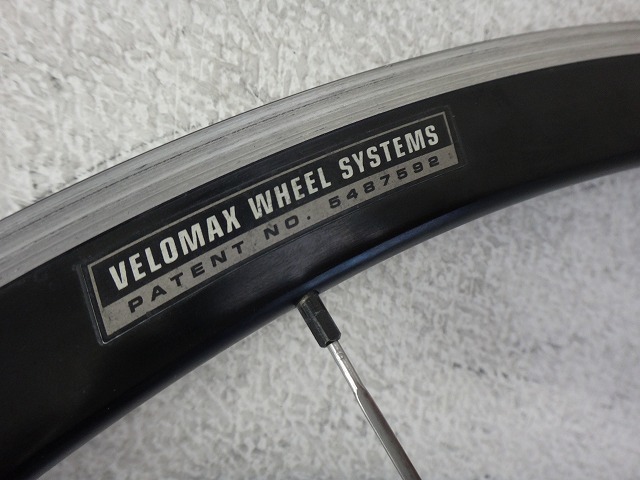
↑That big sticker—not a double-name EASTON VELOMAX,
but there's a separate sticker saying it's Velomax.
Velomax wheels use spokes with threads on both ends.
The spokes are fixed to the hub with a high-strength threadlocker
before the wheel is built, which takes time and has poor productivity.
Repairs are also difficult when a spoke breaks,
so Easton wheels switched to plain straight spokes.
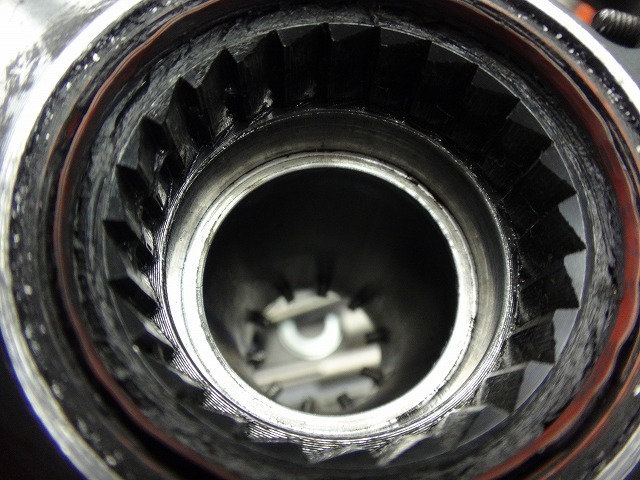

Actually, exactly two months ago the hub was grinding pretty badly,
so I replaced the bearings.
(The photos are from September 11, but I didn't write about it at the time)
I didn't notice it then, but
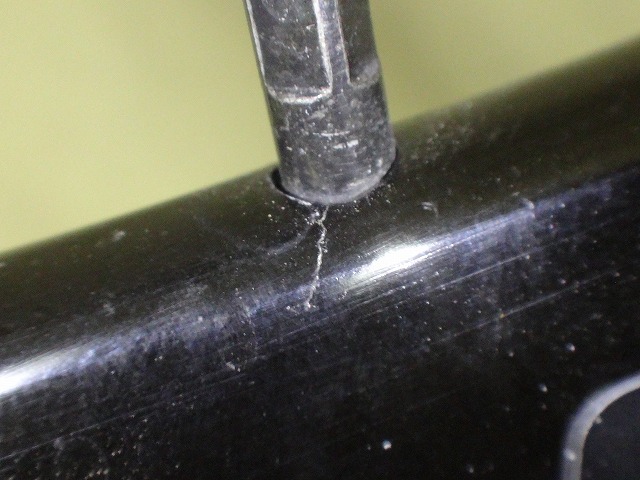
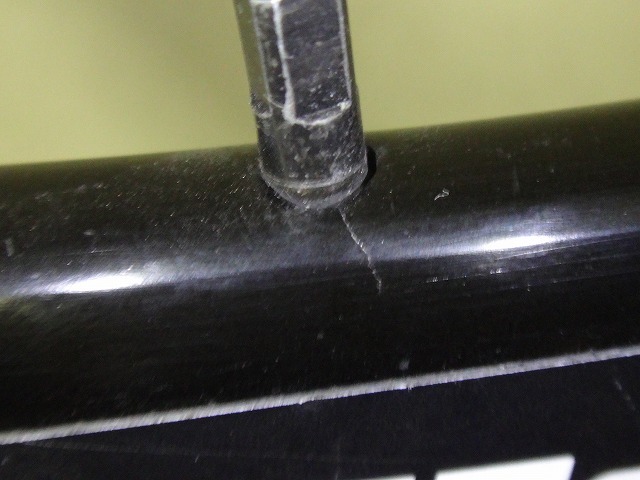
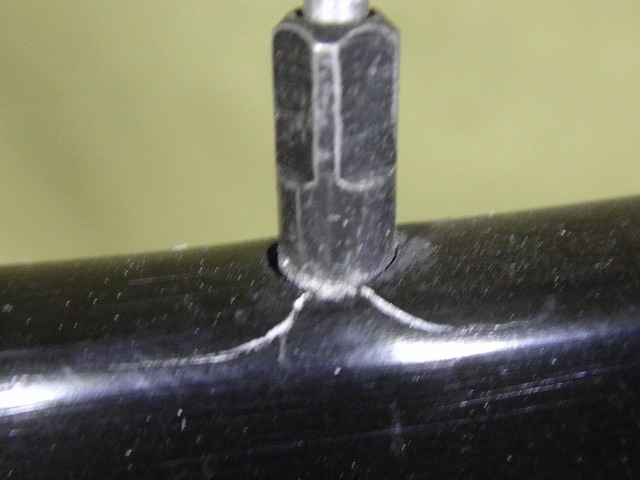
There were cracks in several rim holes.
The rim needs replacement, but I'll rebuild it with a Nomu Lab Wheel #1 rim.
This wasn't my suggestion—the customer proposed it,
but honestly, my recommendation would've been the same.
If it works out, the bearing replacement won't have been wasted effort.

Since the rim heights are close,
I was hoping to reuse the hub-and-spoke assembly as-is,
like a sea urchin in one piece . . .
And it worked out OK.
The XR300's rim inner diameter is about 1mm longer than the Tempest II's,
so I needed longer spokes for the rebuild.
A 1mm difference in rim inner diameter translates directly to a 1mm spoke length difference in radial lacing
where the hub flange sits right below the rim,
but in practice it varies depending on flange position and lacing method.
So when reusing the sea-urchin assembly as-is in this case,
the spoke threads would have less engagement with the nipple threads.
By the way, most Easton wheels are built with about two threads
of spoke sticking out past the end of the nipple.
If you're particular about that spoke-protrusion length,
you'd want longer thread lengths on the spokes,
but it's no different from off-the-shelf Sapim products.
So as shown in the diagram above, there's only about one thread
of clearance before the nipple bottoms out.
The rim is under so much tension it's no wonder it cracked—
I can't do any more than fine spoke truing, and
there's virtually no way I'd ever tighten a nipple another full turn.
When I repair Easton wheel spokes myself,
I use a spoke length that's flush with the nipple end.
This time, thanks to that
After assembly, the spoke end reached right to the nipple slot—basically flush—
so it ended up being exactly the right length in my opinion.
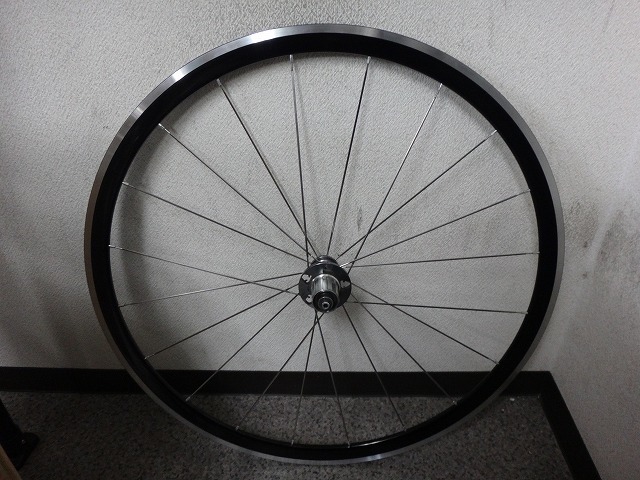

It's built. Besides the rim change,
I swapped out the brass nipples for silver aluminum ones.
By the way, I got a comment the other day about Easton wheel repairs:
"I always find your posts really helpful!
But I'm curious—I heard that at distributors,
repairs to EASTON wheels are basically a no-go,
so doesn't Nomu Lab ever get grief from Toshshokai about fixing them?
Feel free to ignore this if it's awkward!"
I think I've written about this before somewhere, but
that "dealers basically shouldn't touch them" policy isn't from the Japanese distributor—
it comes from the manufacturer.
Per Easton and Velomax's wishes,
there are (or were) "Easton (Velomax) Wheel Centers"
within Lightweight Products Japan (which handled Velomax)
and Toshshokai (which handles Easton),
but processing volume and repair turnaround through those centers alone was difficult,
so both brands held seminars for shops on "you can handle this if you receive it."
Before Nomu Lab, I attended one of those seminars
and I still have the materials, so I do the work,
but since our shop doesn't do business with Toshshokai,
if you want to go through proper channels, please use the Easton Wheel Center.
Specifically—I won't spell it out—there are detailed restrictions:
if the number of spokes being repaired exceeds a certain percentage of the whole wheel, shop repair isn't allowed;
replacement rim singles aren't supplied,
rim exchanges get sent to the Wheel Center,
and so on.
This customer is from far away
and wanted to use the wheel at Suzuka tomorrow,
so I asked for "30 minutes, and please park in a coin lot—
street parking enforcement comes fast in front of the shop"
and did an improvised rebuild.
who writes a road bike blog was chatting with two others about "bad guys,"
but I try not to pay attention.
Well, if I do get scolded about this,
I'll stop posting Easton repairs here
Thanks for the comment.