Today I built the Nomu Lab (のむラボ) Wheel No.1 SL and No.5.
I was able to build them once the materials arrived, but shipping them out wasn't possible yet.
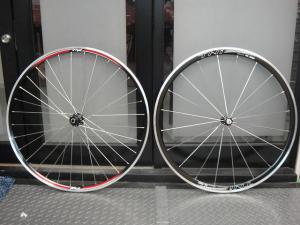
The No.1 SL is a stock specification, and the No.5 deliberately doesn't use Sapim CX-RAY spokes—
instead it's built in DT Competition spoke specification.
This is pretty much the same configuration as my personal wheels.
The No.1 SL and No.5 Competition spec rear wheel don't weigh much differently when you hold them.
But the weight distribution is quite different.
The No.1 SL concentrates weight in the rim, while the No.5 Competition spec concentrates it in the spokes.
When you push down on the pedals,
it ultimately translates to the rear tire kicking the ground backward,
so if you prioritize a light outer diameter on the rear wheel, the No.5 is the better choice.
On the other hand, the front wheel simply rotates in sync with the rear wheel,
and it's the first to encounter air resistance from the direction of travel—
which is why the No.1 with fewer spokes works best, and especially the No.1 SL with aero spokes.
The customer requested that I remove the stickers, so I'm peeling them off now.
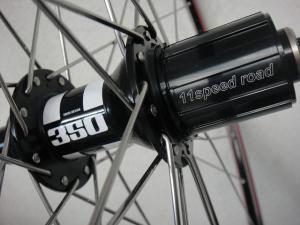
There's one more custom element.
I upgraded the rear hub to the DT 350.
The retail price including tax is ¥19,200, but it's still relatively affordable for a Shimano 11-speed compatible hub.
Since only 32H and 28H specs are available, I don't think it will be used much on the No.1 or No.2,
but I figure I'll use it going forward.
I was able to build them once the materials arrived, but shipping them out wasn't possible yet.
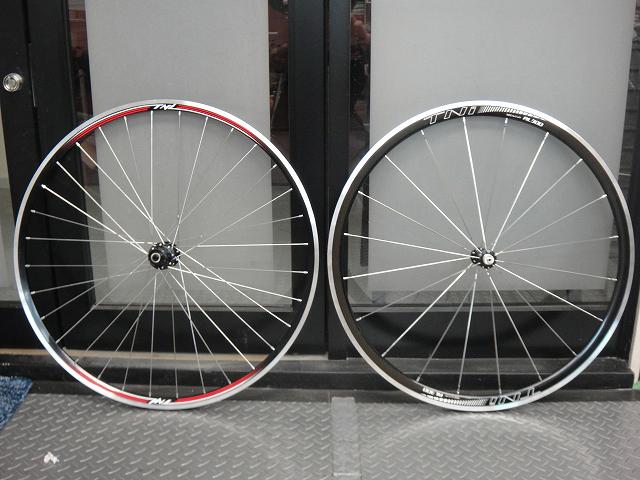
The No.1 SL is a stock specification, and the No.5 deliberately doesn't use Sapim CX-RAY spokes—
instead it's built in DT Competition spoke specification.
This is pretty much the same configuration as my personal wheels.
The No.1 SL and No.5 Competition spec rear wheel don't weigh much differently when you hold them.
But the weight distribution is quite different.
The No.1 SL concentrates weight in the rim, while the No.5 Competition spec concentrates it in the spokes.
When you push down on the pedals,
it ultimately translates to the rear tire kicking the ground backward,
so if you prioritize a light outer diameter on the rear wheel, the No.5 is the better choice.
On the other hand, the front wheel simply rotates in sync with the rear wheel,
and it's the first to encounter air resistance from the direction of travel—
which is why the No.1 with fewer spokes works best, and especially the No.1 SL with aero spokes.
The customer requested that I remove the stickers, so I'm peeling them off now.
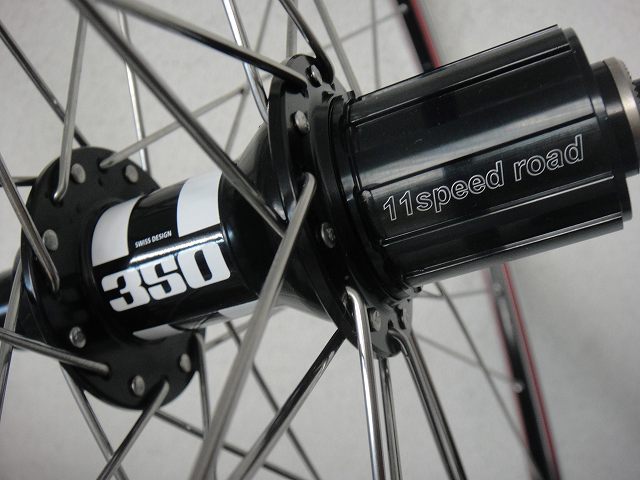
There's one more custom element.
I upgraded the rear hub to the DT 350.
The retail price including tax is ¥19,200, but it's still relatively affordable for a Shimano 11-speed compatible hub.
Since only 32H and 28H specs are available, I don't think it will be used much on the No.1 or No.2,
but I figure I'll use it going forward.