Tni's new product,

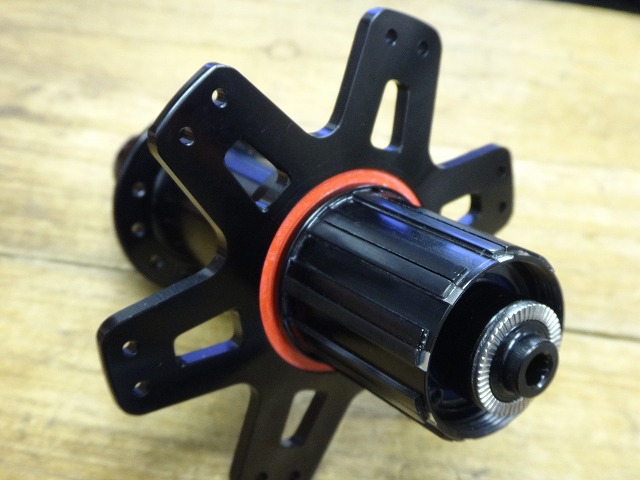
I'm building a rear wheel with a star hub.
The freewheel-side flange is star-shaped,
which is probably why they named it the star hub.

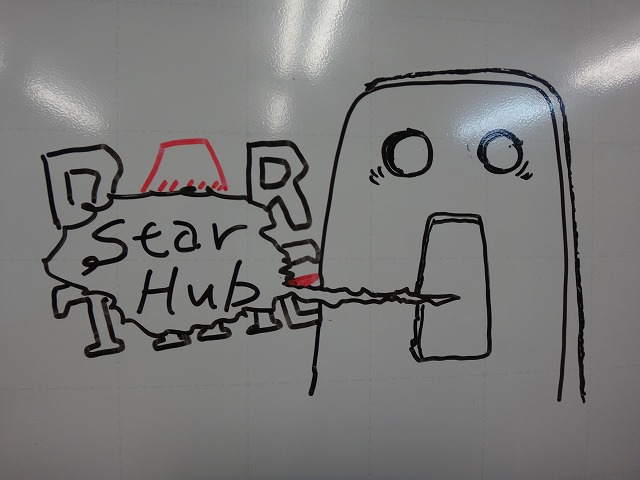
↑Star hub buddy ( ゜Д゜)

Regarding this hub, I've received several comments
speculating or asserting that it must be a BARTIME hub!
BARTIME does make an RS100, which is an ultra-high-low flange hub,
and there's a model called the RS101 that appears to have the flange hole phase narrowed from that,
and this hub does bear a strong resemblance to it.
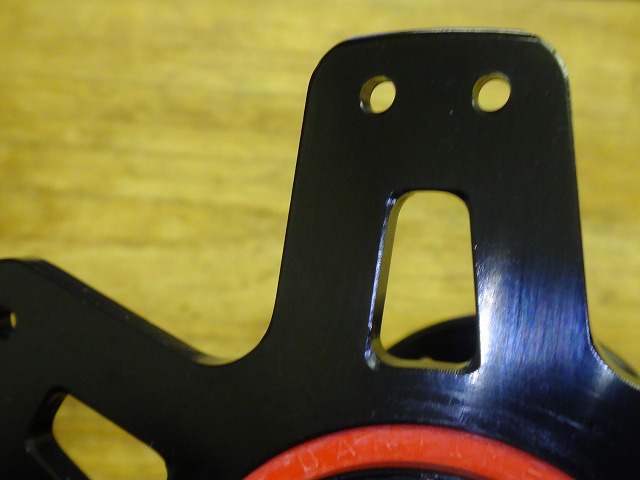
However, the "face" of the star-shaped flange is different from the RS101 buddy ( ゜△゜),
so I can't definitively say whether this is made by BARTIME or not.
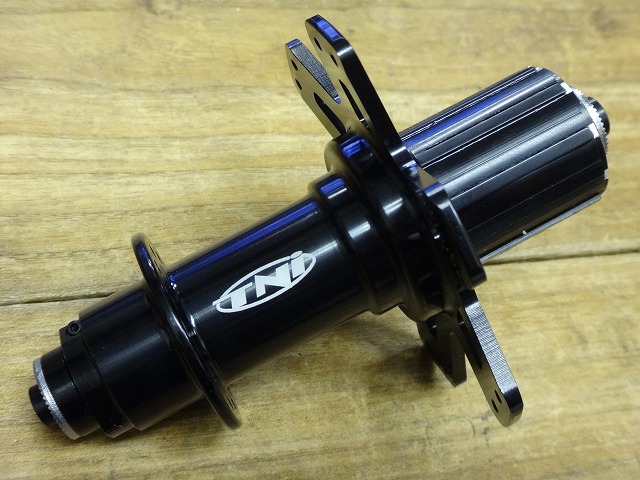
As a point that clearly differs from BARTIME hubs,

the star hub has "Tni" markings on the hub body.
Conversely, as something in common with BARTIME hubs,

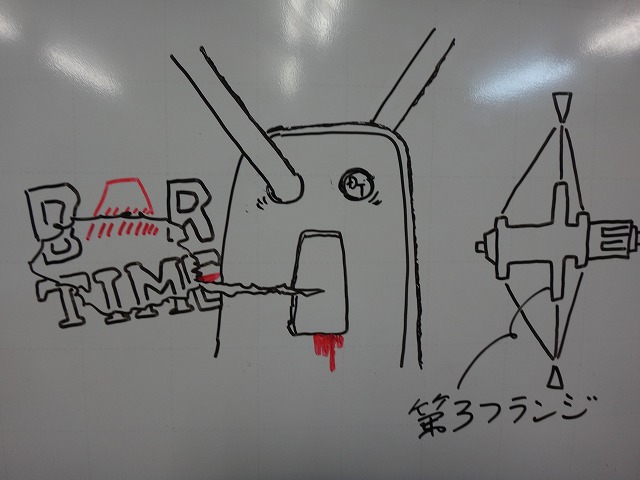
the freewheel body seal has the markings "B A R T I M E".
The speech bubbles in the second image of this post and
the way the seal phase is deliberately aligned in the third image
might suggest something from the start, but that's probably just my imagination.
Today's also wheels (details omitted).

I built the rear wheel for Nomu Lab Wheel #1 with the star hub.

24H (the star hub rear hub only comes in 24H specification)
half Campagnolo lacing and

half Campagnolo lacing. (Note: these are actually both variations, just built as comparisons)
The spoke tension on the non-freewheel side is almost identical,
and the rim centering is good, so
I can investigate the difference between half Campagnolo and half Campagnolo on this hub.
Doing this once makes things easier going forward.
I'll do the spoke trailing later, but I need to get a new soldering iron stand.

↑half Campagnolo

↑half Campagnolo
This isn't exactly the precise weight difference between half Campagnolo and half Campagnolo.
Since I didn't selectively choose rims by weight, if you arbitrarily picked rims,
you could have a wheel where a half Campagnolo is lighter than some half Campagnolo.
Theoretically it should be an 11.8g difference, so it's not way off.
I built the half Campagnolo first.
With plain spokes, if I made a mistake choosing the longer spoke length,
I can definitely re-cut and reuse it—that's the cautious reason—
but actually they came out about 0.5mm shorter than expected,
and I thought, "ah well, it's not for sale anyway," so I went ahead and built it.
I won't make that mistake next time. Correction value acquired!

The 2-cross 1 on the freewheel side is just how the hole count works out,
and naturally it has different characteristics than even-spacing 2-cross lacing.

I thought of other lacing patterns too, but
if you don't want it to get too radial and want to maintain a steep final crossing angle,
this is about the sweet spot.
If the large flange diameter makes it easy to avoid rear derailleur and spoke interference,
maybe going full inpoke on the freewheel side would work too.
Regarding the star rear hub, the flange width is narrower than the Evolite rear hub.
On the scale of Dura-Ace→Evolite→→DT→→Ame-Cra→→→Gokiso,
it's around DT territory.
However, as a barely-okay checkpoint...

I put the Evolite hub and star hub side by side.

At the point where the star hub's left end touches the Evolite hub's left flange

there's this much clearance on the opposite side.
The Evolite hub has a wider left flange, that is,
when one rear hub has a narrower flange width than another,
whether the narrower dimension comes mainly from the right flange or the left flange
is extremely important from a spoking angle perspective.
A hub with a narrow right flange (pulled toward center)
ends up with the freewheel side tensioned hard and the non-freewheel side loose—
basically a pretty hopeless situation.
A concrete example would be White Industries' T11.
That one's really a pain to work with.
The pain points are different, but in terms of difficulty
it's pretty much on par with Tni's reverse high-low flange disc hub.
The T11 is a decent high-low flange too, but
having a narrow right flange defeats much of that advantage.
With the star hub, when viewing flange width against the Evolite hub baseline,
most of the flange width reduction is on the non-freewheel side, so
it avoids making the spoke angle too steep—at least it's better that way.
From what I felt building it today compared to the Evolite hub,
the lateral stiffness loss from being narrow-flanged
seems to be almost completely recovered by the ultra-high-low flange.
It basically ends up in the same ballpark.
In other words, if you try to recover a mere 2-3mm flange width reduction
just through flange diameter,
you need this kind of high-low flange configuration.
With small-wheel builds or 700C wheels with super-deep rims,
the dimensional weakness of narrow-flange hubs is mitigated, so
wheels with smaller rim inner diameter might actually perform better than an Evolite hub.
Since the star-shaped flange doesn't constitute a decisive weight increase,
if you think this kind of hub is cool, I'd say it's valid.
Threading spokes through is annoying though

The freewheel side flange is offset inward in a dome shape.
Including that offset in the hole positioning,
the right flange width ends up about the same as the Evolite hub.
That's also why I thought full inpoke might be possible.
One concern I had was this:

Long ago, FSA made a complete wheel with a third flange
positioned directly below the rim (at the center of the whole hub),
and it was made of thin large-flange material with
a spoke lacing pattern that mixed inpoke and outpoke (when viewed from one side),
but the spoke tension caused that third flange to wobble all over the place—
it really bothered me. You can't tell when it's stationary,
but when it spins, there's considerable runout.
I was worried the freewheel side of the star rear hub might do the same thing,
but that wasn't a problem at all.
In the image above, the star hub buddy under spoke tension
appears to be doing something questionable, but pay it no mind.
Finally, a response to comments.
From someone who always sends useful comments
even though I never reply,
I received feedback on building a wheel with BARTIME's RS100,
and it was very helpful again. Thank you.
"I realized that offset-center rims are more effective for correcting left-right differences on this hub."
That's absolutely correct.
Offset rims are quite the power move—adjusting spoke angle without losing flange width—and other than potentially
adding weight to the rim, there's really no fault to find with the idea.
Within realistic parameters, offset rims work better than ultra-large-flange setups,
and I'm planning to build a wheel with a star hub and offset rim soon too.
That's for another time.
I'm building a rear wheel with a star hub.
The freewheel-side flange is star-shaped,
which is probably why they named it the star hub.
↑Star hub buddy ( ゜Д゜)
Regarding this hub, I've received several comments
speculating or asserting that it must be a BARTIME hub!
BARTIME does make an RS100, which is an ultra-high-low flange hub,
and there's a model called the RS101 that appears to have the flange hole phase narrowed from that,
and this hub does bear a strong resemblance to it.
However, the "face" of the star-shaped flange is different from the RS101 buddy ( ゜△゜),
so I can't definitively say whether this is made by BARTIME or not.
As a point that clearly differs from BARTIME hubs,
the star hub has "Tni" markings on the hub body.
Conversely, as something in common with BARTIME hubs,
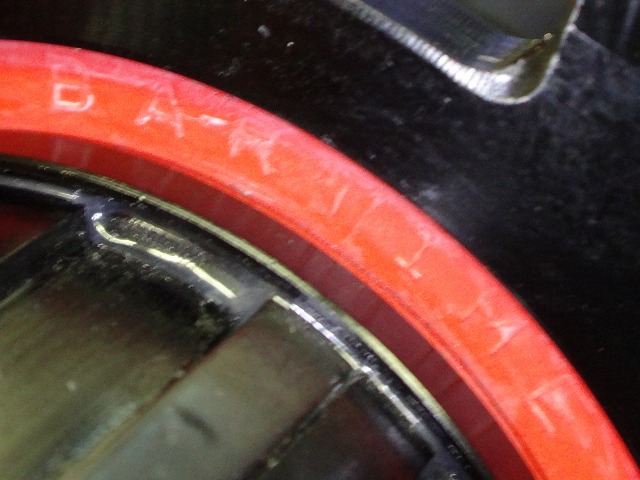
the freewheel body seal has the markings "B A R T I M E".
the way the seal phase is deliberately aligned in the third image
might suggest something from the start, but that's probably just my imagination.
Today's also wheels (details omitted).
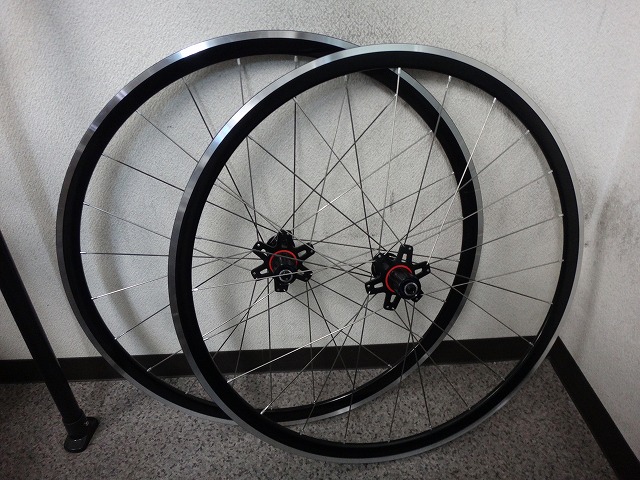
I built the rear wheel for Nomu Lab Wheel #1 with the star hub.
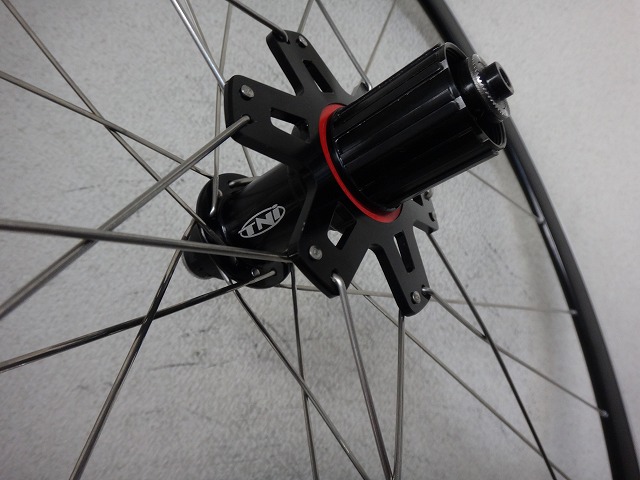
24H (the star hub rear hub only comes in 24H specification)
half Campagnolo lacing and
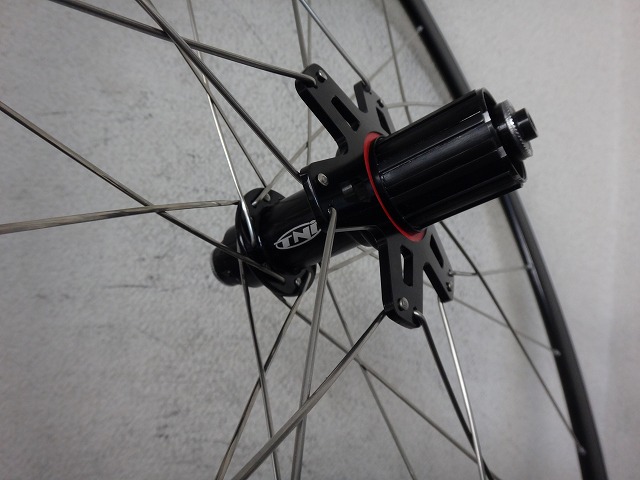
half Campagnolo lacing. (Note: these are actually both variations, just built as comparisons)
The spoke tension on the non-freewheel side is almost identical,
and the rim centering is good, so
I can investigate the difference between half Campagnolo and half Campagnolo on this hub.
Doing this once makes things easier going forward.
I'll do the spoke trailing later, but I need to get a new soldering iron stand.
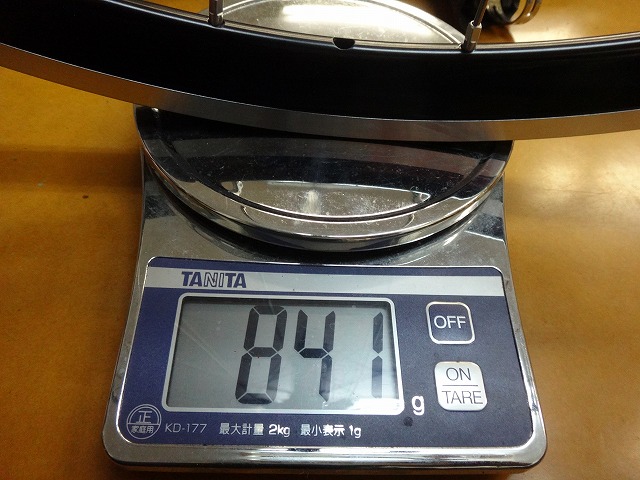
↑half Campagnolo
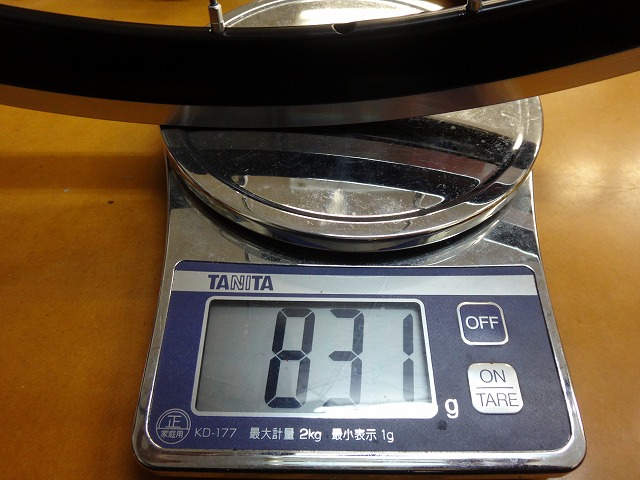
↑half Campagnolo
This isn't exactly the precise weight difference between half Campagnolo and half Campagnolo.
Since I didn't selectively choose rims by weight, if you arbitrarily picked rims,
you could have a wheel where a half Campagnolo is lighter than some half Campagnolo.
Theoretically it should be an 11.8g difference, so it's not way off.
I built the half Campagnolo first.
With plain spokes, if I made a mistake choosing the longer spoke length,
I can definitely re-cut and reuse it—that's the cautious reason—
but actually they came out about 0.5mm shorter than expected,
and I thought, "ah well, it's not for sale anyway," so I went ahead and built it.
I won't make that mistake next time. Correction value acquired!
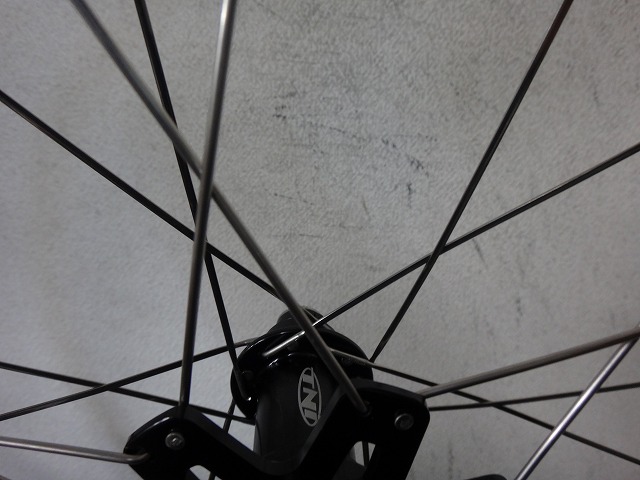
The 2-cross 1 on the freewheel side is just how the hole count works out,
and naturally it has different characteristics than even-spacing 2-cross lacing.
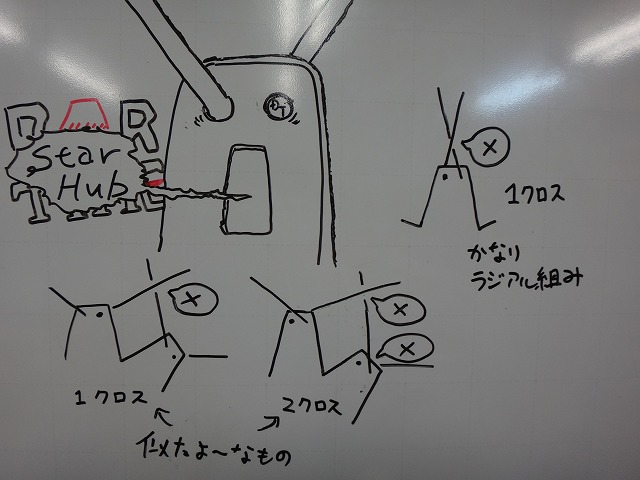
I thought of other lacing patterns too, but
if you don't want it to get too radial and want to maintain a steep final crossing angle,
this is about the sweet spot.
If the large flange diameter makes it easy to avoid rear derailleur and spoke interference,
maybe going full inpoke on the freewheel side would work too.
Regarding the star rear hub, the flange width is narrower than the Evolite rear hub.
On the scale of Dura-Ace→Evolite→→DT→→Ame-Cra→→→Gokiso,
it's around DT territory.
However, as a barely-okay checkpoint...

I put the Evolite hub and star hub side by side.
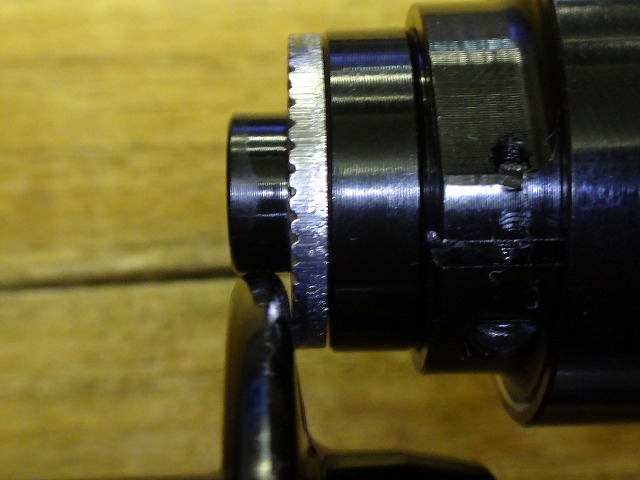
At the point where the star hub's left end touches the Evolite hub's left flange
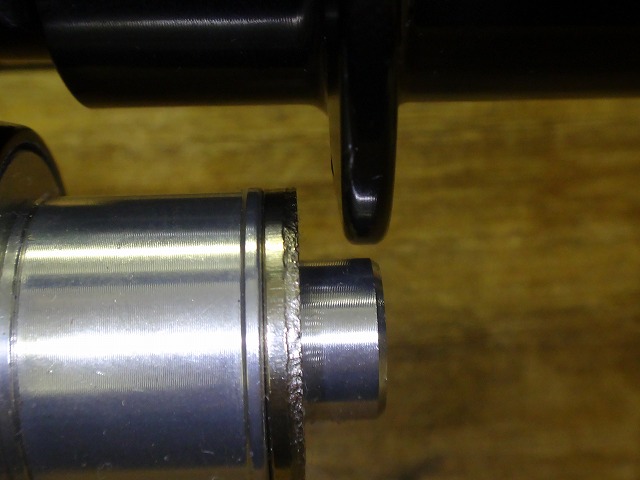
there's this much clearance on the opposite side.
The Evolite hub has a wider left flange, that is,
when one rear hub has a narrower flange width than another,
whether the narrower dimension comes mainly from the right flange or the left flange
is extremely important from a spoking angle perspective.
A hub with a narrow right flange (pulled toward center)
ends up with the freewheel side tensioned hard and the non-freewheel side loose—
basically a pretty hopeless situation.
A concrete example would be White Industries' T11.
That one's really a pain to work with.
The pain points are different, but in terms of difficulty
it's pretty much on par with Tni's reverse high-low flange disc hub.
The T11 is a decent high-low flange too, but
having a narrow right flange defeats much of that advantage.
With the star hub, when viewing flange width against the Evolite hub baseline,
most of the flange width reduction is on the non-freewheel side, so
it avoids making the spoke angle too steep—at least it's better that way.
From what I felt building it today compared to the Evolite hub,
the lateral stiffness loss from being narrow-flanged
seems to be almost completely recovered by the ultra-high-low flange.
It basically ends up in the same ballpark.
In other words, if you try to recover a mere 2-3mm flange width reduction
just through flange diameter,
you need this kind of high-low flange configuration.
With small-wheel builds or 700C wheels with super-deep rims,
the dimensional weakness of narrow-flange hubs is mitigated, so
wheels with smaller rim inner diameter might actually perform better than an Evolite hub.
Since the star-shaped flange doesn't constitute a decisive weight increase,
if you think this kind of hub is cool, I'd say it's valid.

The freewheel side flange is offset inward in a dome shape.
Including that offset in the hole positioning,
the right flange width ends up about the same as the Evolite hub.
That's also why I thought full inpoke might be possible.
One concern I had was this:
Long ago, FSA made a complete wheel with a third flange
positioned directly below the rim (at the center of the whole hub),
and it was made of thin large-flange material with
a spoke lacing pattern that mixed inpoke and outpoke (when viewed from one side),
but the spoke tension caused that third flange to wobble all over the place—
it really bothered me. You can't tell when it's stationary,
but when it spins, there's considerable runout.
I was worried the freewheel side of the star rear hub might do the same thing,
but that wasn't a problem at all.
In the image above, the star hub buddy under spoke tension
appears to be doing something questionable, but pay it no mind.
Finally, a response to comments.
From someone who always sends useful comments
I received feedback on building a wheel with BARTIME's RS100,
and it was very helpful again. Thank you.
"I realized that offset-center rims are more effective for correcting left-right differences on this hub."
That's absolutely correct.
Offset rims are quite the power move—adjusting spoke angle without losing flange width—and other than potentially
adding weight to the rim, there's really no fault to find with the idea.
Within realistic parameters, offset rims work better than ultra-large-flange setups,
and I'm planning to build a wheel with a star hub and offset rim soon too.
That's for another time.