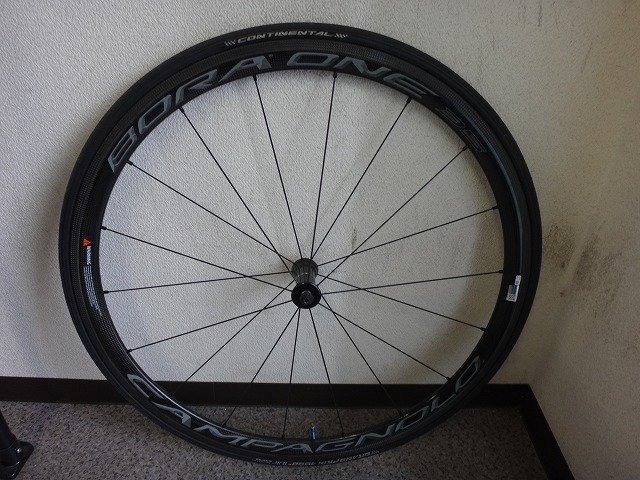
A customer left a Bora One wheel with me for service.
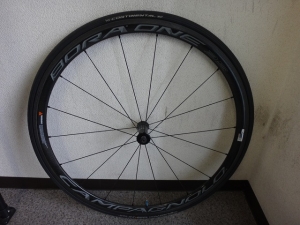
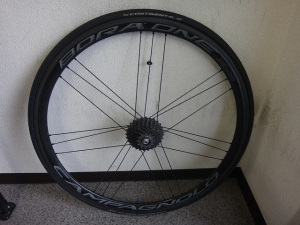
During inspection, there's nothing particularly worth noting.
Unusually, I took some photos with the tire mounted, so
while I'm at it, I thought I'd write about
valve hole rattle prevention guards (valve bushings).

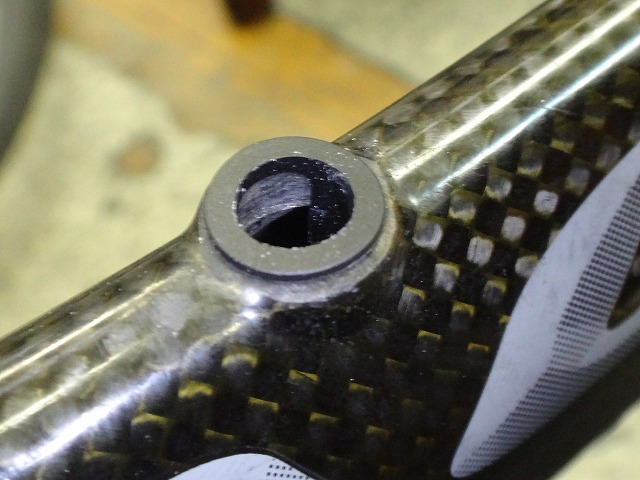
Both 2WAY-FIT aluminum rims and carbon rims like the Bora have
bushings in the valve hole, but
2WAY-FIT has four prongs at 90° phase alignment,
while carbon rims have two prongs at 180° phase alignment,
and the prong lengths differ as well.
The prongs on either design make it difficult for the valve to pass through, but
especially the two-prong design for carbon rims is quite problematic.
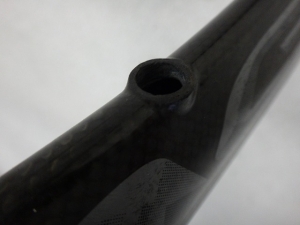
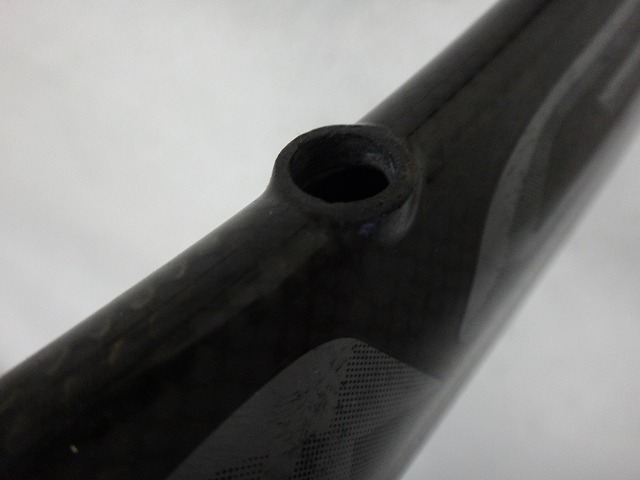
I've often seen cases where the valve pushes the prong and it flies off somewhere,
leaving the wheel in the state shown in the image above.
This valve bushing is also one of our standard stock parts in the shop.

It has this two-prong design, and the ease with which
the valve passes through changes depending on the installation direction.
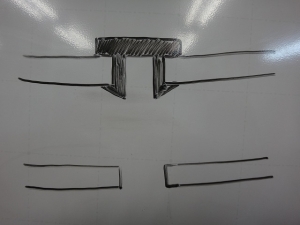
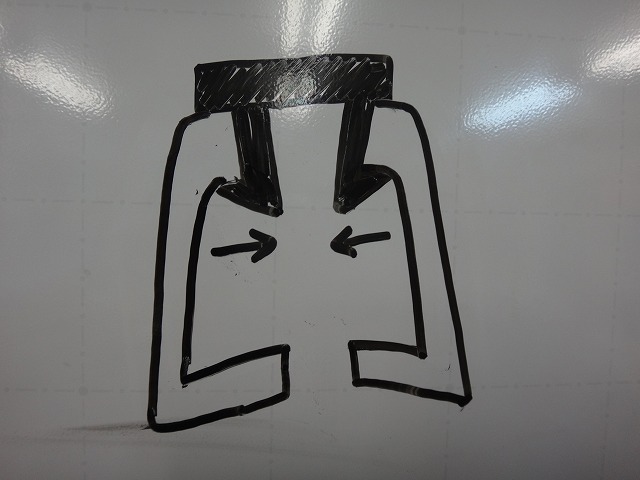
When installed in the fore-aft direction of the rim, the prongs have some clearance between them, but
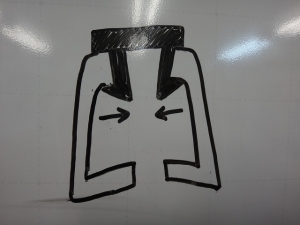
when installed in the side-to-side direction, the prongs get pushed slightly closed
by the internal curve of the rim.
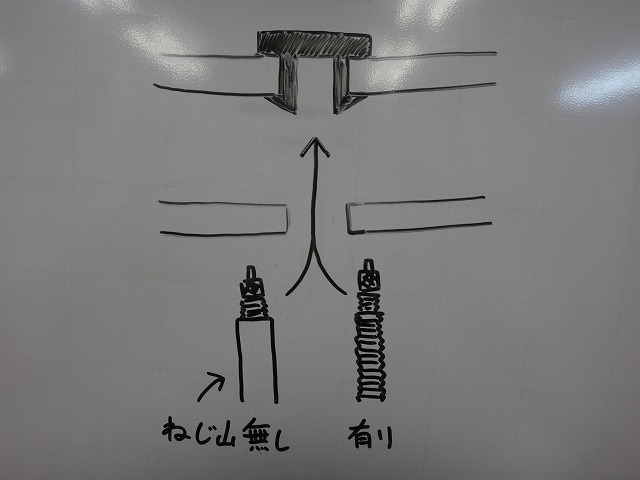
In this state, the valve slips right through from the inside (though normally you wouldn't do this).
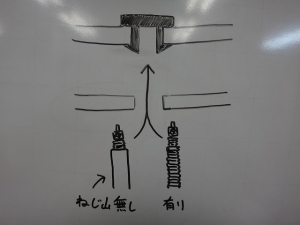
Also, if the valve has threads, its outer diameter is reduced by that amount, so
it passes through more easily than a smooth valve.

When using an extended valve, the coupling-style type has the same outer diameter as the valve itself, but
with the slip-on style, the outer diameter is larger than the valve itself,
so it won't pass through the valve bushing at all.
The reason Campagnolo wheels that come with extended valves
used to use the slip-on style but now come with coupling-style is
likely related to this issue.
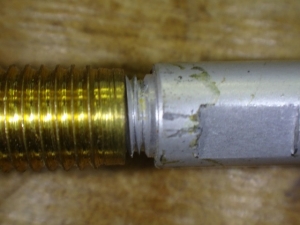
↑Coupling-style
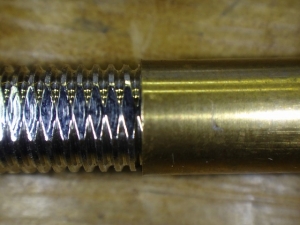
↑Slip-on style
Even if the valve bushing is installed fore-aft and you're using a threaded valve,
the two-prong type is still quite difficult to pass through.
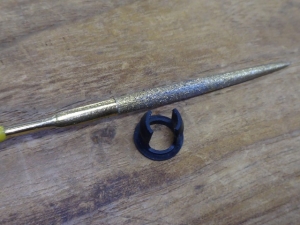
In such cases,

↑File this part of the prong into a taper shape.
This makes it pass through much more easily.
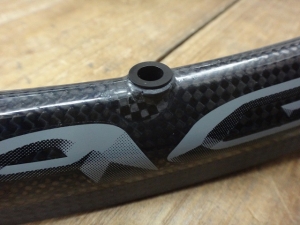
By the way, recently I saw a Bora like in the image above
with a slip-on extended valve passing through, which should be nearly impossible.
The reason was,
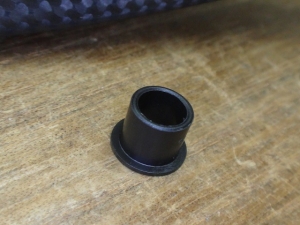
the valve bushing had been updated to a new design.
Making changes quietly like this suggests
there were quite a few complaints about it.

During inspection, there's nothing particularly worth noting.
Unusually, I took some photos with the tire mounted, so
while I'm at it, I thought I'd write about
valve hole rattle prevention guards (valve bushings).
Both 2WAY-FIT aluminum rims and carbon rims like the Bora have
bushings in the valve hole, but
2WAY-FIT has four prongs at 90° phase alignment,
while carbon rims have two prongs at 180° phase alignment,
and the prong lengths differ as well.
The prongs on either design make it difficult for the valve to pass through, but
especially the two-prong design for carbon rims is quite problematic.
I've often seen cases where the valve pushes the prong and it flies off somewhere,
leaving the wheel in the state shown in the image above.
This valve bushing is also one of our standard stock parts in the shop.

It has this two-prong design, and the ease with which
the valve passes through changes depending on the installation direction.

When installed in the fore-aft direction of the rim, the prongs have some clearance between them, but
when installed in the side-to-side direction, the prongs get pushed slightly closed
by the internal curve of the rim.
In this state, the valve slips right through from the inside (though normally you wouldn't do this).
Also, if the valve has threads, its outer diameter is reduced by that amount, so
it passes through more easily than a smooth valve.
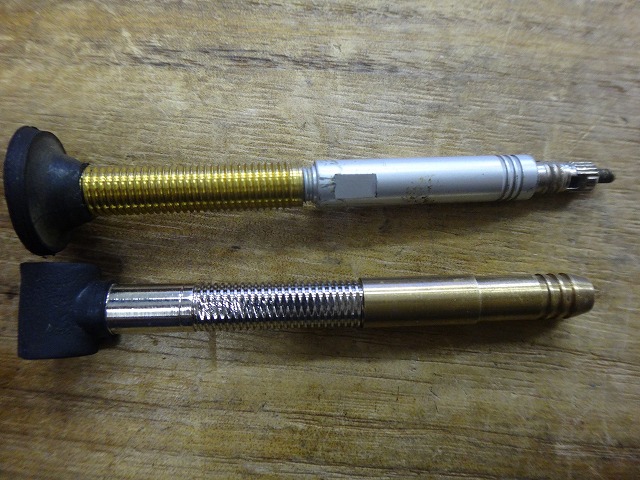
When using an extended valve, the coupling-style type has the same outer diameter as the valve itself, but
with the slip-on style, the outer diameter is larger than the valve itself,
so it won't pass through the valve bushing at all.
The reason Campagnolo wheels that come with extended valves
used to use the slip-on style but now come with coupling-style is
likely related to this issue.
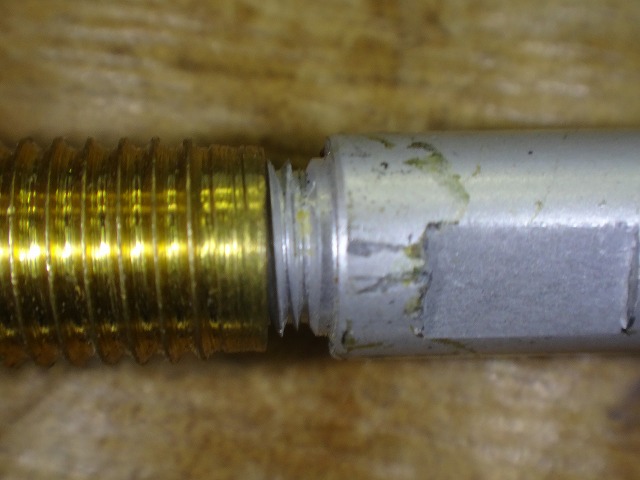
↑Coupling-style

↑Slip-on style
Even if the valve bushing is installed fore-aft and you're using a threaded valve,
the two-prong type is still quite difficult to pass through.

In such cases,
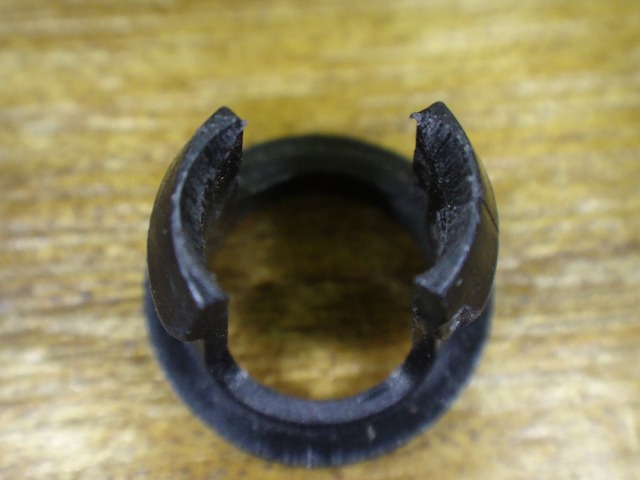
↑File this part of the prong into a taper shape.
This makes it pass through much more easily.
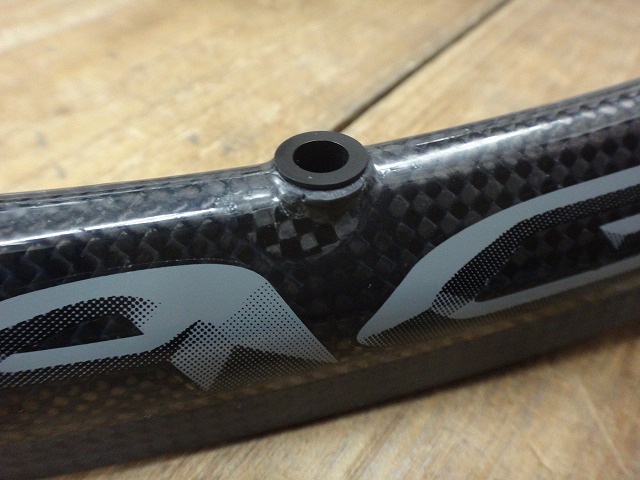
By the way, recently I saw a Bora like in the image above
with a slip-on extended valve passing through, which should be nearly impossible.
The reason was,
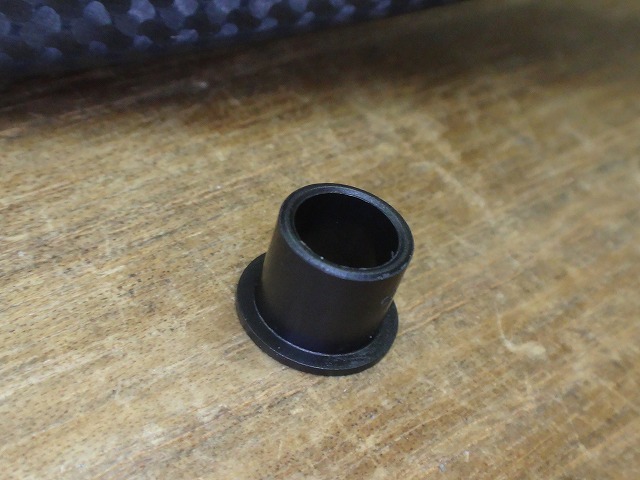
the valve bushing had been updated to a new design.
there were quite a few complaints about it.