Wheels again today (and so on).
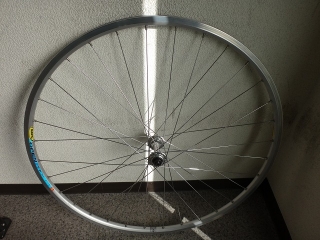
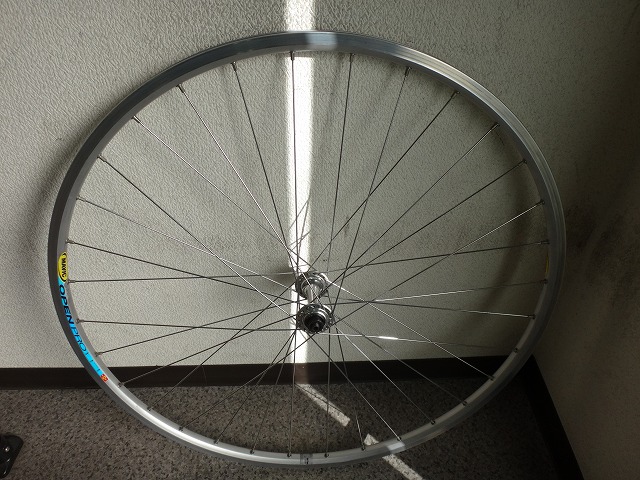
A customer left me a wheel built with a silver Open Pro rim.
Starting with the front wheel.

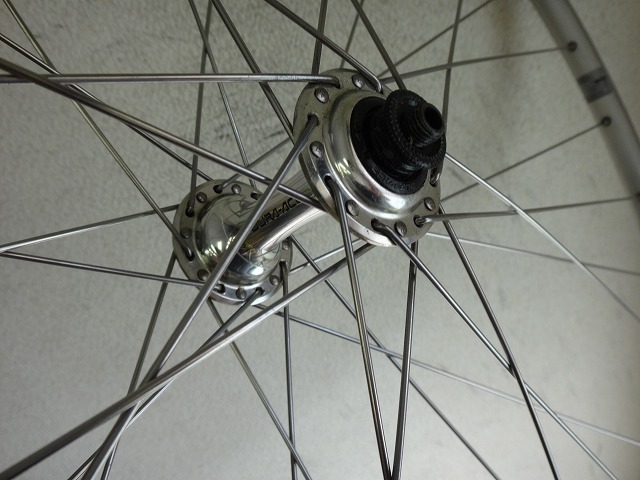
HB-7400 32H hub, stainless steel #15 plain 6/6 Italian lacing.
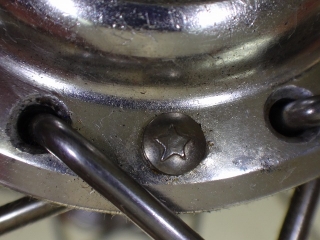
The spokes have a star mark stamped on the head, so
they're supposedly stainless steel (a product name, not a generic term)... but (more on this later).
Since I'm taking it apart anyway, it doesn't matter, but
the spoke length is on the short side though within the acceptable range.
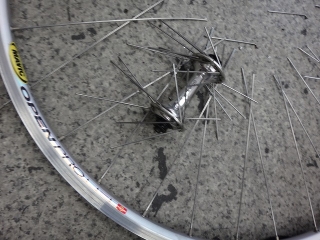
Disassembled.
I'm reusing the rim, so I released the tension before cutting the spokes.
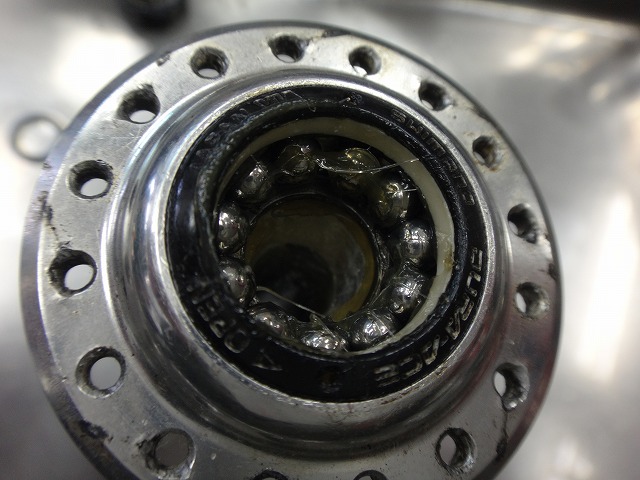
I'll do a hub overhaul while I'm at it.
The grease had lost its color and looked kind of emulsified.
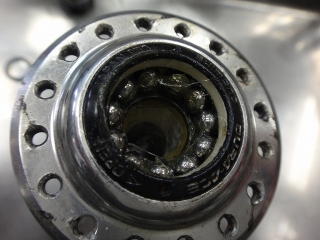
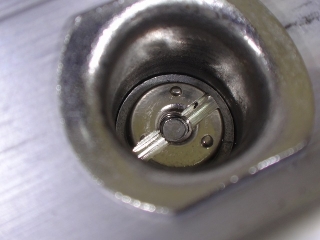
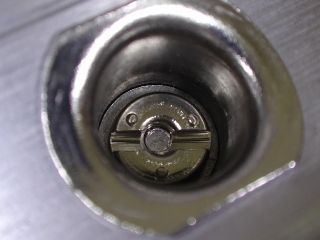
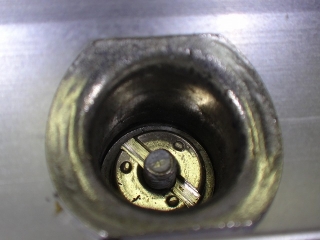
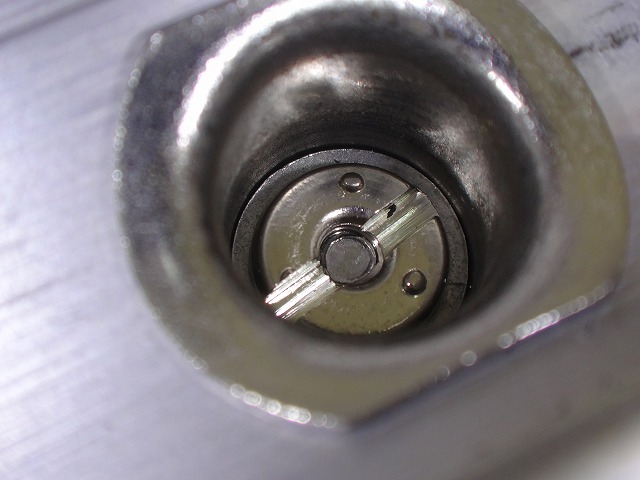
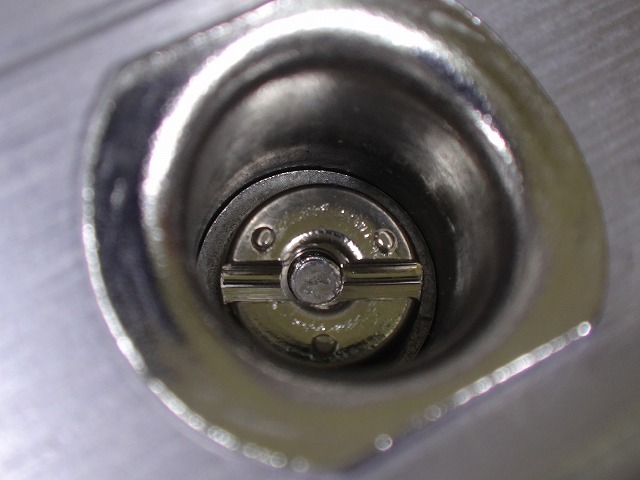
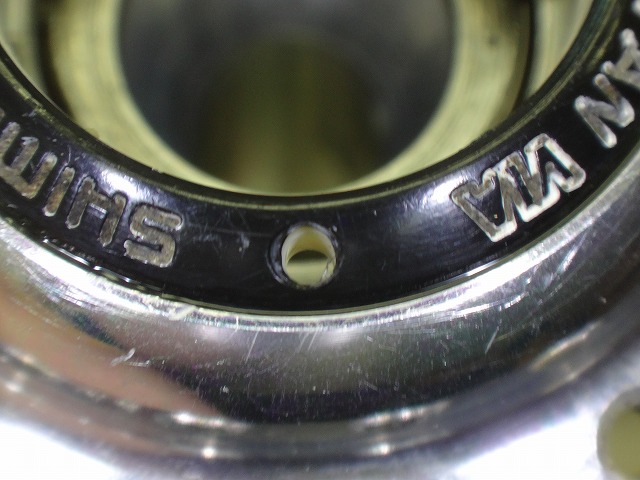
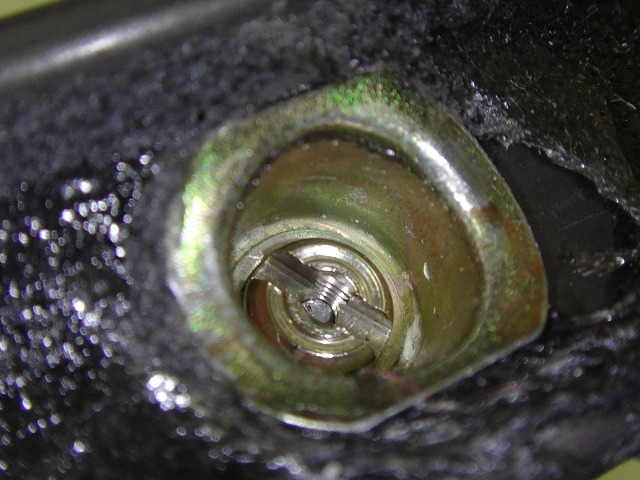
The HB-7400 dust cap has
a sliding grease port,
which you can't see when it's dirty, but
the part inside the dust cap is white delrin (probably).
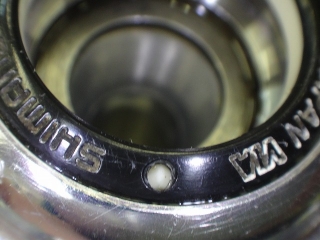
↑ Grease port
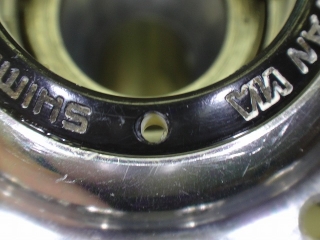
I slid it open to check.
When using 7400-series hubs, you need to make sure this isn't left open.

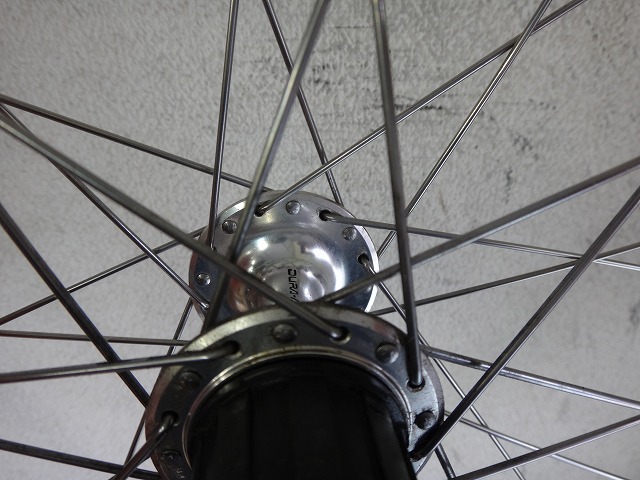
Next, the rear wheel. The rim is the same as the front.

FH-7403 32H, #15 plain 6/6 Italian lacing,
and the spokes are
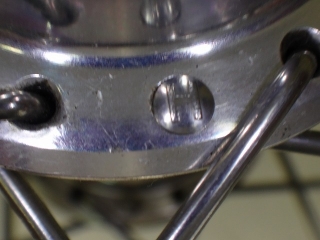
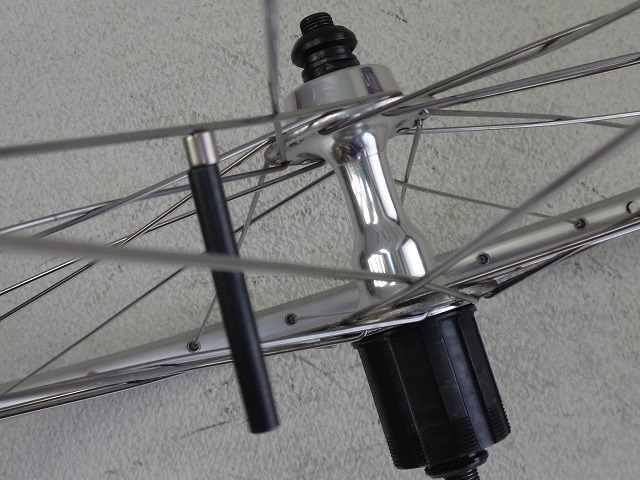
on the non-freewheel side stamped with H, so they're Starbright and
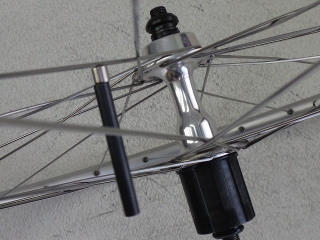
they stick to a magnet.
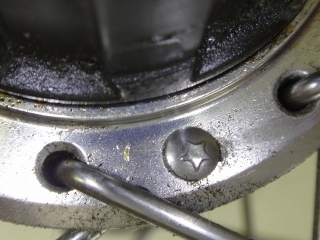
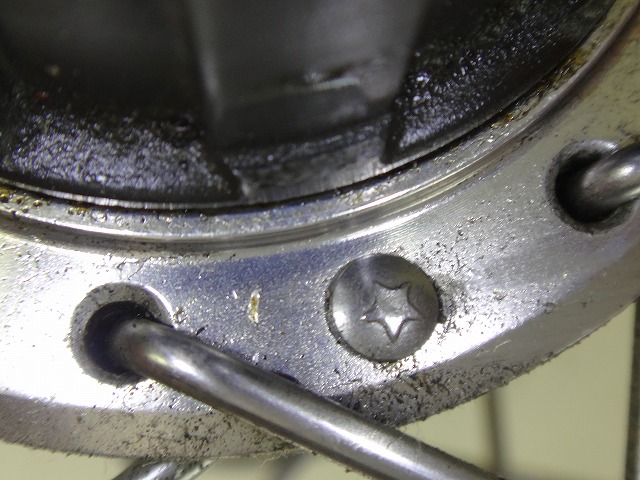
The freewheel side is supposed to be stainless, but

it sticks to the magnet too.
This lack of proper differentiation
is a big reason why I really hate current star-marked spokes,
though some people say they've gotten better lately.
Who cares. I'm too scared to buy them.
If I source Starbright and it doesn't stick to a magnet,
will they replace it for free?
Also, the degree of magnetic attraction is different from old Starbright.
I can only think that either the material or the manufacturing method—or both—have changed.
Actually, the so-called stainless on the front wheel also stuck to the magnet.

↑ Freewheel-side spokes too long
↑ Non-freewheel side is also long, but they probably used the same spoke length for both sides.
The confusing part is that the front wheel spoke length
should be almost the same as the non-freewheel side length, so
if there were enough spokes, using them all interchangeably should have resulted in
front wheel proper, freewheel side short, non-freewheel side proper.
Of course, freewheel side being short is NG, but it's better than sticking out this much.
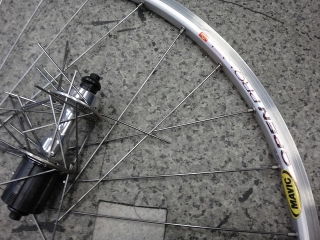
Disassembled.
Among 7400-series rear hubs, the reason I could determine
this was FH-7403 (8-speed) and not FH-7400 (7-speed) is:
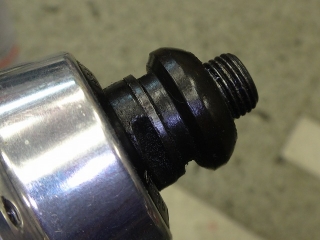
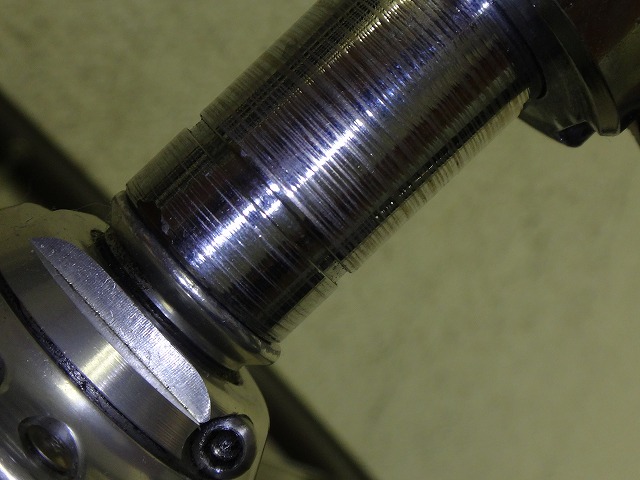
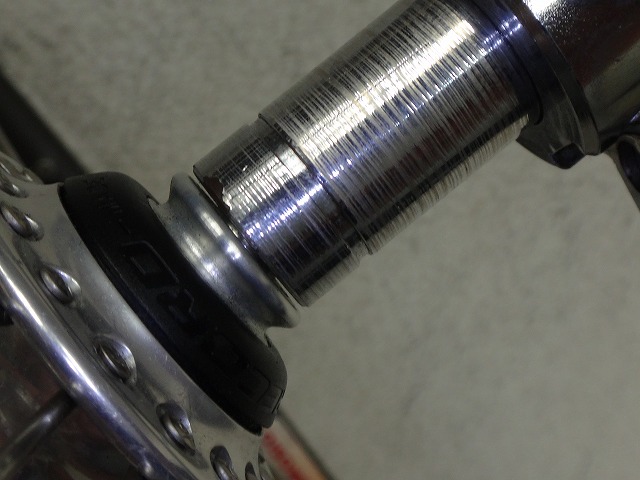
First, this left end. The actual over-locknut width
of this rear hub is 129.6mm, nearly 130mm,
and this hub is from a transition period when rear end width shifted from 126mm to 130mm,
so the left end has this shape to allow it to slip and spread
into a 126mm dropout.
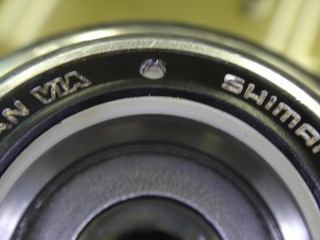
Second, the dust cap.
The FH-7400 also has a sliding grease port,
but the internal part is black plastic, so
even when closed, the hole appears black.
A white hole means it's FH-7402 or later.
Furthermore, the FH-7402 has grease-hole dust caps on both sides,
but the FH-7403 has just a plain cap on the freewheel side
and the grease hole only on the non-freewheel side.
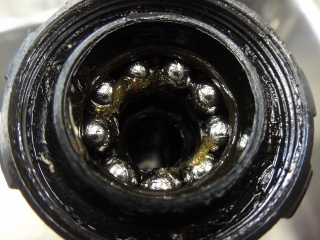
Backtracking in timeline, this is the freewheel side.
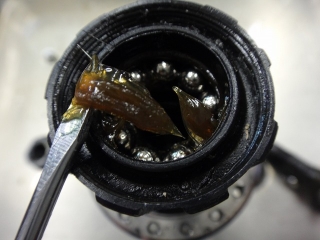
The grease is hardened and dirty, but

the bearings showed no wear.
I did a cleaning and re-greasing, but I'm not using this one today.
I've left the bearing play adjustment loose,
so play will probably develop as I build the wheel.
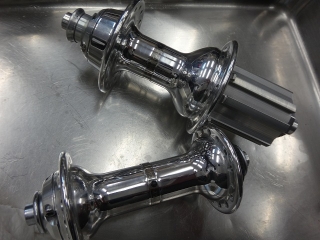
What I'm using are Record hubs the customer left with me.
For this period, besides 32H there were also 28H and 36H, but this one is 32H.
The hub shell looks clean—that's not my imagination;
the customer polished it.There was polishing compound stuck in the flange holes.
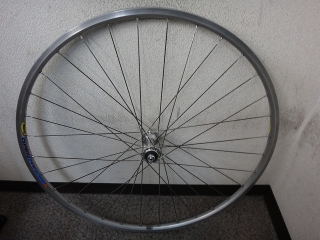
Built.
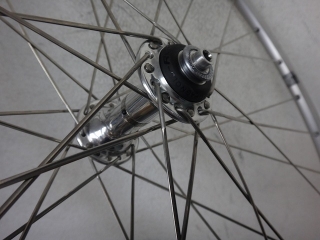
Front wheel is CX-RAY 6/6 Italian lacing,
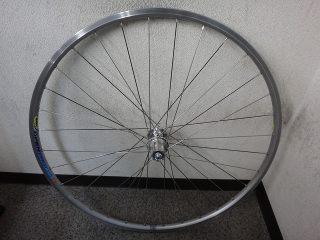
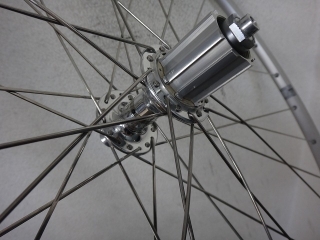
rear wheel is half-Comp 4/6 lacing.
Lacing comes later.
Actually, there's another pair today
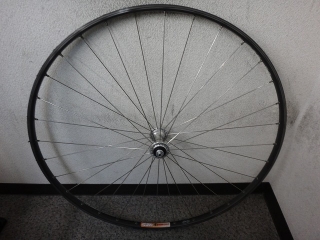
A customer left me a wheel built with a Formula Chrono 20.
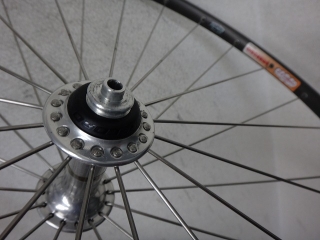
Record hub 32H, Champion #15 plain outpoke radial lacing.
I'm not going to argue about the rule that Campagnolo hubs prohibit radial lacing.
I've seen flanges that broke from radial lacing, but not on this hub.
In my opinion, given the spoke hole positions, I don't think
a flange would break in the first place.
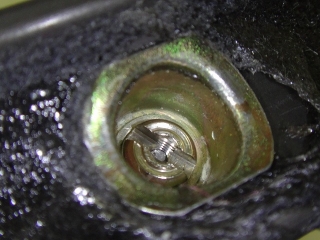
↑ Spokes being slightly short and
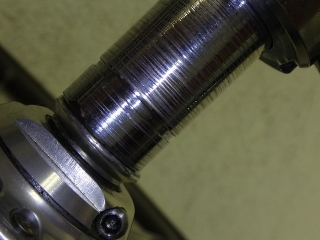
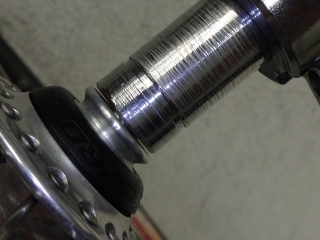
the front wheel being radial—well, that front wheel needs better centering, at least.
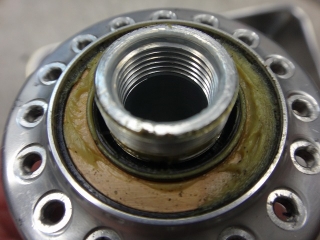
The customer also asked for a hub overhaul.
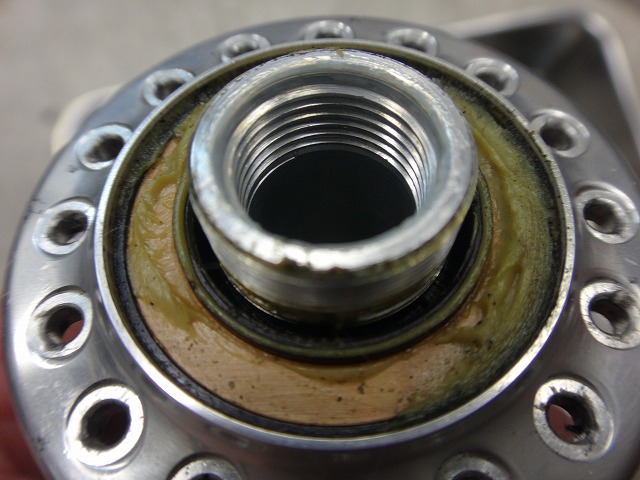
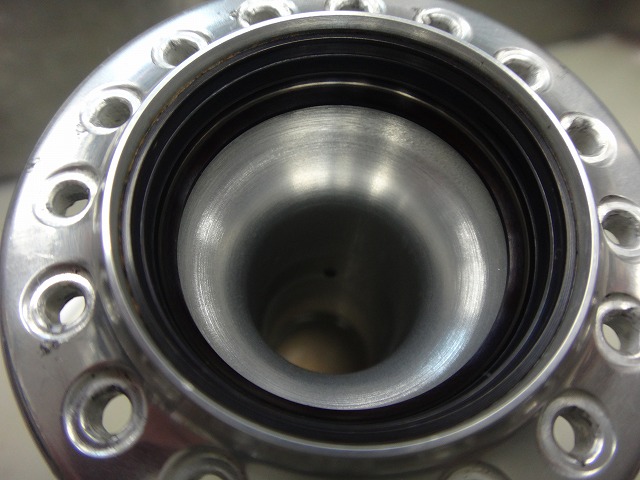
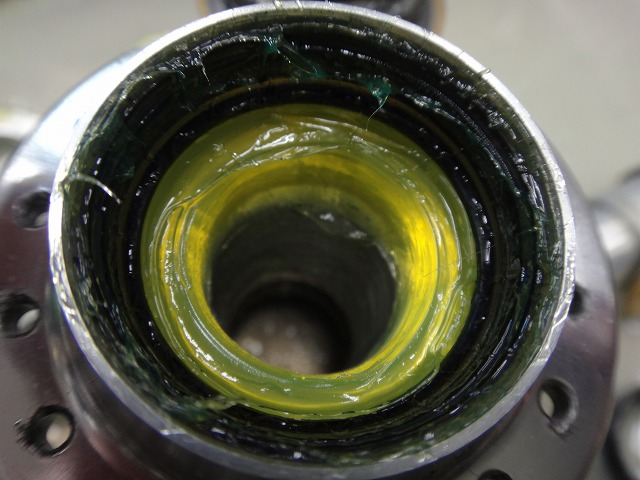
There's grease outside the seal, and
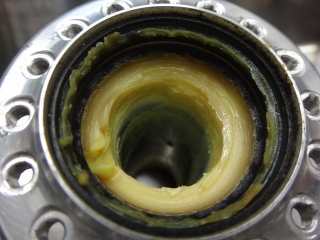
inside the hub there's grease packed as densely
as butter served at a restaurant,
which makes me think—though I have no proof—that
the factory grease filling was done
through the grease hole in the hub center.
I don't think you could get this result
by applying grease from the outside.
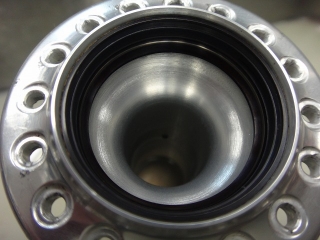
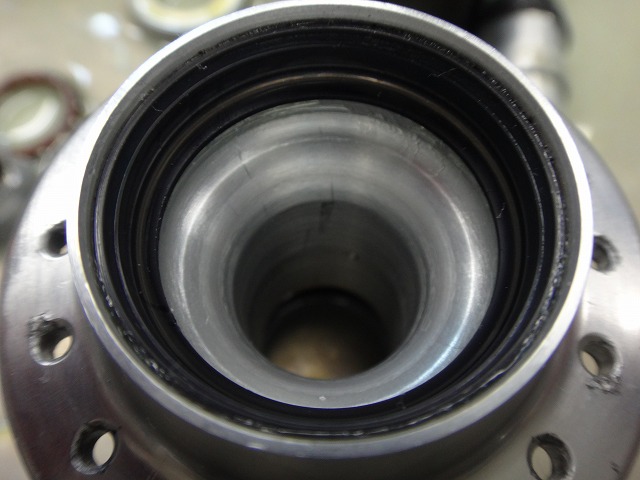
Cleaned.
Later hubs don't have grease holes, and
the hub shell inner diameter and hub axle outer diameter don't have such tight clearance.
On pre-built wheels,
a grease guard keeps grease from flowing into the hub.
It was originally a plastic ring, but
later became a ring with a membrane that press-fits with the cone.
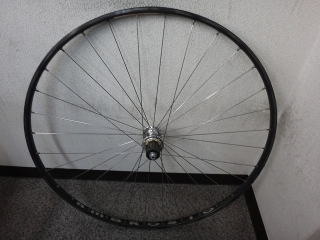
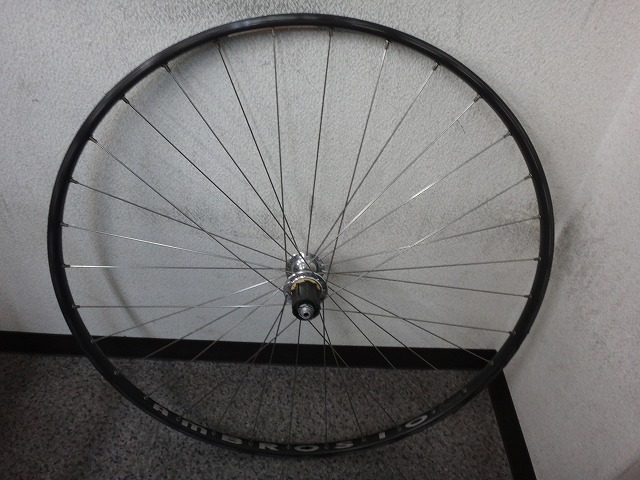
Next, the rear wheel. The rim is the same as the front.
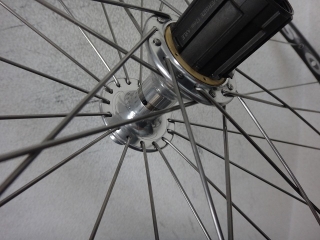
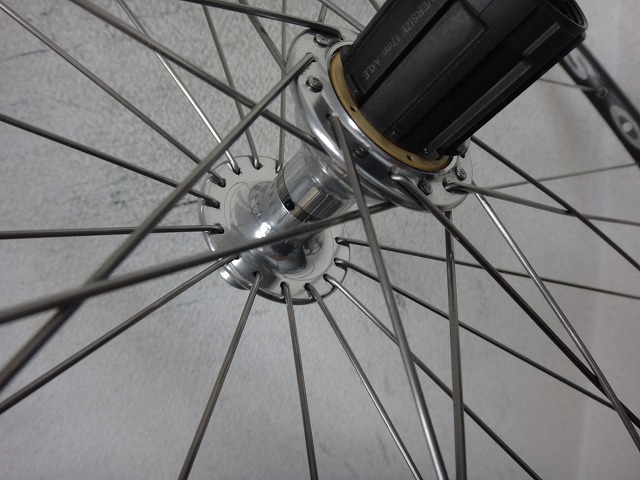
Record hub 32H, Champion #15 plain 4/6 lacing.
The front wheel was tensioned decently, but the rear is a bit slack,
especially on the non-freewheel side—really slack.
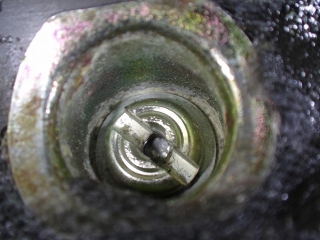

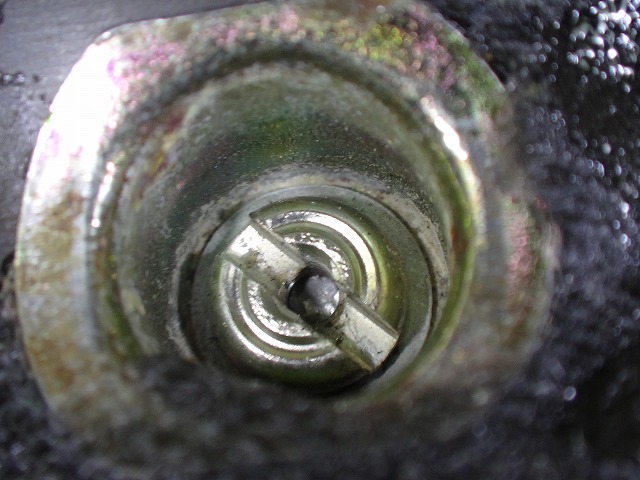
The spoke length is below the slot depth—no good.
Even if tensioned, it wouldn't reach the slot depth, so they're definitely too short.
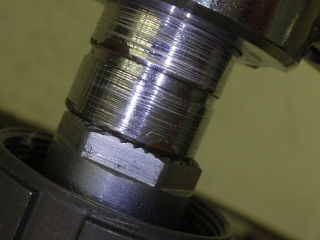

The hub is shifted opposite to how it would shift with use,
so the centering error was there from the start.
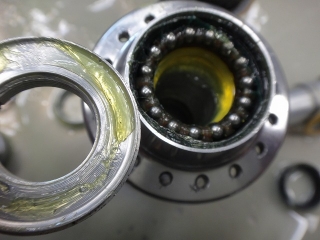
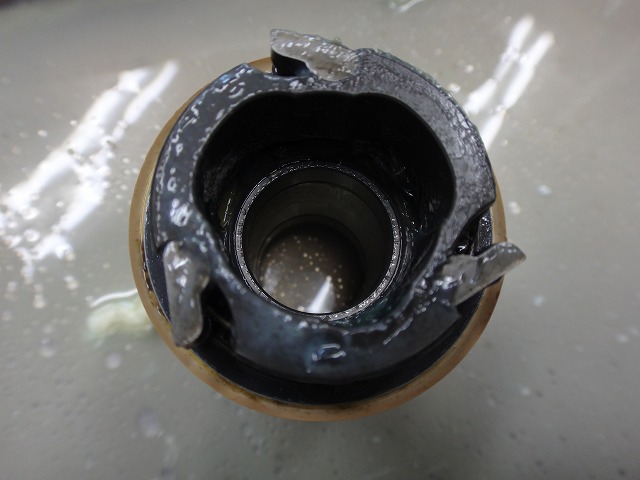
Unlike the front hub (with factory grease), Dura-Ace grease was filled in this one.
Since grease had leaked past the bearing preload nut,
it was probably filled through the grease hole.
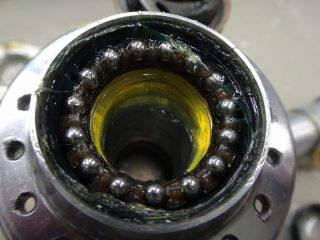
To grease this retainer,
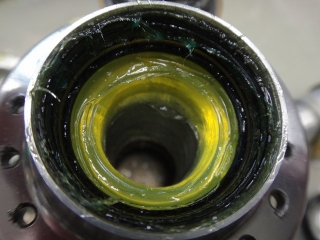
you don't need to pack this much grease deeper inside,
and even if you worked it in from outside, I don't think you'd get this result.

Cleaned.
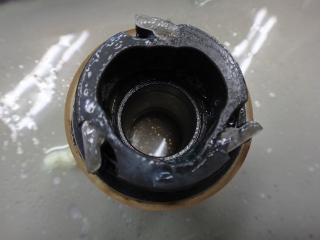
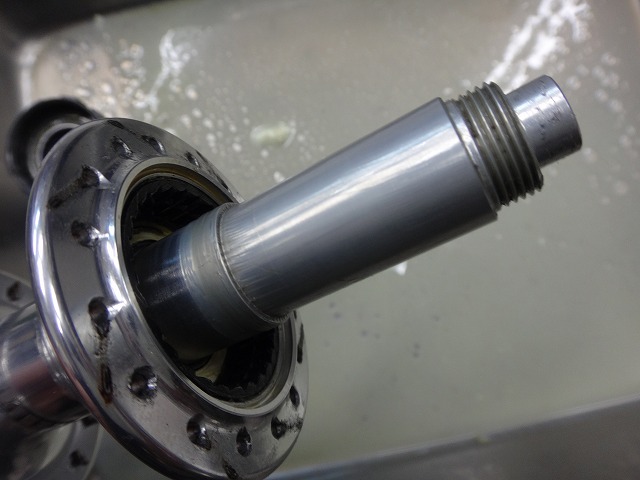
A Shimano-type freewheel body was fitted to this non-butted vintage axle,
but the customer wants to switch to a Campagnolo freewheel body.
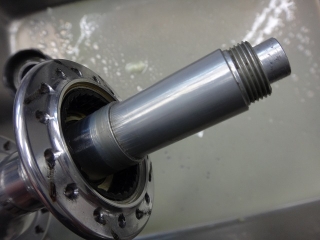
Backtracking, before hub cleaning.
The part number for this non-butted axle is FH-RE201,
and the round-hole Campagnolo freewheel body that fits it
(the one that was on the Record hub from the Open Pro earlier)
has part number FH-RE415.
Of these, FH-RE201 isn't listed in the price table, so it's obsolete.
On this point, the new axle covers the old one, so there's no problem.
FH-RE415 is available, but
for some reason it comes bundled with hub axle,
and costs around ¥17,000 at list price.
FH-RE415 should be just the freewheel body part number,
but somehow it's become the part number for the set with FH-RE201.
So the FH-RE201 old axle is, strictly speaking, not discontinued
but rather unavailable as a standalone item.
If that's the case, going with new axle + current Campagnolo
triangular-hole freewheel body is better for both
delivery time and cost, so
I decided to swap in the new axle + current freewheel body.
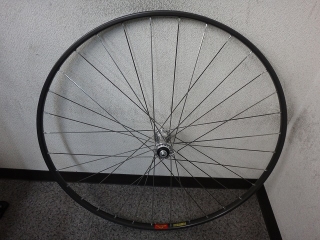
Built.
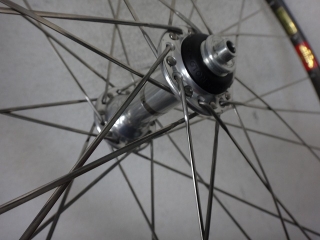
Front wheel is Record hub 32H, CX-RAY 6/6 Italian lacing, but
both front and rear rims are not Formula Chrono 20 but
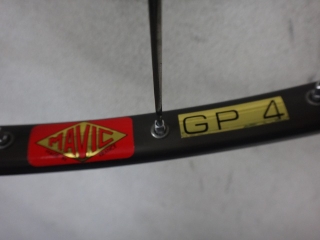
the Mavic so-called "red-label" GP4.
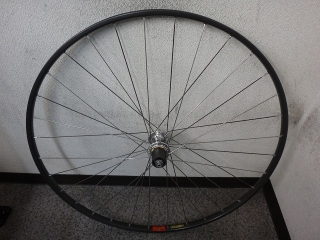
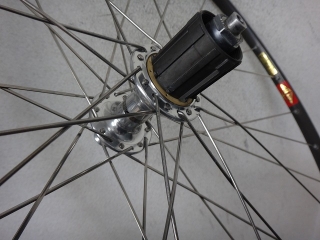
Rear wheel is Record hub 32H, half-Comp 4/6 lacing.
Lacing comes later.
With these older rims, you can't tension them the same way as modern rims.
I don't use spokes with 65% weight ratio round-butted spokes like DT Revolution
because "they get wobbly,"
but with old rims, the rim's limit is lower, so you can build
without the wobble appearing.
Conversely, with CX-RAY and an old rim combination,
you could theoretically keep tightening nipples and crack the rim.
So I build nervously and conservatively,
but this GP4 actually tensioned pretty well.
Still, not as much as with Reflex, for example.
The freewheel body is still Shimano-type, but
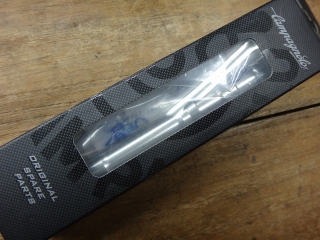
I did swap the hub axle to the new one.
The freewheel body is out of stock, so it's on backorder.
It'll arrive in time for the customer's pickup date.
Bonus
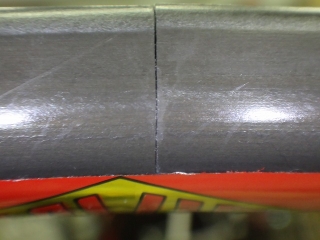
Before tensioning
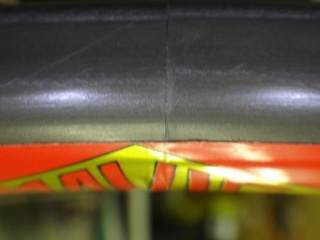
After tensioning
If the gap is even larger,
the sticker can wrinkle.
A customer left me a wheel built with a silver Open Pro rim.
Starting with the front wheel.
HB-7400 32H hub, stainless steel #15 plain 6/6 Italian lacing.

The spokes have a star mark stamped on the head, so
they're supposedly stainless steel (a product name, not a generic term)... but (more on this later).
Since I'm taking it apart anyway, it doesn't matter, but
the spoke length is on the short side though within the acceptable range.
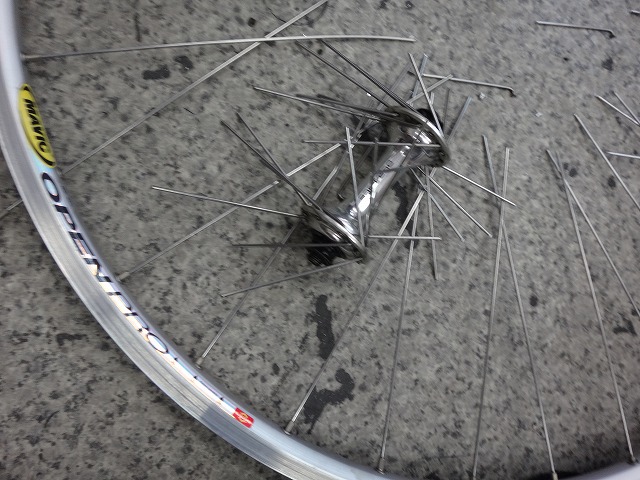
Disassembled.
I'm reusing the rim, so I released the tension before cutting the spokes.
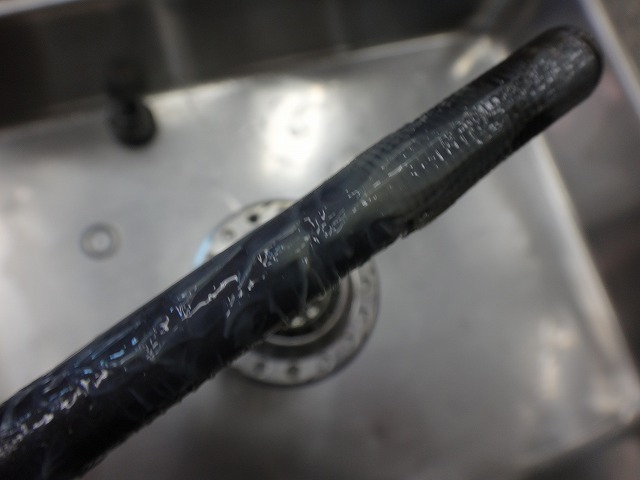
I'll do a hub overhaul while I'm at it.
The grease had lost its color and looked kind of emulsified.
The HB-7400 dust cap has
a sliding grease port,
which you can't see when it's dirty, but
the part inside the dust cap is white delrin (probably).
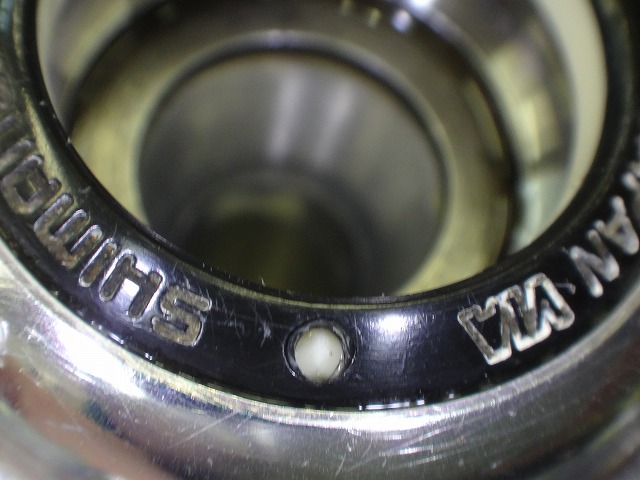
↑ Grease port
I slid it open to check.
When using 7400-series hubs, you need to make sure this isn't left open.

Next, the rear wheel. The rim is the same as the front.
FH-7403 32H, #15 plain 6/6 Italian lacing,
and the spokes are

on the non-freewheel side stamped with H, so they're Starbright and
they stick to a magnet.
The freewheel side is supposed to be stainless, but
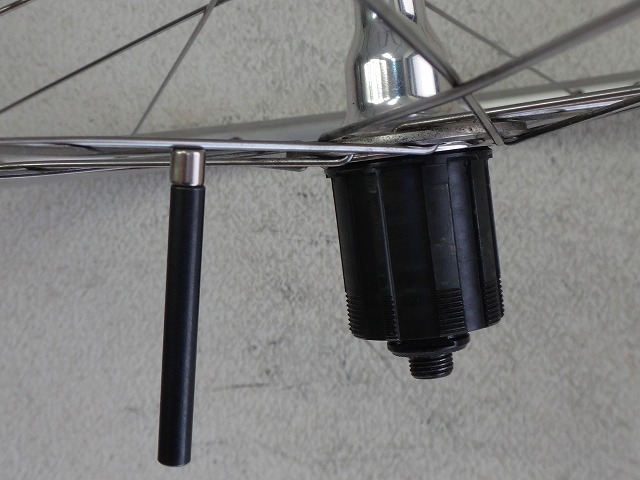
it sticks to the magnet too.
This lack of proper differentiation
is a big reason why I really hate current star-marked spokes,
though some people say they've gotten better lately.
Who cares. I'm too scared to buy them.
If I source Starbright and it doesn't stick to a magnet,
will they replace it for free?
Also, the degree of magnetic attraction is different from old Starbright.
I can only think that either the material or the manufacturing method—or both—have changed.
Actually, the so-called stainless on the front wheel also stuck to the magnet.
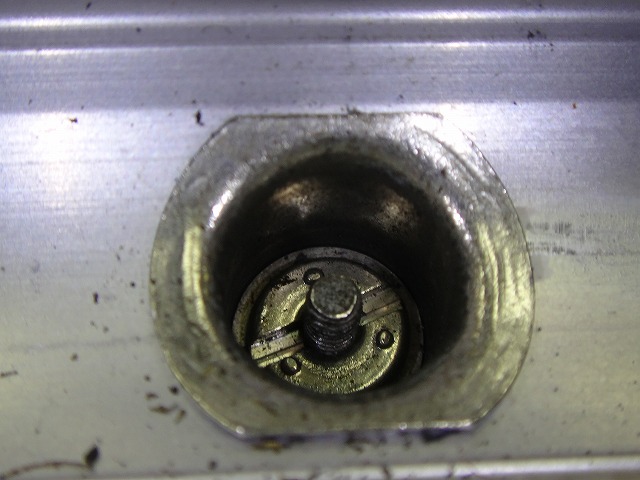
↑ Freewheel-side spokes too long

↑ Non-freewheel side is also long, but they probably used the same spoke length for both sides.
The confusing part is that the front wheel spoke length
should be almost the same as the non-freewheel side length, so
if there were enough spokes, using them all interchangeably should have resulted in
front wheel proper, freewheel side short, non-freewheel side proper.
Of course, freewheel side being short is NG, but it's better than sticking out this much.
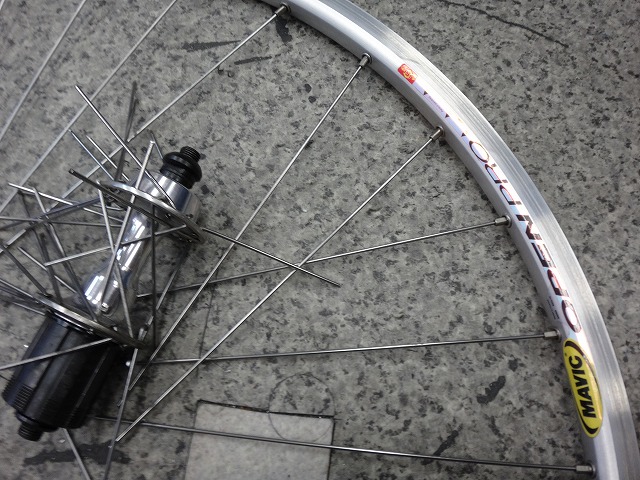
Disassembled.
Among 7400-series rear hubs, the reason I could determine
this was FH-7403 (8-speed) and not FH-7400 (7-speed) is:
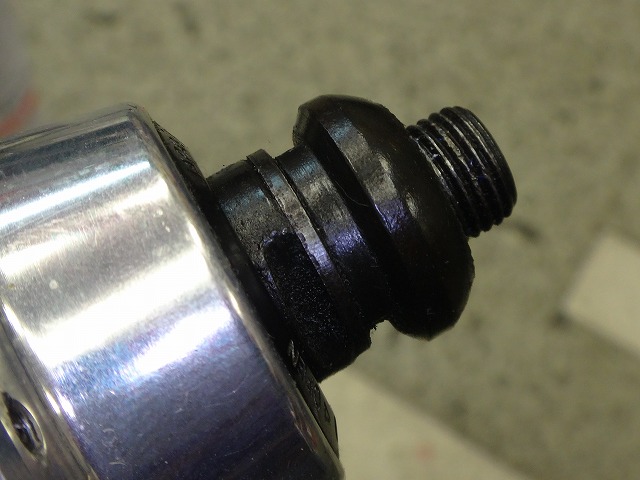
First, this left end. The actual over-locknut width
of this rear hub is 129.6mm, nearly 130mm,
and this hub is from a transition period when rear end width shifted from 126mm to 130mm,
so the left end has this shape to allow it to slip and spread
into a 126mm dropout.
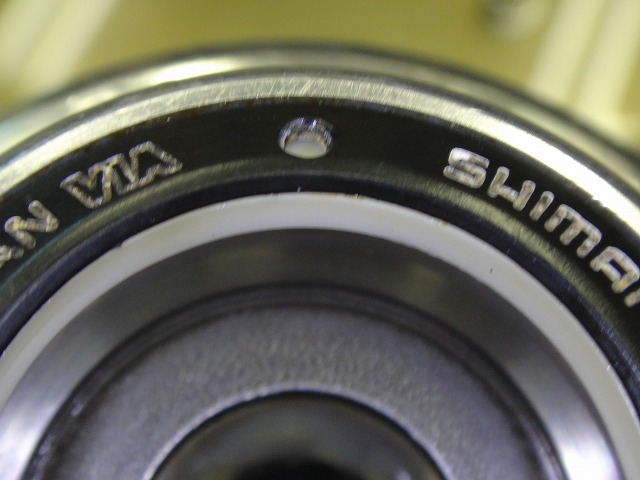
Second, the dust cap.
The FH-7400 also has a sliding grease port,
but the internal part is black plastic, so
even when closed, the hole appears black.
A white hole means it's FH-7402 or later.
Furthermore, the FH-7402 has grease-hole dust caps on both sides,
but the FH-7403 has just a plain cap on the freewheel side
and the grease hole only on the non-freewheel side.
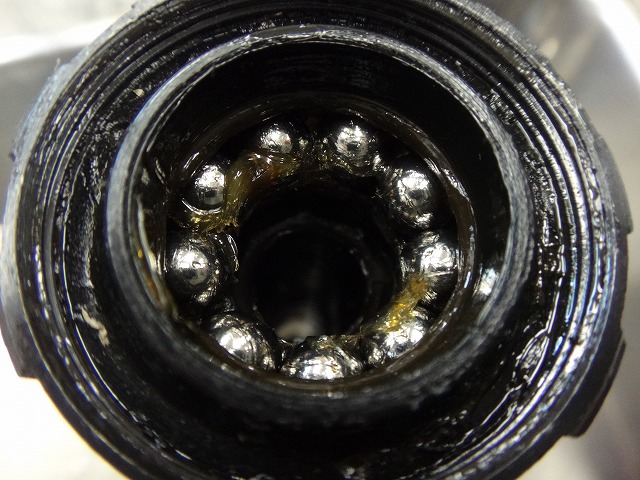
Backtracking in timeline, this is the freewheel side.

The grease is hardened and dirty, but
the bearings showed no wear.
I did a cleaning and re-greasing, but I'm not using this one today.
I've left the bearing play adjustment loose,
so play will probably develop as I build the wheel.

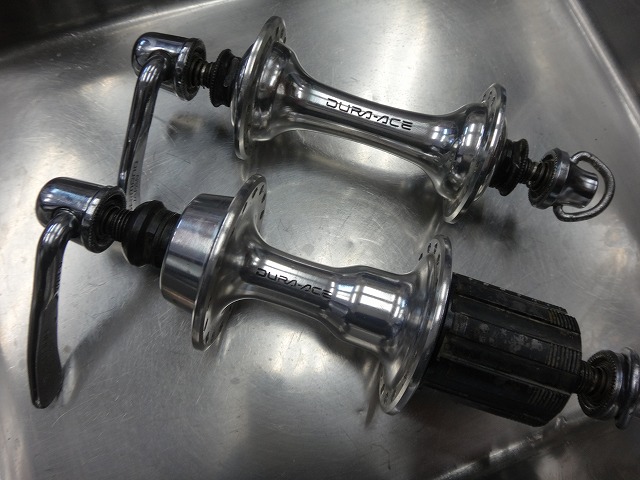
What I'm using are Record hubs the customer left with me.
For this period, besides 32H there were also 28H and 36H, but this one is 32H.
The hub shell looks clean—that's not my imagination;
the customer polished it.
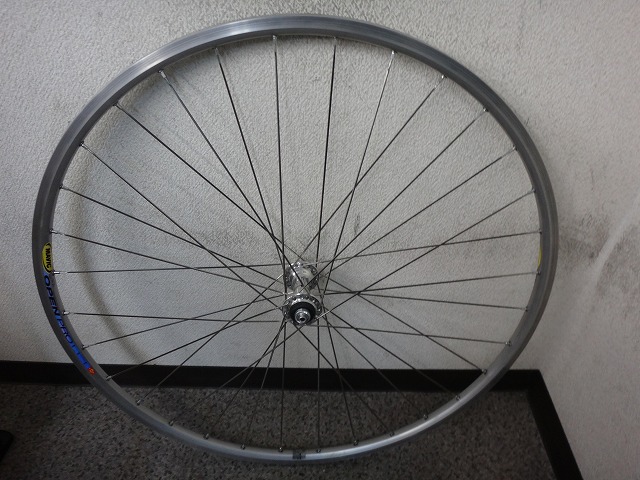
Built.
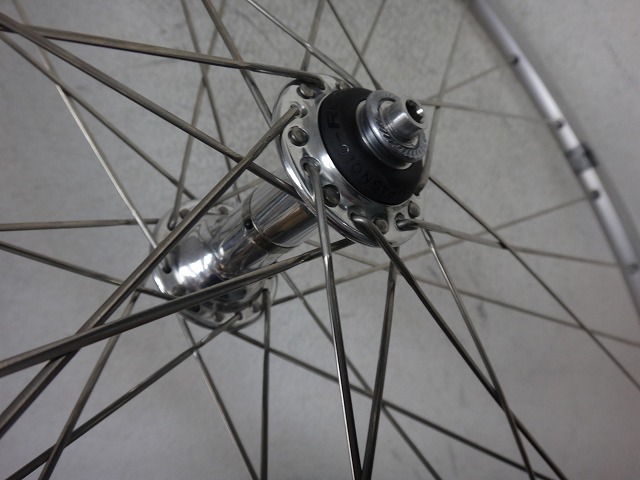
Front wheel is CX-RAY 6/6 Italian lacing,
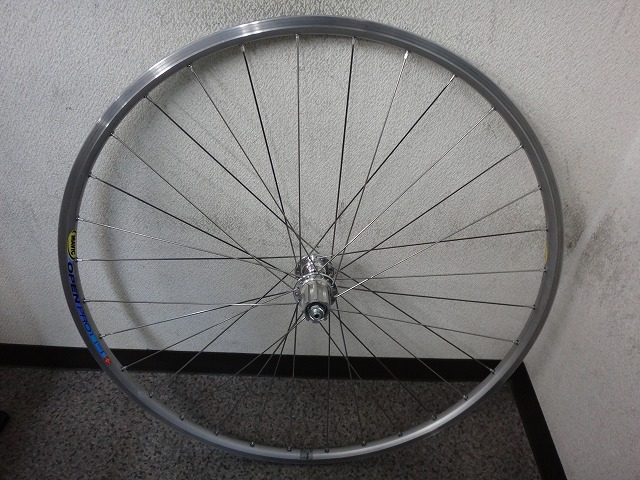
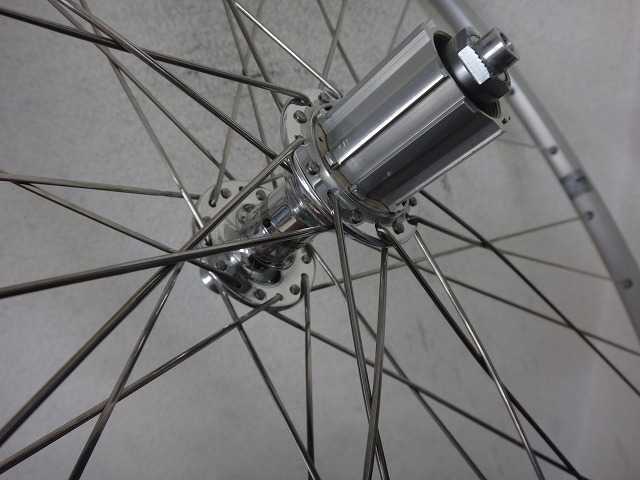
rear wheel is half-Comp 4/6 lacing.
Lacing comes later.
Actually, there's another pair today

A customer left me a wheel built with a Formula Chrono 20.
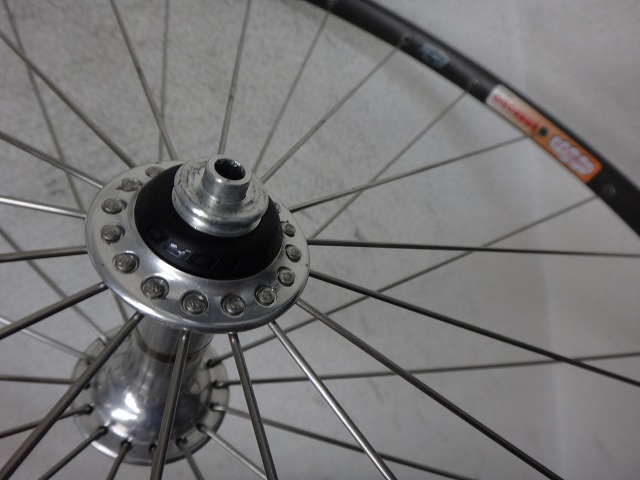
Record hub 32H, Champion #15 plain outpoke radial lacing.
I'm not going to argue about the rule that Campagnolo hubs prohibit radial lacing.
I've seen flanges that broke from radial lacing, but not on this hub.
In my opinion, given the spoke hole positions, I don't think
a flange would break in the first place.
↑ Spokes being slightly short and
the front wheel being radial—well, that front wheel needs better centering, at least.
The customer also asked for a hub overhaul.
There's grease outside the seal, and

inside the hub there's grease packed as densely
as butter served at a restaurant,
which makes me think—though I have no proof—that
the factory grease filling was done
through the grease hole in the hub center.
I don't think you could get this result
by applying grease from the outside.
Cleaned.
Later hubs don't have grease holes, and
the hub shell inner diameter and hub axle outer diameter don't have such tight clearance.
On pre-built wheels,
a grease guard keeps grease from flowing into the hub.
It was originally a plastic ring, but
later became a ring with a membrane that press-fits with the cone.
Next, the rear wheel. The rim is the same as the front.
Record hub 32H, Champion #15 plain 4/6 lacing.
The front wheel was tensioned decently, but the rear is a bit slack,
especially on the non-freewheel side—really slack.
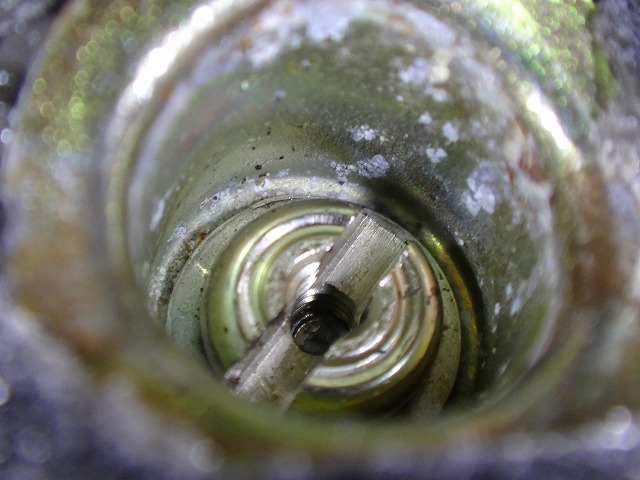
The spoke length is below the slot depth—no good.
Even if tensioned, it wouldn't reach the slot depth, so they're definitely too short.
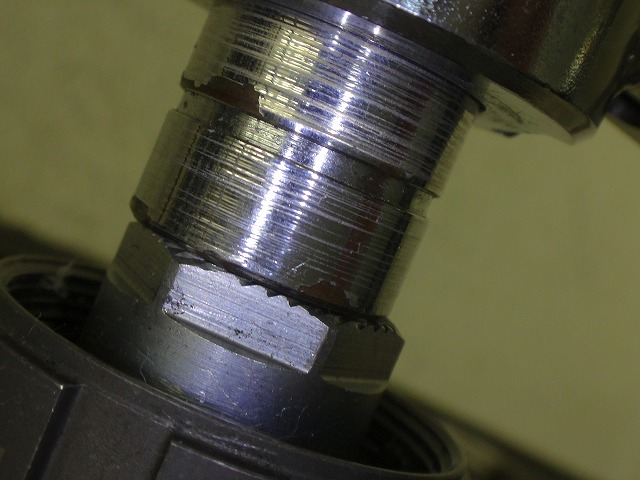
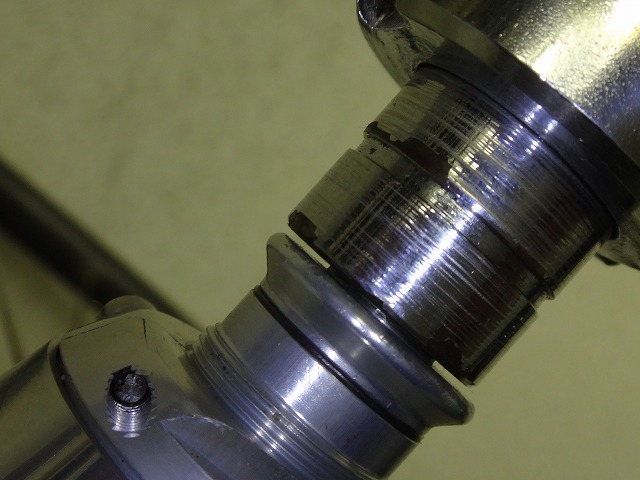
The hub is shifted opposite to how it would shift with use,
so the centering error was there from the start.

Unlike the front hub (with factory grease), Dura-Ace grease was filled in this one.
Since grease had leaked past the bearing preload nut,
it was probably filled through the grease hole.
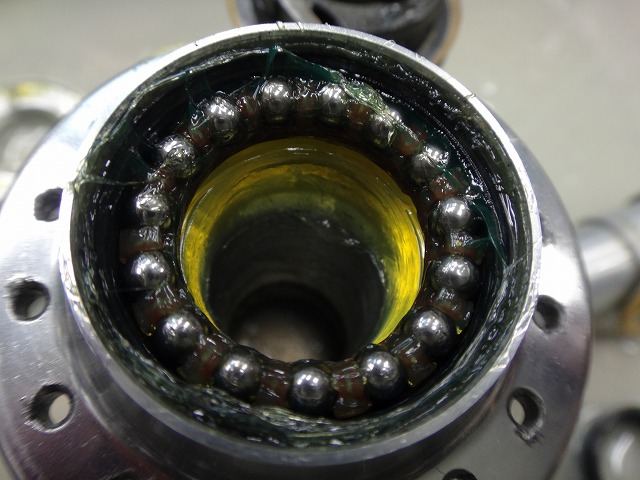
To grease this retainer,
you don't need to pack this much grease deeper inside,
and even if you worked it in from outside, I don't think you'd get this result.
Cleaned.
A Shimano-type freewheel body was fitted to this non-butted vintage axle,
but the customer wants to switch to a Campagnolo freewheel body.
Backtracking, before hub cleaning.
The part number for this non-butted axle is FH-RE201,
and the round-hole Campagnolo freewheel body that fits it
(the one that was on the Record hub from the Open Pro earlier)
has part number FH-RE415.
Of these, FH-RE201 isn't listed in the price table, so it's obsolete.
On this point, the new axle covers the old one, so there's no problem.
FH-RE415 is available, but
for some reason it comes bundled with hub axle,
and costs around ¥17,000 at list price.
FH-RE415 should be just the freewheel body part number,
but somehow it's become the part number for the set with FH-RE201.
So the FH-RE201 old axle is, strictly speaking, not discontinued
but rather unavailable as a standalone item.
If that's the case, going with new axle + current Campagnolo
triangular-hole freewheel body is better for both
delivery time and cost, so
I decided to swap in the new axle + current freewheel body.
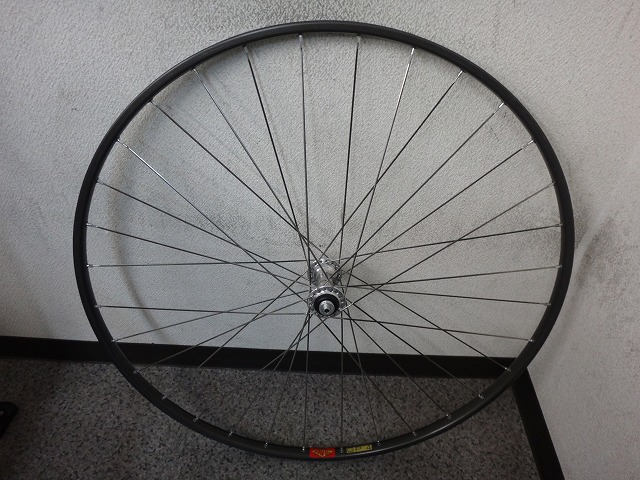
Built.
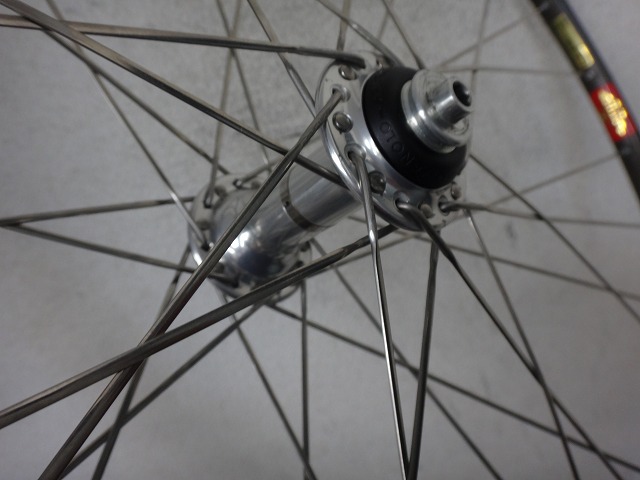
Front wheel is Record hub 32H, CX-RAY 6/6 Italian lacing, but
both front and rear rims are not Formula Chrono 20 but
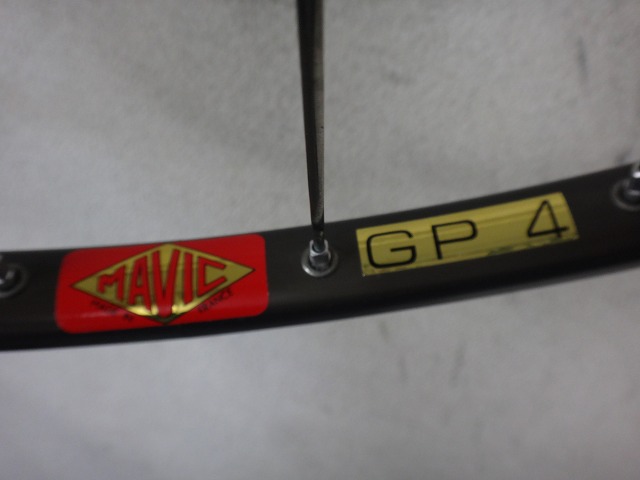
the Mavic so-called "red-label" GP4.
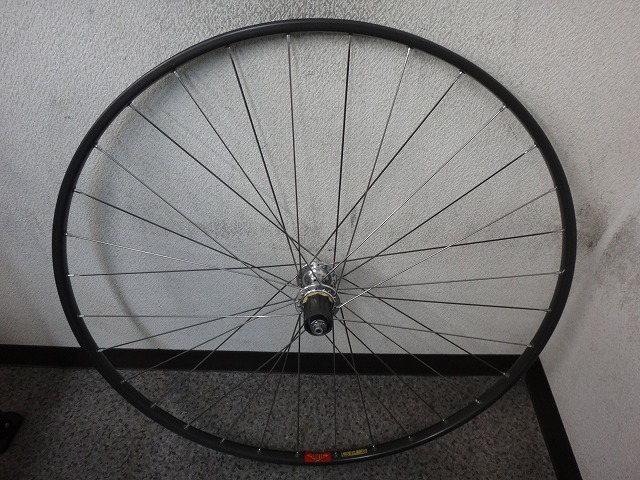

Rear wheel is Record hub 32H, half-Comp 4/6 lacing.
Lacing comes later.
With these older rims, you can't tension them the same way as modern rims.
I don't use spokes with 65% weight ratio round-butted spokes like DT Revolution
because "they get wobbly,"
but with old rims, the rim's limit is lower, so you can build
without the wobble appearing.
Conversely, with CX-RAY and an old rim combination,
you could theoretically keep tightening nipples and crack the rim.
So I build nervously and conservatively,
but this GP4 actually tensioned pretty well.
Still, not as much as with Reflex, for example.
The freewheel body is still Shimano-type, but
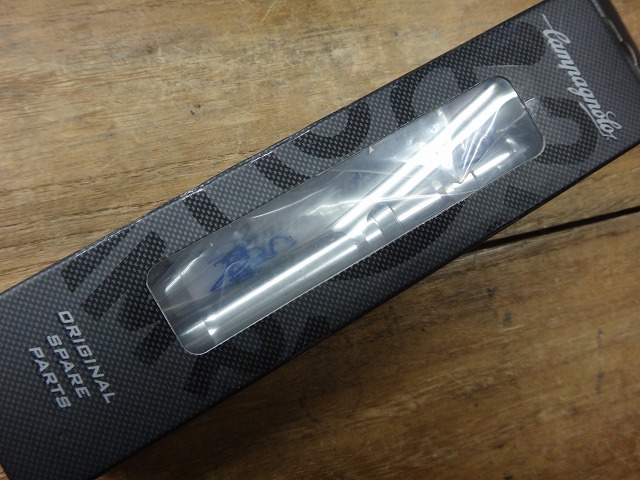
I did swap the hub axle to the new one.
The freewheel body is out of stock, so it's on backorder.
It'll arrive in time for the customer's pickup date.
Bonus
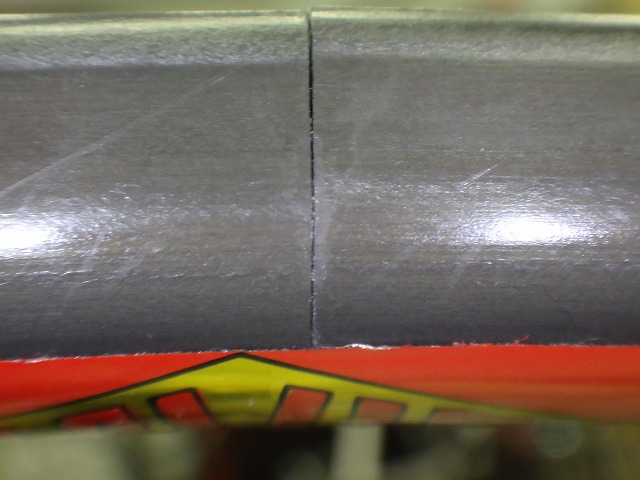
Before tensioning

After tensioning
If the gap is even larger,
the sticker can wrinkle.
Products Mentioned in This Article
- 🛒 Mavic Open Pro bicycle rim
- 🛒 Sapim CX-Ray bicycle spoke
- 🛒 Sapim Champion bicycle spoke
- 🛒 Formula Chrono 20 bicycle hub
* Amazon affiliate links — prices may vary
Original Japanese post: のむラボ日記 #3915