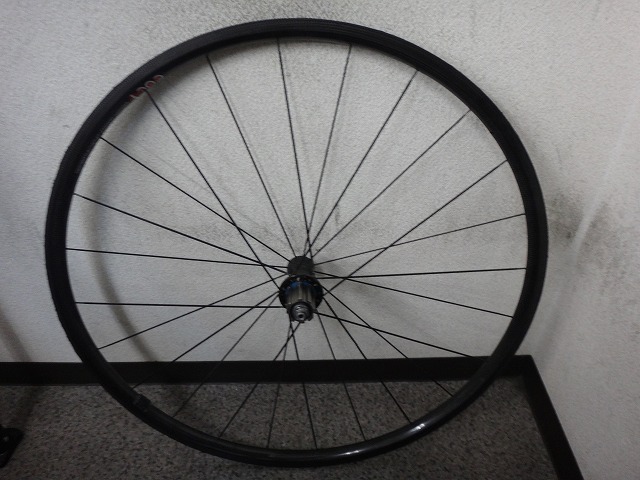
A customer brought in a Hyperion rear wheel for me to work on.
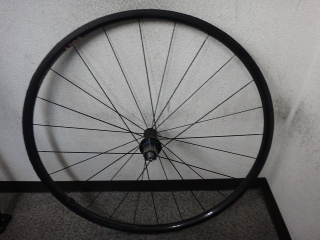
There's some runout, but I'll set that aside for now.
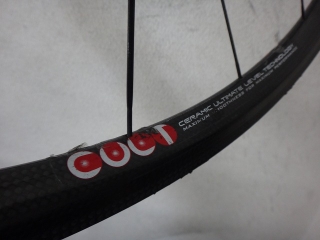
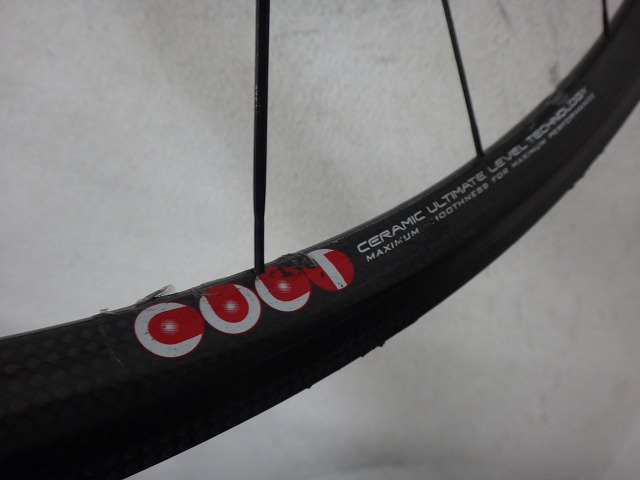
Most of the stickers have been peeled off,
but the CULT sticker remained (or was left?)
Since this sticker goes through the spokes after being applied,
there's no way the customer could have applied it later.
The reason I could identify this as a Hyperion Ultra Two rather than just a Hyperion Ultra
is because this sticker was still there.
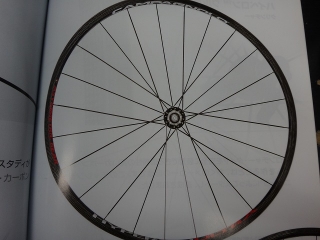
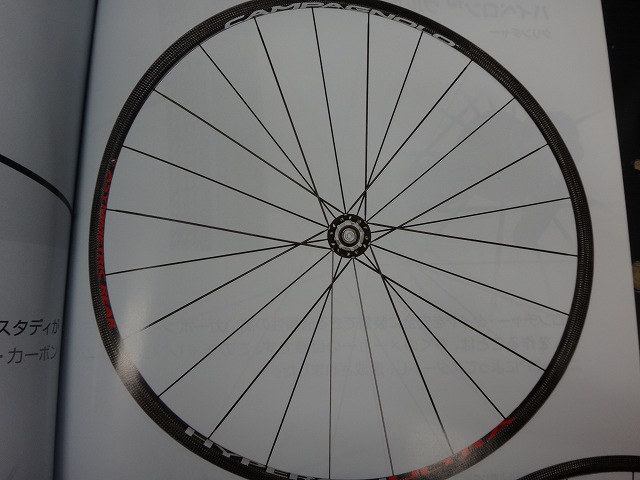
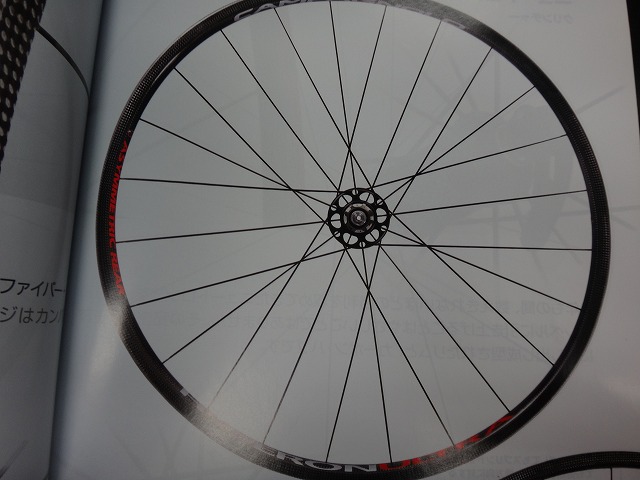
This is a 2008 Hyperion Ultra Tubular.
It doesn't have a CULT sticker.
At that time, neither CULT nor USB existed.
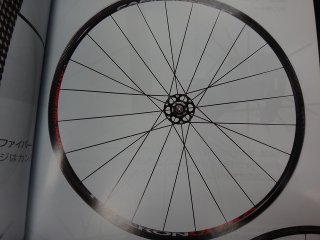
This is also a 2008 Hyperion Ultra Clincher,
but from 2006 onward, the clincher models of Hyperion
used a dedicated hub with higher/lower flanges compared to the tubular models.
This rear wheel first appeared in 2006 and remained the same model through 2008.
Starting with the 2004 model, a clincher version was added to the Hyperion line.
It had the same model name: "Hyperion."
At that time, the rear hub was the same as the tubular model.
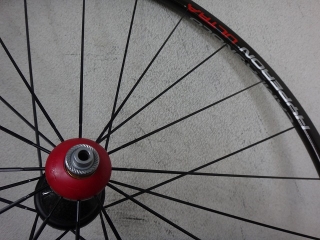
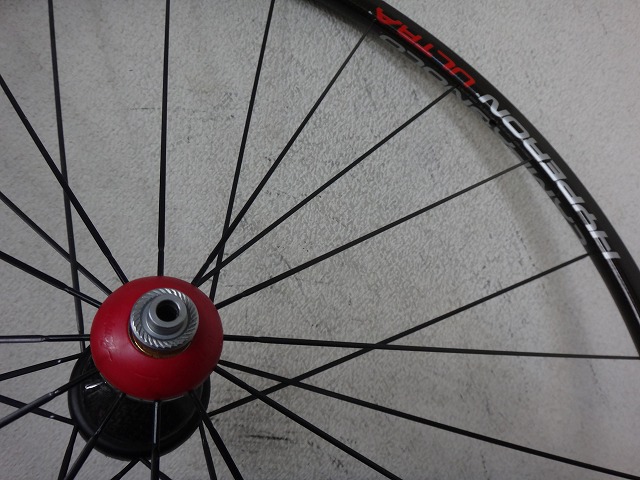
The Hyperion Clincher upgraded with ceramic ball bearings
and a red dust cap
became the original "Hyperion Ultra" (shown in the image above).
For the Hyperion line, the 2005 model was the same as 2004,
and the red dust cap Hyperion Ultra was only made for two years.
These ceramic ball bearings were just ceramic balls thrown into a steel ball race,
and they quickly developed pitting—a failed design.
So the 2006 Hyperion Ultra
(both tubular and clincher versions were called Hyperion Ultra)
reverted to steel ball bearings,
and the ceramic bearings were basically pretended never to exist.
Steel ball races with ceramic balls developing pitting sounds similar to
black ball race + USB (Ultra Speed Bearing), but
the ceramic balls used in the 2004/2005 Hyperion Ultra
were supposedly a different specification from those used in CULT and USB,
or so I heard the other day from a distributor who knows more about Campagnolo than anyone in Japan.
In fact, the original Hyperion Ultra's tendency to develop pitting was
far worse than USB (no matter how you used it, regular use wouldn't last even a year)
—that's just a fact.
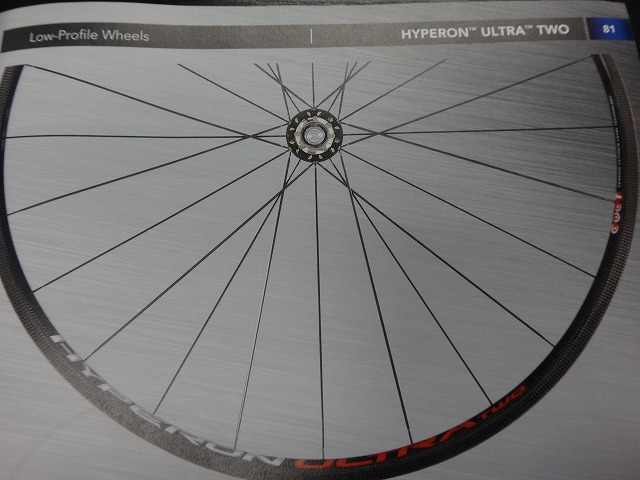
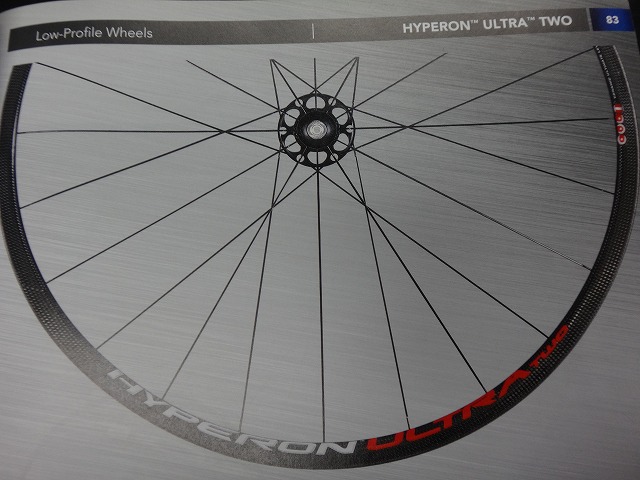
From 2009 onward, both tubular and clincher versions
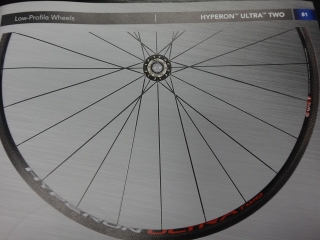
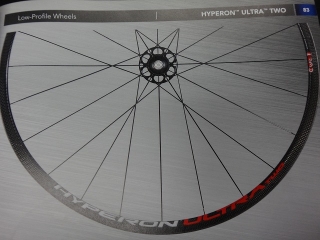
were renamed "Hyperion Ultra Two"
and switched to CULT (Ceramic Ultra Long-lasting Technology) bearings.
It took four years to reintroduce proper ceramic bearings.
I was initially skeptical of CULT as well,
but I'm glad those doubts proved unfounded.
The tubular had conventional high/low flanges and the clincher had ultra-high/low flanges,
and this arrangement didn't change
until the tubular was discontinued in 2017 and the clincher in 2015.
As someone who maintains spoke inventory, I'm grateful for that consistency.
From 2010 to 2013, there was also a Hyperion One model
with an aluminum hub, steel ball bearings, and high/low flanges slightly smaller in diameter
than the ultra-high/low (same dimensions as Zonda), available in clincher only.
So the Hyperion tubular I've taken in today is
too broad to pinpoint precisely, but it's a Hyperion Ultra Two
from the 2009–2017 model years.
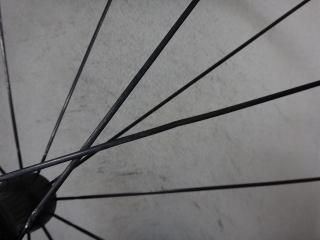
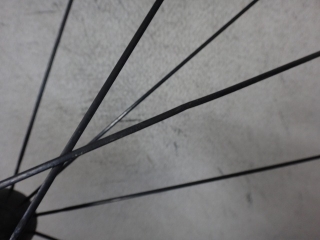
↑The rear derailleur got caught and bent two spokes on the anti-porcupine side.

I replaced them.
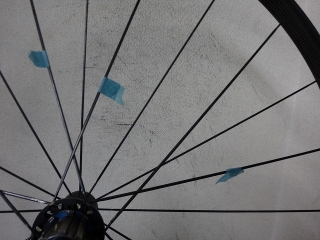
There are four tape markers even though I replaced only two spokes, because
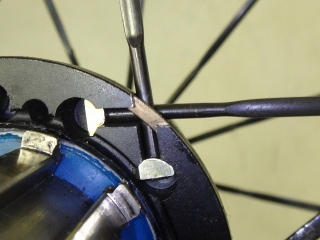
to remove the spokes on the anti-porcupine side,
I first have to remove the porcupine side spokes that cross them.
So as I always say, normally
I can handle most things by just adjusting the nipples on these four spokes,
but there was also an unnatural lateral runout separate from that.
Whether the customer realized the runout was caused by spoke deformation is unclear,
but apparently another shop just did a runout correction.
Yeah, I figured that was it.
The spokes on both sides of the bent ones had abnormal tension.
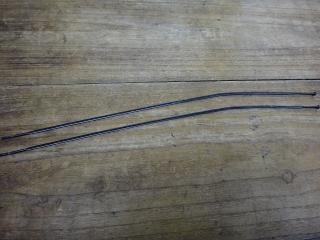
↑The replaced spokes

They're bent so similarly that I can't tell afterward which took the first hit.
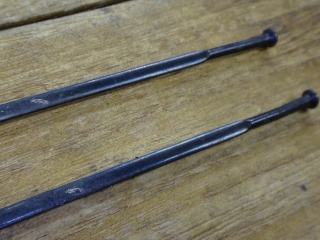
What looks like an impact mark isn't—it's the contact point at the final spoke crossing.
There's some runout, but I'll set that aside for now.
Most of the stickers have been peeled off,
but the CULT sticker remained (or was left?)
Since this sticker goes through the spokes after being applied,
there's no way the customer could have applied it later.
The reason I could identify this as a Hyperion Ultra Two rather than just a Hyperion Ultra
is because this sticker was still there.
This is a 2008 Hyperion Ultra Tubular.
It doesn't have a CULT sticker.
At that time, neither CULT nor USB existed.
This is also a 2008 Hyperion Ultra Clincher,
but from 2006 onward, the clincher models of Hyperion
used a dedicated hub with higher/lower flanges compared to the tubular models.
This rear wheel first appeared in 2006 and remained the same model through 2008.
Starting with the 2004 model, a clincher version was added to the Hyperion line.
It had the same model name: "Hyperion."
At that time, the rear hub was the same as the tubular model.
The Hyperion Clincher upgraded with ceramic ball bearings
and a red dust cap
became the original "Hyperion Ultra" (shown in the image above).
For the Hyperion line, the 2005 model was the same as 2004,
and the red dust cap Hyperion Ultra was only made for two years.
These ceramic ball bearings were just ceramic balls thrown into a steel ball race,
and they quickly developed pitting—a failed design.
So the 2006 Hyperion Ultra
(both tubular and clincher versions were called Hyperion Ultra)
reverted to steel ball bearings,
and the ceramic bearings were basically pretended never to exist.
Steel ball races with ceramic balls developing pitting sounds similar to
black ball race + USB (Ultra Speed Bearing), but
the ceramic balls used in the 2004/2005 Hyperion Ultra
were supposedly a different specification from those used in CULT and USB,
or so I heard the other day from a distributor who knows more about Campagnolo than anyone in Japan.
In fact, the original Hyperion Ultra's tendency to develop pitting was
far worse than USB (no matter how you used it, regular use wouldn't last even a year)
—that's just a fact.
From 2009 onward, both tubular and clincher versions
were renamed "Hyperion Ultra Two"
and switched to CULT (Ceramic Ultra Long-lasting Technology) bearings.
It took four years to reintroduce proper ceramic bearings.
I was initially skeptical of CULT as well,
but I'm glad those doubts proved unfounded.
The tubular had conventional high/low flanges and the clincher had ultra-high/low flanges,
and this arrangement didn't change
until the tubular was discontinued in 2017 and the clincher in 2015.
As someone who maintains spoke inventory, I'm grateful for that consistency.
From 2010 to 2013, there was also a Hyperion One model
with an aluminum hub, steel ball bearings, and high/low flanges slightly smaller in diameter
than the ultra-high/low (same dimensions as Zonda), available in clincher only.
So the Hyperion tubular I've taken in today is
too broad to pinpoint precisely, but it's a Hyperion Ultra Two
from the 2009–2017 model years.
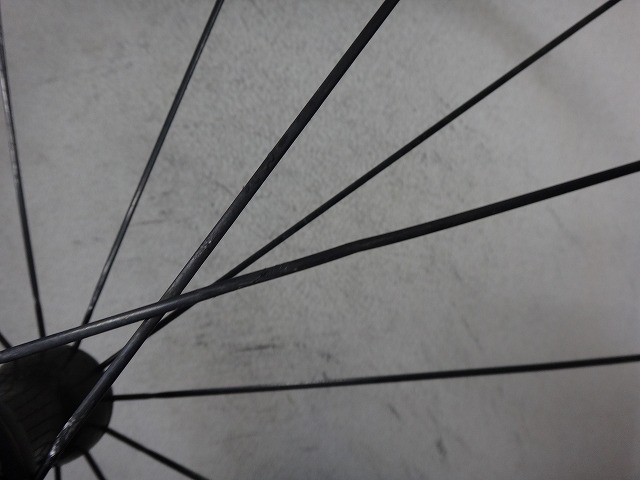
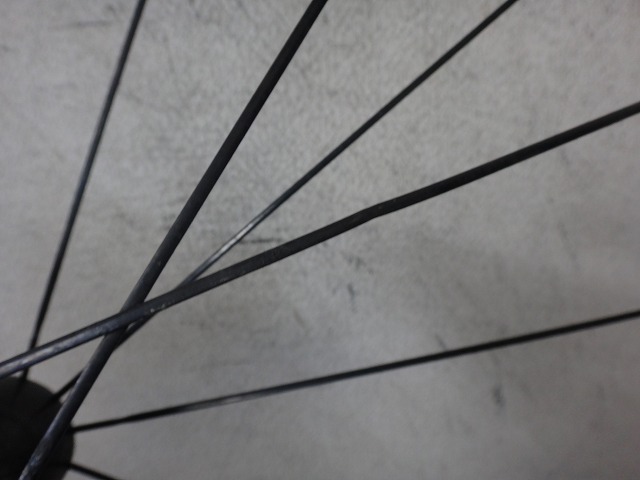
↑The rear derailleur got caught and bent two spokes on the anti-porcupine side.
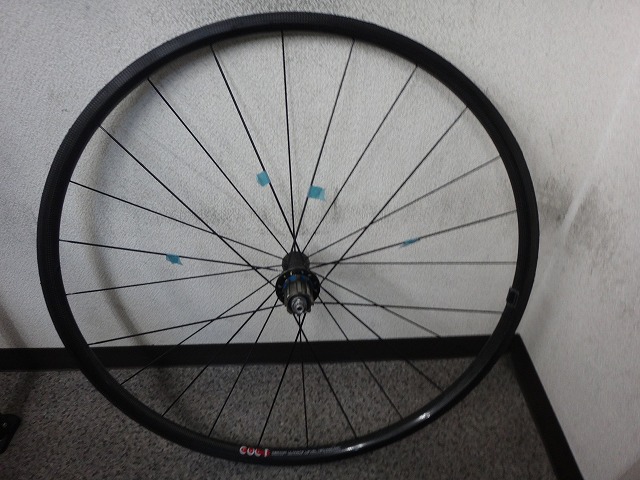
I replaced them.
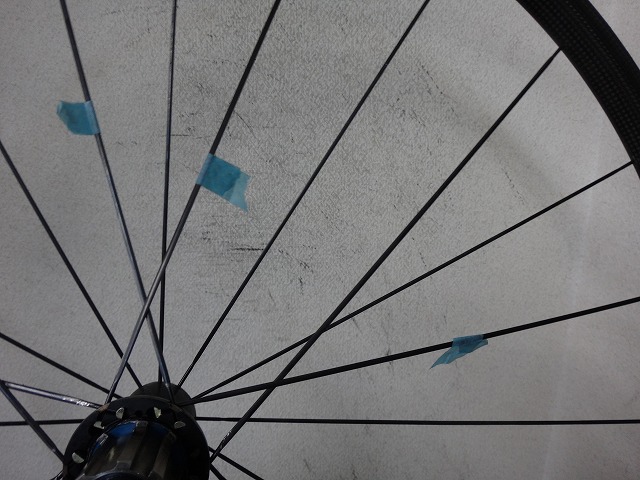
There are four tape markers even though I replaced only two spokes, because
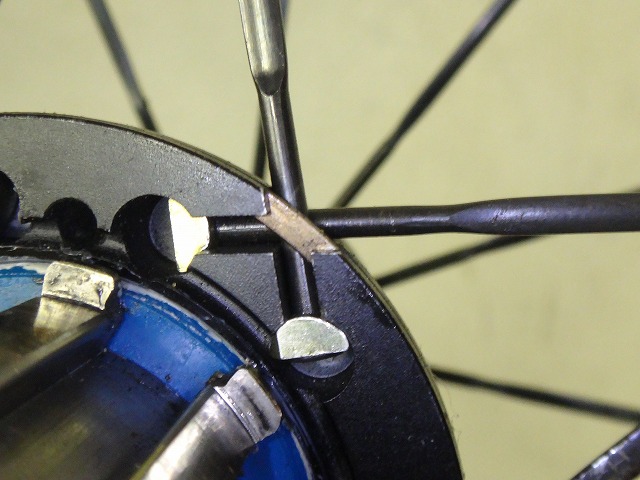
to remove the spokes on the anti-porcupine side,
I first have to remove the porcupine side spokes that cross them.
So as I always say, normally
I can handle most things by just adjusting the nipples on these four spokes,
but there was also an unnatural lateral runout separate from that.
Whether the customer realized the runout was caused by spoke deformation is unclear,
but apparently another shop just did a runout correction.
Yeah, I figured that was it.
The spokes on both sides of the bent ones had abnormal tension.
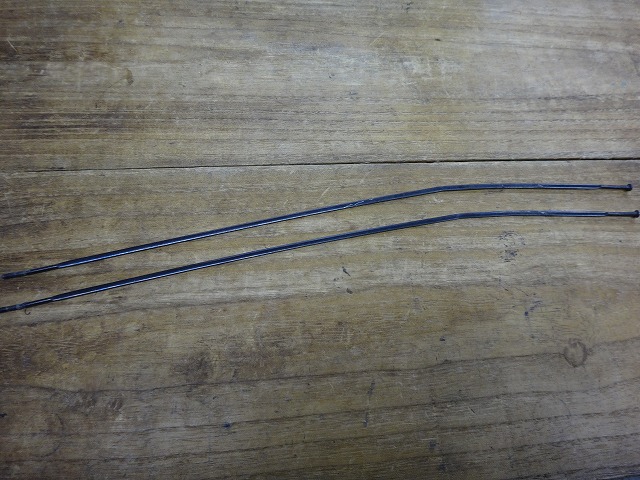
↑The replaced spokes
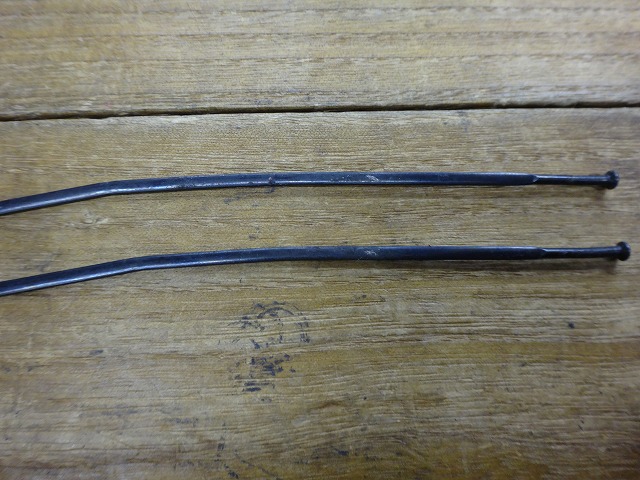
They're bent so similarly that I can't tell afterward which took the first hit.
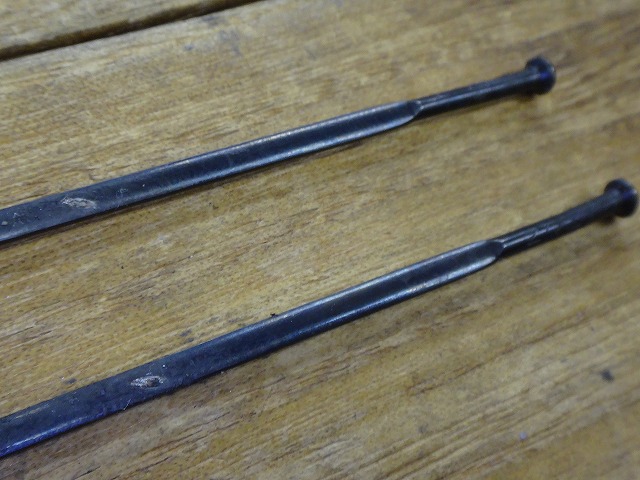
What looks like an impact mark isn't—it's the contact point at the final spoke crossing.