Back to wheels today (et cetera).
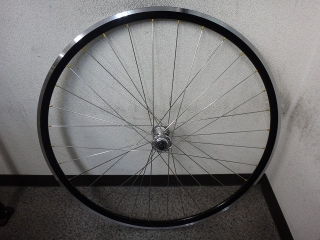
Built the front wheel for Nomu Lab Wheel #4.
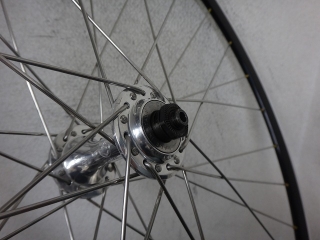
Veloce 32H hub, all Competition spokes, Italian laced
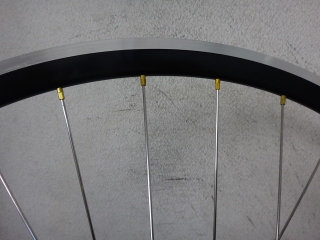
Gold aluminum nipples.
This front wheel was previously built with a different rim,
but the customer wanted us to rebuild it by reusing the hub and spokes.
They disassembled the wheel themselves and left the hub and spokes with us.
The previous rim was probably built at around 302mm based on rim height,
so reuse is almost certainly possible (assuming the spokes aren't severely bent).
Here's why: DT Competition spokes can definitely be cut by 20mm,
but we keep 305mm in stock (next size down is 285mm),
and we're only cutting a few millimeters from that,
so we're guaranteed to get the 288mm length we need for rebuilding.
If they'd cut 302mm from around 330mm Competition, we couldn't trim it further—
but spokes that long don't exist.
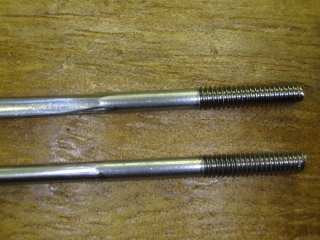
↑This is uncut Sapim CX-RAY (top in image) and Race (bottom),
but with Race spokes, even though the butted dimensions are 2.0–1.8–2.0mm like Competition,
the cuttable length is 8mm at most if you push it,
or better to keep it under 6mm.
With 250–305mm spokes you can build most 700C wheels,
but Competition lets you get by with three lengths in stock at 20mm intervals,
whereas Race requires about ten.
That's why I don't use Race spokes.
Even though the butted section dimensions are the same, Race—with less of the 2.0mm section—has slightly lighter spoke weight than Competition. You'd think so, and you'd be right.
But the difference isn't significant enough to show up in actual wheel characteristics.
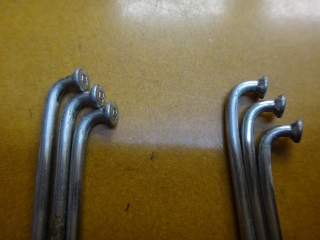
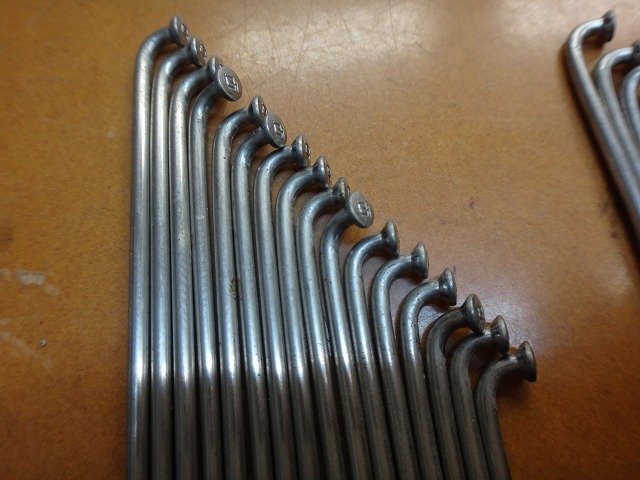
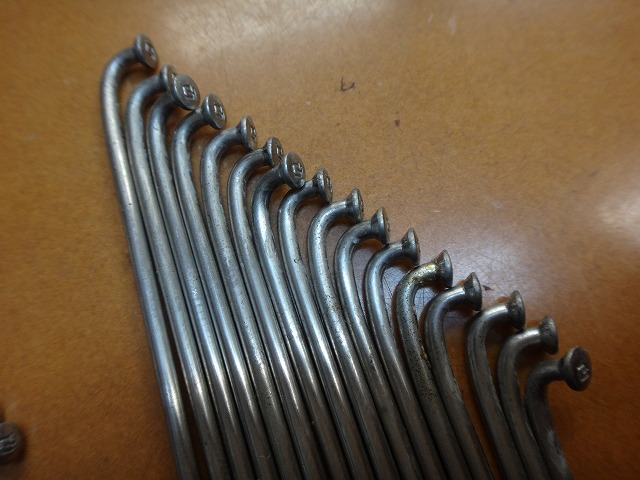
I already have the disassembled spokes on hand,
and ideally I'd like to reuse former inpokes as inpokes and former outpokes as outpokes.
In the image above, left is original outpoke, right is original inpoke—no doubt about it.
Sorting them this way
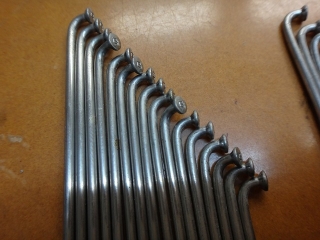
↑former outpokes
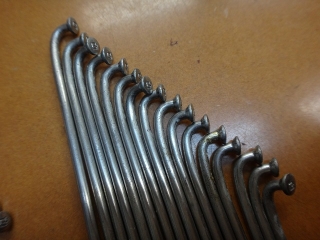
↑former inpokes
They split evenly into 16 each.
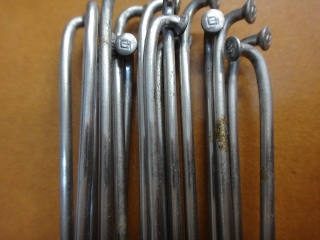
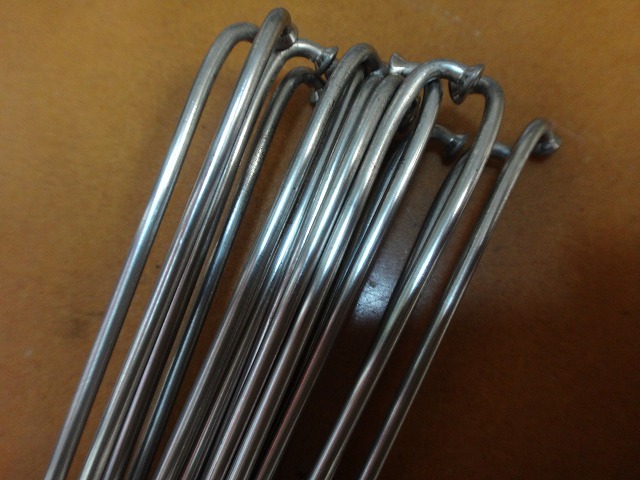
I cleaned off the rim cement that was stuck on
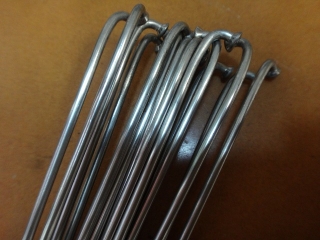
with acetone,
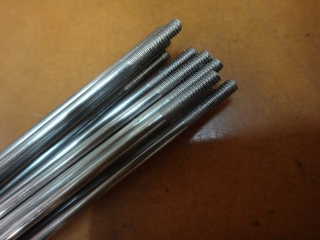
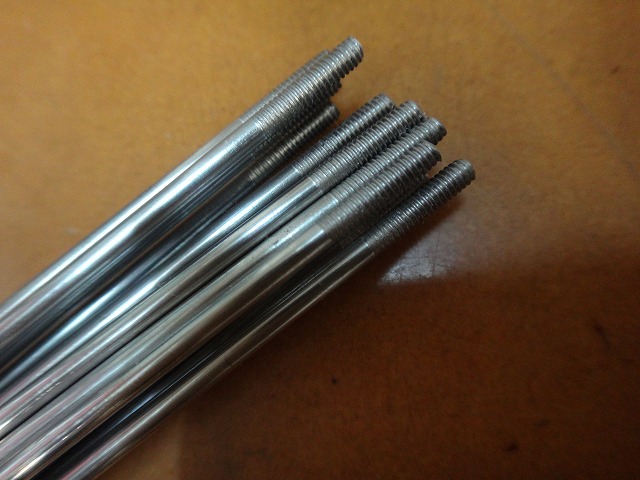
and degreased the threads.
This image is after cutting, by the way,
since we use cutting oil when rolling the threads.

First I threaded the former inpokes through the flange with inpoke holes
(the marks visible in the image are outpoke marks).
Whether following the flange marks is the right approach, I honestly don't know.
This wheel was previously Italian-laced too, but if the earlier builder wasn't me—
say they used JIS lacing—then one side wouldn't align with the previous marks.
Or with radial lacing, all the holes would face a different direction than before.
Also, when rebuilding a rear wheel that was 46×46 laced into 46×26 lacing or similar,
one side ends up threading inpokes through former outpoke holes.

This is a Veloce hub.
I know it seems obvious to point out, but
when all the parts except the hub shell
(axle, end nuts, dust caps, bearings, cones)
are the same and only have the Campagnolo stamp, that's a Mirage.
If it also has the Veloce stamp, it's a Veloce.
There's no other way to tell them apart.

Built the front wheel for Nomu Lab Wheel #4.

Veloce 32H hub, all Competition spokes, Italian laced

Gold aluminum nipples.
This front wheel was previously built with a different rim,
but the customer wanted us to rebuild it by reusing the hub and spokes.
They disassembled the wheel themselves and left the hub and spokes with us.
The previous rim was probably built at around 302mm based on rim height,
so reuse is almost certainly possible (assuming the spokes aren't severely bent).
Here's why: DT Competition spokes can definitely be cut by 20mm,
but we keep 305mm in stock (next size down is 285mm),
and we're only cutting a few millimeters from that,
so we're guaranteed to get the 288mm length we need for rebuilding.
If they'd cut 302mm from around 330mm Competition, we couldn't trim it further—
but spokes that long don't exist.
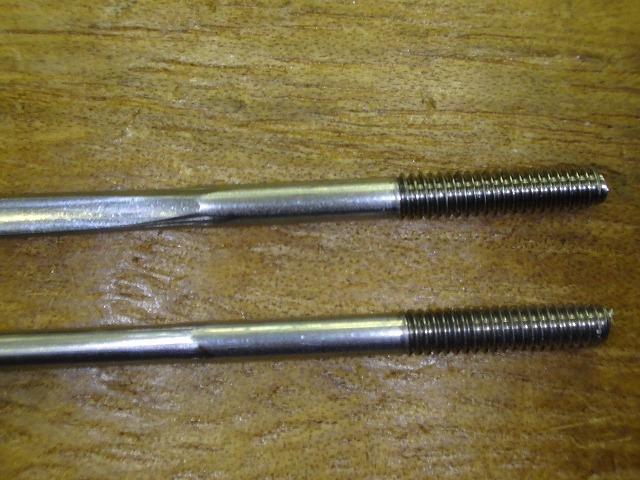
↑This is uncut Sapim CX-RAY (top in image) and Race (bottom),
but with Race spokes, even though the butted dimensions are 2.0–1.8–2.0mm like Competition,
the cuttable length is 8mm at most if you push it,
or better to keep it under 6mm.
With 250–305mm spokes you can build most 700C wheels,
but Competition lets you get by with three lengths in stock at 20mm intervals,
whereas Race requires about ten.
That's why I don't use Race spokes.
Even though the butted section dimensions are the same, Race—with less of the 2.0mm section—has slightly lighter spoke weight than Competition. You'd think so, and you'd be right.
But the difference isn't significant enough to show up in actual wheel characteristics.
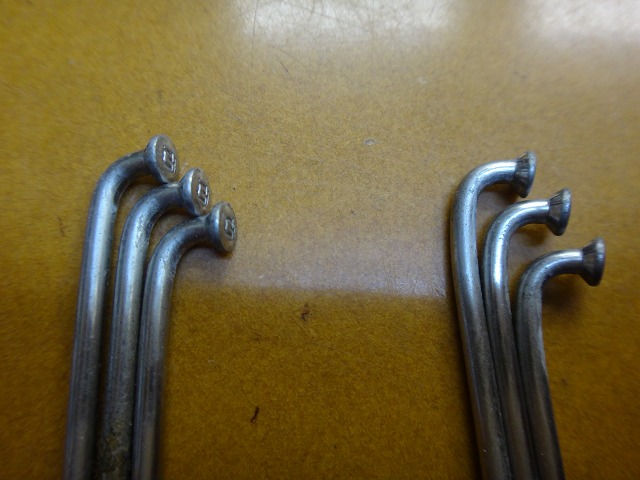
I already have the disassembled spokes on hand,
and ideally I'd like to reuse former inpokes as inpokes and former outpokes as outpokes.
In the image above, left is original outpoke, right is original inpoke—no doubt about it.
Sorting them this way
↑former outpokes
↑former inpokes
They split evenly into 16 each.

I cleaned off the rim cement that was stuck on
with acetone,
and degreased the threads.
This image is after cutting, by the way,
since we use cutting oil when rolling the threads.
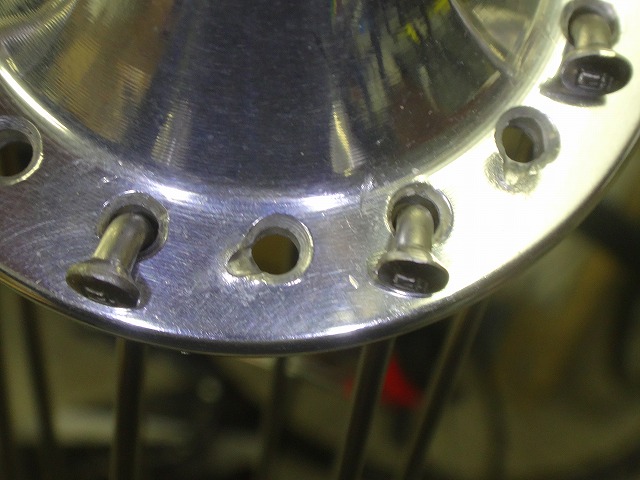
First I threaded the former inpokes through the flange with inpoke holes
(the marks visible in the image are outpoke marks).
Whether following the flange marks is the right approach, I honestly don't know.
This wheel was previously Italian-laced too, but if the earlier builder wasn't me—
say they used JIS lacing—then one side wouldn't align with the previous marks.
Or with radial lacing, all the holes would face a different direction than before.
Also, when rebuilding a rear wheel that was 46×46 laced into 46×26 lacing or similar,
one side ends up threading inpokes through former outpoke holes.
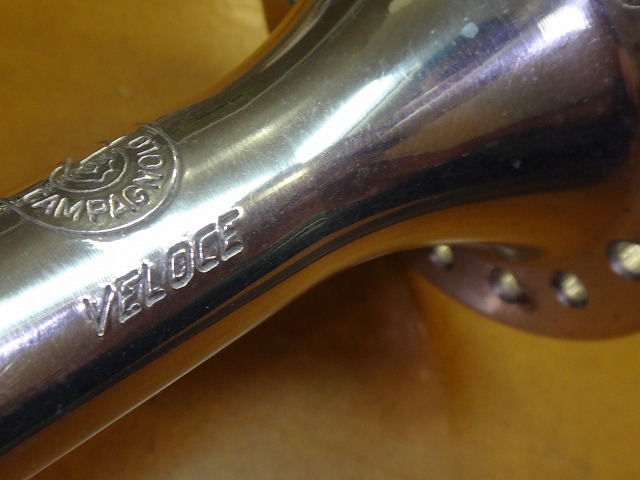
This is a Veloce hub.
I know it seems obvious to point out, but
when all the parts except the hub shell
(axle, end nuts, dust caps, bearings, cones)
are the same and only have the Campagnolo stamp, that's a Mirage.
If it also has the Veloce stamp, it's a Veloce.
There's no other way to tell them apart.