I'd like to say "another wheel day" (and so on), but
since I built my own wheel outside business hours, I'm not counting it officially.
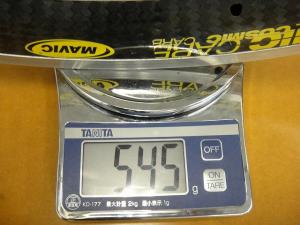
The Cosmic Carbon SL WO rim
(though there's no tubular version anymore)weighs around 550g.
The Red Wind 105 feels like it accelerates better than the Cosmic Carbon when I'm climbing,
so I've been curious about the rim weight.
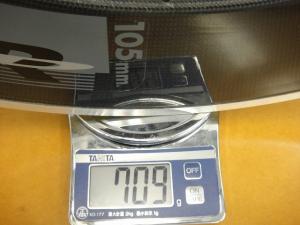
↑Well, it turns out it's not particularly light.
Yet it still feels faster on climbs,
so I think there are two possible reasons.
First, the rim height is 105mm, so the weight is distributed more to the inner circumference.
The other factor is spoke length.
The Cosmic Carbon has a carbon fairing over a low-profile rim, so
the nipples are inside the low-profile aluminum rim.
The rim inner diameter for spoke length calculation
is almost identical to the Open Pro. The difference in radius is only 0.5mm.
Looking at it with the mind's eye, you could say it's like
"an Open Pro 20H with a wind fairing cover."
The Red Wind, on the other hand, has the nipples at the rim's apex.
Naturally the spokes are very short, and the spoke deflection is minimal = it's a stiff setup.
The Cosmic Carbon SL WO rim
weighs around 550g.
The catalog weight for the Red Wind 105 XLR
varies depending on the source—sometimes 1070g, sometimes 1050g—
but my actual measured weight is 1041g.
That said, this uses an aluminum freebody for Campagnolo,
so with a steel freebody for Shimano it would likely come in around catalog weight.
The Red Wind comes in rim heights of 80mm and 50mm,
and naturally as the rim gets lower, the spoke length increases.
Also, the 105mm and 80mm versions use 18 spokes with a 2:1 ratio of 3 spokes × 6 pairs,
but the 50mm only uses 21 spokes with a 2:1 ratio of 3 spokes × 7 pairs.
Since I've now determined the specific gravity of this wheel's spokes,
I can get fairly accurate estimated weights for both the 80mm and 50mm rim versions.

The bearings are USB (United States Bicycle), but the cone and lock ring
have been changed to a silver color that's
nearly indistinguishable from CULT.
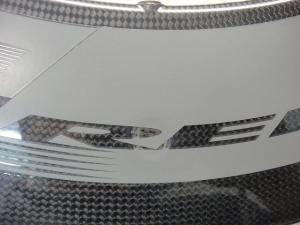
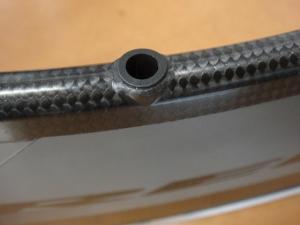
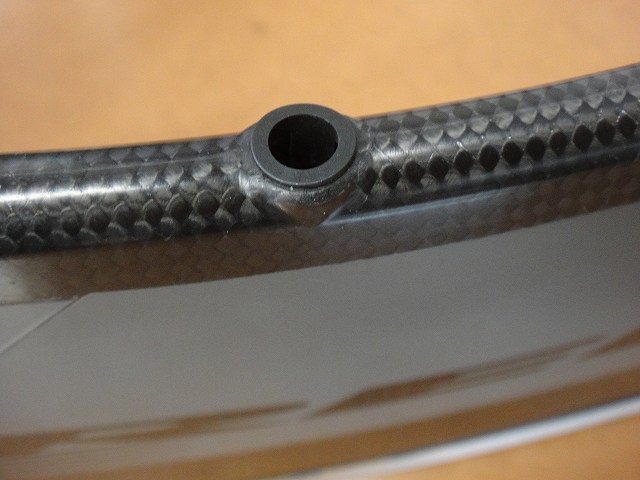
↑There's a round depression in the rim.
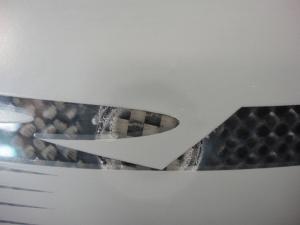
It's hard to see under the sticker, but
the carbon weave is different only there.
This is probably a hole for tire bead seating or for nipple insertion,
or perhaps both.
The nipple replacement during this rebuild required a bit of technique.
If I can use this hole, the work will be a bit easier.
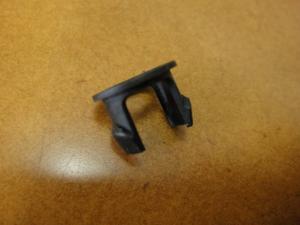
The valve rattle guard

goes into the valve hole
and is set in place.

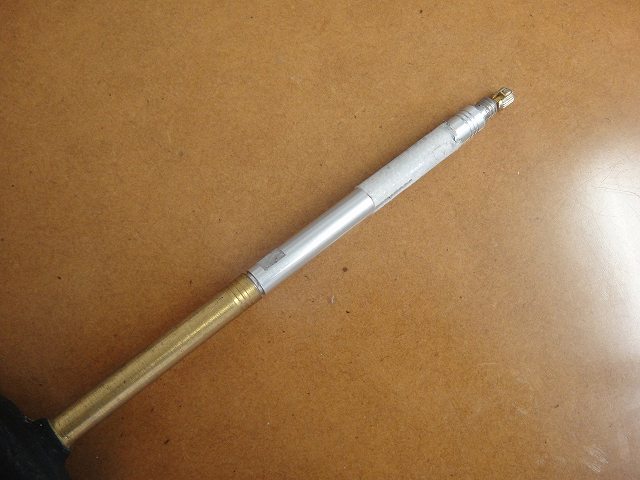
I use a commercial valve extender,

but the valve extender that comes with the wheel—when you look closely, it resembles a tubeless valve.
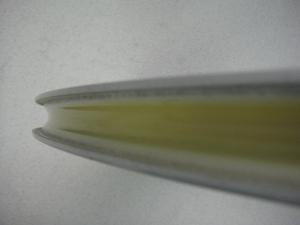
↑Even the WO model rim already has a "tire bead seating depression."
If you add to that a hump (the part of the rim that prevents tubeless tire beads
from coming loose) and attach a tubeless valve,
you could make it tubeless right away.
You could theoretically use a tubeless tire as-is,
if you don't mind the tire flying off instantly during a puncture and getting seriously injured.

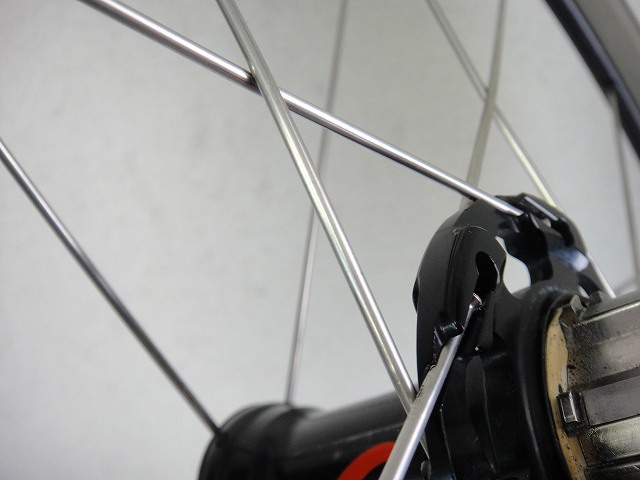
I rebuilt it with Sapim Leader 2.0mm plain straight-gauge spokes.
The spokes are so short that deflection is almost zero.
Surprisingly, the same applies to the radial lacing on the non-drive side.
Normally when you grip two spokes from the same flange together,
they deflect somewhat, but on this wheel they don't deflect at all—
your fingers just slide right down toward the hub.
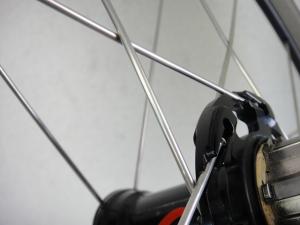
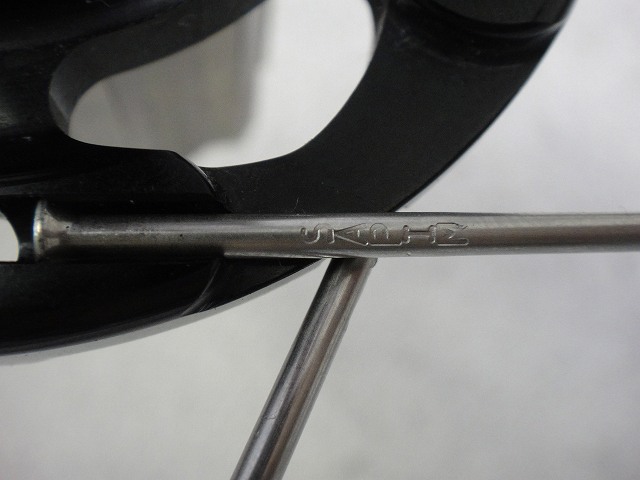
Before the rebuild, the spoke intersections weren't woven, but I wove them this time.

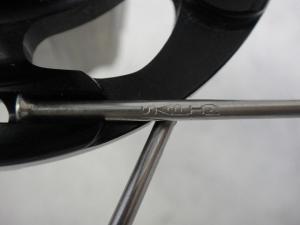
It's unfortunate that Sapim's domestic distributor only carries
the 2.0mm plain "Leader" (equivalent to DT Champion) and
the 2.0-1.8-2.0mm round-butted "Race" (equivalent to DT Competition)—
just those two items.
If they had everything, I would have used CX spokes.
The drive side can use "hooked" spokes.
The non-drive side is "straight-through," so I'd use CX-RAY.
Unfortunately, that's not possible.
With this rebuild, there's no question I've gained weight and lost aerodynamic efficiency,
but the rigidity—especially lateral rigidity—has visibly improved.
I can't feel the weight gain, and I can't detect the aerodynamic loss
(the non-drive side flange on this hub is extremely large, so round spokes should be worst-case)
I usually do this style of rebuild with customers' wheels,
and I've now tried it on my own wheel too.
I'd been thinking about doing this spec even before I bought this wheel.
since I built my own wheel outside business hours, I'm not counting it officially.
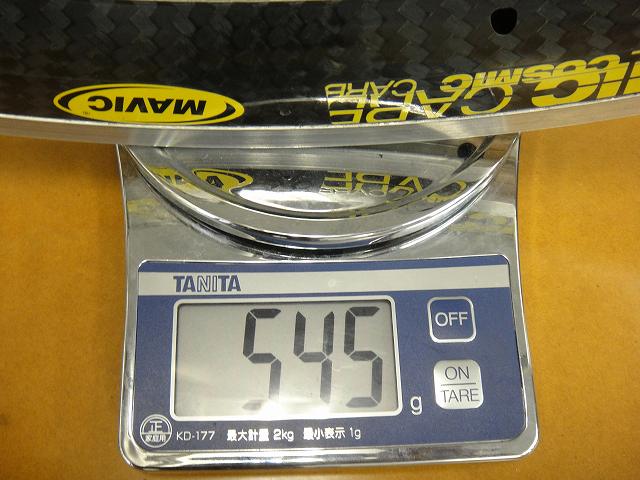
The Cosmic Carbon SL WO rim
(though there's no tubular version anymore)weighs around 550g.
The Red Wind 105 feels like it accelerates better than the Cosmic Carbon when I'm climbing,
so I've been curious about the rim weight.
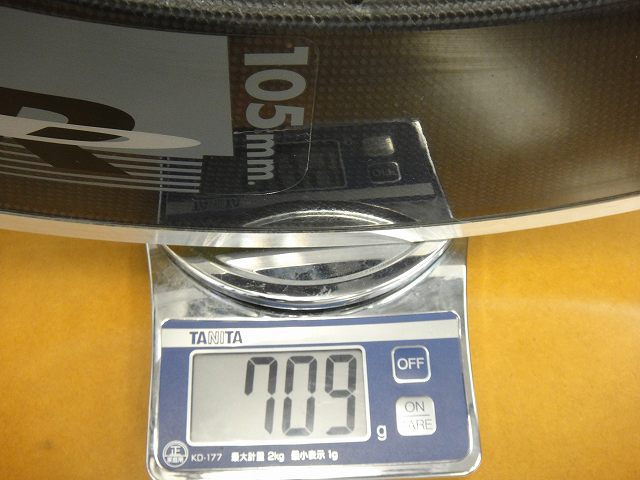
↑Well, it turns out it's not particularly light.
Yet it still feels faster on climbs,
so I think there are two possible reasons.
First, the rim height is 105mm, so the weight is distributed more to the inner circumference.
The other factor is spoke length.
The Cosmic Carbon has a carbon fairing over a low-profile rim, so
the nipples are inside the low-profile aluminum rim.
The rim inner diameter for spoke length calculation
is almost identical to the Open Pro. The difference in radius is only 0.5mm.
Looking at it with the mind's eye, you could say it's like
"an Open Pro 20H with a wind fairing cover."
The Red Wind, on the other hand, has the nipples at the rim's apex.
Naturally the spokes are very short, and the spoke deflection is minimal = it's a stiff setup.
The Cosmic Carbon SL WO rim
weighs around 550g.
The catalog weight for the Red Wind 105 XLR
varies depending on the source—sometimes 1070g, sometimes 1050g—
but my actual measured weight is 1041g.
That said, this uses an aluminum freebody for Campagnolo,
so with a steel freebody for Shimano it would likely come in around catalog weight.
The Red Wind comes in rim heights of 80mm and 50mm,
and naturally as the rim gets lower, the spoke length increases.
Also, the 105mm and 80mm versions use 18 spokes with a 2:1 ratio of 3 spokes × 6 pairs,
but the 50mm only uses 21 spokes with a 2:1 ratio of 3 spokes × 7 pairs.
Since I've now determined the specific gravity of this wheel's spokes,
I can get fairly accurate estimated weights for both the 80mm and 50mm rim versions.
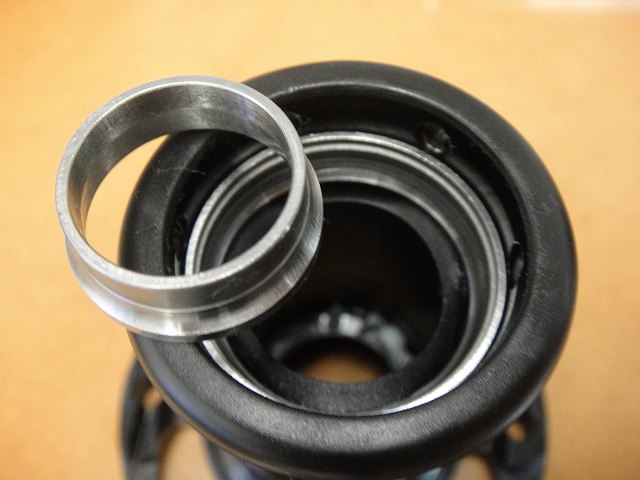
The bearings are USB (United States Bicycle), but the cone and lock ring
have been changed to a silver color that's
nearly indistinguishable from CULT.
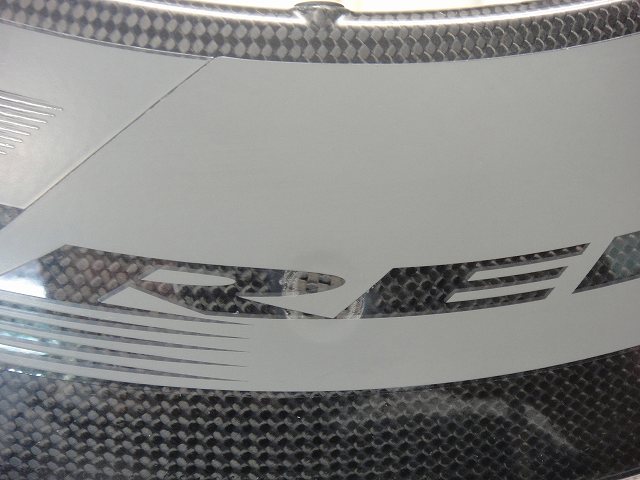
↑There's a round depression in the rim.
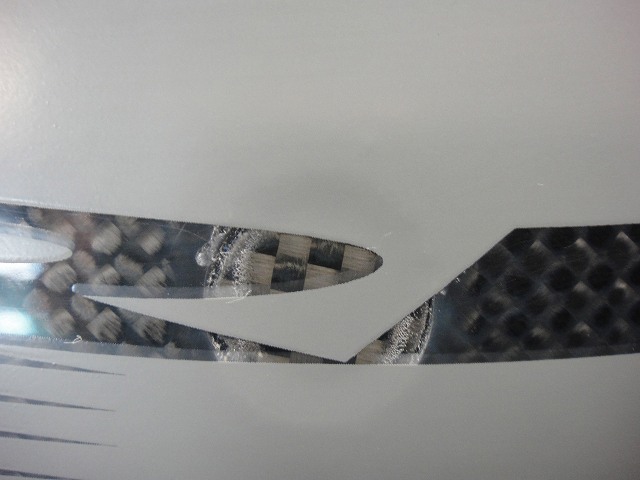
It's hard to see under the sticker, but
the carbon weave is different only there.
This is probably a hole for tire bead seating or for nipple insertion,
or perhaps both.
The nipple replacement during this rebuild required a bit of technique.
If I can use this hole, the work will be a bit easier.
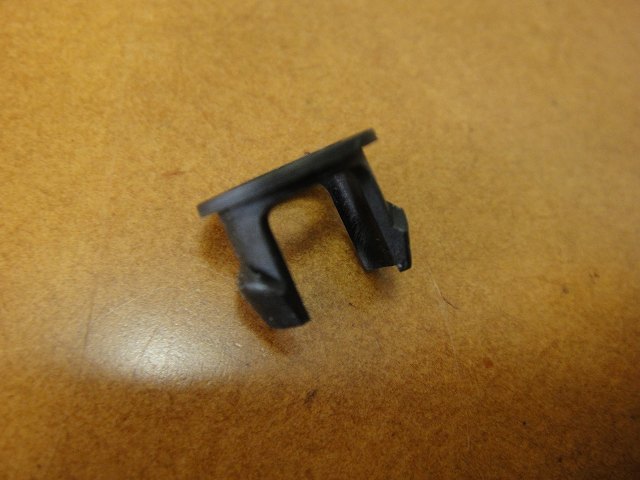
The valve rattle guard
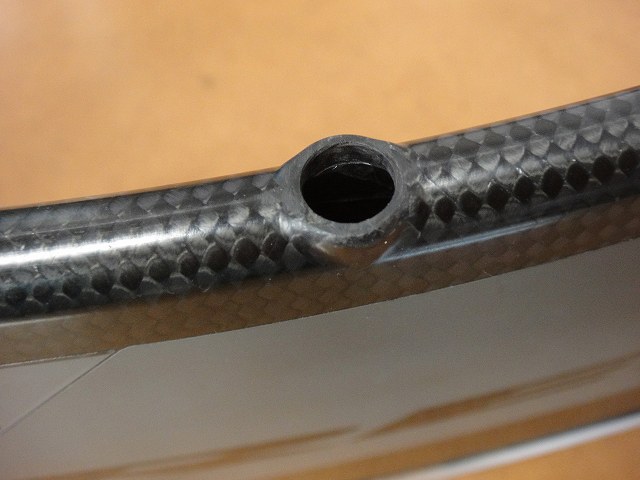
goes into the valve hole
and is set in place.
I use a commercial valve extender,

but the valve extender that comes with the wheel—when you look closely, it resembles a tubeless valve.

↑Even the WO model rim already has a "tire bead seating depression."
If you add to that a hump (the part of the rim that prevents tubeless tire beads
from coming loose) and attach a tubeless valve,
you could make it tubeless right away.
You could theoretically use a tubeless tire as-is,
if you don't mind the tire flying off instantly during a puncture and getting seriously injured.

I rebuilt it with Sapim Leader 2.0mm plain straight-gauge spokes.
The spokes are so short that deflection is almost zero.
Surprisingly, the same applies to the radial lacing on the non-drive side.
Normally when you grip two spokes from the same flange together,
they deflect somewhat, but on this wheel they don't deflect at all—
your fingers just slide right down toward the hub.
Before the rebuild, the spoke intersections weren't woven, but I wove them this time.

It's unfortunate that Sapim's domestic distributor only carries
the 2.0mm plain "Leader" (equivalent to DT Champion) and
the 2.0-1.8-2.0mm round-butted "Race" (equivalent to DT Competition)—
just those two items.
If they had everything, I would have used CX spokes.
The drive side can use "hooked" spokes.
The non-drive side is "straight-through," so I'd use CX-RAY.
Unfortunately, that's not possible.
With this rebuild, there's no question I've gained weight and lost aerodynamic efficiency,
but the rigidity—especially lateral rigidity—has visibly improved.
I can't feel the weight gain, and I can't detect the aerodynamic loss
(the non-drive side flange on this hub is extremely large, so round spokes should be worst-case)
I usually do this style of rebuild with customers' wheels,
and I've now tried it on my own wheel too.
I'd been thinking about doing this spec even before I bought this wheel.