More wheel work today (you know the drill).
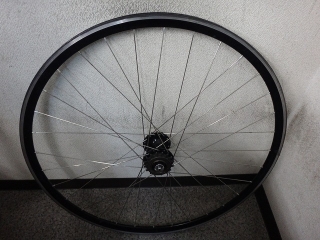
Continuing from last time.
I'm rebuilding the rear wheel from Nomu Lab Wheel #4 into #1.
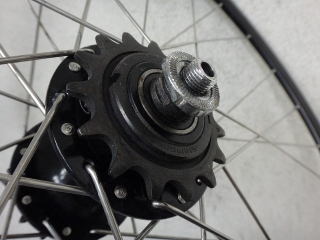
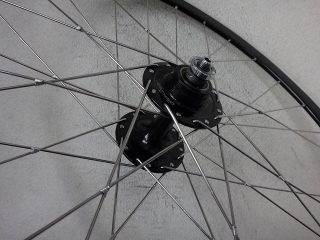
Gran Compe 32H hub, full Compe lock, JIS lacing, no cross-lacing wire.
One side has stepped threads for the fixed cog, and
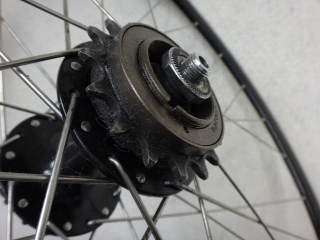
the other side has unstepped threads like a freewheel body
and is set up for the freewheel cog.

When disassembling the wheel, on the freewheel side you can rotate the sprocket
and swap spokes by threading them between the teeth,
but on the fixed cog side that's not possible, so you have to remove it.
In the end I removed the freewheel anyway.
If I'd snapped spokes or reduced the hub to just a bare axle
before removing the sprocket, and then later realized
I needed the wheel intact to unscrew the cog—
that would be a real disaster.
Multi-speed freewheel cogs and single freewheel cogs (not cassette type),
plus the single fixed cog sprocket,
can't be removed from a bare rear hub—
you need the wheel assembled to have something to resist the torque.
It's not impossible, but it's extremely difficult
(you could clamp the hub shell in a vise, but that leaves marks).

There was something like a nail puncture.
No bulge in the brake zone, and it didn't penetrate through to the inner side,
so it won't affect wheel use.
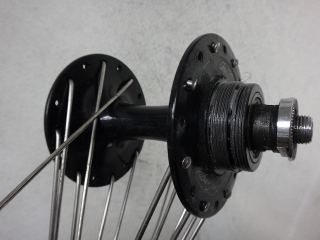
As usual, for identification purposes I first removed just the inpokes,
then cleaned them, cut to length, and applied threadlock.
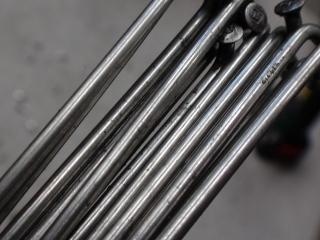
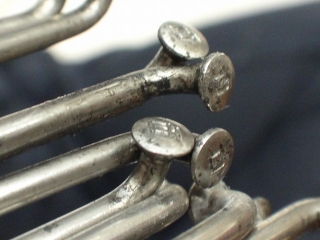
↑This is the bundle of outpokes after that, and
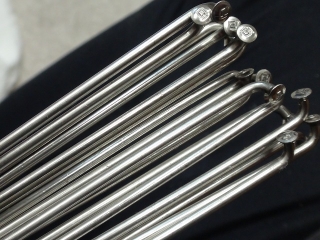
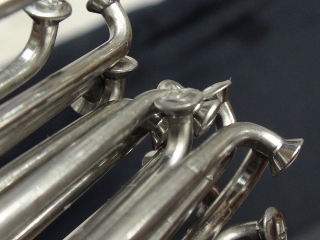
after cleaning they look like this.
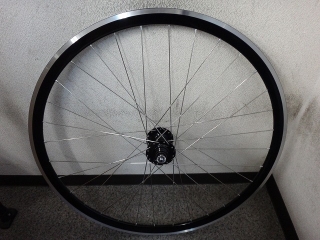
Built up.
Same as the rebuilt wheel—32H, six-over-six JIS lacing—
but this time I also did cross-lacing.
Since it's a large-flange hub, I could have built it eight-over-eight
without spoke head interference,
but that would require longer spokes than the originals,
so I couldn't reuse them—that's why I went with six-over-six.
Not a compromise, though; if I were building it from scratch
I'd probably choose six-over-six anyway.
In fact, the original lacing was six-over-six too.

Continuing from last time.
I'm rebuilding the rear wheel from Nomu Lab Wheel #4 into #1.

Gran Compe 32H hub, full Compe lock, JIS lacing, no cross-lacing wire.
One side has stepped threads for the fixed cog, and
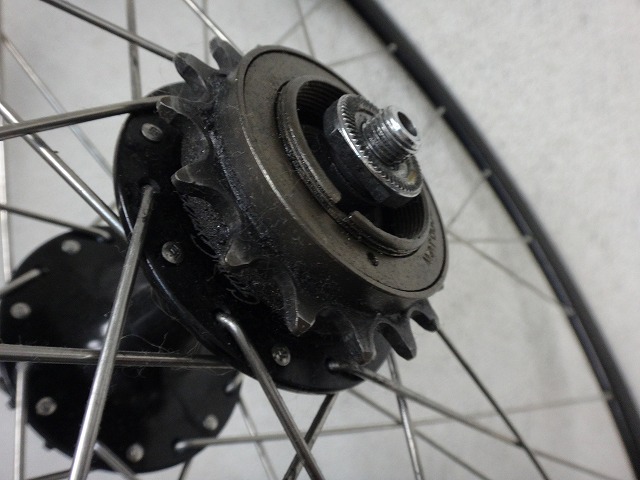
the other side has unstepped threads like a freewheel body
and is set up for the freewheel cog.

When disassembling the wheel, on the freewheel side you can rotate the sprocket
and swap spokes by threading them between the teeth,
but on the fixed cog side that's not possible, so you have to remove it.
In the end I removed the freewheel anyway.
If I'd snapped spokes or reduced the hub to just a bare axle
before removing the sprocket, and then later realized
I needed the wheel intact to unscrew the cog—
that would be a real disaster.
Multi-speed freewheel cogs and single freewheel cogs (not cassette type),
plus the single fixed cog sprocket,
can't be removed from a bare rear hub—
you need the wheel assembled to have something to resist the torque.
It's not impossible, but it's extremely difficult
(you could clamp the hub shell in a vise, but that leaves marks).
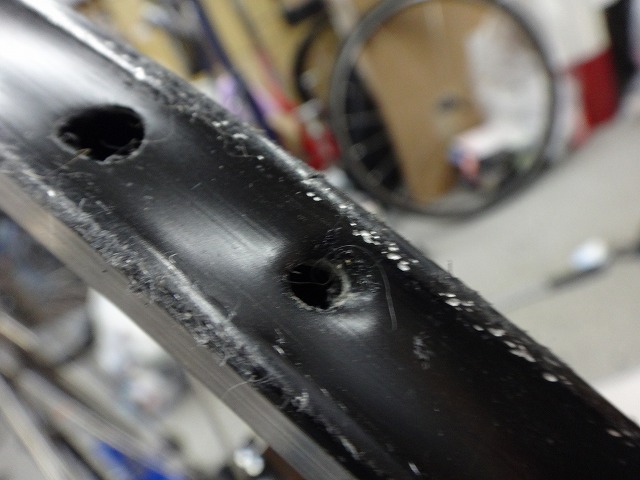
There was something like a nail puncture.
No bulge in the brake zone, and it didn't penetrate through to the inner side,
so it won't affect wheel use.
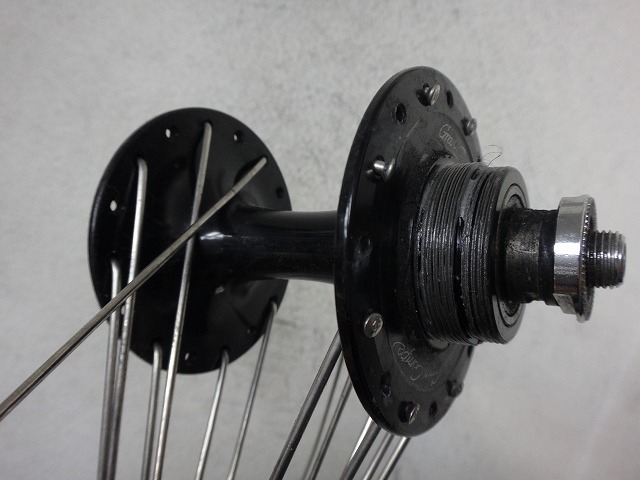
As usual, for identification purposes I first removed just the inpokes,
then cleaned them, cut to length, and applied threadlock.
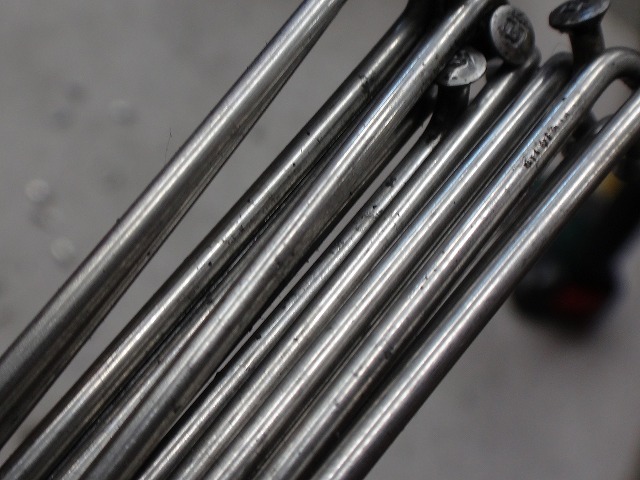
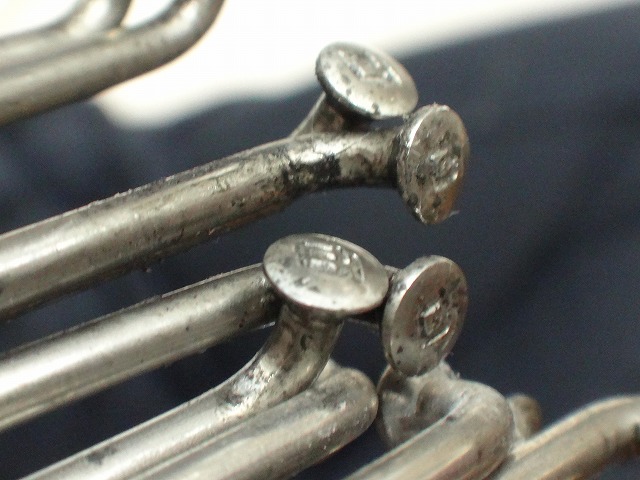
↑This is the bundle of outpokes after that, and
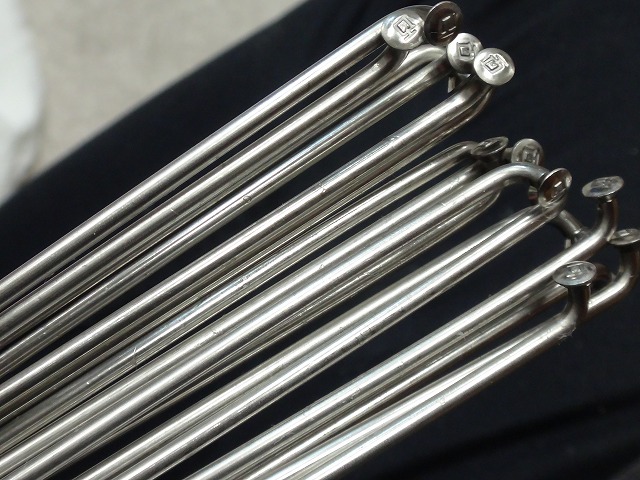
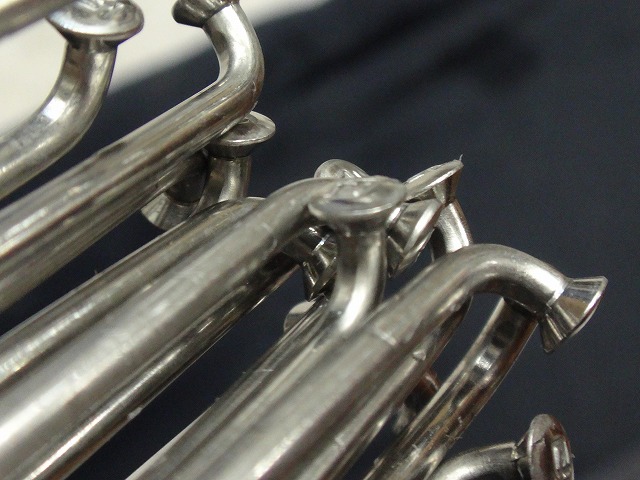
after cleaning they look like this.
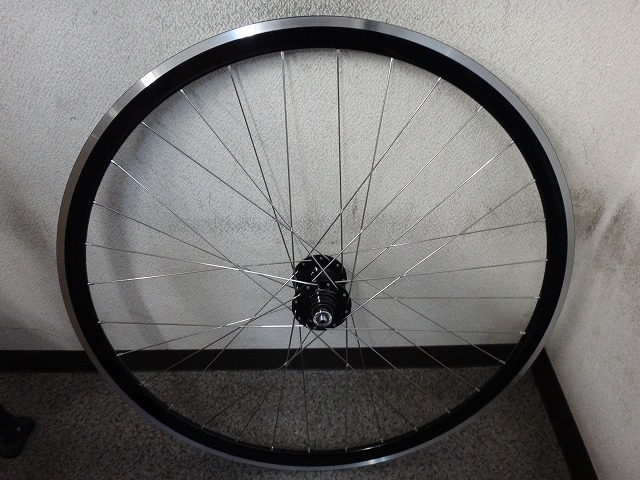
Built up.
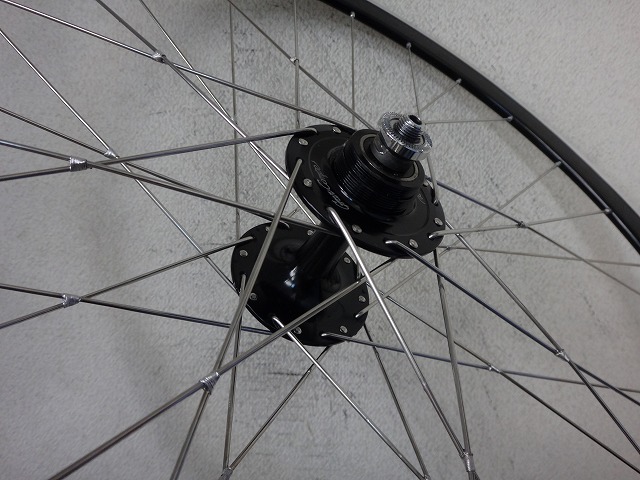
Same as the rebuilt wheel—32H, six-over-six JIS lacing—
but this time I also did cross-lacing.
Since it's a large-flange hub, I could have built it eight-over-eight
without spoke head interference,
but that would require longer spokes than the originals,
so I couldn't reuse them—that's why I went with six-over-six.
Not a compromise, though; if I were building it from scratch
I'd probably choose six-over-six anyway.
In fact, the original lacing was six-over-six too.