The matter from the previous article still doesn't meet the conditions today (wheel inspection abbreviated).
So today is the same (wheel inspection abbreviated).
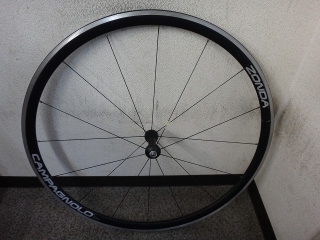
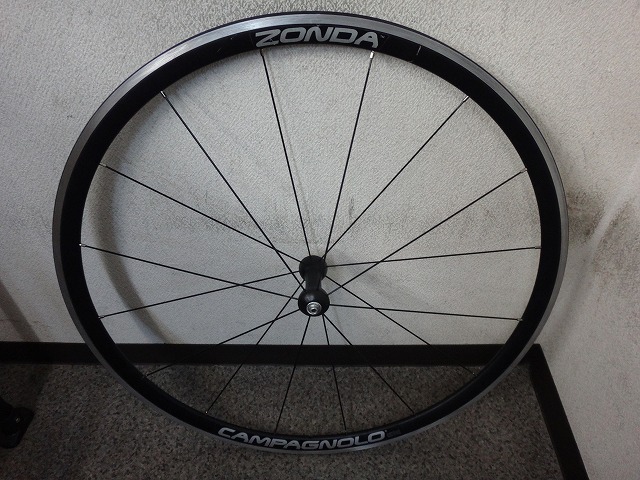
A customer brought in a Zonda front wheel for repair.
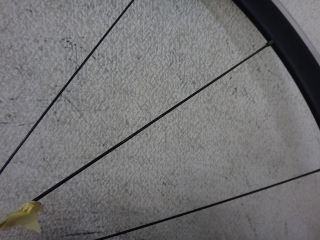
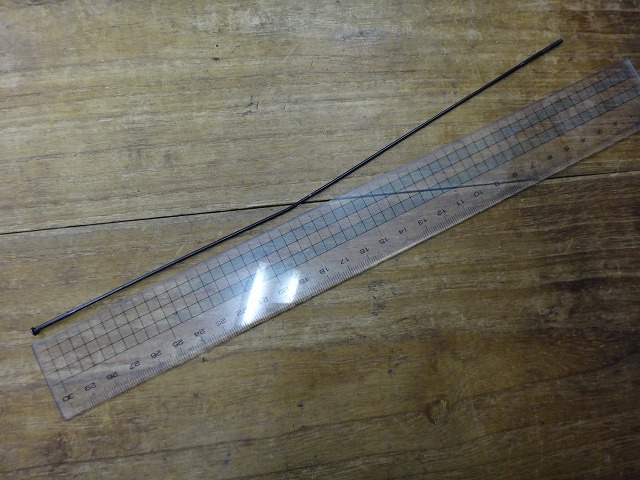
There's a deformation in the spoke marked with tape.
You can definitely feel it when you run your finger over it.
This spoke is a 2.0-1.5-2.0mm butted round spoke,
equivalent to DT's Revolution or Sapim's Laser.
Those black straight spokes from those brands
aren't carried by parts distributors, and the original replacement spokes are discontinued.
Other manufacturers don't really use this spoke size either
(except for some GIANT SLR wheels, etc.),
and there's nothing quite the same length.
To repair it without introducing radial or lateral runout and future loosening,
I could use CX-RAY straight spokes with the same weight characteristics,
but it feels off to have just one flat spoke mixed in, so a full replacement would be fine,
and if we're doing a full replacement anyway,
since it's 16-hole, wouldn't it be better to go with CX Sprint?
That's what the customer suggested.
If they hadn't suggested it, I would've said exactly the same thing.
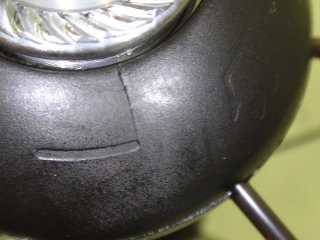
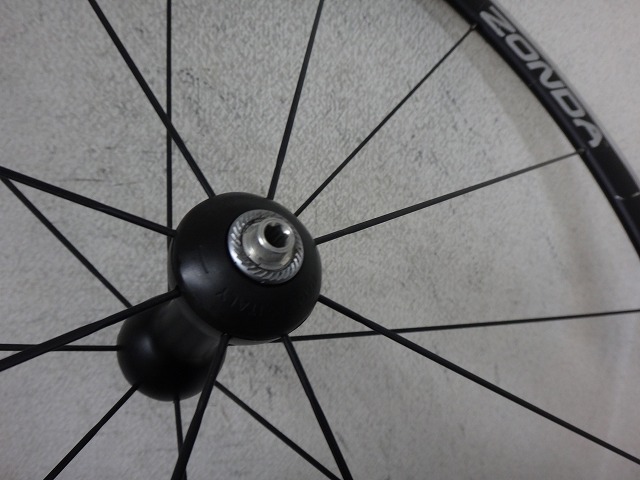
One of the dust caps had a small crack, so I'm replacing it.
When I wrote about this part the other day,
someone commented asking if they could buy one,
but I sincerely apologize—please call the shop.
I don't answer orders or questions submitted via comments.
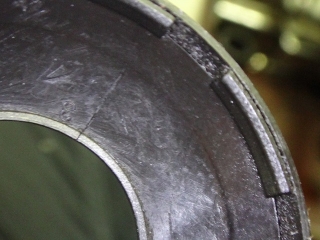
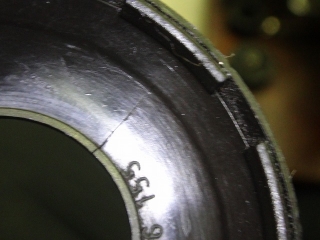
There were actually two spots with cracks.
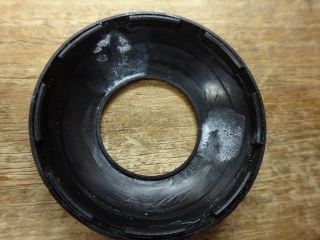
I applied brush-type cyanoacrylate adhesive from the back
and sprayed it with accelerator spray to help prevent further crack propagation.
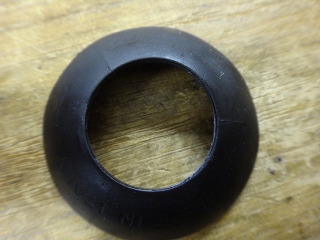
The outside doesn't show whitening.
But that's just being kept as a spare to return to the customer—
the hub itself has a brand new one installed.
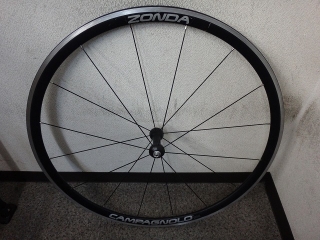
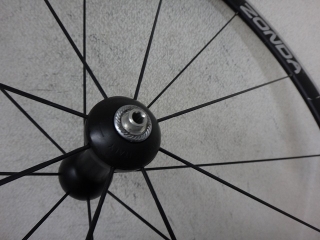
All built up.
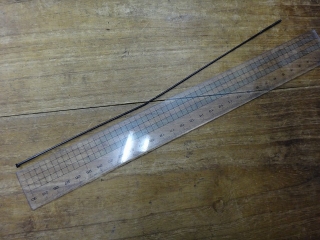
↑The deformed spoke
On a different note, I weighed the front rim of an Aeolus (a wheelset from around the same era as this Zonda) a while back.
Since that Aeolus rim has the spoke bed area drilled out,
it should be lighter than the Zonda rim without the drilling.
If there's not much weight difference, then the drilling is just "appearing to pursue lightness"
and has no real merit.
As for Kksyrium rims, when they first introduced silver rims with the 2004 Kksyrium SSC SL early batch,
the spoke bed area was clearly over-drilled,
and for all subsequent batches and replacement rims,
they even made an announcement that "drilling would be shallower for strength (making it heavier)."
Looking at the entire history of Kksyrium aluminum rims,
the 2004 early batch was the lightest,
followed by the Kksyrium 125 series rims as light,
but the Kksyrium 125 (and later Kksyrium SLR) rims
have a hard anodize finish color with an Exalite brake zone,
so taking that into account, they're actually lighter in practical terms than the 2004 early batch.
However, the Kksyrium ES series rims from the years in between
and the Kksyrium K10 series with sides that are also drilled
gave the impression of "building up material beforehand just to show off the drilling."
Getting back to it, whether the Aeolus rim drilling is this kind of
"drilling for appearance" or not
can be determined by the Zonda rim this time around.
I think it's enough for just me to know that, so I won't post it here.
↑Ugh, this guy's got bad vibes
Sorrrrrry for the wait!
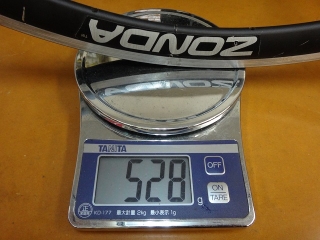
Pleeeease look at this image!
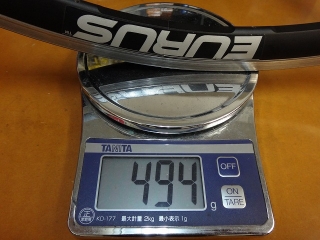
Since it's a hassle to go looking,
I've also pasted the Aeolus rim image here!
With this weight difference, wouldn't you say "it's NOT just decorative drilling"?
The sticker letters are pretty big,
so the Aeolus rim might look taller, but
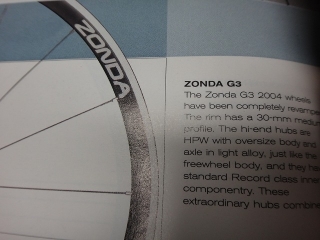
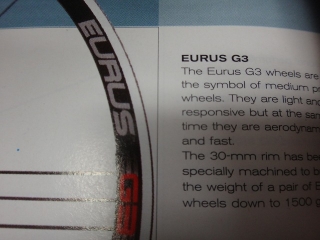
The official rim height for both is 30-mm (※).
※Following the original notation
↑NOOO STOP THAT!
So today is the same (wheel inspection abbreviated).

A customer brought in a Zonda front wheel for repair.
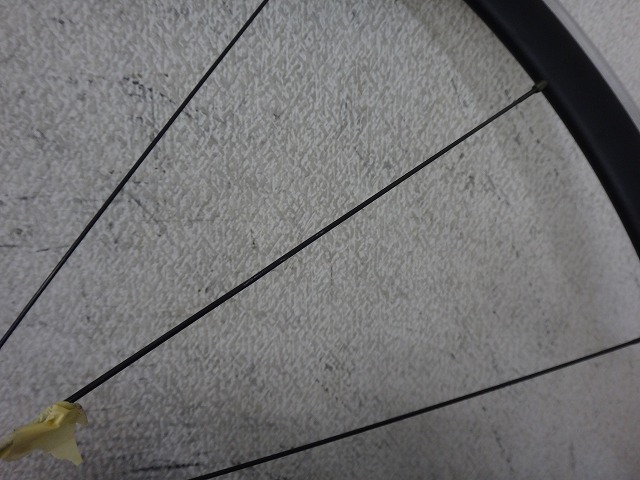
There's a deformation in the spoke marked with tape.
You can definitely feel it when you run your finger over it.
This spoke is a 2.0-1.5-2.0mm butted round spoke,
equivalent to DT's Revolution or Sapim's Laser.
Those black straight spokes from those brands
aren't carried by parts distributors, and the original replacement spokes are discontinued.
Other manufacturers don't really use this spoke size either
(except for some GIANT SLR wheels, etc.),
and there's nothing quite the same length.
To repair it without introducing radial or lateral runout and future loosening,
I could use CX-RAY straight spokes with the same weight characteristics,
but it feels off to have just one flat spoke mixed in, so a full replacement would be fine,
and if we're doing a full replacement anyway,
since it's 16-hole, wouldn't it be better to go with CX Sprint?
That's what the customer suggested.
If they hadn't suggested it, I would've said exactly the same thing.
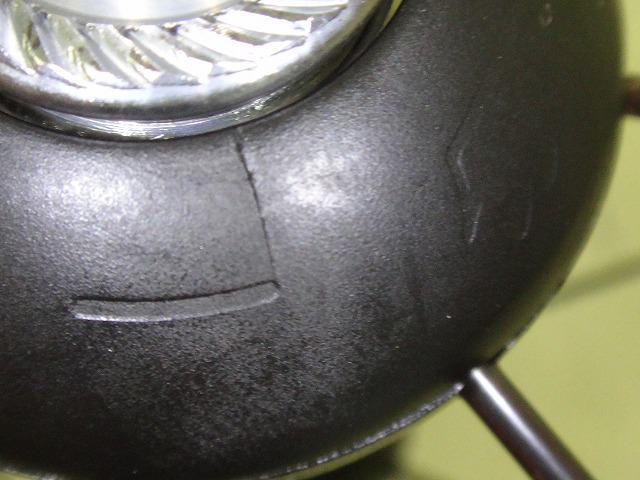
One of the dust caps had a small crack, so I'm replacing it.
When I wrote about this part the other day,
someone commented asking if they could buy one,
but I sincerely apologize—please call the shop.
I don't answer orders or questions submitted via comments.
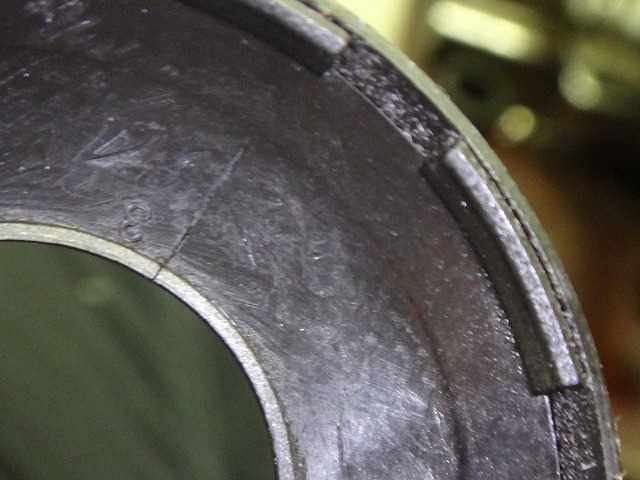
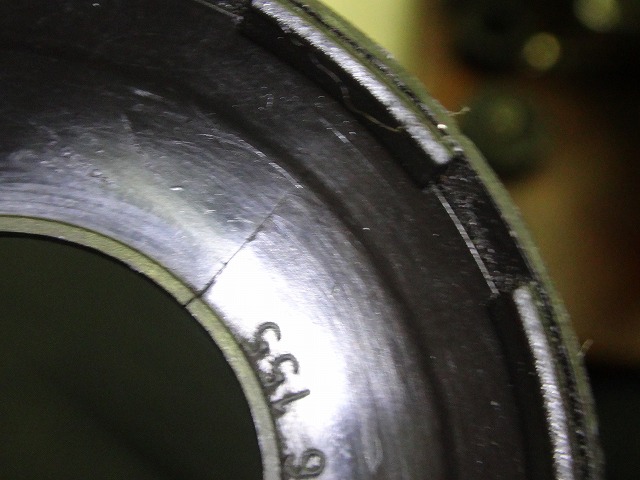
There were actually two spots with cracks.

I applied brush-type cyanoacrylate adhesive from the back
and sprayed it with accelerator spray to help prevent further crack propagation.
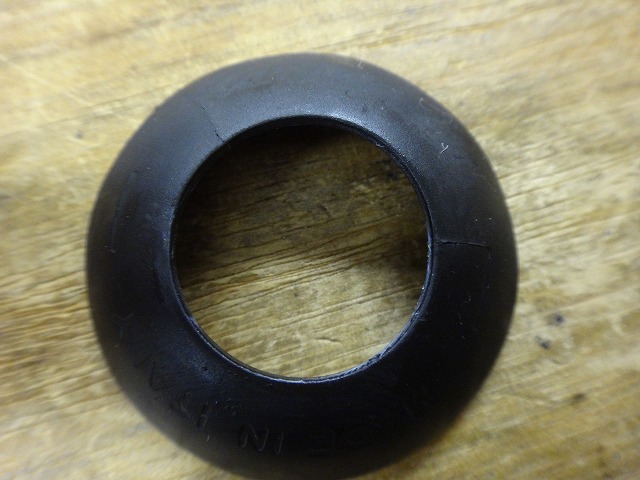
The outside doesn't show whitening.
But that's just being kept as a spare to return to the customer—
the hub itself has a brand new one installed.
All built up.
↑The deformed spoke
On a different note, I weighed the front rim of an Aeolus (a wheelset from around the same era as this Zonda) a while back.
Since that Aeolus rim has the spoke bed area drilled out,
it should be lighter than the Zonda rim without the drilling.
If there's not much weight difference, then the drilling is just "appearing to pursue lightness"
and has no real merit.
As for Kksyrium rims, when they first introduced silver rims with the 2004 Kksyrium SSC SL early batch,
the spoke bed area was clearly over-drilled,
and for all subsequent batches and replacement rims,
they even made an announcement that "drilling would be shallower for strength (making it heavier)."
Looking at the entire history of Kksyrium aluminum rims,
the 2004 early batch was the lightest,
followed by the Kksyrium 125 series rims as light,
but the Kksyrium 125 (and later Kksyrium SLR) rims
have a hard anodize finish color with an Exalite brake zone,
so taking that into account, they're actually lighter in practical terms than the 2004 early batch.
However, the Kksyrium ES series rims from the years in between
and the Kksyrium K10 series with sides that are also drilled
gave the impression of "building up material beforehand just to show off the drilling."
Getting back to it, whether the Aeolus rim drilling is this kind of
"drilling for appearance" or not
can be determined by the Zonda rim this time around.
I think it's enough for just me to know that, so I won't post it here.
↑Ugh, this guy's got bad vibes
Sorrrrrry for the wait!
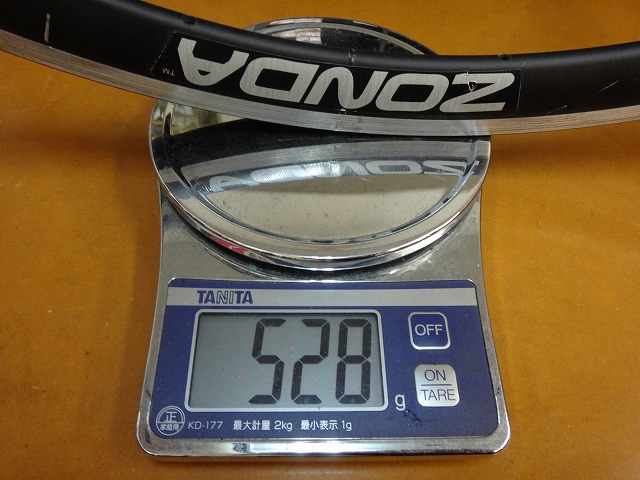
Pleeeease look at this image!
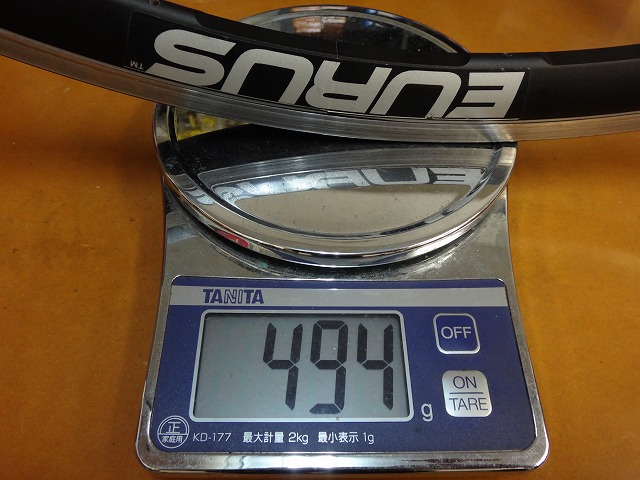
Since it's a hassle to go looking,
I've also pasted the Aeolus rim image here!
With this weight difference, wouldn't you say "it's NOT just decorative drilling"?
The sticker letters are pretty big,
so the Aeolus rim might look taller, but
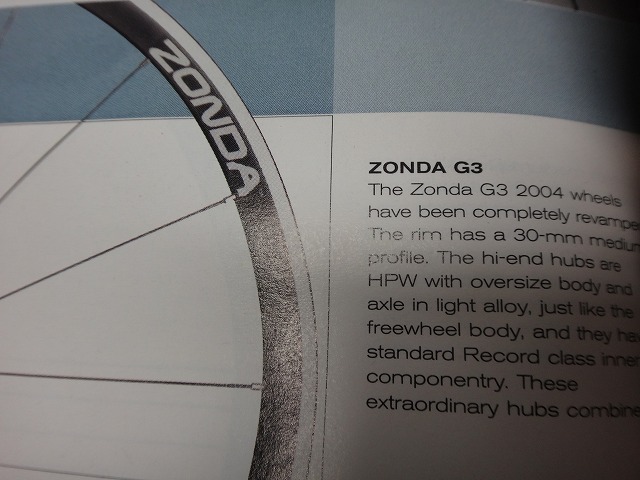
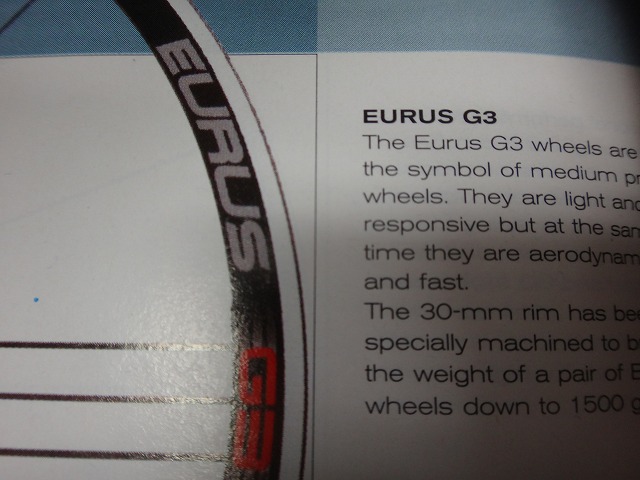
The official rim height for both is 30-mm (※).
※Following the original notation
↑NOOO STOP THAT!