I've got a tire stretcher—the Stretcher Y double model—but
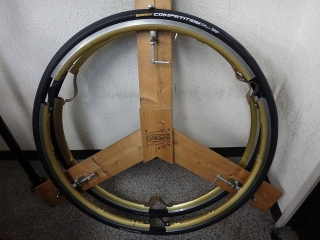
I don't use it much normally (since I rarely run into tires that are a hassle to mount),
so I thought it'd end up in storage, but lately it's been getting used pretty regularly.
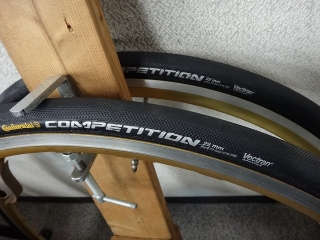
↑Two tires currently being stretched

↑Two more waiting their turn
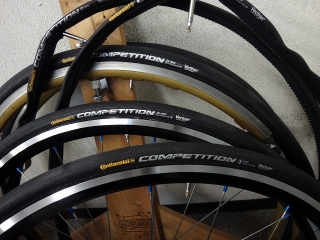
↑Two already mounted
All of them are Continental Competition 22s (tubular tires).
If you're mounting with tubular tape, you don't need to stretch them,
but when you're mounting tires with noticeably smaller inner diameters using rim cement
(especially since I'm applying rim cement to the tire side as well),
the area on the opposite side of the valve hole inevitably
gets completely covered in rim cement,
so I use the Stretcher Y to help manage that.
The other day I also mounted the same tire using rim cement on a Prime pre-built wheelset,
but since that one wasn't brand new and already had some stretch, it went pretty smoothly.
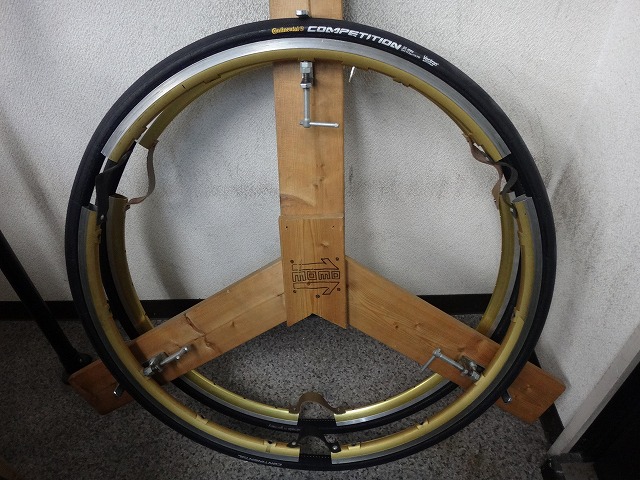
I don't use it much normally (since I rarely run into tires that are a hassle to mount),
so I thought it'd end up in storage, but lately it's been getting used pretty regularly.
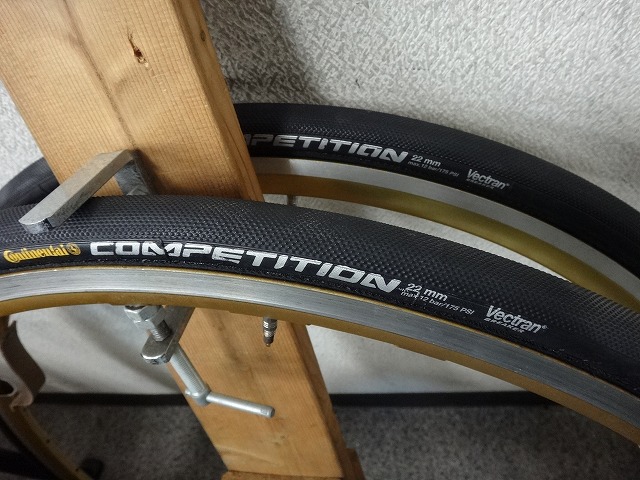
↑Two tires currently being stretched
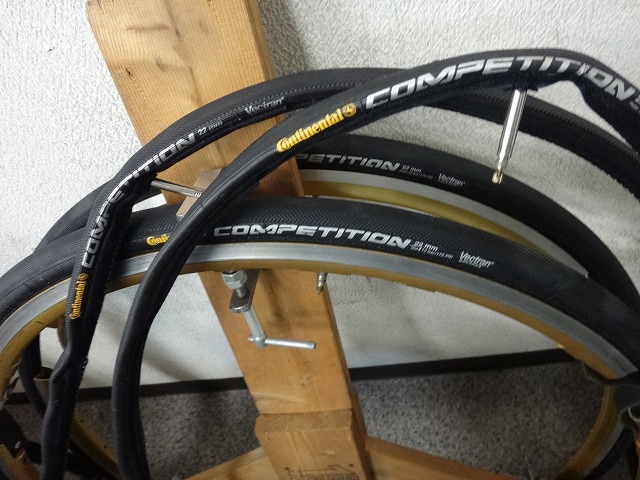
↑Two more waiting their turn
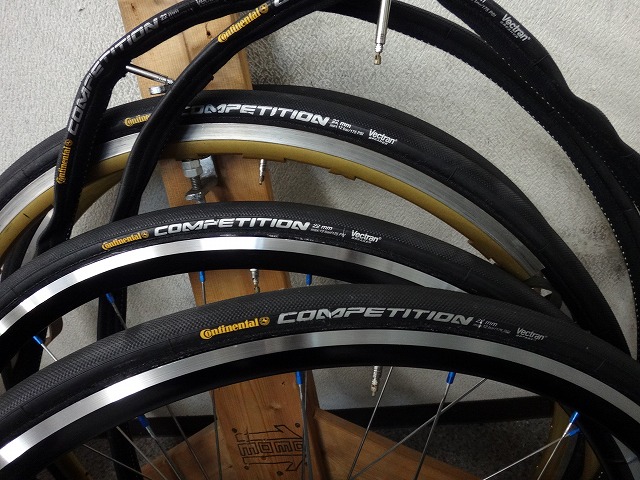
↑Two already mounted
All of them are Continental Competition 22s (tubular tires).
If you're mounting with tubular tape, you don't need to stretch them,
but when you're mounting tires with noticeably smaller inner diameters using rim cement
(especially since I'm applying rim cement to the tire side as well),
the area on the opposite side of the valve hole inevitably
gets completely covered in rim cement,
so I use the Stretcher Y to help manage that.
The other day I also mounted the same tire using rim cement on a Prime pre-built wheelset,
but since that one wasn't brand new and already had some stretch, it went pretty smoothly.