Wheels again today (and so on).
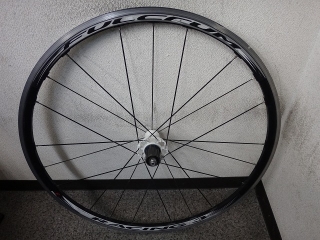
A customer—well, actually my teammate too—
brought in the rear wheel from a Racing 3.
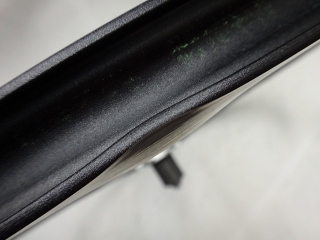
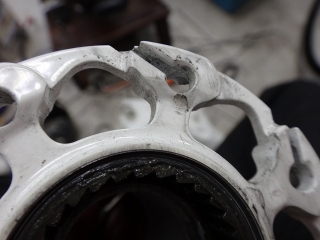
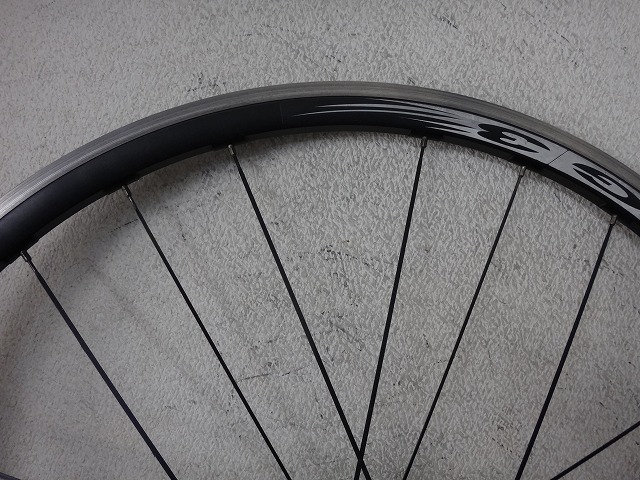
↑The bead hook on the rim is deformed.
As for the price of a replacement rim, while rims for Zonda and Racing 3 are somewhat cheaper than those for Shamal Ultra or Racing Zero,
the difference isn't more than a few thousand yen,
so relative to the wheel price, "why spend that much fixing it when you could just buy a new one"
is often the conclusion from experience.
And that "wheel price" I'm talking about
is even more the case if we're talking overseas mail order actual market prices.
A wheel that costs just over 50,000 yen for a pair (online going rate)
ends up with just the rear rim costing over 20,000 yen.
This time we're fixing it on a budget approach.
What I did is already spoiled by the title, but.
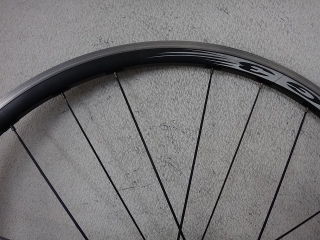
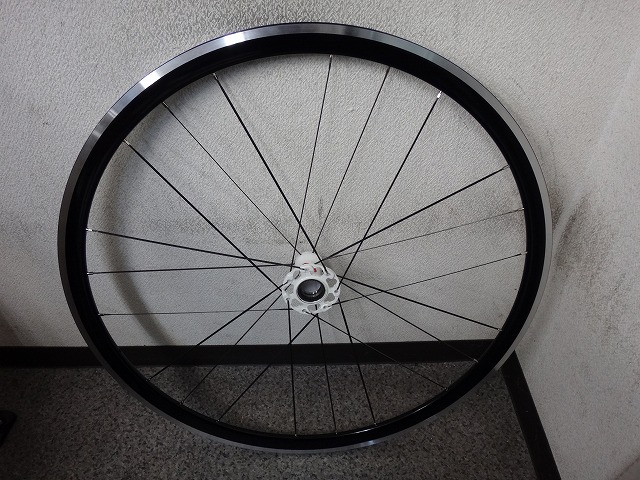
This rear rim is a 21H with a rest phase, and
the rim spoke hole pattern is the same as a 28H with equal spoke count on both sides
with the non-freewheel side spokes halved out.

So, aside from the rest phase hole,
the right-left-right rim holes line up perfectly
with a standard 28H rim.

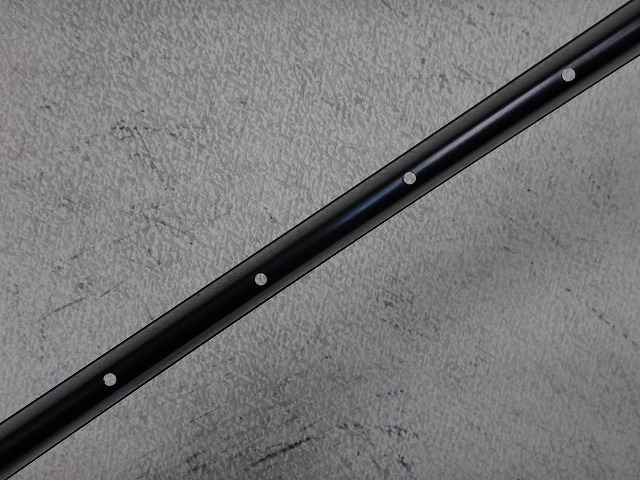
The Kinrin XR300 rim (this time it's a Tni AL300, though)
had no radial hole offset
(or at least none you could see with your eyes) in batches from a few years back,
but this current version—or at least this particular one—has a slight radial offset on the inner circumference.
The outer circumference appears to have no offset...
Correction:
I had written something about reverse hole offset problems occurring when building a 28H rim with a 21H hub,
but that was wrong.
Since we're just selectively removing spokes from a 28H wheel,
there's no issue with radial offset.
Reverse offset problems only occur when building a 24H rim with radial offset designed for equal spoke counts
with a 16:8H hub, for example.
The XR300 rim's inner diameter is slightly smaller,
so the spokes need to be cut shorter.
So if we rebuild with the Racing 3's original rim later,
we can't reuse the cut spokes.
The reason I used the XR300 rim was partly because the inner diameter is close,
but also because to keep the radial runout difference
between the freewheel-side spoke phase and rest phase
within an acceptable range,
we need a rim that's sturdy enough (= heavy enough).
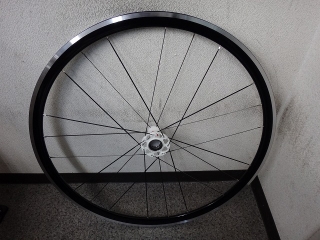
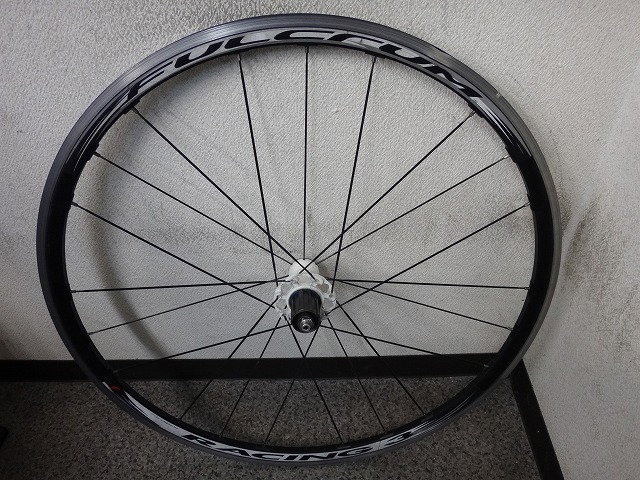
Rough assembly is done.

After
Before
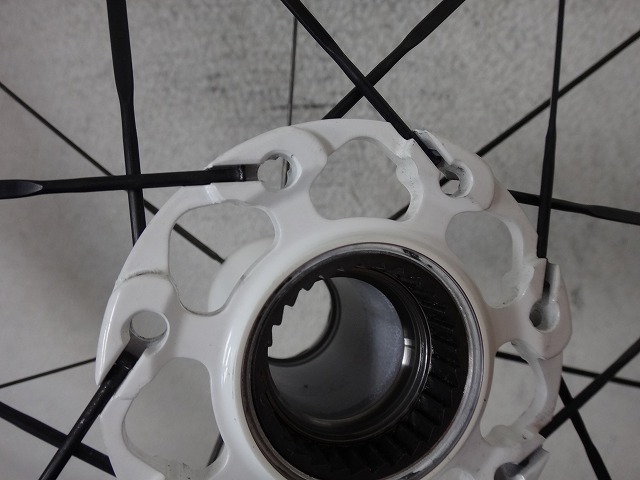
While removing the freewheel-side spokes, I took out the hub axle and did a hub overhaul while also cleaning the hub body.

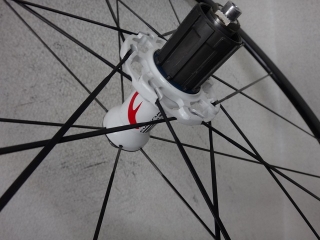
Built.
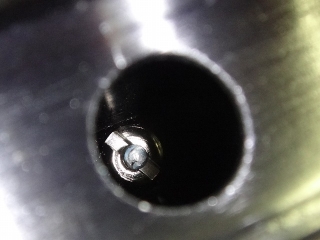
I'm using standard brass nipples.

The rest phase hole needs to be sealed somehow
to prevent water intrusion.
Since this isn't my first time building a rear wheel with a 21H hub and 28H rim,
I know several methods.
There's the technique of using a mushroom-shaped flange plastic grommet
and gently tapping it in with a plastic hammer,
where the flange breaks off and the remaining part fits perfectly into the rim hole;
or sealing it is the quicker way.
A customer—well, actually my teammate too—
brought in the rear wheel from a Racing 3.

↑The bead hook on the rim is deformed.
As for the price of a replacement rim, while rims for Zonda and Racing 3 are somewhat cheaper than those for Shamal Ultra or Racing Zero,
the difference isn't more than a few thousand yen,
so relative to the wheel price, "why spend that much fixing it when you could just buy a new one"
is often the conclusion from experience.
And that "wheel price" I'm talking about
is even more the case if we're talking overseas mail order actual market prices.
ends up with just the rear rim costing over 20,000 yen.
This time we're fixing it on a budget approach.
What I did is already spoiled by the title, but.
This rear rim is a 21H with a rest phase, and
the rim spoke hole pattern is the same as a 28H with equal spoke count on both sides
with the non-freewheel side spokes halved out.

So, aside from the rest phase hole,
the right-left-right rim holes line up perfectly
with a standard 28H rim.
The Kinrin XR300 rim (this time it's a Tni AL300, though)
had no radial hole offset
(or at least none you could see with your eyes) in batches from a few years back,
but this current version—or at least this particular one—has a slight radial offset on the inner circumference.
The outer circumference appears to have no offset...
Correction:
I had written something about reverse hole offset problems occurring when building a 28H rim with a 21H hub,
but that was wrong.
Since we're just selectively removing spokes from a 28H wheel,
there's no issue with radial offset.
Reverse offset problems only occur when building a 24H rim with radial offset designed for equal spoke counts
with a 16:8H hub, for example.
The XR300 rim's inner diameter is slightly smaller,
so the spokes need to be cut shorter.
So if we rebuild with the Racing 3's original rim later,
we can't reuse the cut spokes.
The reason I used the XR300 rim was partly because the inner diameter is close,
but also because to keep the radial runout difference
between the freewheel-side spoke phase and rest phase
within an acceptable range,
we need a rim that's sturdy enough (= heavy enough).
Rough assembly is done.
After
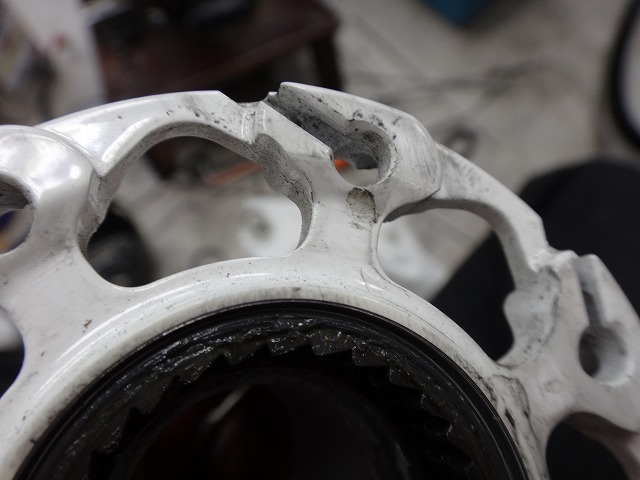
Before
While removing the freewheel-side spokes, I took out the hub axle and did a hub overhaul while also cleaning the hub body.

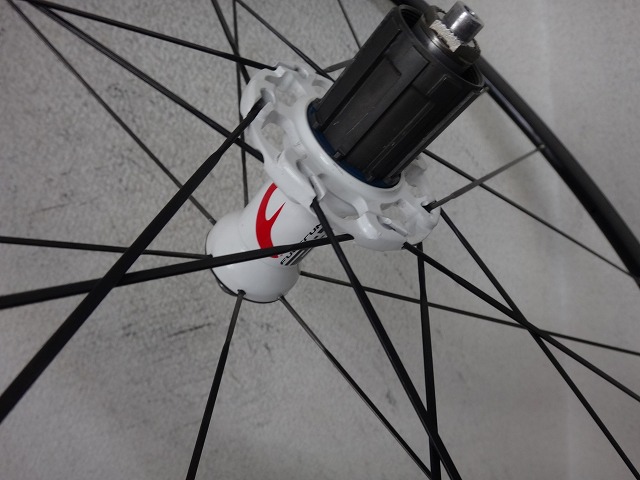
Built.
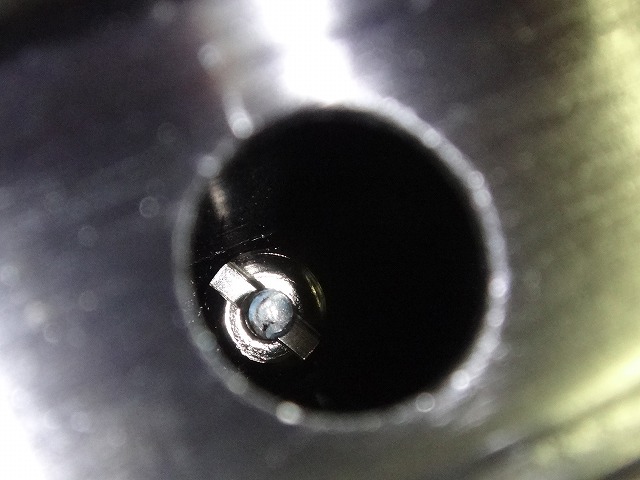
I'm using standard brass nipples.

The rest phase hole needs to be sealed somehow
to prevent water intrusion.
Since this isn't my first time building a rear wheel with a 21H hub and 28H rim,
I know several methods.
There's the technique of using a mushroom-shaped flange plastic grommet
and gently tapping it in with a plastic hammer,
where the flange breaks off and the remaining part fits perfectly into the rim hole;
or sealing it is the quicker way.