Most of the bikes I use regularly these days are
front single-speed setups.
When Shimano's GRX came out a little while back,
I thought about buying just the crankset, but decided against it.
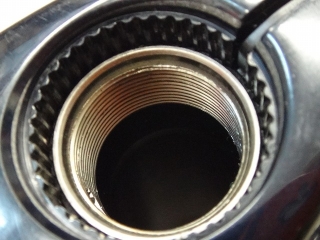
↑This is an FC-R9100P, but
for front double road cranks from the 7800 series onwards
with a grade of 105 or higher,
a value called "Q-factor" in Shimano's catalog
is consistently 146mm
(even front doubles like Tiagra and CX50 are 150mm).
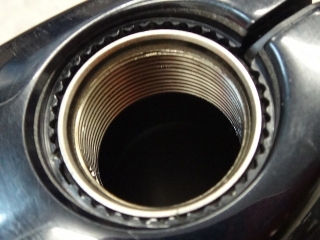
If you measure the width of this crank without passing it through the frame,
compressing all the play adjustment range,
and aligning both crank arms in the same phase...
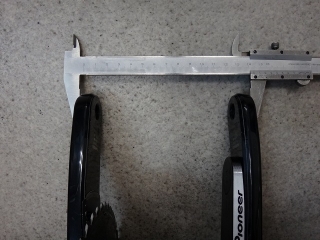
Sorry, I said FC-R9100P earlier,
but the P stands for Pioneer's P.
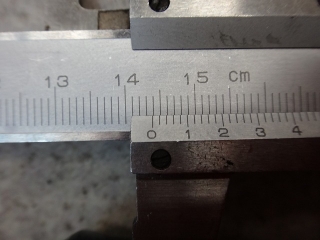
It comes out to just under 144mm.
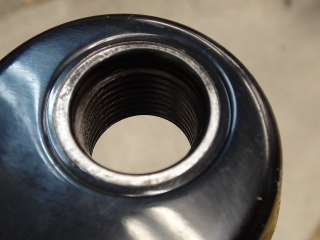
The "Q-factor" I (arbitrarily) define
is "the width between the surfaces of the pedal contact points on the left and right cranks."
So this measurement is also subtracted from the calipers width I mentioned earlier.
The nominal BB width in the BSC standard is 68mm,
but in practice it's usually around 68.2mm,
and it's rare to find anything under 68mm.
For most BSC frames, when mounting Hollowtech II cranks of grade 105 or higher,
the Q-factor as I define it comes out to around 147.5mm.
In contrast, Shimano's nominal value is 146mm as I wrote earlier,
but in the case of the GRX crankset, for both the RX810 and RX600 series,
front double and single, 11-speed and 10-speed versions,
the nominal value is listed as 151mm.
So the Q-factor as I define it
would be around 152.5mm.
That's why I didn't buy the GRX crank.
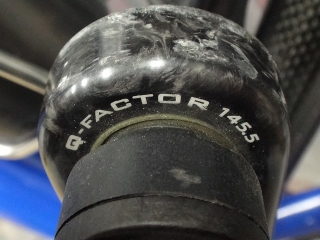
As for Campagnolo's Ultra-Torque crankset,
Campagnolo's definition of Q-factor
is consistently 145.5mm.
Recent crank arms don't have this marking,
but the catalog lists 145.5mm, and it hasn't changed from the old specs.
Recently, Campagnolo released something called "Ekar,"
a 1x13-speed gravel component set,
and since the front single-gear crankset for this
is also listed as 145.5mm, the same as their road version,
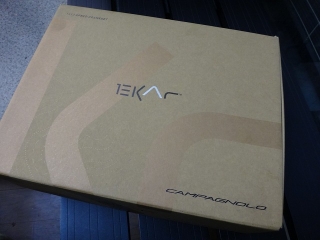
I picked one up personally.

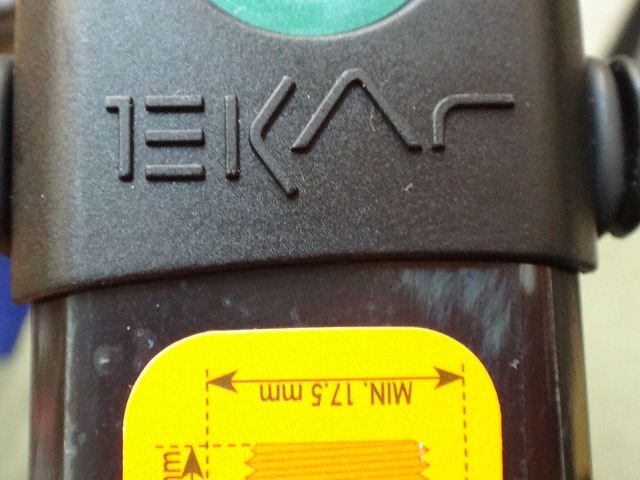
The E in the Ekar logo,
the 1Ξ shape seems to represent 13-speed.

↑By the way, this is not Ekar but a frog (kaeru).
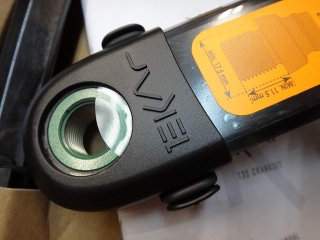
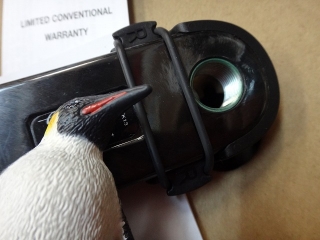
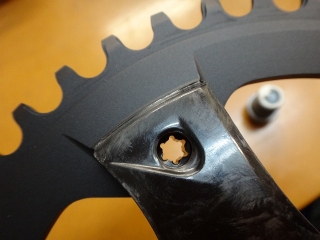
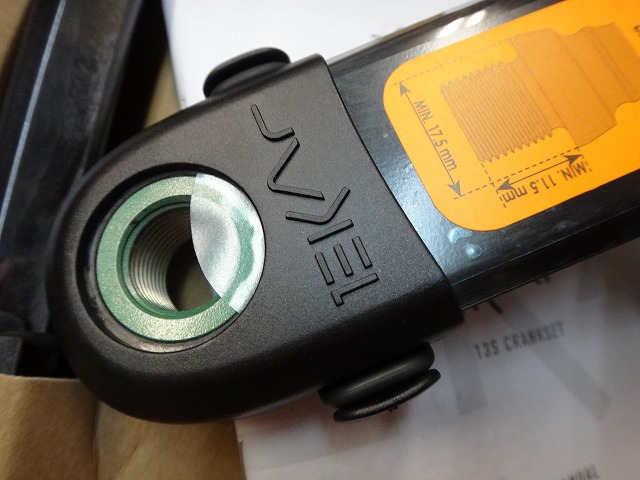
There was a removable bumper around the pedal hole,
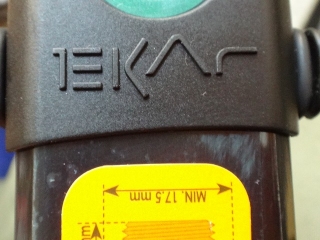
but its edge has a subtly curved profile,
and when I remove it later, any small scratches would be sharply visible at this boundary,
which would actually make them stand out more. So I decided not to use it.

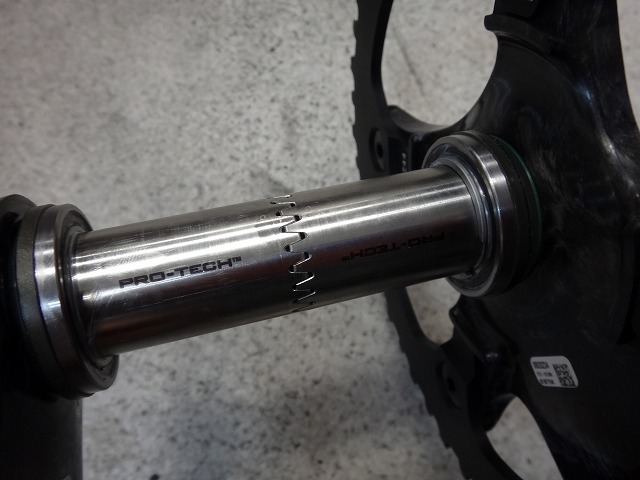
I aligned the phase of the left and right crank arms
and assembled them without passing through the frame.
The "Protec" marking on the shaft part refers to
a dedicated bearing with a dust-sealing ring bonded to it,
and the BB cup also needs to be a Protec-specific item.
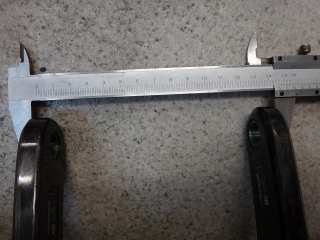
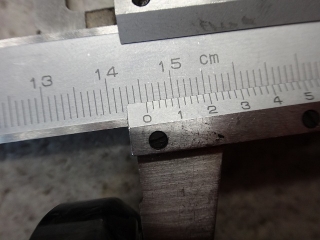
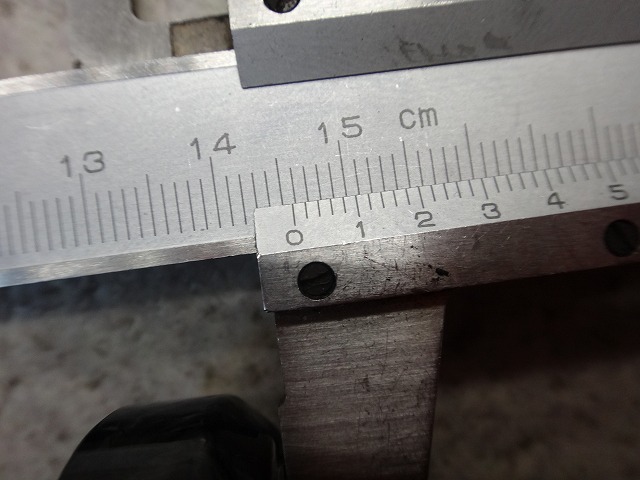
The outer-to-outer width is just under 146mm.
This also spreads slightly when actually installed,

since there's no step measurement at the pedal attachment point,
the Q-factor is no different from Shimano's.
Among the front double cranks I have installed on my road bikes,
the one with the narrowest Q-factor is 135.4mm.
If left and right don't need to be even, I can get it down to 133.4mm.
The front shift chainline is quite far off,
but there's no shifting issue.
The chainring is positioned inward so much that around inner × top,
the chain scrapes against the front derailleur cage a bit,
but I just don't use those gears.
Incidentally, the nominal value for Dura-Ace Track cranks is 136.3mm.
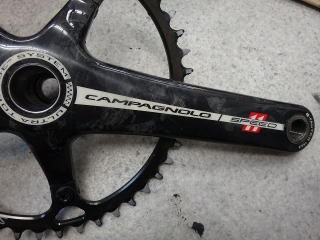
The crank I'd been using until now
is an off-grade 165mm crank.
With carbon cranks from that era, compared to Chorus,
Record had wider left-right crank arm width, thinner thickness,
and subtle rib-like bulging in the center of the arm (to be discussed later).
This uses the same arm specs as Chorus from that time,
so it has slightly narrower width, thicker than Record, and no ribs.
The chainring finish included as standard is the same as Record,
so it's a spec of "Chorus crank arm with Record chainring installed
and cut to 165mm length."
Since it's not the compact gear type,
the PCD (BCD) is 135mm, but
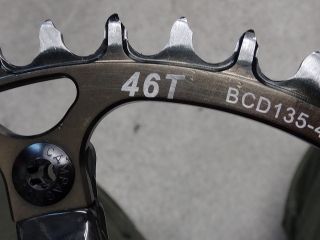
narrow-wide chainrings that match this
are barely made, and I only know of two manufacturers/brands.
When it's a compact gear, Campagnolo's case is
"PCD 110mm, but only one point on the back of the crank arm is 113mm"—
a somewhat complicated standard, and while there are a few third-party options for double gears,
narrow-wide chainrings probably don't exist
(though you could machine a 110mm five-arm as a workaround).
As for the chainring in the image above, it's cheap anodizing,
so what was originally black has faded to a bronze color.
Many of you have probably seen stems or seat clamps on cheap hybrid bikes
discolor the same way.
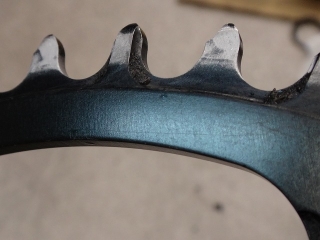
↑The back side wasn't sun-exposed, so it remained black.
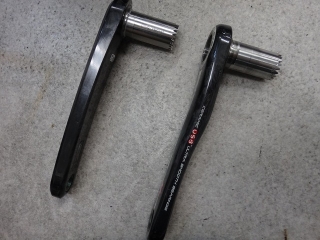
In the image the Ekar looks shorter, but both are 165mm just so you know.
In terms of weight with bearings removed,
the Ekar left crank alone was 17g lighter,
but when counting left and right cranks + chainring + bolts, it was 33g heavier overall.
The Ekar has a thicker and more robust chainring, so
the reason the right crankset is about 50g heavier
is probably mostly due to the chainring weight difference.
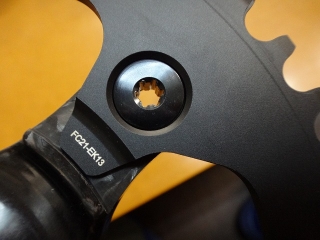
From the back side.
FC21 means the 2021 model year, and EK13 means Ekar 13-speed.
I wanted the chainring at 46T,
but the lineup only goes 38, 40, 42, 44T, so I went with 44T.
Currently I use either 11-28T or 11-30T sprockets, but
compared to the simple gear ratio when I had 39T inner with a double,
44×28T gives 39×approx 24.8T,
and 44×30T gives 39×approx 26.6T.
If I could get around 39×25T,
I wouldn't have any particular issues in my normal riding range.
When adopting Ekar in a full component setup (which is probably how anyone would do it anyway),
you'd use the new N3W standard 13-speed freewheel body
and the corresponding 13-speed sprockets,
and their gear tooth options are 9-36T, 9-42T, and 10-44T—three varieties,
so even with front gears at 38–44T, you can get
a sufficiently large gear ratio for outer×top.
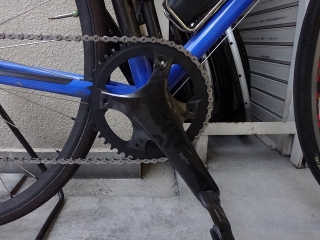
Even setting aside the fact that thin frame tubes don't suit it,
I'm not really a fan of this flat-looking crank aesthetic,
but with current products, it's not just Ekar—Record has pretty much the same look these days.
Bonus

↑This is an off-grade 165mm crank and
a Record crank from an earlier generation.
The Record is longer because in that era,
170mm was the shortest available length, so that's only natural.
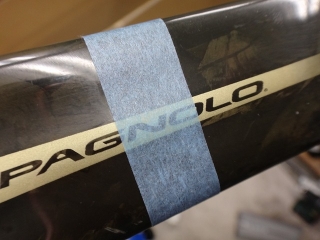
It's hard to see in the image,
and you notice right away by touch, but
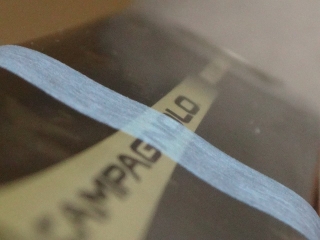
the Record crank arm has a subtle
rib-like bulging in the center.
front single-speed setups.
When Shimano's GRX came out a little while back,
I thought about buying just the crankset, but decided against it.
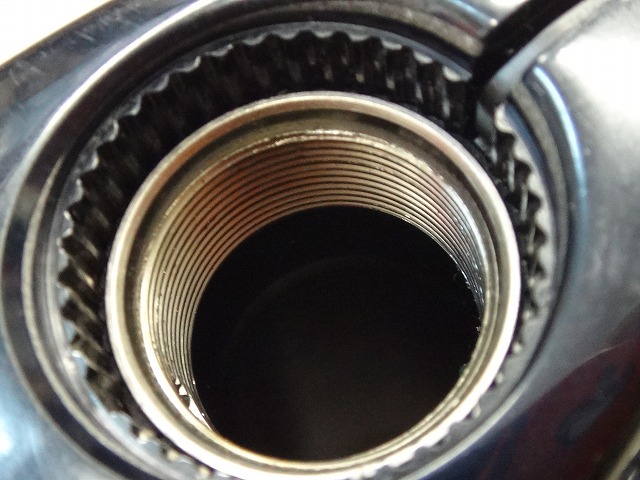
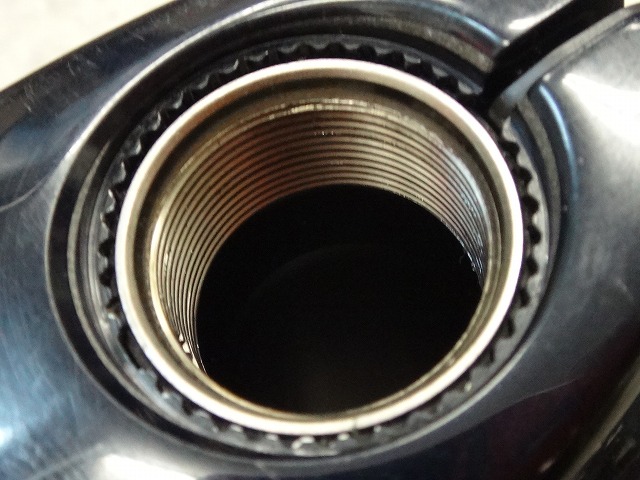
↑This is an FC-R9100P, but
for front double road cranks from the 7800 series onwards
with a grade of 105 or higher,
a value called "Q-factor" in Shimano's catalog
is consistently 146mm
(even front doubles like Tiagra and CX50 are 150mm).
If you measure the width of this crank without passing it through the frame,
compressing all the play adjustment range,
and aligning both crank arms in the same phase...
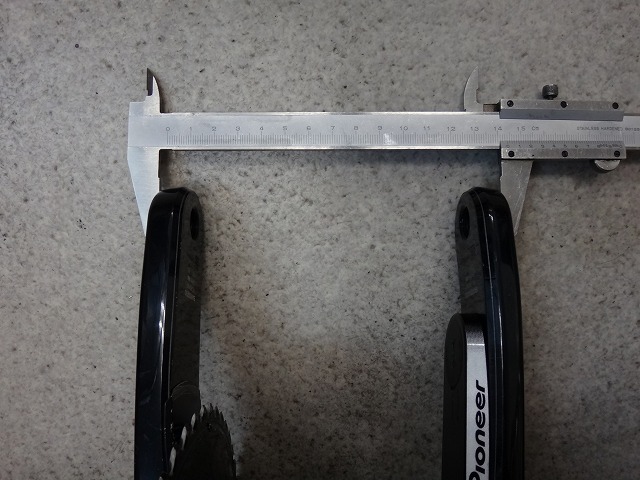
Sorry, I said FC-R9100P earlier,
but the P stands for Pioneer's P.
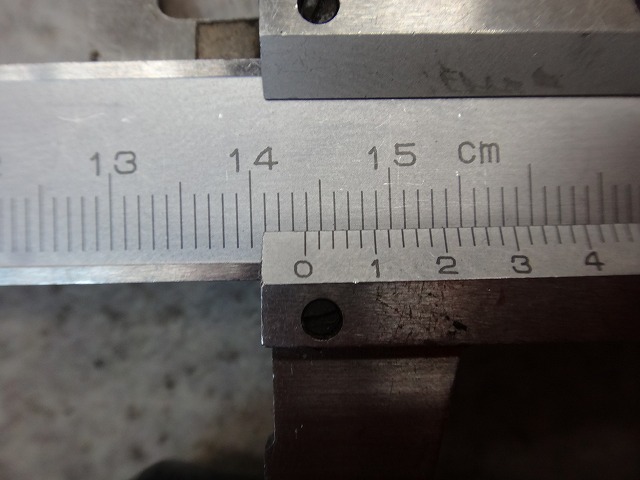
It comes out to just under 144mm.
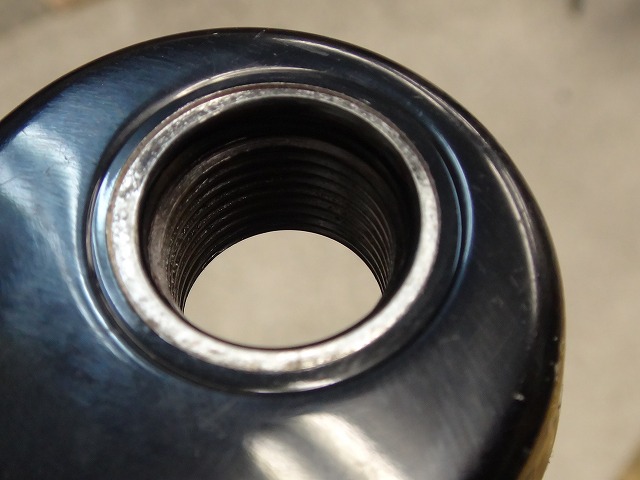
The "Q-factor" I (arbitrarily) define
is "the width between the surfaces of the pedal contact points on the left and right cranks."
So this measurement is also subtracted from the calipers width I mentioned earlier.
The nominal BB width in the BSC standard is 68mm,
but in practice it's usually around 68.2mm,
and it's rare to find anything under 68mm.
For most BSC frames, when mounting Hollowtech II cranks of grade 105 or higher,
the Q-factor as I define it comes out to around 147.5mm.
In contrast, Shimano's nominal value is 146mm as I wrote earlier,
but in the case of the GRX crankset, for both the RX810 and RX600 series,
front double and single, 11-speed and 10-speed versions,
the nominal value is listed as 151mm.
So the Q-factor as I define it
would be around 152.5mm.
That's why I didn't buy the GRX crank.
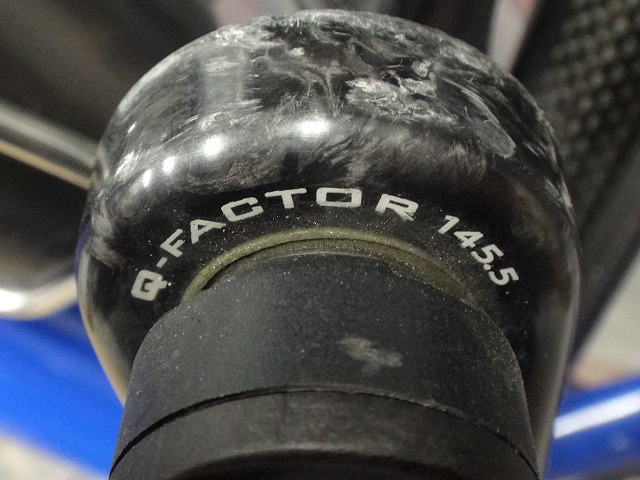
As for Campagnolo's Ultra-Torque crankset,
Campagnolo's definition of Q-factor
is consistently 145.5mm.
Recent crank arms don't have this marking,
but the catalog lists 145.5mm, and it hasn't changed from the old specs.
Recently, Campagnolo released something called "Ekar,"
a 1x13-speed gravel component set,
and since the front single-gear crankset for this
is also listed as 145.5mm, the same as their road version,
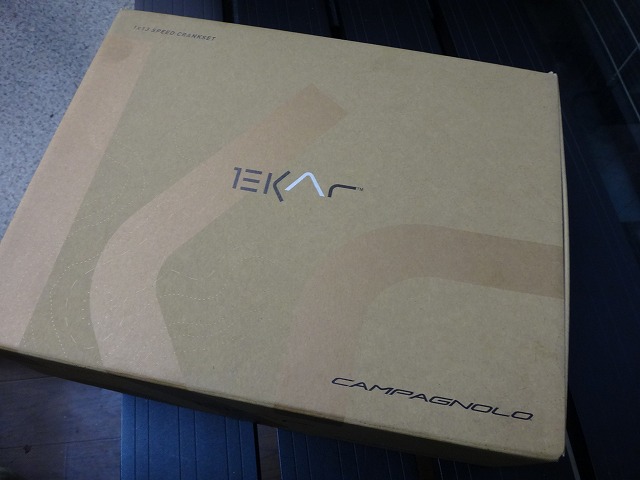
I picked one up personally.

The E in the Ekar logo,
the 1Ξ shape seems to represent 13-speed.

↑By the way, this is not Ekar but a frog (kaeru).

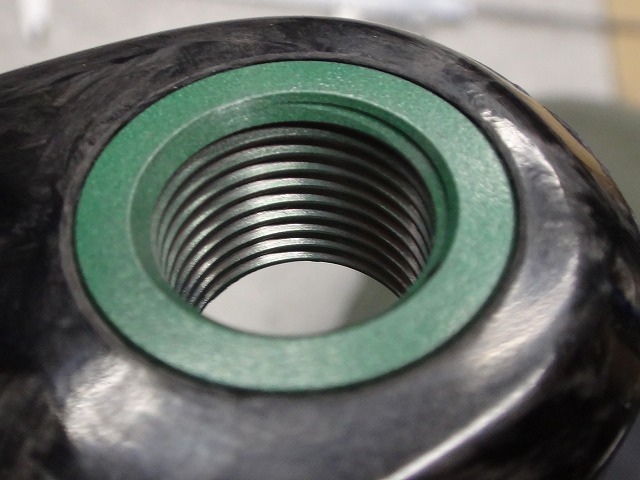
There was a removable bumper around the pedal hole,
but its edge has a subtly curved profile,
and when I remove it later, any small scratches would be sharply visible at this boundary,
which would actually make them stand out more. So I decided not to use it.
I aligned the phase of the left and right crank arms
and assembled them without passing through the frame.
The "Protec" marking on the shaft part refers to
a dedicated bearing with a dust-sealing ring bonded to it,
and the BB cup also needs to be a Protec-specific item.

The outer-to-outer width is just under 146mm.
This also spreads slightly when actually installed,
since there's no step measurement at the pedal attachment point,
the Q-factor is no different from Shimano's.
Among the front double cranks I have installed on my road bikes,
the one with the narrowest Q-factor is 135.4mm.
If left and right don't need to be even, I can get it down to 133.4mm.
The front shift chainline is quite far off,
but there's no shifting issue.
The chainring is positioned inward so much that around inner × top,
the chain scrapes against the front derailleur cage a bit,
but I just don't use those gears.
Incidentally, the nominal value for Dura-Ace Track cranks is 136.3mm.
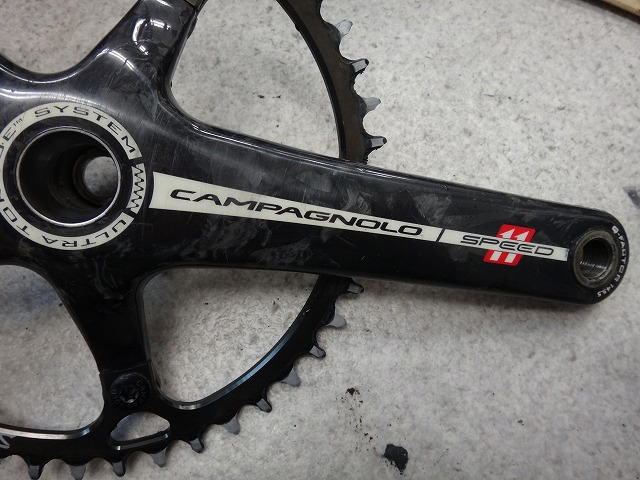
The crank I'd been using until now
is an off-grade 165mm crank.
With carbon cranks from that era, compared to Chorus,
Record had wider left-right crank arm width, thinner thickness,
and subtle rib-like bulging in the center of the arm (to be discussed later).
This uses the same arm specs as Chorus from that time,
so it has slightly narrower width, thicker than Record, and no ribs.
The chainring finish included as standard is the same as Record,
so it's a spec of "Chorus crank arm with Record chainring installed
and cut to 165mm length."
Since it's not the compact gear type,
the PCD (BCD) is 135mm, but

narrow-wide chainrings that match this
are barely made, and I only know of two manufacturers/brands.
When it's a compact gear, Campagnolo's case is
"PCD 110mm, but only one point on the back of the crank arm is 113mm"—
a somewhat complicated standard, and while there are a few third-party options for double gears,
narrow-wide chainrings probably don't exist
(though you could machine a 110mm five-arm as a workaround).
As for the chainring in the image above, it's cheap anodizing,
so what was originally black has faded to a bronze color.
Many of you have probably seen stems or seat clamps on cheap hybrid bikes
discolor the same way.
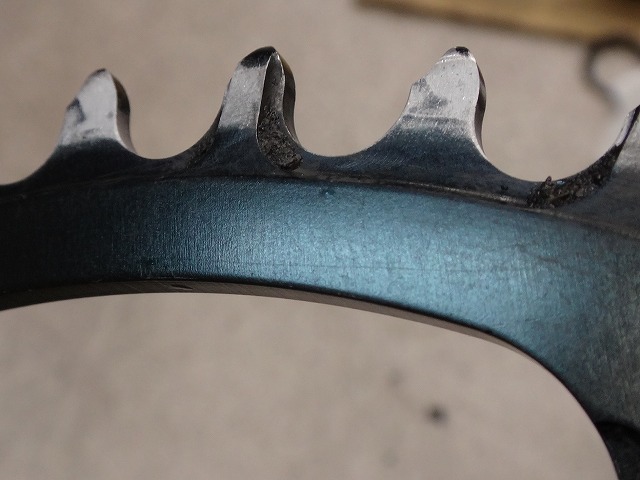
↑The back side wasn't sun-exposed, so it remained black.
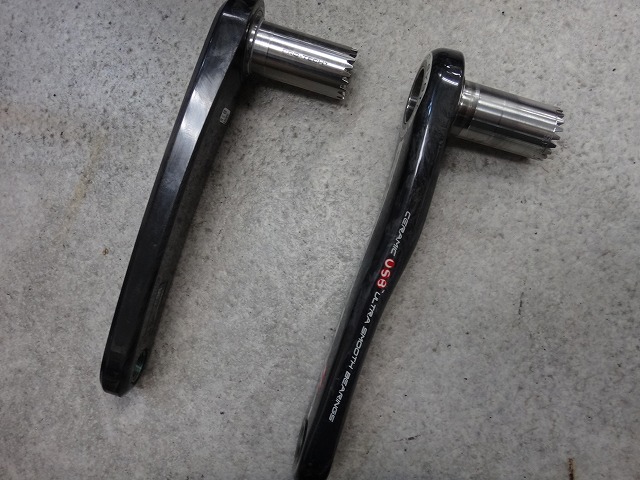
In the image the Ekar looks shorter, but both are 165mm just so you know.
In terms of weight with bearings removed,
the Ekar left crank alone was 17g lighter,
but when counting left and right cranks + chainring + bolts, it was 33g heavier overall.
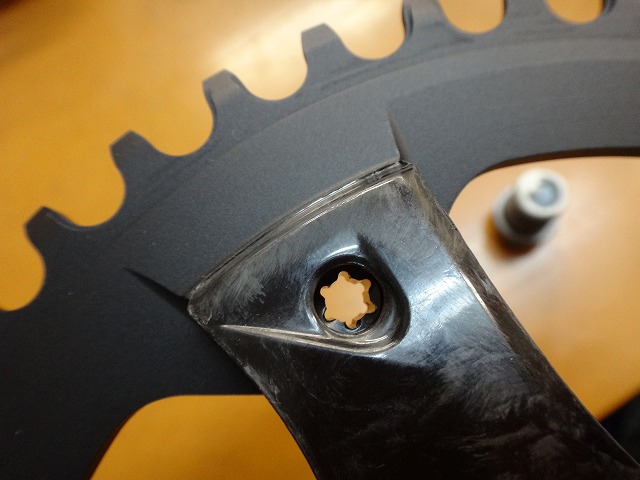
The Ekar has a thicker and more robust chainring, so
the reason the right crankset is about 50g heavier
is probably mostly due to the chainring weight difference.
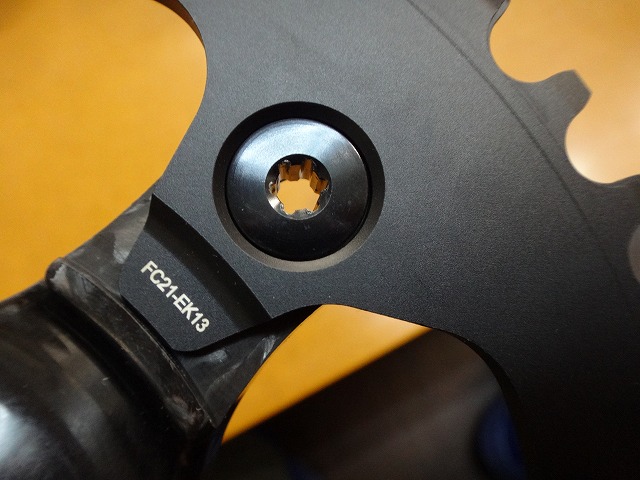
From the back side.
FC21 means the 2021 model year, and EK13 means Ekar 13-speed.
I wanted the chainring at 46T,
but the lineup only goes 38, 40, 42, 44T, so I went with 44T.
Currently I use either 11-28T or 11-30T sprockets, but
compared to the simple gear ratio when I had 39T inner with a double,
44×28T gives 39×approx 24.8T,
and 44×30T gives 39×approx 26.6T.
If I could get around 39×25T,
I wouldn't have any particular issues in my normal riding range.
When adopting Ekar in a full component setup (which is probably how anyone would do it anyway),
you'd use the new N3W standard 13-speed freewheel body
and the corresponding 13-speed sprockets,
and their gear tooth options are 9-36T, 9-42T, and 10-44T—three varieties,
so even with front gears at 38–44T, you can get
a sufficiently large gear ratio for outer×top.
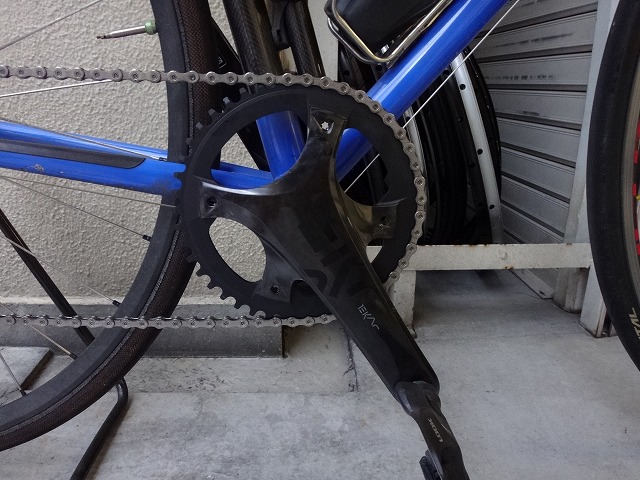
Even setting aside the fact that thin frame tubes don't suit it,
I'm not really a fan of this flat-looking crank aesthetic,
but with current products, it's not just Ekar—Record has pretty much the same look these days.
Bonus
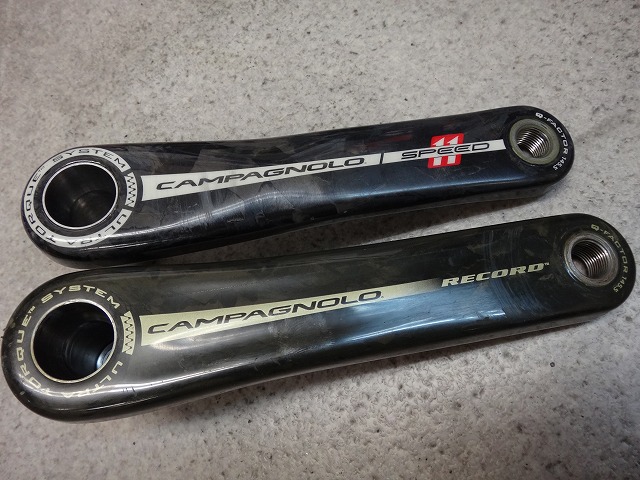
↑This is an off-grade 165mm crank and
a Record crank from an earlier generation.
The Record is longer because in that era,
170mm was the shortest available length, so that's only natural.
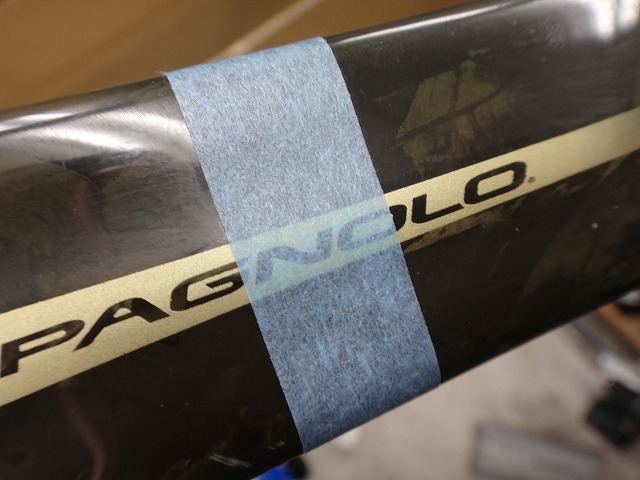
It's hard to see in the image,
and you notice right away by touch, but
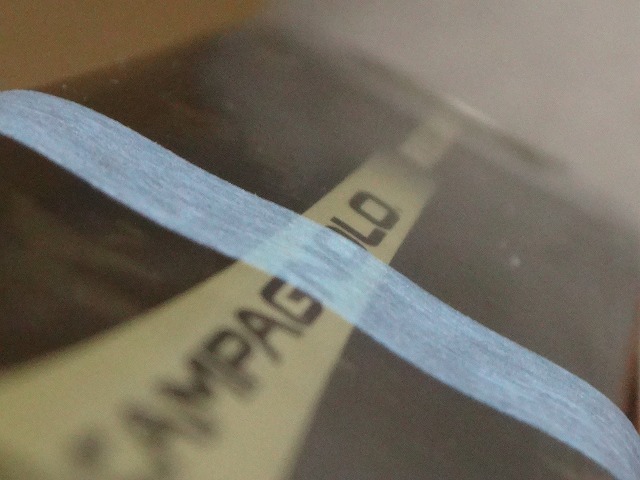
the Record crank arm has a subtle
rib-like bulging in the center.