Another wheel day (and so on).
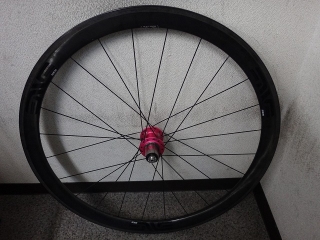
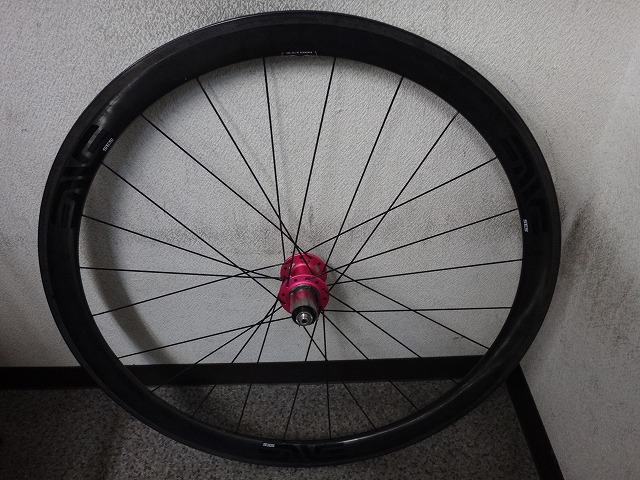
A customer brought me a rear wheel built with a
42AC rim from Smart Envy System.
It's a rim that was adopted in the earlier SES 3.4, and this is a clincher version.
I haven't written about it yet, but I inspected this wheel
along with my partner's front wheel previously.
The spoke tension was abnormally loose,
so loose that I wondered if it was even below the minimum threshold for a functional wheel,
and there was terrible radial runout and lateral runout too.
I even suspected it might be a half-built wheel.
From information from the customer, they're the second owner,
and the shop that built it has been identified.
So technically, it was built at a shop
and the builder was paid for their work,
which means it's supposed to be professional work.
But from my impression, it looked like someone's first time building a wheel.
Since this wheel has an expensive rim and hub,
it should cost over 300,000 yen regardless of whether it's actually well-built
or rides well. But high cost and performance have
(especially with hand-built wheels)
no causal relationship. The first owner might have thought,
"This ENVE rim wheel doesn't ride at all!"
and jumped to conclusions.
The problem isn't the rim or hub—it's the builder.
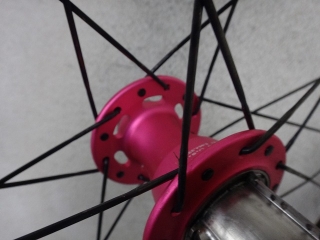
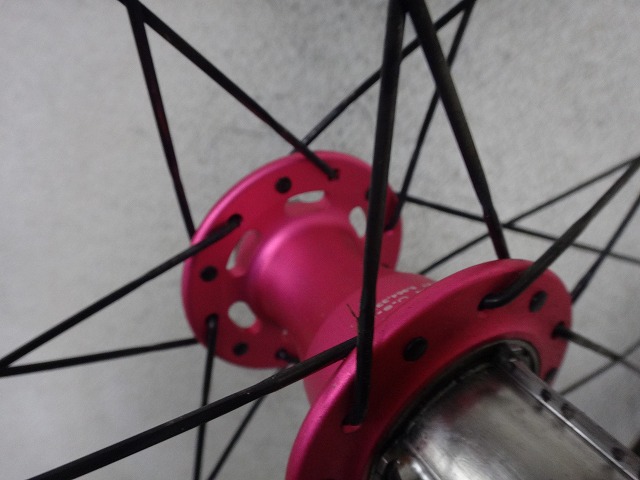
Criscking R45 hub, 24H,
all-black CX-RAY, reverse Italian 4-cross lacing.
Looking at the spokes and lacing pattern, you might think it was built in-house by the manufacturer,
but even without a definite source confirming it was built at a certain shop,
it's clear it wasn't made in-house.
ENVE's off-the-shelf wheels do have some lateral runout issues,
but this wheel's radial runout, lateral runout, and initial low tension state
were far beyond that level.
Although I was pretty sure it would come back eventually,
I went ahead and tensioned it under those conditions
to roughly manufacturer's off-the-shelf tension levels
and adjusted it as precisely as I could manage.
I told the customer to use it for a while and see,
but before that, I mentioned that compared to the Fulcrum Racing Light XLR
they'd been using before, this wheel would have lower lateral stiffness,
and if they use rim brakes, the brake zone has a file finish
so it would squeak when stopping—and both predictions turned out right.
On in-house built wheels, the rim's outer edge sometimes has a label
with the builder's name molded in indelibly,
but that wasn't done on rims from this era.
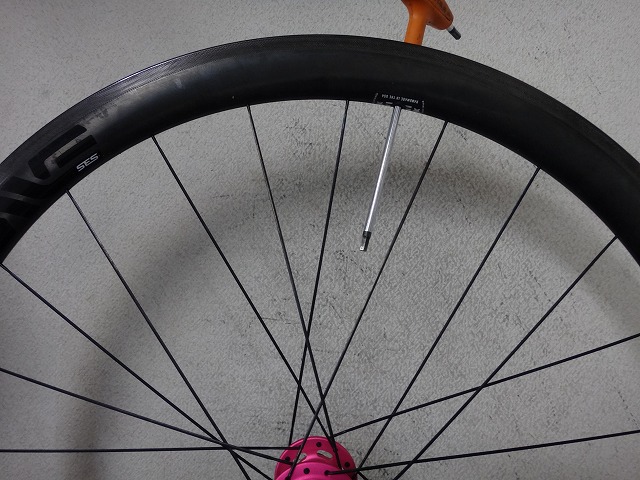
That said, there's separate, definitive evidence this isn't in-house built:
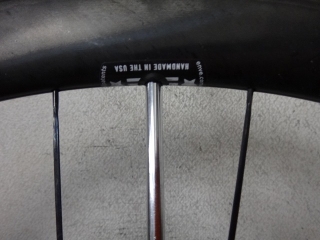
↑This right here.
At first I thought the rim's spoke holes were being treated as a reverse rim.
And looking at just this section, that's what it looks like.
This rim has no spoke hole offset on either the inner or outer edge,
so treating it as a reverse rim would be fine,
but there's really no particular reason to do so.
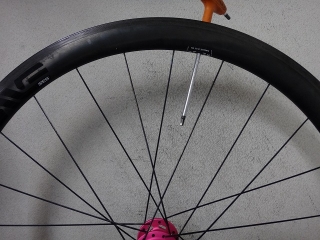
This wheel isn't treated as a reverse rim.
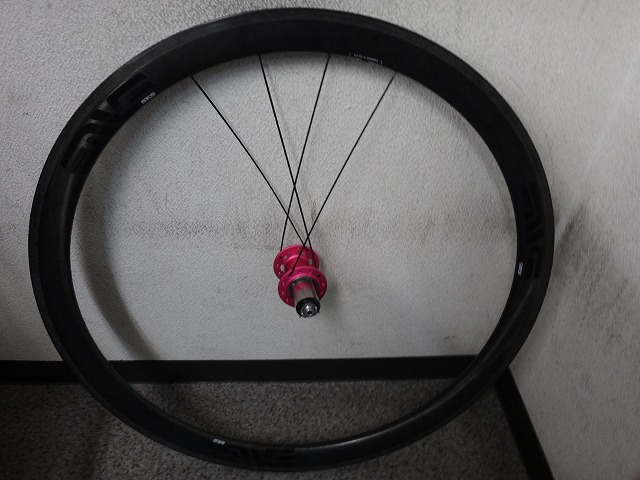
Instead, it has an awkward lacing where the valve hole sits
within the four-spoke bundle of the final crossings on both sides.
The first spoke was laced one hole off.
I think the customer's reason for wanting a complete rebuild rather than settling for
a retensioning (which was basically a wheel rebuild) was
largely this unsightly appearance.
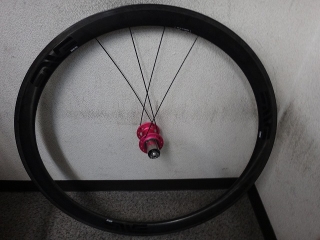
I left the four spokes of the final crossings on both sides
without loosening any nipples.
Usually I'd write "loosening from the valve hole clockwise (or counterclockwise)
to the final four spokes," but
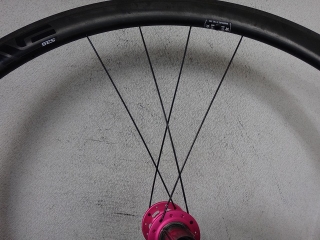
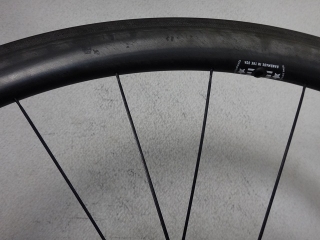
↑This time it works out like this.
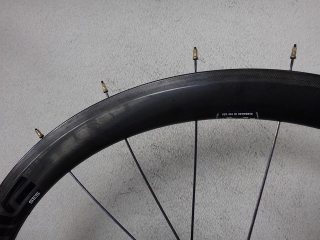
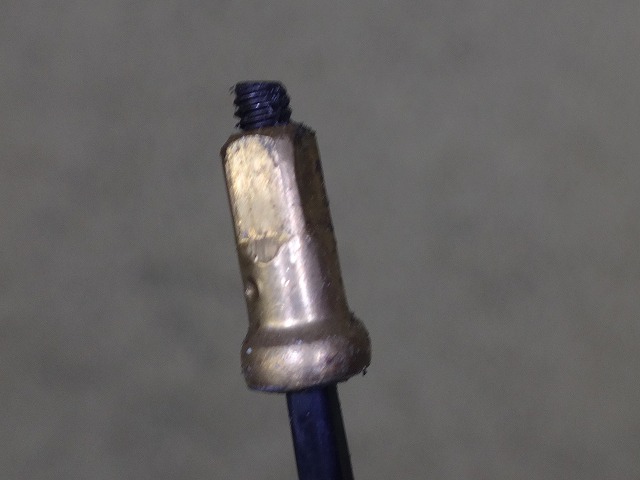
I pulled the internal nipples that I didn't loosen at all
out through the rim.
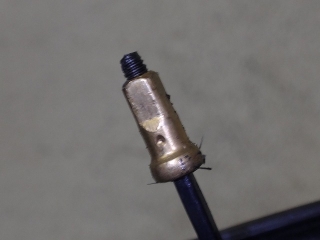
↑Non-freewheel side
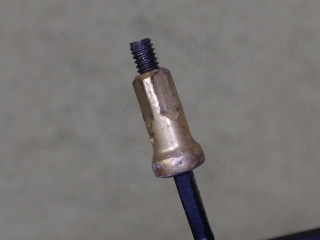
↑Freewheel side
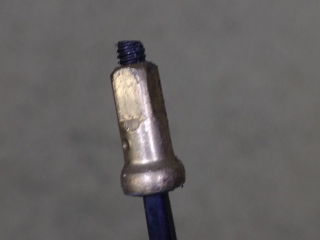
↑Non-freewheel side (spoke end face is beveled)
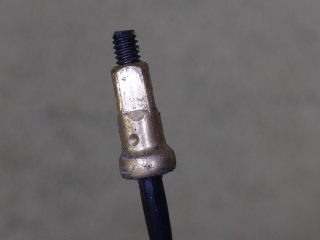
↑Freewheel side
I did do some retensioning myself
(about two turns maximum. You might think it's impossible for a supposedly finished wheel's nipples
to need two more turns of tightening, but
the initial state was so low-tension it barely qualified as a half-built wheel),
and the spokes are on the long side on both sides, especially excessively long on the freewheel side.
The front wheel had spokes that were slightly long,
but since they were black CX-RAY radial lacing built as a normal rim,
I just inspected it.
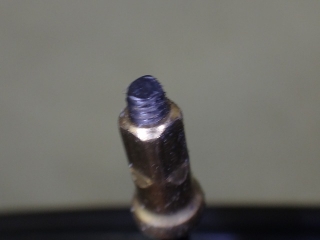
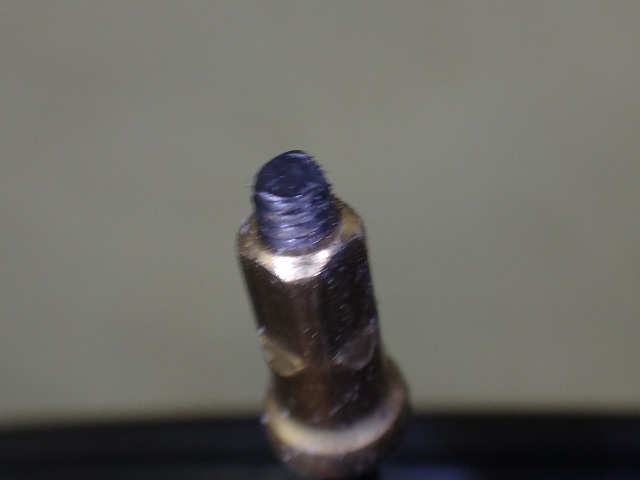
↑The black CX-RAY from the third image earlier,
with the beveled spoke end face.
Black spokes with black threading
and a black end face as well.
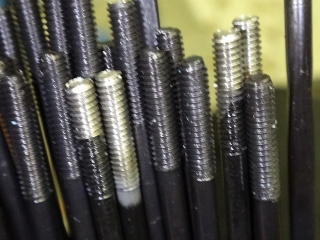
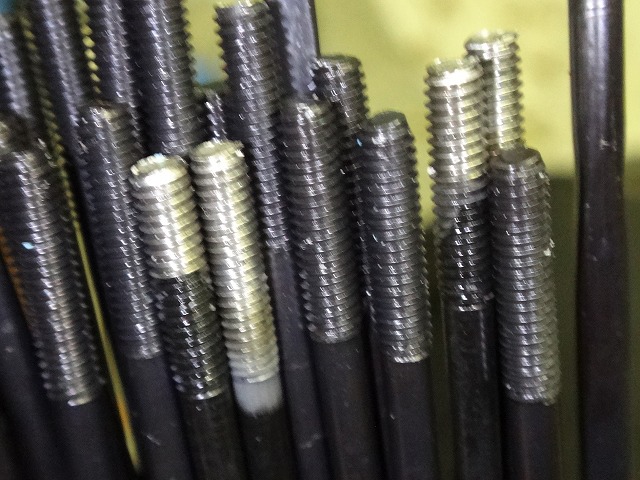
This is another black CX-RAY of the same length,
but since it's from a different manufacturing period, some have
black coating on the spoke threading and some don't.
CX-RAY is sold in 20-spoke bags from the manufacturer,
and this specification doesn't get mixed within the same bag.
But this doesn't let us pinpoint the exact production date.
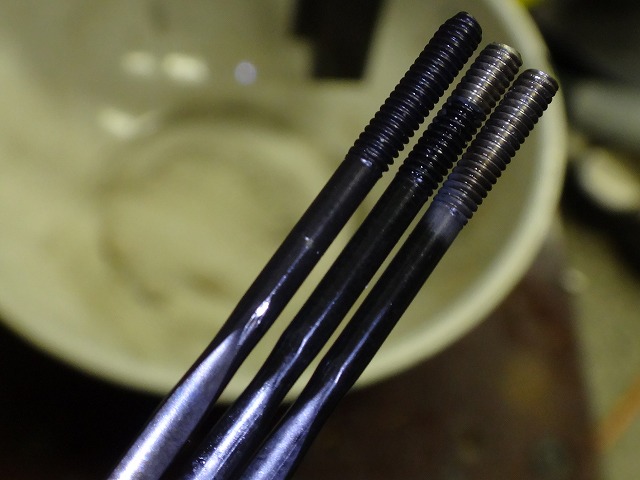
The threading goes from silver to black to silver again in cycles.
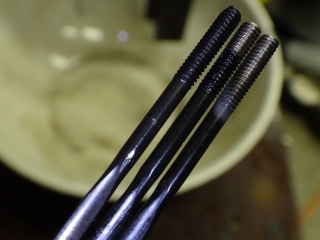
For the same length, the distance to the butted section
is the same even across different production dates.
Though, honestly, star spokes are kind of sloppy about this stuff.
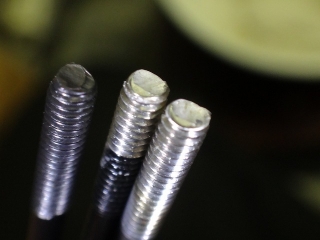
Spokes that are fully black, including the rounded end face, are completely black.
So any spoke with black threading right to the end
but a silver end face
can be definitively identified as cut.
The beveled spoke from before must be exactly as it came from the manufacturer.
I'll note the counterexample: nobody would bother
painting the cut end of a spoke black.
In Greek mythology, Achilles was dipped into the River Styx as a baby by his mother Thetis,
making nearly his entire body immortal—
except for the heel she held him by.
This is where the Achilles tendon gets its name.
So if the black on CX-RAY were the result of being dipped in the Styx,
then CX-RAY with a silver end
would mean that part wasn't immortal.

It's built.
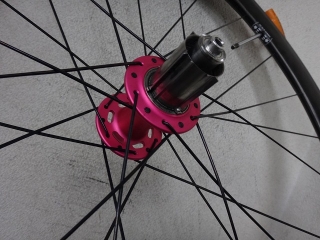
24H black half-comp, 2-cross Italian lacing.
I'll do the tying-in later.
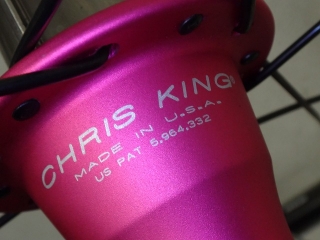
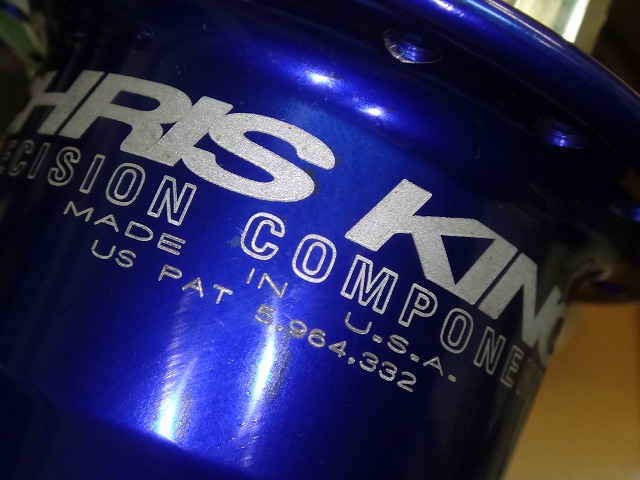
The markings on the Criscking rear hub shell look the same at first glance,
but as I wrote the other day, one side has a U.S. patent number
and the other side is (probably) a serial number.
Up until now, about half the time they'd be oriented differently,
but going forward I'll make sure the patent number side
is always at the orientation visible when looking through the valve hole.
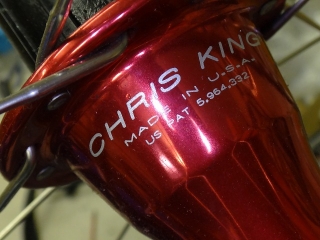
↑This is a different R45 hub,
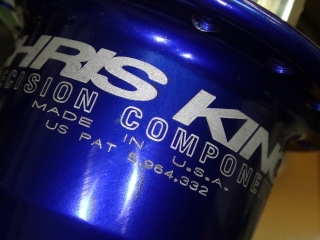
↑and this is my personal ISO hub—
the patent relates to the freewheel body structure,
so both hubs have the same number.
The numbers on the opposite side of the hub shell on both are different,
so those must be the serial numbers.
A customer brought me a rear wheel built with a
42AC rim from Smart Envy System.
It's a rim that was adopted in the earlier SES 3.4, and this is a clincher version.
I haven't written about it yet, but I inspected this wheel
along with my partner's front wheel previously.
The spoke tension was abnormally loose,
so loose that I wondered if it was even below the minimum threshold for a functional wheel,
and there was terrible radial runout and lateral runout too.
I even suspected it might be a half-built wheel.
From information from the customer, they're the second owner,
and the shop that built it has been identified.
So technically, it was built at a shop
and the builder was paid for their work,
which means it's supposed to be professional work.
But from my impression, it looked like someone's first time building a wheel.
Since this wheel has an expensive rim and hub,
it should cost over 300,000 yen regardless of whether it's actually well-built
or rides well. But high cost and performance have
(especially with hand-built wheels)
no causal relationship. The first owner might have thought,
"This ENVE rim wheel doesn't ride at all!"
and jumped to conclusions.
The problem isn't the rim or hub—it's the builder.
Criscking R45 hub, 24H,
all-black CX-RAY, reverse Italian 4-cross lacing.
Looking at the spokes and lacing pattern, you might think it was built in-house by the manufacturer,
but even without a definite source confirming it was built at a certain shop,
it's clear it wasn't made in-house.
ENVE's off-the-shelf wheels do have some lateral runout issues,
but this wheel's radial runout, lateral runout, and initial low tension state
were far beyond that level.
Although I was pretty sure it would come back eventually,
I went ahead and tensioned it under those conditions
to roughly manufacturer's off-the-shelf tension levels
and adjusted it as precisely as I could manage.
I told the customer to use it for a while and see,
but before that, I mentioned that compared to the Fulcrum Racing Light XLR
they'd been using before, this wheel would have lower lateral stiffness,
and if they use rim brakes, the brake zone has a file finish
so it would squeak when stopping—and both predictions turned out right.
On in-house built wheels, the rim's outer edge sometimes has a label
with the builder's name molded in indelibly,
but that wasn't done on rims from this era.
That said, there's separate, definitive evidence this isn't in-house built:

↑This right here.
At first I thought the rim's spoke holes were being treated as a reverse rim.
And looking at just this section, that's what it looks like.
This rim has no spoke hole offset on either the inner or outer edge,
so treating it as a reverse rim would be fine,
but there's really no particular reason to do so.
This wheel isn't treated as a reverse rim.
Instead, it has an awkward lacing where the valve hole sits
within the four-spoke bundle of the final crossings on both sides.
The first spoke was laced one hole off.
I think the customer's reason for wanting a complete rebuild rather than settling for
a retensioning (which was basically a wheel rebuild) was
largely this unsightly appearance.
I left the four spokes of the final crossings on both sides
without loosening any nipples.
Usually I'd write "loosening from the valve hole clockwise (or counterclockwise)
to the final four spokes," but
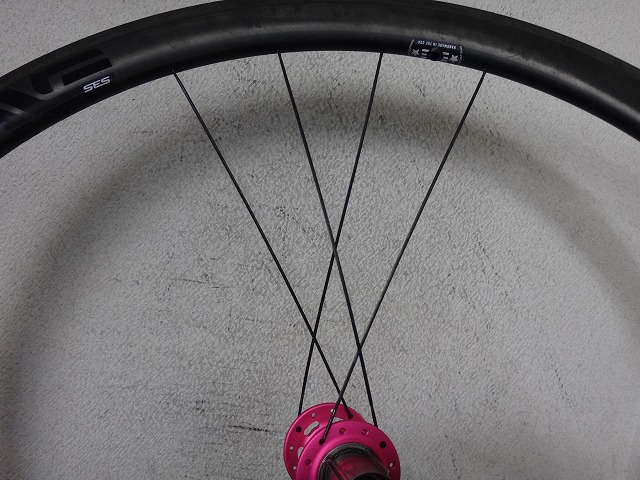
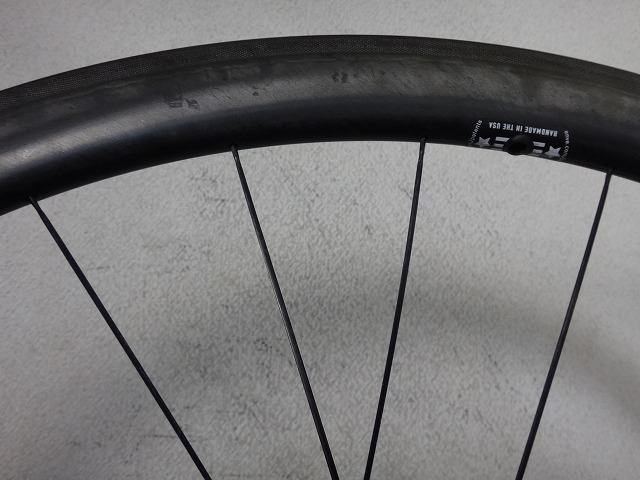
↑This time it works out like this.

I pulled the internal nipples that I didn't loosen at all
out through the rim.
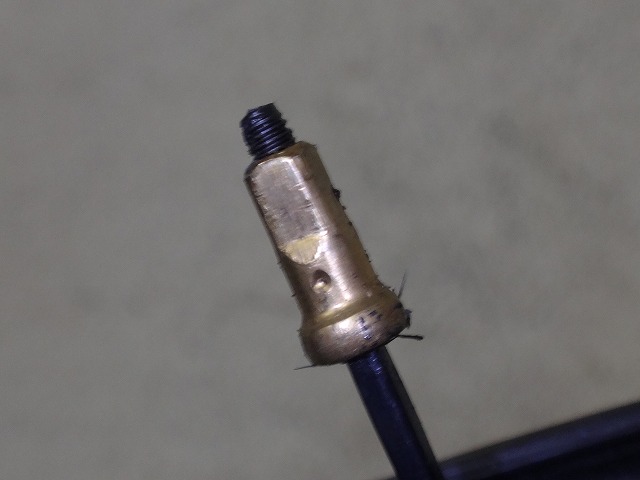
↑Non-freewheel side
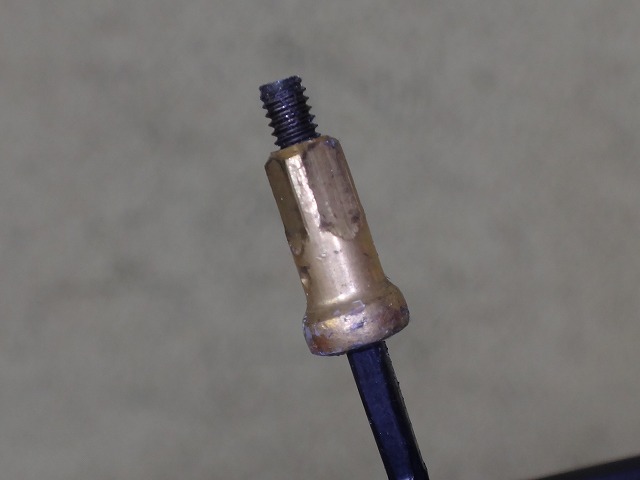
↑Freewheel side
↑Non-freewheel side (spoke end face is beveled)

↑Freewheel side
I did do some retensioning myself
(about two turns maximum. You might think it's impossible for a supposedly finished wheel's nipples
to need two more turns of tightening, but
the initial state was so low-tension it barely qualified as a half-built wheel),
and the spokes are on the long side on both sides, especially excessively long on the freewheel side.
The front wheel had spokes that were slightly long,
but since they were black CX-RAY radial lacing built as a normal rim,
I just inspected it.
↑The black CX-RAY from the third image earlier,
with the beveled spoke end face.
Black spokes with black threading
and a black end face as well.
This is another black CX-RAY of the same length,
but since it's from a different manufacturing period, some have
black coating on the spoke threading and some don't.
CX-RAY is sold in 20-spoke bags from the manufacturer,
and this specification doesn't get mixed within the same bag.
But this doesn't let us pinpoint the exact production date.
The threading goes from silver to black to silver again in cycles.
For the same length, the distance to the butted section
is the same even across different production dates.

Spokes that are fully black, including the rounded end face, are completely black.
So any spoke with black threading right to the end
but a silver end face
can be definitively identified as cut.
The beveled spoke from before must be exactly as it came from the manufacturer.
I'll note the counterexample: nobody would bother
painting the cut end of a spoke black.
In Greek mythology, Achilles was dipped into the River Styx as a baby by his mother Thetis,
making nearly his entire body immortal—
except for the heel she held him by.
This is where the Achilles tendon gets its name.
So if the black on CX-RAY were the result of being dipped in the Styx,
then CX-RAY with a silver end
would mean that part wasn't immortal.
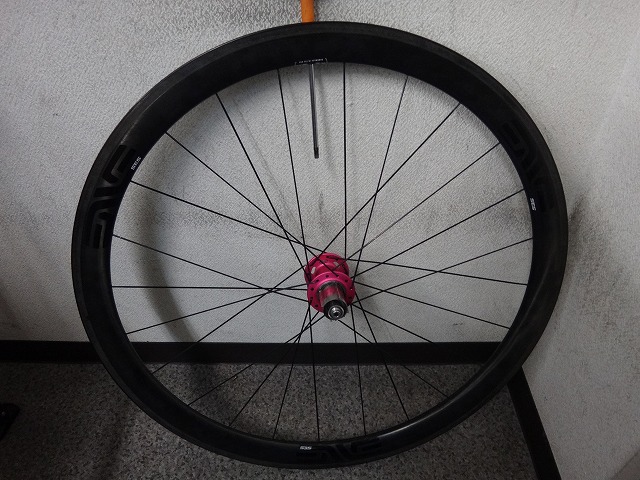
It's built.
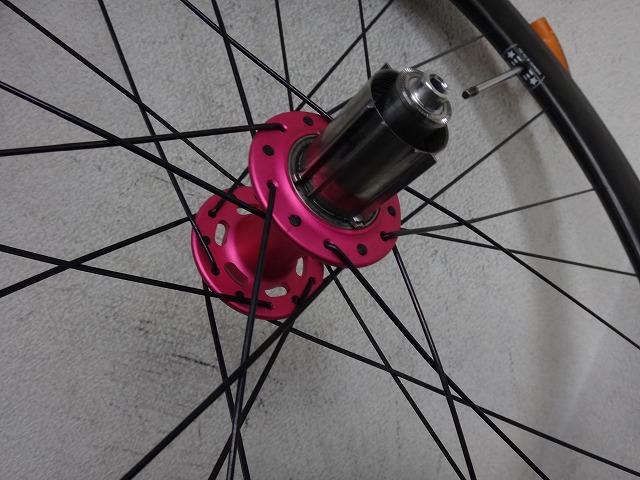
24H black half-comp, 2-cross Italian lacing.
I'll do the tying-in later.
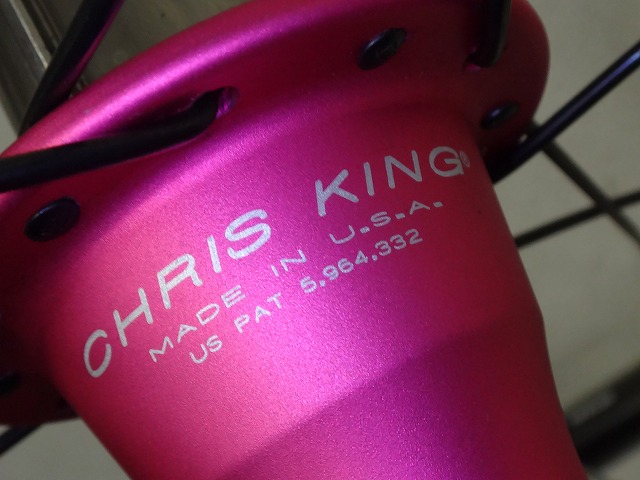
The markings on the Criscking rear hub shell look the same at first glance,
but as I wrote the other day, one side has a U.S. patent number
and the other side is (probably) a serial number.
Up until now, about half the time they'd be oriented differently,
but going forward I'll make sure the patent number side
is always at the orientation visible when looking through the valve hole.
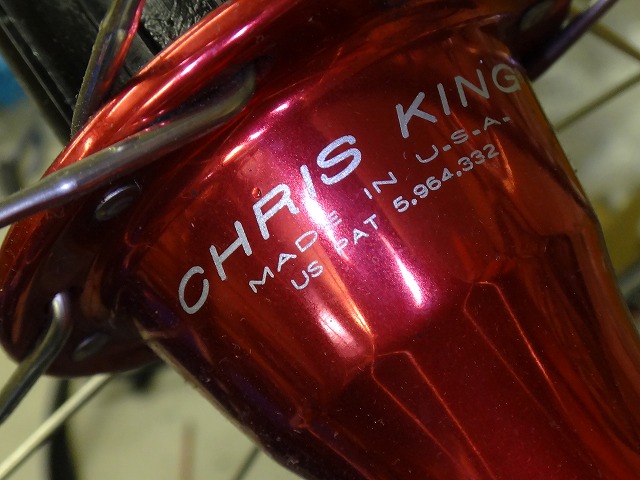
↑This is a different R45 hub,
↑and this is my personal ISO hub—
the patent relates to the freewheel body structure,
so both hubs have the same number.
The numbers on the opposite side of the hub shell on both are different,
so those must be the serial numbers.