Another day, another wheel (and so on).
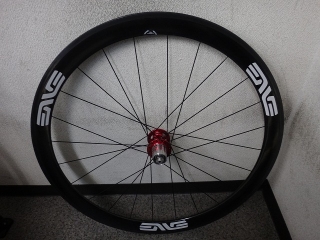
Continuing from the other day.
I'm rebuilding the rear wheel built with ENVE's 1-45 rim.
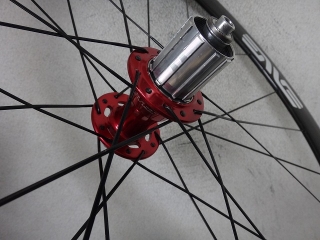
Chris King R45 hub, 24H, all black, CX-RAY in a 4-cross pattern

The front wheel was built treating the rim as reverse, but
the rear wheel was built treating it as a normal rim.
I wrote about this before with the front wheel, but I don't think it was intentionally done as a reverse rim—
it was just put together carelessly, I suspect.
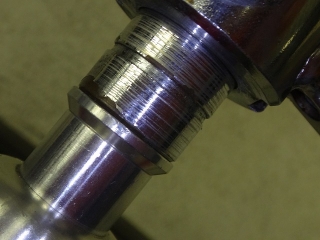
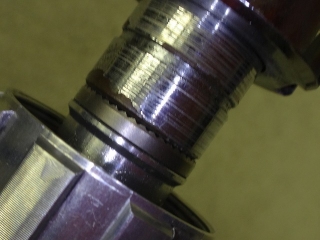
Centered perfectly.
There was some lateral runout, so if I looked carefully I could probably find a phase difference of about one sheet of paper,
but that's negligible and honestly doesn't matter.
The center's there, and while the freewheel side tension could probably be tightened more,
it's tensioned enough to say the wheel is functional.
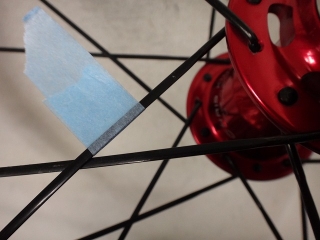
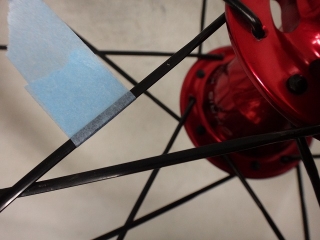
In that state, the deformation of the final crossing on the non-freewheel side
when gripping firmly was about this much.
Even if I were to increase tension on the freewheel side, I couldn't manage a full turn,
and if I could somehow turn it one full rotation, the amount of additional tensioning needed on the non-freewheel side
to get the wheel center back would be just over half a turn.
With that amount, it won't change much from here.
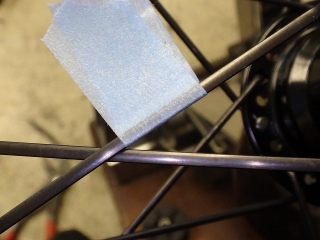
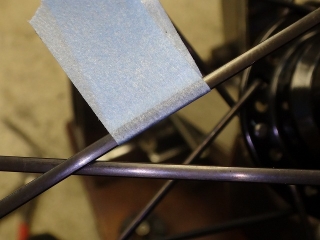
Jumping ahead in the timeline, this is after rebuilding but before lacing.
I'm actually gripping this one more firmly for fairness's sake.
If we were okay with the rim drifting about half the rim width to the left,
I think I could get the non-freewheel side deformation to this level even before the rebuild.
But then, if the brake is centered, it'd constantly rub.
Getting the wheel centered while tensioning the non-freewheel side to this level under the pre-rebuild conditions
is basically impossible.
I say "basically" because maybe with an ENVE rim it could barely be done,
but with most other rims, the rim holes can't handle it.
With some rim from some brand that went dark (playing dumb) with a god-awful name,
according to specs they could theoretically be tensioned that much,
but even their stock wheels weren't tensioned to that level.
Of course not. If you tried to tension to that level,
the nipples (which weren't internal) wouldn't be able to take it, let alone the rim.

As usual, I left just one pair—four spokes—of the final crossings on either side next to the valve hole
without touching the nipples at all.
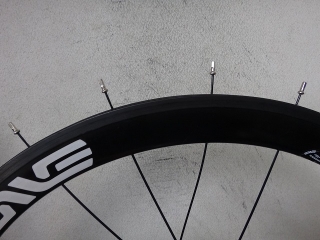
The nipples though...
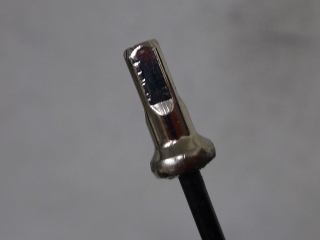
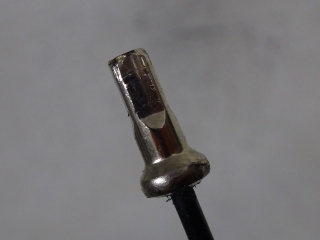
These aren't the ones that came with the ENVE rim—
they're generic brass nipples for internal use.
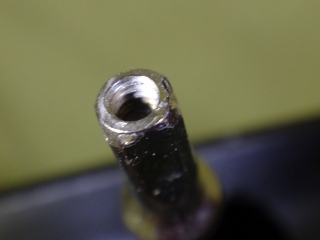
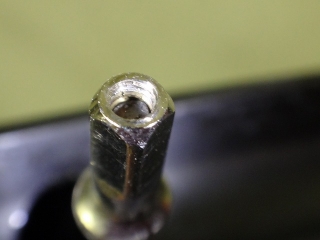
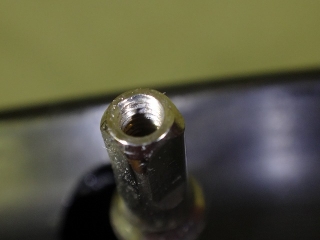
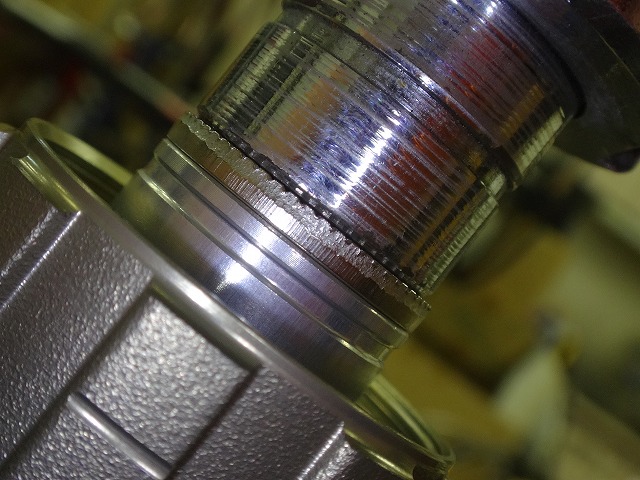
The gripping surface is incredibly gouged up,
but what kind of tool would you use to end up like this?
↑Non-freewheel side
↑Freewheel side
↑Non-freewheel side
↑Freewheel side
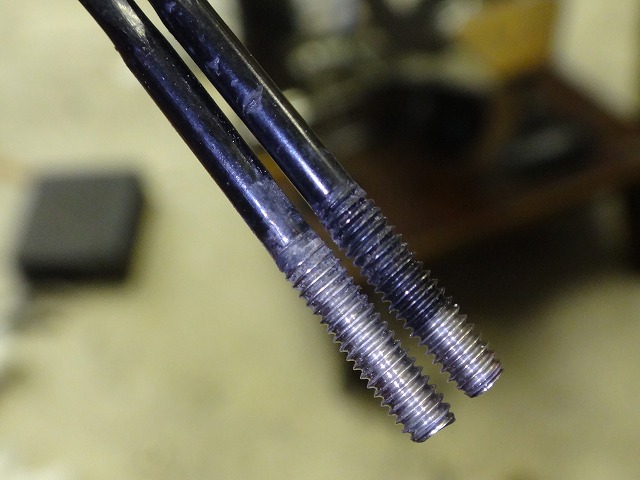
The spoke length on the freewheel side is short.
Since the R45 hub isn't high-low flange,
I thought maybe they cheated by reusing the same length spokes left and right,
but that would make the non-freewheel side short, which is the opposite here.
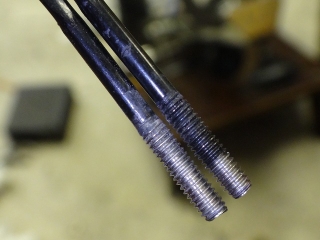
The spoke length was
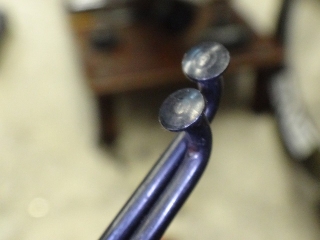
different left and right, but if we take the non-freewheel side as correct,
the freewheel side is on the short end.
The remaining four nipples came loose by hand.
The front wheel spokes had threadlock applied,
so I thought maybe they were from completely different wheel builders—
a front from one and rear from another—but
they both have matching red R45 hubs,
and the rim stickers have been reapplied on both front and rear,
so even if they're not from the same builder,
they might be from the same shop.
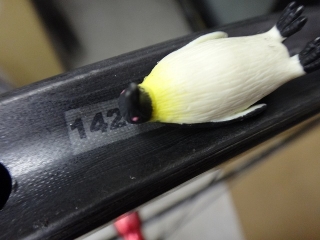
The front rim's serial number was in the 116,000 range,
but the rear rim is in the 1.42 million range—a 7-digit number, not 142,000.
With this generation, the nipples that came with the rim were definitely 4th generation.
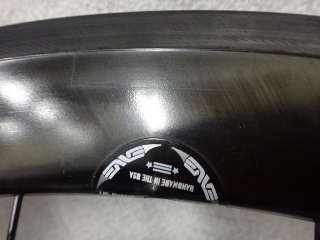
The sticker around the valve hole that the front rim didn't have
is a characteristic of late-generation ENVE rims.
Also, there are traces of a rectangular sticker that was applied.
Maybe it was a shop name sticker?
SAPIM's stickers have this shape,
but they're not this wide.
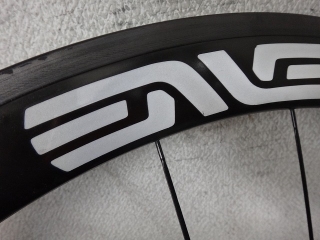
This ENVE sticker though,
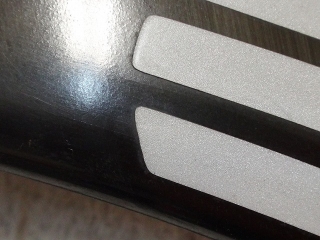
shows sun-fading in the outlines where previous stickers used to sit—
you can see it scattered around, though it's hard to make out in the photo.
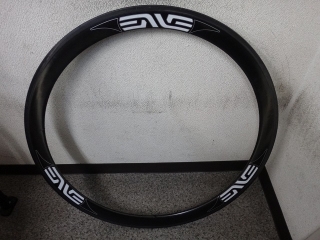
This is my personal 1-45 rim,
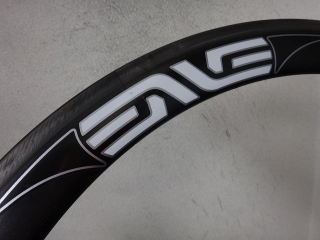
and like the EDGE era, ENVE has triangular wing-like designs
on either side of the lettering.
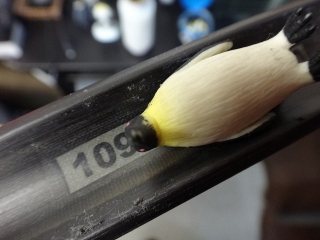
The serial number is in the 109,000 range.

With this sticker, the wings are part of one piece,
so you won't see the sun-fading in the shape of "ENVE".
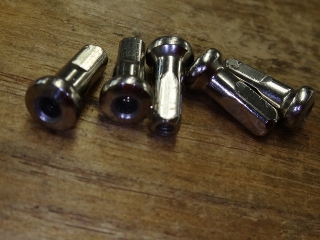
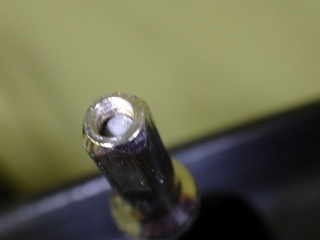
↑This is the pre-rebuild nipple, and the end face on the inner circumference side
has no slot—it's the internal-use type.
EDGE/ENVE require the use of nipples that come with the rim,
so for the rebuild I'll use nipples from one generation or another
of the included sets.
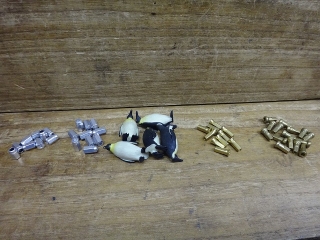
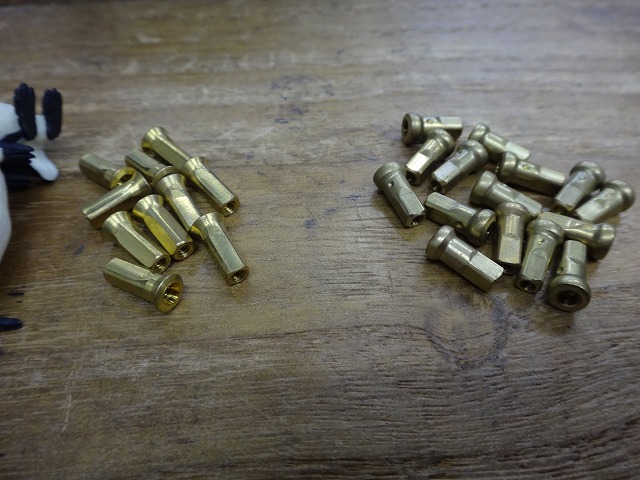
↑From left: 1st generation, 2nd generation, consideration-san mini, 3rd generation, 4th generation.
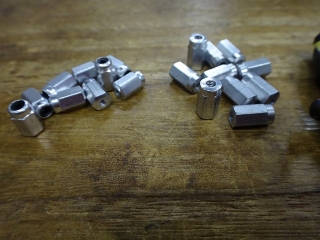
↑1st and 2nd generation
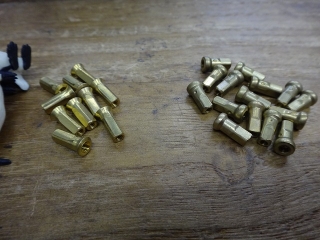
↑3rd and 4th generation
I'd built the front wheel with 2nd generation, so I wanted to match them on the rear,
but I didn't have enough—only what I needed for future repairs—
so I went with 4th generation instead.
Though, there was one defective unit that got rejected. This is the first time I've seen a defect with this nipple.
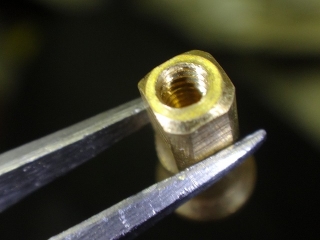
First, a normal nipple.
The outer end is fully threaded all the way to the edge,

and the inner end has some thread relief.
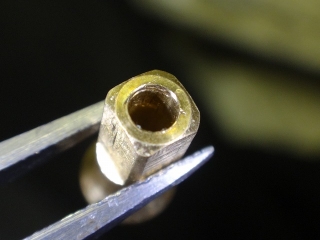
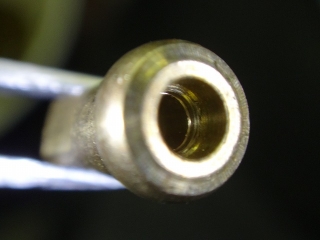
The defective nipple has no threads.
Strictly speaking, there's maybe one thread from the relief side,
but there's no way to screw a spoke into it.
I have spare 4th generation nipples from my separate stock,
but if this came with a rim and there were only just enough with no spares,
the wheel couldn't be built.
DT's high-end rims come with
34 silver Squorx nipples in 14mm regardless of hole count,
and since black is sold separately, if you build a wheel with black Squorx nipples
you end up with a full set of extras.

Built.
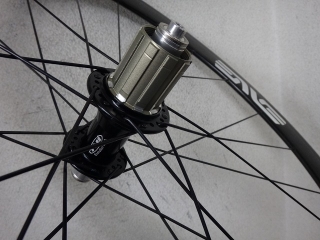
Evolight hub, 24H, black semi-aero, 4-6 cross pattern.
I'll do the lacing later.
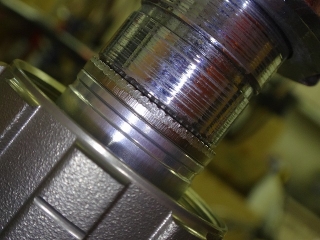
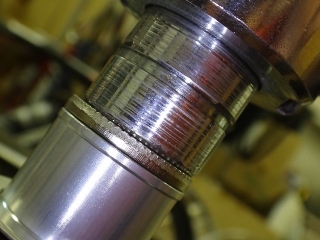
I was supposed to post the spoke-gripping pictures before, but forgot—
but it's centered perfectly, just so you know.
The customer asked me to weigh both front and rear rims.
The actual weight of a 1-45 tubular rim is
around 268-274g for early EDGE,
and around 300g or so for ENVE,
with 7-digit part numbers getting even heavier.
Sure enough, the rear rim was heavier this time,
and when I squeezed the rim sidewall (inboard of the braking surface),
the front rim with the 6-digit part number was noticeably more flexed.
As for the actual weight, I have no intention of writing it here.
I mean, why do I have to tell anyone?
↑Dude, that's kind of a bad attitude.
Sorry For The Wait! Please Check Out This Image!
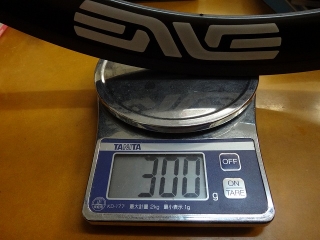
It's The Front Rim!
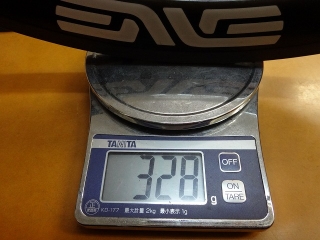
It's The Rear Rim!
Even After Going To ENVE, They Differ By About 10 Percent!
↑Stop It Already!

Continuing from the other day.
I'm rebuilding the rear wheel built with ENVE's 1-45 rim.

Chris King R45 hub, 24H, all black, CX-RAY in a 4-cross pattern

The front wheel was built treating the rim as reverse, but
the rear wheel was built treating it as a normal rim.
I wrote about this before with the front wheel, but I don't think it was intentionally done as a reverse rim—
it was just put together carelessly, I suspect.


Centered perfectly.
There was some lateral runout, so if I looked carefully I could probably find a phase difference of about one sheet of paper,
but that's negligible and honestly doesn't matter.
The center's there, and while the freewheel side tension could probably be tightened more,
it's tensioned enough to say the wheel is functional.


In that state, the deformation of the final crossing on the non-freewheel side
when gripping firmly was about this much.
Even if I were to increase tension on the freewheel side, I couldn't manage a full turn,
and if I could somehow turn it one full rotation, the amount of additional tensioning needed on the non-freewheel side
to get the wheel center back would be just over half a turn.
With that amount, it won't change much from here.


Jumping ahead in the timeline, this is after rebuilding but before lacing.
I'm actually gripping this one more firmly for fairness's sake.
If we were okay with the rim drifting about half the rim width to the left,
I think I could get the non-freewheel side deformation to this level even before the rebuild.
But then, if the brake is centered, it'd constantly rub.
Getting the wheel centered while tensioning the non-freewheel side to this level under the pre-rebuild conditions
is basically impossible.
I say "basically" because maybe with an ENVE rim it could barely be done,
but with most other rims, the rim holes can't handle it.
With some rim from some brand that went dark (playing dumb) with a god-awful name,
according to specs they could theoretically be tensioned that much,
but even their stock wheels weren't tensioned to that level.
Of course not. If you tried to tension to that level,
the nipples (which weren't internal) wouldn't be able to take it, let alone the rim.

As usual, I left just one pair—four spokes—of the final crossings on either side next to the valve hole
without touching the nipples at all.

The nipples though...


These aren't the ones that came with the ENVE rim—
they're generic brass nipples for internal use.
The gripping surface is incredibly gouged up,
but what kind of tool would you use to end up like this?

↑Non-freewheel side

↑Freewheel side

↑Non-freewheel side

↑Freewheel side
The spoke length on the freewheel side is short.
Since the R45 hub isn't high-low flange,
I thought maybe they cheated by reusing the same length spokes left and right,
but that would make the non-freewheel side short, which is the opposite here.
The spoke length was

different left and right, but if we take the non-freewheel side as correct,
the freewheel side is on the short end.
The remaining four nipples came loose by hand.
The front wheel spokes had threadlock applied,
so I thought maybe they were from completely different wheel builders—
a front from one and rear from another—but
they both have matching red R45 hubs,
and the rim stickers have been reapplied on both front and rear,
so even if they're not from the same builder,
they might be from the same shop.

The front rim's serial number was in the 116,000 range,
but the rear rim is in the 1.42 million range—a 7-digit number, not 142,000.
With this generation, the nipples that came with the rim were definitely 4th generation.

The sticker around the valve hole that the front rim didn't have
is a characteristic of late-generation ENVE rims.
Also, there are traces of a rectangular sticker that was applied.
Maybe it was a shop name sticker?
SAPIM's stickers have this shape,
but they're not this wide.

This ENVE sticker though,

shows sun-fading in the outlines where previous stickers used to sit—
you can see it scattered around, though it's hard to make out in the photo.

This is my personal 1-45 rim,

and like the EDGE era, ENVE has triangular wing-like designs
on either side of the lettering.

The serial number is in the 109,000 range.

With this sticker, the wings are part of one piece,
so you won't see the sun-fading in the shape of "ENVE".

↑This is the pre-rebuild nipple, and the end face on the inner circumference side
has no slot—it's the internal-use type.
EDGE/ENVE require the use of nipples that come with the rim,
so for the rebuild I'll use nipples from one generation or another
of the included sets.

↑From left: 1st generation, 2nd generation, consideration-san mini, 3rd generation, 4th generation.

↑1st and 2nd generation
↑3rd and 4th generation
I'd built the front wheel with 2nd generation, so I wanted to match them on the rear,
but I didn't have enough—only what I needed for future repairs—
so I went with 4th generation instead.
Though, there was one defective unit that got rejected. This is the first time I've seen a defect with this nipple.

First, a normal nipple.
The outer end is fully threaded all the way to the edge,

and the inner end has some thread relief.


The defective nipple has no threads.
Strictly speaking, there's maybe one thread from the relief side,
but there's no way to screw a spoke into it.
I have spare 4th generation nipples from my separate stock,
but if this came with a rim and there were only just enough with no spares,
the wheel couldn't be built.
DT's high-end rims come with
34 silver Squorx nipples in 14mm regardless of hole count,
and since black is sold separately, if you build a wheel with black Squorx nipples
you end up with a full set of extras.

Built.

Evolight hub, 24H, black semi-aero, 4-6 cross pattern.
I'll do the lacing later.
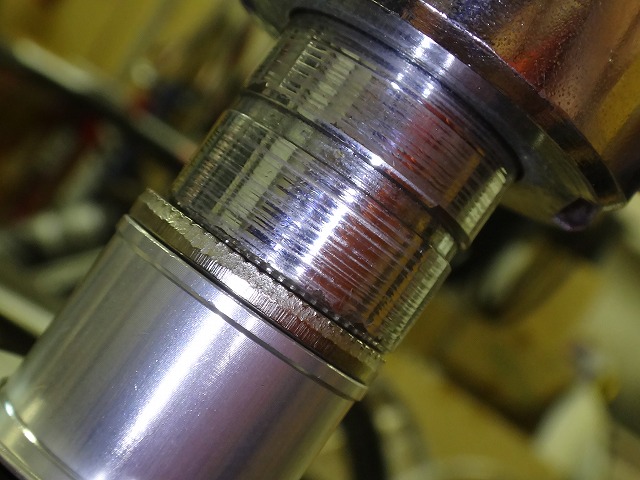
I was supposed to post the spoke-gripping pictures before, but forgot—
but it's centered perfectly, just so you know.
The customer asked me to weigh both front and rear rims.
The actual weight of a 1-45 tubular rim is
around 268-274g for early EDGE,
and around 300g or so for ENVE,
with 7-digit part numbers getting even heavier.
Sure enough, the rear rim was heavier this time,
and when I squeezed the rim sidewall (inboard of the braking surface),
the front rim with the 6-digit part number was noticeably more flexed.
As for the actual weight, I have no intention of writing it here.
I mean, why do I have to tell anyone?
↑Dude, that's kind of a bad attitude.

Sorry For The Wait! Please Check Out This Image!

It's The Front Rim!
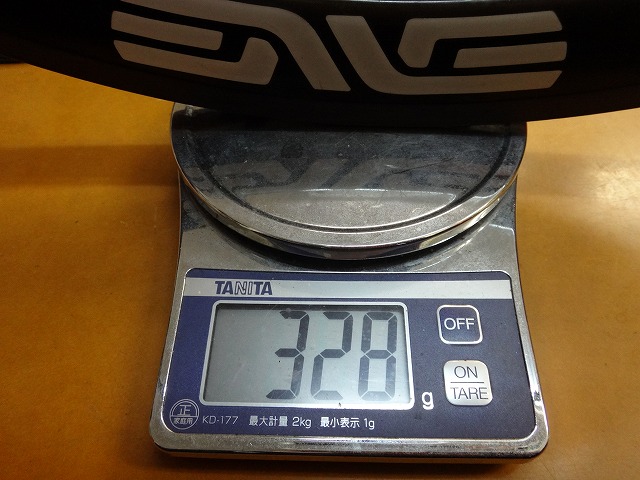
It's The Rear Rim!
Even After Going To ENVE, They Differ By About 10 Percent!
↑Stop It Already!