A customer dropped off the rear wheel of the theoretically strongest
nomuLab Wheel #5.
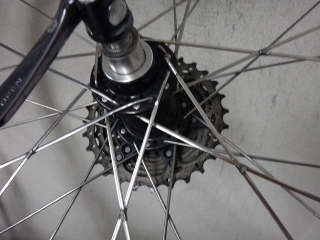
It's a 28H four-cross lace, with the non-freewheel side using true tangential lacing.
Besides this one, the customer also has a standard 24H four-cross
nomuLab Wheel #5 rear wheel,
but this one has the sensation of
"accelerating before you even finish pushing the pedal stroke."
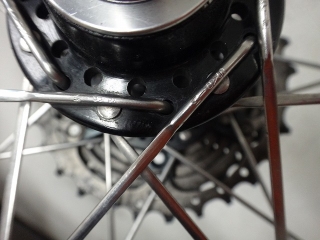
However, with a 28H eight-cross lace, the outpoke spoke heads
contact with the inpoke spoke path,
and we know there's a risk of spoke breakage at this point,
so normally we don't build it that way.

And that's exactly what happened.
Spoke breakage occurring anywhere other than at the neck
is extremely unusual.
Even when this wheel was built,
we anticipated this might happen,
but after explaining the risk, the customer still wanted it,
so we built it with eight-cross lacing.
This was about five years ago, by the way.
To replace this broken spoke,
we'd need to loosen the adjacent final crossing too,
and to loosen that, we'd need to loosen the one next to it again... and so on,
so to replace just one spoke
we'd need to loosen the entire non-freewheel side—
that's what I've been saying, but strictly speaking it's not quite true.
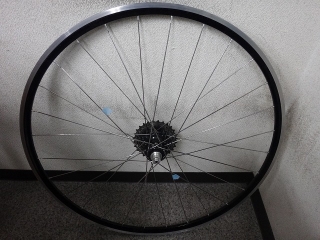
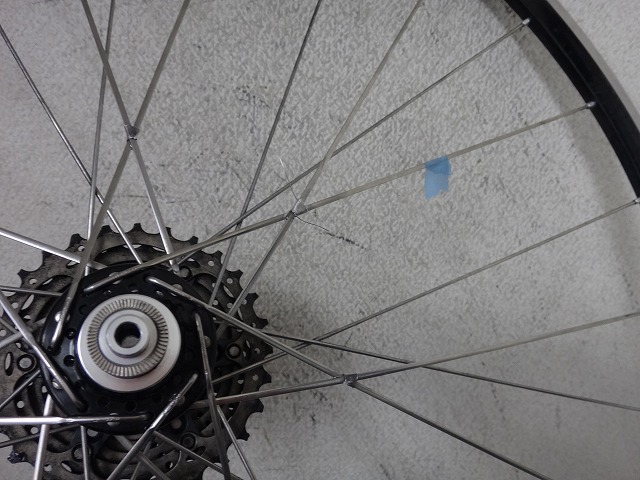
Fixed it.
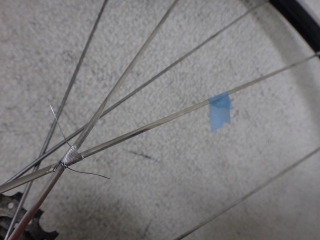
↑The tape marking shows
where the replacement spoke went,
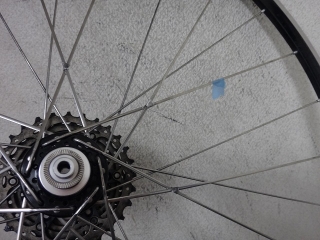
and at the root of that spoke head where the first crossing happens,
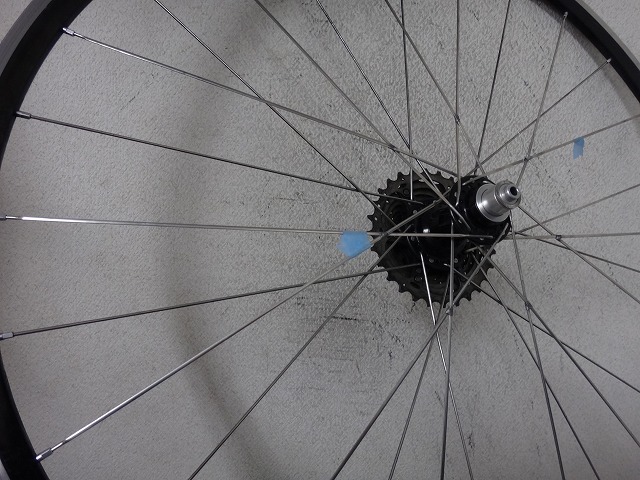
including the outpoke
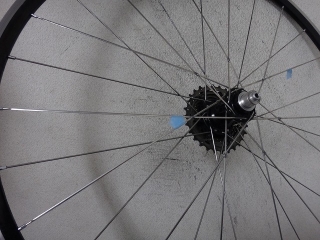
the tape on the final crossing shows
these two spokes—if you completely loosen and remove their nipples
(you have to remove both),
you can recover and replace the broken spoke.
If you don't want to loosen the nipples completely and remove them,
and instead want to manage by loosening them only partially,
then you'd need to loosen all the spokes on the non-freewheel side.
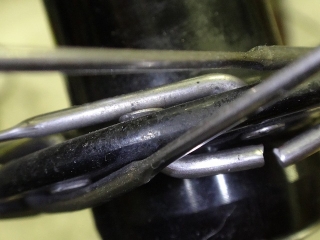
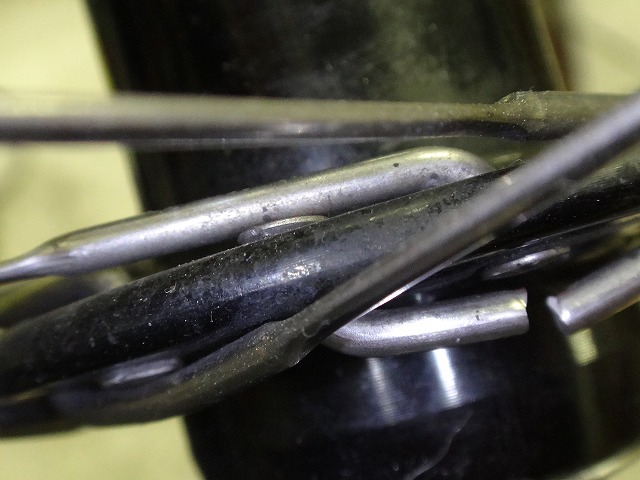
Going back in the timeline,
when it looked like "how on earth are we replacing this?"
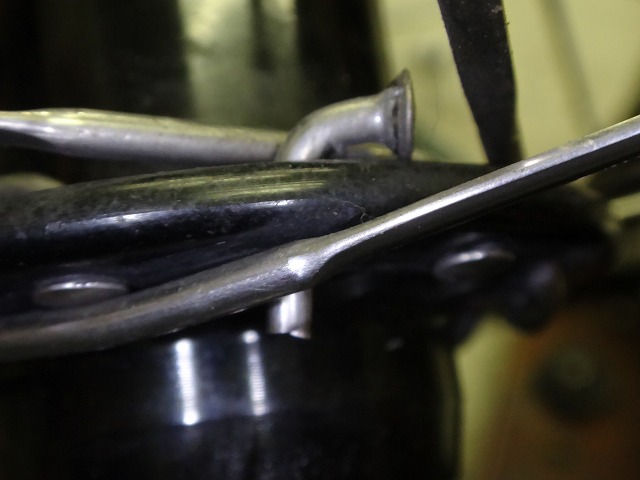
the spokes overlapping inside the flange
and the nipples of one final crossing pair with its partner—if you loosen those completely—
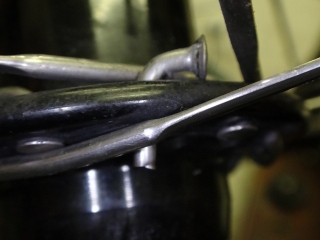
you can recover it like this.
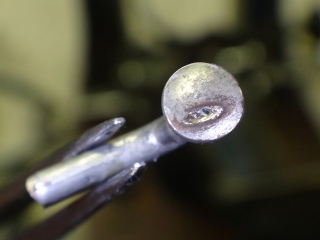
The fracture was caused by contact with the outpoke head,
but this inpoke head also shows contact marks from the outpoke.
Separate from this, with normal spoke breakage too,
sometimes it's like a "breaking habit" has set in, and
subsequent breaks become frequent from the second time onward,
in which case it's actually less work to replace all the spokes.
If similar breakage happens again in the not-too-distant future,
I suggested we rebuild the non-freewheel side as a six-cross lace,
but the customer said they understand the risk and want to keep using eight-cross,
and that they don't mind paying for a complete one-side respoke if needed.
Hmm.
nomuLab Wheel #5.

It's a 28H four-cross lace, with the non-freewheel side using true tangential lacing.
Besides this one, the customer also has a standard 24H four-cross
nomuLab Wheel #5 rear wheel,
but this one has the sensation of
"accelerating before you even finish pushing the pedal stroke."
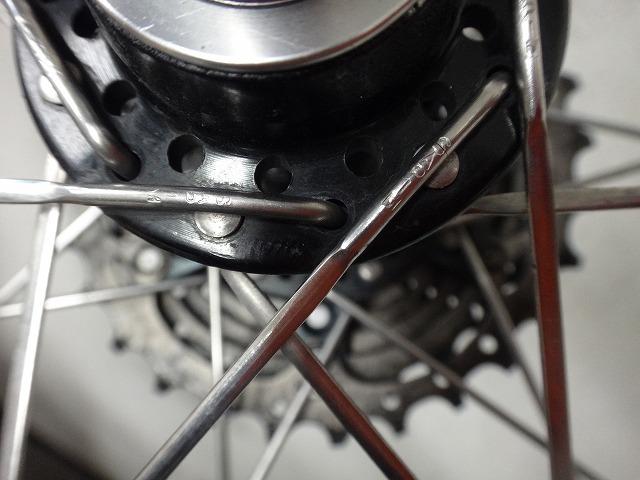
However, with a 28H eight-cross lace, the outpoke spoke heads
contact with the inpoke spoke path,
and we know there's a risk of spoke breakage at this point,
so normally we don't build it that way.
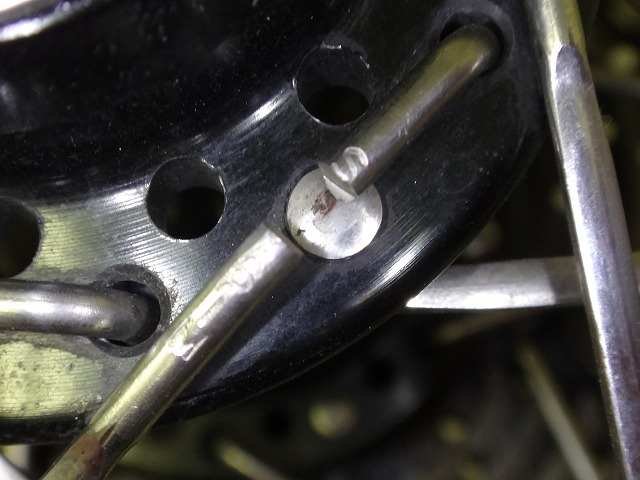
And that's exactly what happened.
Spoke breakage occurring anywhere other than at the neck
is extremely unusual.
Even when this wheel was built,
we anticipated this might happen,
but after explaining the risk, the customer still wanted it,
so we built it with eight-cross lacing.
This was about five years ago, by the way.
To replace this broken spoke,
we'd need to loosen the adjacent final crossing too,
and to loosen that, we'd need to loosen the one next to it again... and so on,
so to replace just one spoke
we'd need to loosen the entire non-freewheel side—
that's what I've been saying, but strictly speaking it's not quite true.
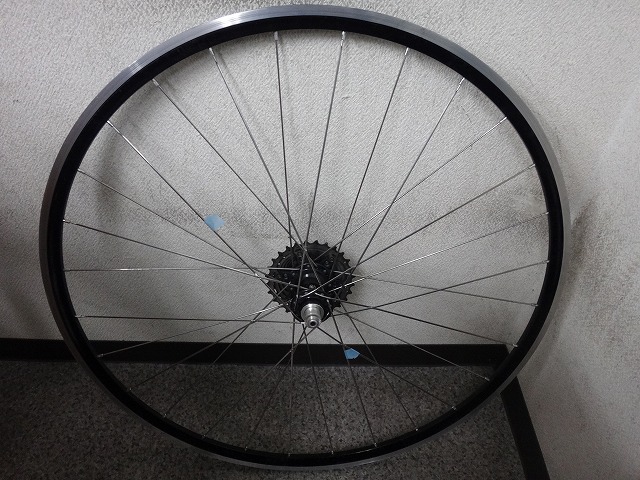
Fixed it.

↑The tape marking shows
where the replacement spoke went,
and at the root of that spoke head where the first crossing happens,
including the outpoke
the tape on the final crossing shows
these two spokes—if you completely loosen and remove their nipples
(you have to remove both),
you can recover and replace the broken spoke.
If you don't want to loosen the nipples completely and remove them,
and instead want to manage by loosening them only partially,
then you'd need to loosen all the spokes on the non-freewheel side.
Going back in the timeline,
when it looked like "how on earth are we replacing this?"
the spokes overlapping inside the flange
and the nipples of one final crossing pair with its partner—if you loosen those completely—
you can recover it like this.
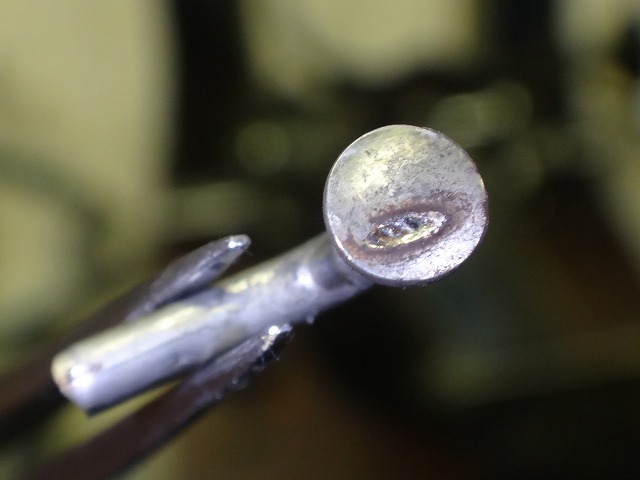
The fracture was caused by contact with the outpoke head,
but this inpoke head also shows contact marks from the outpoke.
Separate from this, with normal spoke breakage too,
sometimes it's like a "breaking habit" has set in, and
subsequent breaks become frequent from the second time onward,
in which case it's actually less work to replace all the spokes.
If similar breakage happens again in the not-too-distant future,
I suggested we rebuild the non-freewheel side as a six-cross lace,
but the customer said they understand the risk and want to keep using eight-cross,
and that they don't mind paying for a complete one-side respoke if needed.
Hmm.