You might be thinking "Here we go, another Imezi shill article!" Well, I won't deny it. But before that, let me tell you about something else.
A customer (loosely speaking) who had a tubeless tire on some hookless rim brought their front wheel to us because no matter how many times they pumped air into it, it would deflate immediately.
The wheel had been sitting unused for over a month, the air had leaked out excessively, the tire bead lost its lift with a "poof," the sealant inside the tire was exposed to outside air, and without noticing this, they just kept it sitting there as a result...
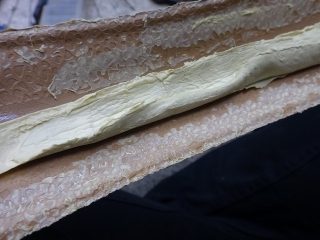
The sealant had hardened on the part of the tire that was facing the ground while it was sitting.
By the way, the sealant is Imezi's Cafe Latex.
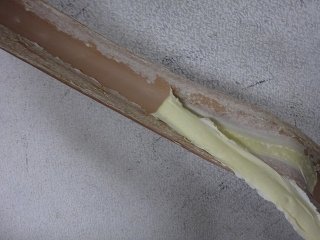
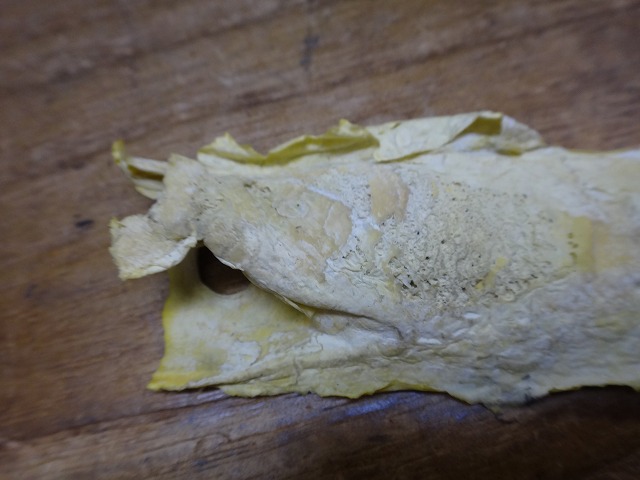
The tire is a Goodyear with an amber-colored sidewall, but not just the sidewall—the inside carcass is also amber-colored, and the surface had a slippery texture that made it hard for the sealant to grip, so
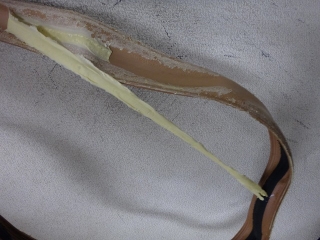
I was able to peel off the sealant that had formed like yuba (tofu skin) cleanly.
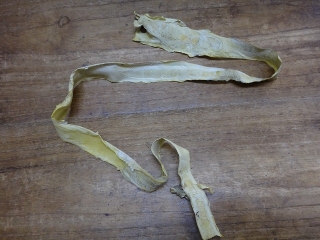
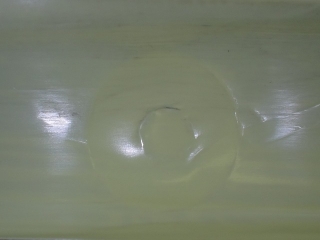
↑This one
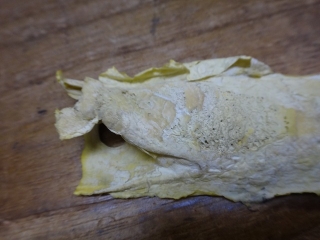
This edge part,

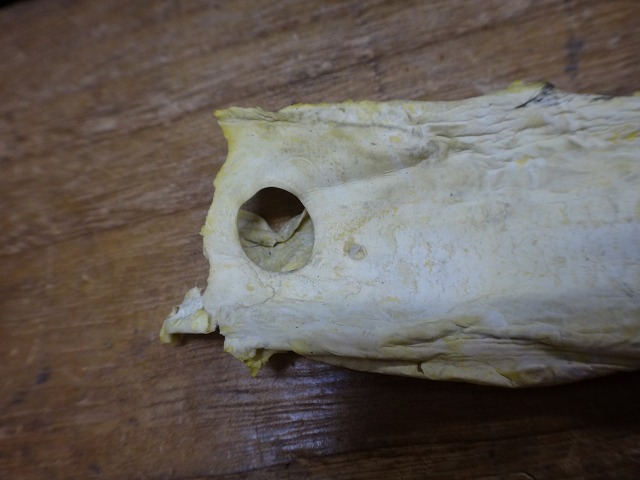
When flipped over, it has a nice round hole, but

This is the mark from the base of the tubeless valve.
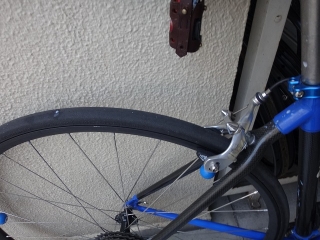
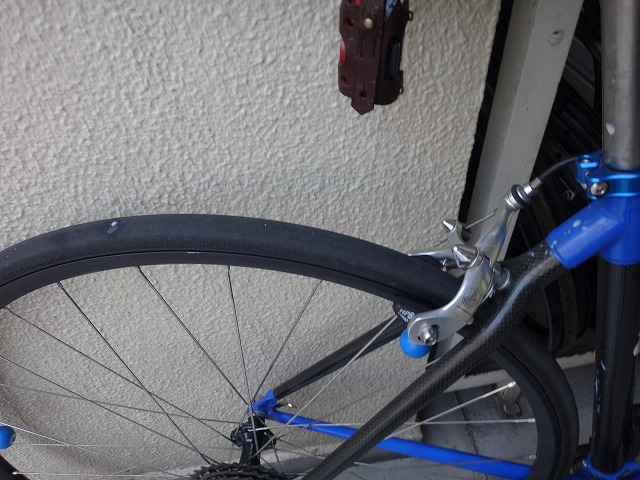
Today, it punctured on my commute.
While riding, suddenly there was a "pssshhh pssshhh pssshhh!" sound and air leaked out violently, but it didn't become completely flat—instead it turned into a slow leak at very low pressure.
After that, I got up onto the sidewalk and topped up the air with an inflator, rode a bit further, and the pressure dropped so much it was about to rim strike, so I thought about switching to a tubed tire, but I topped up the air one more time, and this time the slow leak pace became even slower than before, so I was able to ride to the shop.
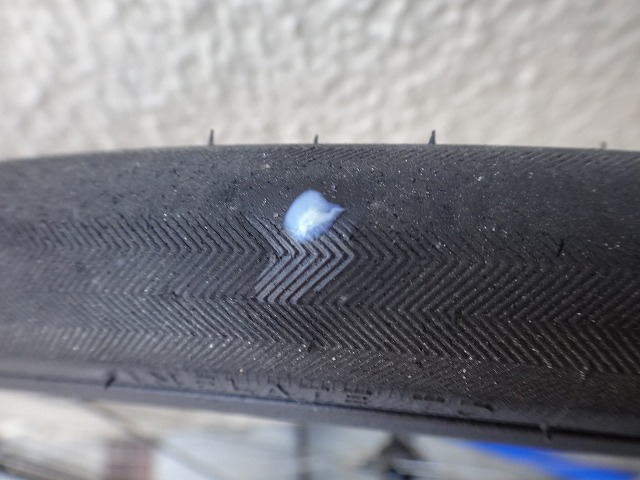
On the second pumping, I think sealant fibers gathered at the puncture hole more than the first time.
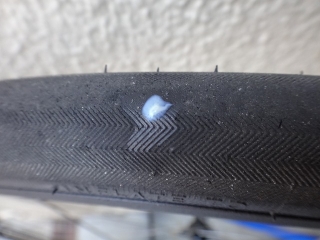
↑The puncture location
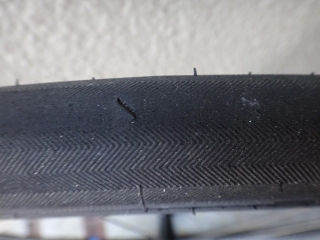
This is different from the spot where I applied a patch from inside a while ago when it punctured.
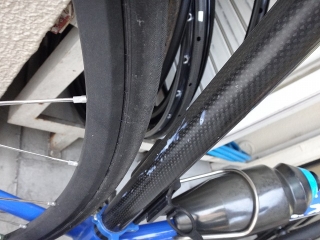
When the puncture was fresh at high pressure and making that pssshhh sound, the sealant was spattering like flames shooting out from Gamera's leg holes during flight, and it was
scattered on the seat tube and
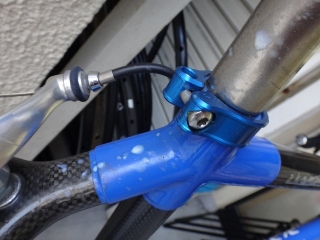
the back of the seatpost.
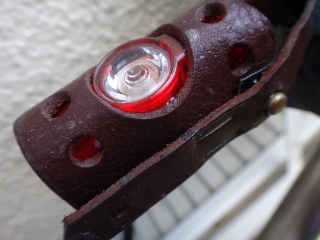
It also splattered on the Cat Eye taillight in a leather case hanging from the bag I have hanging off the back of the saddle.
At this point it's hard to see visually, but it's stained.
Going off on a tangent, in brevets (with slight variations depending on the organizer), there's a rule that you have to use the taillight in constant-on mode.
As for why flashing is not allowed, from what I've heard, it's because the flashing has a mesmerizing effect on people behind you (including cars), but this leather case taillight, even though it's set to constant-on, has a red light that wobbles so much without being fixed that if you used it in a brevet, you might get yelled at.
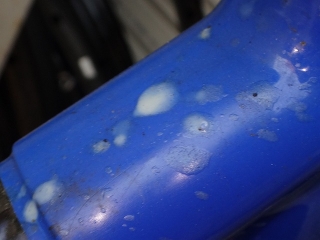
Even Imezi's sealant will harden when exposed to outside air.

When I rubbed the clump with my finger, sealant with an okara-like texture came off with a pop.
Once before, I had Stans sealant stuck to the back of the seat tube as a transparent lump, and at first I didn't know what it was.
Because some time had passed, cleaning that off was a real hassle.
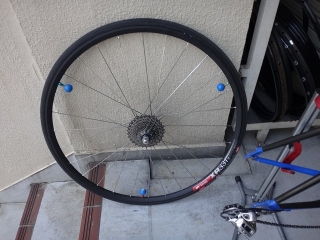
Before doing the usual "it comes off without rubbing" thing.
When a tubeless tire punctures on the road, if your destination is close, you might ride with the slow leak without switching to a tubed tire, but if you top up the air during that with a CO2 cartridge, you instantly exceed the "air pressure that the sealant can seal with," the puncture hole expands, and violent air leakage starts.
If you repeat this, the sealant inside the tire decreases, so the air pressure the sealant can seal also goes down.
As a good opportunity, I slowly pumped pressure with a floor pump to check what air pressure the wound opens at.
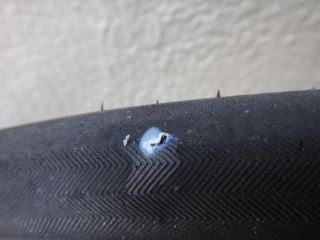
At around 3.5 bar the wound opened and a "fsshhh" sound leaked from the hole.
You could tell the air was hitting the camera I was using for close-up shots.
This is with the puncture hole pointing straight up as I'm pressurizing, but if I pointed it straight down and the wound opened, then shook the wheel, there's a possibility it would seal even above 3.5 bar.
Also, it depends on conditions like hole size and tread thickness, so it's not set in stone that "Imezi's sealant's limit for sealing wounds is 3.5 bar."
Imezi's sealant doesn't have particularly high performance at sealing puncture holes, to be honest.
In fact, I've taken out rides where I completely sealed a puncture hole with Stans sealant and pumped in 7 bar, treating it as a full "repair," and ridden that way.
So why do I use Imezi's sealant?
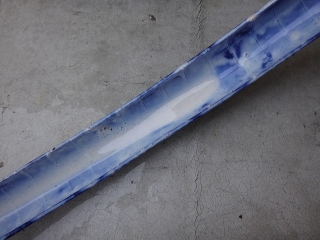
Like I always write,
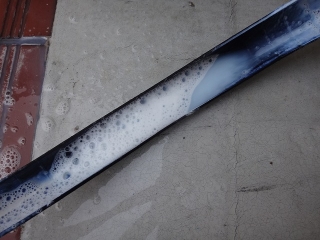
you can just spray water on it and
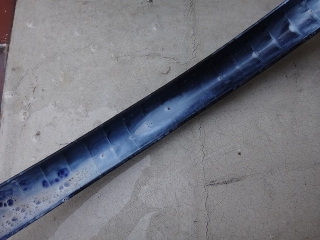
cleanly remove the sealant.
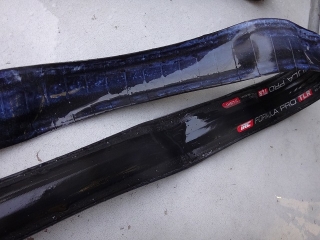
Inside the tire, I haven't rubbed it at all with my fingers or a sponge.
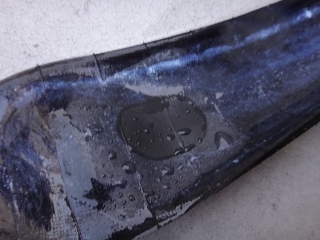
↑The repair patch location from a while back
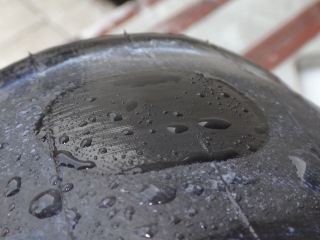
It has almost no thickness and hasn't peeled off.
Since the tread is also worn this time, I'm not going to half-ass it and will just replace the tire.
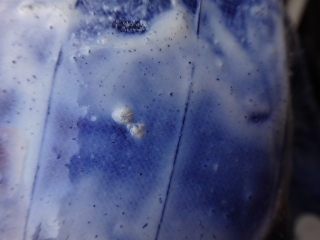
Going back in the timeline, this is the state of the puncture location viewed from inside before rinsing it off.
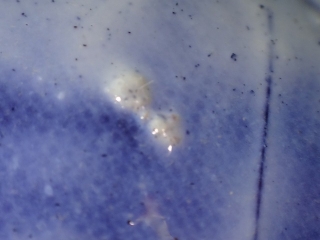
The fibers have gathered.
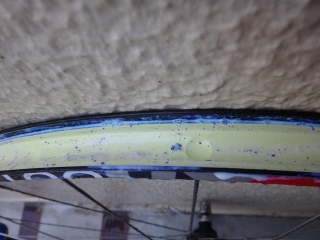
Since the tire's getting thrown out anyway, doesn't matter, but the important thing is this, the rim side.
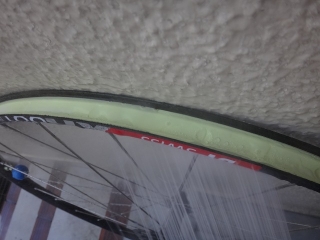
Shaaa~ (←onomatopoeia for shower)
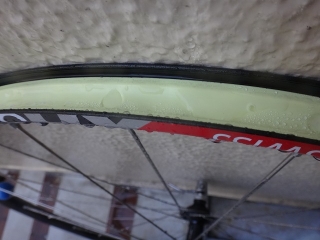
The rim side also cleaned up easily.
The fact that gummy sealant debris doesn't accumulate inside the rim hook, or if it does, doesn't become so firmly stuck that it can't be completely removed—that one point alone is reason enough to choose Imezi, personally speaking.

At one phase, sealant had hardened and accumulated continuously in the rim tape indentations.
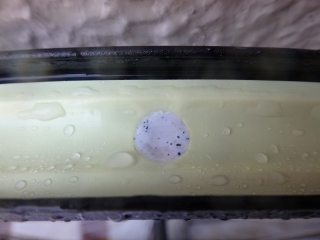
This didn't come off with just the shower, so
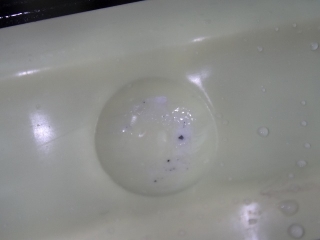
I lightly scratched it with my nail.
What I was worried about is that on XR331 rims, the end face of the Squorx nipple and the rim tape are extremely close, and when the rim tape depresses due to air pressure, the nipple can poke the tape and create a hole.
To prevent that, when combining XR331 with Stans tape, double-wrapping is mandatory.
This didn't happen this time.
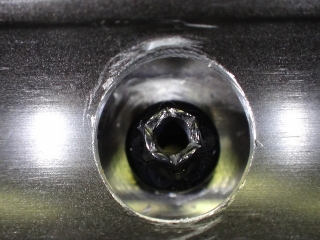
↑This is an image from a previous article, but it's a WTB rim, not an XR331 rim, with lower rim height than the XR331.
I wouldn't build this rim with Squorx nipples, but I set it up for photography, wrapped the tape once, and then pressed the rim hole hard with the pad of my finger, and it became
↑This.
A verification that Squorx nipples can poke through rim tape and create holes.
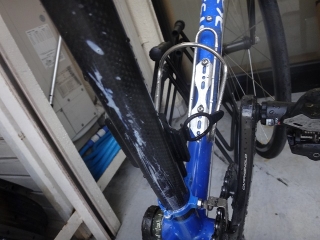
The sealant that splattered and hardened,
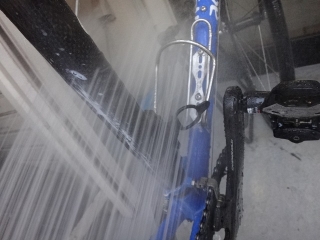
couldn't be removed with just the shower, so

>
I did a regular wash on that part.
You might notice metal shavings caught in the brake pads and think it's a pain to deal with, so you just leave it (recently people might say, "I have disc brakes so that doesn't happen to me"), but you should rinse off this splattered sealant right away.
Hardened Stans or Cafe Latex becomes really hard to remove if you leave it alone.
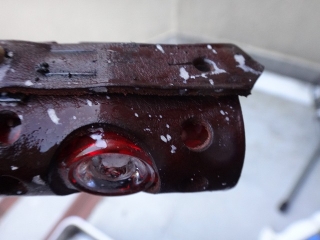
The leather case and light from before, once wet with water, made the sealant much more visible.
Imezi's sealant gets periodic sales calls, so when they call, if we don't have stock, we order it over the phone.
Thinking back to the phone call where the sealant was first recommended to me, even if I can't bite through the phone, I'm impressed by the courage of anyone who would try to make a sales pitch to a mad dog like this.
Recently it's been selling well and the pace has picked up, so we ran out of stock before the call came in.
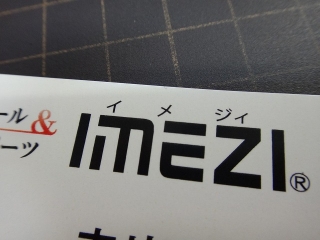
Only opened bottles for workshop use remain at our shop, and I pulled out a business card to call and order, but today I realized that IMEZI is read as イメジィ (Imezi), not イメジ (Imeji).
Abababbaababbababbaabaaa
When I called to place the order, I asked the person on the other end, "I've been calling it Imeji, but is Imezi actually the correct reading?" and they said, "Imeji is fine!" so today's work didn't turn into a complete correction of all past article references to Imeji.
The next tire is a Goodyear 25C, and instead of the high likelihood of a single 60ml application stopping the air leak, I went with 40ml plus monitoring progress.
In 6 hours it dropped from 7 bar to 5 bar, but since re-pressurizing to 7 bar it's barely dropped.
However, from this incident, I thought that maybe putting in around 60ml would improve the sealant's puncture-sealing performance and the air pressure limit where wounds don't open.
What I was running this morning was an IRC S-Lite 23C, an extremely light tire at just under 210g, so I wanted to skimp on the sealant weight, but the tire I switched to is just under 280g, so there's little point in being aggressive with sealant amount.
A customer (loosely speaking) who had a tubeless tire on some hookless rim brought their front wheel to us because no matter how many times they pumped air into it, it would deflate immediately.
The wheel had been sitting unused for over a month, the air had leaked out excessively, the tire bead lost its lift with a "poof," the sealant inside the tire was exposed to outside air, and without noticing this, they just kept it sitting there as a result...
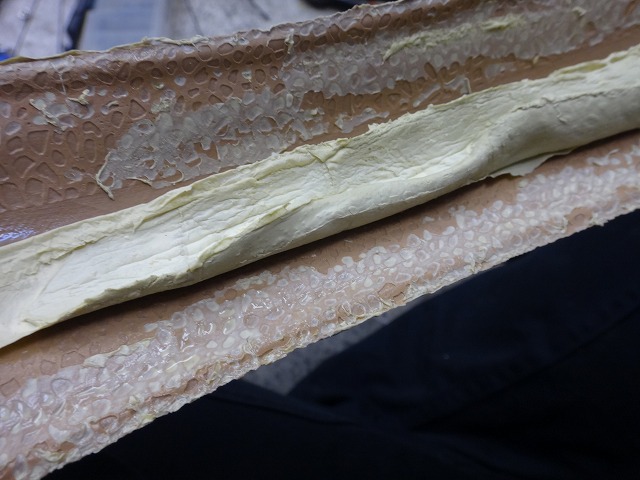
The sealant had hardened on the part of the tire that was facing the ground while it was sitting.
By the way, the sealant is Imezi's Cafe Latex.
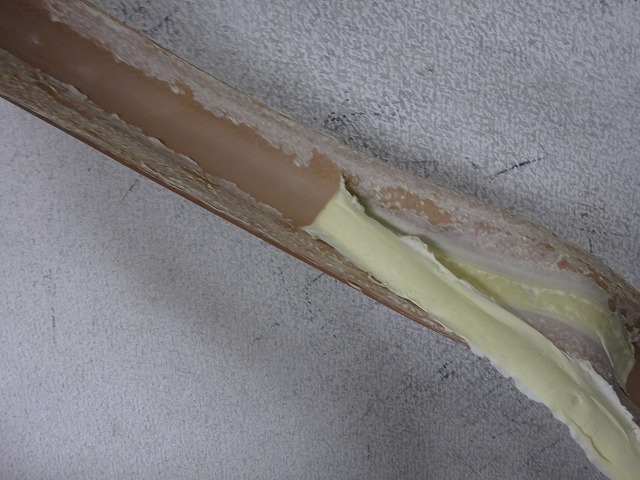
The tire is a Goodyear with an amber-colored sidewall, but not just the sidewall—the inside carcass is also amber-colored, and the surface had a slippery texture that made it hard for the sealant to grip, so
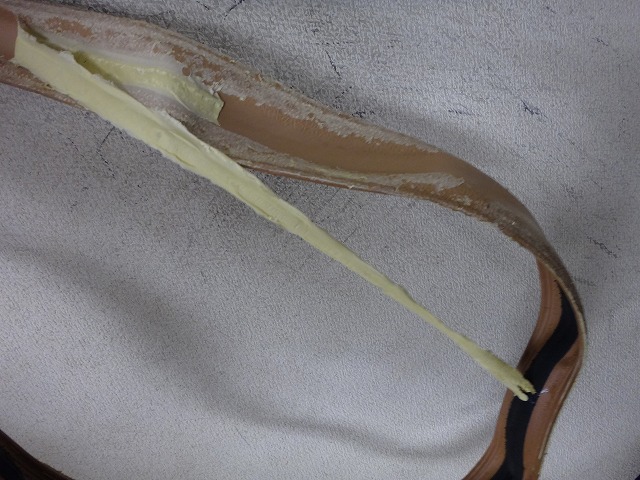
I was able to peel off the sealant that had formed like yuba (tofu skin) cleanly.

↑This one
This edge part,
When flipped over, it has a nice round hole, but

This is the mark from the base of the tubeless valve.
Today, it punctured on my commute.
While riding, suddenly there was a "pssshhh pssshhh pssshhh!" sound and air leaked out violently, but it didn't become completely flat—instead it turned into a slow leak at very low pressure.
After that, I got up onto the sidewalk and topped up the air with an inflator, rode a bit further, and the pressure dropped so much it was about to rim strike, so I thought about switching to a tubed tire, but I topped up the air one more time, and this time the slow leak pace became even slower than before, so I was able to ride to the shop.
On the second pumping, I think sealant fibers gathered at the puncture hole more than the first time.
↑The puncture location

This is different from the spot where I applied a patch from inside a while ago when it punctured.
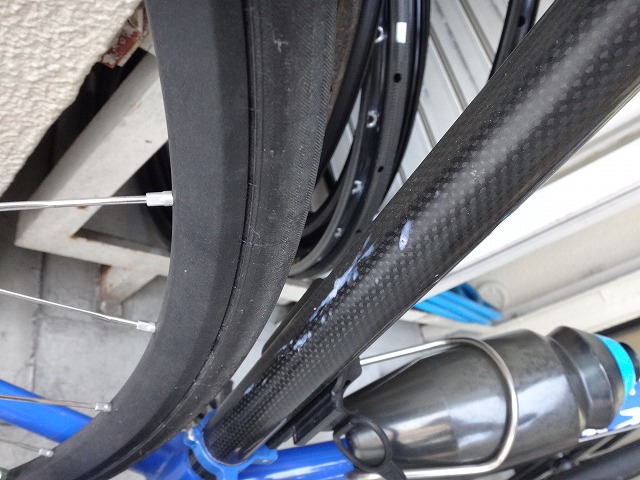
When the puncture was fresh at high pressure and making that pssshhh sound, the sealant was spattering like flames shooting out from Gamera's leg holes during flight, and it was
scattered on the seat tube and
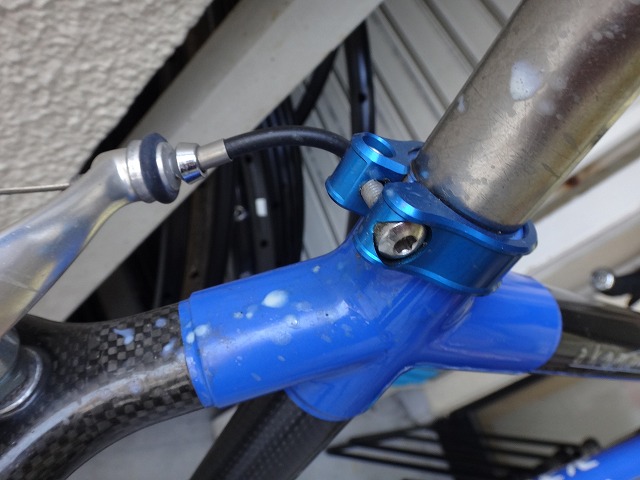
the back of the seatpost.
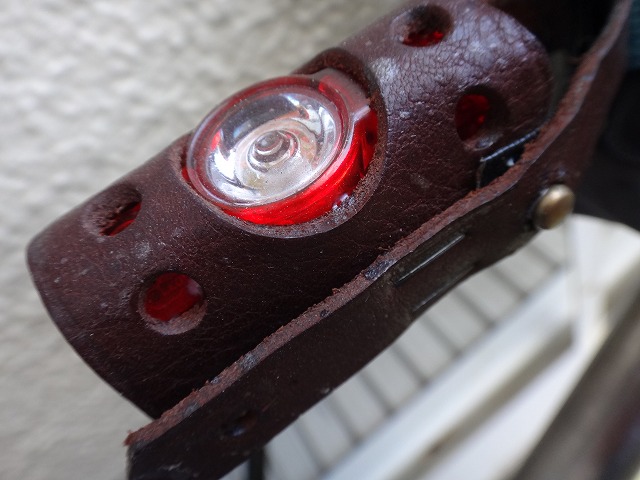
It also splattered on the Cat Eye taillight in a leather case hanging from the bag I have hanging off the back of the saddle.
At this point it's hard to see visually, but it's stained.
Going off on a tangent, in brevets (with slight variations depending on the organizer), there's a rule that you have to use the taillight in constant-on mode.
As for why flashing is not allowed, from what I've heard, it's because the flashing has a mesmerizing effect on people behind you (including cars), but this leather case taillight, even though it's set to constant-on, has a red light that wobbles so much without being fixed that if you used it in a brevet, you might get yelled at.
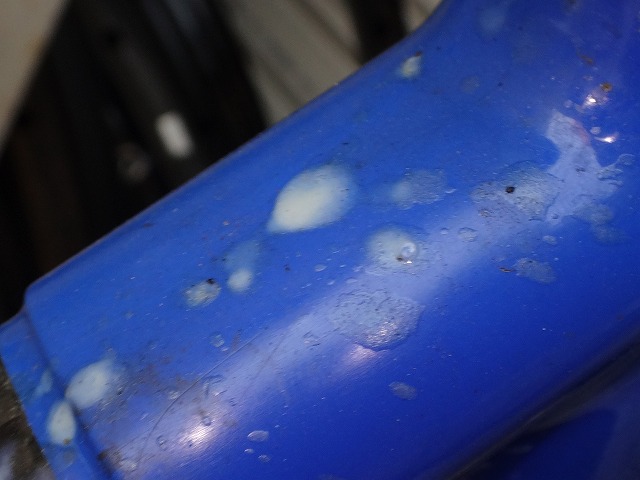
Even Imezi's sealant will harden when exposed to outside air.
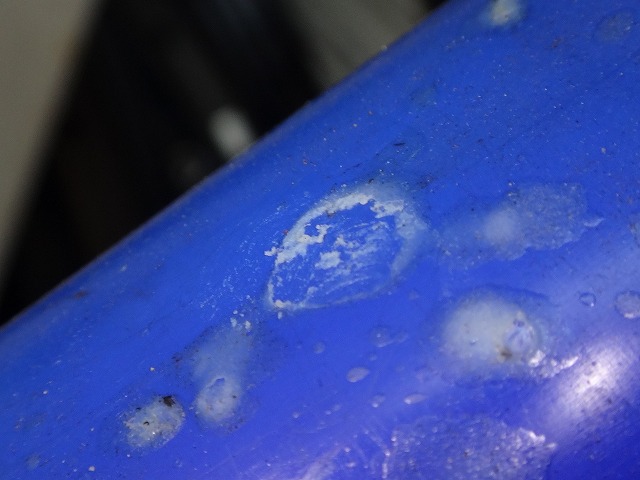
When I rubbed the clump with my finger, sealant with an okara-like texture came off with a pop.
Once before, I had Stans sealant stuck to the back of the seat tube as a transparent lump, and at first I didn't know what it was.
Because some time had passed, cleaning that off was a real hassle.

Before doing the usual "it comes off without rubbing" thing.
When a tubeless tire punctures on the road, if your destination is close, you might ride with the slow leak without switching to a tubed tire, but if you top up the air during that with a CO2 cartridge, you instantly exceed the "air pressure that the sealant can seal with," the puncture hole expands, and violent air leakage starts.
If you repeat this, the sealant inside the tire decreases, so the air pressure the sealant can seal also goes down.
As a good opportunity, I slowly pumped pressure with a floor pump to check what air pressure the wound opens at.
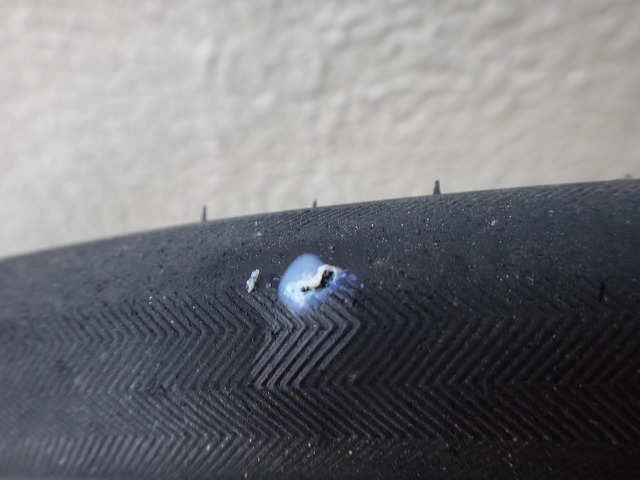
At around 3.5 bar the wound opened and a "fsshhh" sound leaked from the hole.
You could tell the air was hitting the camera I was using for close-up shots.
This is with the puncture hole pointing straight up as I'm pressurizing, but if I pointed it straight down and the wound opened, then shook the wheel, there's a possibility it would seal even above 3.5 bar.
Also, it depends on conditions like hole size and tread thickness, so it's not set in stone that "Imezi's sealant's limit for sealing wounds is 3.5 bar."
Imezi's sealant doesn't have particularly high performance at sealing puncture holes, to be honest.
In fact, I've taken out rides where I completely sealed a puncture hole with Stans sealant and pumped in 7 bar, treating it as a full "repair," and ridden that way.
So why do I use Imezi's sealant?

Like I always write,

you can just spray water on it and
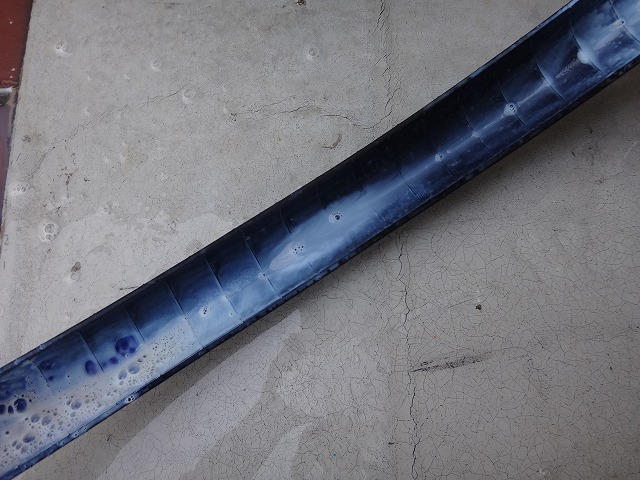
cleanly remove the sealant.
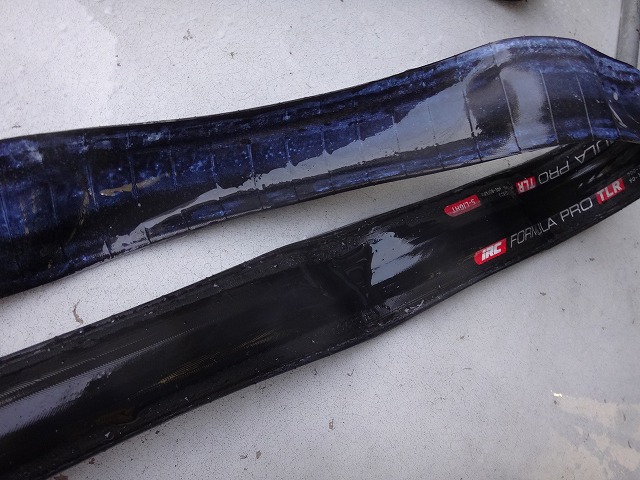
Inside the tire, I haven't rubbed it at all with my fingers or a sponge.
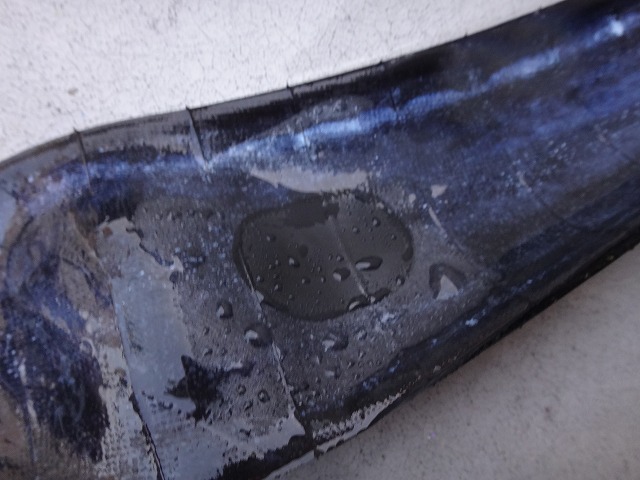
↑The repair patch location from a while back
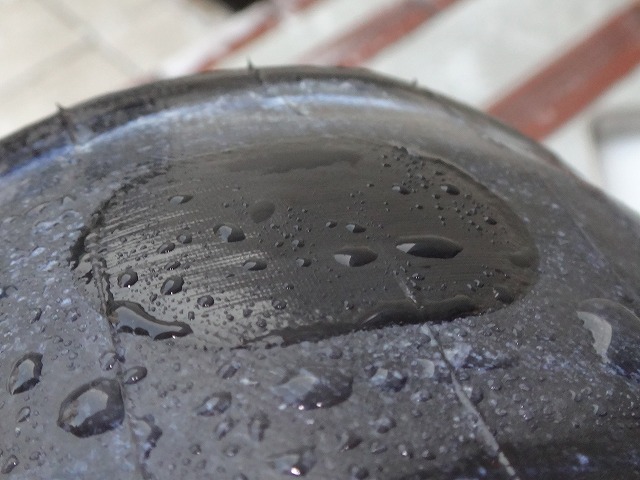
It has almost no thickness and hasn't peeled off.
Since the tread is also worn this time, I'm not going to half-ass it and will just replace the tire.

Going back in the timeline, this is the state of the puncture location viewed from inside before rinsing it off.

The fibers have gathered.
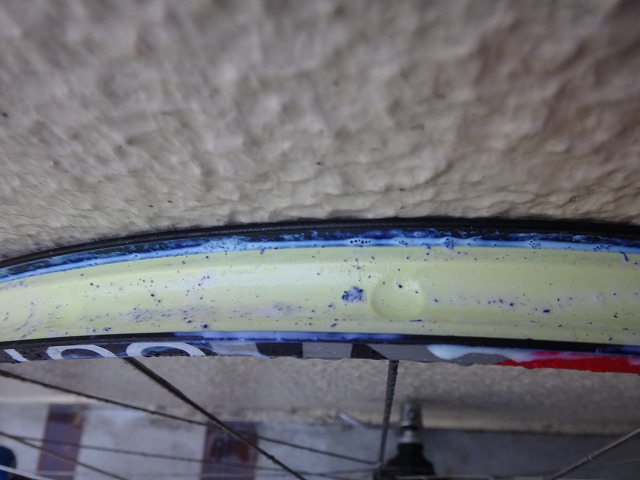
Since the tire's getting thrown out anyway, doesn't matter, but the important thing is this, the rim side.
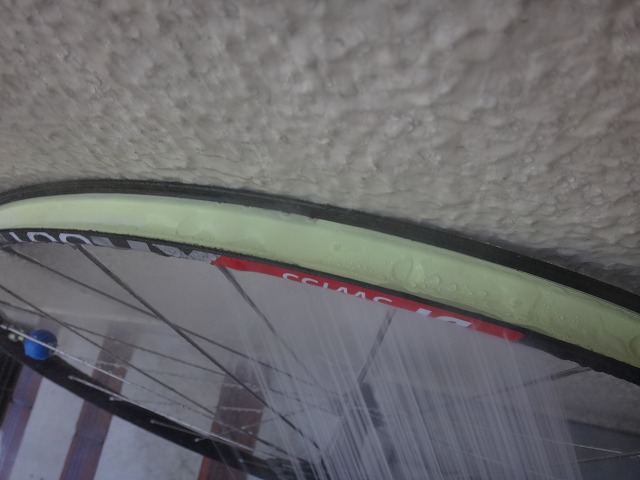
Shaaa~ (←onomatopoeia for shower)
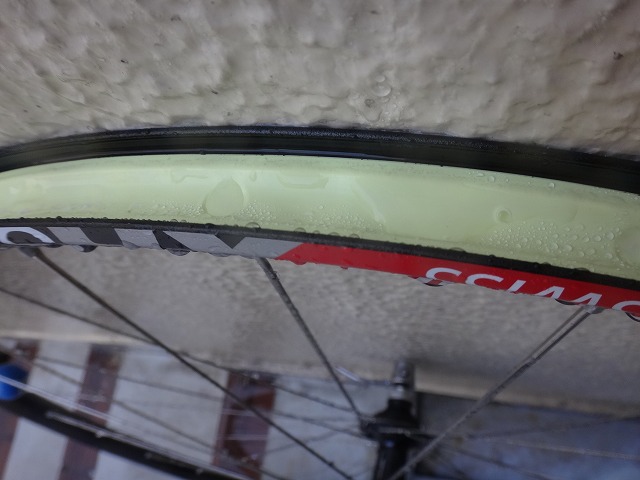
The rim side also cleaned up easily.
The fact that gummy sealant debris doesn't accumulate inside the rim hook, or if it does, doesn't become so firmly stuck that it can't be completely removed—that one point alone is reason enough to choose Imezi, personally speaking.
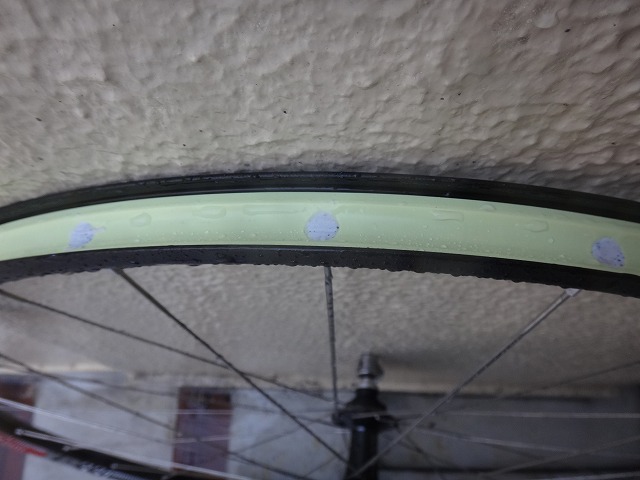
At one phase, sealant had hardened and accumulated continuously in the rim tape indentations.
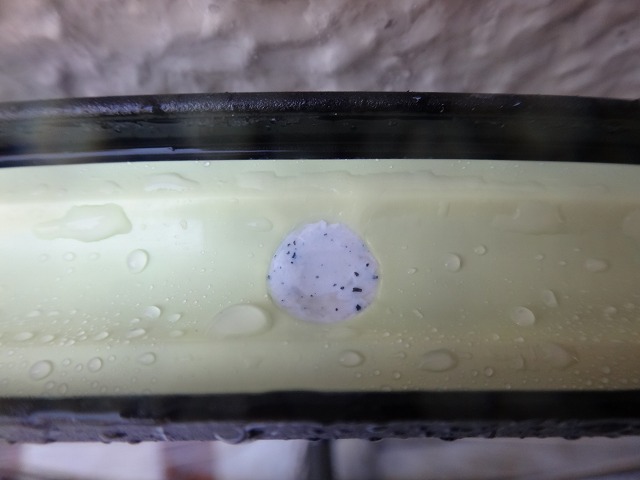
This didn't come off with just the shower, so
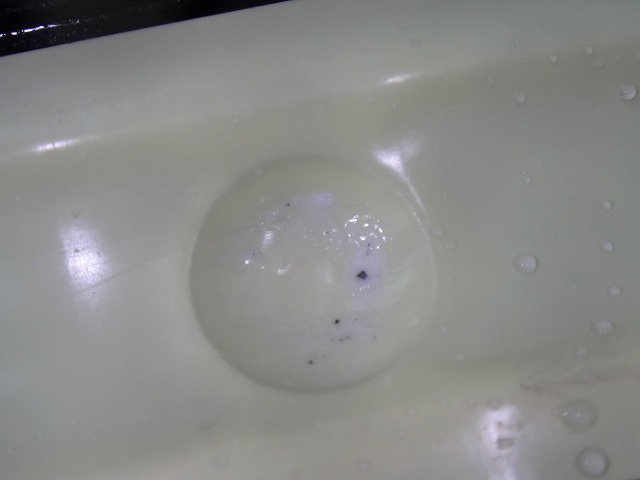
I lightly scratched it with my nail.
What I was worried about is that on XR331 rims, the end face of the Squorx nipple and the rim tape are extremely close, and when the rim tape depresses due to air pressure, the nipple can poke the tape and create a hole.
To prevent that, when combining XR331 with Stans tape, double-wrapping is mandatory.
This didn't happen this time.
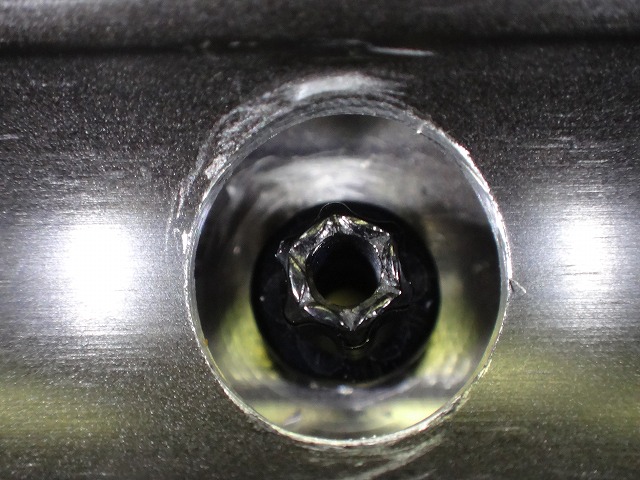
↑This is an image from a previous article, but it's a WTB rim, not an XR331 rim, with lower rim height than the XR331.
I wouldn't build this rim with Squorx nipples, but I set it up for photography, wrapped the tape once, and then pressed the rim hole hard with the pad of my finger, and it became

↑This.
A verification that Squorx nipples can poke through rim tape and create holes.
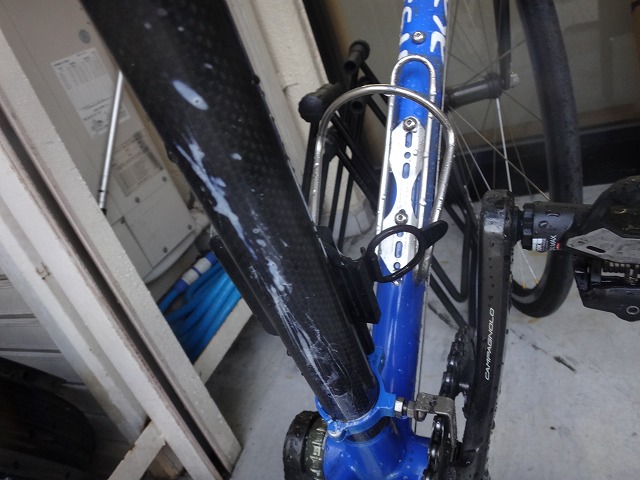
The sealant that splattered and hardened,
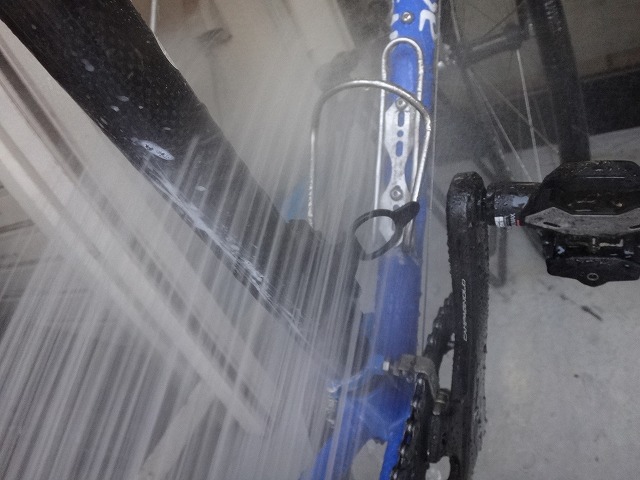
couldn't be removed with just the shower, so

>
I did a regular wash on that part.
You might notice metal shavings caught in the brake pads and think it's a pain to deal with, so you just leave it (recently people might say, "I have disc brakes so that doesn't happen to me"), but you should rinse off this splattered sealant right away.
Hardened Stans or Cafe Latex becomes really hard to remove if you leave it alone.
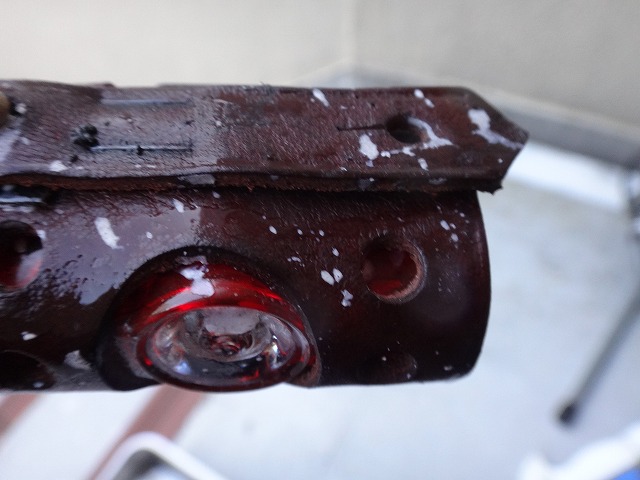
The leather case and light from before, once wet with water, made the sealant much more visible.

Imezi's sealant gets periodic sales calls, so when they call, if we don't have stock, we order it over the phone.
Recently it's been selling well and the pace has picked up, so we ran out of stock before the call came in.
Only opened bottles for workshop use remain at our shop, and I pulled out a business card to call and order, but today I realized that IMEZI is read as イメジィ (Imezi), not イメジ (Imeji).
Abababbaababbababbaabaaa
When I called to place the order, I asked the person on the other end, "I've been calling it Imeji, but is Imezi actually the correct reading?" and they said, "Imeji is fine!" so today's work didn't turn into a complete correction of all past article references to Imeji.
The next tire is a Goodyear 25C, and instead of the high likelihood of a single 60ml application stopping the air leak, I went with 40ml plus monitoring progress.
In 6 hours it dropped from 7 bar to 5 bar, but since re-pressurizing to 7 bar it's barely dropped.
However, from this incident, I thought that maybe putting in around 60ml would improve the sealant's puncture-sealing performance and the air pressure limit where wounds don't open.
What I was running this morning was an IRC S-Lite 23C, an extremely light tire at just under 210g, so I wanted to skimp on the sealant weight, but the tire I switched to is just under 280g, so there's little point in being aggressive with sealant amount.