Another day with wheels (abbreviation omitted hereon).
A customer brought in the rear wheel of a Nomu Lab Wheel No. 5 for me to work on.
I won't go into the details of its condition here,
but the hub was completely destroyed, so I'm applying an undocumented warranty
and rebuilding it free of charge.
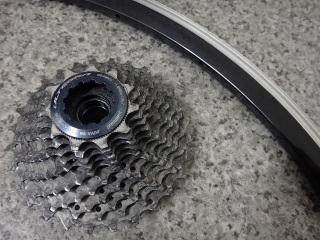
In the photo above, I've already disassembled the wheel.
The decision to repair it for free wasn't the customer's request—
it was my call from the start. The rear wheel in question (before disassembly)
had its rim bent into a chip-like shape from a pretty severe accident a while back
that crumpled the frame, so I had rebuilt it with a rim relocation.
Because of that, the customer said to me,
"If the previous accident was the cause or contributing factor to this hub failure,
shouldn't the repair be chargeable?"
But since I can't prove a causal relationship with the accident, I can't charge for it.
If the situation were reversed—if the customer had asked me to fix it for free
and I'd said "Didn't the impact from the last accident break the hub?"—
then I would need to convince the customer
that there's a causal relationship between the accident and the hub failure.
So I tell the customer something like: "If you really want me to make this chargeable,
then prove to me that the hub was damaged after the accident!
If you can't, well, I'm afraid it has to be free! Give it up!"
↑ I realize this is backwards compared to typical shop transactions—
the chargeable and free parts are swapped—
but don't worry about it.
It's not like I'm getting nothing out of this.
I get to keep the broken hub for my own education.
So when I carefully disassembled the wheel,
the rim wasn't bent, so I decided to reuse it.
I'm also inheriting the freewheel body with sprockets.
That's what you see in the photo above.
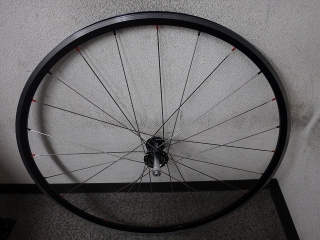
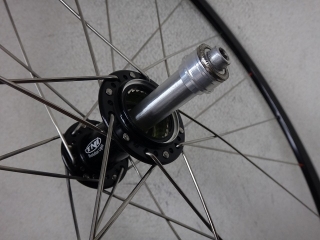
I assembled the rear hub without the freewheel body
to the point where I'd dialed out all radial and lateral runout.
The right end has its threads further inward compared to the actual state
when the freewheel body is installed,
so I shouldn't center it at this point.
It's better to have it offset toward the freewheel side.
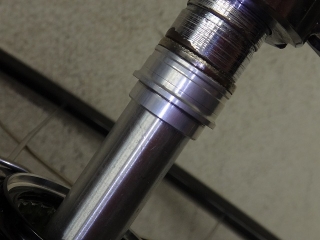

But it came out pretty much centered.
Oh man, that's definitely double work ahead.

The photo didn't come out perfectly, but
less than one sheet of paper's worth—the rim is offset to the anti-freewheel side.
Depending on centering gauge precision, or rather,
most centering gauges wouldn't catch this.
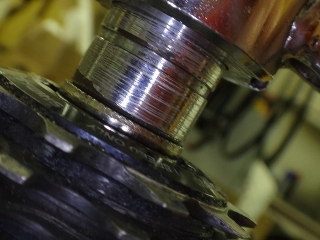
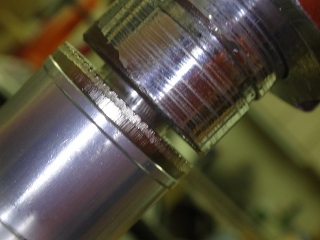
Once I installed the freewheel body, it went way out of center.
The tension on the freewheel side is nearly at fully built-up state,
so I had to dial in the center by loosening the anti-freewheel side.
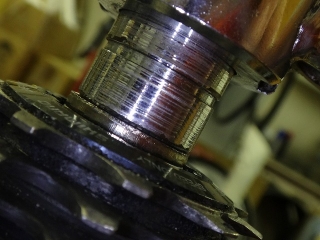

Got it centered,
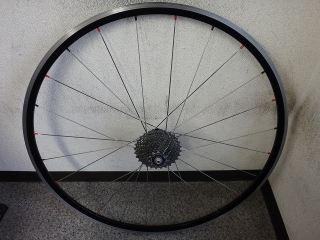
and finished building it.
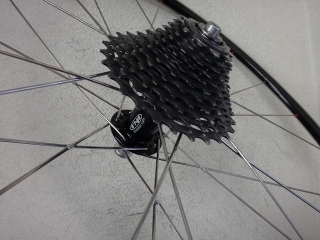
An Evolite hub, 24-hole, half-comp lacing, four-cross pattern with spoke connections,
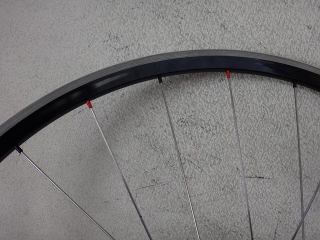
and the nipples are alternating black and red at the customer's request.
The wheel before disassembly also had black and red nipples,
but the pattern is different from this one.
A customer brought in the rear wheel of a Nomu Lab Wheel No. 5 for me to work on.
I won't go into the details of its condition here,
but the hub was completely destroyed, so I'm applying an undocumented warranty
and rebuilding it free of charge.
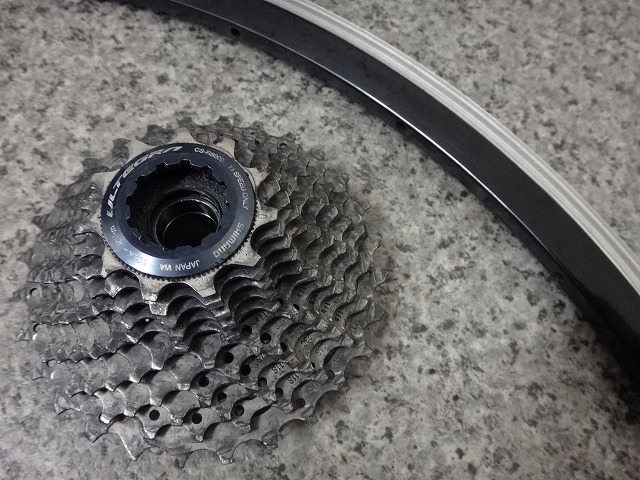
In the photo above, I've already disassembled the wheel.
The decision to repair it for free wasn't the customer's request—
it was my call from the start. The rear wheel in question (before disassembly)
had its rim bent into a chip-like shape from a pretty severe accident a while back
that crumpled the frame, so I had rebuilt it with a rim relocation.
Because of that, the customer said to me,
"If the previous accident was the cause or contributing factor to this hub failure,
shouldn't the repair be chargeable?"
But since I can't prove a causal relationship with the accident, I can't charge for it.
If the situation were reversed—if the customer had asked me to fix it for free
and I'd said "Didn't the impact from the last accident break the hub?"—
then I would need to convince the customer
that there's a causal relationship between the accident and the hub failure.
So I tell the customer something like: "If you really want me to make this chargeable,
then prove to me that the hub was damaged after the accident!
If you can't, well, I'm afraid it has to be free! Give it up!"
↑ I realize this is backwards compared to typical shop transactions—
the chargeable and free parts are swapped—
but don't worry about it.
It's not like I'm getting nothing out of this.
I get to keep the broken hub for my own education.
So when I carefully disassembled the wheel,
the rim wasn't bent, so I decided to reuse it.
I'm also inheriting the freewheel body with sprockets.
That's what you see in the photo above.
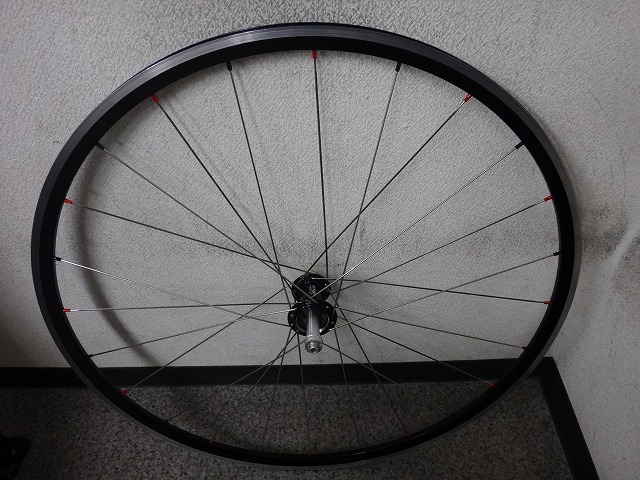
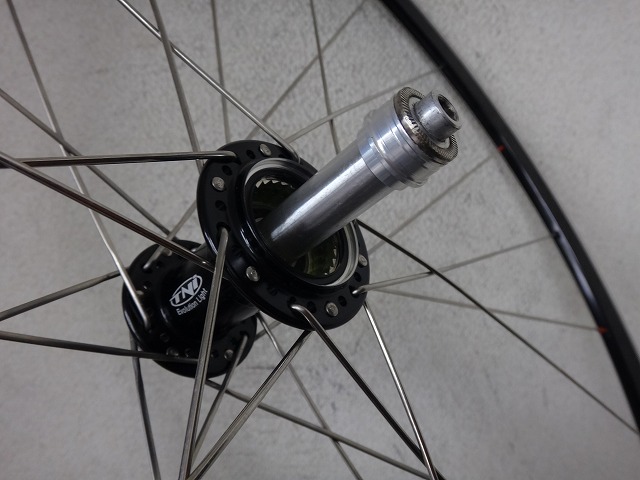
I assembled the rear hub without the freewheel body
to the point where I'd dialed out all radial and lateral runout.
The right end has its threads further inward compared to the actual state
when the freewheel body is installed,
so I shouldn't center it at this point.
It's better to have it offset toward the freewheel side.
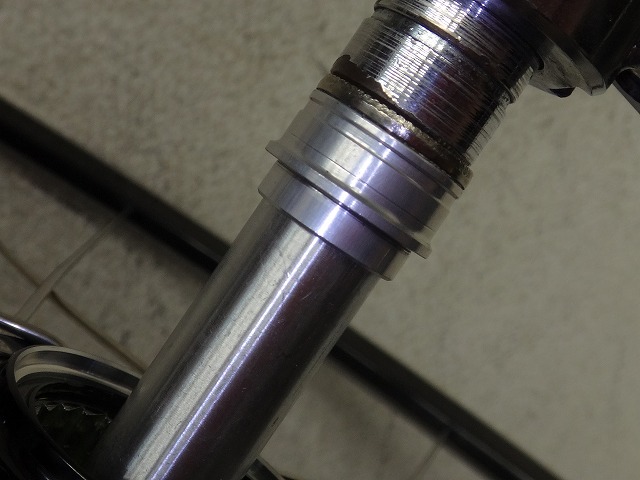
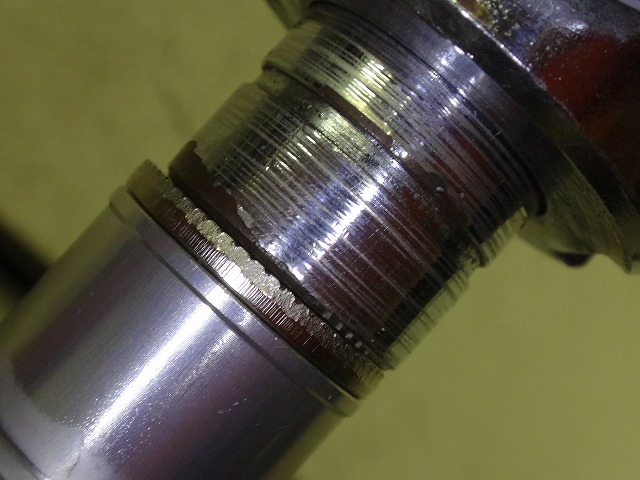
But it came out pretty much centered.
Oh man, that's definitely double work ahead.
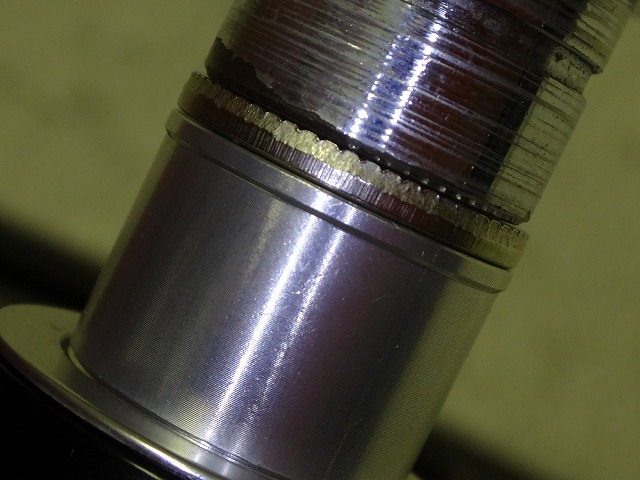
The photo didn't come out perfectly, but
less than one sheet of paper's worth—the rim is offset to the anti-freewheel side.
Depending on centering gauge precision, or rather,
most centering gauges wouldn't catch this.
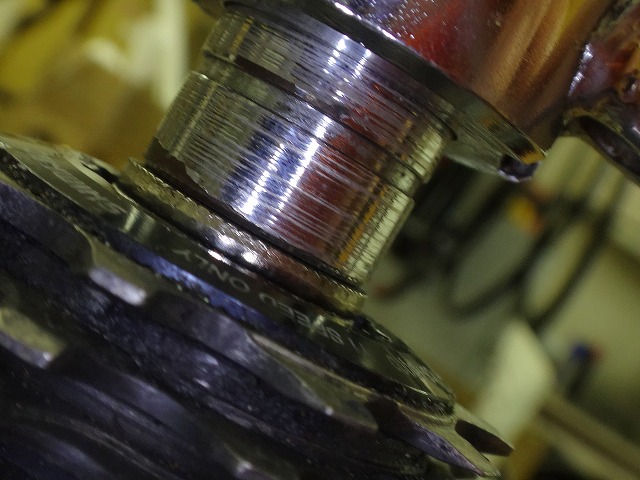
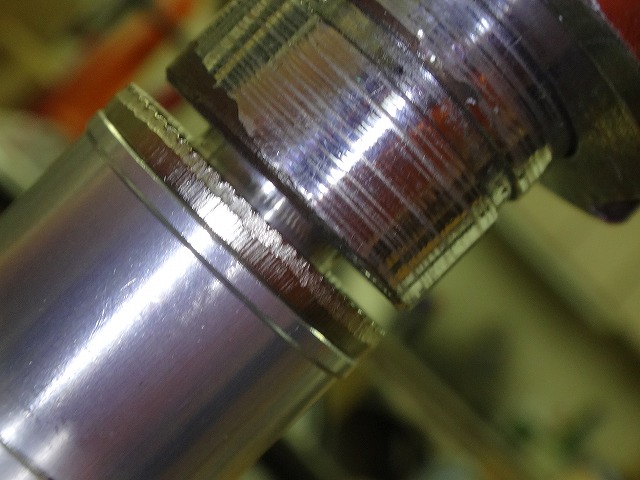
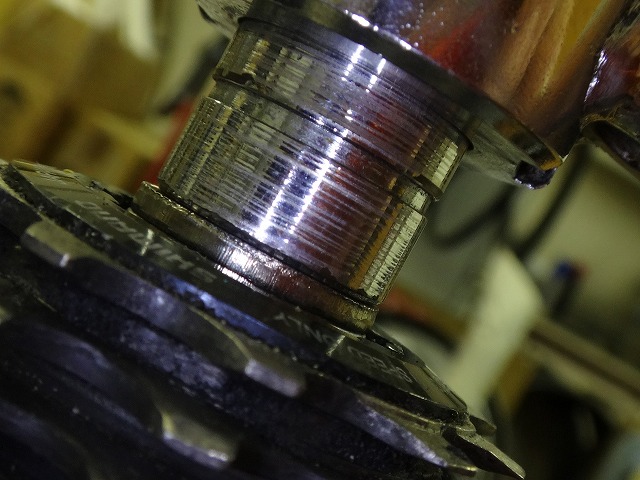
Once I installed the freewheel body, it went way out of center.
The tension on the freewheel side is nearly at fully built-up state,
so I had to dial in the center by loosening the anti-freewheel side.

Got it centered,
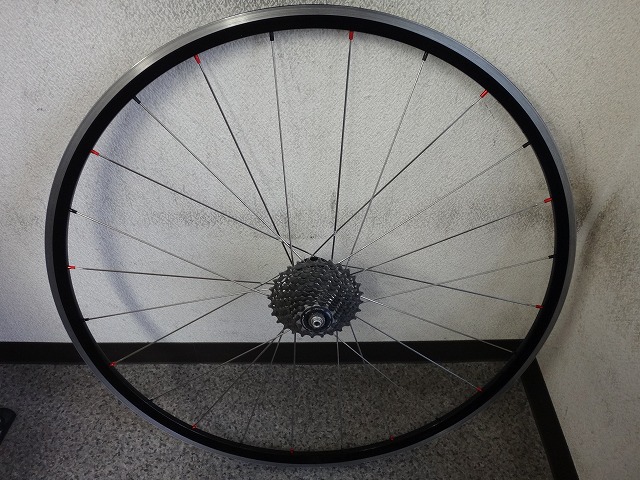
and finished building it.
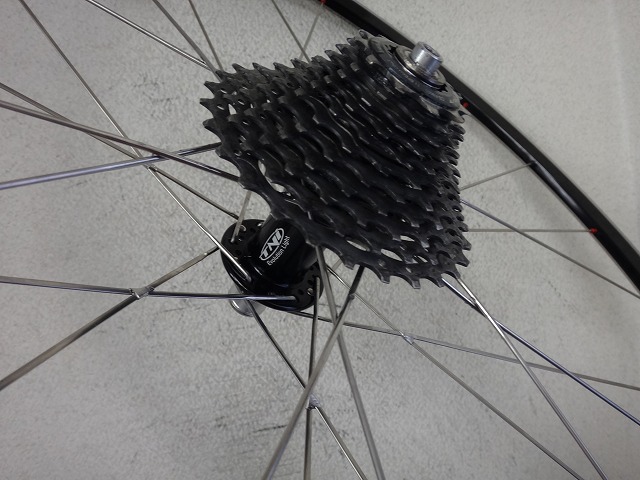
An Evolite hub, 24-hole, half-comp lacing, four-cross pattern with spoke connections,
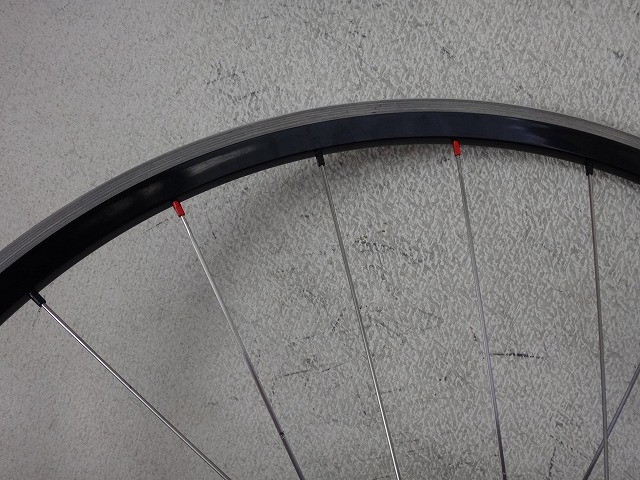
and the nipples are alternating black and red at the customer's request.
The wheel before disassembly also had black and red nipples,
but the pattern is different from this one.