Another day of wheel building (details omitted).
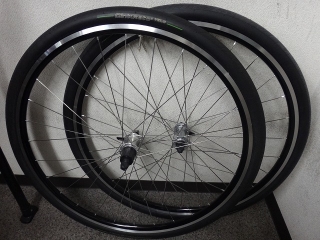
Continuing from yesterday.
I built the rear wheel using a Shimano RS hub.
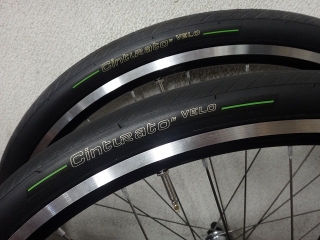
A customer saw yesterday's post and brought in a tire,
so I'm installing it now.

FH-RS300 28H semi-competition four-cross lacing with spoke loop connection.
The RS300 rear hub is for 8, 9, and 10-speed (not compatible with 11-speed),
but unlike the 11-speed RS400, the overall flange width is 1mm wider.
Looking at Shimano's catalog, the relationship between flange width and offset is:
FH-RS400: flange width 56.9mm, offset 9.75mm
FH-RS300: flange width 57.9mm, offset 8.4mm
Why make us calculate the left and right flange widths separately?
I feel like saying they should just list the numbers directly like they used to,
but calculating the left flange width:
FH-RS400 is 56.9÷2+9.75 = 38.2mm,
FH-RS300 is 57.9÷2+8.4 = 37.35mm.
The RS300 has a left flange width that's 0.85mm narrower,
but since the overall flange width is 1mm wider,
the right flange width is 1.85mm wider (which is actually the same as the difference between 10-speed and 11-speed sprocket widths)
compared to the RS400.
In other words, dish (ocho) is significantly reduced.
A 1mm change in left flange width (plus or minus)
isn't that big a difference,
but a 1mm difference in right flange width is extremely significant.
And in this case it's a 1.85mm difference.
You can actually feel this difference when you're building the wheel.
The RS400 hub and above, even up to Dura-Ace hubs,
use a slight high-low flange with flange hole diameters of 45/44mm,
whereas the RS300 hub uses equal 45mm left and right flanges,
so by that measure alone the RS400 would be superior,
but the difference in overall flange width and dish amount
has a far greater impact on the wheel
than that consideration does.
While Dura-Ace-grade hubs ended with the 9000 series,
in terms of dimensions alone, the FH-RS300 is actually superior to the FH-9000.
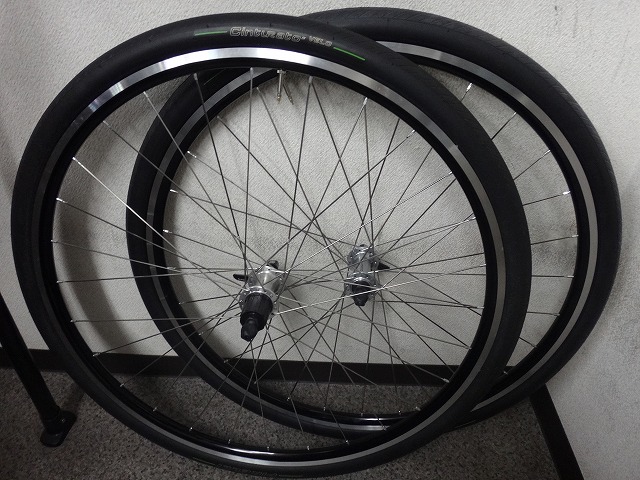
Continuing from yesterday.
I built the rear wheel using a Shimano RS hub.
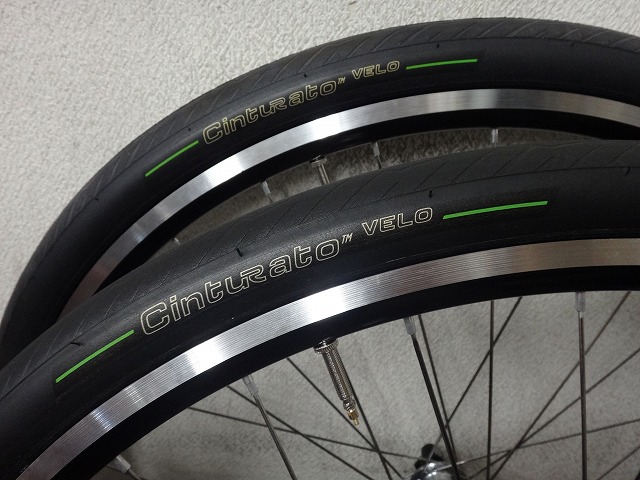
A customer saw yesterday's post and brought in a tire,
so I'm installing it now.
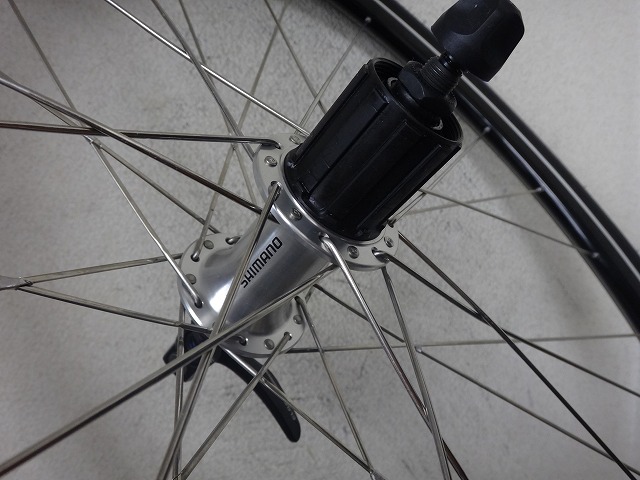
FH-RS300 28H semi-competition four-cross lacing with spoke loop connection.
The RS300 rear hub is for 8, 9, and 10-speed (not compatible with 11-speed),
but unlike the 11-speed RS400, the overall flange width is 1mm wider.
Looking at Shimano's catalog, the relationship between flange width and offset is:
FH-RS400: flange width 56.9mm, offset 9.75mm
FH-RS300: flange width 57.9mm, offset 8.4mm
Why make us calculate the left and right flange widths separately?
I feel like saying they should just list the numbers directly like they used to,
but calculating the left flange width:
FH-RS400 is 56.9÷2+9.75 = 38.2mm,
FH-RS300 is 57.9÷2+8.4 = 37.35mm.
The RS300 has a left flange width that's 0.85mm narrower,
but since the overall flange width is 1mm wider,
the right flange width is 1.85mm wider (which is actually the same as the difference between 10-speed and 11-speed sprocket widths)
compared to the RS400.
In other words, dish (ocho) is significantly reduced.
A 1mm change in left flange width (plus or minus)
isn't that big a difference,
but a 1mm difference in right flange width is extremely significant.
And in this case it's a 1.85mm difference.
You can actually feel this difference when you're building the wheel.
The RS400 hub and above, even up to Dura-Ace hubs,
use a slight high-low flange with flange hole diameters of 45/44mm,
whereas the RS300 hub uses equal 45mm left and right flanges,
so by that measure alone the RS400 would be superior,
but the difference in overall flange width and dish amount
has a far greater impact on the wheel
than that consideration does.
While Dura-Ace-grade hubs ended with the 9000 series,
in terms of dimensions alone, the FH-RS300 is actually superior to the FH-9000.