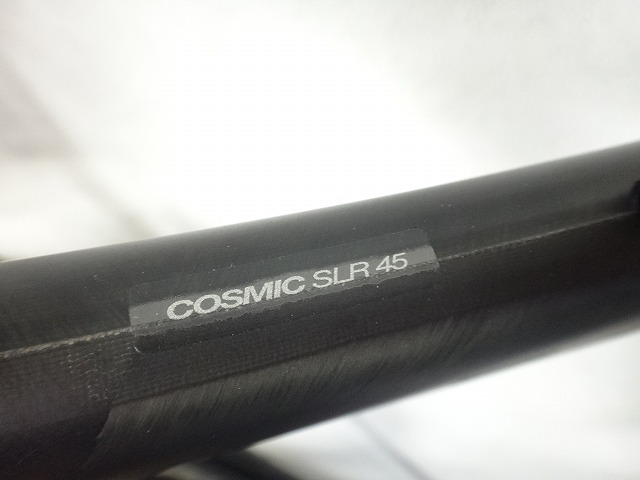
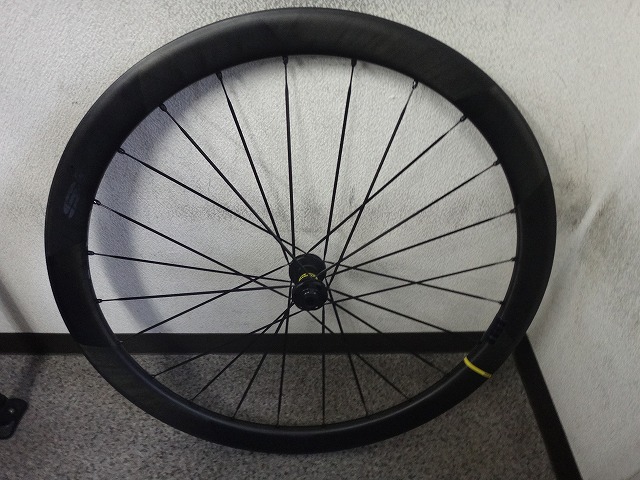
A customer brought in a Mavic (French wheel manufacturer) Cosmic SLR 45 for service.
↑Usually I don't include this in posts—
it's just a reference photo of the wheel name for my notes.
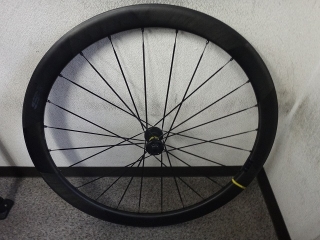
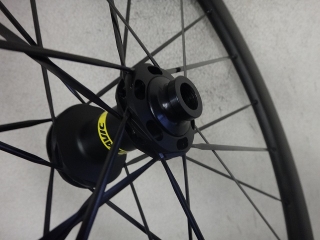
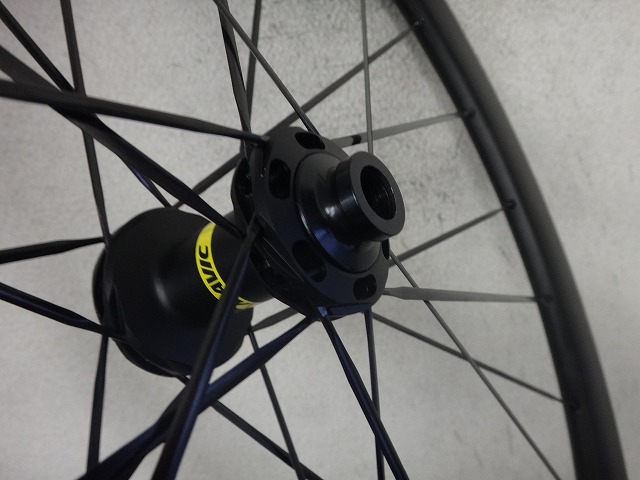
Starting with the front wheel.
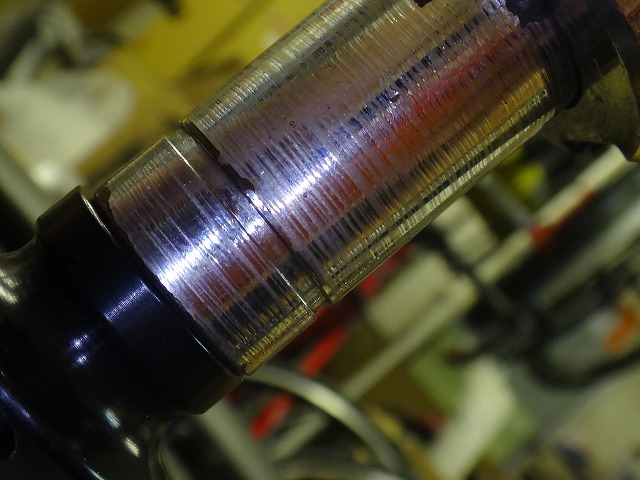
The rim is shifted toward the left side—the side with the disc rotor mount.
I could center it by evenly tightening the right-side spoke nipples,
but since this was a loose-tension specimen, I'd need to center it first
and then tighten all the nipples a bit more.
Instead, I decided to try pre-tightening all the necessary amount
on the left-side spoke nipples first—the side that would actually increase
the centering error.
The logic is: out of the three steps—
1: Tighten right side to center
2: Tighten left side to increase tension
3: Tighten right side to increase tension
—I'm doing step 2 completely first.

↑This is what happened.
In normal truing work, I check the temporary center like this
to avoid the situation where "the runout's fixed but the centering error got worse,
so now I've doubled my work."
From here I'll tighten one-sidedly on the right until it centers,
which corresponds to doing steps 1 and 3 simultaneously as I mentioned earlier.
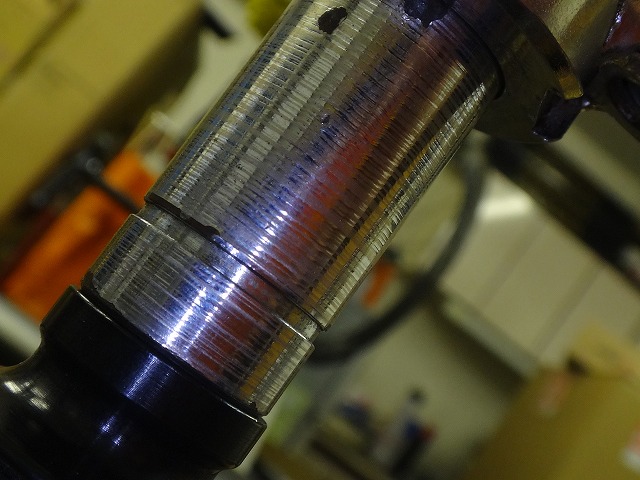
Center is good now.
I've also chased down any fine lateral runout that was there originally
plus any runout created by the centering process itself, just to be safe.

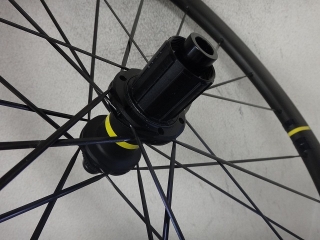
Next, the rear wheel.
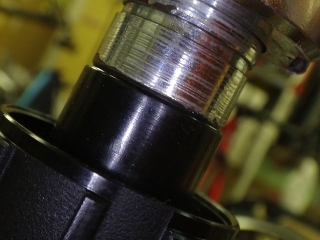
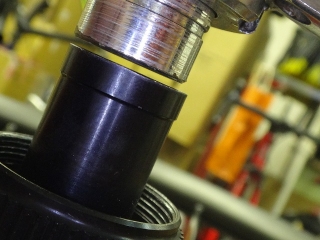
As usual, it's shifted toward the anti-freewheel side.
Mavic deliberately ships wheels off-center like this so the user can choose whether to adjust it
(statistically speaking, that's the only explanation),
but to adjust it properly you need a decent shop nearby that can handle wheels.
For this customer, the nearest shop that could do it
happened to be us—about 240 kilometers away.
The customer was especially bothered by how loose the rear wheel felt,
and that observation is accurate. This specimen is even looser than the front.
Just to be clear, I don't believe that spoke tension on a complete wheelset
gets better and better the more you tighten it.
I rarely loosen things intentionally, but in most cases I don't tighten
beyond what's needed for centering.
As a side note, it seems that after Mavic's company restructuring
and discontinuing aluminum-spoke wheels and R-SYS models,
their quality control—already loose to begin with—has gotten even sloppier,
and the variation in spoke tension between individual units has gotten wider.
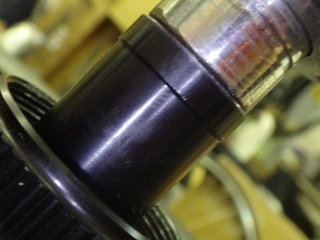
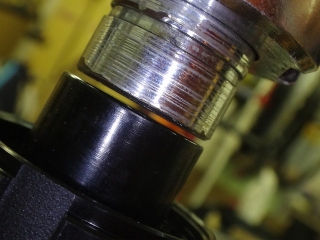
Opposite to the front wheel, I started tightening in the direction that reduces
centering error, but like the front wheel, I went ahead and tightened the amount needed
to raise tension after centering, which is why the rim's offset
reversed direction.
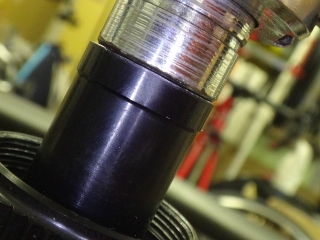
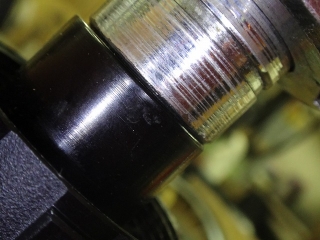
From that state, I achieved center by tightening the anti-freewheel side.

This wheel's rim is full carbon with Zicral spokes (Mavic's aluminum-alloy spoke)—
meaning there are no holes on the rim's outer edge except the valve hole.
Why is this good? Well, Mavic's brown Road UST tubeless tape
(see here)
has weak adhesion at its edge, and almost all used examples
have sealant seeping in from the tape's edge, losing adhesion
and peeling back.
On Mavic's Zicral-spoke aluminum rims, where the joints are welded,
rim tape isn't needed, but there's just a thin black tape on the rough
joint area to avoid puncturing the tube. However, on wheels with the Road UST tubeless tape,
that black tape becomes the curl-stop for the end of the tubeless tape itself,
and it gets mangled—shrinking left-to-right—from the tire bead movement.
Plus, whether with stock or aftermarket tubeless tires, if the tire is hard to remove
and someone scrapes the tape with a tire lever, the tape can partially peel
and get torn. With a rim-tape-free design, you don't deal with any of that.
And honestly, that Mavic tape has weak adhesion where the layers overlap,
but when you peel it off, the adhesive residue on the rim is terrible—
it doesn't come clean like Stans tape does.
↑Usually I don't include this in posts—
it's just a reference photo of the wheel name for my notes.
Starting with the front wheel.

The rim is shifted toward the left side—the side with the disc rotor mount.
I could center it by evenly tightening the right-side spoke nipples,
but since this was a loose-tension specimen, I'd need to center it first
and then tighten all the nipples a bit more.
Instead, I decided to try pre-tightening all the necessary amount
on the left-side spoke nipples first—the side that would actually increase
the centering error.
The logic is: out of the three steps—
1: Tighten right side to center
2: Tighten left side to increase tension
3: Tighten right side to increase tension
—I'm doing step 2 completely first.


↑This is what happened.
In normal truing work, I check the temporary center like this
to avoid the situation where "the runout's fixed but the centering error got worse,
so now I've doubled my work."
From here I'll tighten one-sidedly on the right until it centers,
which corresponds to doing steps 1 and 3 simultaneously as I mentioned earlier.
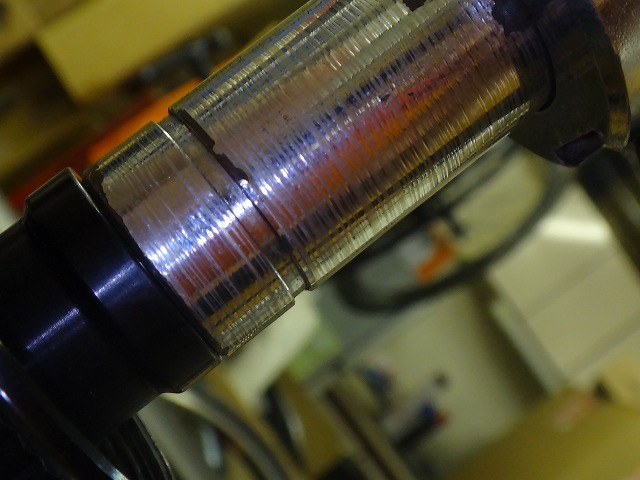
Center is good now.
I've also chased down any fine lateral runout that was there originally
plus any runout created by the centering process itself, just to be safe.
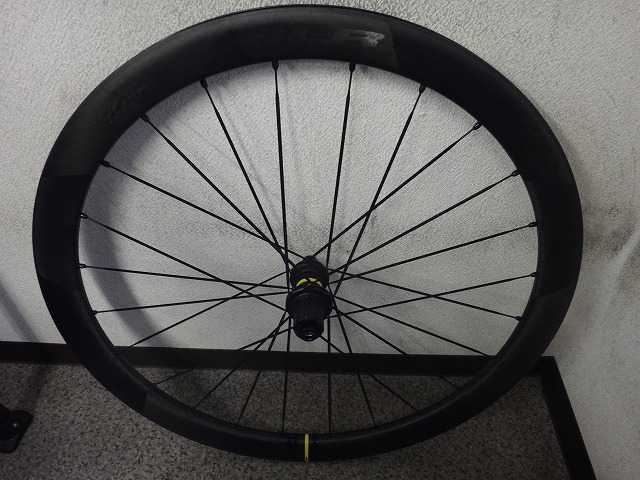

Next, the rear wheel.
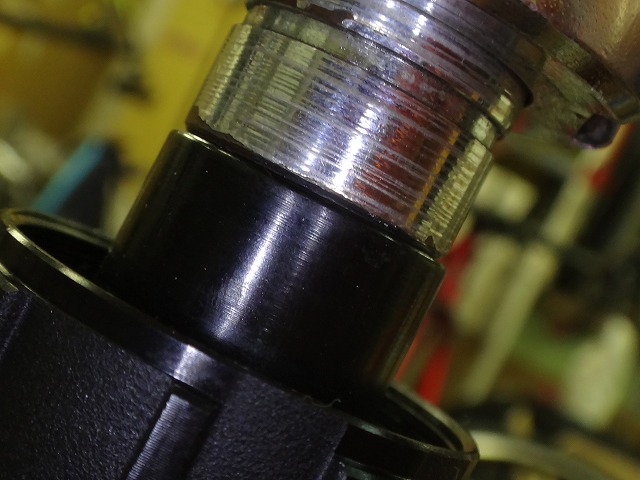
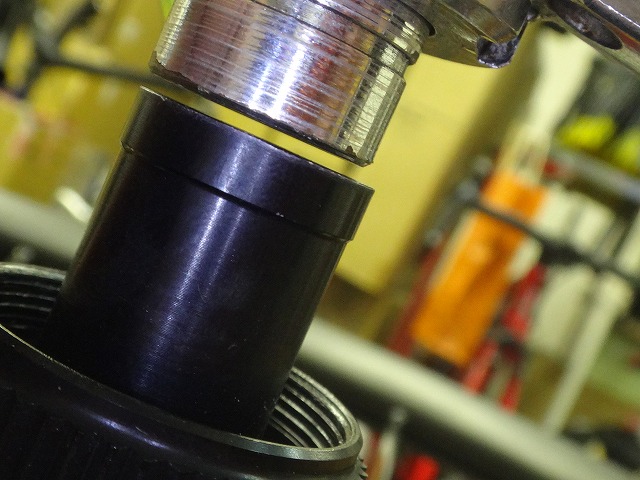
As usual, it's shifted toward the anti-freewheel side.
Mavic deliberately ships wheels off-center like this so the user can choose whether to adjust it
(statistically speaking, that's the only explanation),
but to adjust it properly you need a decent shop nearby that can handle wheels.
For this customer, the nearest shop that could do it
happened to be us—about 240 kilometers away.
The customer was especially bothered by how loose the rear wheel felt,
and that observation is accurate. This specimen is even looser than the front.
Just to be clear, I don't believe that spoke tension on a complete wheelset
gets better and better the more you tighten it.
I rarely loosen things intentionally, but in most cases I don't tighten
beyond what's needed for centering.
As a side note, it seems that after Mavic's company restructuring
and discontinuing aluminum-spoke wheels and R-SYS models,
their quality control—already loose to begin with—has gotten even sloppier,
and the variation in spoke tension between individual units has gotten wider.
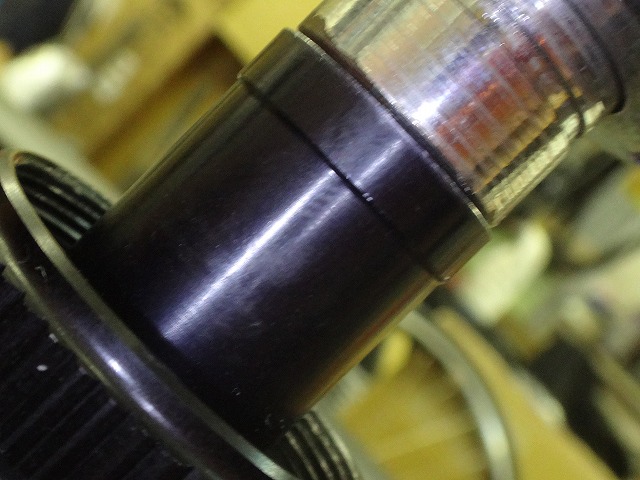
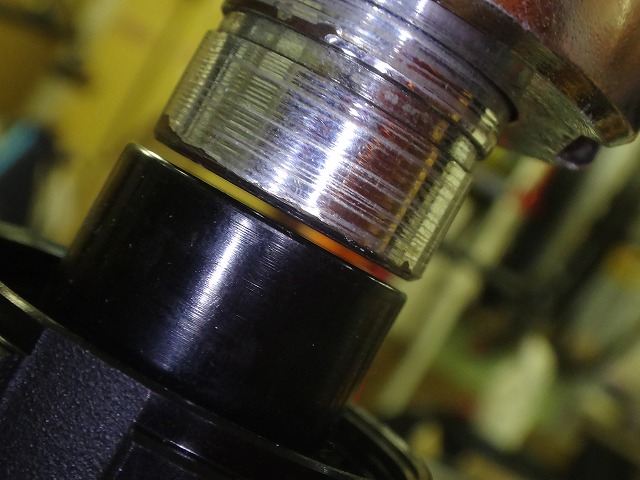
Opposite to the front wheel, I started tightening in the direction that reduces
centering error, but like the front wheel, I went ahead and tightened the amount needed
to raise tension after centering, which is why the rim's offset
reversed direction.

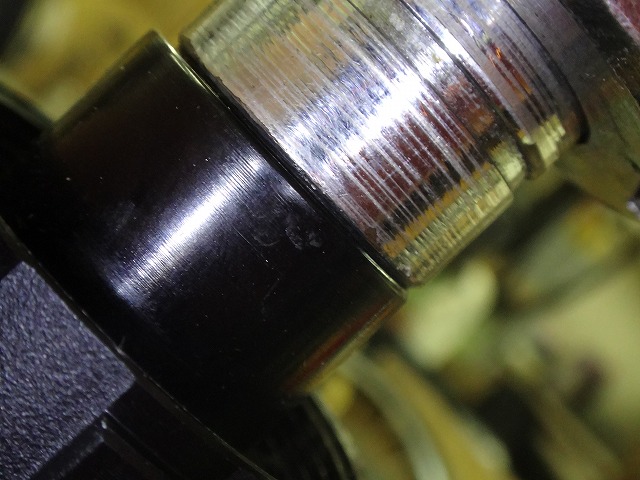
From that state, I achieved center by tightening the anti-freewheel side.

This wheel's rim is full carbon with Zicral spokes (Mavic's aluminum-alloy spoke)—
meaning there are no holes on the rim's outer edge except the valve hole.
Why is this good? Well, Mavic's brown Road UST tubeless tape
(see here)
has weak adhesion at its edge, and almost all used examples
have sealant seeping in from the tape's edge, losing adhesion
and peeling back.
On Mavic's Zicral-spoke aluminum rims, where the joints are welded,
rim tape isn't needed, but there's just a thin black tape on the rough
joint area to avoid puncturing the tube. However, on wheels with the Road UST tubeless tape,
that black tape becomes the curl-stop for the end of the tubeless tape itself,
and it gets mangled—shrinking left-to-right—from the tire bead movement.
Plus, whether with stock or aftermarket tubeless tires, if the tire is hard to remove
and someone scrapes the tape with a tire lever, the tape can partially peel
and get torn. With a rim-tape-free design, you don't deal with any of that.
And honestly, that Mavic tape has weak adhesion where the layers overlap,
but when you peel it off, the adhesive residue on the rim is terrible—
it doesn't come clean like Stans tape does.