I received the front wheel of a Bontrager Aeolus RSL 37 from a customer.
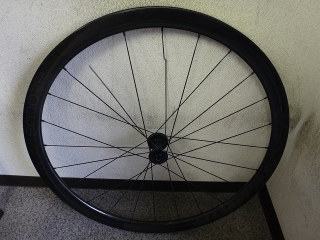
They made contact during the Niseko Classic race and broke some spokes.
This is completely unrelated, but I received Shiroi Koibito (a local Hokkaido white chocolate biscuit treat) from two separate customers who both participated in Niseko events.
The packaging was different—one was green and one was brown—but the brown one turned out to be Shiroi Koibito Black, which is a variant with a rather contradictory name.
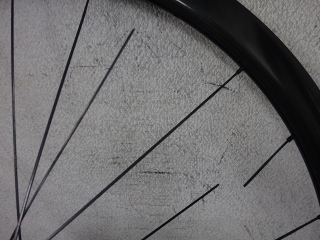
Two spokes are broken.
Apparently the wheel was still rideable, but they were concerned that the wheel might catastrophically fail in the group, causing damage to other riders around them, so they gently nursed it along and managed to cross the finish line.
Given today's bike prices, a pile-up involving the whole group could easily run into tens of millions of yen in damages on list price alone. Terrifying stuff.
It occurred to me—is there actually a Trek dealer out there that could repair this on the spot, and ideally to a standard equal to or better than mine?
But the fact that the customer brought it to my shop answers that question.
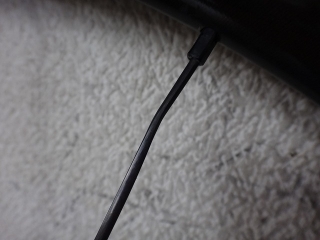
There were also spokes that weren't broken but were bent from the impact.
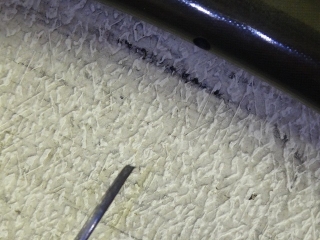
The broken spoke and its nipple had fallen into the rim,
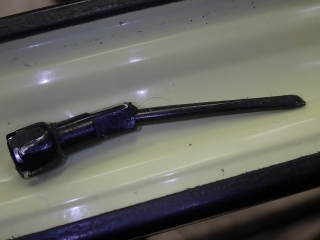
but I recovered them through the valve hole.
I'll reset the nipple using the Fulcrum method with a magnet for guidance.
Since there were only a couple spots, I didn't want to bother peeling off the tubeless tape.
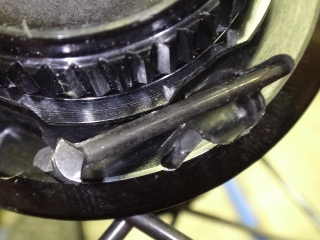
The flange on the rotor side—the left side—made spoke replacement fairly straightforward,
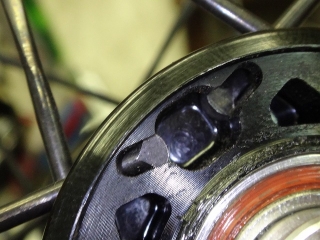
but the right flange had very limited clearance for removing spokes. While it might be manageable during initial wheel building with no spoke tension, replacing them with the wheel under full tension proved extremely difficult.
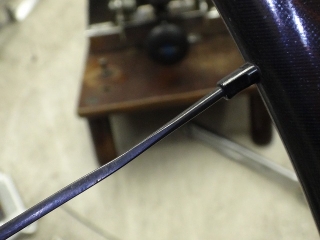
I thought I needed to replace 3 spokes total—the 2 that were broken and 1 that was deformed—but when I checked more carefully, there were spokes I couldn't quite remove, and if I forced them, they'd either create radial runout or end up with unnaturally uneven tension compared to the surrounding spokes. Looking closer, I found deformation. Any significant deformation will show up as runout, so I'm always sure to catch it.
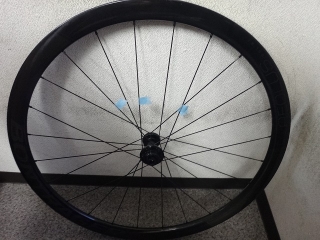
It's fixed.

Four spokes concentrated in one section.
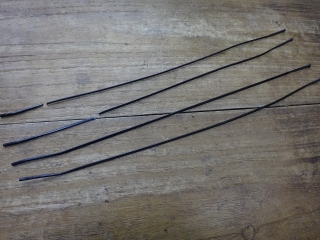
↑Replaced spokes
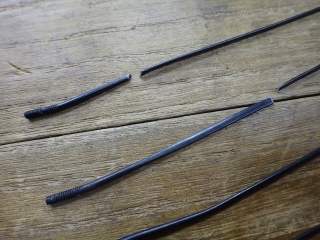
2 were broken and
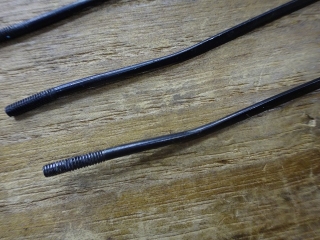
2 were bent.
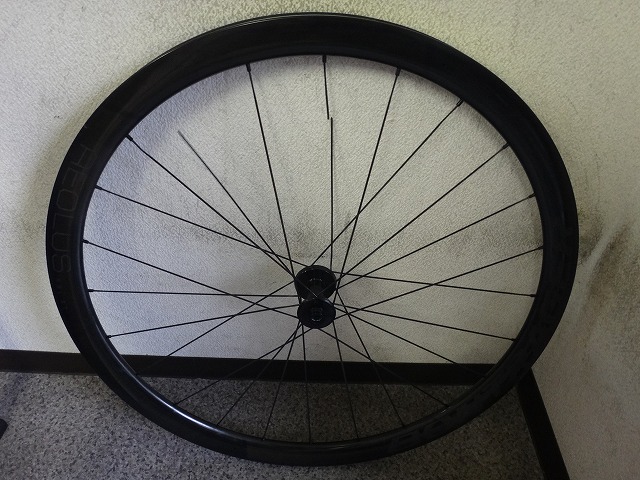
They made contact during the Niseko Classic race and broke some spokes.
This is completely unrelated, but I received Shiroi Koibito (a local Hokkaido white chocolate biscuit treat) from two separate customers who both participated in Niseko events.
The packaging was different—one was green and one was brown—but the brown one turned out to be Shiroi Koibito Black, which is a variant with a rather contradictory name.
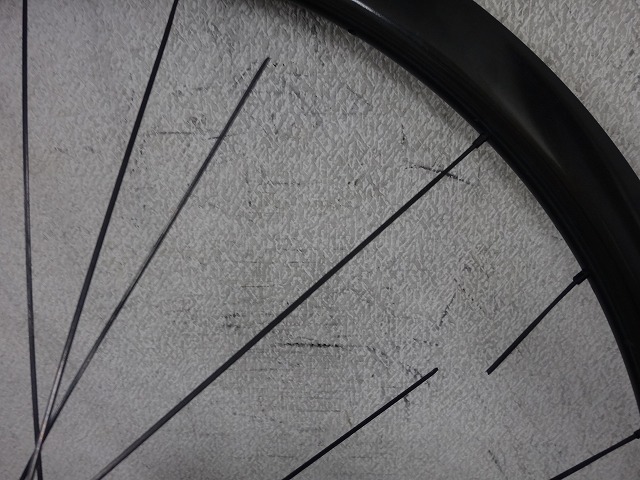
Two spokes are broken.
Apparently the wheel was still rideable, but they were concerned that the wheel might catastrophically fail in the group, causing damage to other riders around them, so they gently nursed it along and managed to cross the finish line.
Given today's bike prices, a pile-up involving the whole group could easily run into tens of millions of yen in damages on list price alone. Terrifying stuff.
It occurred to me—is there actually a Trek dealer out there that could repair this on the spot, and ideally to a standard equal to or better than mine?
But the fact that the customer brought it to my shop answers that question.

There were also spokes that weren't broken but were bent from the impact.

The broken spoke and its nipple had fallen into the rim,
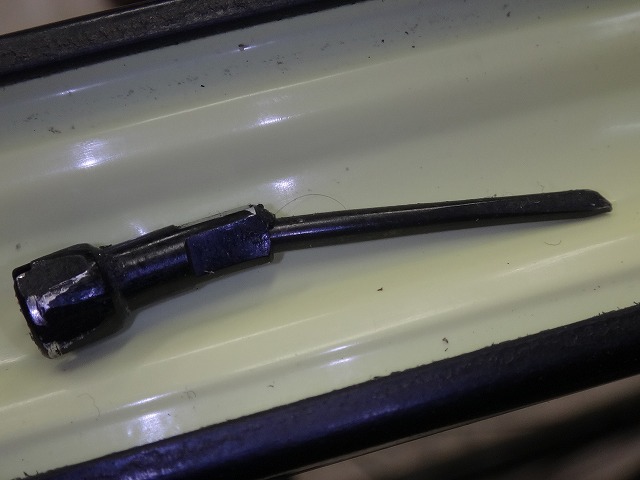
but I recovered them through the valve hole.
I'll reset the nipple using the Fulcrum method with a magnet for guidance.
Since there were only a couple spots, I didn't want to bother peeling off the tubeless tape.
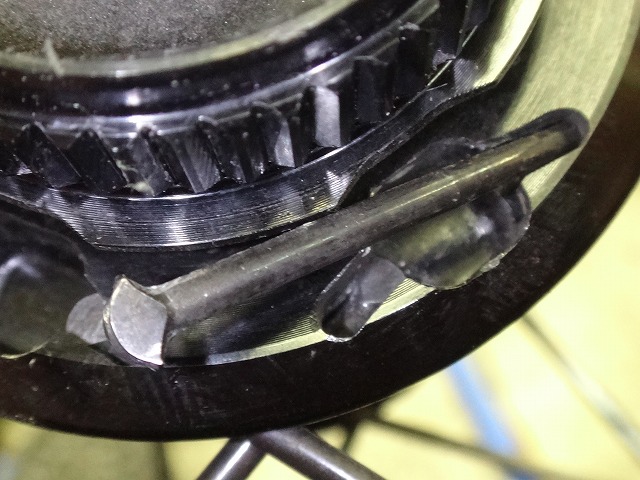
The flange on the rotor side—the left side—made spoke replacement fairly straightforward,
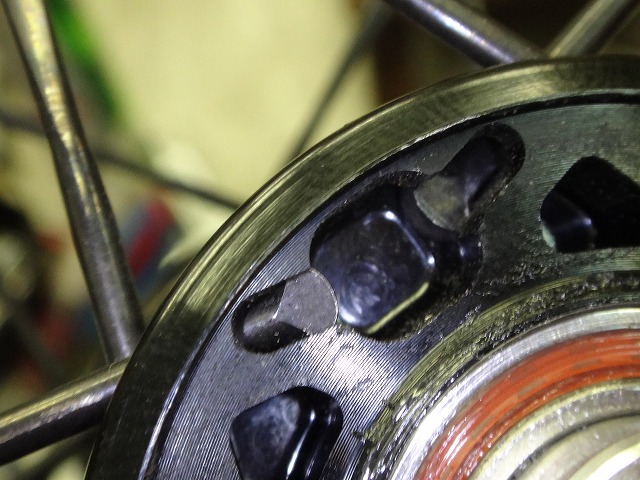
but the right flange had very limited clearance for removing spokes. While it might be manageable during initial wheel building with no spoke tension, replacing them with the wheel under full tension proved extremely difficult.
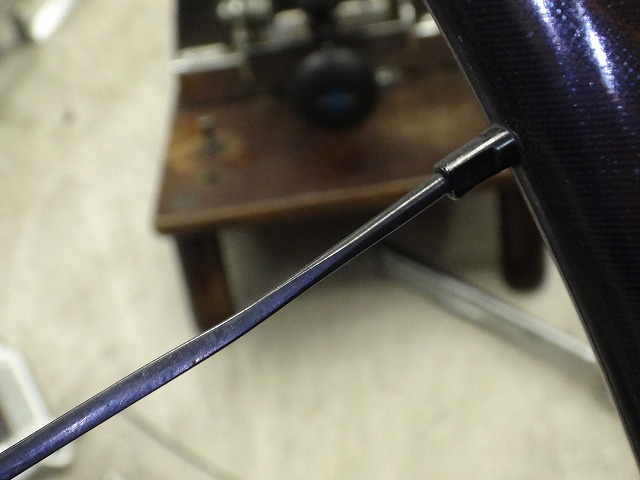
I thought I needed to replace 3 spokes total—the 2 that were broken and 1 that was deformed—but when I checked more carefully, there were spokes I couldn't quite remove, and if I forced them, they'd either create radial runout or end up with unnaturally uneven tension compared to the surrounding spokes. Looking closer, I found deformation. Any significant deformation will show up as runout, so I'm always sure to catch it.
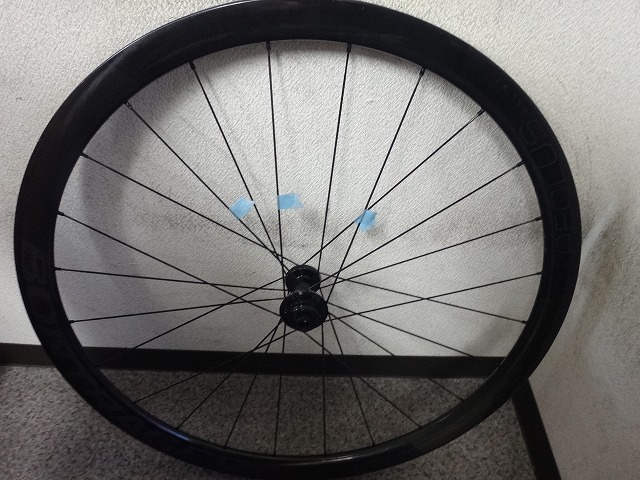
It's fixed.
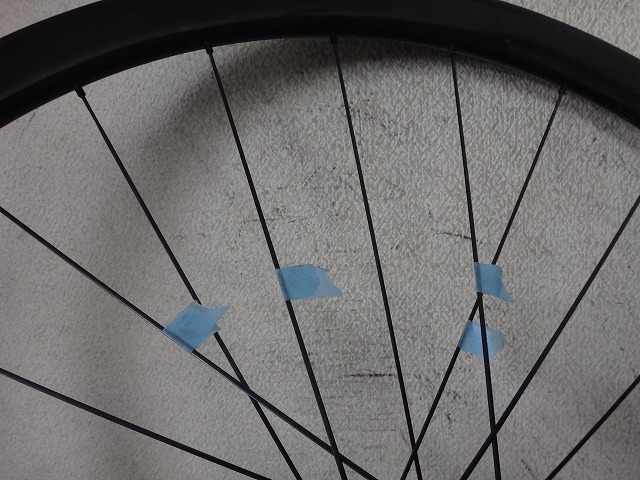
Four spokes concentrated in one section.

↑Replaced spokes
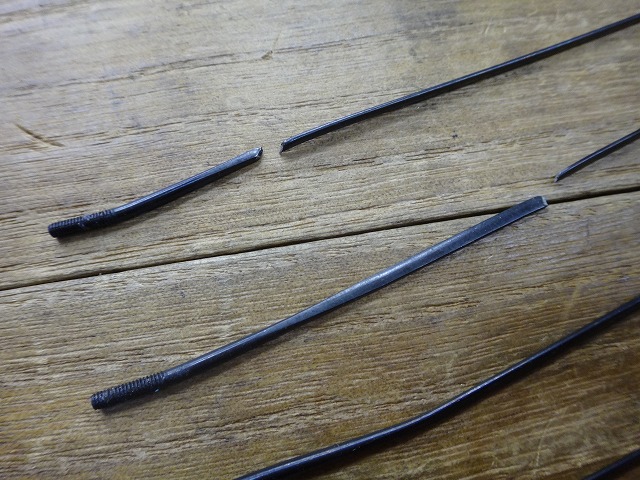
2 were broken and
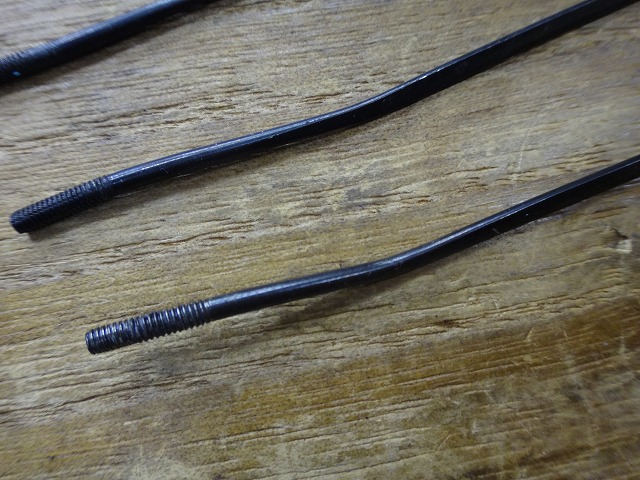
2 were bent.