More wheel work today (you know the drill).
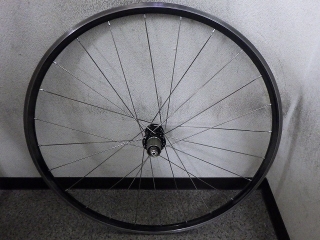
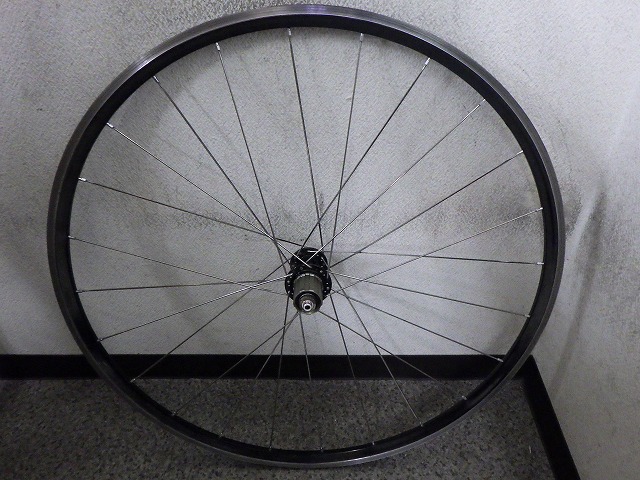
A customer left me the rear wheel from a Nomu Lab Wheel No. 5 (custom Japanese wheelbuilding brand) for service.
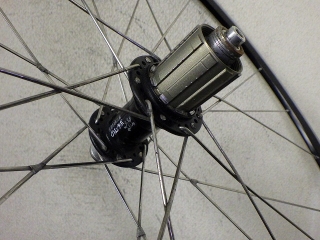
Evolight hub, 24H, semi-comp lacing with junction wiring.
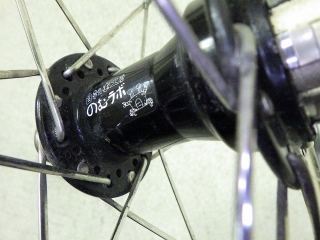
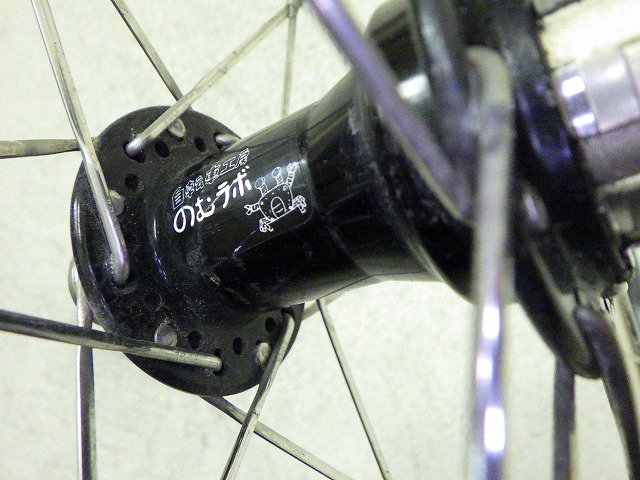
Evolight hub...?
There's a significant lateral runout,
and the customer mentioned suspecting spoke fatigue damage (like a potato chip warped rim).
They said if I judged that a rim replacement was necessary, I could go ahead with it.
Since the result is that I did replace it, here we are with this writeup.
The first problem I noticed was rust and corrosion.
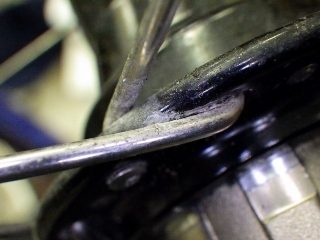
White corrosion appeared at the contact point between the spokes and hub flange.
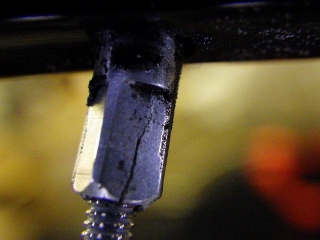
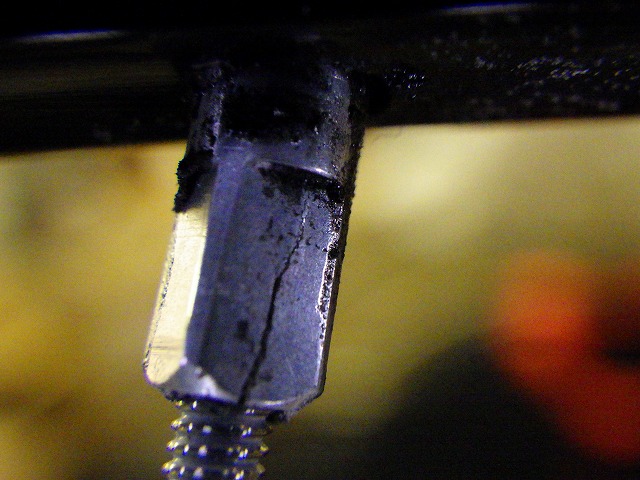
When I loosened all the nipples, white corrosion powder came pouring out of the spoke pockets with serious resistance.
About 3 out of 24 nipples had developed cracks, overwhelmed by the rust bulging from inside.
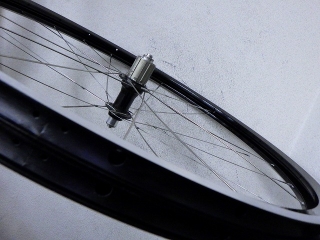
I completely released all spoke tension.
In this state, there's no rim deformation from spoke tension.
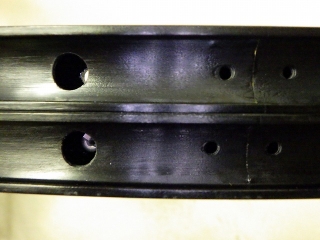
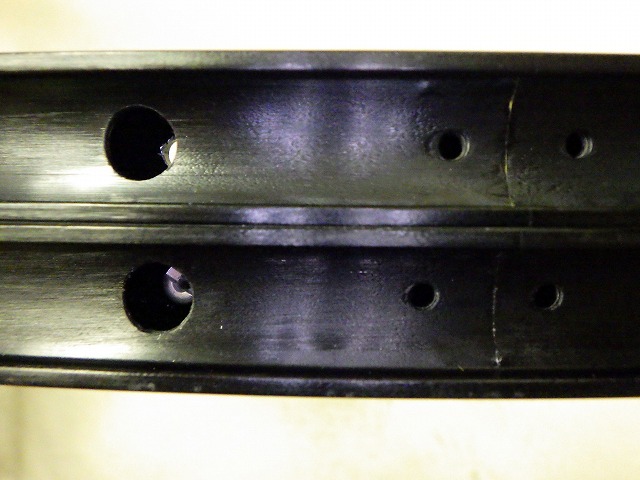
I held it up against a new rim to check the fit.
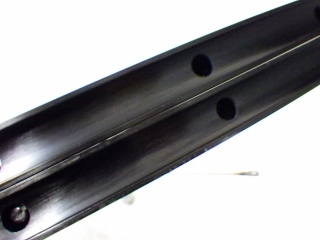
There are slight gaps in certain phases, barely noticeable.
But honestly, at this level I can still build the wheel, and it's totally normal for a wheel with a few years of use and no crash history to have just this much minor rim warp when you take it apart.
This time I decided to replace only the nipples and reassemble with the original rim.
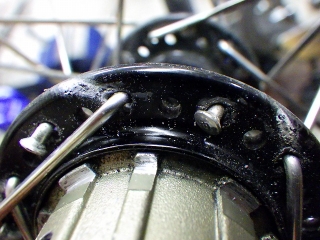
↑White corrosion on the flange.
It cleaned right off with a wipe.
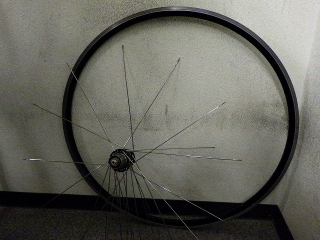
Here's the money shot—completely disassembled.
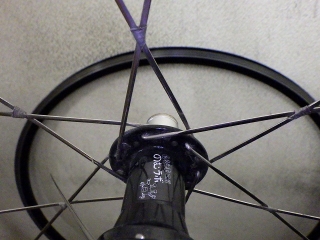
I've written this many times before, but there are a hell of a lot of crappy shops out there spouting nonsense like "you can't true a wheel with junction wiring."
I'm pretty sure almost all of them have never actually done junction wiring themselves, so how can they say that so definitively?
If the rim is the same or has nearly the same internal diameter, you can build a wheel from this state. There's no logical reason you couldn't true it—it's a simpler operation than building from scratch.
Or maybe they're just intimidated by Nomu Lab? Just say it straight, you cowards.
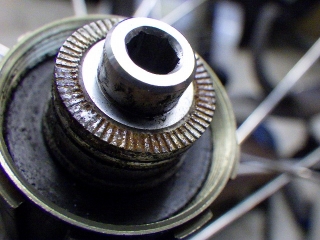
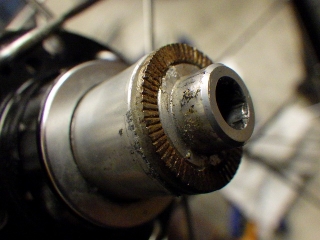
Both left and right axle nuts were corroded too.
The corrosion appeared specifically at the contact points between different metals, so I initially thought maybe the customer lived near the ocean. But they actually live in an inland Kanto prefecture.
Maybe they're using an alkaline degreaser?
Edit: According to the customer, de-icing salt might be a factor too.
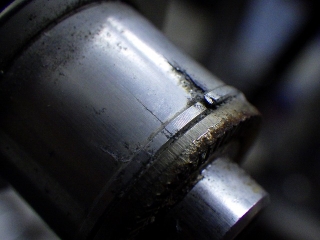
Especially this part on the left end—the corrosion had lifted the surface layer and it was peeling up.
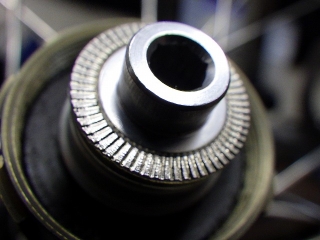
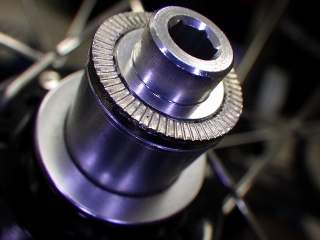
I replaced both left and right axle nuts.
Parts for discontinued models aren't available anywhere,
but I do what I can to make it work.
So, I got about 80% through the wheel building process, all the way to chasing down radial runout, but then I hit a wall that made rim replacement unavoidable.

In the end, I had to transfer the spokes to a new rim.
Ugh ugh ugh ugh ugh.
This was my call to make, so it's not reflected in the labor charge. But this job took about three times longer than a normal wheel build.
My habit of trying to repair things without replacing parts as much as possible backfired this time.
Can't be helped.
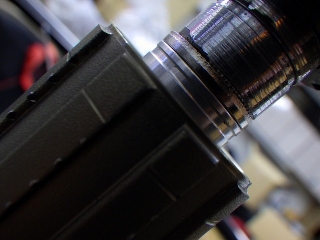
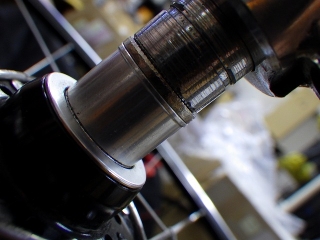
Whew, that long part is done.
The photos above show a non-original freebody paired with brand new axle nuts, so I shot them from a wider angle to emphasize that point.
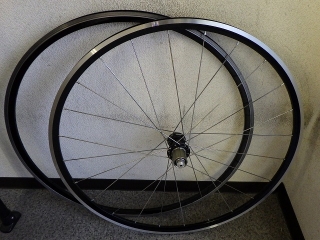
Built.
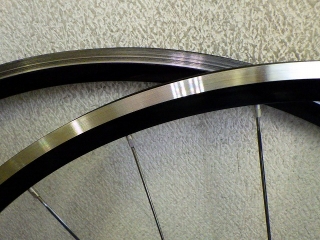
New rim, new nipples (and new left and right axle nuts), installed.
A customer left me the rear wheel from a Nomu Lab Wheel No. 5 (custom Japanese wheelbuilding brand) for service.

Evolight hub, 24H, semi-comp lacing with junction wiring.
Evolight hub...?
There's a significant lateral runout,
and the customer mentioned suspecting spoke fatigue damage (like a potato chip warped rim).
They said if I judged that a rim replacement was necessary, I could go ahead with it.
Since the result is that I did replace it, here we are with this writeup.
The first problem I noticed was rust and corrosion.

White corrosion appeared at the contact point between the spokes and hub flange.
When I loosened all the nipples, white corrosion powder came pouring out of the spoke pockets with serious resistance.
About 3 out of 24 nipples had developed cracks, overwhelmed by the rust bulging from inside.

I completely released all spoke tension.
In this state, there's no rim deformation from spoke tension.
I held it up against a new rim to check the fit.
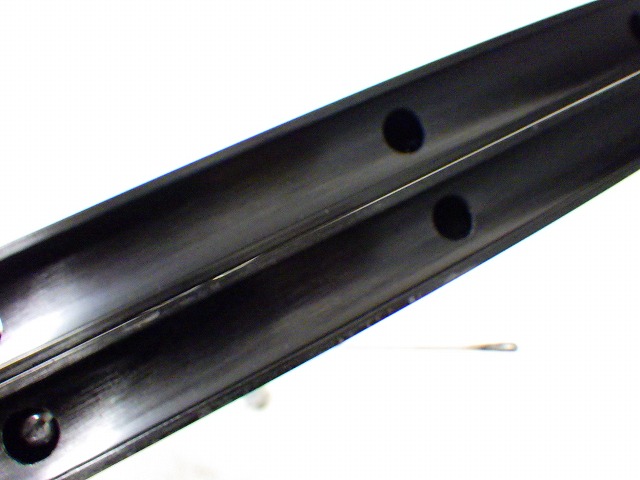
There are slight gaps in certain phases, barely noticeable.
But honestly, at this level I can still build the wheel, and it's totally normal for a wheel with a few years of use and no crash history to have just this much minor rim warp when you take it apart.
This time I decided to replace only the nipples and reassemble with the original rim.
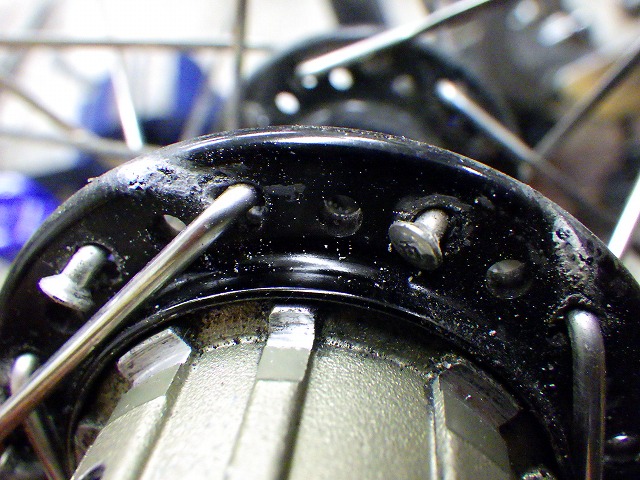
↑White corrosion on the flange.
It cleaned right off with a wipe.
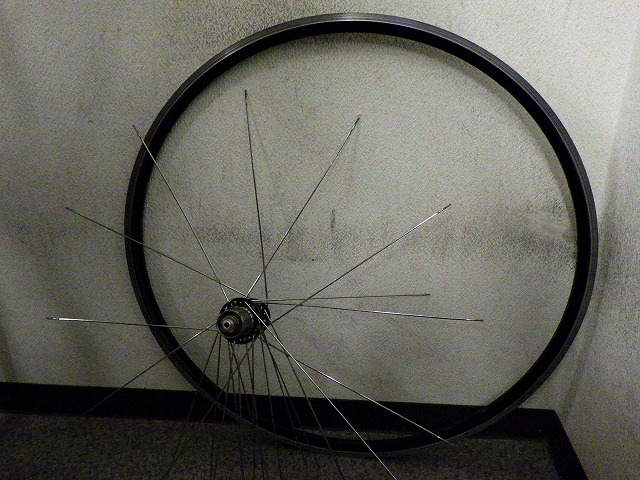
Here's the money shot—completely disassembled.
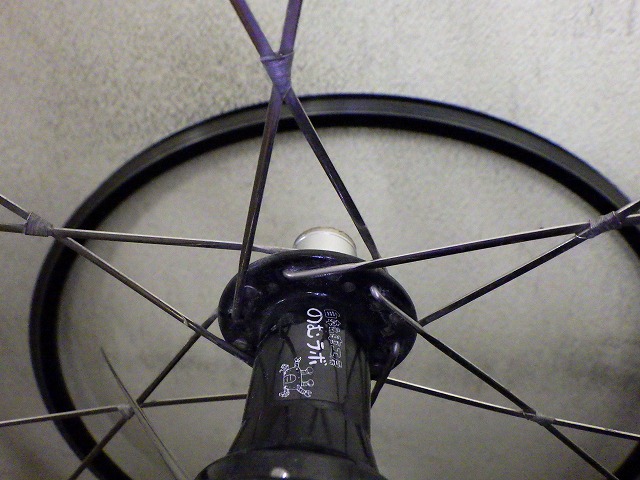
I've written this many times before, but there are a hell of a lot of crappy shops out there spouting nonsense like "you can't true a wheel with junction wiring."
I'm pretty sure almost all of them have never actually done junction wiring themselves, so how can they say that so definitively?
If the rim is the same or has nearly the same internal diameter, you can build a wheel from this state. There's no logical reason you couldn't true it—it's a simpler operation than building from scratch.
Or maybe they're just intimidated by Nomu Lab? Just say it straight, you cowards.
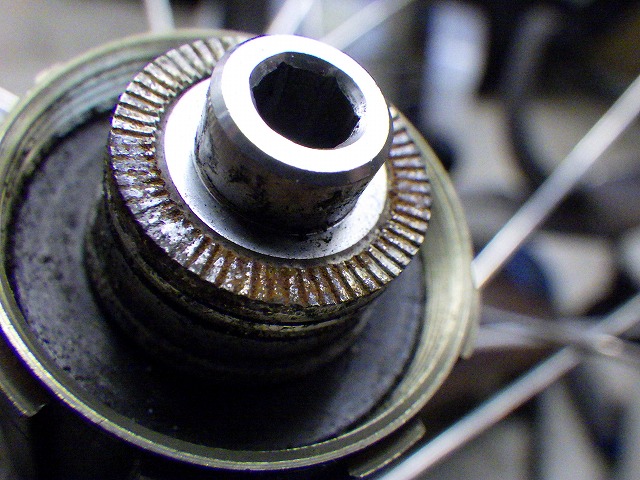
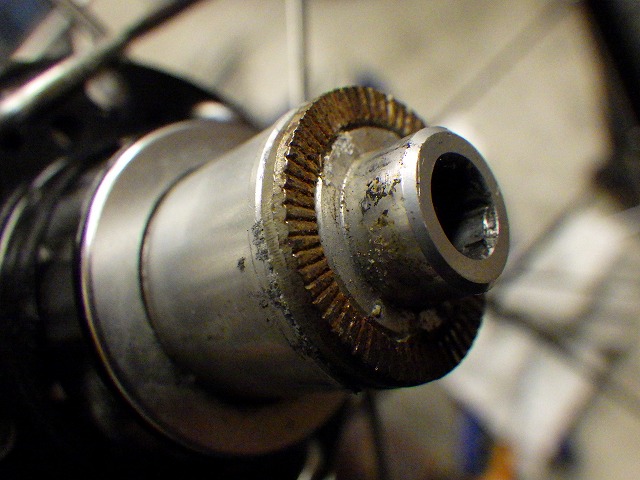
Both left and right axle nuts were corroded too.
The corrosion appeared specifically at the contact points between different metals, so I initially thought maybe the customer lived near the ocean. But they actually live in an inland Kanto prefecture.
Maybe they're using an alkaline degreaser?
Edit: According to the customer, de-icing salt might be a factor too.
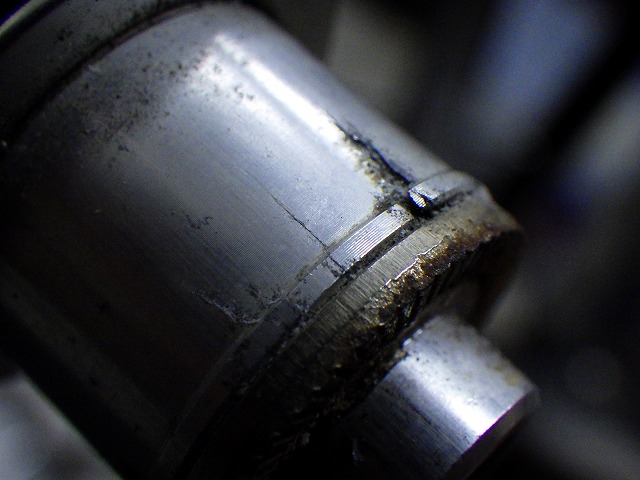
Especially this part on the left end—the corrosion had lifted the surface layer and it was peeling up.
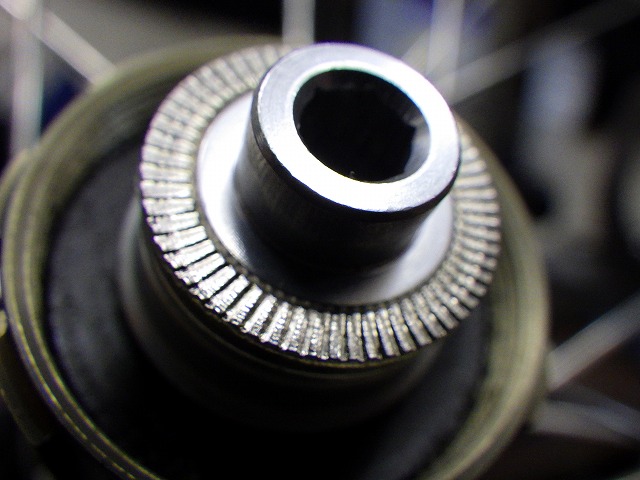
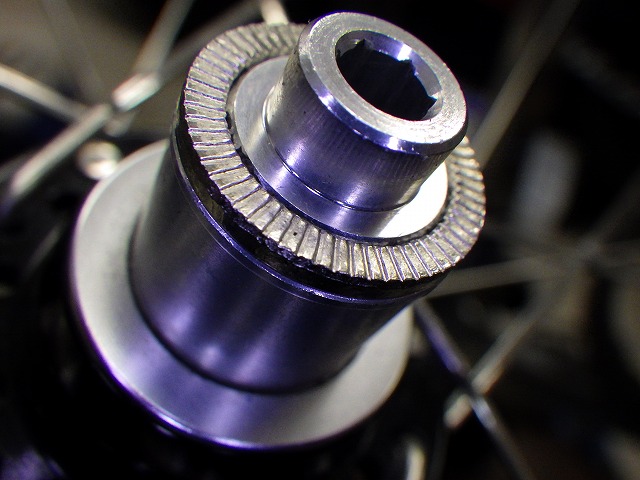
I replaced both left and right axle nuts.
Parts for discontinued models aren't available anywhere,
but I do what I can to make it work.
So, I got about 80% through the wheel building process, all the way to chasing down radial runout, but then I hit a wall that made rim replacement unavoidable.
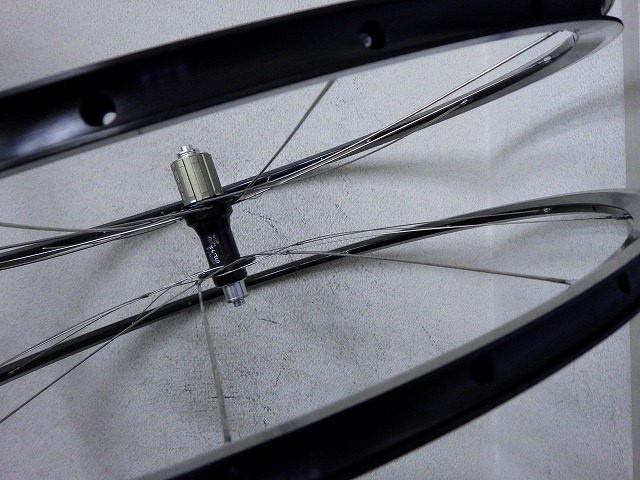
In the end, I had to transfer the spokes to a new rim.
Ugh ugh ugh ugh ugh.
This was my call to make, so it's not reflected in the labor charge. But this job took about three times longer than a normal wheel build.
My habit of trying to repair things without replacing parts as much as possible backfired this time.
Can't be helped.
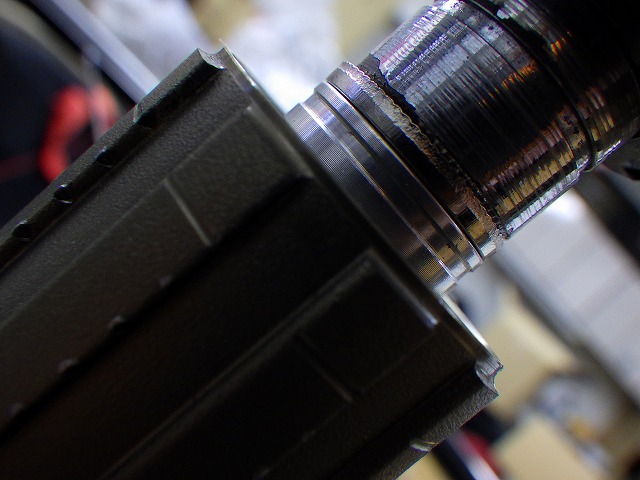
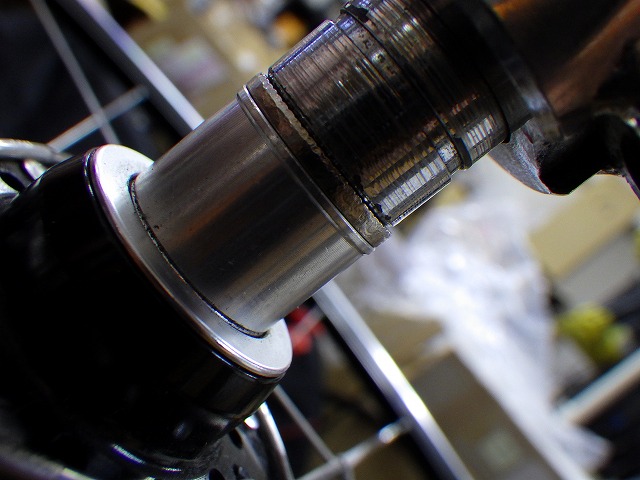
Whew, that long part is done.
The photos above show a non-original freebody paired with brand new axle nuts, so I shot them from a wider angle to emphasize that point.
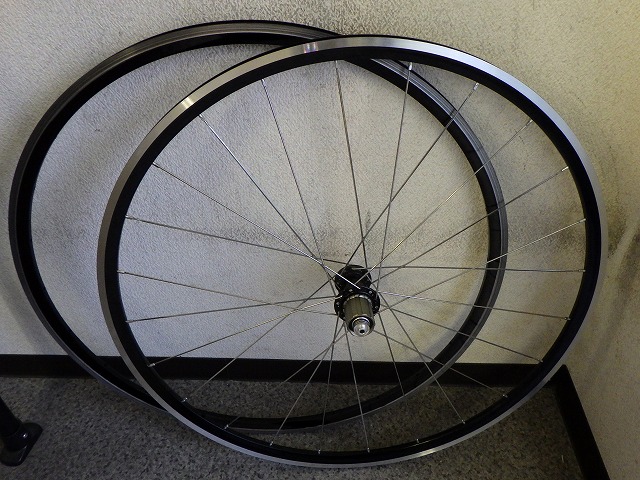
Built.
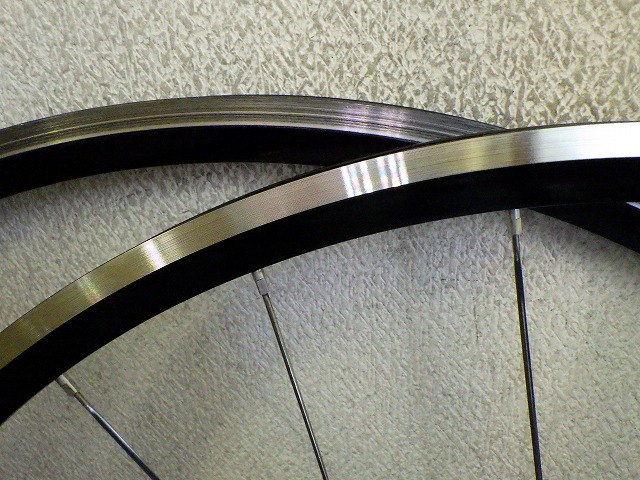
New rim, new nipples (and new left and right axle nuts), installed.