Another wheel day (and so on).

I built Nomi Lab Wheel #1.
The customer wanted 20H both front and rear,
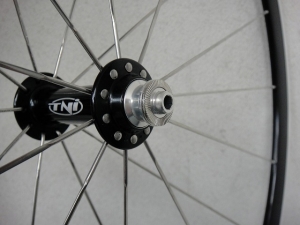
so it's been a while since I've used the Tni Evo hub.
If both front and rear are 20H, we still have a few in stock.
Since we're out of stock on the Evo hub rear 24H,
wheels with 20H front and 24H rear will use the Reef hub,
but if it's 20H both front and rear, we can build it with the Evo hub.
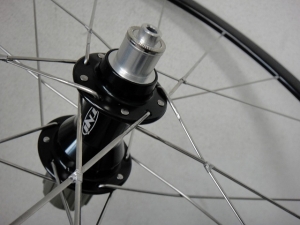
The wiring is done, but if it hypothetically wasn't,
with a 4-2-4 lacing pattern, the only way to correct left-right wheel balance
would be through different spoke counts for semi-comp lacing.
The other day
I received a comment saying "hub geometry is dominant when correcting left-right spoke tension differences~" Ouch! That's absolutely right.
Unless I'm deliberately aiming to build a loose wheel,
I end up tensioning the spokes to about 90% of the rim's limit
on both the rear freehub side and the front wheel left and right.
I wrote "about 90%" casually,
but these slight nipple adjustments are extremely delicate.
In my case, I build according to certain reference values,
but that requires a spoke tension meter as an essential tool.
Without this tool, I (at least) cannot build wheels.
I think relying solely on craftsman's intuition is nothing but arrogance.
Because it's the customer who ends up using wheels built with such "misunderstandings."
But anyway,regardless of hub dimensions, wheels are built to roughly the same spoke tension corresponding to the rim.
Which means the hub dimensions basically determine the wheel's characteristics.
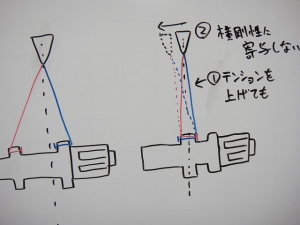
For example, there's no way a narrow flange produces lateral stiffness.
When I write about structural flaws in hubs like Ameクラ or Gokiso,
I sometimes get comments saying "just choose a sturdy rim and tension the spokes tight." If that would work,
then I should just set a single flange right at the rim base and crank the tension to the max.
If this produced lateral stiffness, wheels like this would be everywhere by now.
Plus, the spokes would be hidden behind the rim's frontal projection, which is aerodynamically nice too.
Steel spokes don't compare—materials with deformation so minimal they're nearly perfectly rigid
and blade-section flat spokes are considered "spokes,"
and wheels are made with 3–5 of them. That's roundabout way of saying baton wheels exist.
Though these aren't tension-structure wheels, so you can't think of them the same way as typical spoke wheels.
What I'm getting at is this rear wheel I built today—
before wiring, the left-right spoke tension difference was small,
but I think that's less because of semi-comp lacing and more due to
the Evo hub's hi-lo flange design?
I often write "last resort" when referring to my left-right different-diameter, different-count lacing,
but that's not false modesty—it means I never underestimate
how big the hub selection factor is, before you even get to the lacing method.
Just a moment ago
I wrote: "The wiring is done, but if it hypothetically wasn't,
with 4-2-4 lacing the only way to correct left-right wheel balance
would be through semi-comp different-diameter lacing."
But this overlooks the hub dimensions—the very "foundation" everything else rests on—before you even consider wheel building methods or spoke gauges.
Building a rear wheel with a 20H Evo hub for the first time in a while was eye-opening.
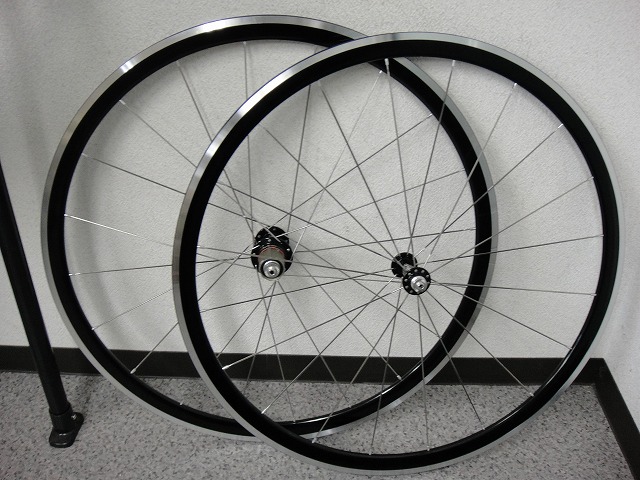
I built Nomi Lab Wheel #1.
The customer wanted 20H both front and rear,
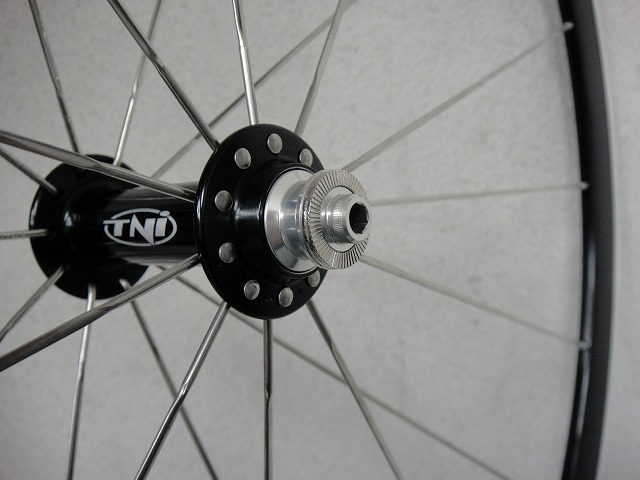
so it's been a while since I've used the Tni Evo hub.
If both front and rear are 20H, we still have a few in stock.
Since we're out of stock on the Evo hub rear 24H,
wheels with 20H front and 24H rear will use the Reef hub,
but if it's 20H both front and rear, we can build it with the Evo hub.
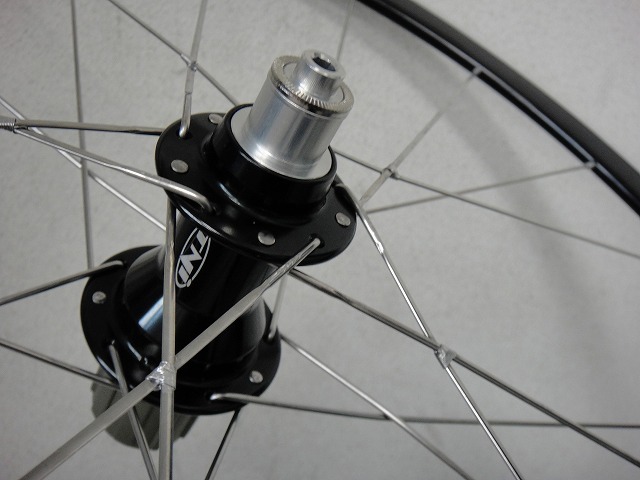
The wiring is done, but if it hypothetically wasn't,
with a 4-2-4 lacing pattern, the only way to correct left-right wheel balance
would be through different spoke counts for semi-comp lacing.
The other day
I received a comment saying "hub geometry is dominant when correcting left-right spoke tension differences~" Ouch! That's absolutely right.
Unless I'm deliberately aiming to build a loose wheel,
I end up tensioning the spokes to about 90% of the rim's limit
on both the rear freehub side and the front wheel left and right.
I wrote "about 90%" casually,
but these slight nipple adjustments are extremely delicate.
In my case, I build according to certain reference values,
but that requires a spoke tension meter as an essential tool.
Without this tool, I (at least) cannot build wheels.
I think relying solely on craftsman's intuition is nothing but arrogance.
Because it's the customer who ends up using wheels built with such "misunderstandings."
But anyway,regardless of hub dimensions, wheels are built to roughly the same spoke tension corresponding to the rim.
Which means the hub dimensions basically determine the wheel's characteristics.
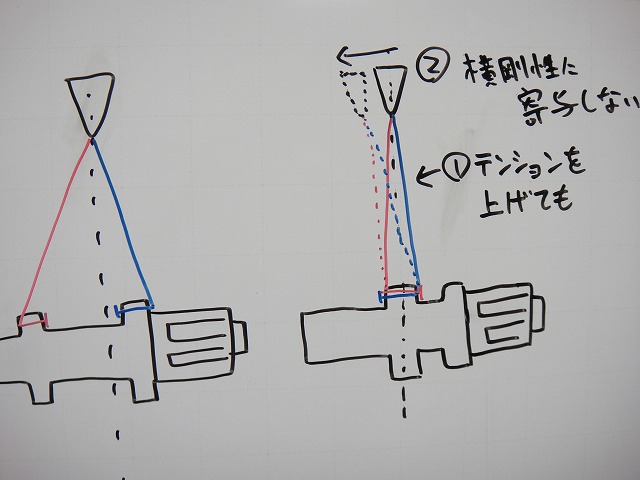
For example, there's no way a narrow flange produces lateral stiffness.
When I write about structural flaws in hubs like Ameクラ or Gokiso,
I sometimes get comments saying "just choose a sturdy rim and tension the spokes tight." If that would work,
then I should just set a single flange right at the rim base and crank the tension to the max.
If this produced lateral stiffness, wheels like this would be everywhere by now.
Plus, the spokes would be hidden behind the rim's frontal projection, which is aerodynamically nice too.
Steel spokes don't compare—materials with deformation so minimal they're nearly perfectly rigid
and blade-section flat spokes are considered "spokes,"
and wheels are made with 3–5 of them. That's roundabout way of saying baton wheels exist.
Though these aren't tension-structure wheels, so you can't think of them the same way as typical spoke wheels.
What I'm getting at is this rear wheel I built today—
before wiring, the left-right spoke tension difference was small,
but I think that's less because of semi-comp lacing and more due to
the Evo hub's hi-lo flange design?
I often write "last resort" when referring to my left-right different-diameter, different-count lacing,
but that's not false modesty—it means I never underestimate
how big the hub selection factor is, before you even get to the lacing method.
Just a moment ago
I wrote: "The wiring is done, but if it hypothetically wasn't,
with 4-2-4 lacing the only way to correct left-right wheel balance
would be through semi-comp different-diameter lacing."
But this overlooks the hub dimensions—the very "foundation" everything else rests on—before you even consider wheel building methods or spoke gauges.
Building a rear wheel with a 20H Evo hub for the first time in a while was eye-opening.