Another wheel build today (and so on).
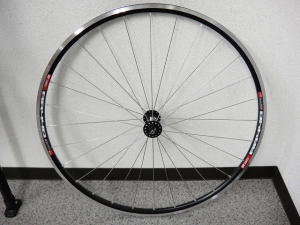
Built a wheel with DT 350 hub, DT Competition spokes, and DT RR440 rim.
Both front and rear are 28H.

Front wheel is outpoke radial laced.
DT's narrowest XC MTB rim is 21.8mm wide, but
the RR440 rim is 21mm wide, so 20C tires don't really suit it.
On the other hand, 28C tires fit comfortably, and depending on what the frame and fork allow,
it could even accommodate 35C tires.
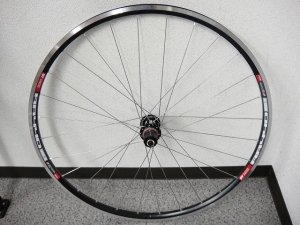
Rear wheel is built too.
The nominal weight printed on the rim is 450g, so I found myself thinking "then just call it RR450,"
but since an R450 rim already exists it gets confusing.
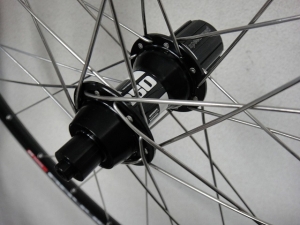
Four-cross lacing with no cross-connections, but for an all-Competition build (same diameter left and right),
the spoke tension tracking on the anti-freewheel side is quite high.
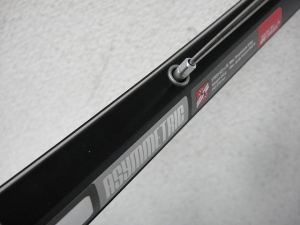
The rear uses an offset rim, which might be responsible for this.
Come to think of it, a while back I got a comment about narrow-flange rear hubs whose only advantage is rotational feel,
suggesting that using an offset rim like this and building with higher spoke tension would solve it—
but changing the offset only affects the dish amount, not the hub flange width itself,
so it doesn't fundamentally solve lateral stiffness issues.
Also, this rim's specified tension limit is 1200N, which
isn't particularly high among aluminum rims overall (not low either, though).
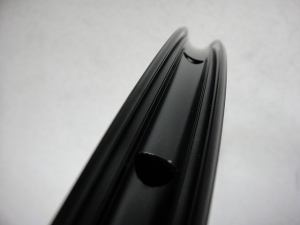
This rim clearly has a tubeless rim cross-section shape.
The essential conditions for a tubeless rim are "air-seal at the valve section and rim perimeter"
and "a depression for initially seating the bead."
Additionally, not essential but desirable, is a "hump."
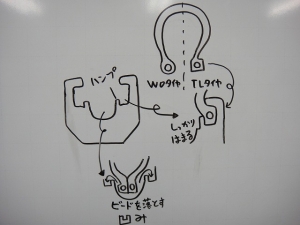
↑Tubeless rims look like this.

The bead-seating depression is structurally necessary because
without it you can't initially achieve an airtight seal on tubeless tires.
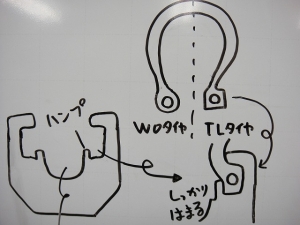
The hump is a protrusion that firmly holds the stiff, thick bead of a tubeless tire on the rim's shoulders.
When you inflate a tire on a humped rim,
the tire bead pops in satisfyingly with a "snap!"—that's the hump's doing.
And the reason the bead doesn't easily slip off the rim even after deflation
is also thanks to the hump.
There are rims without humps that can still function as tubeless rims by using high-seal rim tape,
but because they lack a hump, if you get a flat while riding,
the tire can slip right off the next moment (super dangerous)—I've actually heard of about three cases like this.
Even if a rim has a hump, if it's the type with rim tape covering holes on the outer side,
the hump becomes ineffective. So it's safer to use tubeless tires only on
rims with "no holes on the outer side except the valve hole AND a hump."

As for this RR440,
it's not designed to be converted to tubeless with sealing tape.
With offset rear rims, the outer-side holes are cut in a hump-like pattern.
I wondered if the company was just repurposing single tubeless-wheel rims as regular rims,
but they differ in both width and shape from the Tricross wheel rims.
Hmm... I really wonder why...?
The shape is clearly that of a tubeless rim.
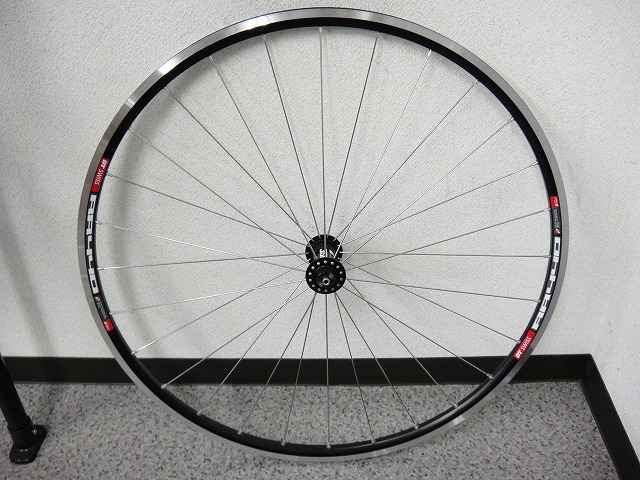
Built a wheel with DT 350 hub, DT Competition spokes, and DT RR440 rim.
Both front and rear are 28H.

Front wheel is outpoke radial laced.
DT's narrowest XC MTB rim is 21.8mm wide, but
the RR440 rim is 21mm wide, so 20C tires don't really suit it.
On the other hand, 28C tires fit comfortably, and depending on what the frame and fork allow,
it could even accommodate 35C tires.
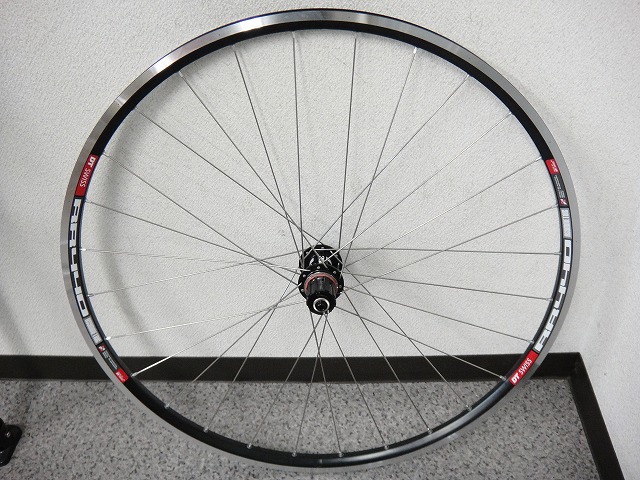
Rear wheel is built too.
The nominal weight printed on the rim is 450g, so I found myself thinking "then just call it RR450,"
but since an R450 rim already exists it gets confusing.

Four-cross lacing with no cross-connections, but for an all-Competition build (same diameter left and right),
the spoke tension tracking on the anti-freewheel side is quite high.
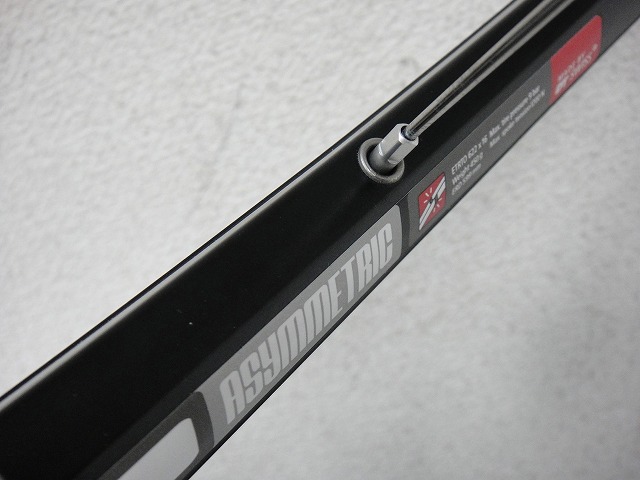
The rear uses an offset rim, which might be responsible for this.
Come to think of it, a while back I got a comment about narrow-flange rear hubs whose only advantage is rotational feel,
suggesting that using an offset rim like this and building with higher spoke tension would solve it—
but changing the offset only affects the dish amount, not the hub flange width itself,
so it doesn't fundamentally solve lateral stiffness issues.
Also, this rim's specified tension limit is 1200N, which
isn't particularly high among aluminum rims overall (not low either, though).
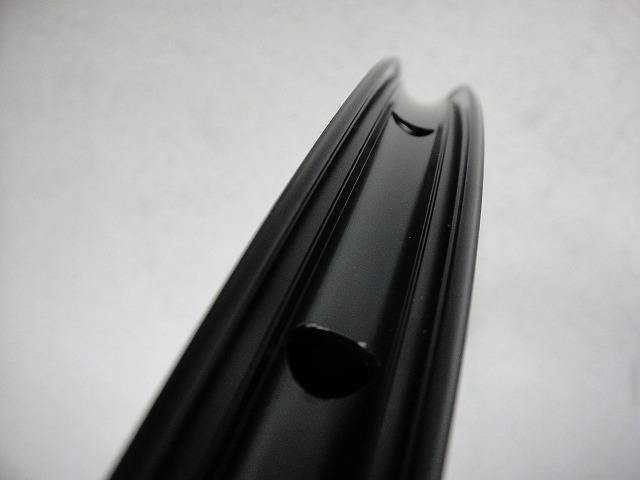
This rim clearly has a tubeless rim cross-section shape.
The essential conditions for a tubeless rim are "air-seal at the valve section and rim perimeter"
and "a depression for initially seating the bead."
Additionally, not essential but desirable, is a "hump."
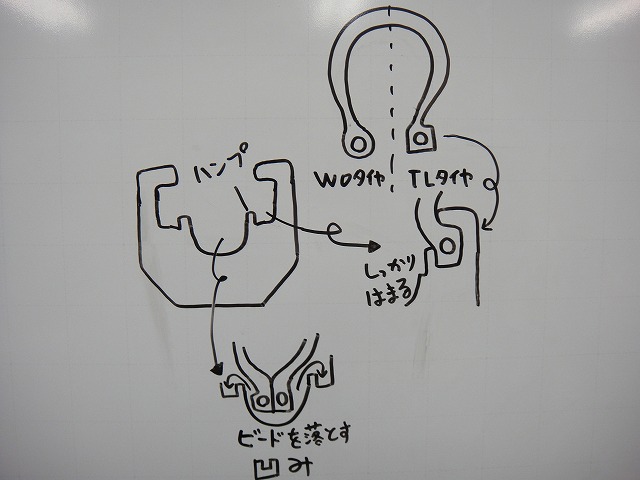
↑Tubeless rims look like this.
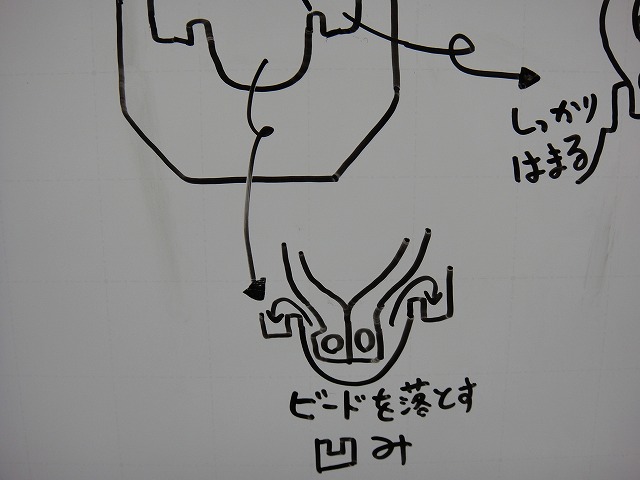
The bead-seating depression is structurally necessary because
without it you can't initially achieve an airtight seal on tubeless tires.
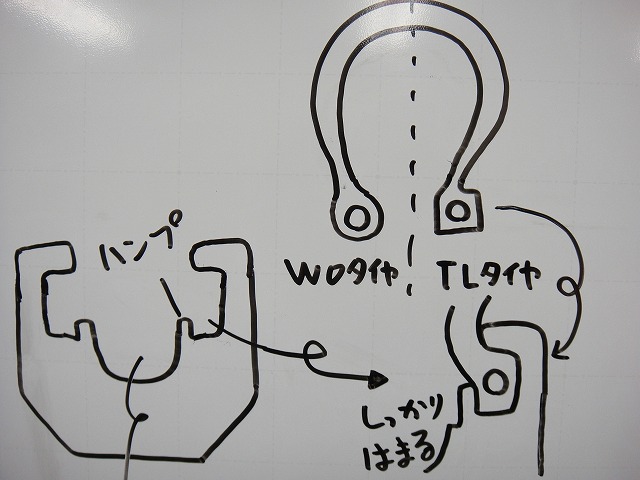
The hump is a protrusion that firmly holds the stiff, thick bead of a tubeless tire on the rim's shoulders.
When you inflate a tire on a humped rim,
the tire bead pops in satisfyingly with a "snap!"—that's the hump's doing.
And the reason the bead doesn't easily slip off the rim even after deflation
is also thanks to the hump.
There are rims without humps that can still function as tubeless rims by using high-seal rim tape,
but because they lack a hump, if you get a flat while riding,
the tire can slip right off the next moment (super dangerous)—I've actually heard of about three cases like this.
Even if a rim has a hump, if it's the type with rim tape covering holes on the outer side,
the hump becomes ineffective. So it's safer to use tubeless tires only on
rims with "no holes on the outer side except the valve hole AND a hump."
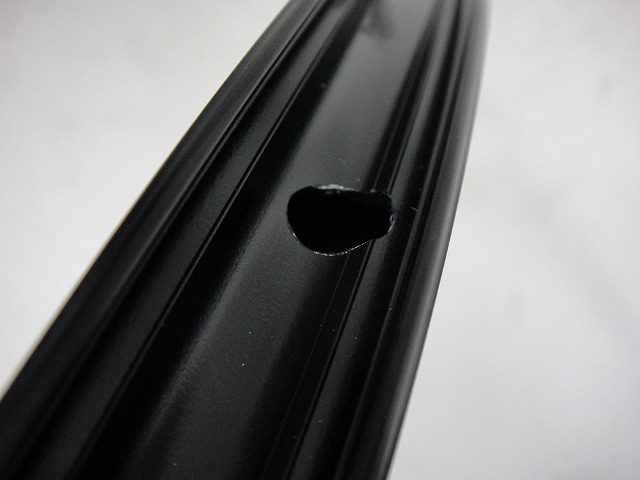
As for this RR440,
it's not designed to be converted to tubeless with sealing tape.
With offset rear rims, the outer-side holes are cut in a hump-like pattern.
I wondered if the company was just repurposing single tubeless-wheel rims as regular rims,
but they differ in both width and shape from the Tricross wheel rims.
Hmm... I really wonder why...?
The shape is clearly that of a tubeless rim.