Back to wheel building today (and so on).
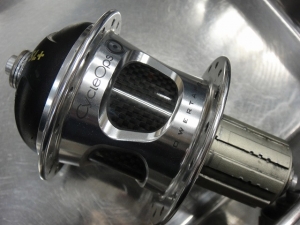
A customer left me with a PowerTap SL+ hub.
I had an ominous premonition (of course in a bad way) about this one.
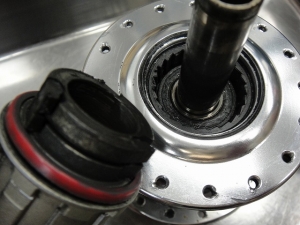
The area just below the freewheel body on the hub shaft had rust transfer,
so the freewheel body wouldn't come off with just a gentle tug.
(Normally it should come off easily with just a light pull)
When I finally got it off, the grease was dried up and the rotation felt gritty.
Rather than the bearings being shot,
it seemed like dust had gotten in and was rotating right along with everything else.

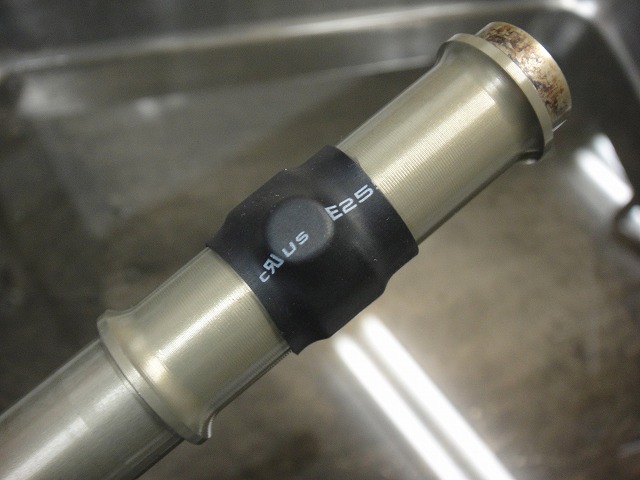
The tape was peeling off, looking pretty unmotivated.
The bearing press-fit area on the left side of the shaft also had rust transfer.
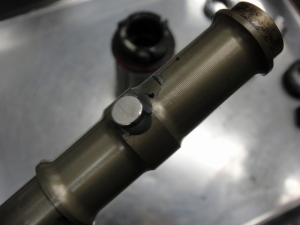
While the tape showed no motivation, the epoxy adhesive went totally overboard—
it was applied excessively and had splattered in unnecessary places.
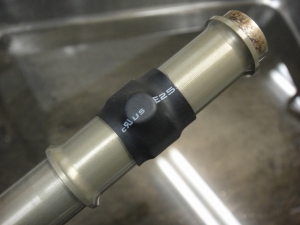
Well, the usual routine for now.

I cleaned the bearings and, surprisingly, they were fine.
A fresh greasing should do the trick.
Though to flush out the old grease, I do end up using quite a bit of fresh grease.
But that's always how it goes with this kind of work.
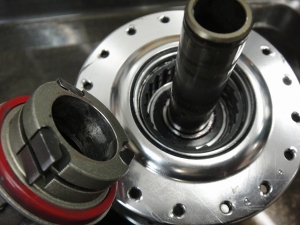
The main culprit behind the gritty feeling was dust buildup around the freewheel body.
Even if one of the left or right bearings had failed,
when the shaft connects both sides,
it's hard to tell by feel which one is bad—
similarly, when judging the overall condition of the hub,
it's difficult to tell at a glance what's causing the irregularity when spinning the shaft.
Anyway, I'm glad we got it fixed without replacing any parts.
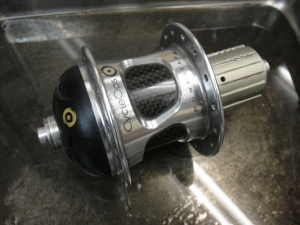
↑Most of the dirt came from around the freewheel body.
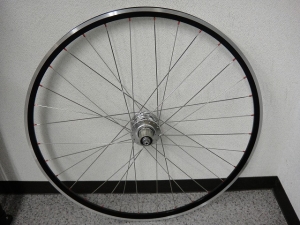
Built it.
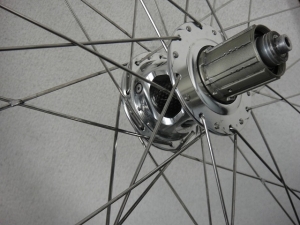
Half-comp, 48-spoke, Italian pattern, non-freewheel side laced with nipples.
This was my call (since they said to do whatever),
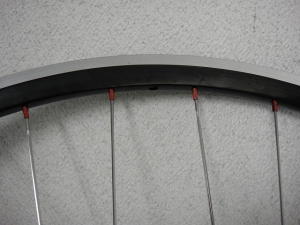
and like the front wheel, the nipples are red.
I mentioned to the customer that just because the rear wheel is 32-spokes doesn't mean the front needs to match,
and since there weren't any particularly risky conditions (weight-wise or otherwise), I went with 20 spokes for the front wheel yesterday.
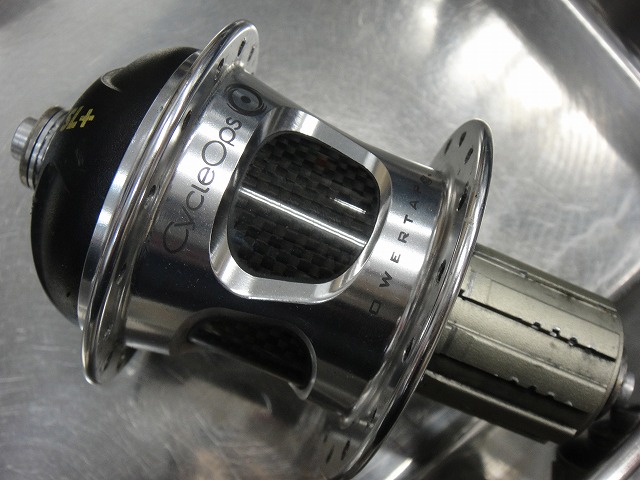
A customer left me with a PowerTap SL+ hub.
I had an ominous premonition (of course in a bad way) about this one.
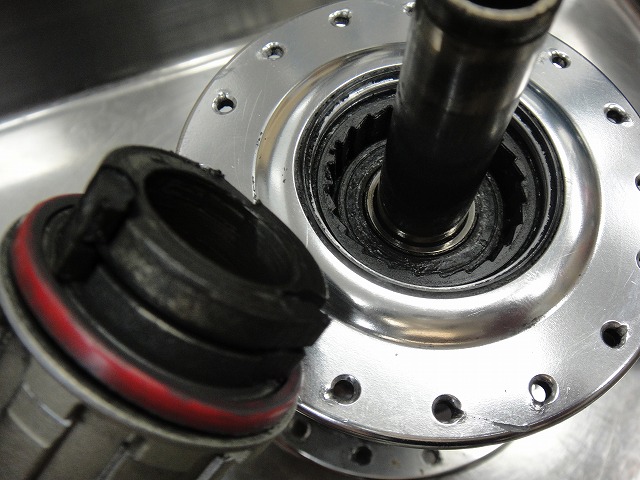
The area just below the freewheel body on the hub shaft had rust transfer,
so the freewheel body wouldn't come off with just a gentle tug.
(Normally it should come off easily with just a light pull)
When I finally got it off, the grease was dried up and the rotation felt gritty.
Rather than the bearings being shot,
it seemed like dust had gotten in and was rotating right along with everything else.
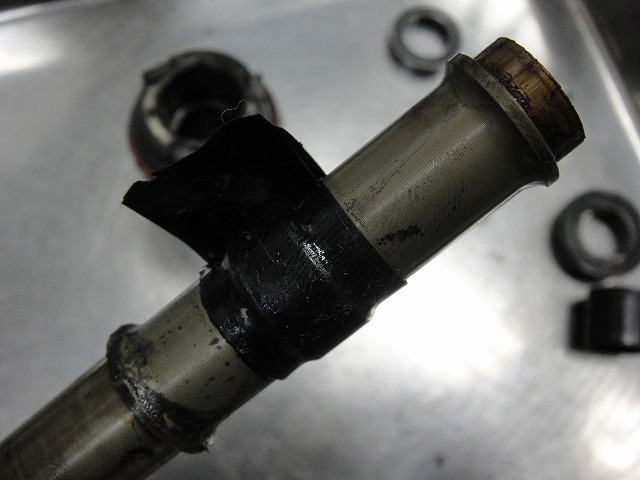
The tape was peeling off, looking pretty unmotivated.
The bearing press-fit area on the left side of the shaft also had rust transfer.

While the tape showed no motivation, the epoxy adhesive went totally overboard—
it was applied excessively and had splattered in unnecessary places.
Well, the usual routine for now.
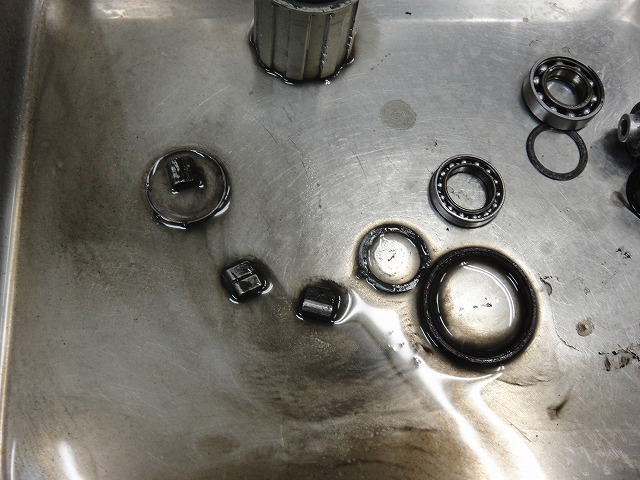
I cleaned the bearings and, surprisingly, they were fine.
A fresh greasing should do the trick.
Though to flush out the old grease, I do end up using quite a bit of fresh grease.
But that's always how it goes with this kind of work.
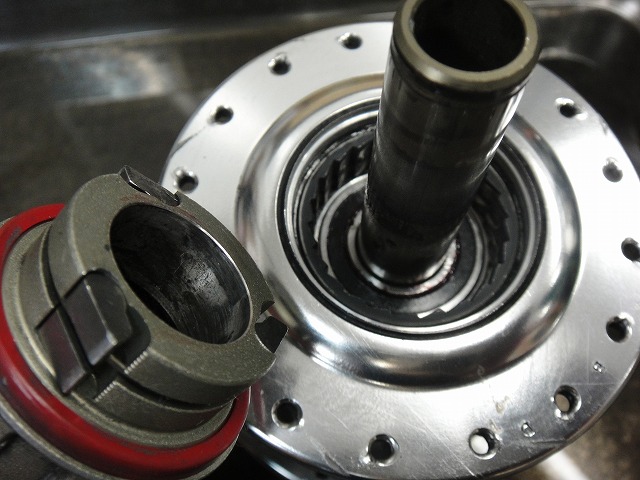
The main culprit behind the gritty feeling was dust buildup around the freewheel body.
Even if one of the left or right bearings had failed,
when the shaft connects both sides,
it's hard to tell by feel which one is bad—
similarly, when judging the overall condition of the hub,
it's difficult to tell at a glance what's causing the irregularity when spinning the shaft.
Anyway, I'm glad we got it fixed without replacing any parts.
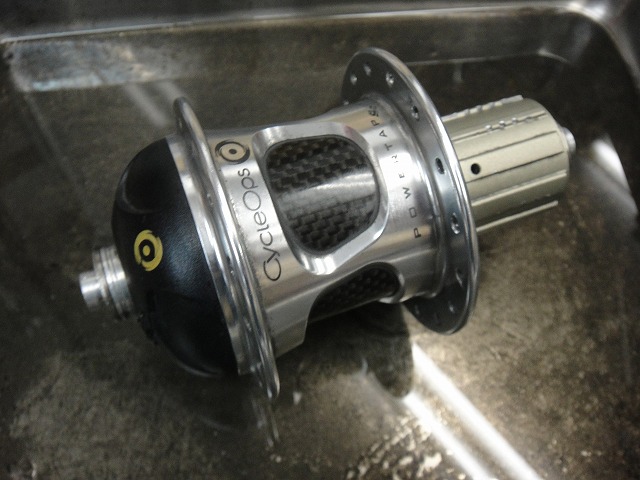
↑Most of the dirt came from around the freewheel body.
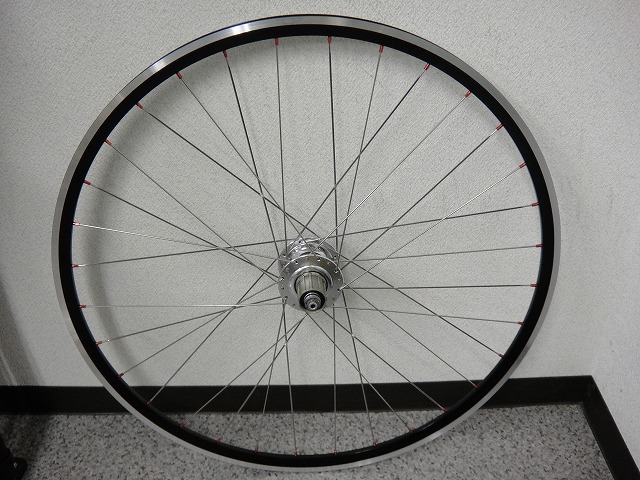
Built it.

Half-comp, 48-spoke, Italian pattern, non-freewheel side laced with nipples.
This was my call (since they said to do whatever),
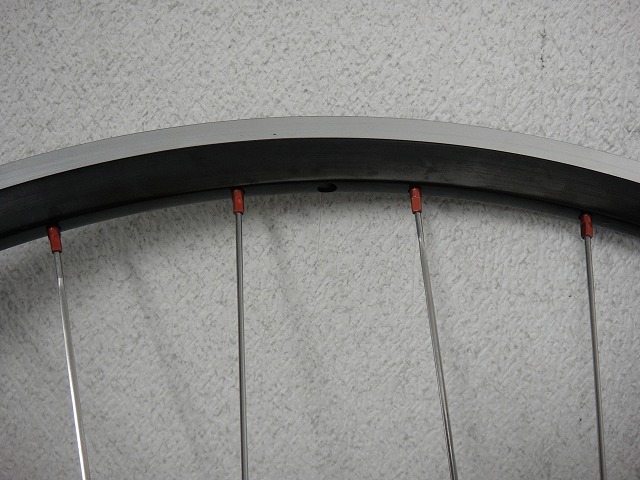
and like the front wheel, the nipples are red.
I mentioned to the customer that just because the rear wheel is 32-spokes doesn't mean the front needs to match,
and since there weren't any particularly risky conditions (weight-wise or otherwise), I went with 20 spokes for the front wheel yesterday.