I received a WH-7900-C50-CL rear wheel from a customer.
I also received the front wheel, but the radial runout was extremely bad and took a long time to fix.
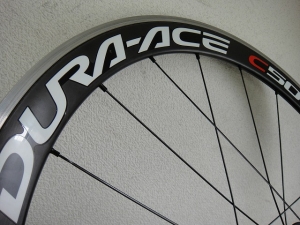
↑The rear wheel was being worked on for a different reason, but...
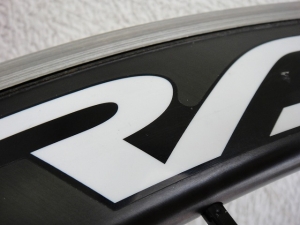
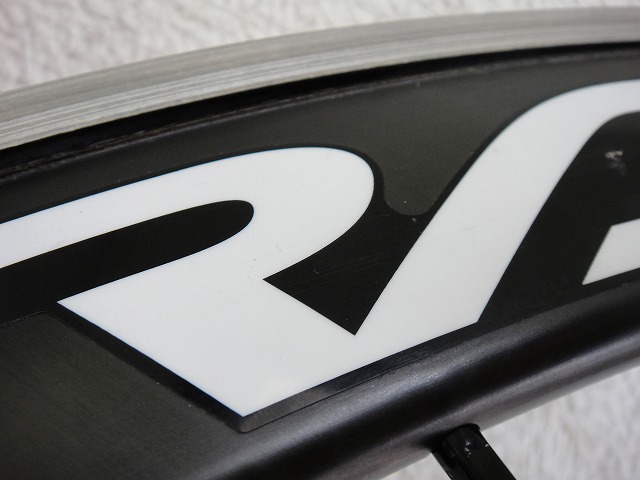
↑The boundary between the aluminum and carbon looked suspicious,
so I pressed on it by hand and...
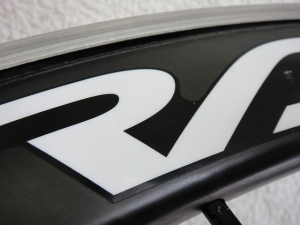
It was lifting and separating.
I called Shimano's customer service center about this, and they told me:
・If it was within one year of purchase, we could do something about it, but if it's past that, we can't
・Rims are not currently sold individually; you can only get a new rim if you use Shimano's wheel service center for a spoke relacing service where they reuse just the hub
(I checked and found that 7850 rims are available, but nothing from 7900 onward)
・The service center relacing fee comes out to about 75% of the cost of a new wheel
・There have been a few past cases of rim delamination
・You really shouldn't use it much
That's what they said.
Not much—you shouldn't use it at all. I'm too scared to use it.
75% is, well, that convenient price point where you think "I might as well just buy a new one," isn't it?
The customer said "I guess rims with a carbon covering on an aluminum braking surface just don't work..." and seemed disappointed, but it's okay.
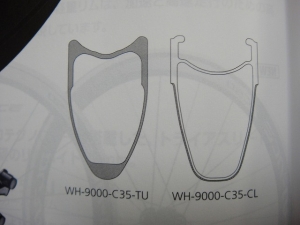
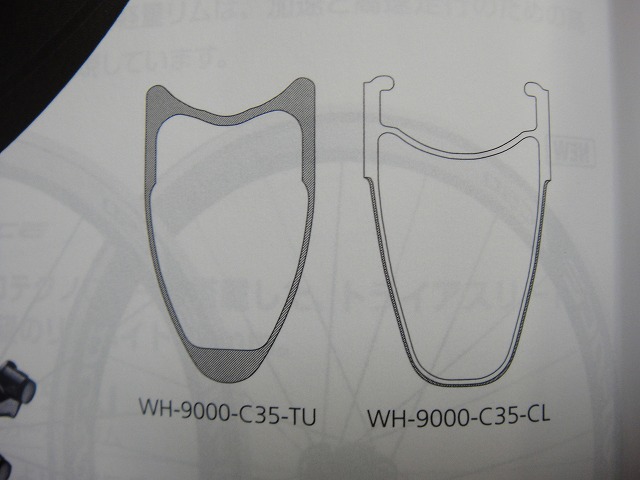
↑On the 9000 WO wheels, the rim braking surface isn't 100% carbon;
it's a hybrid with aluminum!
Don't worry!
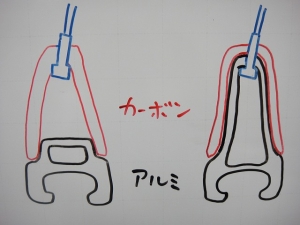
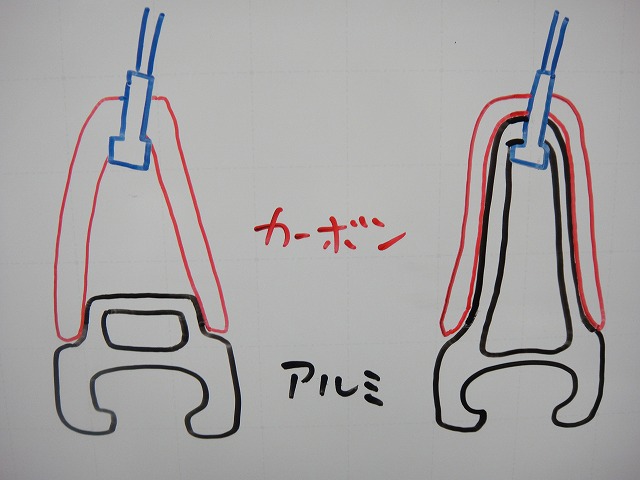
In the diagram above, the left is a carbon braking surface and the right is a hybrid braking surface.
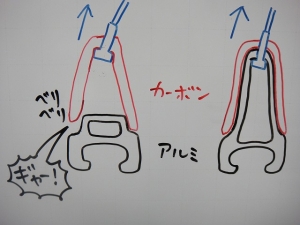
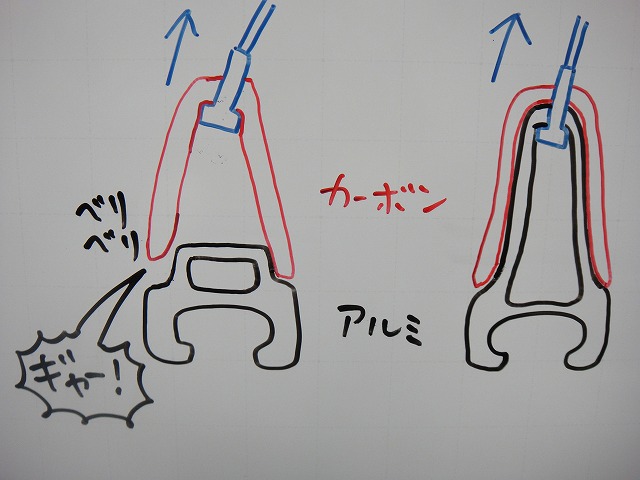
When spoke tension is applied, the adhesive on the carbon braking surface can separate and
break off. When that happens, you'll be in the situation of "you really shouldn't use it much."
By the way, the spoke tension on this rear wheel
wasn't particularly high or anything.
In fact, it was clearly loose.
Before I started working on it, I had a vague feeling something was wrong with the rim seams,
so it's good I caught the delamination.
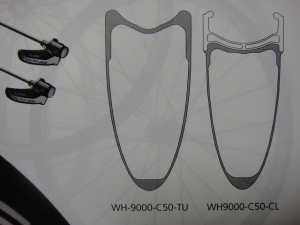
Ah, sorry.
The C50 WO wheels still had carbon braking surfaces.
Addendum: I'm writing this knowing it might stir things up (laugh)
"The front wheel has severe radial runout, the rear wheel has carbon delamination,
and the spoke tension is clearly loose?
I should have just told them straight: 'It's not the rim that's bad, it's your riding style!
Looking closer, there's even a dent in the carbon near the delamination.
This person shouldn't be allowed to ride a bike, should they?"
I received this kind of comment.
Regarding the point that this isn't about the customer's riding style or body weight,
I'll explain by separating the front and rear wheels.
First, the front wheel.
I didn't take photos of the front wheel, so I'll draw a diagram.
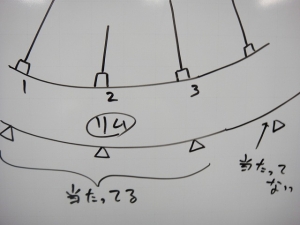
The front wheel's radial runout was about 3 spokes out of 16 spokes worth bulging outward around the entire rim.
Not dents—bulges.
To adjust this 3-spoke bulge to the same vertical position as the other 13 spokes,
I had to tighten each nipple about one-and-a-half full turns.
If you've ever built a wheel, you'd understand that
a radial runout of one-and-a-half nipple turns is quite significant.
Before I started, I checked the lateral runout and center alignment,
and the center was spot-on with virtually no lateral runout.
That means if the front wheel had been properly built initially,
some force would have had to loosen three consecutive adjacent nipples by one-and-a-half turns
(without creating lateral runout, no less).
It's hard to imagine this happening from buckling or riding style.
The radial runout was there from the start.
I just corrected it.
Now for the rear wheel.
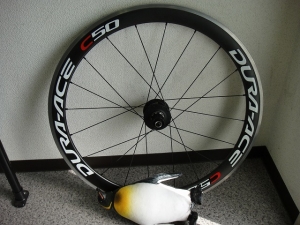
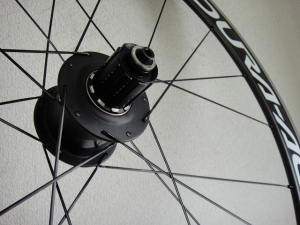
The loose spoke tension on the rear wheel is not Shimano's fault.
This rear wheel was built with a 7900 rim on a PowerTap 20H hub.
I apologize for leaving this out of the previous post.
The shop that built this seems to take pride in building loose wheels with DT Revolution spokes,
and they had another customer come in today asking for retensioning or rebuilding.
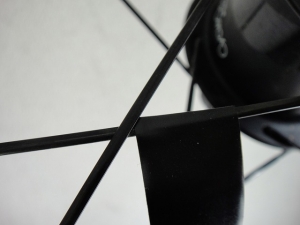
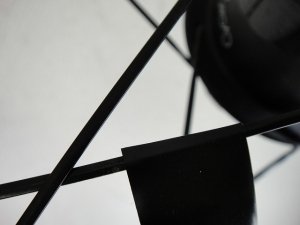
Spoke tension clearly loose?→Yes, it was loose.
I thought it was a wheel in progress.
This isn't the customer's fault.
This wheel was a CX-RAY, not a Revolution.
Thank you for your comment.
I don't know if you own a C50 WO wheel, but
if you did use one and the rim delaminated like this case,
would you be satisfied just saying "Well, my riding style was bad, so it can't be helped"?
I think it's the rim that's faulty, not the riding style...
This has been very enlightening. Thank you.

Unused photos.
Should have looked at the rim first.
Addendum to the addendum:
The person who commented has sent me another comment.
I won't post it here, but I've read it.
They seem to understand now that there was no problem with the customer's usage.
Also, regarding the "impact marks" you mentioned—
is that what's showing inside the letter A in the sticker?
That's dirt. I confirmed it.
I also received the front wheel, but the radial runout was extremely bad and took a long time to fix.
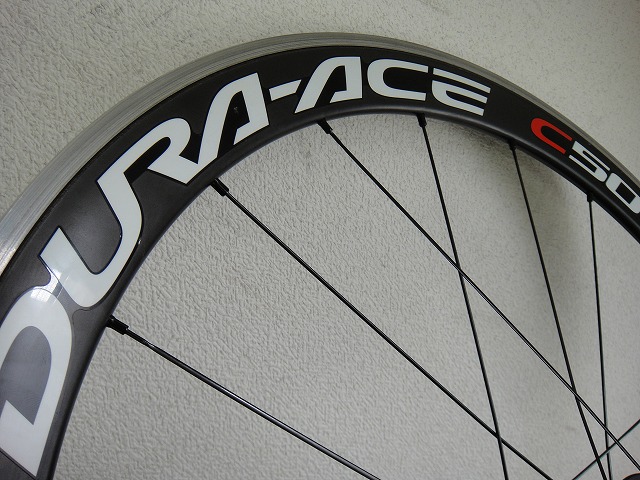
↑The rear wheel was being worked on for a different reason, but...
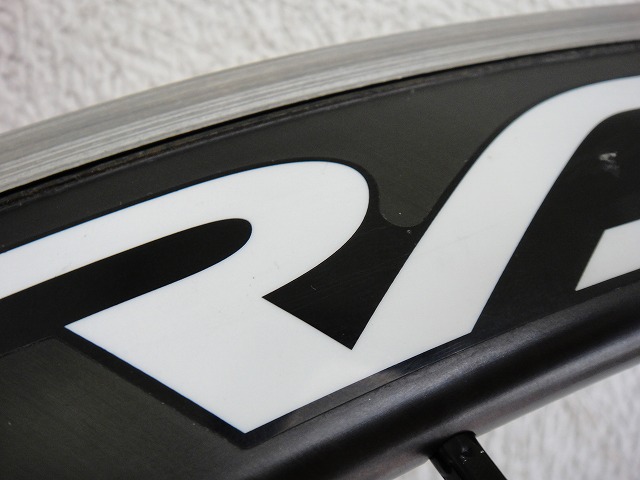
↑The boundary between the aluminum and carbon looked suspicious,
so I pressed on it by hand and...
It was lifting and separating.
I called Shimano's customer service center about this, and they told me:
・If it was within one year of purchase, we could do something about it, but if it's past that, we can't
・Rims are not currently sold individually; you can only get a new rim if you use Shimano's wheel service center for a spoke relacing service where they reuse just the hub
(I checked and found that 7850 rims are available, but nothing from 7900 onward)
・The service center relacing fee comes out to about 75% of the cost of a new wheel
・There have been a few past cases of rim delamination
・You really shouldn't use it much
That's what they said.
Not much—you shouldn't use it at all. I'm too scared to use it.
75% is, well, that convenient price point where you think "I might as well just buy a new one," isn't it?
The customer said "I guess rims with a carbon covering on an aluminum braking surface just don't work..." and seemed disappointed, but it's okay.
↑On the 9000 WO wheels, the rim braking surface isn't 100% carbon;
it's a hybrid with aluminum!
Don't worry!
In the diagram above, the left is a carbon braking surface and the right is a hybrid braking surface.
When spoke tension is applied, the adhesive on the carbon braking surface can separate and
break off. When that happens, you'll be in the situation of "you really shouldn't use it much."
By the way, the spoke tension on this rear wheel
wasn't particularly high or anything.
In fact, it was clearly loose.
Before I started working on it, I had a vague feeling something was wrong with the rim seams,
so it's good I caught the delamination.

Ah, sorry.
The C50 WO wheels still had carbon braking surfaces.
Addendum: I'm writing this knowing it might stir things up (laugh)
"The front wheel has severe radial runout, the rear wheel has carbon delamination,
and the spoke tension is clearly loose?
I should have just told them straight: 'It's not the rim that's bad, it's your riding style!
Looking closer, there's even a dent in the carbon near the delamination.
This person shouldn't be allowed to ride a bike, should they?"
I received this kind of comment.
Regarding the point that this isn't about the customer's riding style or body weight,
I'll explain by separating the front and rear wheels.
First, the front wheel.
I didn't take photos of the front wheel, so I'll draw a diagram.
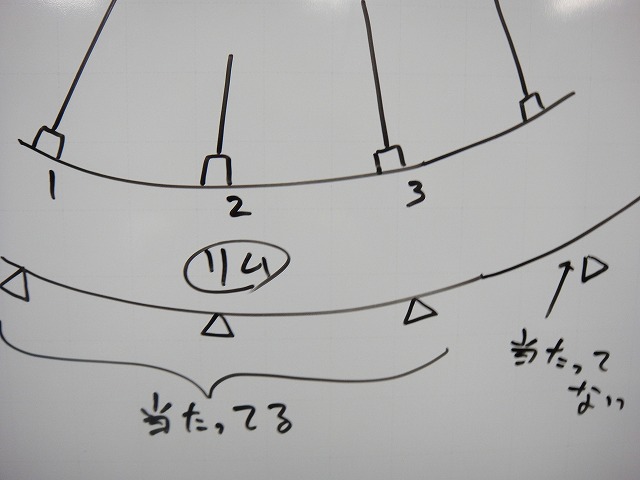
The front wheel's radial runout was about 3 spokes out of 16 spokes worth bulging outward around the entire rim.
Not dents—bulges.
To adjust this 3-spoke bulge to the same vertical position as the other 13 spokes,
I had to tighten each nipple about one-and-a-half full turns.
If you've ever built a wheel, you'd understand that
a radial runout of one-and-a-half nipple turns is quite significant.
Before I started, I checked the lateral runout and center alignment,
and the center was spot-on with virtually no lateral runout.
That means if the front wheel had been properly built initially,
some force would have had to loosen three consecutive adjacent nipples by one-and-a-half turns
(without creating lateral runout, no less).
It's hard to imagine this happening from buckling or riding style.
The radial runout was there from the start.
I just corrected it.
Now for the rear wheel.
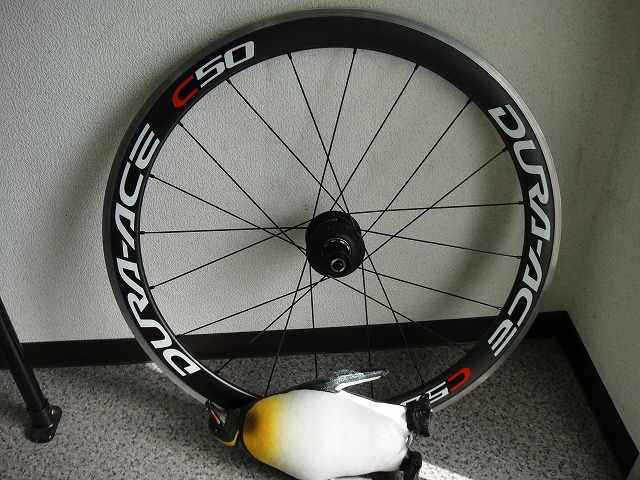
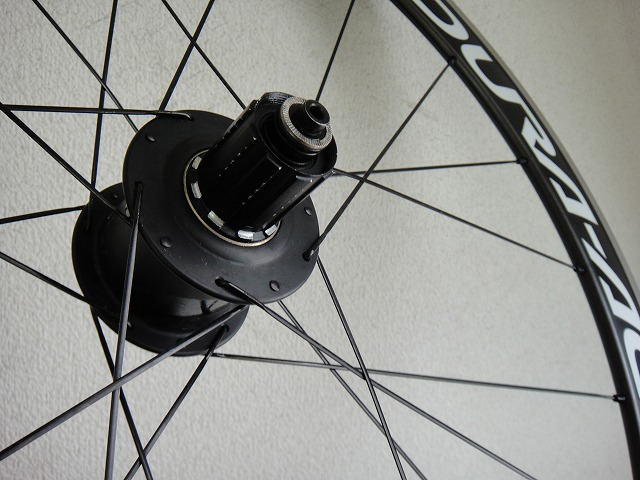
The loose spoke tension on the rear wheel is not Shimano's fault.
This rear wheel was built with a 7900 rim on a PowerTap 20H hub.
I apologize for leaving this out of the previous post.
The shop that built this seems to take pride in building loose wheels with DT Revolution spokes,
and they had another customer come in today asking for retensioning or rebuilding.

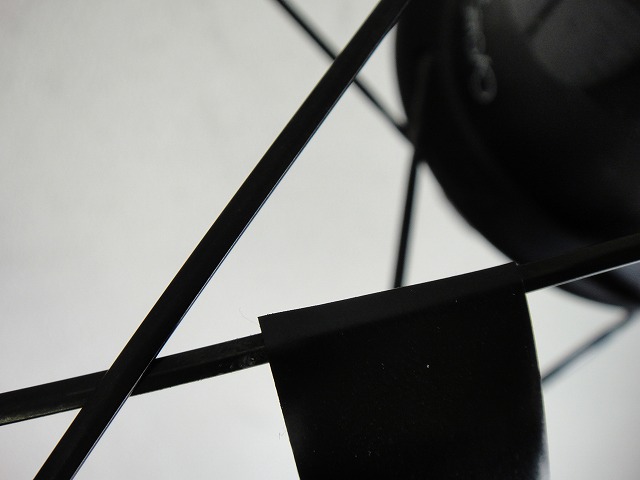
Spoke tension clearly loose?→Yes, it was loose.
I thought it was a wheel in progress.
This isn't the customer's fault.
This wheel was a CX-RAY, not a Revolution.
Thank you for your comment.
I don't know if you own a C50 WO wheel, but
if you did use one and the rim delaminated like this case,
would you be satisfied just saying "Well, my riding style was bad, so it can't be helped"?
I think it's the rim that's faulty, not the riding style...
This has been very enlightening. Thank you.
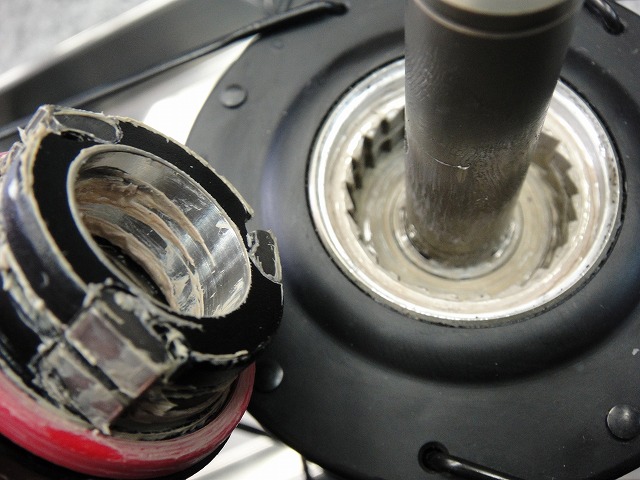

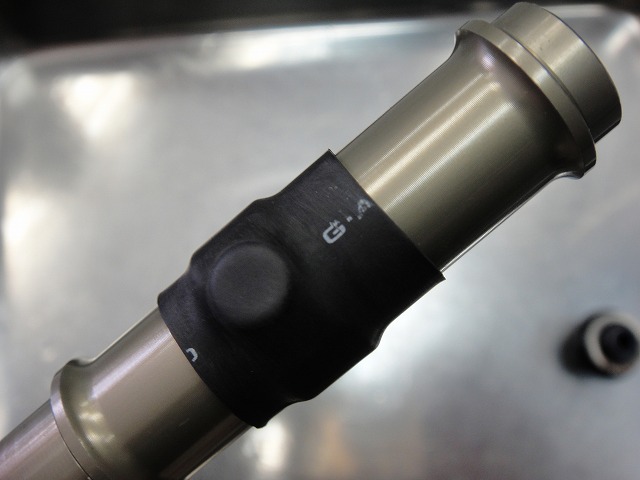
Unused photos.
Should have looked at the rim first.
Addendum to the addendum:
The person who commented has sent me another comment.
I won't post it here, but I've read it.
They seem to understand now that there was no problem with the customer's usage.
Also, regarding the "impact marks" you mentioned—
is that what's showing inside the letter A in the sticker?
That's dirt. I confirmed it.