Today's supposed to be the last Saturday of the month, so I should be closed, but I had a few customer appointments, so I opened up the shop anyway.
More wheels today (and so on).
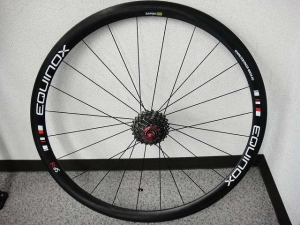
I took in a wheel built with an Ekinox SP38 carbon rim—38mm tall.
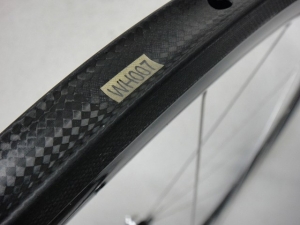
Nomu Lab Wheel No. 2 uses an Ekinox WH007 rim, but
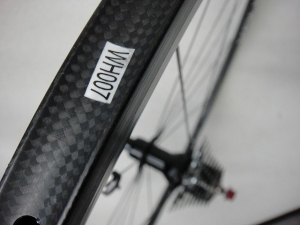
this is the same rim. The decorative carbon finish on the rim sidewall is different, but this is the original from the manufacturer.

The spokes are CX-RAY, laced 40-spoke pattern.
The reason I took it in is "to relace the non-drive side from radial to tangent."
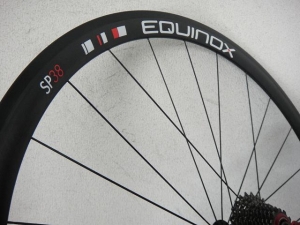
↑The drive side has no brake marks on the rim sidewall, but
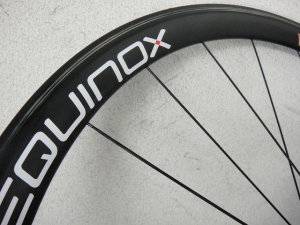
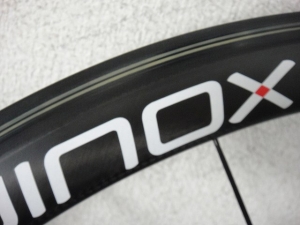
↑The non-drive side has marks from the yellow SwissStop brake pads across a considerable area of the rim.
Brake rub is something that happens more easily on wheels with loose lateral stiffness, depending on the rider's weight and riding style, and the gap between the brake pads and rim. But it always happens on the non-drive side (the left). The right side pretty much never rubs. If the right side rubs, the left will rub even more. When you push down the right pedal from top dead center, the gap between the rear rim and left brake pad narrows. Under those conditions I mentioned earlier, the pads rub.
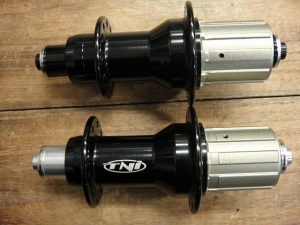
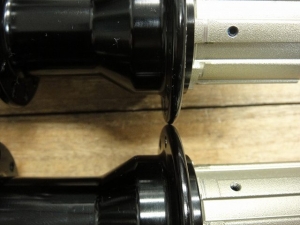
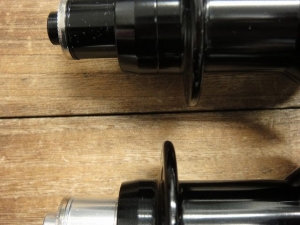
I disassembled the wheel, and wow—this is problematic. It's a somewhat custom hub based on the Novatech 482, and the flange width is only about 51mm edge-to-edge. That's only about 1mm wider than an American Classic hub. No wonder the tension difference between left and right seemed closer for a 40-spoke lacing. Narrow-flange hubs can't achieve lateral stiffness no matter how hard you tension the spokes. When I state this plainly, I sometimes get pushback in the comments, but as long as we're talking about steel-spoke spoke wheels, there are no exceptions. If you could just crank up the tension and call it good, you'd just put the flanges right under the rim and crank away. The dish would disappear, so you wouldn't get left-right tension differences either. But lateral stiffness can't be achieved that way, which is why flanges are made wider even if it creates dish in the first place.
From here on, the main cause of the brake rub is probably more likely to be the hub dimensions rather than the 40-spoke lacing. I'm building all CX-RAY spokes in a semi-comp pattern and also will do lacing nipple lines (which provides just a tiny bit of brake-rub reduction), and if there's still rub after the rebuild, I'll consider swapping out the hub too.
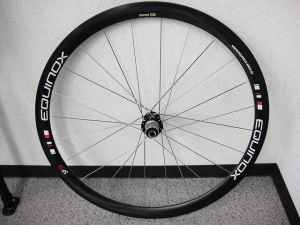
It's built.

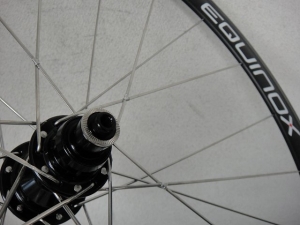
Semi-comp 40-spoke laced with spoke lines. I only took in the rear wheel, so I don't even know if there's a front wheel to match it. If there isn't, the resistance to the spokes changing color becomes a little different. The spokes went silver because of the lacing lines.
I swapped out the brass nipples for aluminum ones. Overall on the wheel, the DT Comp conversion on the drive side and the 6-spoke lacing on the non-drive side result in weight increase, and the aluminum nipple swap doesn't recover all that weight, but in terms of rotating weight, it's a small change that makes a big difference.
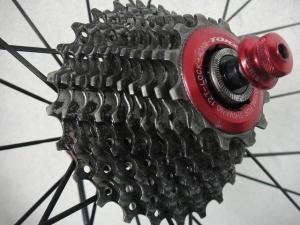
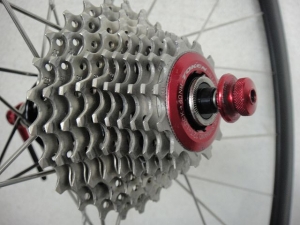
I also cleaned the sprocket while I was at it. "While I'm at it" during wheel building. We don't offer this as a standalone service. We don't. ←Why did I write that twice?
More wheels today (and so on).

I took in a wheel built with an Ekinox SP38 carbon rim—38mm tall.
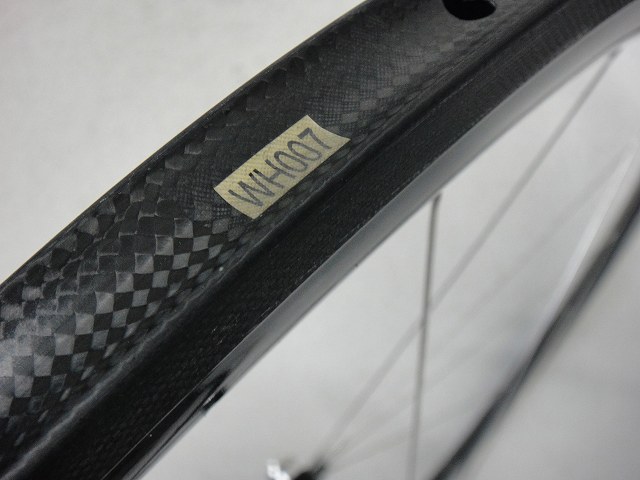
Nomu Lab Wheel No. 2 uses an Ekinox WH007 rim, but

this is the same rim. The decorative carbon finish on the rim sidewall is different, but this is the original from the manufacturer.
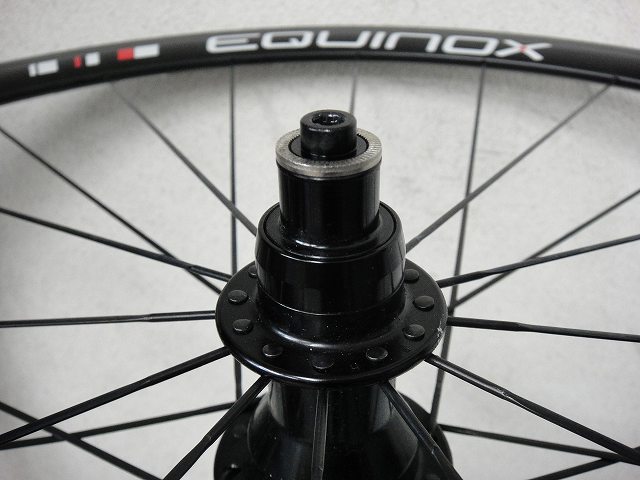
The spokes are CX-RAY, laced 40-spoke pattern.
The reason I took it in is "to relace the non-drive side from radial to tangent."
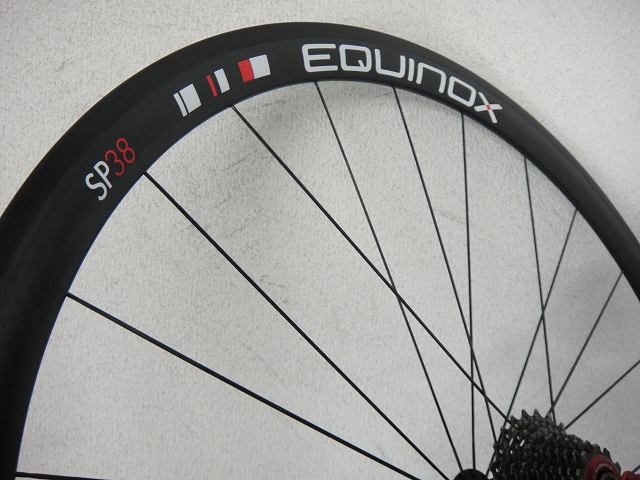
↑The drive side has no brake marks on the rim sidewall, but
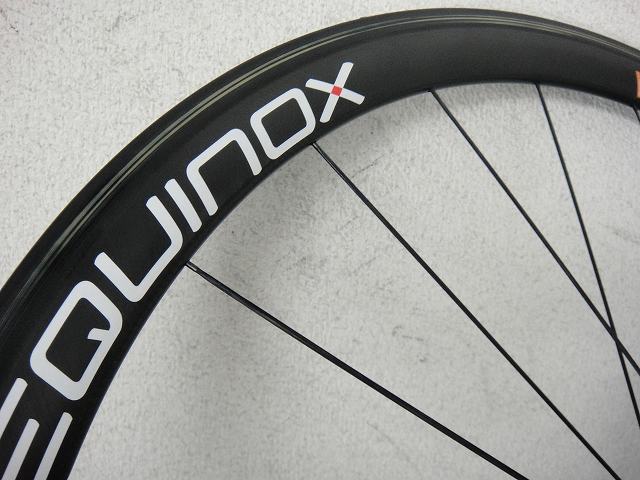
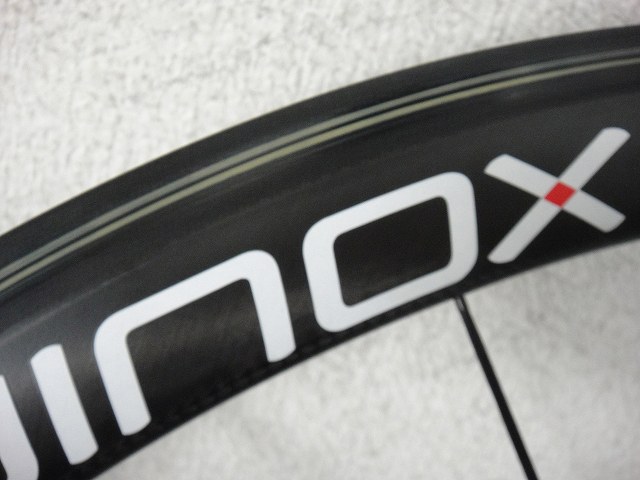
↑The non-drive side has marks from the yellow SwissStop brake pads across a considerable area of the rim.
Brake rub is something that happens more easily on wheels with loose lateral stiffness, depending on the rider's weight and riding style, and the gap between the brake pads and rim. But it always happens on the non-drive side (the left). The right side pretty much never rubs. If the right side rubs, the left will rub even more. When you push down the right pedal from top dead center, the gap between the rear rim and left brake pad narrows. Under those conditions I mentioned earlier, the pads rub.
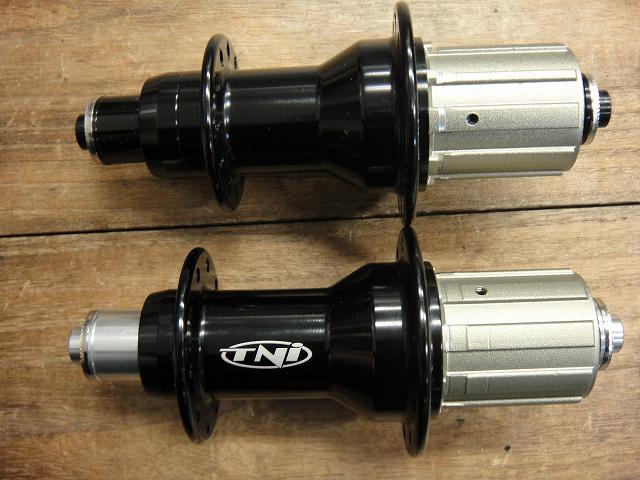
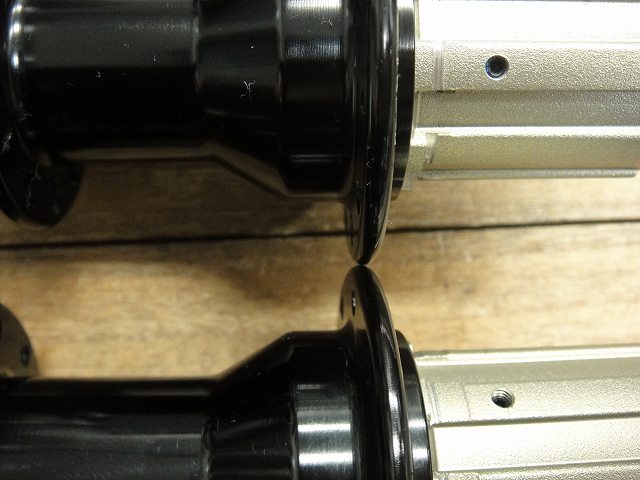
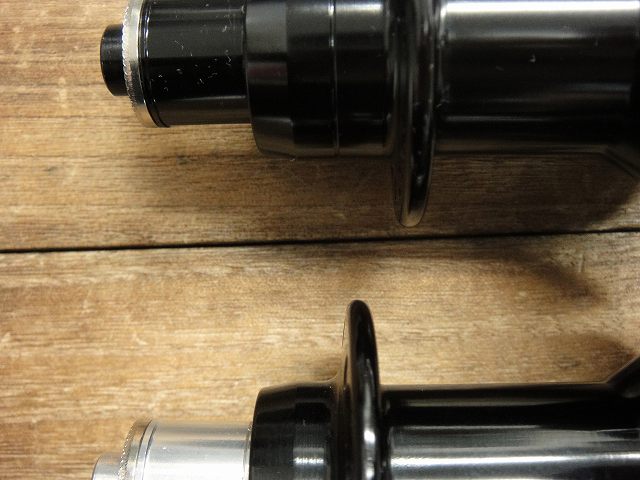
I disassembled the wheel, and wow—this is problematic. It's a somewhat custom hub based on the Novatech 482, and the flange width is only about 51mm edge-to-edge. That's only about 1mm wider than an American Classic hub. No wonder the tension difference between left and right seemed closer for a 40-spoke lacing. Narrow-flange hubs can't achieve lateral stiffness no matter how hard you tension the spokes. When I state this plainly, I sometimes get pushback in the comments, but as long as we're talking about steel-spoke spoke wheels, there are no exceptions. If you could just crank up the tension and call it good, you'd just put the flanges right under the rim and crank away. The dish would disappear, so you wouldn't get left-right tension differences either. But lateral stiffness can't be achieved that way, which is why flanges are made wider even if it creates dish in the first place.
From here on, the main cause of the brake rub is probably more likely to be the hub dimensions rather than the 40-spoke lacing. I'm building all CX-RAY spokes in a semi-comp pattern and also will do lacing nipple lines (which provides just a tiny bit of brake-rub reduction), and if there's still rub after the rebuild, I'll consider swapping out the hub too.
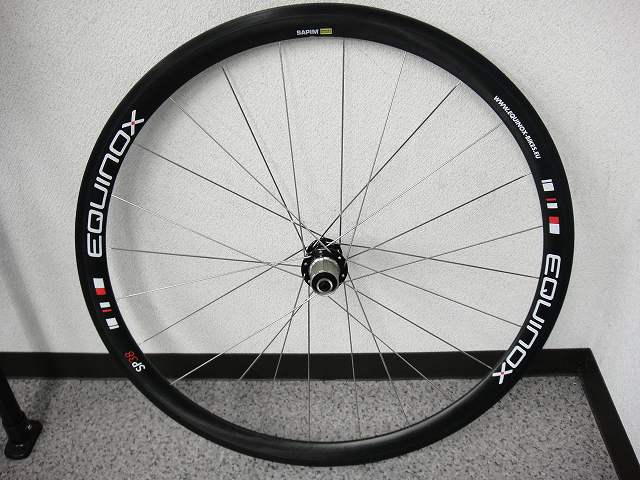
It's built.
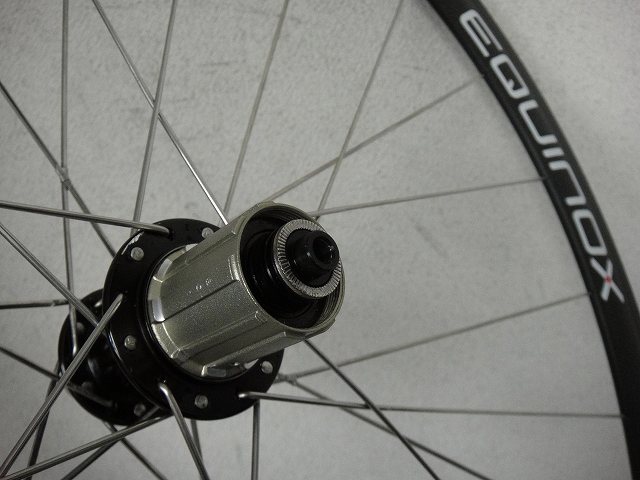

Semi-comp 40-spoke laced with spoke lines. I only took in the rear wheel, so I don't even know if there's a front wheel to match it. If there isn't, the resistance to the spokes changing color becomes a little different. The spokes went silver because of the lacing lines.
I swapped out the brass nipples for aluminum ones. Overall on the wheel, the DT Comp conversion on the drive side and the 6-spoke lacing on the non-drive side result in weight increase, and the aluminum nipple swap doesn't recover all that weight, but in terms of rotating weight, it's a small change that makes a big difference.

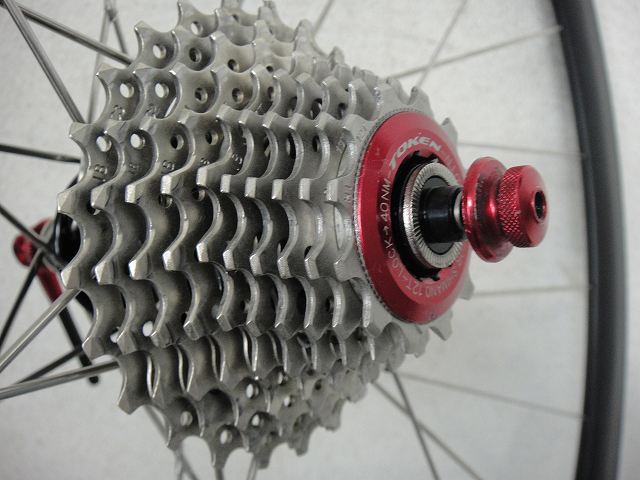
I also cleaned the sprocket while I was at it. "While I'm at it" during wheel building. We don't offer this as a standalone service. We don't. ←Why did I write that twice?