Someone gave me a assortment of baked goods, and
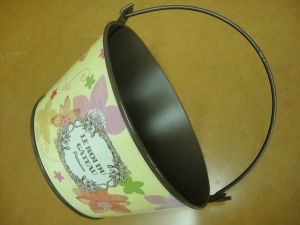
before I knew it, eating one after another, they were all gone.
Thank you for the meal.
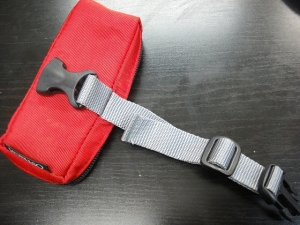
I've been using an OSTRICH (Japanese saddle bag maker) SP-222 saddle bag,
and apart from the fact that it doesn't come in black and requires a separate slip-stop buckle for the strap (→here),
I think this is one of the ultimate forms of a saddle bag.
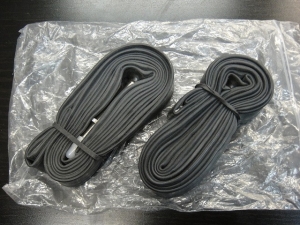
The manufacturer's intended capacity is about one tube, two tire levers, and a patch for puncture repairs,
but if you use a Vittoria EVO55 tube (discontinued) or a Panaracer R'AIR,
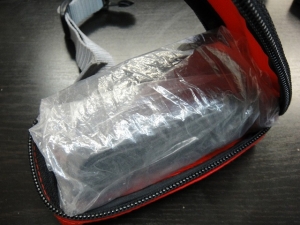
if you fold them neatly,
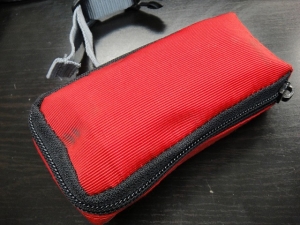
you can fit two.
The bag has pockets on the top and bottom,
so I put tire levers and patches in them.
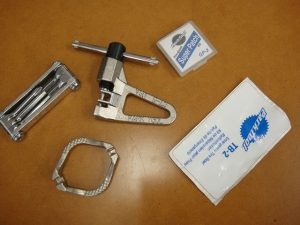
Tools other than tubes and tire levers
I put in a separate waterproof pouch and carry it in my jersey pocket.
If I simply decide that "punctures are an act of God, but everything else is poor maintenance," then I only need a portable pump and a tube.
Unless it's a Vittoria Zaffiro or tubeless tire,
I don't need tire levers, so I don't carry them.
And since I almost never use the waterproof pouch with tools for myself,
I often forget to bring it.
But the other day on the way back from an early morning ride,
I saw someone stranded with a chain that had dropped and then gotten badly jammed,
and I thought "there's no way this person can fix this alone,"
so I fixed it for them on the spot.
I removed the rear wheel and took the chain off the front derailleur,
but I didn't have a screwdriver to get the chain off the front derailleur,
so I borrowed one from someone riding with us.
And that's when I reflected.
I carry tools not for my own rescue, but
it's overwhelmingly more common that I end up using them for someone else who's in trouble.
Even my own portable pump and CO2 cartridges—
I've probably only used them for myself about half the time.
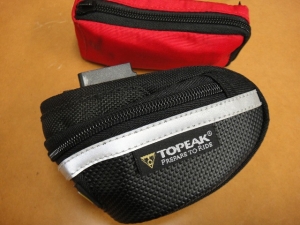
So I decided to get a slightly larger saddle bag
and put my tools in it too.
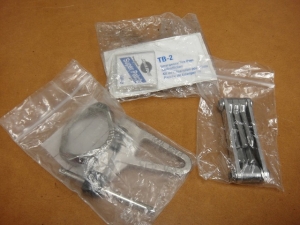
When putting tools and patches in a saddle bag,
it's better to put them in a separate waterproof bag.
If water gets into the saddle, your tools will rust,
and patches can absorb moisture and become unusable.
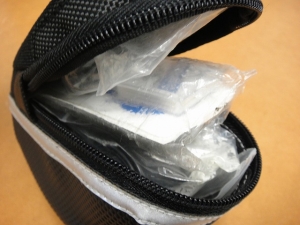
Tools, patches, and two tubes

fit comfortably.
With this saddle bag, you might be able to fit two tubes even without thin ones.
I said earlier that "anything other than a puncture is poor maintenance,"
but a broken chain can also be an act of God.
Most of the time it's because it wasn't connected properly, though.
The way to tell is simple: if the chain broke at a spot that was previously cut and reconnected with a connecting pin,
that counts as poor maintenance.
So you should carry a chain tool.
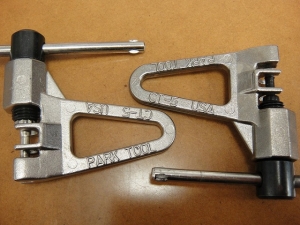
For portable use, the Park Tool CT-5 shown in the image above is recommended.
Like always, it's probably short for ChainTool-5.
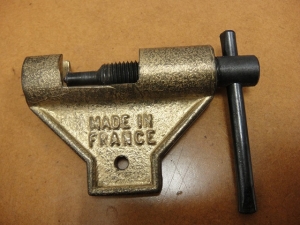
VAR (Japanese tool maker) makes more compact versions,
but modern chains are thin, so their pins are tightened abnormally.
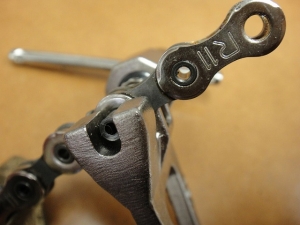
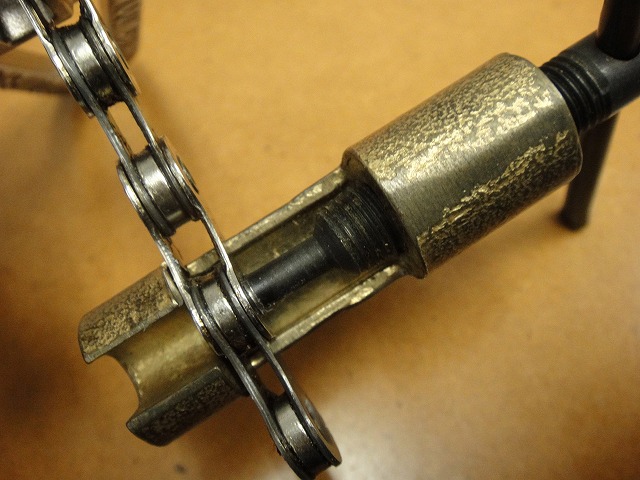
This is a current Record 11S chain, but
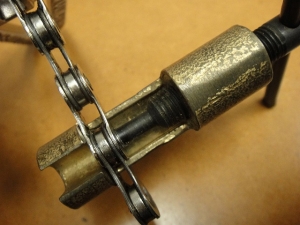
the VAR tool couldn't push the pin out.
(Even holding the body with large pliers didn't work)
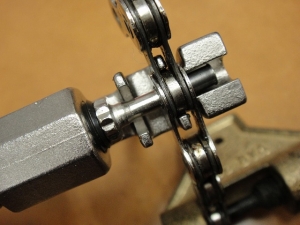
Park Tool managed it (but it's pretty tight).

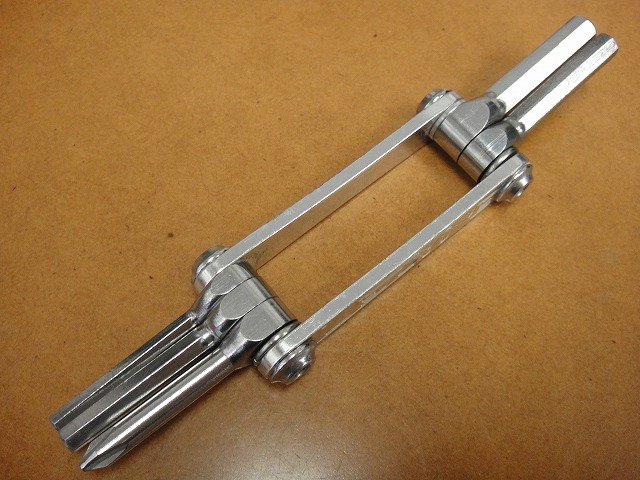
This is a Lezyne multi-tool, but this type of simple hex key
with 3mm, 4mm, and 5mm plus a Phillips driver is enough.
The tool above also has 6mm,
and if your stem has a 6mm hole, it's nice to have.
I've decided never to adjust position away from home.
But you do get situations where a crash moves the stem or seatpost and you can't move them by hand,
so you should carry a hex key that matches the size of your stem and seat clamp bolts.
If disc brake rotors or brake shoe posts have Torx bolts,
you should carry the appropriate size hex key for those too.
Also, some of these type of tools have chain-cutting-looking attachments,
but they're usually just useless bulk,
so don't get your hopes up.
You use the entire body of the tool as a handle and rotate it,
but whether it can actually cut current 10S or 11S chains is questionable.
If you have one, you should test it on a chain end piece like I did.
You might avoid the despair of being stranded and realizing
"I thought I had a 'chain tool' but I didn't actually have one."
That's why I carry a dedicated chain tool.
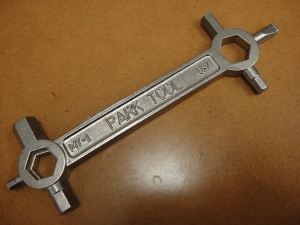
I also like the Park Tool MT-1 as a simple multi-tool.
Like usual, it's probably short for MultiTool-1.
It also has an 8mm hex key, but at this length
you can't remove tightly-fastened crank bolts or pedals (and if you could, that would be a problem),
so the 8mm is basically ornamental.
The driver is flat-head, but derailleur screws usually have flat slots,
so that's not much of an issue.
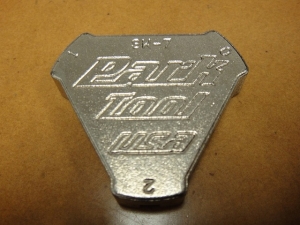
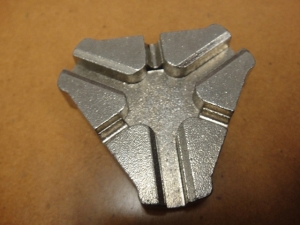
I like the Park Tool SW-7 nipple wrench,
but it's a bit heavy.
And like always, it's probably short for SpokeWrench-7.
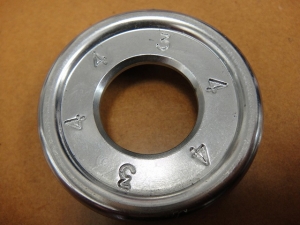
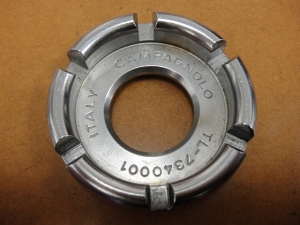
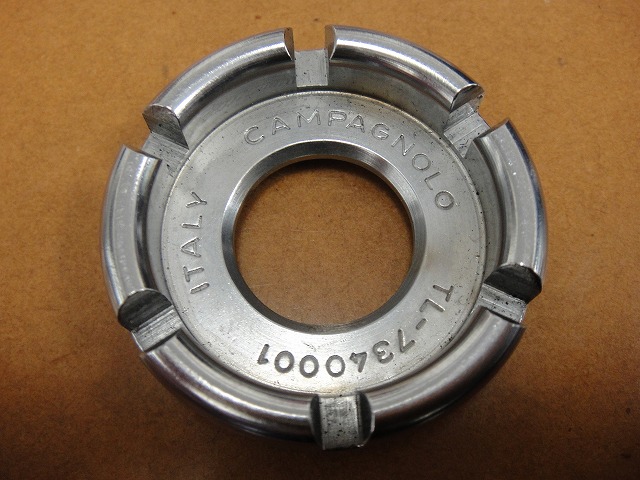
Campagnolo's is also a bit heavy.
It looks great though.
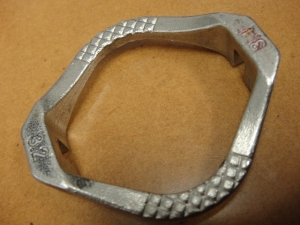
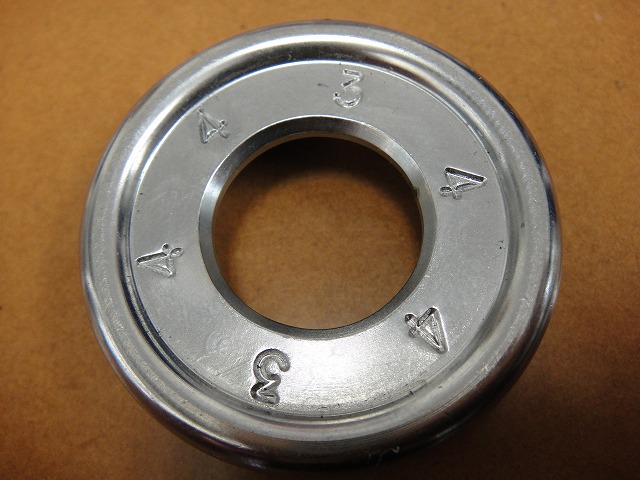
The Minoura NW-200 is light and recommended.
It's short for NippleWrench, but thinking about it,
since the tool doesn't actually touch the spokes,
calling it a "spoke wrench" might be odd.
I used to paint the 3.2 size black and the 3.4 size red to match Park Tool's spoke wrench colors,
but it's mostly worn off now. Marking them so you can tell them apart is a bit convenient.
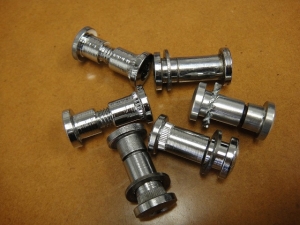
If you have a steel frame with a seat pin,
you should carry a spare seat pin.
I once broke one away from home and had a terrible time.
(That's why I stopped adjusting position away from home)
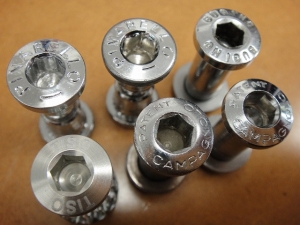
If you have no preference, Sugino's are recommended.
Campagnolo's seem to be tempered differently—they're unnecessarily hard and break easily.
Tisso's ultra-light aluminum seat pins convert clamping force into aluminum stretch,
so they don't clamp very well.
They demand precision on the frame side.
Frames with good precision and finish will let the seatpost slide out smoothly and straight
with just a half turn of the seat pin.
Pinarello seat pin? What are you talking about?

About simple patches and tire boots.
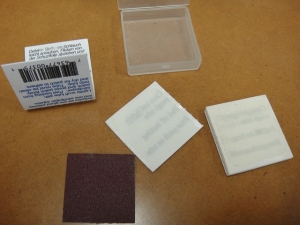
Park Tool's GP-2,
As it says "Pre-Glued," the adhesive is already applied.
So all you do is roughen the area around the puncture with sandpaper and stick it on—simple—
but over time it can peel off from rubbing inside the tire.
This isn't a defect; that's just how it is.
The idea is that if you get a puncture during your ride, you temporarily fix it with this and make it home safely.
When you get home, you should either replace the tube or peel it off and re-attach it with proper rubber cement patches.
(Peeling off means it wasn't properly applied)
Panaracer's Easy Patch is similar.
The "Easy" in the name captures the characteristic that it's easy to apply but easy to peel off.
GP-2 (abbr.) = GluedPatch-2 (abbr.)
By the way, this case fits a 500-yen coin perfectly.
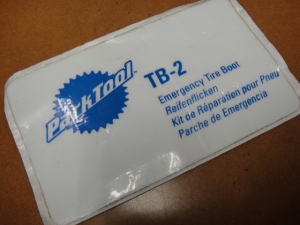
If you get a puncture that tears the tire (especially the sidewall),
even if you patch the tube and pump it up,
the tube will poke out through the torn part and puncture again right away.
In that case, you temporarily seal the tear with folded paper,
or in a pinch, with paper money,
and that's what a Park Tool tire boot is for—like a protective patch.
(abbr.) = TireBoot-2 (abbr.)
And as a trick, if you stick fabric duct tape on the underside of your saddle,
it might come in handy someday.
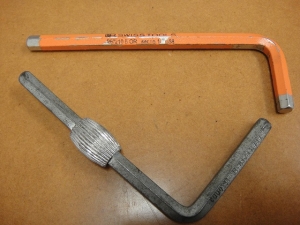
Old Campagnolo used 5mm holes for everything—
brake cable fixing, shift cable fixing,
brake arch fixing, crank five-bolts, brake shoe post fixing, etc.
So one 5mm hex key could handle just about anything,
but that's not the case anymore.
The top in the image is PB, the bottom is Campagnolo.

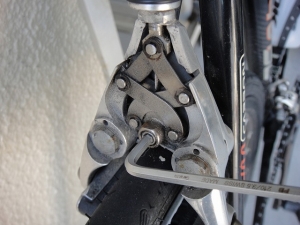
If you use a delta brake,
you should carry a 3.5mm hex key.
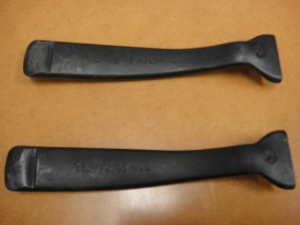
↑This is a Campagnolo tire lever.

Made September 2004
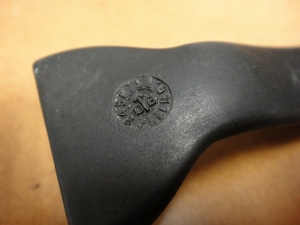
or July 2006,
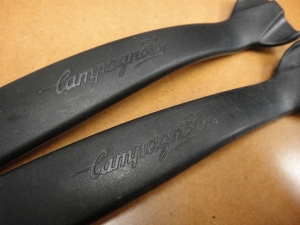
but it has a Campagnolo logo.
Recent ones seem to have this marking omitted for some reason, but I don't know why.
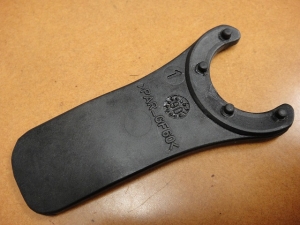
The Mavic tire lever with hub bearing cone wrench
is annoying because of the tire lever, so I cut it short
to just the bearing cone wrench.
Since you're not applying force on this part, the length is fine.
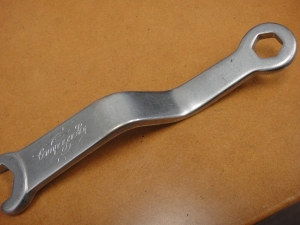
This Campagnolo bent tool,

the wrench end works perfectly for Record with dual-bolt seatposts or Sugino Mighty seatpost bolts,
with just the right curve.
You actually work with the saddle attached,
and even with Turbo or Rolls saddles, the rails don't get in the way much.

If you use a deep rim,
it might be good to carry a slip-on type valve extender.
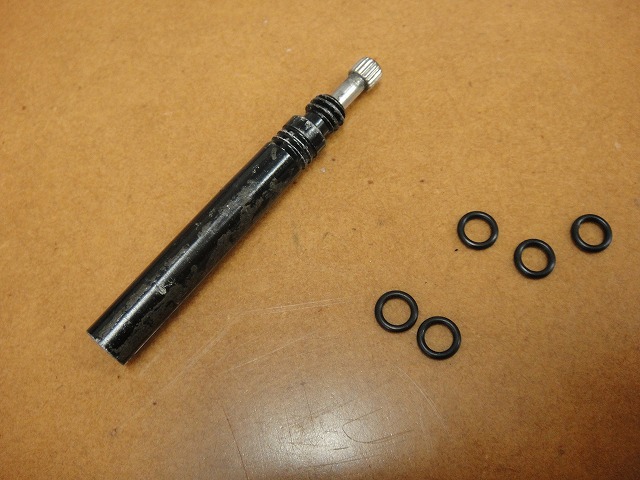
This is Panaracer's Synchro Valve Extender,
with a design where you can open and close the valve tip
after slipping it over the valve.
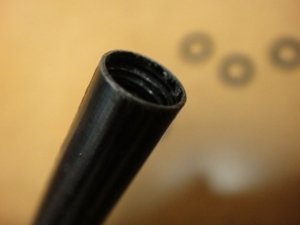
The slip-on type gets flared at the edges after repeated use and breaks down,
causing air leaks from the joint.
The image above hasn't flared yet.
Putting on a packing ring helps somewhat, but this rubber's lifespan isn't long either.
Even if air leaks from the joint, air does get into the tube,
but the gauge needle on the air pump stays down,
so you can't accurately tell what pressure you've pumped in.
I don't like that, so I don't recommend slip-on extenders.
Also, Campagnolo and Fulcrum carbon deep rim wheels have a "valve rattle prevention guard,"
but slip-on extenders are slightly thicker than the valve diameter,
so they won't fit through this guard.
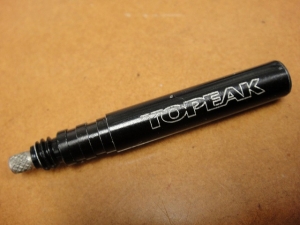
Topeak also has ablatant copy similar product,
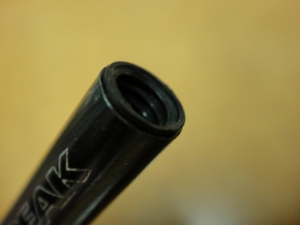
but this one has a seal rubber ring at the edge.
In actual use, this rubber's lifespan also isn't long.
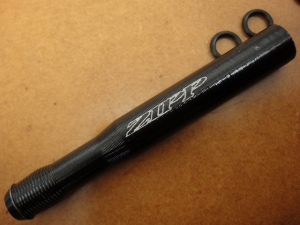
↑This is ZIPP, but most slip-on types have this shape.
The valve tip is always in the open position inside the extender.
Unless the joint is completely embedded in the rim,
it'll stick out a little, and another option is to
only use it when pumping air.
Carrying this too might help in some situations.
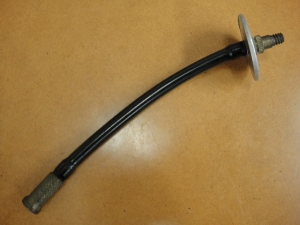
If you run disc wheels,
it's convenient to carry Sugino's tension disc valve adapter hose.
It works with most disc wheels,
including those with small valve windows.
So, I've gone off on an excessive tangent, but these are tools
that might be convenient to carry.
Please refrain from pointing out that I'm recommending
tools, many of which are discontinued.
I'll make it a point to always carry a simple hex key, driver, and chain tool.
Beyond that, I'll decide what to carry based on the situation.
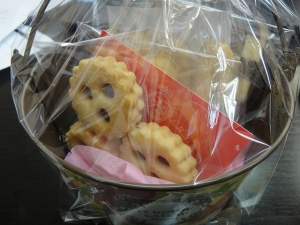
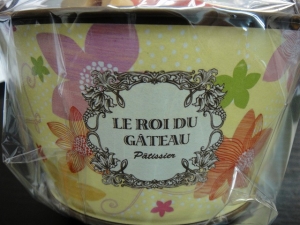
The person whose chain sack I fixed—
the same day, they came to the shop to thank me with a box of baked goods. I'm very sorry. I shouldn't have mentioned my name.
But I think this should really go to the person who lent their screwdriver,
not me.
So I have no intention of touching it at all!
But maybe just one cookie would be okay,
oh,

before I knew it, eating one after another, they were all gone.
Thank you for the meal.
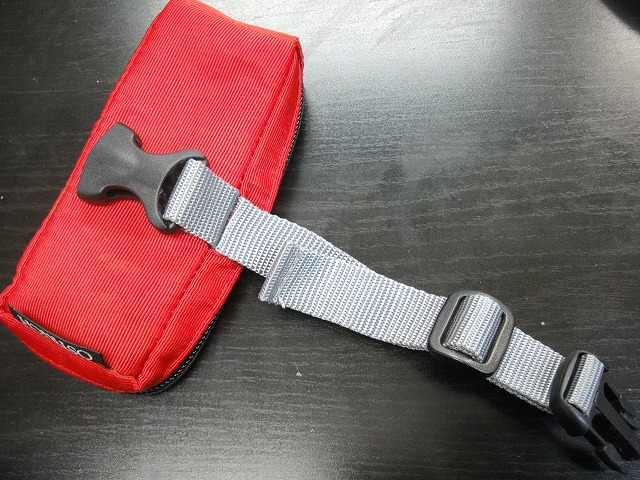
I've been using an OSTRICH (Japanese saddle bag maker) SP-222 saddle bag,
and apart from the fact that it doesn't come in black and requires a separate slip-stop buckle for the strap (→here),
I think this is one of the ultimate forms of a saddle bag.
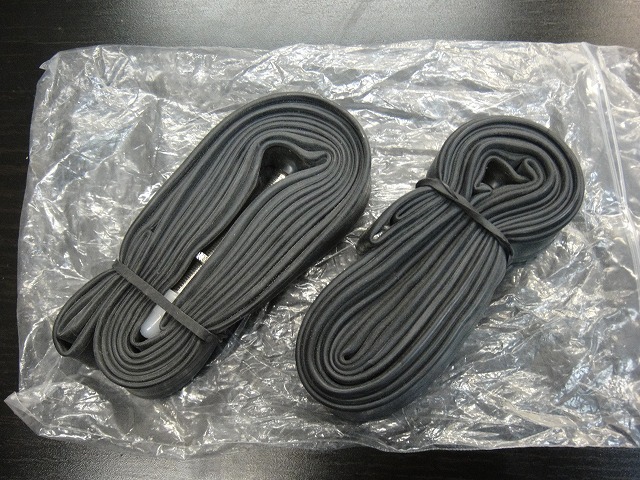
The manufacturer's intended capacity is about one tube, two tire levers, and a patch for puncture repairs,
but if you use a Vittoria EVO55 tube (discontinued) or a Panaracer R'AIR,
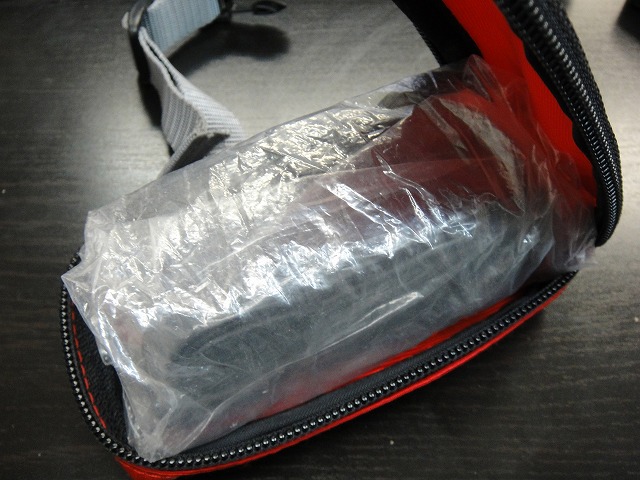
if you fold them neatly,
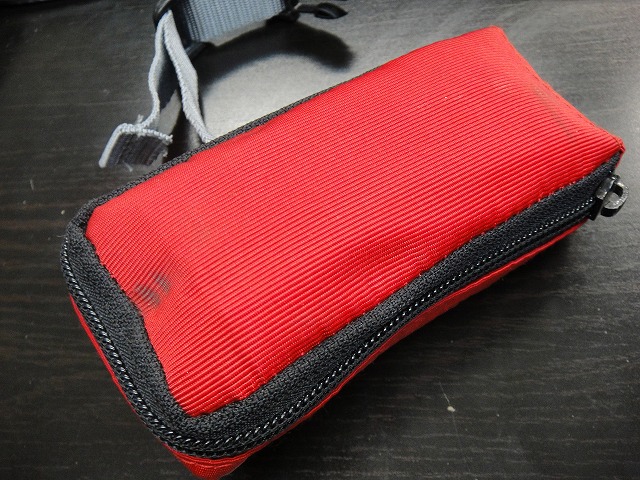
you can fit two.
The bag has pockets on the top and bottom,
so I put tire levers and patches in them.
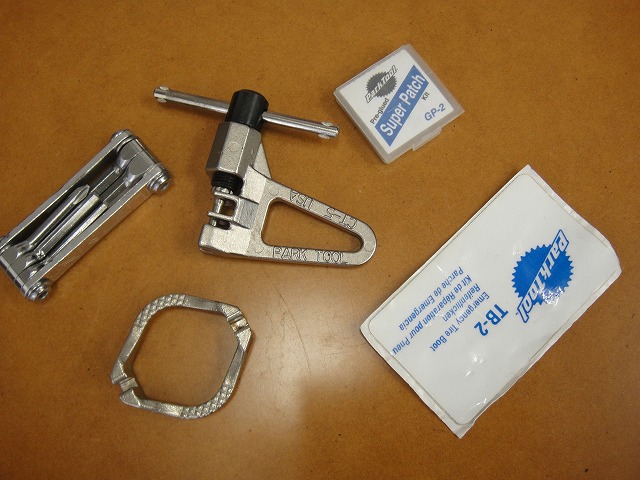
Tools other than tubes and tire levers
I put in a separate waterproof pouch and carry it in my jersey pocket.
If I simply decide that "punctures are an act of God, but everything else is poor maintenance," then I only need a portable pump and a tube.
Unless it's a Vittoria Zaffiro or tubeless tire,
I don't need tire levers, so I don't carry them.
And since I almost never use the waterproof pouch with tools for myself,
I often forget to bring it.
But the other day on the way back from an early morning ride,
I saw someone stranded with a chain that had dropped and then gotten badly jammed,
and I thought "there's no way this person can fix this alone,"
so I fixed it for them on the spot.
I removed the rear wheel and took the chain off the front derailleur,
but I didn't have a screwdriver to get the chain off the front derailleur,
so I borrowed one from someone riding with us.
And that's when I reflected.
I carry tools not for my own rescue, but
it's overwhelmingly more common that I end up using them for someone else who's in trouble.
Even my own portable pump and CO2 cartridges—
I've probably only used them for myself about half the time.
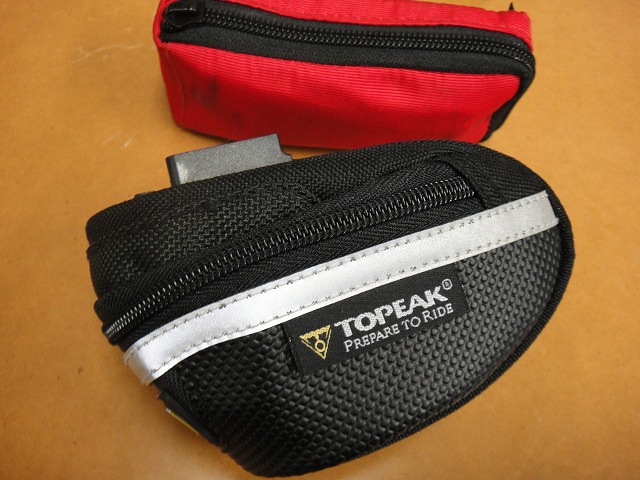
So I decided to get a slightly larger saddle bag
and put my tools in it too.
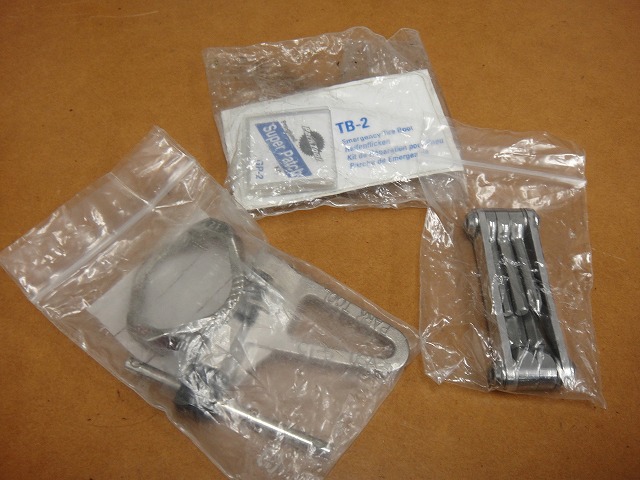
When putting tools and patches in a saddle bag,
it's better to put them in a separate waterproof bag.
If water gets into the saddle, your tools will rust,
and patches can absorb moisture and become unusable.
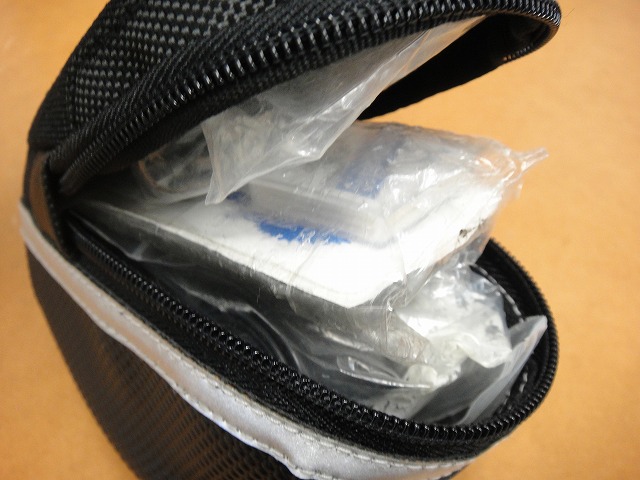
Tools, patches, and two tubes
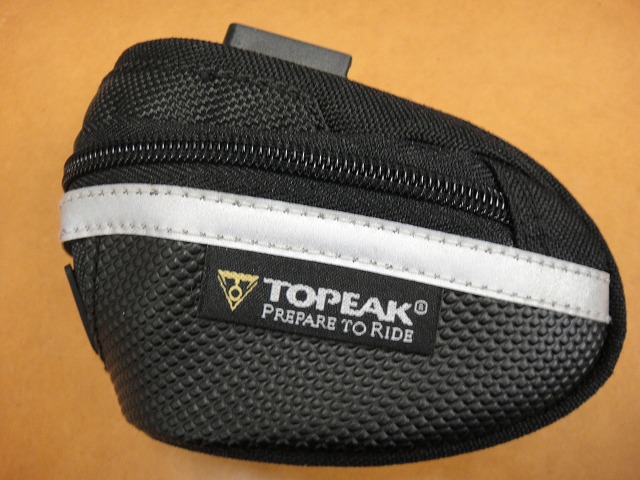
fit comfortably.
With this saddle bag, you might be able to fit two tubes even without thin ones.
I said earlier that "anything other than a puncture is poor maintenance,"
but a broken chain can also be an act of God.
Most of the time it's because it wasn't connected properly, though.
The way to tell is simple: if the chain broke at a spot that was previously cut and reconnected with a connecting pin,
that counts as poor maintenance.
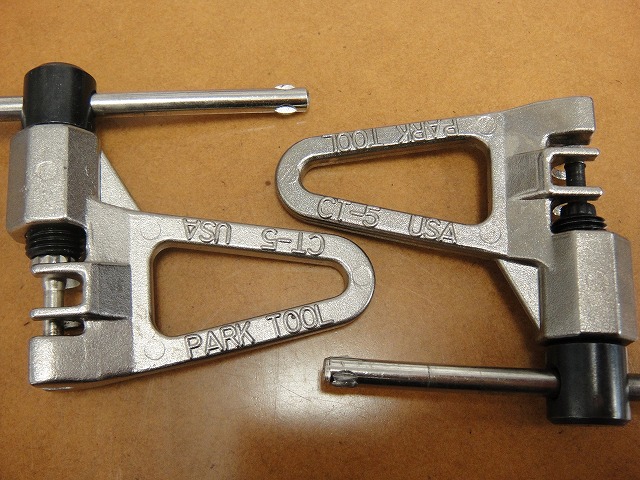
So you should carry a chain tool.
For portable use, the Park Tool CT-5 shown in the image above is recommended.
Like always, it's probably short for ChainTool-5.

VAR (Japanese tool maker) makes more compact versions,
but modern chains are thin, so their pins are tightened abnormally.

This is a current Record 11S chain, but
the VAR tool couldn't push the pin out.
(Even holding the body with large pliers didn't work)

Park Tool managed it (but it's pretty tight).
This is a Lezyne multi-tool, but this type of simple hex key
with 3mm, 4mm, and 5mm plus a Phillips driver is enough.
The tool above also has 6mm,
and if your stem has a 6mm hole, it's nice to have.
I've decided never to adjust position away from home.
But you do get situations where a crash moves the stem or seatpost and you can't move them by hand,
so you should carry a hex key that matches the size of your stem and seat clamp bolts.
If disc brake rotors or brake shoe posts have Torx bolts,
you should carry the appropriate size hex key for those too.
Also, some of these type of tools have chain-cutting-looking attachments,
but they're usually just useless bulk,
so don't get your hopes up.
You use the entire body of the tool as a handle and rotate it,
but whether it can actually cut current 10S or 11S chains is questionable.
If you have one, you should test it on a chain end piece like I did.
You might avoid the despair of being stranded and realizing
"I thought I had a 'chain tool' but I didn't actually have one."
That's why I carry a dedicated chain tool.

I also like the Park Tool MT-1 as a simple multi-tool.
Like usual, it's probably short for MultiTool-1.
It also has an 8mm hex key, but at this length
you can't remove tightly-fastened crank bolts or pedals (and if you could, that would be a problem),
so the 8mm is basically ornamental.
The driver is flat-head, but derailleur screws usually have flat slots,
so that's not much of an issue.


I like the Park Tool SW-7 nipple wrench,
but it's a bit heavy.
And like always, it's probably short for SpokeWrench-7.
Campagnolo's is also a bit heavy.
It looks great though.
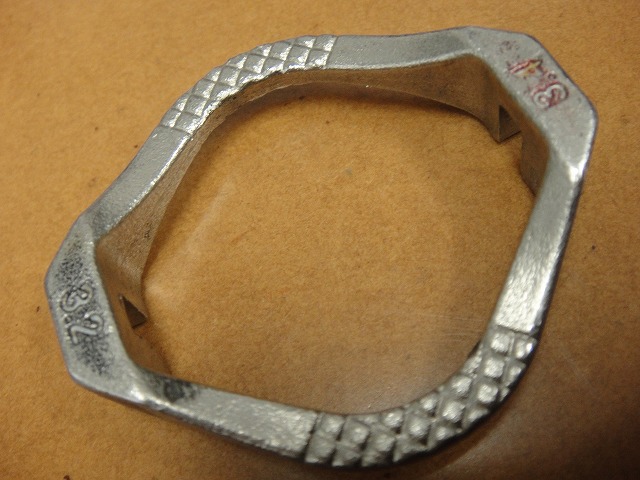
The Minoura NW-200 is light and recommended.
It's short for NippleWrench, but thinking about it,
since the tool doesn't actually touch the spokes,
calling it a "spoke wrench" might be odd.
I used to paint the 3.2 size black and the 3.4 size red to match Park Tool's spoke wrench colors,
but it's mostly worn off now. Marking them so you can tell them apart is a bit convenient.
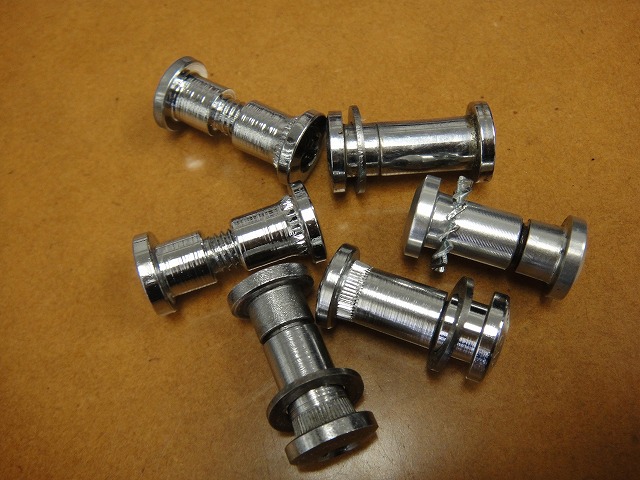
If you have a steel frame with a seat pin,
you should carry a spare seat pin.
I once broke one away from home and had a terrible time.
(That's why I stopped adjusting position away from home)
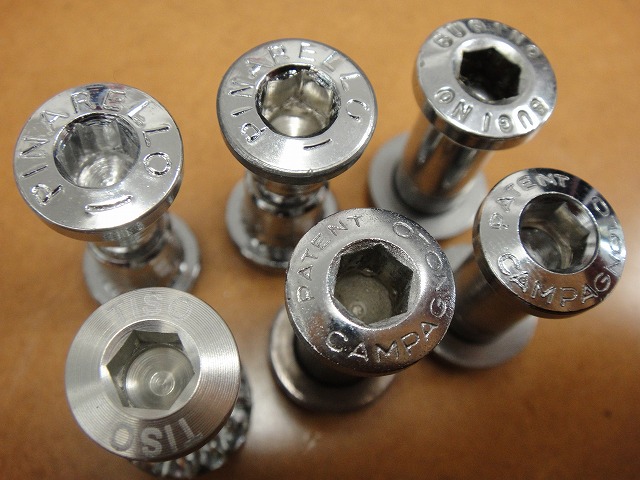
If you have no preference, Sugino's are recommended.
Campagnolo's seem to be tempered differently—they're unnecessarily hard and break easily.
Tisso's ultra-light aluminum seat pins convert clamping force into aluminum stretch,
so they don't clamp very well.
They demand precision on the frame side.
Frames with good precision and finish will let the seatpost slide out smoothly and straight
with just a half turn of the seat pin.
Pinarello seat pin? What are you talking about?
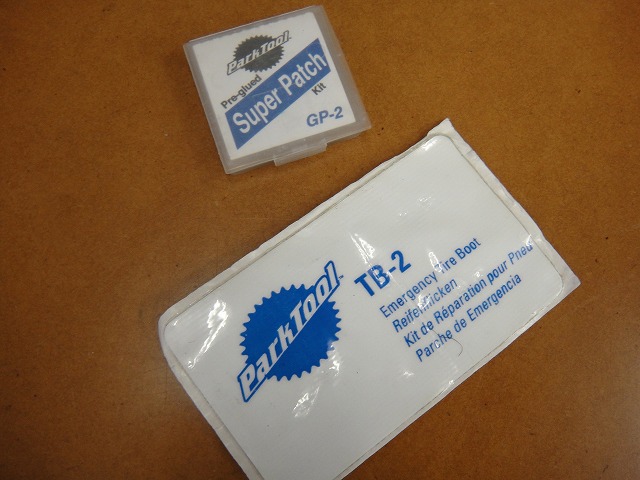
About simple patches and tire boots.

Park Tool's GP-2,
As it says "Pre-Glued," the adhesive is already applied.
So all you do is roughen the area around the puncture with sandpaper and stick it on—simple—
but over time it can peel off from rubbing inside the tire.
This isn't a defect; that's just how it is.
The idea is that if you get a puncture during your ride, you temporarily fix it with this and make it home safely.
When you get home, you should either replace the tube or peel it off and re-attach it with proper rubber cement patches.
(Peeling off means it wasn't properly applied)
Panaracer's Easy Patch is similar.
The "Easy" in the name captures the characteristic that it's easy to apply but easy to peel off.
GP-2 (abbr.) = GluedPatch-2 (abbr.)
By the way, this case fits a 500-yen coin perfectly.
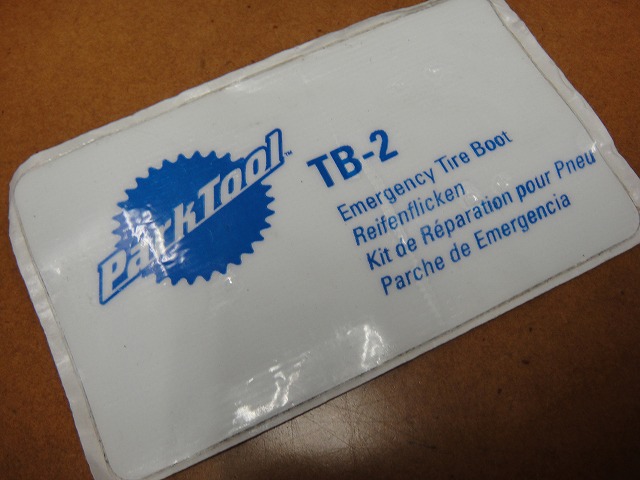
If you get a puncture that tears the tire (especially the sidewall),
even if you patch the tube and pump it up,
the tube will poke out through the torn part and puncture again right away.
In that case, you temporarily seal the tear with folded paper,
or in a pinch, with paper money,
and that's what a Park Tool tire boot is for—like a protective patch.
(abbr.) = TireBoot-2 (abbr.)
And as a trick, if you stick fabric duct tape on the underside of your saddle,
it might come in handy someday.
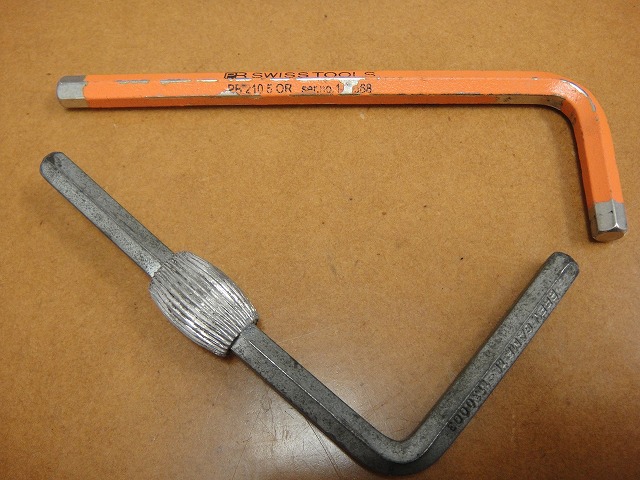
Old Campagnolo used 5mm holes for everything—
brake cable fixing, shift cable fixing,
brake arch fixing, crank five-bolts, brake shoe post fixing, etc.
So one 5mm hex key could handle just about anything,
but that's not the case anymore.
The top in the image is PB, the bottom is Campagnolo.
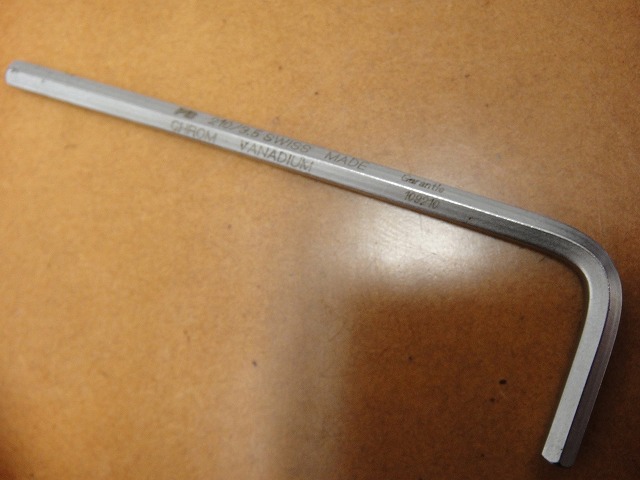
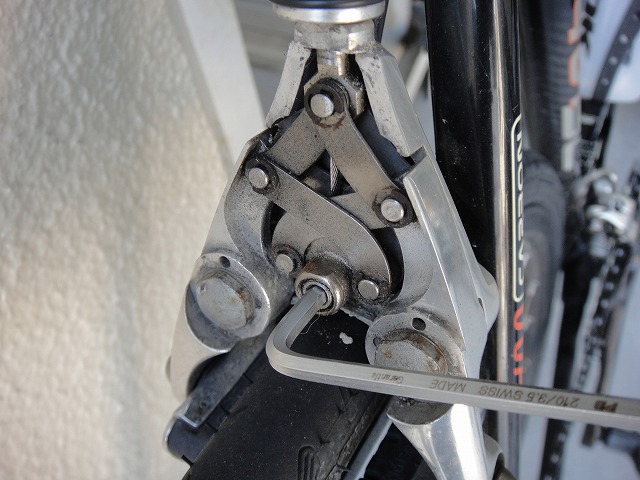
If you use a delta brake,
you should carry a 3.5mm hex key.
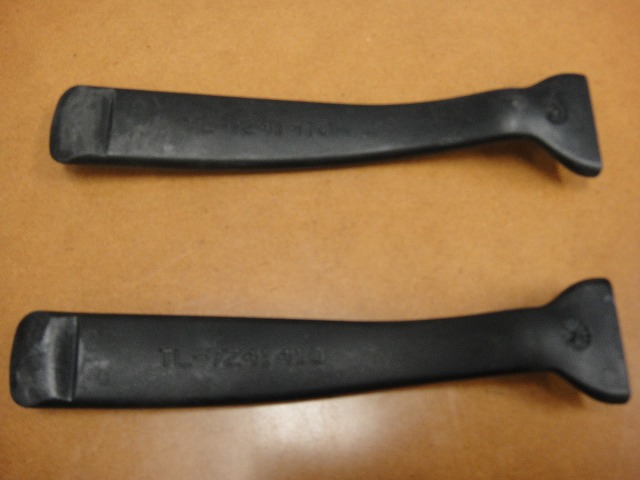
↑This is a Campagnolo tire lever.

Made September 2004
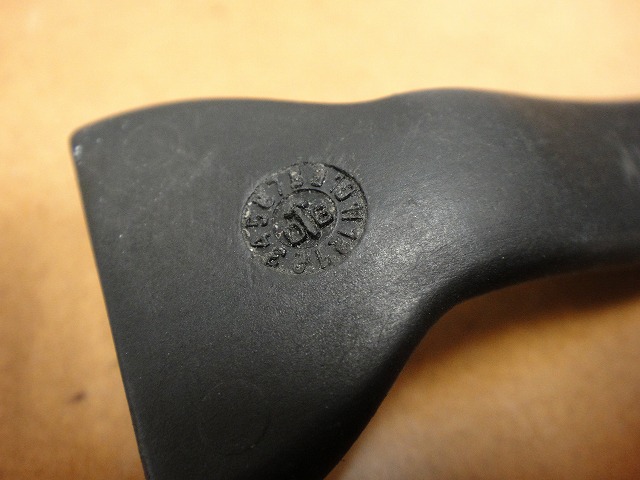
or July 2006,
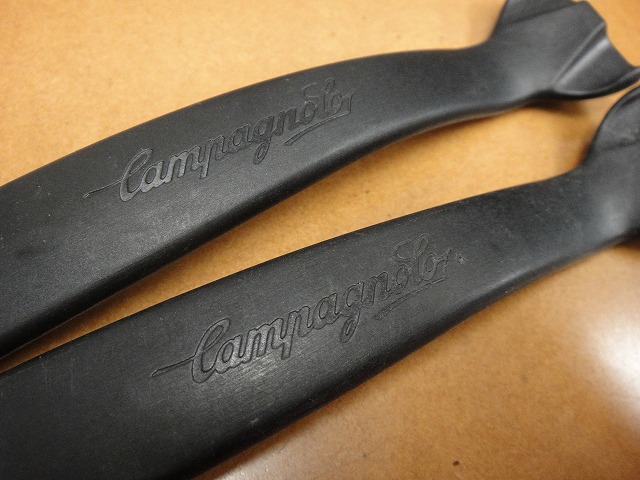
but it has a Campagnolo logo.
Recent ones seem to have this marking omitted for some reason, but I don't know why.
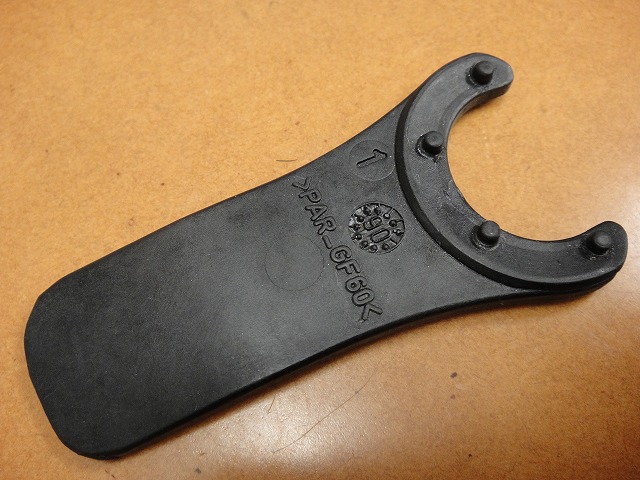
The Mavic tire lever with hub bearing cone wrench
is annoying because of the tire lever, so I cut it short
to just the bearing cone wrench.
Since you're not applying force on this part, the length is fine.
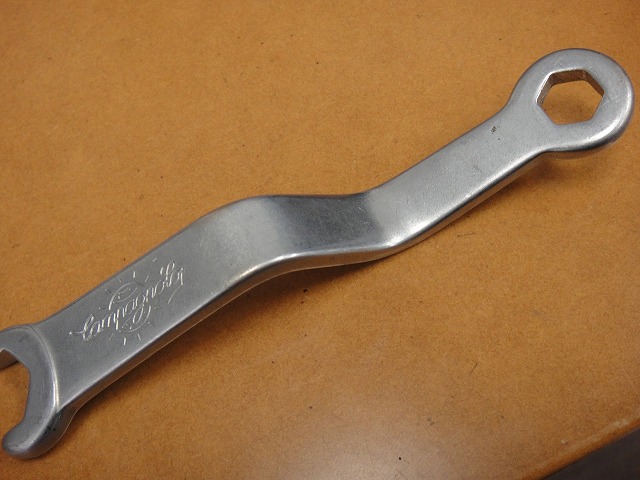
This Campagnolo bent tool,
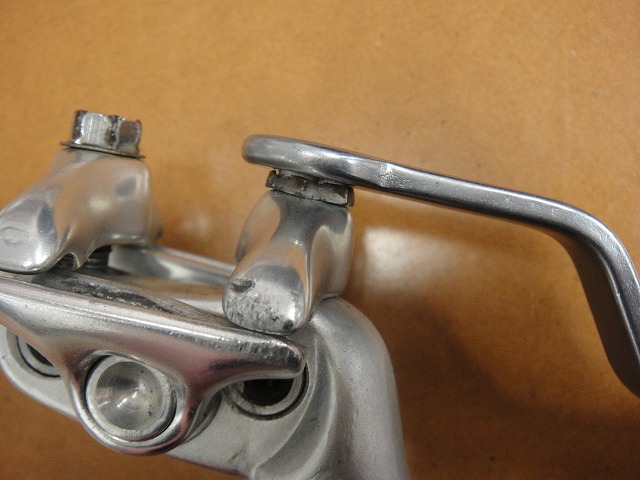
the wrench end works perfectly for Record with dual-bolt seatposts or Sugino Mighty seatpost bolts,
with just the right curve.
You actually work with the saddle attached,
and even with Turbo or Rolls saddles, the rails don't get in the way much.
If you use a deep rim,
it might be good to carry a slip-on type valve extender.
This is Panaracer's Synchro Valve Extender,
with a design where you can open and close the valve tip
after slipping it over the valve.
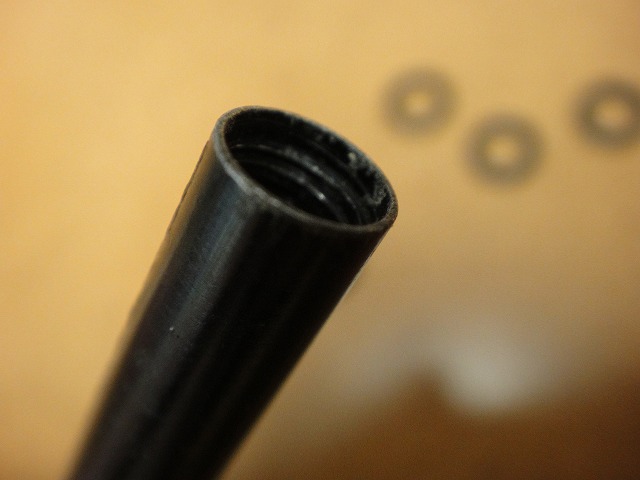
The slip-on type gets flared at the edges after repeated use and breaks down,
causing air leaks from the joint.
The image above hasn't flared yet.
Putting on a packing ring helps somewhat, but this rubber's lifespan isn't long either.
Even if air leaks from the joint, air does get into the tube,
but the gauge needle on the air pump stays down,
so you can't accurately tell what pressure you've pumped in.
I don't like that, so I don't recommend slip-on extenders.
Also, Campagnolo and Fulcrum carbon deep rim wheels have a "valve rattle prevention guard,"
but slip-on extenders are slightly thicker than the valve diameter,
so they won't fit through this guard.
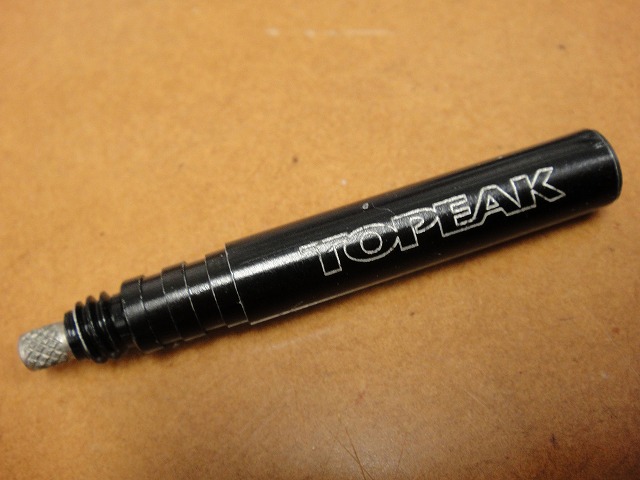
Topeak also has a
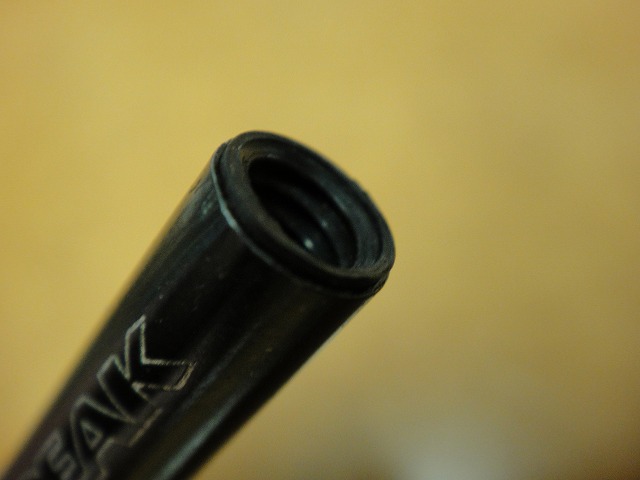
but this one has a seal rubber ring at the edge.
In actual use, this rubber's lifespan also isn't long.

↑This is ZIPP, but most slip-on types have this shape.
The valve tip is always in the open position inside the extender.
Unless the joint is completely embedded in the rim,
it'll stick out a little, and another option is to
only use it when pumping air.
Carrying this too might help in some situations.
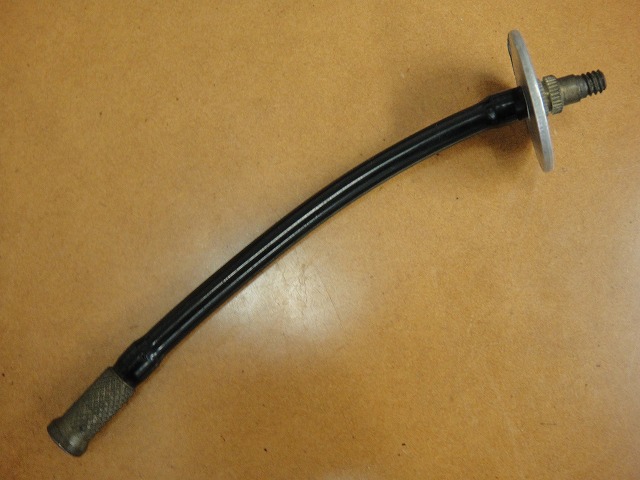
If you run disc wheels,
it's convenient to carry Sugino's tension disc valve adapter hose.
It works with most disc wheels,
including those with small valve windows.
So, I've gone off on an excessive tangent, but these are tools
that might be convenient to carry.
tools, many of which are discontinued.
I'll make it a point to always carry a simple hex key, driver, and chain tool.
Beyond that, I'll decide what to carry based on the situation.
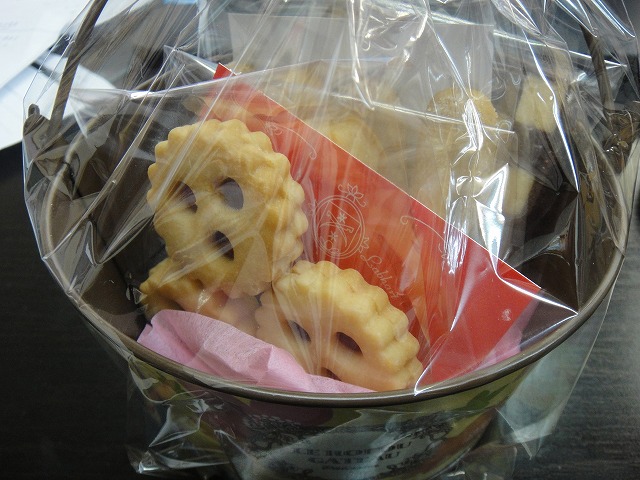
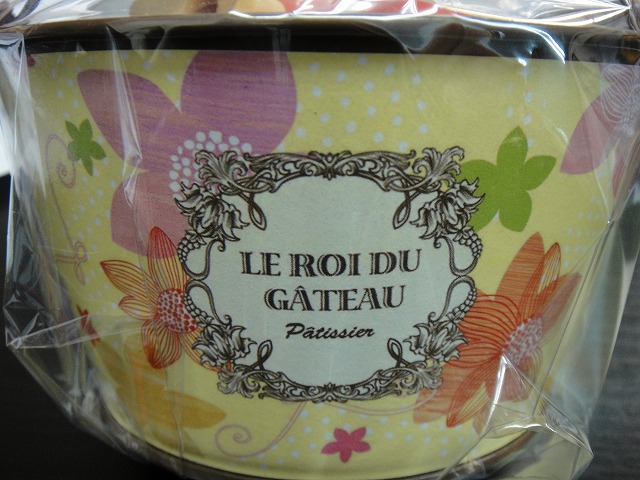
The person whose chain sack I fixed—
the same day, they came to the shop to thank me with a box of baked goods. I'm very sorry. I shouldn't have mentioned my name.
But I think this should really go to the person who lent their screwdriver,
not me.
So I have no intention of touching it at all!
But maybe just one cookie would be okay,
oh,
Products Mentioned in This Article
- 🛒 OSTRICH SP-222 saddle bag
- 🛒 Park Tool CT-5 chain tool
- 🛒 Lezyne multi-tool hex key
- 🛒 Park Tool MT-1 multi-tool
* Amazon affiliate links — prices may vary
Original Japanese post: のむラボ日記 #1102