Wheels again today (et cetera).
The last Saturday of the month is normally closed, but I kept the shop open anyway
because I had promised to hand off some wheels and complete bikes.
I'm continuing to work through email and comment replies.
I figured building my own wheel on a day off isn't exactly a sin, so
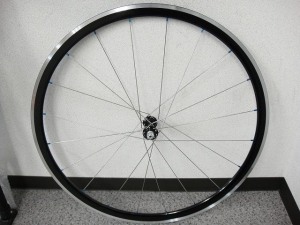
I built a front wheel with a Shimano Leaf front hub and XR300 rim.
It's a 20-hole 6-spoke lace (rokuroku).
The true tangent-equivalent lacing methods are:
12H 4-spoke, 20H 6-spoke, 28H 8-spoke, and 36H 10-spoke—
four in total. But since hand-built 12-hole wheels are practically never made, we can leave that out.
For rear wheels, if the freewheel side is fixed at 4-spoke,
and the non-freewheel side is true tangent with alternate left-right cross counts,
you get 20H 4-6 lace, 24H 4-8 lace, and 36H 4-10 lace.
With 36H, the freewheel side at 4-spoke gets pretty close to radial, so
maybe 6-10 lace would be acceptable too.
The point I'm making is: 20-hole spokes can technically be laced 6-spoke,
and rear wheels can also be done 4-6—
and yet I don't do it, because there are insurmountable drawbacks beyond just
spoke balance correction that (at present) I consider disqualifying.
I have built it that way before on non-commercial wheels, though.
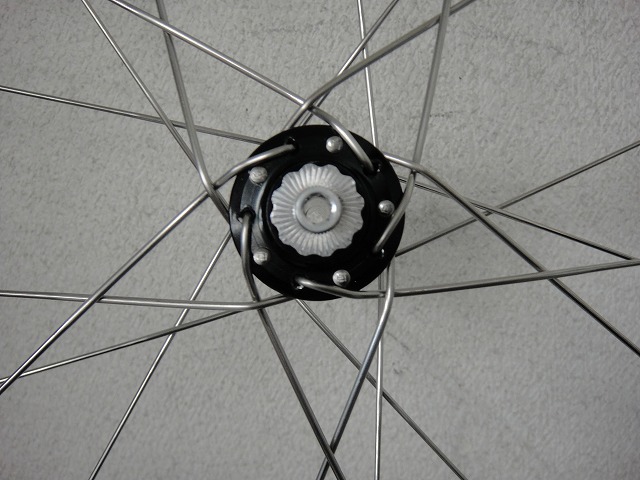
I don't see any particular merit in lacing a 20H front wheel 6-spoke on both sides either, but
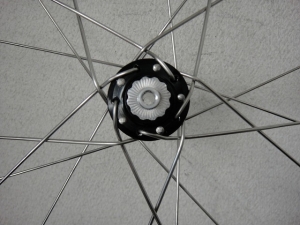
I wanted to try W-cross lacing, so I did it.
W-cross can get confused with 2-cross (the alternative name for 4-spoke),
but on this blog it means
"weaving in two crossings—the final crossing and the one before it"
when dealing with 6-spoke or higher lacing.
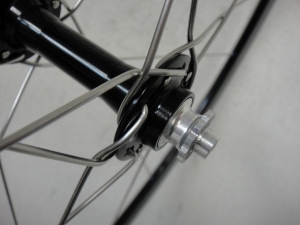
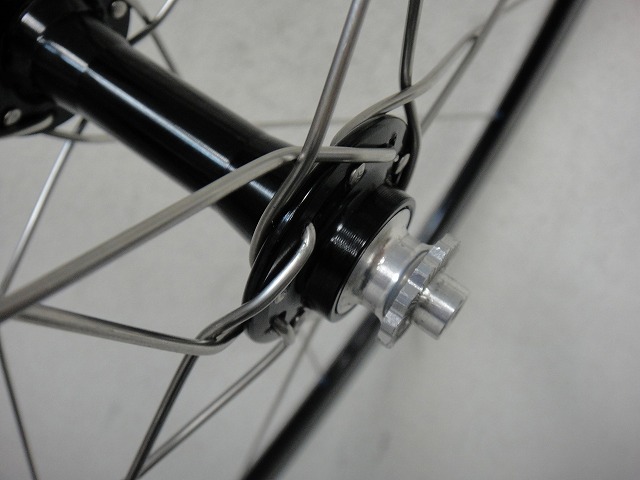
Small-flange hubs have holes spaced close together, and
round spokes undergo severe lateral distortion at crossing points,
so the spokes bend quite sharply—really badly.
The spokes used are DT Competition, but
in the initial weaving section the butting hasn't started yet.
This is gnarly.

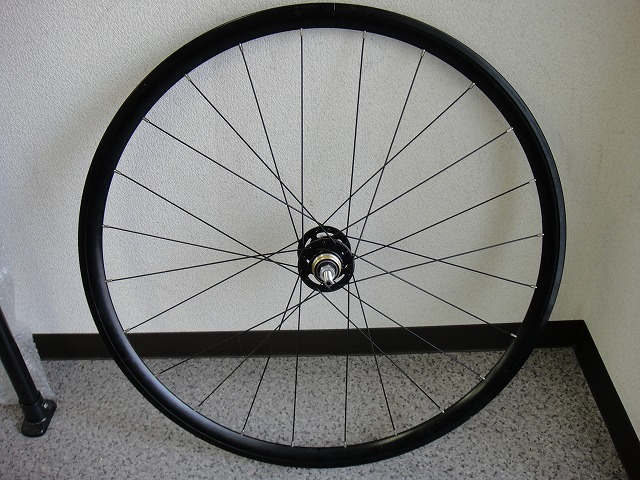
I brought the rear wheel from my 3-roller trainer bike from home. It's 24-hole.
I discovered when taking it apart that the rim weighs 662 grams.
No wonder it felt heavy.
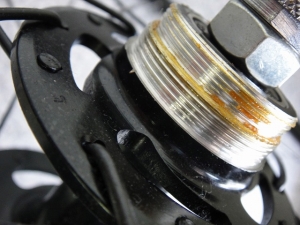
The hub is double-threaded, but for some reason the original lacing was Italian style,
so I'd been using it in freewheel spec with both inpokes pointing toward the quill,
though I thought this side didn't actually have stepped threads for a freewheel.
But some freewheel consideration was made anyway.
There's clearance between the end of the threading and the right flange, but
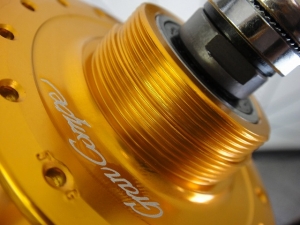
↑on track hubs without that, when you mount a freewheel,
its back side can rub against the hub body or interfere with spokes.
A Shimano 10-speed 1mm spacer fits just right here,
so adding a spacer solves it—but that creates a different problem:
the number of threads the freewheel can engage drops.
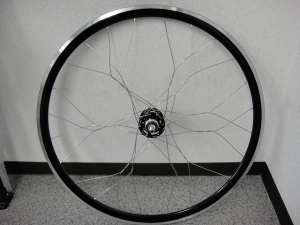
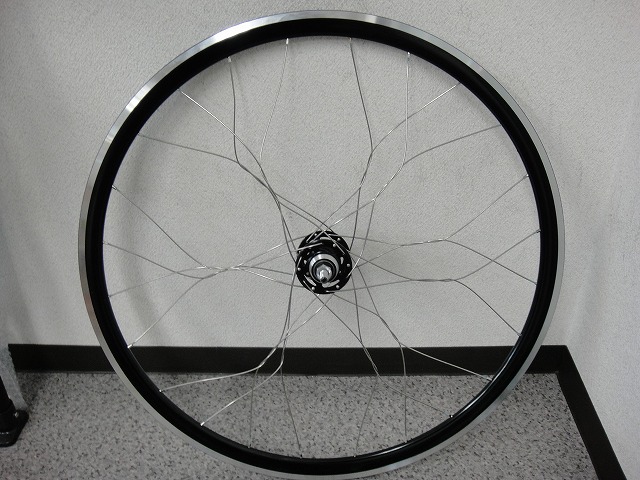
I went with XR300 for the rear rim too.
The image shows the wheel in its rough-built state, so the spokes are all slack, but

when tensioned it snaps right into place.

The lacing is Italian 6-spoke twisted up, but
I also worked in W-cross on top of that.
This lacing method is absolutely not recommendable.
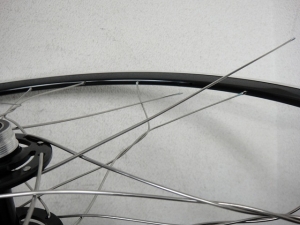
↑I work in W-cross patterns sequentially and build the rough wheel, and
here's the state just before weaving in the final two spokes.
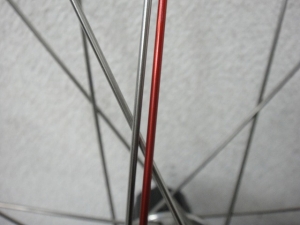
When replacing a single spoke on an already-built wheel,
you sometimes need to route the new spoke over the final crossing like this:
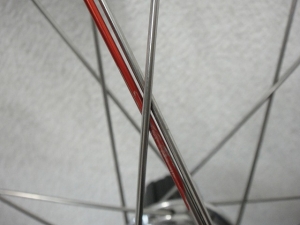
—but
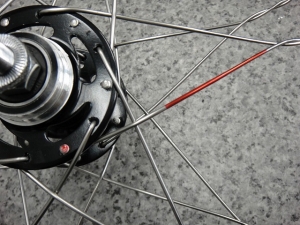
↑when the final crossing is twisted W-cross style, or when it's tied,
there's a serious downside to this.
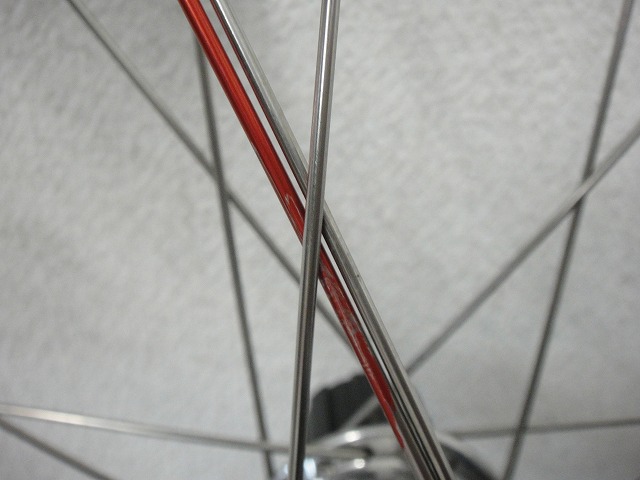
If you need to replace the spoke colored red in the image above,
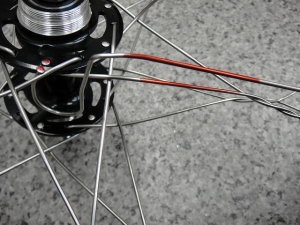
↑you'd have to route it like this—but it's
impossible to do within the spoke's elastic deformation range.
So you have to unweave the adjacent crossing first, but
to do that, you have to unweave the crossing next to it,
and that cascades all the way around one flange side.
Meaning: if one spoke breaks,
you end up disassembling the entire half of the wheel.

The trajectory of a single spoke is... let's just say it's ridiculous.
Normally it's nearly straight.
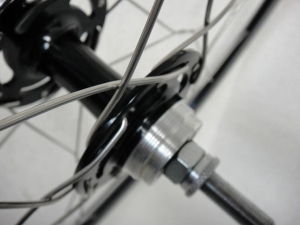
Since this is a large-flange hub, the sharp bending from W-cross
isn't as bad as the front wheel. These are also DT Competition spokes.
Thanks to that clearance I mentioned earlier—between the thread end and flange
(you could also call it flange offset)—
the freewheel interference problem looks avoidable.
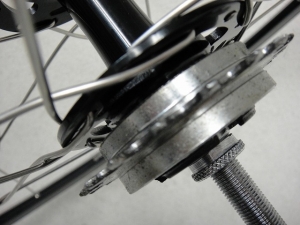
When I actually mounted it, there was plenty of clearance.
Since it's the same cog as before the rebuild, there shouldn't be any issues.
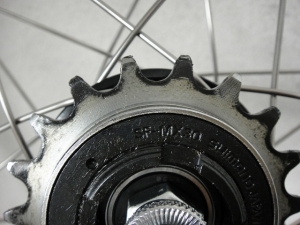
There's a reason the cog teeth alternate between dirty and clean.
Chains are made of outer links and inner links in pairs (unless using half-links),
so they always have an even number of links.
This bike's gearing—44×18T front and rear—is also even,
so each individual cog tooth never reverses the relationship of
"outer link rides here / inner link rides here.\"
The dirty tooth tips are where the inner links contacted, so
at reinstallation it'd be better to have different links riding than before.
Long ago, rear derailleur pulleys weren't gear-shaped but were flat discs,
but when they became gears, the standard was 10T.
Shimano switched to 11T starting with 7700, and the reason is that odd-numbered teeth
cause outer and inner links to alternate around one pulley rotation.
Campagnolo stuck with 10T for ages, but switched to 11T relatively recently.
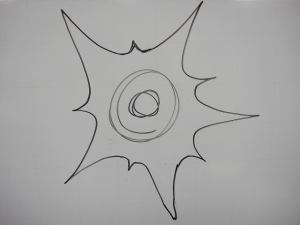
MTB-style bikes ridden by people who don't understand multi-speed gearing
sometimes stay in outer-ring-top cog forever, and
I once saw a 10T pulley that happened to avoid chain-link reversal at that gear ratio
wear into a five-pointed star shape.
An 11T pulley won't do that.
The last Saturday of the month is normally closed, but I kept the shop open anyway
because I had promised to hand off some wheels and complete bikes.
I'm continuing to work through email and comment replies.
I figured building my own wheel on a day off isn't exactly a sin, so
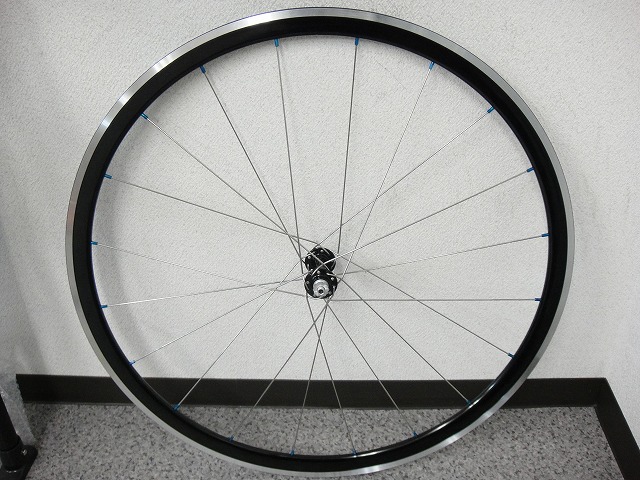
I built a front wheel with a Shimano Leaf front hub and XR300 rim.
It's a 20-hole 6-spoke lace (rokuroku).
The true tangent-equivalent lacing methods are:
12H 4-spoke, 20H 6-spoke, 28H 8-spoke, and 36H 10-spoke—
four in total. But since hand-built 12-hole wheels are practically never made, we can leave that out.
For rear wheels, if the freewheel side is fixed at 4-spoke,
and the non-freewheel side is true tangent with alternate left-right cross counts,
you get 20H 4-6 lace, 24H 4-8 lace, and 36H 4-10 lace.
With 36H, the freewheel side at 4-spoke gets pretty close to radial, so
maybe 6-10 lace would be acceptable too.
The point I'm making is: 20-hole spokes can technically be laced 6-spoke,
and rear wheels can also be done 4-6—
and yet I don't do it, because there are insurmountable drawbacks beyond just
spoke balance correction that (at present) I consider disqualifying.
I have built it that way before on non-commercial wheels, though.
I don't see any particular merit in lacing a 20H front wheel 6-spoke on both sides either, but
I wanted to try W-cross lacing, so I did it.
W-cross can get confused with 2-cross (the alternative name for 4-spoke),
but on this blog it means
"weaving in two crossings—the final crossing and the one before it"
when dealing with 6-spoke or higher lacing.
Small-flange hubs have holes spaced close together, and
round spokes undergo severe lateral distortion at crossing points,
so the spokes bend quite sharply—really badly.
The spokes used are DT Competition, but
in the initial weaving section the butting hasn't started yet.
This is gnarly.
I brought the rear wheel from my 3-roller trainer bike from home. It's 24-hole.
I discovered when taking it apart that the rim weighs 662 grams.
No wonder it felt heavy.

The hub is double-threaded, but for some reason the original lacing was Italian style,
so I'd been using it in freewheel spec with both inpokes pointing toward the quill,
though I thought this side didn't actually have stepped threads for a freewheel.
But some freewheel consideration was made anyway.
There's clearance between the end of the threading and the right flange, but

↑on track hubs without that, when you mount a freewheel,
its back side can rub against the hub body or interfere with spokes.
A Shimano 10-speed 1mm spacer fits just right here,
so adding a spacer solves it—but that creates a different problem:
the number of threads the freewheel can engage drops.
I went with XR300 for the rear rim too.
The image shows the wheel in its rough-built state, so the spokes are all slack, but
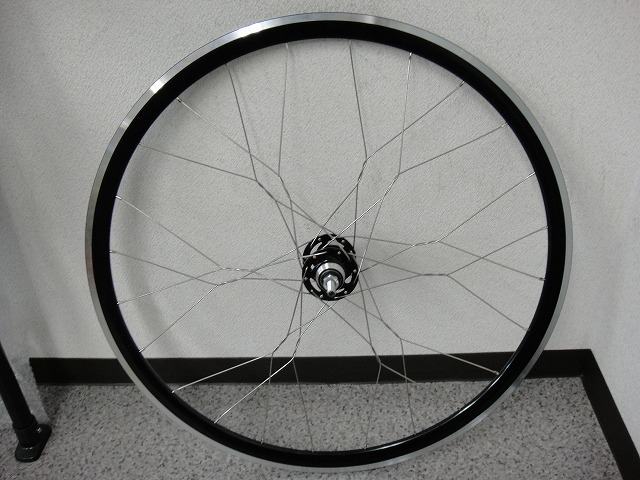
when tensioned it snaps right into place.
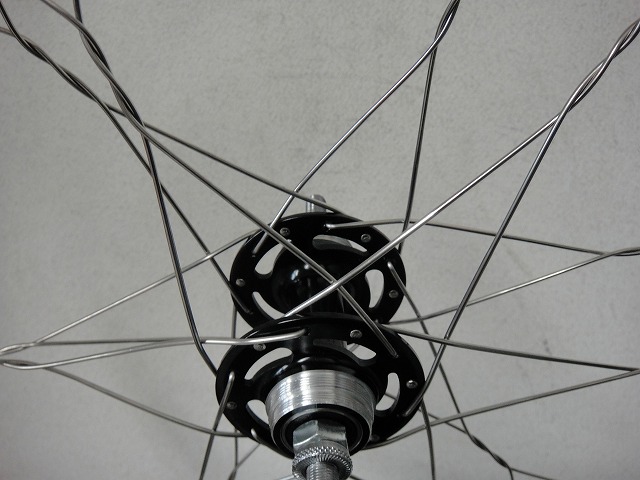
The lacing is Italian 6-spoke twisted up, but
I also worked in W-cross on top of that.
This lacing method is absolutely not recommendable.
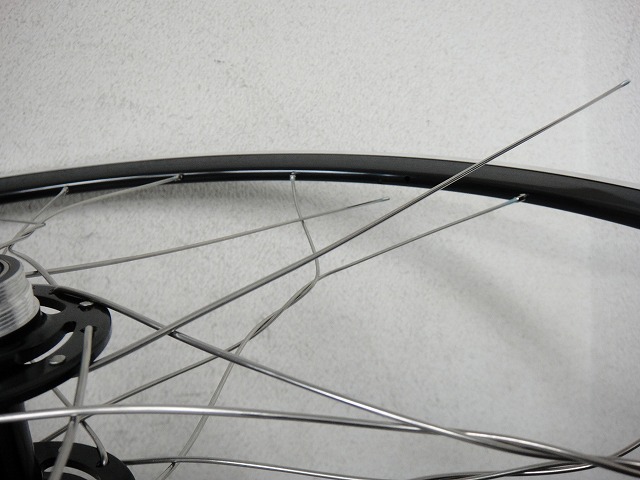
↑I work in W-cross patterns sequentially and build the rough wheel, and
here's the state just before weaving in the final two spokes.
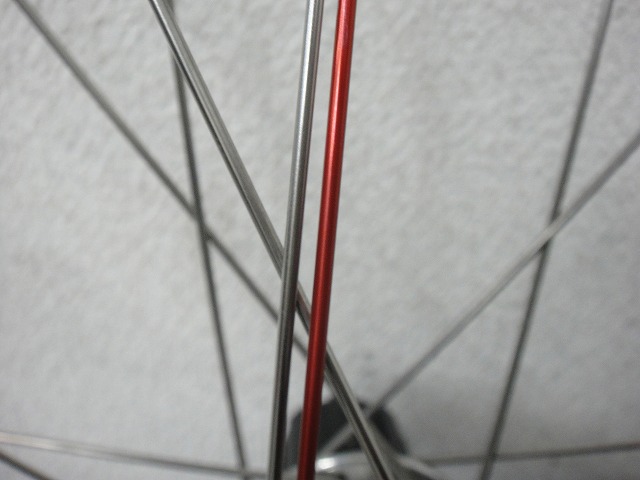
When replacing a single spoke on an already-built wheel,
you sometimes need to route the new spoke over the final crossing like this:
—but

↑when the final crossing is twisted W-cross style, or when it's tied,
there's a serious downside to this.
If you need to replace the spoke colored red in the image above,

↑you'd have to route it like this—but it's
impossible to do within the spoke's elastic deformation range.
So you have to unweave the adjacent crossing first, but
to do that, you have to unweave the crossing next to it,
and that cascades all the way around one flange side.
Meaning: if one spoke breaks,
you end up disassembling the entire half of the wheel.
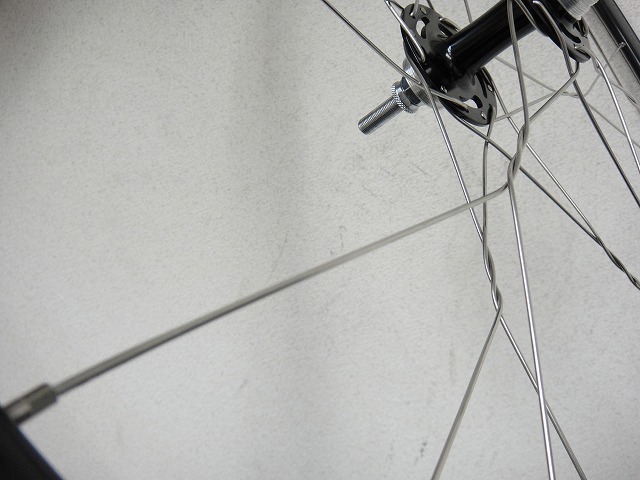
The trajectory of a single spoke is... let's just say it's ridiculous.
Normally it's nearly straight.
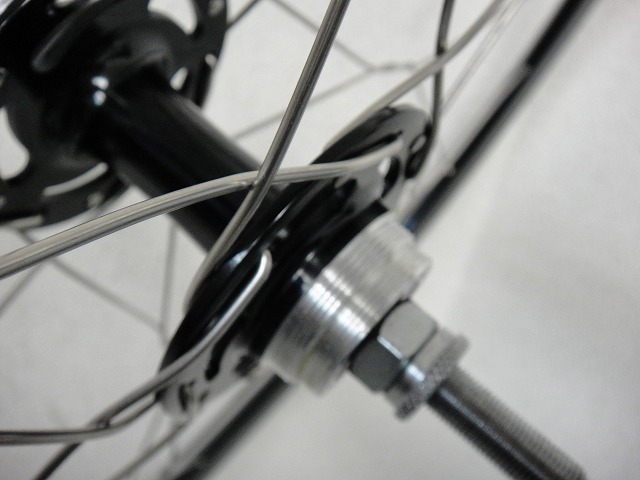
Since this is a large-flange hub, the sharp bending from W-cross
isn't as bad as the front wheel. These are also DT Competition spokes.
Thanks to that clearance I mentioned earlier—between the thread end and flange
(you could also call it flange offset)—
the freewheel interference problem looks avoidable.
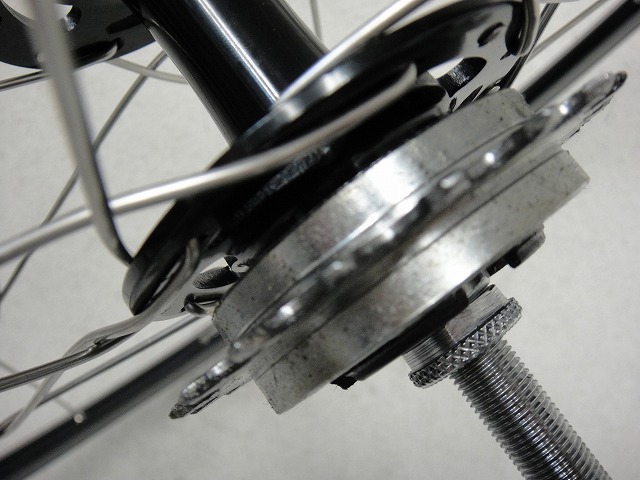
When I actually mounted it, there was plenty of clearance.
Since it's the same cog as before the rebuild, there shouldn't be any issues.
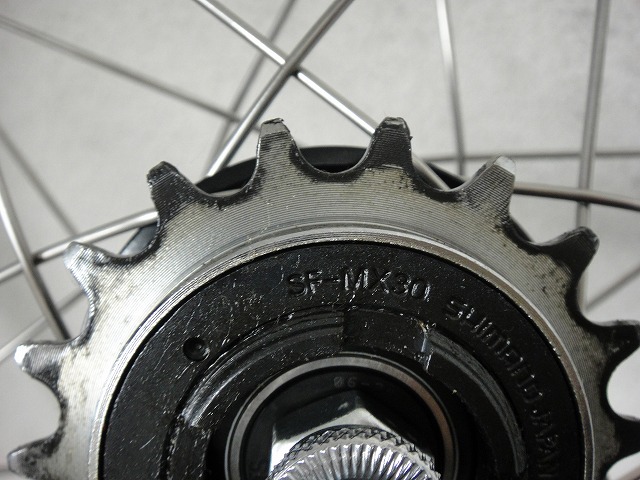
There's a reason the cog teeth alternate between dirty and clean.
Chains are made of outer links and inner links in pairs (unless using half-links),
so they always have an even number of links.
This bike's gearing—44×18T front and rear—is also even,
so each individual cog tooth never reverses the relationship of
"outer link rides here / inner link rides here.\"
The dirty tooth tips are where the inner links contacted, so
at reinstallation it'd be better to have different links riding than before.
Long ago, rear derailleur pulleys weren't gear-shaped but were flat discs,
but when they became gears, the standard was 10T.
Shimano switched to 11T starting with 7700, and the reason is that odd-numbered teeth
cause outer and inner links to alternate around one pulley rotation.
Campagnolo stuck with 10T for ages, but switched to 11T relatively recently.
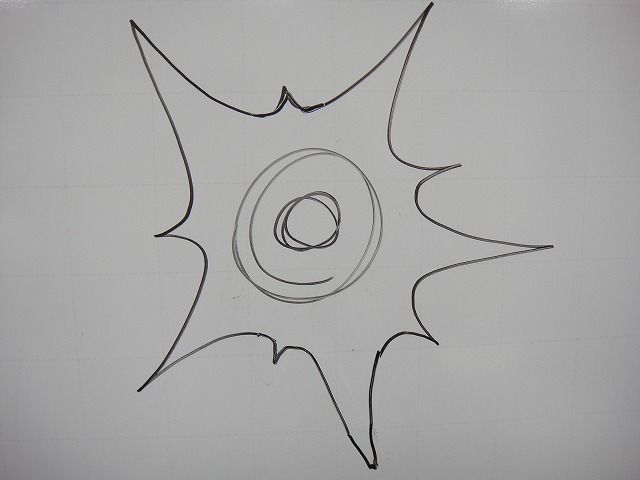
MTB-style bikes ridden by people who don't understand multi-speed gearing
sometimes stay in outer-ring-top cog forever, and
I once saw a 10T pulley that happened to avoid chain-link reversal at that gear ratio
wear into a five-pointed star shape.
An 11T pulley won't do that.