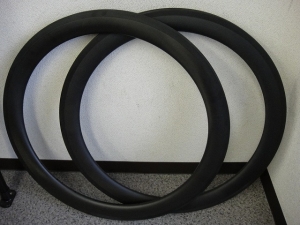
A customer brought me a HongFu carbon rim to work with.
Way back when I built a wheel with this rim before, I got a comment asking
"How does this compare to an ENVE rim?"
In my opinion, under the same conditions, HongFu can handle
higher spoke tension than ENVE.
Also, regarding buckling resistance, HongFu is superior to ENVE.
However, HongFu rims aren't exactly on the lighter end when it comes to height-to-weight ratio.
If I lined up 10 rims of similar height from different manufacturers,
ENVE would be around 1st or 2nd lightest, but
HongFu would be more like 8th, give or take.
This rim is 56mm high, but whether you just handle it or build a wheel with it,
you get this reassuring sense that it's seriously robust.
Setting price aside, the HongFu rim is the one that looks like it'll take constant abuse
without snapping. That said, it doesn't mean you should be careless with it.
The owner of this rim specifically chose it for its strength,
so they're not expecting ultimate rim weight reduction (on this particular rim).
The spoke count reflects that too—24H front and 28H rear.
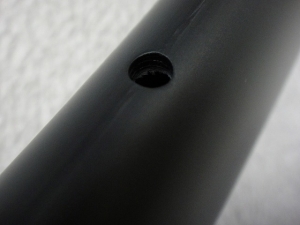
This rim has pretty deep spoke holes on the inside.
That's why you can tighten the nipples with good feel, without much hesitation.
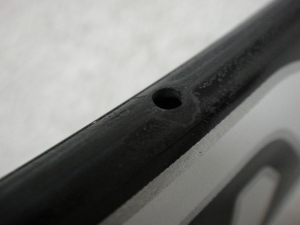
↑ENVE is thin here, but that's impressive in its own way.
Despite the wall thickness, it can handle 120–130 kgf tension.
HongFu rims use external nipples, so you need to drill "nipple holes" in the rim,
while ENVE rims use internal nipples, so you only need spoke holes.
If conditions were identical, even accounting for differences in carbon quality,
HongFu could handle higher spoke tension, I'd say.
ENVE rims don't drill spoke holes after molding—the mold itself is designed
for the specific spoke count from the start,
so their "spoke hole wall thickness spoke-tension strength" is probably unbeatable.
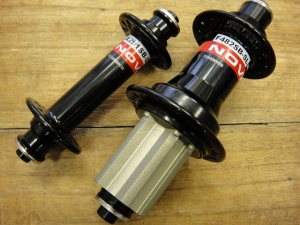
The hubs were also provided—
Novatec 291 and 482, which are basically the same spec as the Tni Evo hub... wait, no.
They're the 291SL and 482SL, which are basically the same spec as the Evolite hub.
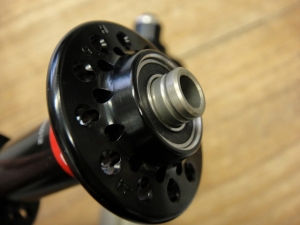
The change from Evo to Evolite hub is that the shaft and end-piece connection
went from threaded to a simple press-fit arrangement,
but actually the bearing outer diameter got smaller too, and the hub body dimensions changed.
Novatec was the same way.
That sounds odd phrased like that—Novatec came first.
The front hub got noticeably lighter with Evolite,
but the difference can't be explained by flange lightening alone.
Ignoring minor alloy composition variations,
removing one yen-coin's volume of aluminum material saves about 1g.
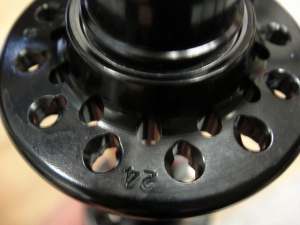
↑Even if you added up all the lightening holes on both flanges,
it's questionable whether they'd amount to a yen-coin's volume.
By the way, I'd assumed Evolite hubs dropped the aero slits because they were lightened,
but the official version does offer aero slit versions as shown above,
so it was just a matter of not ordering with slits this time.
Enough talk—let's actually build the wheel already.
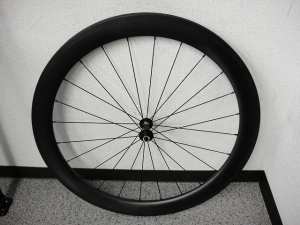
Built.
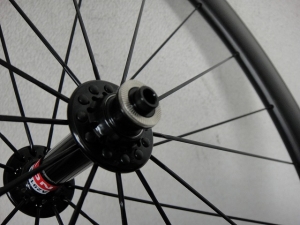
Front wheel is black CX-RAY outpoke radial lacing,
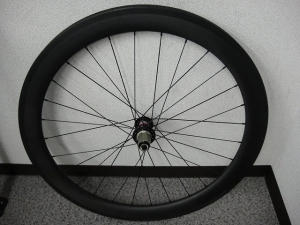
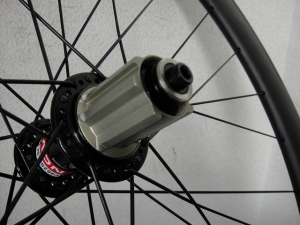
and rear wheel is black semi-comp 2-cross lacing.
Nipples front and rear are also black.
This time I went with Sapim black aluminum nipples.
Most manufacturers supply 12mm-length nipples with their spokes.
This is classified as short nipples, while long nipples are 16mm.
Sapim offers 12, 14, and 16mm-length nipples in their catalog,
but the ones that come with spokes are 14mm length.
Since the rim holes are deep as mentioned, mid-length nipples make assembly easier,
so that's what I used.

Way back when I built a wheel with this rim before, I got a comment asking
"How does this compare to an ENVE rim?"
In my opinion, under the same conditions, HongFu can handle
higher spoke tension than ENVE.
Also, regarding buckling resistance, HongFu is superior to ENVE.
However, HongFu rims aren't exactly on the lighter end when it comes to height-to-weight ratio.
If I lined up 10 rims of similar height from different manufacturers,
ENVE would be around 1st or 2nd lightest, but
HongFu would be more like 8th, give or take.
This rim is 56mm high, but whether you just handle it or build a wheel with it,
you get this reassuring sense that it's seriously robust.
Setting price aside, the HongFu rim is the one that looks like it'll take constant abuse
without snapping. That said, it doesn't mean you should be careless with it.
The owner of this rim specifically chose it for its strength,
so they're not expecting ultimate rim weight reduction (on this particular rim).
The spoke count reflects that too—24H front and 28H rear.

This rim has pretty deep spoke holes on the inside.
That's why you can tighten the nipples with good feel, without much hesitation.

↑ENVE is thin here, but that's impressive in its own way.
Despite the wall thickness, it can handle 120–130 kgf tension.
HongFu rims use external nipples, so you need to drill "nipple holes" in the rim,
while ENVE rims use internal nipples, so you only need spoke holes.
If conditions were identical, even accounting for differences in carbon quality,
HongFu could handle higher spoke tension, I'd say.
ENVE rims don't drill spoke holes after molding—the mold itself is designed
for the specific spoke count from the start,
so their "spoke hole wall thickness spoke-tension strength" is probably unbeatable.
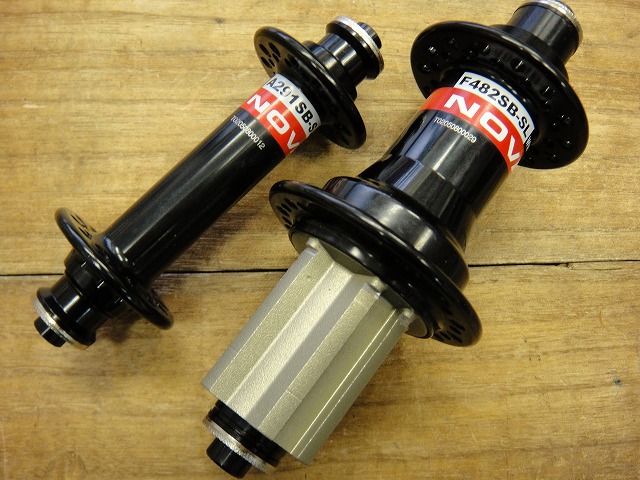
The hubs were also provided—
Novatec 291 and 482, which are basically the same spec as the Tni Evo hub... wait, no.
They're the 291SL and 482SL, which are basically the same spec as the Evolite hub.
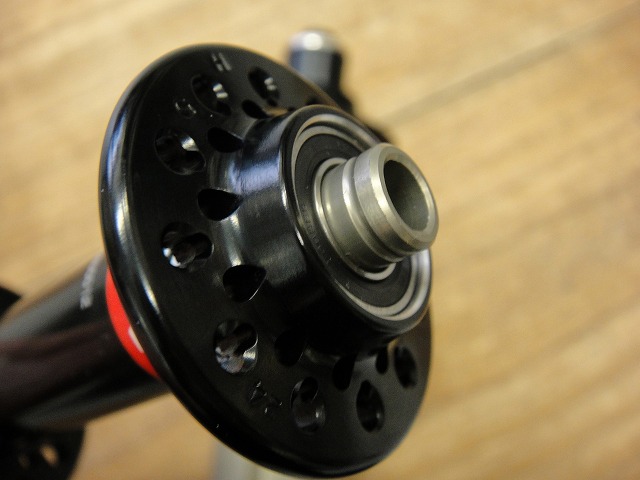
The change from Evo to Evolite hub is that the shaft and end-piece connection
went from threaded to a simple press-fit arrangement,
but actually the bearing outer diameter got smaller too, and the hub body dimensions changed.
Novatec was the same way.
That sounds odd phrased like that—Novatec came first.
The front hub got noticeably lighter with Evolite,
but the difference can't be explained by flange lightening alone.
Ignoring minor alloy composition variations,
removing one yen-coin's volume of aluminum material saves about 1g.
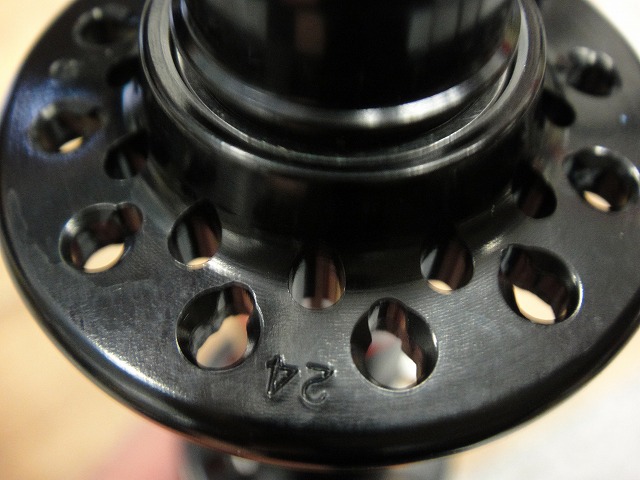
↑Even if you added up all the lightening holes on both flanges,
it's questionable whether they'd amount to a yen-coin's volume.
By the way, I'd assumed Evolite hubs dropped the aero slits because they were lightened,
but the official version does offer aero slit versions as shown above,
so it was just a matter of not ordering with slits this time.
Enough talk—let's actually build the wheel already.

Built.
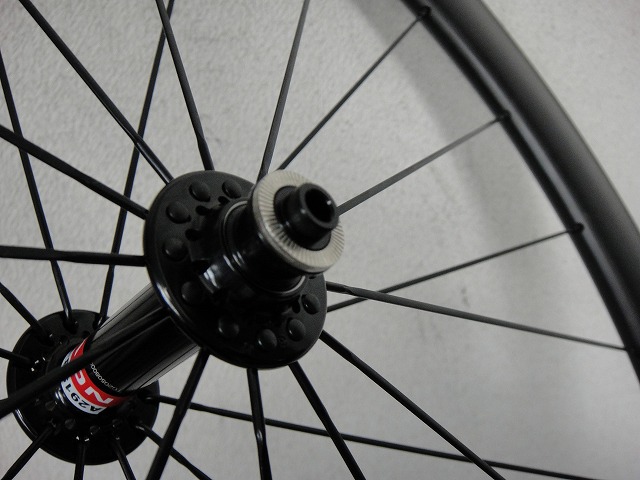
Front wheel is black CX-RAY outpoke radial lacing,
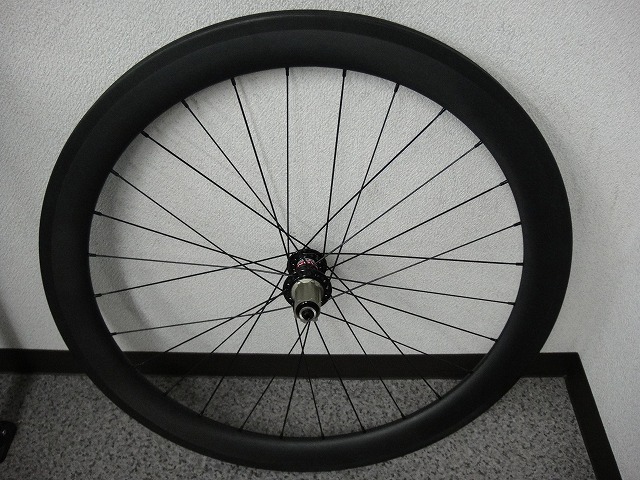
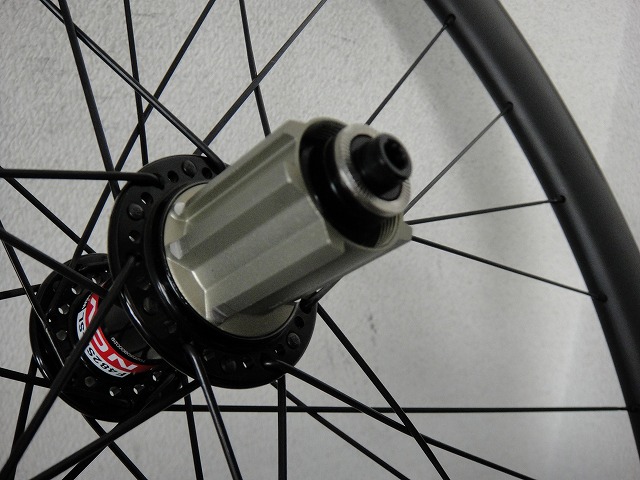
and rear wheel is black semi-comp 2-cross lacing.
Nipples front and rear are also black.
This time I went with Sapim black aluminum nipples.
Most manufacturers supply 12mm-length nipples with their spokes.
This is classified as short nipples, while long nipples are 16mm.
Sapim offers 12, 14, and 16mm-length nipples in their catalog,
but the ones that come with spokes are 14mm length.
Since the rim holes are deep as mentioned, mid-length nipples make assembly easier,
so that's what I used.