Another wheel day (and so on).
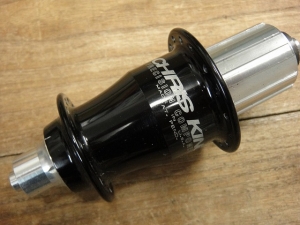
I took in a Chris King rear hub.
It's for MTB, so the over-locknut dimension is 135mm.
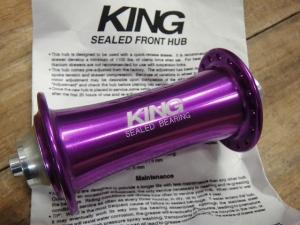
The front hub is a King.
The original "King" from before Chris King.
When someone calls a Chris King hub just "King,"
I'm never sure if they're just shortening the name
or if they actually know about the predecessor King model—
but it's probably the former most of the time.
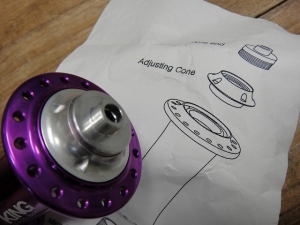
The bearing adjustment mechanism hasn't changed from the current model.
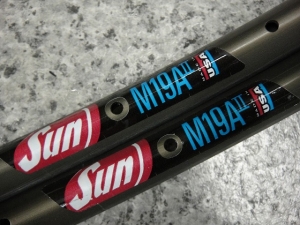
The rim is a Sun MA19II,
but I have no idea what's different between this and the MA19.
The tag hanging on the rim still just said "MA19."
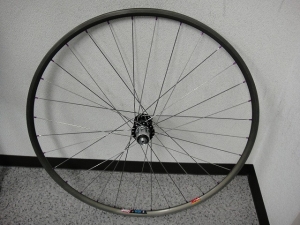
Rear wheel is done.
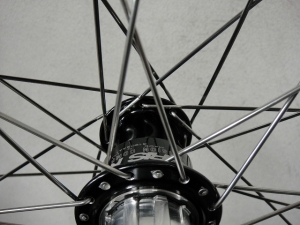
32H, half-comp two-cross lacing.
I'll cross the spokes, but the left and right spoke tensions are very close,
so crossing isn't strictly necessary (i.e., there's no significant gap that needs filling).
I haven't crossed them yet because there are a lot of numbers I want to measure.
Even accounting for the asymmetry of different spoke sizes on each side,
the wheel's left-right balance is quite good—
I think the main reason is probably not the high-low flange difference
but rather the small amount of dish (ochouko).
Road and MTB hubs differ by 5mm in over-locknut dimension,
which means 2.5mm extension per side,
so the right flange width gets effectively 2.5mm wider.
But this hub's right flange is about 3.2mm wider
than yesterday's Chris King.
That's because yesterday's hub is Shimano 11-speed compatible,
so it has tighter dish than a 10-speed hub.
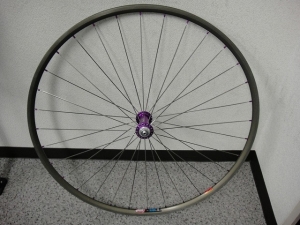
Front wheel is done.
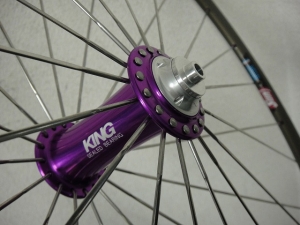
32H, CX-RAY outpoke radial lacing.
Unlike yesterday's Chris King hub, this flange isn't particularly thick,
so I didn't get the spoke neck bend-points cutting into the flange.
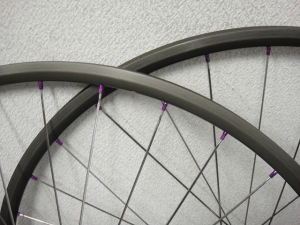
Per the customer's request, I've used purple aluminum nipples front and rear.
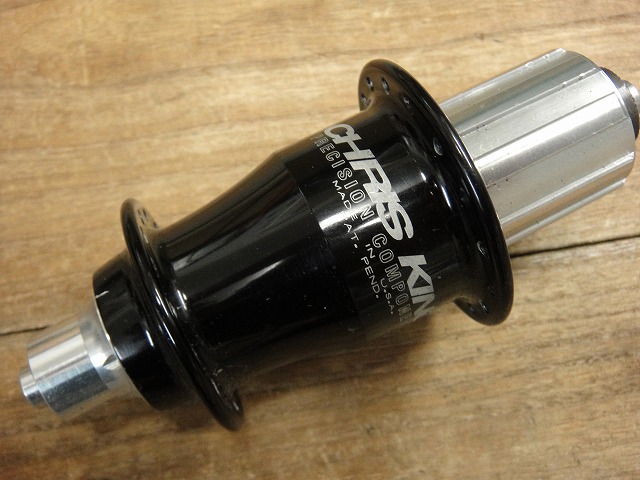
I took in a Chris King rear hub.
It's for MTB, so the over-locknut dimension is 135mm.
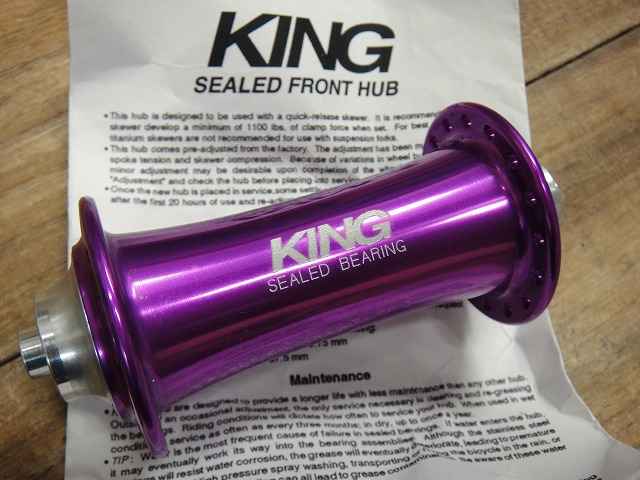
The front hub is a King.
The original "King" from before Chris King.
When someone calls a Chris King hub just "King,"
I'm never sure if they're just shortening the name
or if they actually know about the predecessor King model—
but it's probably the former most of the time.
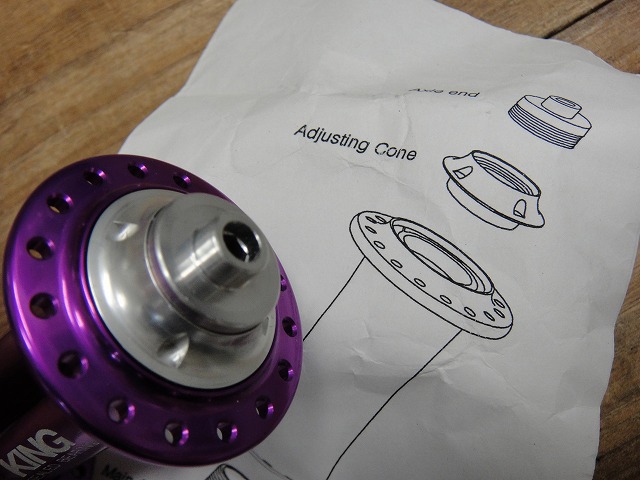
The bearing adjustment mechanism hasn't changed from the current model.
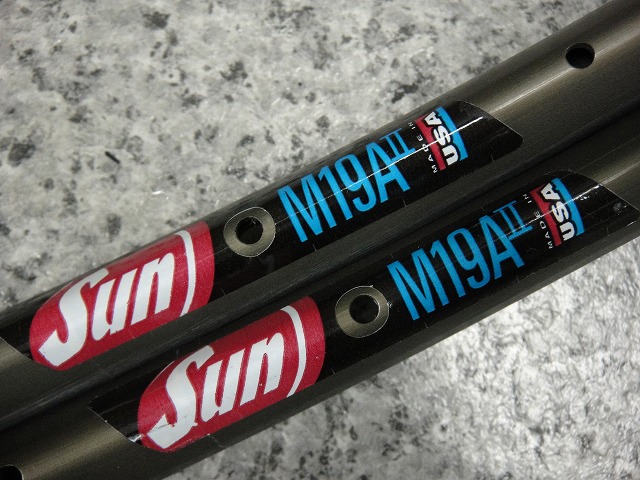
The rim is a Sun MA19II,
but I have no idea what's different between this and the MA19.
The tag hanging on the rim still just said "MA19."
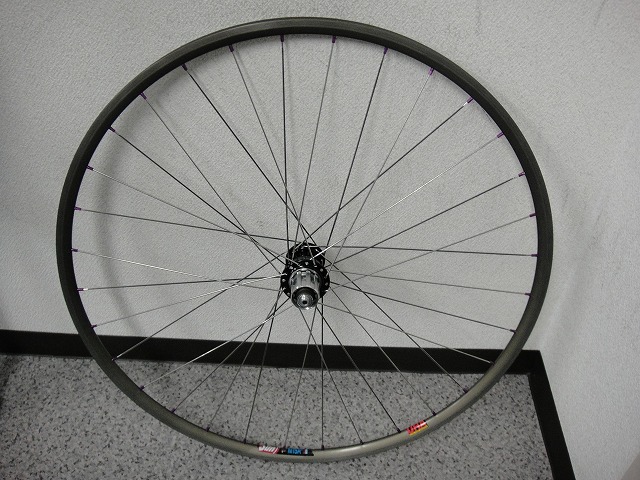
Rear wheel is done.
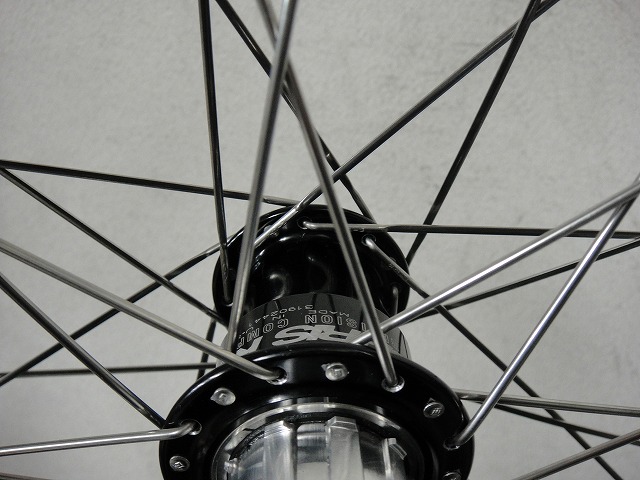
32H, half-comp two-cross lacing.
I'll cross the spokes, but the left and right spoke tensions are very close,
so crossing isn't strictly necessary (i.e., there's no significant gap that needs filling).
I haven't crossed them yet because there are a lot of numbers I want to measure.
Even accounting for the asymmetry of different spoke sizes on each side,
the wheel's left-right balance is quite good—
I think the main reason is probably not the high-low flange difference
but rather the small amount of dish (ochouko).
Road and MTB hubs differ by 5mm in over-locknut dimension,
which means 2.5mm extension per side,
so the right flange width gets effectively 2.5mm wider.
But this hub's right flange is about 3.2mm wider
than yesterday's Chris King.
That's because yesterday's hub is Shimano 11-speed compatible,
so it has tighter dish than a 10-speed hub.

Front wheel is done.

32H, CX-RAY outpoke radial lacing.
Unlike yesterday's Chris King hub, this flange isn't particularly thick,
so I didn't get the spoke neck bend-points cutting into the flange.

Per the customer's request, I've used purple aluminum nipples front and rear.