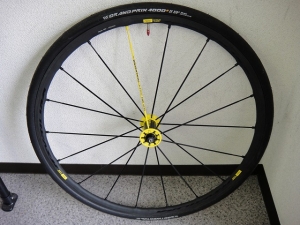
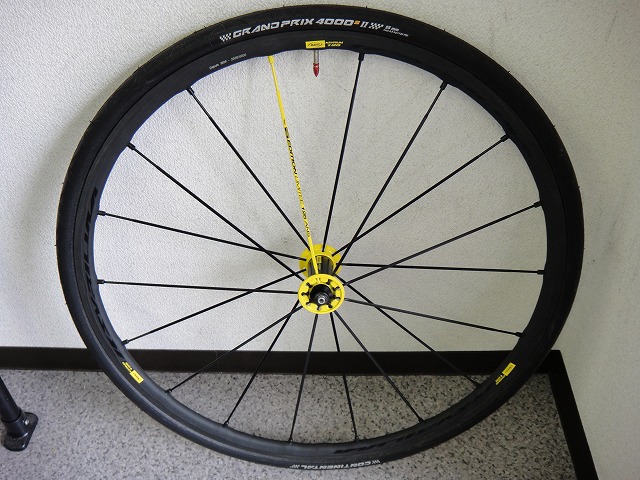
I received a Ksyrium 125 from a customer.
Regarding its history,
I didn't ask where it came from, but the customer casually let it slip that they'd bought it from a shop.
I figured they should have asked the shop to check the wheel centering and runout when they bought it,
but from what I heard from the customer about other matters,
apparently it's hard for people to speak up about things like that,
or they get brushed off with "pre-builts are fine as-is" or similar.
Hmm.
Whether "pre-builts are fine" or not is, as you can tell from this blog's "~san" series,
pretty hit-or-miss.
The front wheel was spot-on for centering and had barely any runout.
The customer doesn't know whether the shop that sold it checked things beforehand,
but it's possible they did.
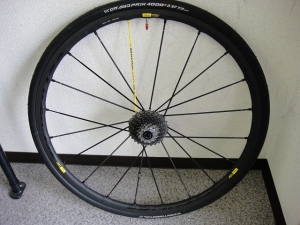
But then I found the rear wheel had
"centering off so badly that there's no way they could have missed it if they'd checked,"
so clearly they weren't looking.
The rim was shifted toward the non-drive side, which is an unusual direction
(it's more common for it to be toward the drive side),
so I tightened up the drive side, but since the runout itself was spot-on,
I might get away with not touching the non-drive side nipples if I'm lucky.
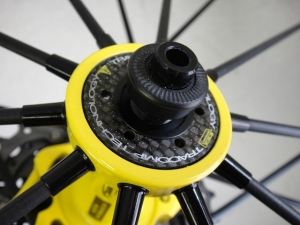
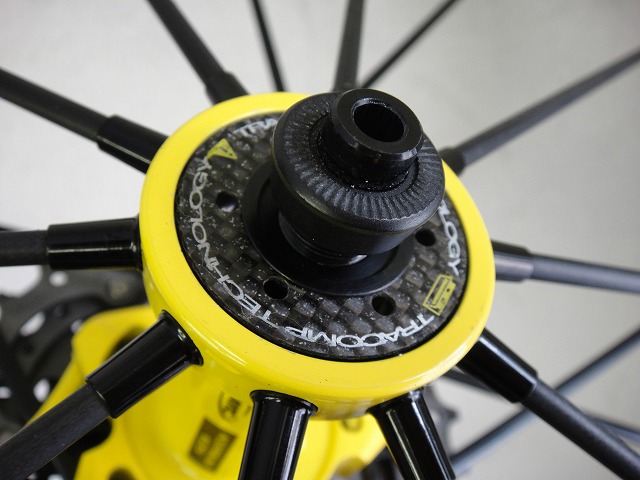
That's because when adjusting Tracomp spokes,
you absolutely have to remove the Tracomp ring inside the hub.
Pulling out the shaft to do this can sometimes take longer than the wheel truing work itself.
This time, I managed to center and true the wheel just by adjusting the drive side,
which is rare, and I didn't have to remove the Tracomp ring.
The spoke tension on the drive side was also slightly loose,
(if the centering had been fine, I wouldn't have bothered tightening it up anyway)
so things worked out well.
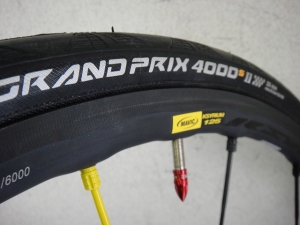
The tires had already been swapped out by the customer.
It's not so much about what Mavic tires are like,
Hamatchin sock tires—the OEM manufacturer's tires—
aren't really my cup of tea either.
It's not without reason;
I just don't have great memories of their puncture resistance and cornering performance.
Also, I've gotten better at reading the bike's history from the serial number.
Before the customer told me, I already had a hunch from the number
that this wasn't an impulse buy online.
Regarding its history,
I didn't ask where it came from, but the customer casually let it slip that they'd bought it from a shop.
I figured they should have asked the shop to check the wheel centering and runout when they bought it,
but from what I heard from the customer about other matters,
apparently it's hard for people to speak up about things like that,
or they get brushed off with "pre-builts are fine as-is" or similar.
Hmm.
Whether "pre-builts are fine" or not is, as you can tell from this blog's "~san" series,
pretty hit-or-miss.
The front wheel was spot-on for centering and had barely any runout.
The customer doesn't know whether the shop that sold it checked things beforehand,
but it's possible they did.
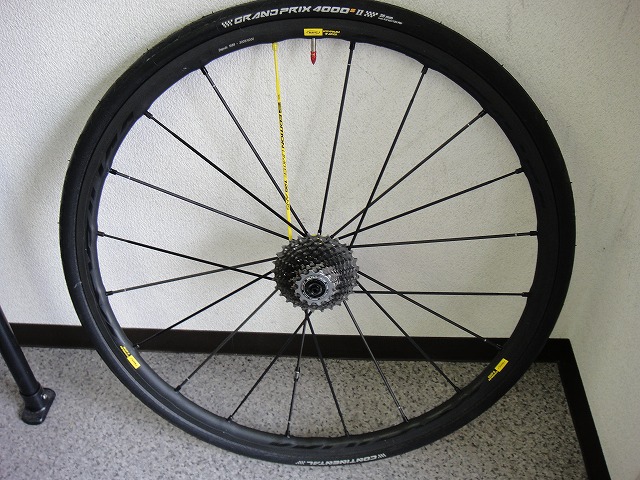
But then I found the rear wheel had
"centering off so badly that there's no way they could have missed it if they'd checked,"
so clearly they weren't looking.
The rim was shifted toward the non-drive side, which is an unusual direction
(it's more common for it to be toward the drive side),
so I tightened up the drive side, but since the runout itself was spot-on,
I might get away with not touching the non-drive side nipples if I'm lucky.
That's because when adjusting Tracomp spokes,
you absolutely have to remove the Tracomp ring inside the hub.
Pulling out the shaft to do this can sometimes take longer than the wheel truing work itself.
This time, I managed to center and true the wheel just by adjusting the drive side,
which is rare, and I didn't have to remove the Tracomp ring.
The spoke tension on the drive side was also slightly loose,
(if the centering had been fine, I wouldn't have bothered tightening it up anyway)
so things worked out well.
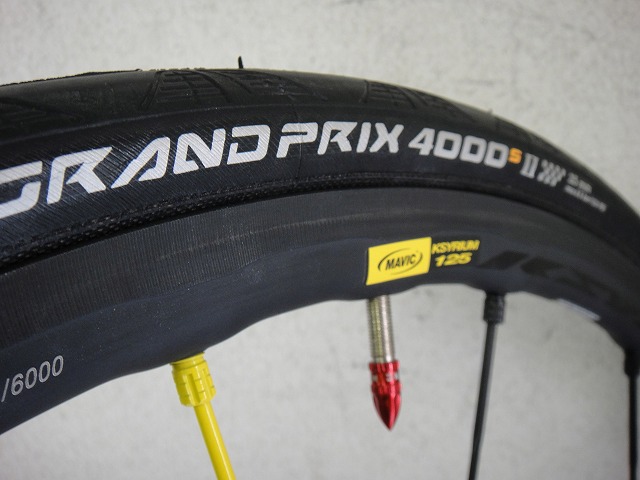
The tires had already been swapped out by the customer.
It's not so much about what Mavic tires are like,
Hamatchin sock tires—the OEM manufacturer's tires—
aren't really my cup of tea either.
It's not without reason;
I just don't have great memories of their puncture resistance and cornering performance.
Also, I've gotten better at reading the bike's history from the serial number.
Before the customer told me, I already had a hunch from the number
that this wasn't an impulse buy online.