Another wheel day today (and so on).
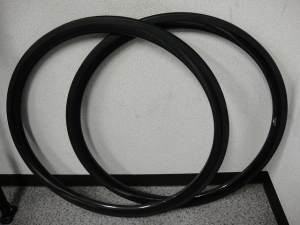
A customer brought in a Hong Fu carbon rim for me to work with.
It's WO spec. The glossy finish is apparently a recently released model.
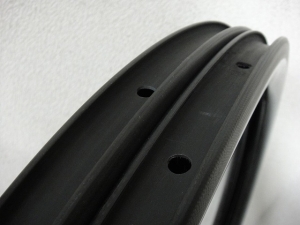
This is basically one big safety margin of a rim,
and because of that the rim width is extremely wide.
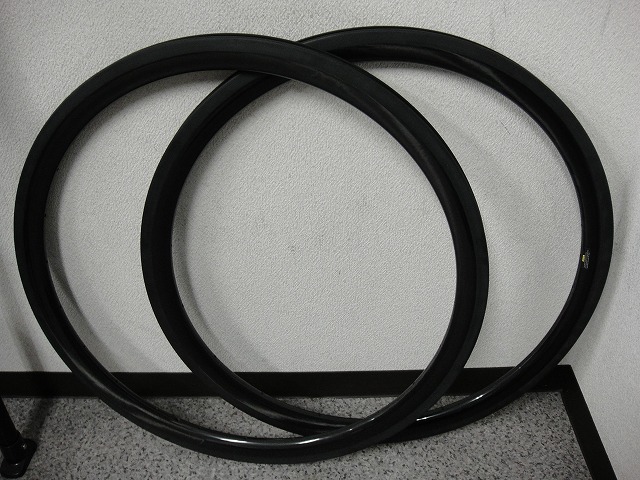
When you stack two together you can really see it—like the current ZIPP,
the brake zone area tapers ever so slightly toward the rim's outer edge.
The widest section measured an actual 26.4mm,
and the outermost edge was 24.0mm.
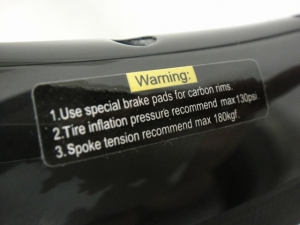
↑Spoke tension can supposedly go up to 180 kgf,
but the conditions on the spoke and nipple side aren't such as to permit that,
so the rim's practical spoke tension limit is effectively unlimited.
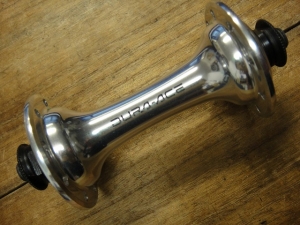
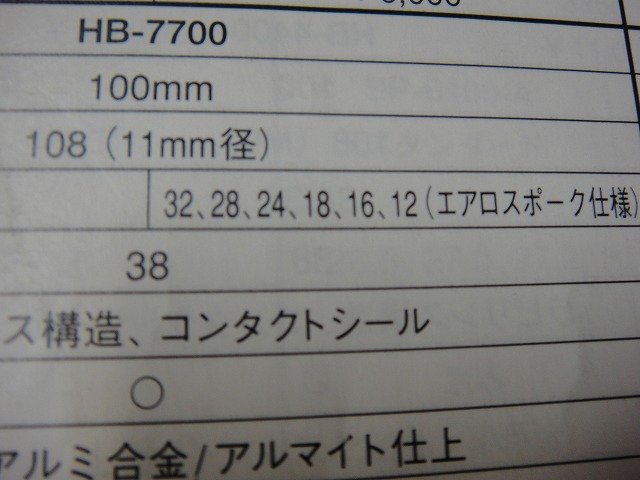
The hub is a customer-supplied HB-7400 with slitted holes.

It's 18-hole.
The 600 (equivalent to today's Altus) second-tier hub from the Dura-Ace era
also came in an 18H version, and I relied on that quite a bit back in the day.
Shimano hubs originally forbid radial lacing,
and the 5501 hub from the 105 5500 series in the 7700 era,
with its minor revision model "5501-A,"
was the first road hub where radial lacing became acceptable.
For Dura-Ace, that would be the 7800 series as the first.
But an 18H (9H per side) front hub
can't be laced tangent-only—
you're forced to use radial lacing.
Rather than doing something exotic like crossed or crosscrossed lacing,
straight radial lacing would be better.
So I'll go with outpoke radial lacing.
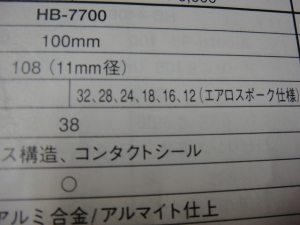
As a side note, for some reason Shimano never makes a "20H front hub."
Not even back in the 7700 era when they made practically everything.
Even the current HB-9000 jumps from 18H straight to 24H.
This ends up being a real lost opportunity for hand-built wheels.
There are carbon rims out there with 20H availability but no 18H option.
Now that I think about it, I've built wheels with 9000 hubs plenty of times,
but almost all of them were carbon rim builds—that's just how it is.
I've hardly ever built a 9000 32H hub with a low-profile aluminum rim.
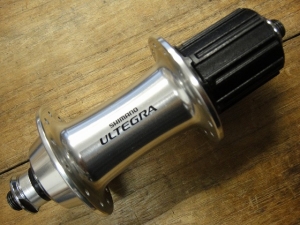
The rear hub is an FH-6600 the customer provided.
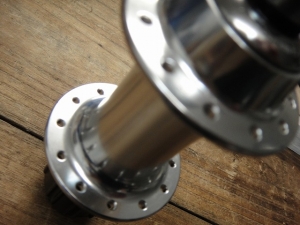
This is the "last 24H rear hub released outside Dura-Ace grade."
The other day I got a comment asking "why don't you make Mulab wheels with Shimano hubs?"
The answer is simple: "because there's no 24H hub."
We'd love a 20H front, but if that's not possible, at least a 24H front and rear
from Altus or 105 would naturally be my choice.
These days, 11-speed freehub compatibility is an essential requirement.
(This FH-6600 can't be converted to 11-speed freebody,
but that's not an issue given the customer's current circumstances)
The ball bearings inside some cartridge bearing hubs
are as big as vitamin pills,
but cup-and-cone bearing systems like Shimano hubs
with larger balls generally have better durability.
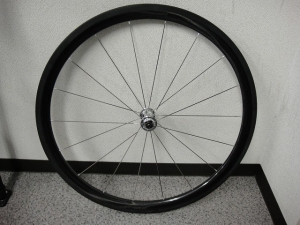
Built.
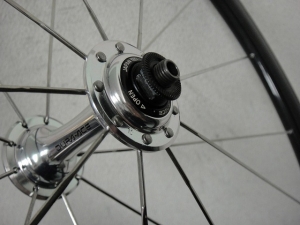
CX-RAY outpoke radial lacing.
It's a front hub, and the customer came with the bearings pretty well greased and the bearing adjustment quite tight,
but once you build the wheel (the flanges get pulled), the bearing play loosens up slightly,
so proper bearing adjustment really can't be dialed in except in the finished wheel state.
The rotation is so smooth there's barely any perceptible play, if any.
It's a delicate situation—if this were my wheel,
I'd leave it as-is for racing,
but if planning regular use I'd tighten it up a touch more.
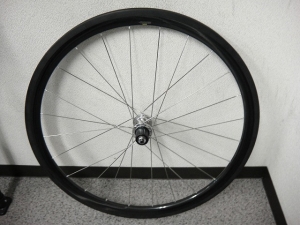
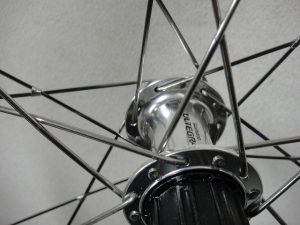
The rear is Strong on the freewheel side / CX-RAY on the non-freewheel side,
laced 4-cross with tie-in reinforcement.
The customer had initially requested Champion on the freewheel side,
but I went more aggressive with Strong.
Aside from pretty extreme cases,
this is pretty much the maximum difference asymmetry you can get.
Writing this after a while: the non-freewheel side tensioned up so much
we barely needed the reinforcement. Ha ha.
Maybe I could've left one crossing without reinforcement and let the customer give it a squeeze.

↑The butted section lined up right at the crossing.
If this were black spokes or on the non-freewheel side,
it could cause some pretty serious creaking.
It's silver spokes on the freewheel side so it should be fine, hopefully.
"Would silver spokes really creak?" you might think,
but back in the day when a Revolution's butted section happened to rub
on the non-freewheel side, it was pretty awful noise.
A customer brought in a Hong Fu carbon rim for me to work with.
It's WO spec. The glossy finish is apparently a recently released model.
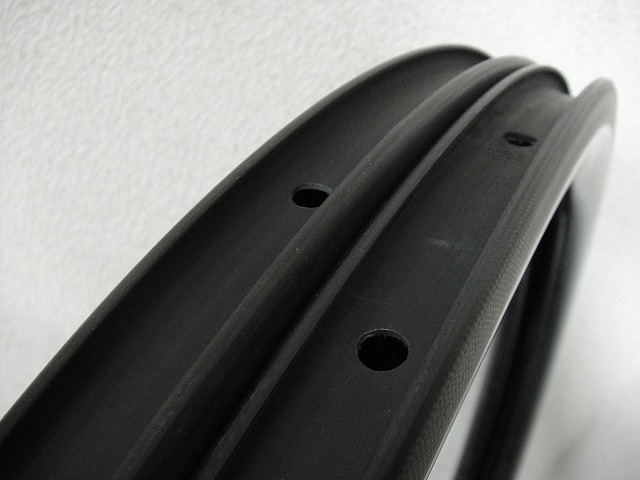
This is basically one big safety margin of a rim,
and because of that the rim width is extremely wide.
When you stack two together you can really see it—like the current ZIPP,
the brake zone area tapers ever so slightly toward the rim's outer edge.
The widest section measured an actual 26.4mm,
and the outermost edge was 24.0mm.
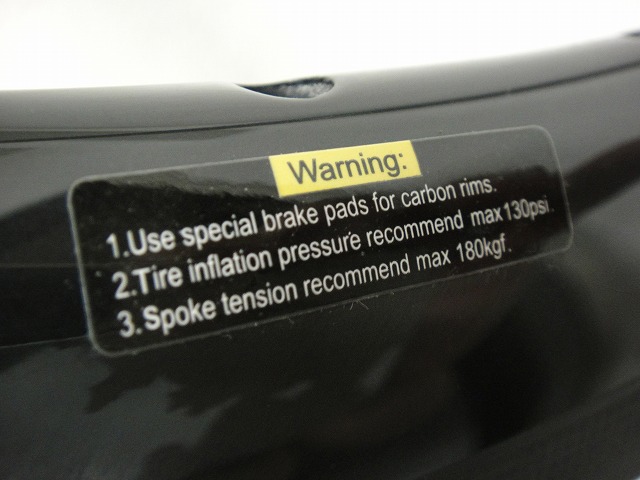
↑Spoke tension can supposedly go up to 180 kgf,
but the conditions on the spoke and nipple side aren't such as to permit that,
so the rim's practical spoke tension limit is effectively unlimited.
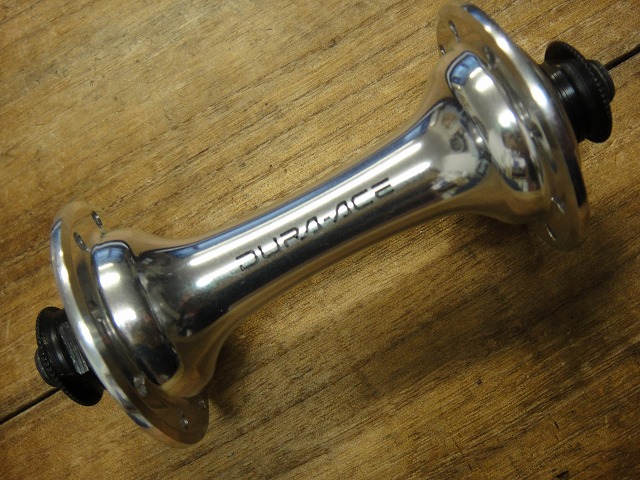
The hub is a customer-supplied HB-7400 with slitted holes.
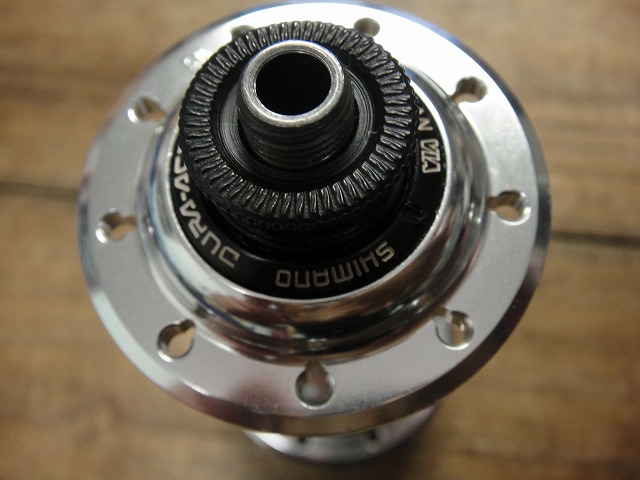
It's 18-hole.
The 600 (equivalent to today's Altus) second-tier hub from the Dura-Ace era
also came in an 18H version, and I relied on that quite a bit back in the day.
Shimano hubs originally forbid radial lacing,
and the 5501 hub from the 105 5500 series in the 7700 era,
with its minor revision model "5501-A,"
was the first road hub where radial lacing became acceptable.
For Dura-Ace, that would be the 7800 series as the first.
But an 18H (9H per side) front hub
can't be laced tangent-only—
you're forced to use radial lacing.
Rather than doing something exotic like crossed or crosscrossed lacing,
straight radial lacing would be better.
So I'll go with outpoke radial lacing.
As a side note, for some reason Shimano never makes a "20H front hub."
Not even back in the 7700 era when they made practically everything.
Even the current HB-9000 jumps from 18H straight to 24H.
This ends up being a real lost opportunity for hand-built wheels.
There are carbon rims out there with 20H availability but no 18H option.
Now that I think about it, I've built wheels with 9000 hubs plenty of times,
but almost all of them were carbon rim builds—that's just how it is.
I've hardly ever built a 9000 32H hub with a low-profile aluminum rim.
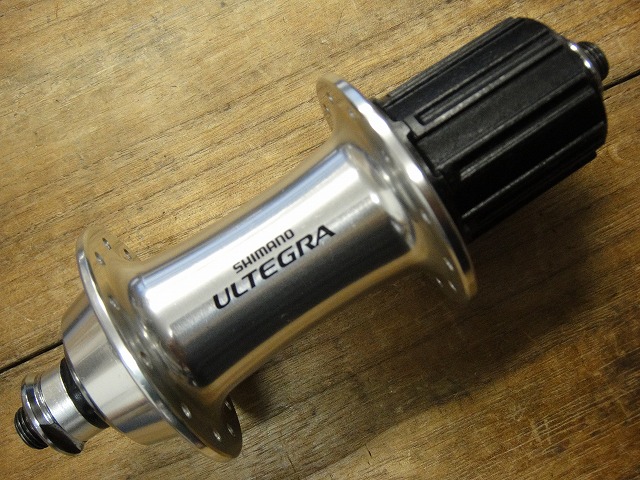
The rear hub is an FH-6600 the customer provided.

This is the "last 24H rear hub released outside Dura-Ace grade."
The other day I got a comment asking "why don't you make Mulab wheels with Shimano hubs?"
The answer is simple: "because there's no 24H hub."
We'd love a 20H front, but if that's not possible, at least a 24H front and rear
from Altus or 105 would naturally be my choice.
These days, 11-speed freehub compatibility is an essential requirement.
(This FH-6600 can't be converted to 11-speed freebody,
but that's not an issue given the customer's current circumstances)
The ball bearings inside some cartridge bearing hubs
are as big as vitamin pills,
but cup-and-cone bearing systems like Shimano hubs
with larger balls generally have better durability.
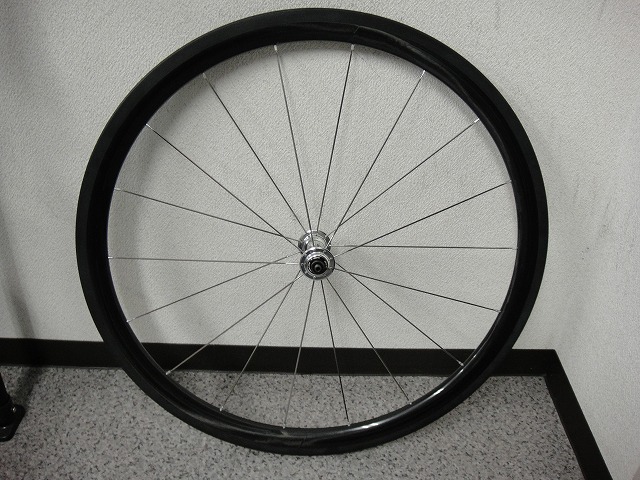
Built.

CX-RAY outpoke radial lacing.
It's a front hub, and the customer came with the bearings pretty well greased and the bearing adjustment quite tight,
but once you build the wheel (the flanges get pulled), the bearing play loosens up slightly,
so proper bearing adjustment really can't be dialed in except in the finished wheel state.
The rotation is so smooth there's barely any perceptible play, if any.
It's a delicate situation—if this were my wheel,
I'd leave it as-is for racing,
but if planning regular use I'd tighten it up a touch more.
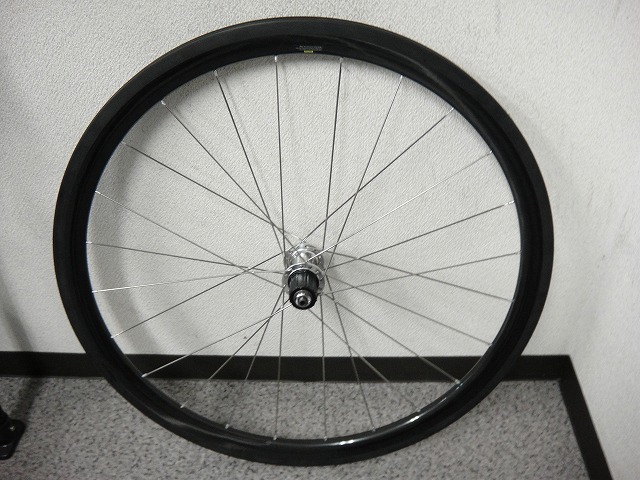
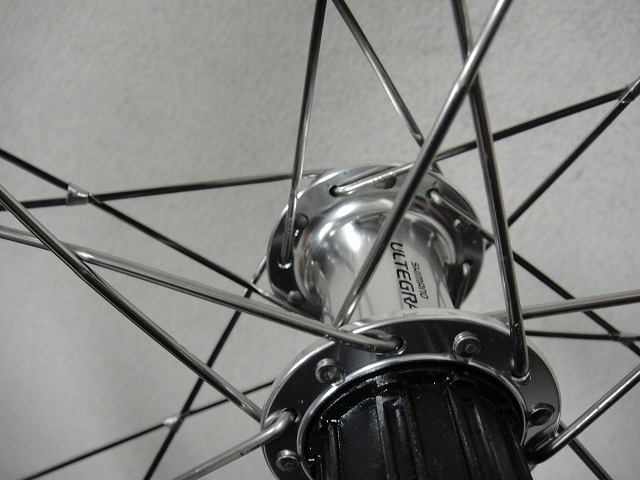
The rear is Strong on the freewheel side / CX-RAY on the non-freewheel side,
laced 4-cross with tie-in reinforcement.
The customer had initially requested Champion on the freewheel side,
but I went more aggressive with Strong.
Aside from pretty extreme cases,
this is pretty much the maximum difference asymmetry you can get.
Writing this after a while: the non-freewheel side tensioned up so much
we barely needed the reinforcement. Ha ha.
Maybe I could've left one crossing without reinforcement and let the customer give it a squeeze.
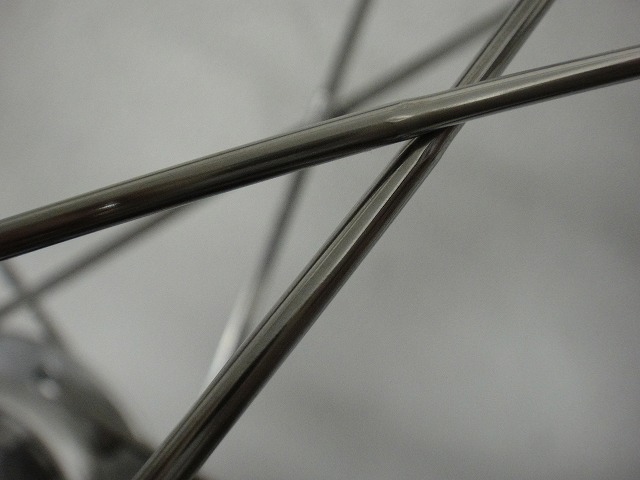
↑The butted section lined up right at the crossing.
If this were black spokes or on the non-freewheel side,
it could cause some pretty serious creaking.
It's silver spokes on the freewheel side so it should be fine, hopefully.
"Would silver spokes really creak?" you might think,
but back in the day when a Revolution's butted section happened to rub
on the non-freewheel side, it was pretty awful noise.