I received a Racing ZERO (Campagnolo hub) from a customer.
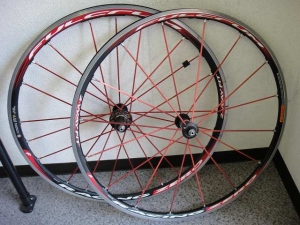
↑Before work
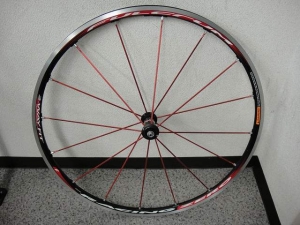
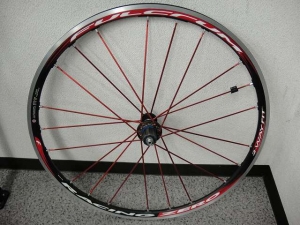
↑After work
Since it was already pretty clean to begin with, the difference is hard to see,
but the brake zone shining unnaturally is definitely noticeable.
In addition to truing and centering, the customer also requested
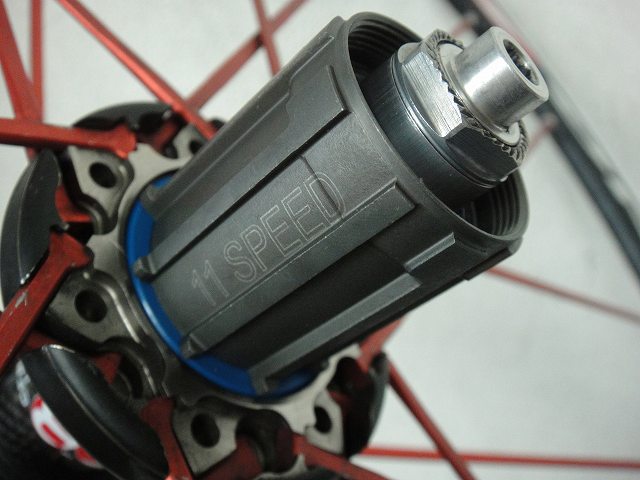
a hub overhaul and upgrading the freebody to Shimano 11-speed.

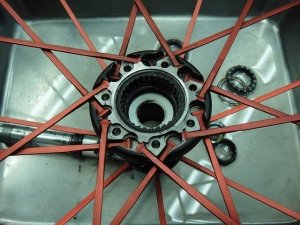
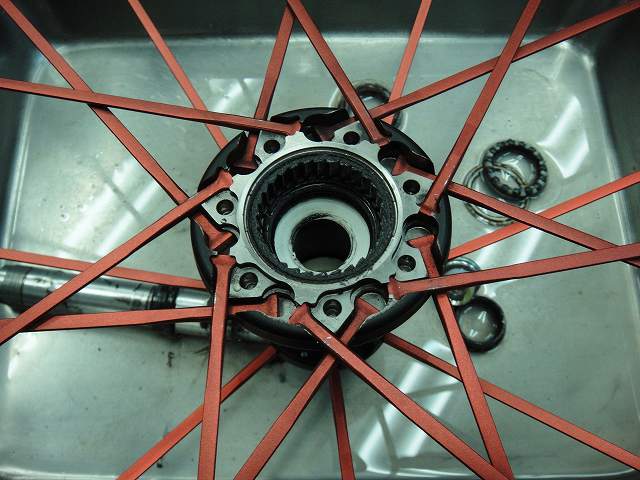
The hub has black ball races with USB bearings.
This is the first time I've made a distinction based on ball race color.
The reason is that the current silver ball races, which look nearly indistinguishable from CULT's, seem to have superior wear resistance compared to ceramic bearings.
USB was changed to silver ball race specs about a year and a bit ago,
and so far I haven't seen any silver ball races that have failed due to spalling.
Black ball races? I've seen plenty fail that way.
Whether I haven't seen silver ones fail due to spalling because the spec change is still recent, or because the hardness has improved—
that will become clear naturally after a bit more time.
With specs like the ZTR Alpha 340 rim inner thickness, the ENVE rim weight,
and the ST-7801 and ST-9001 that oddly got minor updates right away,
manufacturer spec changes often seem suspiciously motivated by wanting to dispel doubts.
However, in the case of these black and silver ball races, the parts number is the same,
so officially they're "the same part."
When I asked Campagnolo Japan, they told me that when ordering ball races individually,
they're still supplying black ones and haven't transitioned to silver yet.
I would have liked to swap them to silver if I could, but there's nothing to be done.
By the way, this time there wasn't even wear marks, let alone spalling,
so replacement wasn't technically essential.
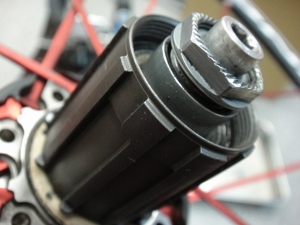
In reverse chronological order, this time too the reverse-threaded end nut came loose by hand.
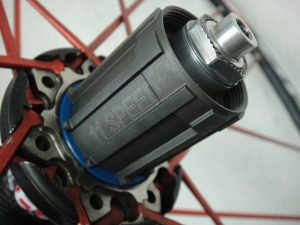
I replaced the freebody.
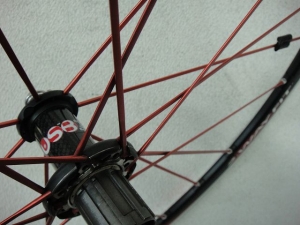
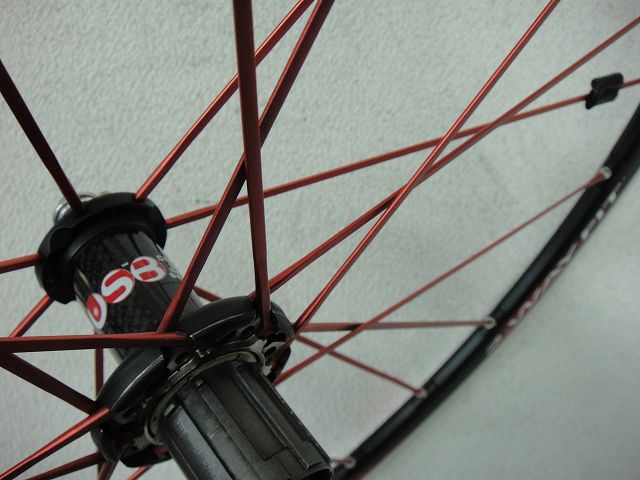
Looking at the rear wheel from the opposite side of the bearing cone adjustment nut,
the USB was oriented so it read forward,
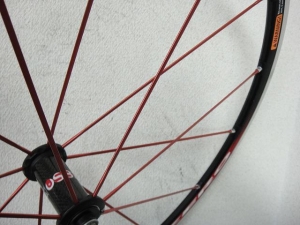
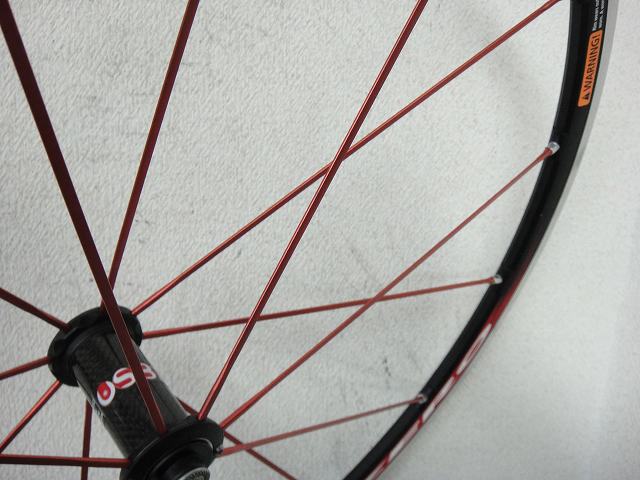
so I matched the front wheel to that.
The sticker is on the right WARNING side, but I prioritized the hub orientation.
Incidentally, this is the same orientation as before the overhaul.
Even if that weren't the case, I would have done it this way.
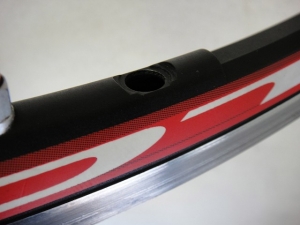
This wheel was apparently inherited from a previous owner,
and the valve hole adapter had gone missing.
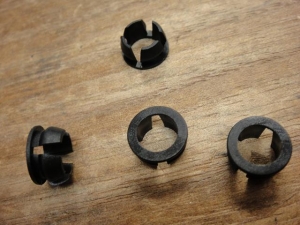
This is a part we keep in stock at the shop as standard.
Cases like this one and various others come up frequently.
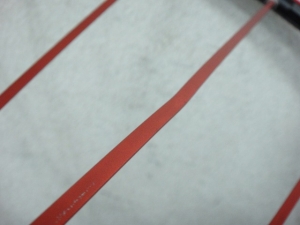
I was told "a spoke is bent, so please replace it,"
but at first I had no idea which one it was.
I might not have noticed if I hadn't been told.
Going through each spoke carefully, I found the bent one.
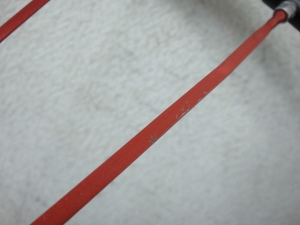
↑This one too.
This one's pretty hard to see, isn't it?
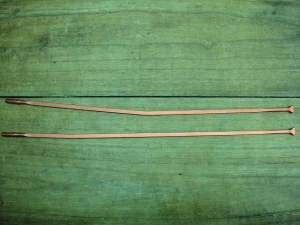
Once it's relieved of tension, you can clearly see the bend.
The spoke at the bottom of the image is still hard to make out, but
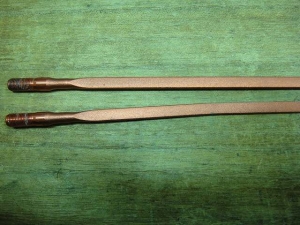
↑from this angle, you can see it.
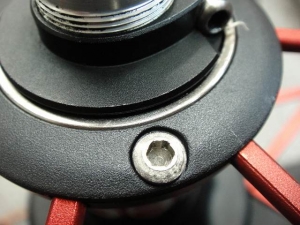
I don't think this concerns most people, but
the current production version uses Torx head screws here.
Since they're small screws, stripping them would be a real pain,
but with Torx, that risk is virtually eliminated.
A similar example would be
stripping the Shimano brake shoe retainer screw
and having to remove it with pliers or Screw Extractors—I'm sure many of you have been there.
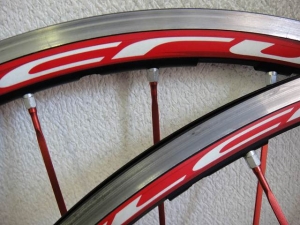
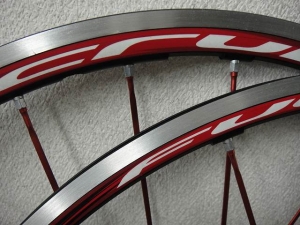
I cleaned the rim sides using the forbidden technique.
You can tell it's the same wheel because there's a vertical line on the brake zone near the "C" on the rear rim that wouldn't come off.
On a side note,
this approach of "shooting from nearly the same angle" in this blog
is also frequently used insupposedly different brand part comparisons with
what can only seem like malicious intent.
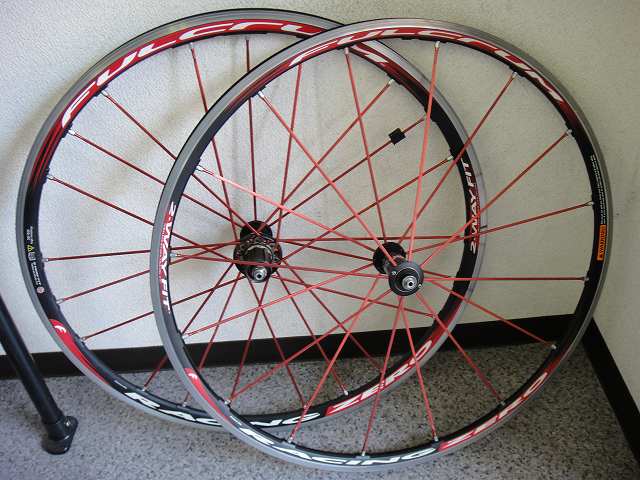
↑Before work
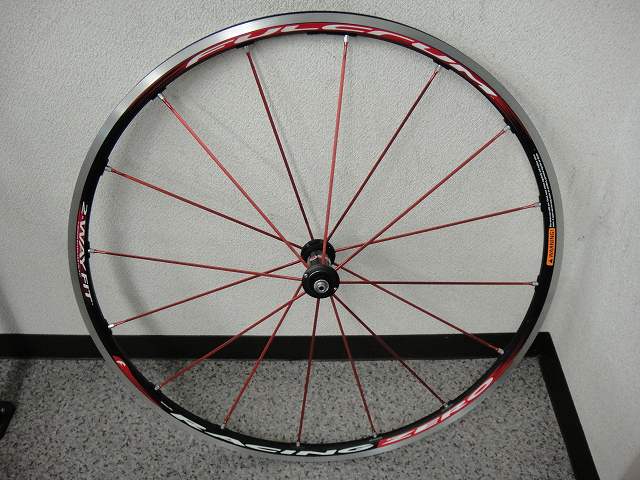
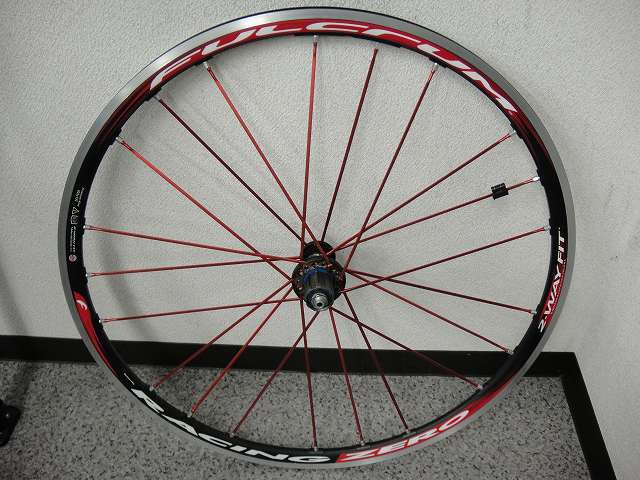
↑After work
Since it was already pretty clean to begin with, the difference is hard to see,
but the brake zone shining unnaturally is definitely noticeable.
In addition to truing and centering, the customer also requested
a hub overhaul and upgrading the freebody to Shimano 11-speed.

The hub has black ball races with USB bearings.
This is the first time I've made a distinction based on ball race color.
The reason is that the current silver ball races, which look nearly indistinguishable from CULT's, seem to have superior wear resistance compared to ceramic bearings.
USB was changed to silver ball race specs about a year and a bit ago,
and so far I haven't seen any silver ball races that have failed due to spalling.
Black ball races? I've seen plenty fail that way.
Whether I haven't seen silver ones fail due to spalling because the spec change is still recent, or because the hardness has improved—
that will become clear naturally after a bit more time.
With specs like the ZTR Alpha 340 rim inner thickness, the ENVE rim weight,
and the ST-7801 and ST-9001 that oddly got minor updates right away,
manufacturer spec changes often seem suspiciously motivated by wanting to dispel doubts.
However, in the case of these black and silver ball races, the parts number is the same,
so officially they're "the same part."
When I asked Campagnolo Japan, they told me that when ordering ball races individually,
they're still supplying black ones and haven't transitioned to silver yet.
I would have liked to swap them to silver if I could, but there's nothing to be done.
By the way, this time there wasn't even wear marks, let alone spalling,
so replacement wasn't technically essential.

In reverse chronological order, this time too the reverse-threaded end nut came loose by hand.
I replaced the freebody.
Looking at the rear wheel from the opposite side of the bearing cone adjustment nut,
the USB was oriented so it read forward,
so I matched the front wheel to that.
The sticker is on the right WARNING side, but I prioritized the hub orientation.
Incidentally, this is the same orientation as before the overhaul.
Even if that weren't the case, I would have done it this way.
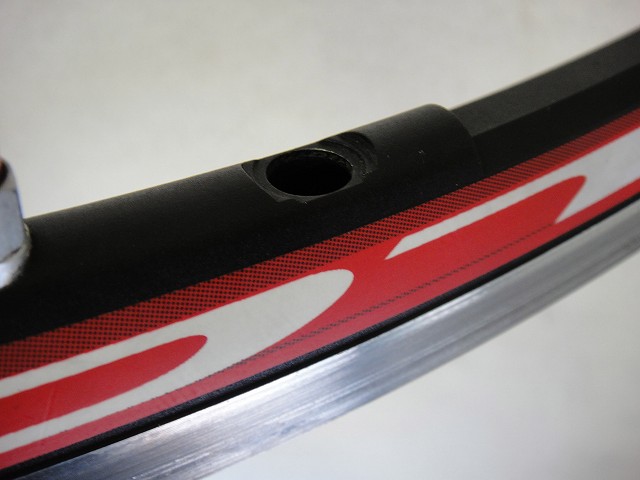
This wheel was apparently inherited from a previous owner,
and the valve hole adapter had gone missing.
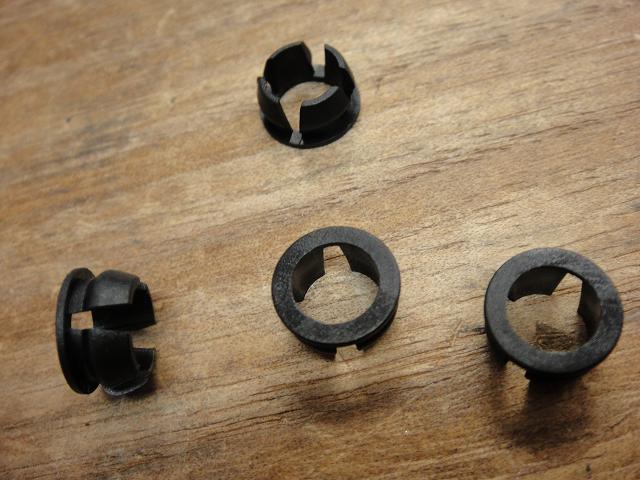
This is a part we keep in stock at the shop as standard.
Cases like this one and various others come up frequently.
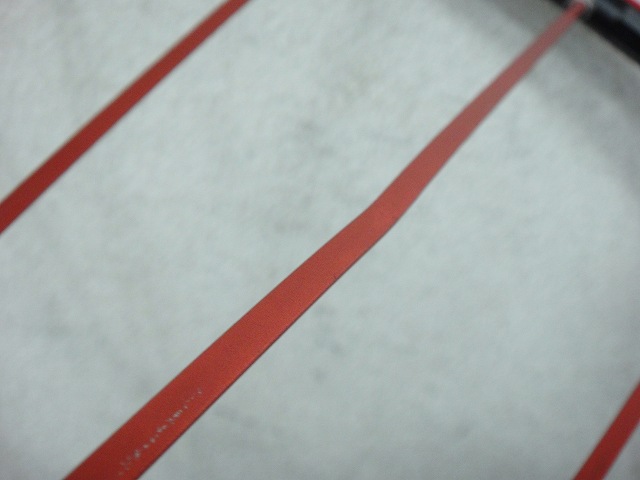
I was told "a spoke is bent, so please replace it,"
but at first I had no idea which one it was.
I might not have noticed if I hadn't been told.
Going through each spoke carefully, I found the bent one.
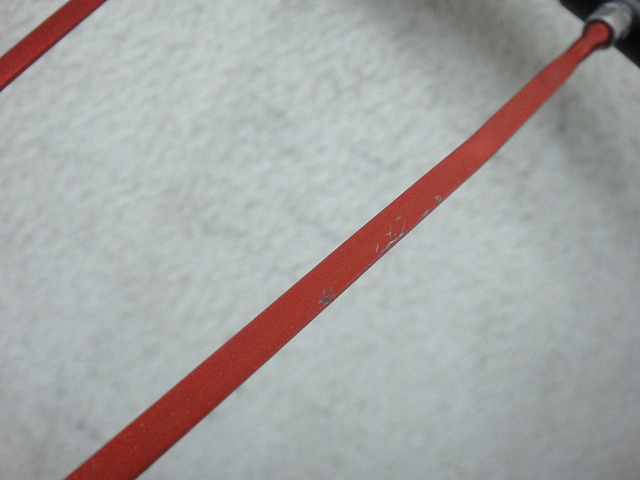
↑This one too.
This one's pretty hard to see, isn't it?
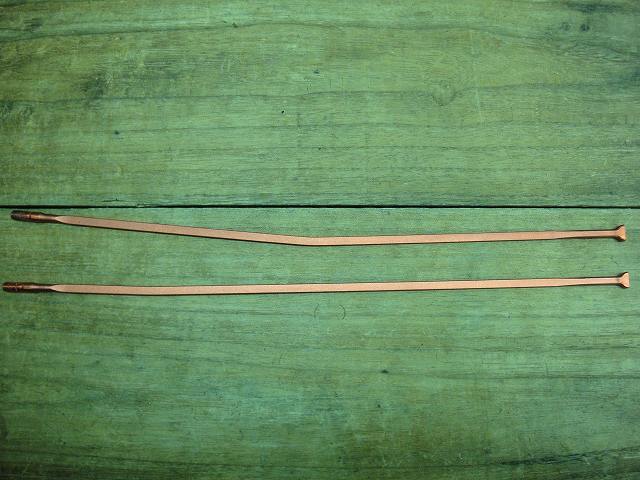
Once it's relieved of tension, you can clearly see the bend.
The spoke at the bottom of the image is still hard to make out, but
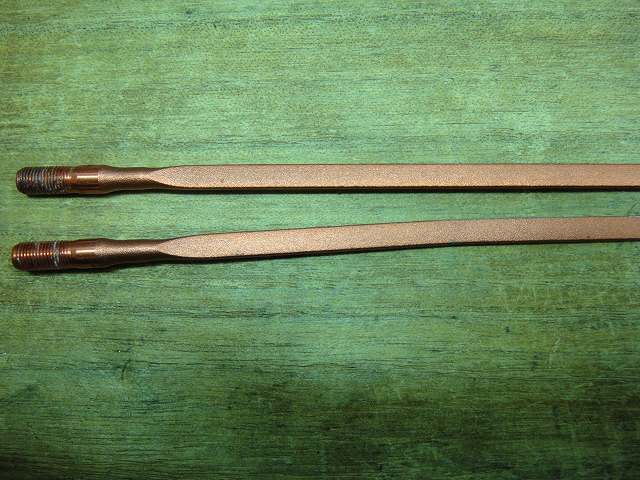
↑from this angle, you can see it.
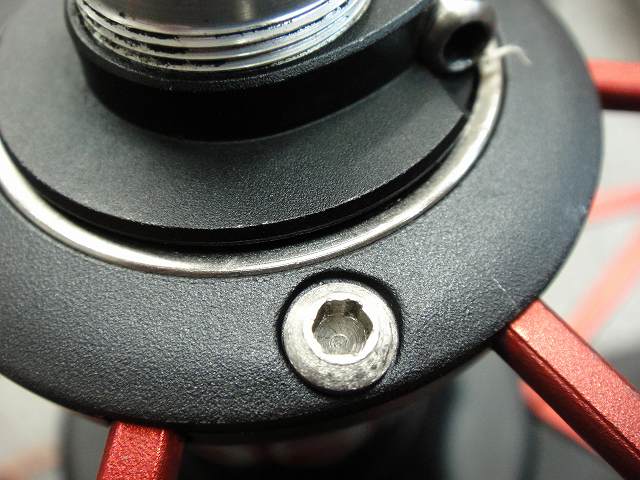
I don't think this concerns most people, but
the current production version uses Torx head screws here.
Since they're small screws, stripping them would be a real pain,
but with Torx, that risk is virtually eliminated.
A similar example would be
stripping the Shimano brake shoe retainer screw
and having to remove it with pliers or Screw Extractors—I'm sure many of you have been there.
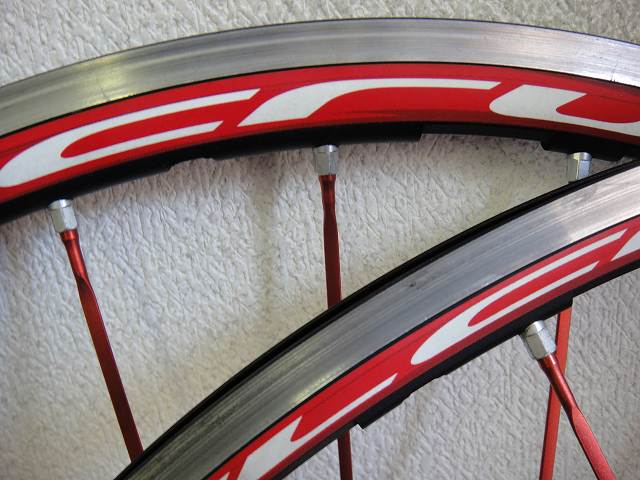
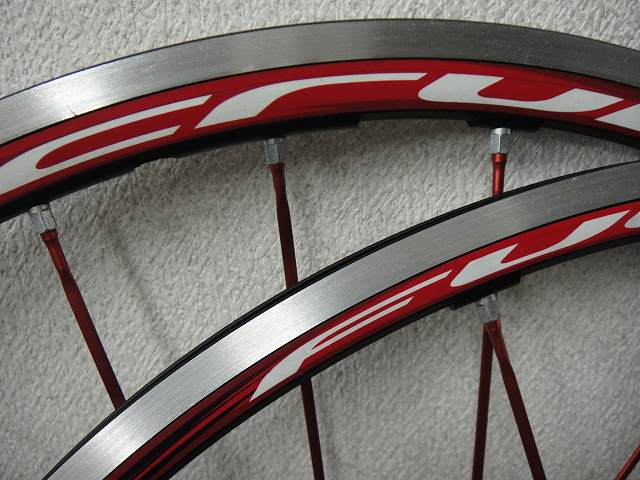
I cleaned the rim sides using the forbidden technique.
You can tell it's the same wheel because there's a vertical line on the brake zone near the "C" on the rear rim that wouldn't come off.
On a side note,
this approach of "shooting from nearly the same angle" in this blog
is also frequently used in