This series with titles like "(Wheel Name)-san" is really just meant to spread the word that
factory pre-built wheels from manufacturers have varying levels of precision,
and while you might get lucky and end up with one built by a skilled builder,
even if you don't, a proper shop will make sure to properly finish the wheel
before handing it over to the customer.
With Shimano, Mavic, Fulcrum, and others,
there's no particular manufacturer whose precision is obviously terrible.
It's really just luck. Whether the rim can be tracked by serial number
or the builder has signed a card hanging from the hub,
there are bad builders everywhere, that much is certain.
These comments are about pre-built wheels though,
and if I tried to extend the "~-san" series to hand-built wheels,
it would just become complaints about shoddy work,
so I haven't written about that kind of thing before.
Sometimes you can tell where a wheel came from just by looking at the component specs.
But every once in a while I write about it anyway.
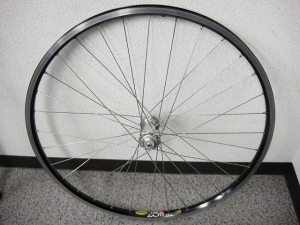
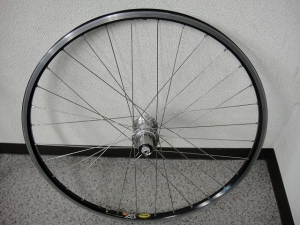
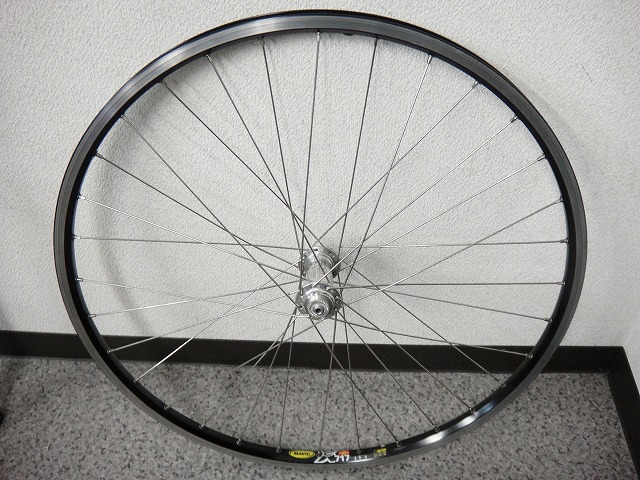
I did truing work on an MTB hand-built wheel.
It's built with a Mavic XC717 rim and White Industries hub
using DT Competition spokes.
Earlier I said "complaints about shoddy work," but
the centering was perfect and there was basically no runout, so there weren't any real problems.
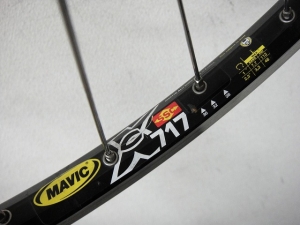
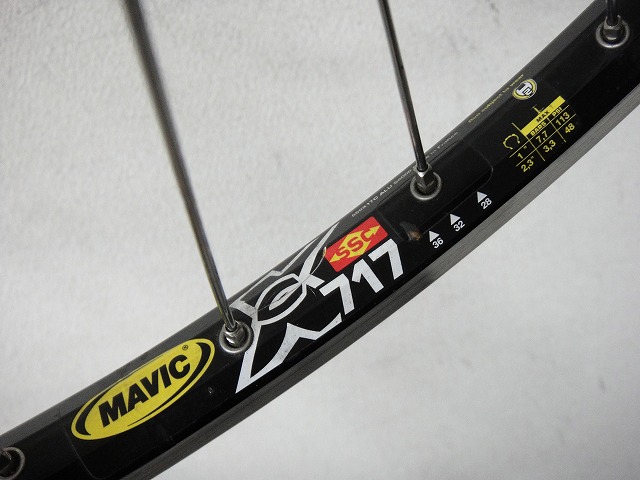
Mavic's lightweight cross-country MTB rims—
the "○17 series" like the 117, 217, X517, and XC717
have a tradition of being as light as road WO rims from the same period,
like the Reflex WO and Open Pro.
The predecessor X517 was a masterpiece.
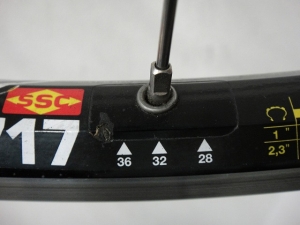
↑The spoke hole count indicator on the sticker is a Mavic patent.
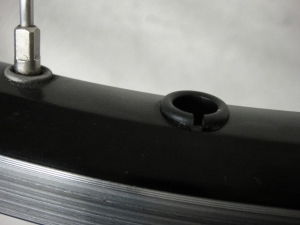
↑Mavic's "Magic Valve"—
an adapter for using a Presta valve on a rim drilled for Schrader valves.
This is a very handy little accessory.
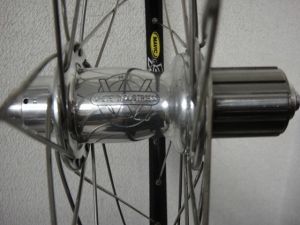
The White rear hub is oriented so the logo reads correctly when viewed from the direction of travel.

There's a small hole on the left side of the rear hub for tightening the set screw
that locks in the cone bearing adjustment.
The right side has the freebody, so this can only be positioned on the left.
So if we follow the convention that "the set screw hole should be on the left side"
even on front hubs...
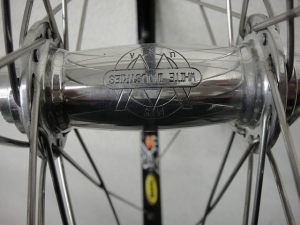
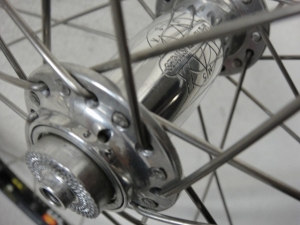
I've written before about how the front hub logo ends up facing backwards.
But in this case, if you do that...
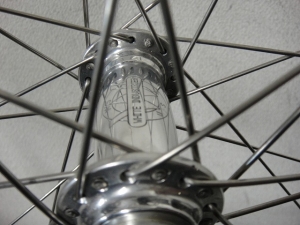
You end up with reverse Italian lacing...
Since the rear wheel uses Italian lacing, it seems better to flip the front wheel
so the logo faces the right direction.
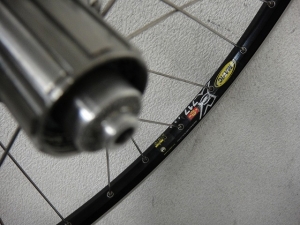
So if both wheels use Italian lacing (the rear wheel has no choice),
the rim stickers end up upside down when viewed from the right side on both wheels.
The direction of markings and stickers doesn't affect wheel performance,
but I thought they could have put a bit more care into it.
It's especially a shame since the wheel itself was built properly.
Next, here's another MTB wheel.
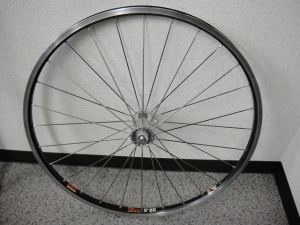
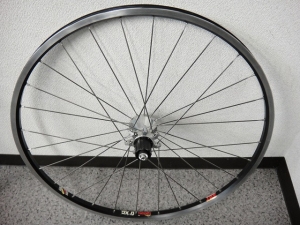
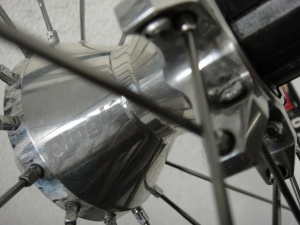
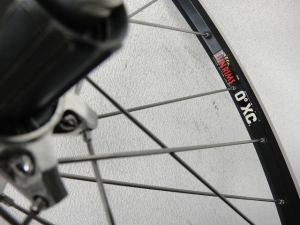
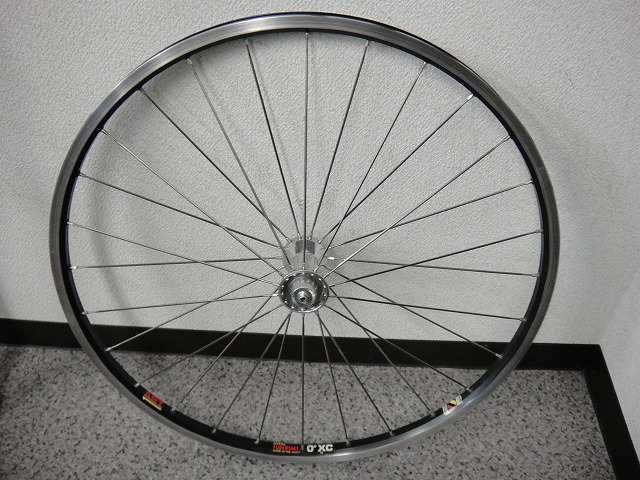
The rim is a Sun 0° XC, and the hub is a Rigida.
Later Sun and Rigida merged into "Sun-Ringle," a single manufacturer,
but with the rim bearing the Sun name and the hub bearing the Rigida name,
it might look like a hand-built wheel that just happened to combine the two,
but the spokes are special, so apparently this is a pre-built wheel.
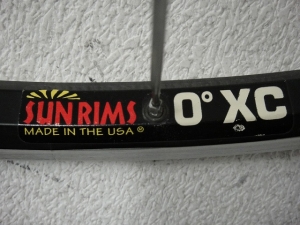
↑Looks like a light rim
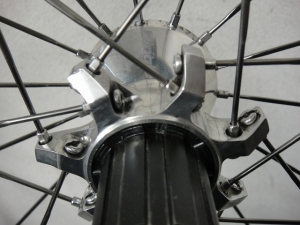

Both the hub and rim have nipples on both sides—a special configuration.
Though when it comes to repairs, you can just machine a bent spoke
into a double-threaded spoke, so this type of wheel is actually relatively easy to fix if needed.
Wheels like this were commonly made by Chronométro.
People might say "that's similar to Cane Creek wheels,"
but Cane Creek just acquired Chronométro when expanding into the wheel business,
so these two companies are like Velomax and Easton.
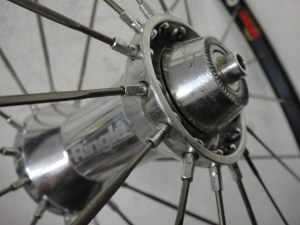
When the front hub's Rigida logo is right-side up,
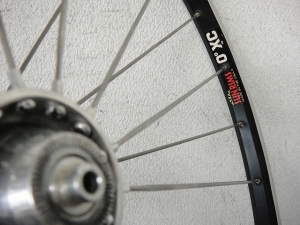
the rim logo can be read from the right side,
following the convention used by most wheels,
but the rear wheel had the rim reversed.
Actually the rear wheel had centering issues, extremely low tension, and other problems,
plus "the valve hole is in the middle of the final cross on the drive-side tangent lacing,"
which is very amateurish lacing,
so I suspect someone re-laced it later.
At the very least, it's almost impossible that the same person laced both wheels.
There's a huge difference in quality between them.
After writing all this, I realize
I should probably stick to doing this kind of article only for pre-built wheels (too late now).
factory pre-built wheels from manufacturers have varying levels of precision,
and while you might get lucky and end up with one built by a skilled builder,
even if you don't, a proper shop will make sure to properly finish the wheel
before handing it over to the customer.
With Shimano, Mavic, Fulcrum, and others,
there's no particular manufacturer whose precision is obviously terrible.
It's really just luck. Whether the rim can be tracked by serial number
or the builder has signed a card hanging from the hub,
there are bad builders everywhere, that much is certain.
These comments are about pre-built wheels though,
and if I tried to extend the "~-san" series to hand-built wheels,
it would just become complaints about shoddy work,
so I haven't written about that kind of thing before.
Sometimes you can tell where a wheel came from just by looking at the component specs.
But every once in a while I write about it anyway.

I did truing work on an MTB hand-built wheel.
It's built with a Mavic XC717 rim and White Industries hub
using DT Competition spokes.
Earlier I said "complaints about shoddy work," but
the centering was perfect and there was basically no runout, so there weren't any real problems.
Mavic's lightweight cross-country MTB rims—
the "○17 series" like the 117, 217, X517, and XC717
have a tradition of being as light as road WO rims from the same period,
like the Reflex WO and Open Pro.
The predecessor X517 was a masterpiece.
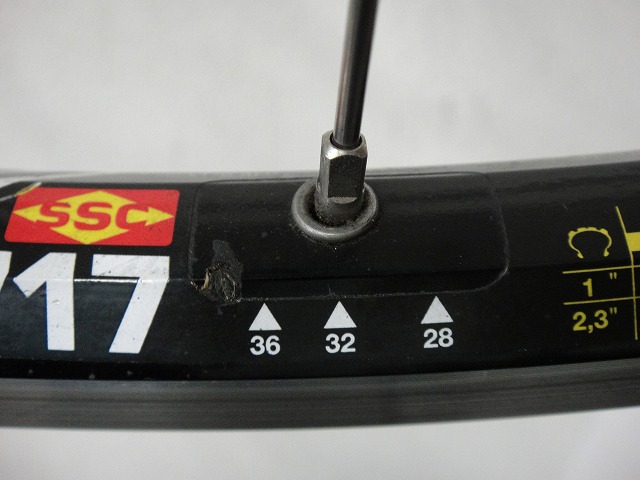
↑The spoke hole count indicator on the sticker is a Mavic patent.
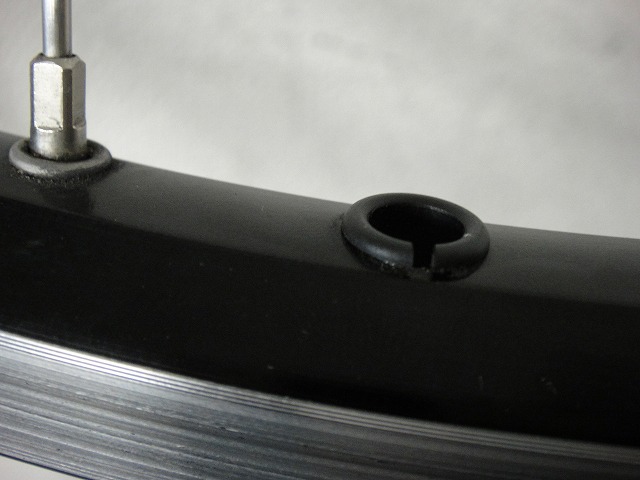
↑Mavic's "Magic Valve"—
an adapter for using a Presta valve on a rim drilled for Schrader valves.
This is a very handy little accessory.
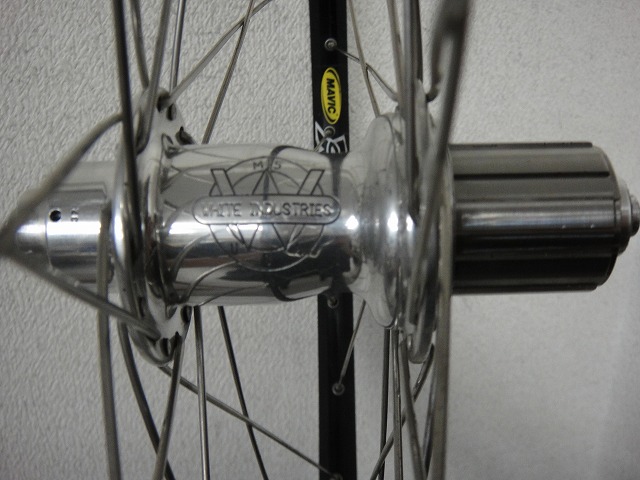
The White rear hub is oriented so the logo reads correctly when viewed from the direction of travel.

There's a small hole on the left side of the rear hub for tightening the set screw
that locks in the cone bearing adjustment.
The right side has the freebody, so this can only be positioned on the left.
So if we follow the convention that "the set screw hole should be on the left side"
even on front hubs...
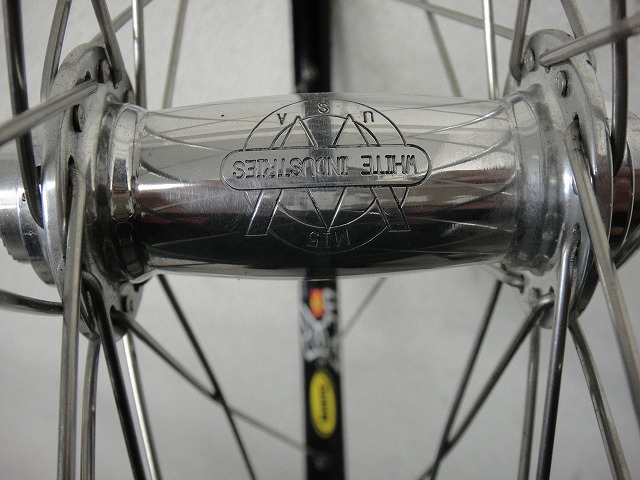
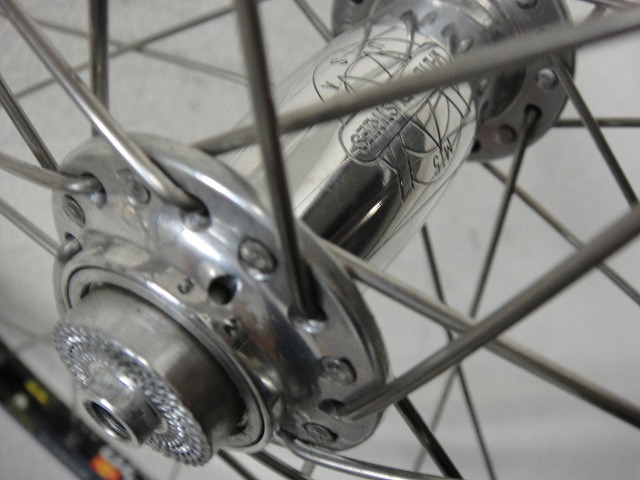
I've written before about how the front hub logo ends up facing backwards.
But in this case, if you do that...
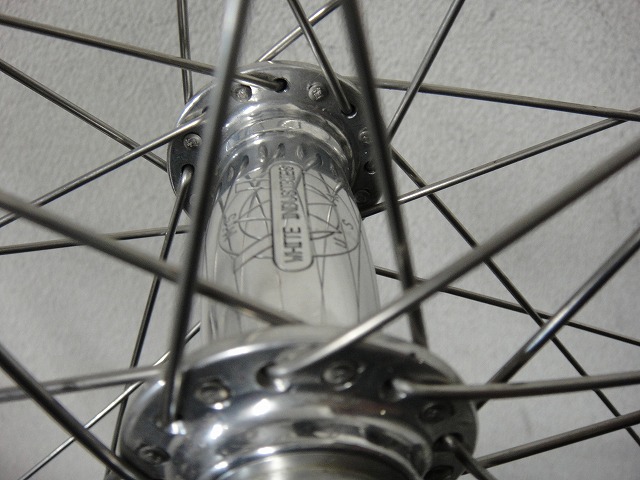
You end up with reverse Italian lacing...
Since the rear wheel uses Italian lacing, it seems better to flip the front wheel
so the logo faces the right direction.
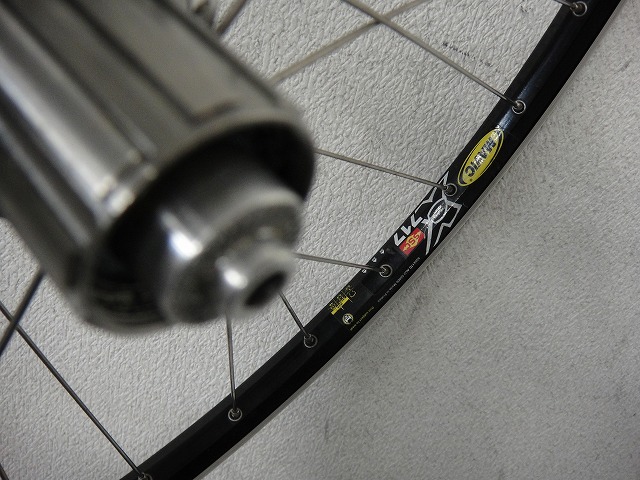
So if both wheels use Italian lacing (the rear wheel has no choice),
the rim stickers end up upside down when viewed from the right side on both wheels.
The direction of markings and stickers doesn't affect wheel performance,
but I thought they could have put a bit more care into it.
It's especially a shame since the wheel itself was built properly.

Next, here's another MTB wheel.
The rim is a Sun 0° XC, and the hub is a Rigida.
Later Sun and Rigida merged into "Sun-Ringle," a single manufacturer,
but with the rim bearing the Sun name and the hub bearing the Rigida name,
it might look like a hand-built wheel that just happened to combine the two,
but the spokes are special, so apparently this is a pre-built wheel.
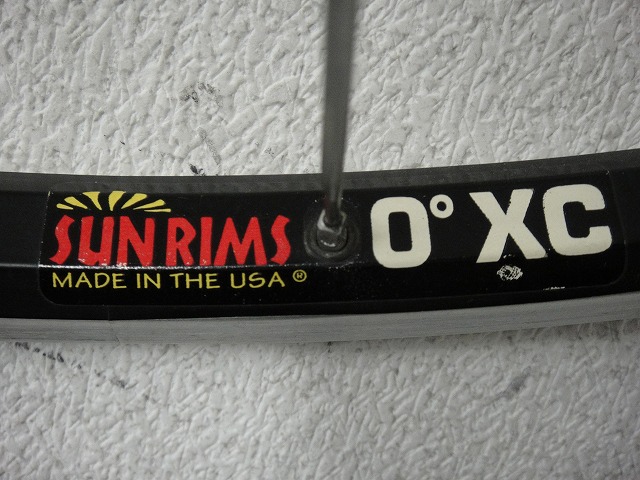
↑Looks like a light rim
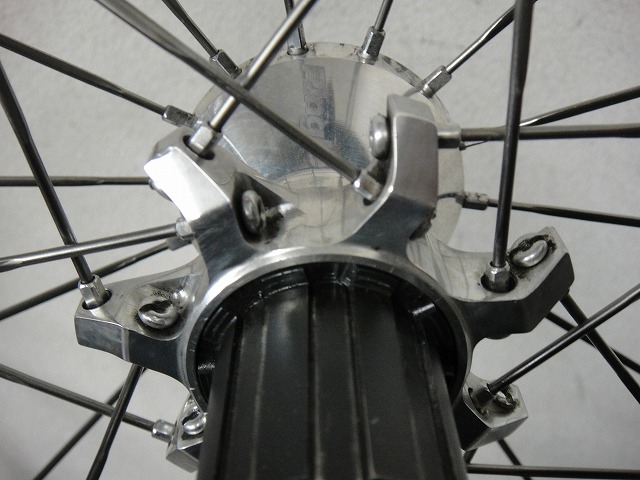
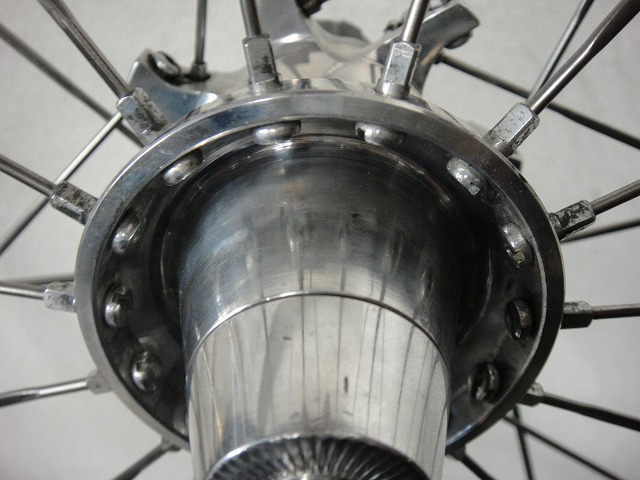
Both the hub and rim have nipples on both sides—a special configuration.
Though when it comes to repairs, you can just machine a bent spoke
into a double-threaded spoke, so this type of wheel is actually relatively easy to fix if needed.
Wheels like this were commonly made by Chronométro.
People might say "that's similar to Cane Creek wheels,"
but Cane Creek just acquired Chronométro when expanding into the wheel business,
so these two companies are like Velomax and Easton.
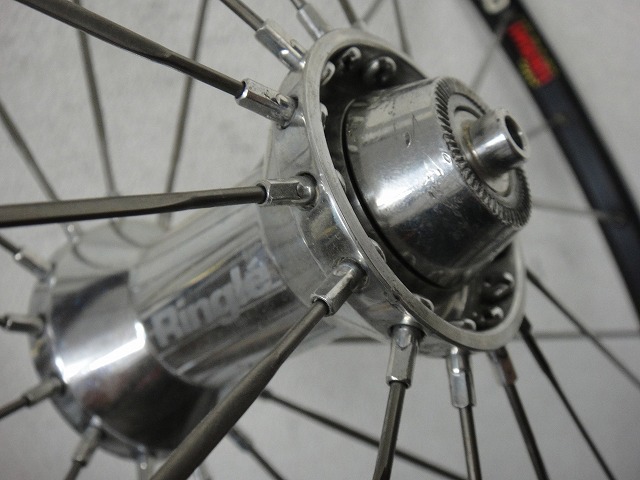
When the front hub's Rigida logo is right-side up,

the rim logo can be read from the right side,
following the convention used by most wheels,


but the rear wheel had the rim reversed.
Actually the rear wheel had centering issues, extremely low tension, and other problems,
plus "the valve hole is in the middle of the final cross on the drive-side tangent lacing,"
which is very amateurish lacing,
so I suspect someone re-laced it later.
At the very least, it's almost impossible that the same person laced both wheels.
There's a huge difference in quality between them.
After writing all this, I realize
I should probably stick to doing this kind of article only for pre-built wheels (too late now).