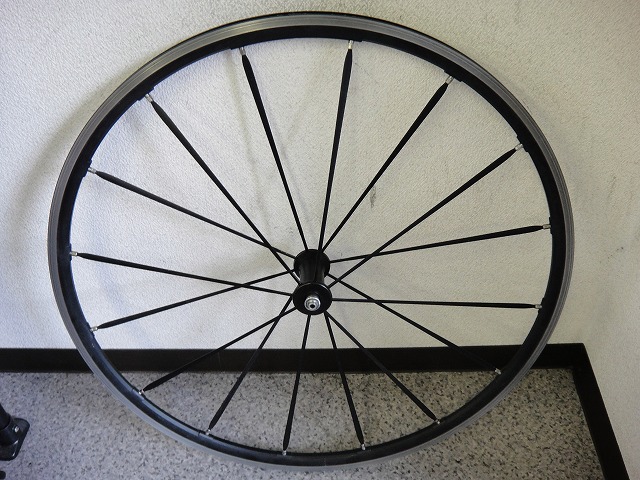
I received a Racing 1 from a customer.
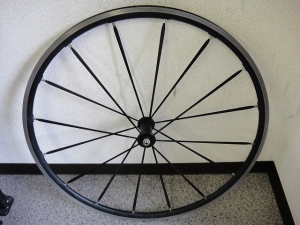
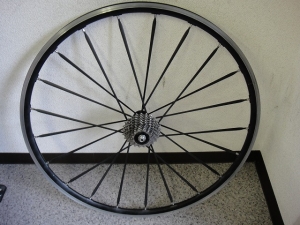
Since this was before Racing Zero came out, this was the flagship model back then.
The customer had gotten hit by a car, and
several spokes on the front wheel were bent.
You can't tell from the photos above because they're after the work,
but the spokes were bent. Someone had done some emergency truing while the spokes were still bent,
so there "was no wobble," but the wheel center was completely off.
The shop that worked on it said "it's fine," but it was anything but fine.
The front brake was mounting at an angle.
In any case, even if spokes were supposedly unobtainable,
a more proper adjustment should have been possible.
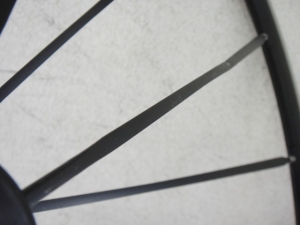
↑Like here

↑The spokes here were bent.
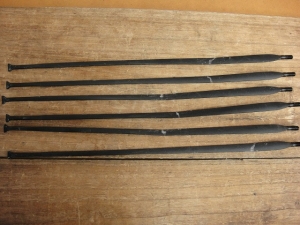

The front wheel had 18 spokes total—9 per side—and 6 spokes on the side that took the impact were damaged.
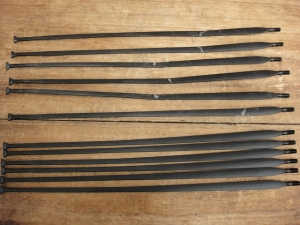
The reason I was able to remove them is because we fortunately had matching spokes in stock.
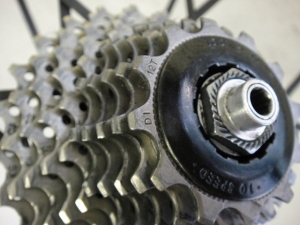
The rear wheel has an aluminum freebody dedicated to Shimano 10-speed.
The reason current Shimano-compatible freebodies are steel is because
the thread diameter of the sprocket lockring is
larger on Shimano than it is on Campagnolo.
This freebody alone has a Campagnolo-tool-compatible lockring
despite using Shimano sprocket splines.
I think many people bought Campagnolo lockring tools back then
specifically for this compatibility issue.
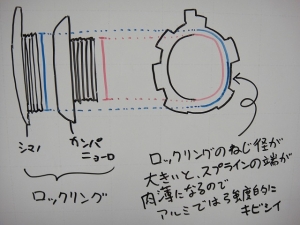
↑The reason it ends up like this is probably why it was difficult to make an aluminum freebody with Shimano's lockring thread diameter.
There are exceptions (Shimano lockring with aluminum freebody)
from Shimano themselves or Easton,
but with Campagnolo, since they originally made a Campagnolo-compatible freebody first
and then added Shimano freewheel compatibility afterward, the dimensions are tight here.
Specifically, the outer diameter of the dual cartridge bearings
pressed into the freebody is only slightly smaller than
the inner diameter of the lockring thread hole,
so if you tried to make a Shimano-compatible aluminum freebody by taking
a Campagnolo freebody, keeping the internal bearing outer diameter the same,
and only changing the external spline machining,
it wouldn't work with Shimano's lockring diameter.
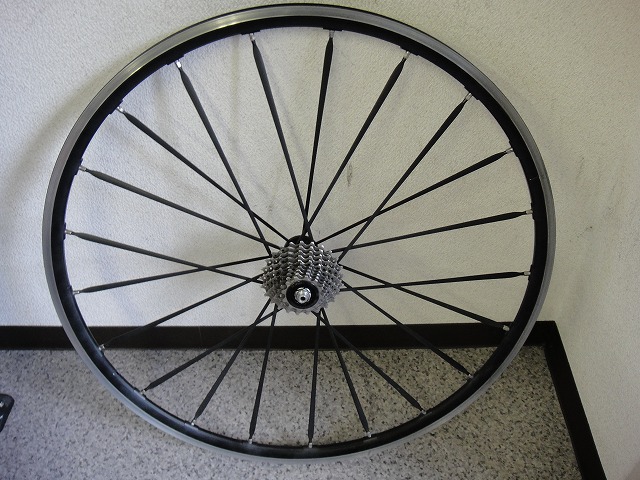
Since this was before Racing Zero came out, this was the flagship model back then.
The customer had gotten hit by a car, and
several spokes on the front wheel were bent.
You can't tell from the photos above because they're after the work,
but the spokes were bent. Someone had done some emergency truing while the spokes were still bent,
so there "was no wobble," but the wheel center was completely off.
The shop that worked on it said "it's fine," but it was anything but fine.
The front brake was mounting at an angle.
In any case, even if spokes were supposedly unobtainable,
a more proper adjustment should have been possible.
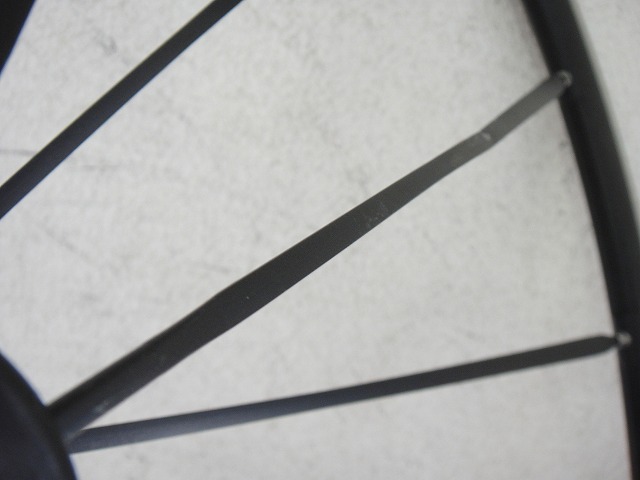
↑Like here
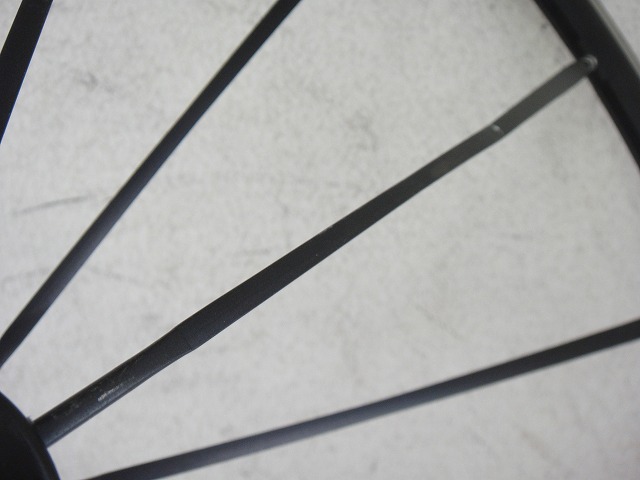
↑The spokes here were bent.

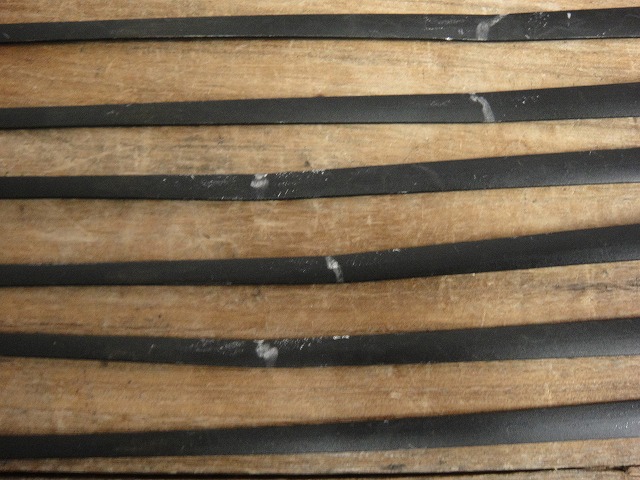
The front wheel had 18 spokes total—9 per side—and 6 spokes on the side that took the impact were damaged.
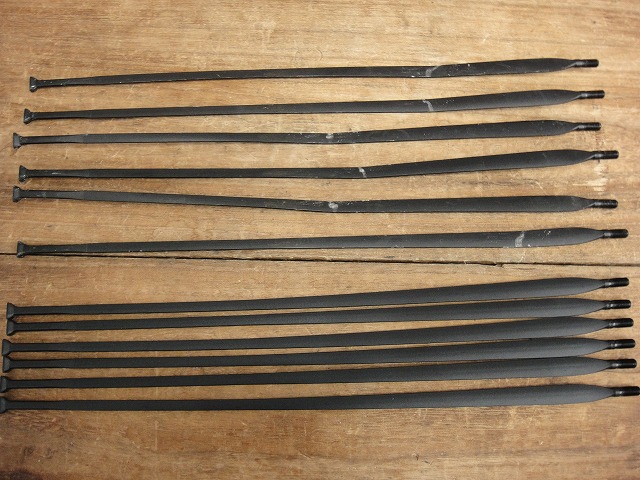
The reason I was able to remove them is because we fortunately had matching spokes in stock.
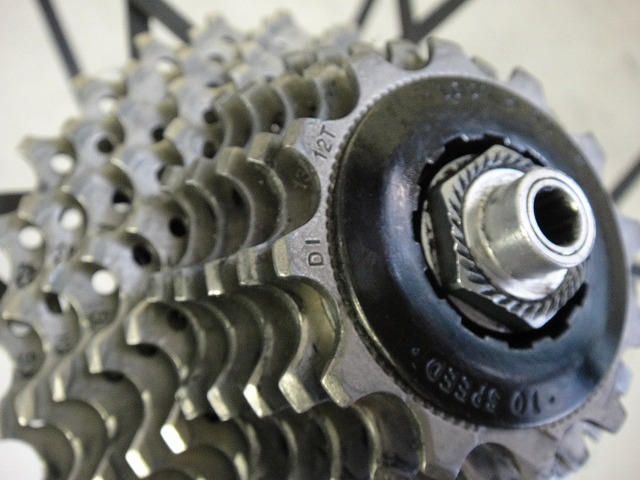
The rear wheel has an aluminum freebody dedicated to Shimano 10-speed.
The reason current Shimano-compatible freebodies are steel is because
the thread diameter of the sprocket lockring is
larger on Shimano than it is on Campagnolo.
This freebody alone has a Campagnolo-tool-compatible lockring
despite using Shimano sprocket splines.
I think many people bought Campagnolo lockring tools back then
specifically for this compatibility issue.
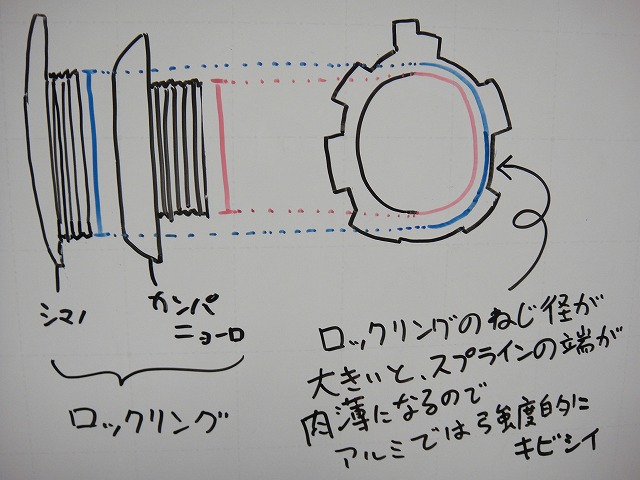
↑The reason it ends up like this is probably why it was difficult to make an aluminum freebody with Shimano's lockring thread diameter.
There are exceptions (Shimano lockring with aluminum freebody)
from Shimano themselves or Easton,
but with Campagnolo, since they originally made a Campagnolo-compatible freebody first
and then added Shimano freewheel compatibility afterward, the dimensions are tight here.
Specifically, the outer diameter of the dual cartridge bearings
pressed into the freebody is only slightly smaller than
the inner diameter of the lockring thread hole,
so if you tried to make a Shimano-compatible aluminum freebody by taking
a Campagnolo freebody, keeping the internal bearing outer diameter the same,
and only changing the external spline machining,
it wouldn't work with Shimano's lockring diameter.