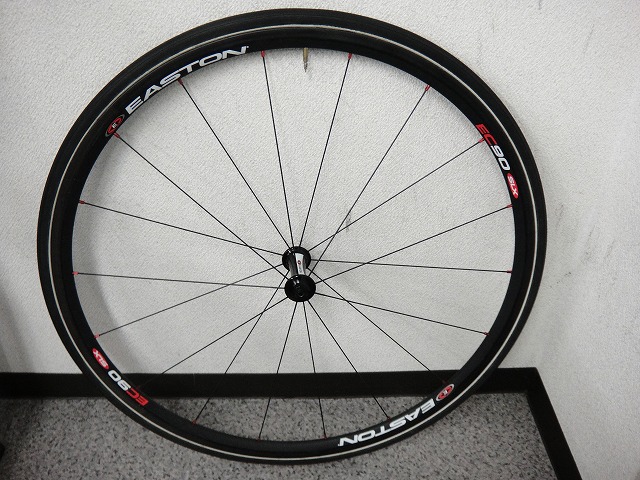
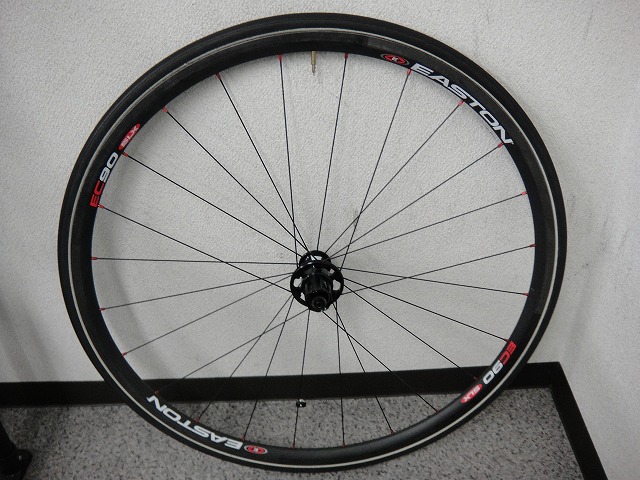
I took in an EC90SLX from a customer.

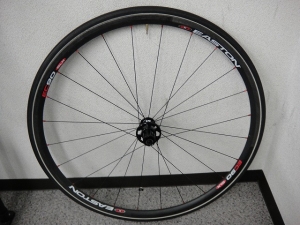
The front wheel had slight runout and centering issues,
and the rear wheel had centering problems worse than the front,
but neither was anything serious.
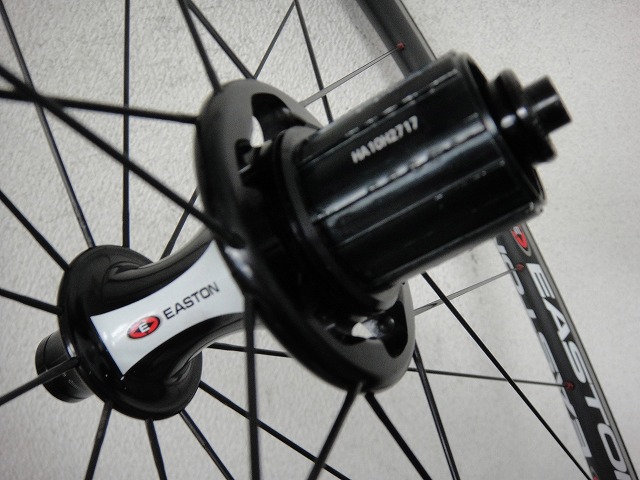
The issue was that the rear hub bearing rotation felt gritty.
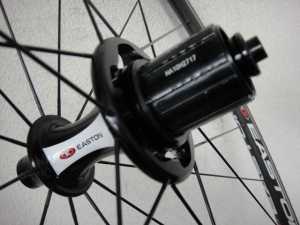
All the images up to here are after work,
but the gritty feeling was definitely there when I manually rotated the shaft.
In a rear hub, there are typically four bearings—two in the hub body and two in the freewheel body.
(This applies to cartridge bearings. Shimano, except during the 7800-series era, uses two cup-and-cone bearings,
while Mavic has only one bearing in the freewheel body,
making it three cartridge bearings.)
Since these are in constant contact with the shaft via light press-fitting,
it's impossible to determine by feel which bearing is causing the grit
or how many bad ones there are.
Often it's not the hub bearings at all,
but the freewheel body bearing that's dead.
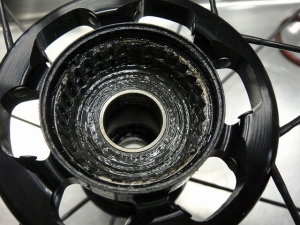
After disassembling, I found
that only the right-side hub bearing was dead this time.
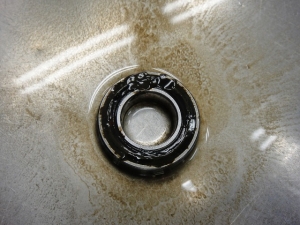
Since it's an R4SL hub, it has ceramic bearing specs,
but the ball race couldn't handle the hardness of the ceramic balls and developed spalling,
with the scraped-off iron particles rusting.
In the image above, I sprayed parts cleaner before peeling back the seal,
and you can already see rust deposits coming out.
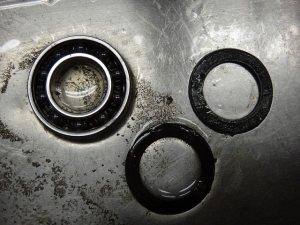
When I sprayed after peeling back the seal, a considerable amount of rust deposits came out,
but I forgot to take a photo.
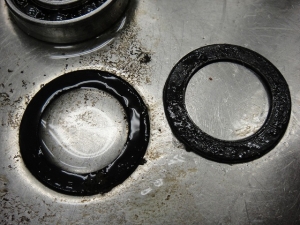
When I washed this seal...
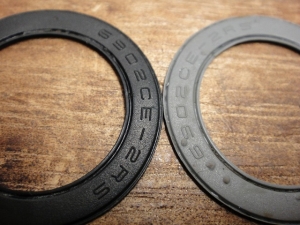
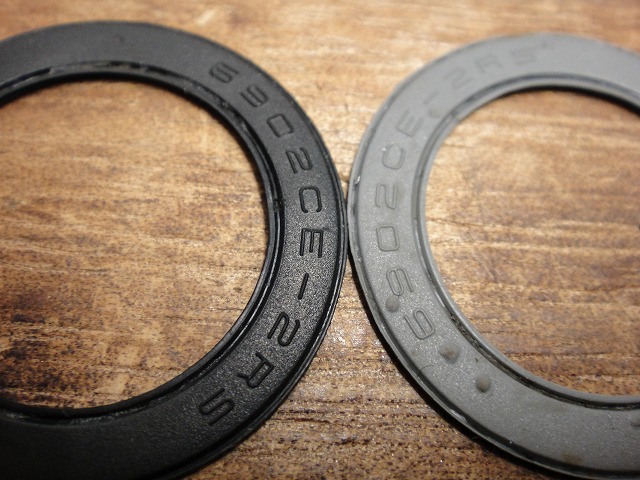
It reads 6902CE-2RS.
6902 is the bearing size, CE indicates ceramic balls,
and 2RS means dual rubber seals. A single rubber seal would be RS,
though some manufacturers mark dual seals as RS as well.
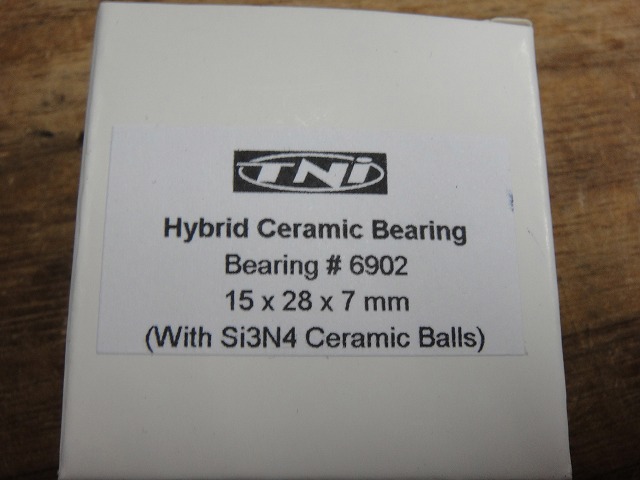
6902 is a metric standard bearing—28mm OD / 15mm ID / 7mm width—
so it's normally easy to source. If only it weren't ceramic.
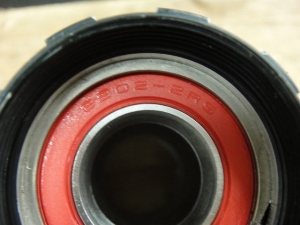
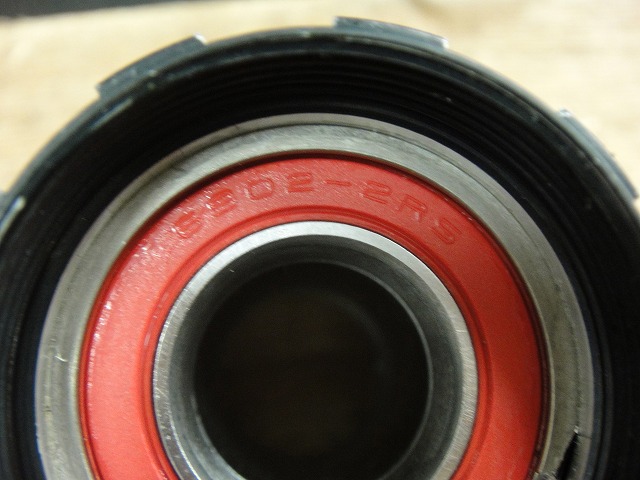
↑The freewheel bearing is a 6902-2RS steel ball version.
That one would be easy to source,
but this... hmm, that's a problem.(Pretending to be troubled)
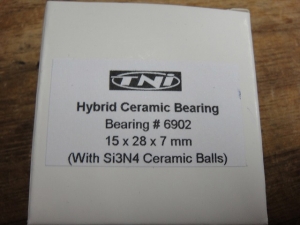
But then I discovered that Tni (a ceramic bearing manufacturer) has ceramic bearings available.(I already knew that)
They have a good selection of 68xx and 69xx series sizes
commonly used in bicycle parts.
This is really convenient!(Blatant advertisement)
Just as steel ball bearings range from great to terrible,
ceramic bearings have their good and bad versions too.
The critical factor isn't the sphericity of the bearing balls—it's the hardness of the ball race.
If that doesn't match the hardness of ceramic balls,
the race gets scraped and spalls quickly.
Campagnolo's black ball race USB bearings are notoriously short-lived,
and that's exactly why.
The newer silver ball races have improved on this.
Even accounting for their relative newness,
the spalling failure rate is remarkably low.
Back in the black ball race era, when I used USB bearings,
I'd deliberately downgrade them all to steel balls.
(Though one could question if that really counts as a downgrade.)
Silver ball races don't seem to require that anymore.
As for which ceramic bearings are actually good—this is just my opinion,
but Ceramic Speed is still in a class of its own.
There's a higher-end COATED model, but even the standard version is excellent.
Next would be CULT, which I'd put in the same category,
though it doesn't fit everything.
Beyond that it's mostly hit or miss—or rather, mostly miss.
Just like with the drill story from before, ones that tout titanium coating
don't actually have superior durability or low friction.
Especially with BB cups: if a ceramic-ball version has a lifespan drastically shorter than steel ball versions,
it's a cheap knockoff with only the balls ceramicized.
The ball race hardness is probably low, and the sphericity is likely poor too.
The reason I don't aggressively recommend ceramic bearings to customers is
because "there aren't many decent ones, and the decent ones are expensive."
Years ago, when a customer had a Cosmic Carbon Ultimate fitted with
some brand's ceramic bearings and wasn't happy with the results
(couldn't feel much difference), I asked them to "trust me"
and immediately swapped in Ceramic Speed ceramic bearings.
They came back with "It's completely different!"
Well, of course—comparing a gem to a stone.
Actually, I didn't just swap the bearings—
but the main reason for the improvement was still the bearing performance itself.
As for whether Tni's bearings are gems or stones,
they're not Ceramic Speed, but they're definitely worth more than their price.
I've personally swapped out Campagnolo Ultegra USB
for these and used them continuously.
They don't have an extremely short lifespan, at least.
More importantly, there are plenty of worse-quality options
that cost more than these.
I'm not naming names though.
Who'd tell you anyway?
↑Wow, this guy's kind of rude!

Sorry, I got sidetracked.
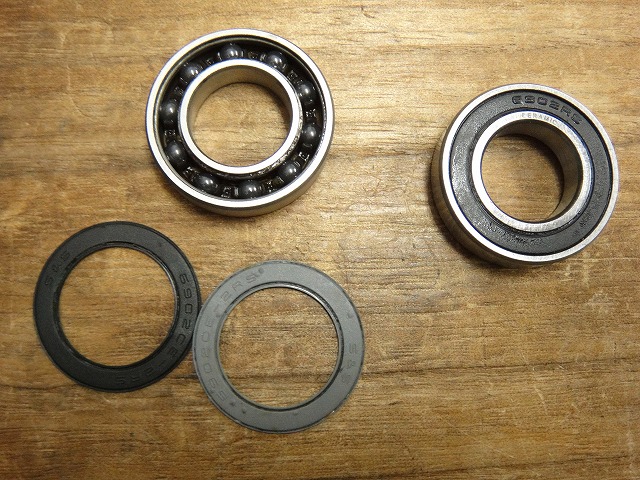
The bearings are, of course, the same size.
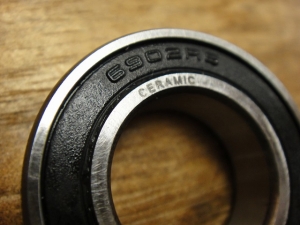
The "RS" marking on the 6902 means dual seals.

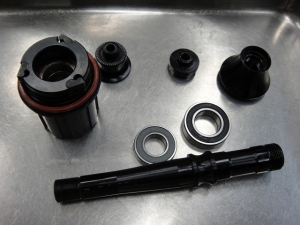
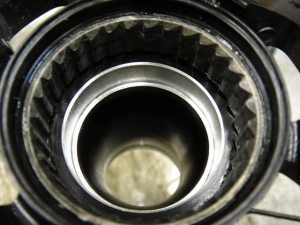
After overhauling the hub and re-pressing the bearings,
the gritty feeling is completely gone.
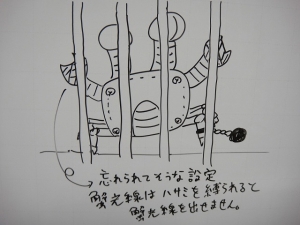
Many of you probably expected the crab beam to make an appearance,
but currently the crab beam is in custody with the thought police
undergoing unjust and harsh interrogation,
so there's no part for it this time. Too bad.
The front wheel had slight runout and centering issues,
and the rear wheel had centering problems worse than the front,
but neither was anything serious.
The issue was that the rear hub bearing rotation felt gritty.
All the images up to here are after work,
but the gritty feeling was definitely there when I manually rotated the shaft.
In a rear hub, there are typically four bearings—two in the hub body and two in the freewheel body.
(This applies to cartridge bearings. Shimano, except during the 7800-series era, uses two cup-and-cone bearings,
while Mavic has only one bearing in the freewheel body,
making it three cartridge bearings.)
Since these are in constant contact with the shaft via light press-fitting,
it's impossible to determine by feel which bearing is causing the grit
or how many bad ones there are.
Often it's not the hub bearings at all,
but the freewheel body bearing that's dead.
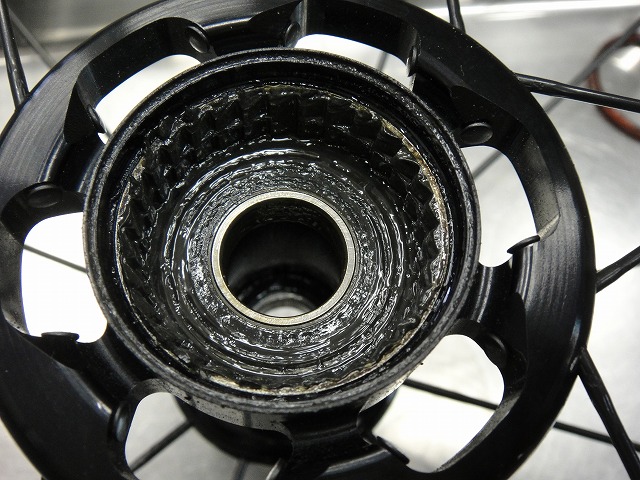
After disassembling, I found
that only the right-side hub bearing was dead this time.
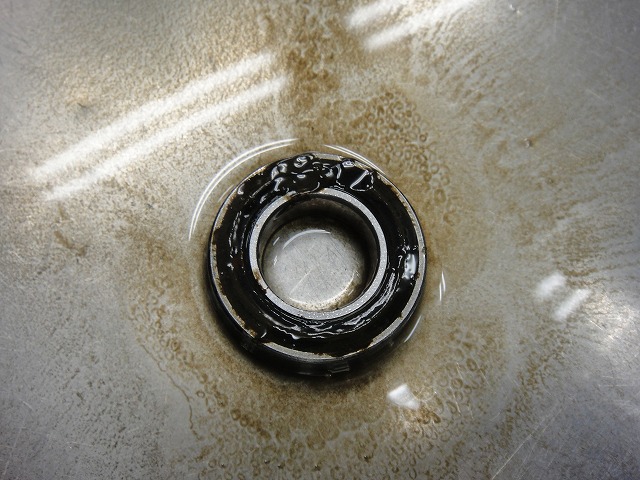
Since it's an R4SL hub, it has ceramic bearing specs,
but the ball race couldn't handle the hardness of the ceramic balls and developed spalling,
with the scraped-off iron particles rusting.
In the image above, I sprayed parts cleaner before peeling back the seal,
and you can already see rust deposits coming out.
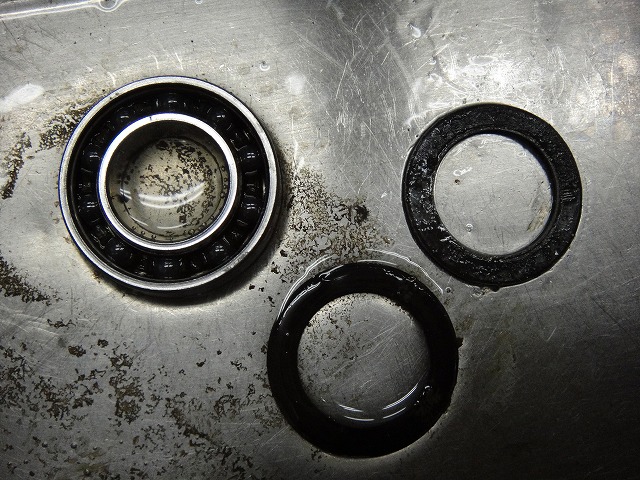
When I sprayed after peeling back the seal, a considerable amount of rust deposits came out,
but I forgot to take a photo.
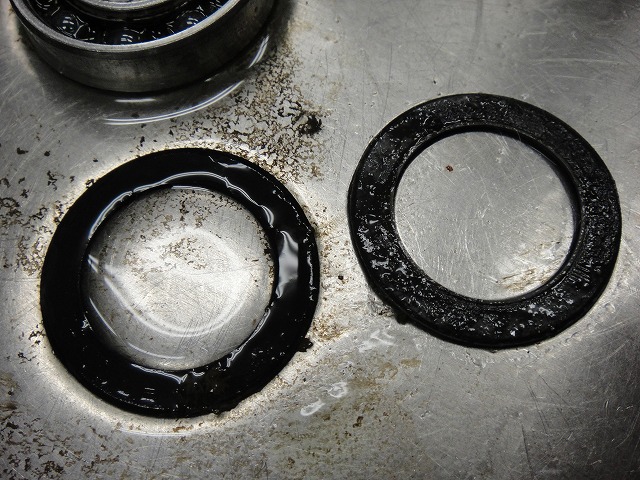
When I washed this seal...
It reads 6902CE-2RS.
6902 is the bearing size, CE indicates ceramic balls,
and 2RS means dual rubber seals. A single rubber seal would be RS,
though some manufacturers mark dual seals as RS as well.
6902 is a metric standard bearing—28mm OD / 15mm ID / 7mm width—
so it's normally easy to source. If only it weren't ceramic.
↑The freewheel bearing is a 6902-2RS steel ball version.
That one would be easy to source,
but this... hmm, that's a problem.
But then I discovered that Tni (a ceramic bearing manufacturer) has ceramic bearings available.
They have a good selection of 68xx and 69xx series sizes
commonly used in bicycle parts.
This is really convenient!
Just as steel ball bearings range from great to terrible,
ceramic bearings have their good and bad versions too.
The critical factor isn't the sphericity of the bearing balls—it's the hardness of the ball race.
If that doesn't match the hardness of ceramic balls,
the race gets scraped and spalls quickly.
Campagnolo's black ball race USB bearings are notoriously short-lived,
and that's exactly why.
The newer silver ball races have improved on this.
Even accounting for their relative newness,
the spalling failure rate is remarkably low.
Back in the black ball race era, when I used USB bearings,
I'd deliberately downgrade them all to steel balls.
(Though one could question if that really counts as a downgrade.)
Silver ball races don't seem to require that anymore.
As for which ceramic bearings are actually good—this is just my opinion,
but Ceramic Speed is still in a class of its own.
There's a higher-end COATED model, but even the standard version is excellent.
Next would be CULT, which I'd put in the same category,
though it doesn't fit everything.
Beyond that it's mostly hit or miss—or rather, mostly miss.
Just like with the drill story from before, ones that tout titanium coating
don't actually have superior durability or low friction.
Especially with BB cups: if a ceramic-ball version has a lifespan drastically shorter than steel ball versions,
it's a cheap knockoff with only the balls ceramicized.
The ball race hardness is probably low, and the sphericity is likely poor too.
The reason I don't aggressively recommend ceramic bearings to customers is
because "there aren't many decent ones, and the decent ones are expensive."
Years ago, when a customer had a Cosmic Carbon Ultimate fitted with
some brand's ceramic bearings and wasn't happy with the results
(couldn't feel much difference), I asked them to "trust me"
and immediately swapped in Ceramic Speed ceramic bearings.
They came back with "It's completely different!"
Well, of course—comparing a gem to a stone.
Actually, I didn't just swap the bearings—
but the main reason for the improvement was still the bearing performance itself.
As for whether Tni's bearings are gems or stones,
they're not Ceramic Speed, but they're definitely worth more than their price.
I've personally swapped out Campagnolo Ultegra USB
for these and used them continuously.
They don't have an extremely short lifespan, at least.
More importantly, there are plenty of worse-quality options
that cost more than these.
I'm not naming names though.
Who'd tell you anyway?
↑Wow, this guy's kind of rude!
Sorry, I got sidetracked.
The bearings are, of course, the same size.
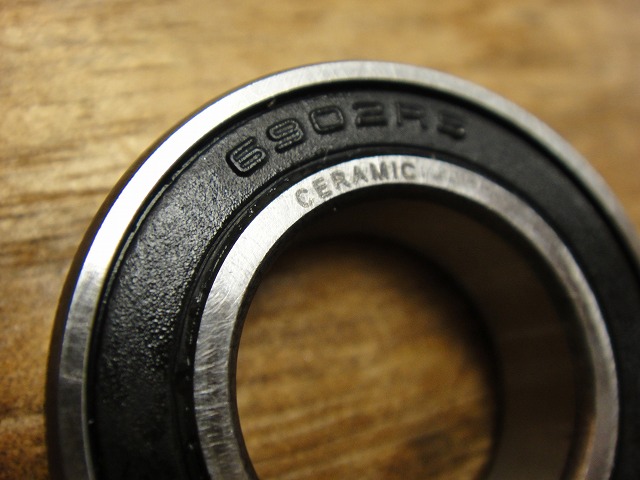
The "RS" marking on the 6902 means dual seals.

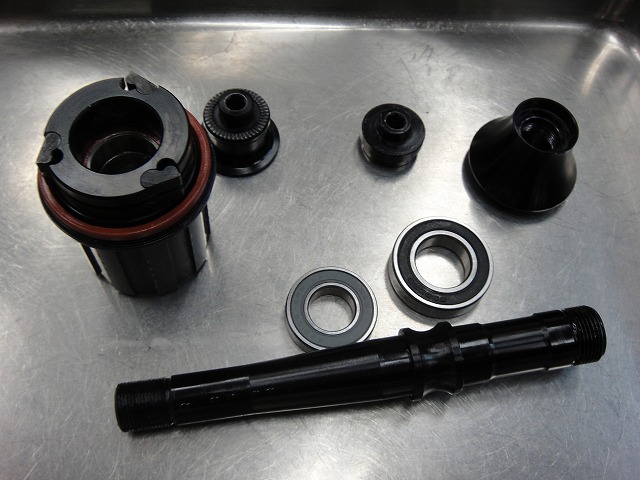
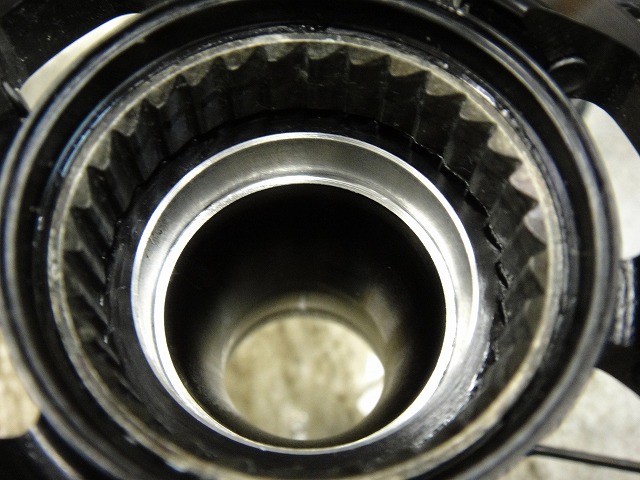
After overhauling the hub and re-pressing the bearings,
the gritty feeling is completely gone.
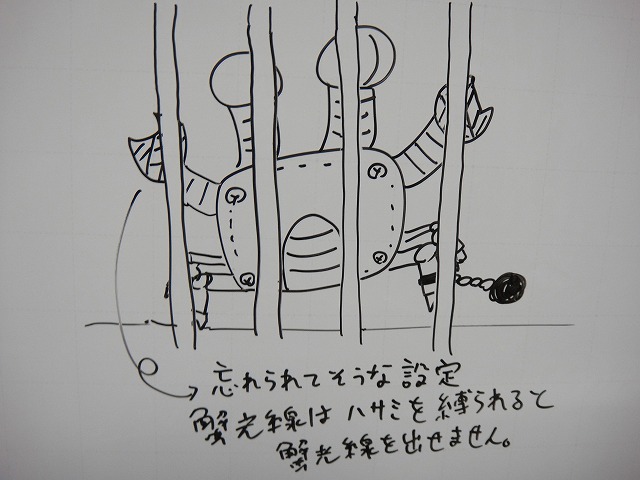
Many of you probably expected the crab beam to make an appearance,
but currently the crab beam is in custody with the thought police
undergoing unjust and harsh interrogation,
so there's no part for it this time. Too bad.